

For tech entrepreneur Elon Musk, the answer to the rocketing energy needs of artificial intelligence (AI) data centres is to launch them into space, where they could tap limitless energy from the sun. But until that happens, the places on Earth where these number-crunching mega-hubs are located face big spikes in electricity demand to run them.
In the US, this has sparked fears of higher energy prices for consumers. To allay those concerns, President Donald Trump will reportedly convene big tech firms this week to sign a pledge to provide or pay for the extra energy supplies they will need as their AI data centres expand.
According to the International Energy Agency (IEA), data centres accounted for 1.5% of electricity demand worldwide in 2024 – a share set to rise to about 3% by 2030. Overall, data centre demand is expected to more than double to about 945 terawatt-hours (TWh) by then, which is slightly above the electricity consumption of Japan today.
AI data centres, where AI models are trained and deployed, put far more strain on power supplies than traditional data centres, which each use between 10 and 25 megawatts (MW). In comparison, demand from a “hyperscale” AI centre can exceed 100 MW at any given time, which if running at full capacity could consume as much electricity in a year as 100,000 households.
Data-centre electricity consumption in household electricity consumption equivalents (million households), 2024

We look at where this power might come from and whether, as some warn, AI is going to blow the world’s efforts to transition away from fossil fuels out of the water.
Why does AI need so much electricity?
AI data centres differ in how they use electric power. In a conventional data centre, data requests from businesses, individuals and other users come in a randomised way, translating into a steady load level on the servers, with relatively little fluctuation in demand.
But in an AI data centre, processors need to go through training or learning periods, using so-called “graphical processing units”. These are synchronised, being started up and switched off at the same time. This translates into “power bursts”, which last just a few seconds, but happen very frequently and concurrently, according to Gerhard Salge, chief technology officer at Hitachi Energy.
“That is a different challenge than just providing the power and the energy for the conventional data centres,” he told journalists at the International Renewable Energy Agency assembly in Abu Dhabi earlier this year.
Here, officials and business executives discussed how to meet those demand peaks, noting they cannot be dealt with just by installing huge batteries as those would wear out quickly.
Martin Pibworth, chief executive of SSE, a Scotland-based energy firm, said AI-led demand will put pressure on the power system, but “the problem we all have is no one really knows the pace and trajectory of that demand lift”. In the UK, the government’s Clean Power Plan will be needed to make sure electricity operators can meet demand from AI and other data centres as more come online, he added.
-
UN adopts first-ever resolution on AI and environment, but omits lifecycle
The UN Environment Assembly in Nairobi gavelled the resolution on artificial intelligence and environment, but removed mentions to AI’s water and power use -
Power-hungry AI data centres seen driving demand for fossil fuels
Big Tech’s data centres are expected to use twice as much electricity by the end of the decade – mainly due to the global AI boom, the International Energy Agency says -
AI and satellite data help researchers map world’s transition minerals rush
Filling “mind-boggling” gaps in mining data will make it easier to track the environmental impact of surging global appetite for critical minerals, experts say


In the US, meanwhile, the Trump administration is eager to ensure that communities that are home to data centres, as well as the wider public, do not turn against the industry due to its perceived unfairly high use of energy and water.
Ahead of a meeting scheduled on March 4, where US tech titans are due to sign a pledge on powering their own data centres, White House spokesperson Taylor Rogers told CNBC: “Under this bold initiative, these massive companies will build, bring, or buy their own power supply for new AI data centres, ensuring that Americans’ electricity bills will not increase as demand grows.”
Will electricity for data centres and AI come from clean or dirty sources of energy?
The answer to this question is key to how countries tackle climate change, as it will affect their energy mix, how electricity is produced and distributed, and therefore the trajectory of their greenhouse gas emissions. Decisions made by governments and businesses will shape how the AI industry powers the technology on which it relies.
Under pro-fossil fuel Trump, the US has walked away from policy support for clean energy, meaning data centre operators can choose their energy sources freely. In January, data from Global Energy Monitor (GEM) showed the US now has the most gas-fired power capacity in development, surpassing China and accounting for nearly a quarter of the world’s total.
More than one-third of this capacity is set to directly power data centres on-site, in hotspots like Texas, and many more grid-connected gas-fired projects are planned to meet an expected increase in energy demand from AI, GEM said.
On the other hand, some tech companies – especially multinationals – have set goals to cut their emissions to net zero, and so are choosing to power their data centres with renewables, including in the US.
For example, French energy giant TotalEnergies recently signed two long-term Power Purchase Agreements (PPA) to deliver 1 gigawatt (GW) of solar capacity for Google’s data centres in Texas. This followed two other PPAs with Google for 1.2 GW secured by Clearway, a California-based renewables company 50%-owned by TotalEnergies.
Sources of global electricity generation for data centres – base case, 2020-2035


Some countries are also moving to ensure the power needed for AI and the data centre industry is produced using clean energy.
In Ireland, an effective ban on new data centre connections was lifted in December, provided at least 80% of the centres’ annual energy demand is met by new renewable electricity sources. The government also plans to build Green Energy Parks, where data centres can be located alongside renewables plants to avoid straining the national grid.
Salge of Hitachi Energy said that with big investors wanting to drive investment in AI data-crunching so fast, “there is no other power generation technology than variable renewables which you can build in such a timeline” of two to three years. “Anything else will be in the 2030s and later,” he added.
Some governments – such as Sweden’s centre-right coalition – have proposed nuclear as a clean energy solution for AI data centres, saying they could fuel a “renaissance”. But building nuclear power plants requires massive investment and long timelines, while new small-scale modular reactors are not yet commercially available.
How are power systems and regulators coping so far?
In a February report forecasting electricity demand out to 2030, the IEA said AI and data centres are contributing to generation growth in advanced economies, which is now accelerating again after 15 years of stagnation. However, it flagged bottlenecks in connecting new data centres, because grids are not being built or improved fast enough to keep up with rising power demand, forcing big customers to wait.
The report noted that at least 150 GW of queued data centre projects are estimated to be in the advanced stages, while one-fifth of the global data centre build-out is at risk of delay due to grid congestion.
Comment: Using energy-hungry AI to detect climate tipping points is a paradox
Planning, permitting and completing new grid infrastructure can take five to 15 years, whereas data centres need one to three years. Prices for key grid components have also nearly doubled over the past five years, the IEA noted.
The European Commission, meanwhile, aims to support those operators that can save on energy use. It plans to adopt a “Data Centre Energy Efficiency Package” in April that will contain an assessment of data submitted under a reporting scheme, introduce a rating scheme for data centres in the EU, and start work on minimum performance standards.
Can AI help to resolve the issue?
Experts say it’s important to look at both sides of the coin, pointing to ways in which AI can contribute to more effective power grid management and integration of renewables into national power supplies.
According to new analysis by energy think-tank Ember, AI applications such as short-term renewables forecasting, predictive maintenance, and real-time monitoring and adjustment of transmission line capacity can deliver operational improvements in power systems.
It estimates that AI could enable Southeast Asian nations, for example, to reduce their power sector costs by $45 billion-$67 billion through to 2035, depending on how much renewable energy they deploy. Potential AI-driven efficiency gains could cut emissions by 290 million to 386 million tonnes of CO2 over the next decade in ASEAN countries, it adds.
“While power-hungry AI might initially stress the power systems, with various powerful applications it has the potential to significantly accelerate the energy transition and offset consumed energy rapidly,” Ember data analyst Lam Pham said in a statement.
The post Explainer: Will AI data centres make or break the energy transition? appeared first on Climate Home News.
Explainer: Will AI data centres make or break the energy transition?

Unless you’re studying for a high school science exam, lithium, nickel, copper, and cobalt probably won’t carry much meaning beyond being elements on the periodic table. But if there is a time to pull out those dusty science books, it would be now.
Across various sectors, these minerals are of increasing importance, including – perhaps most prominently – renewable energy generation and storage, and electric vehicles; but also other large and growing sectors such as military and AI (e.g., for datacenters). And around the world, many governments and companies are competing to control who can dig them up.
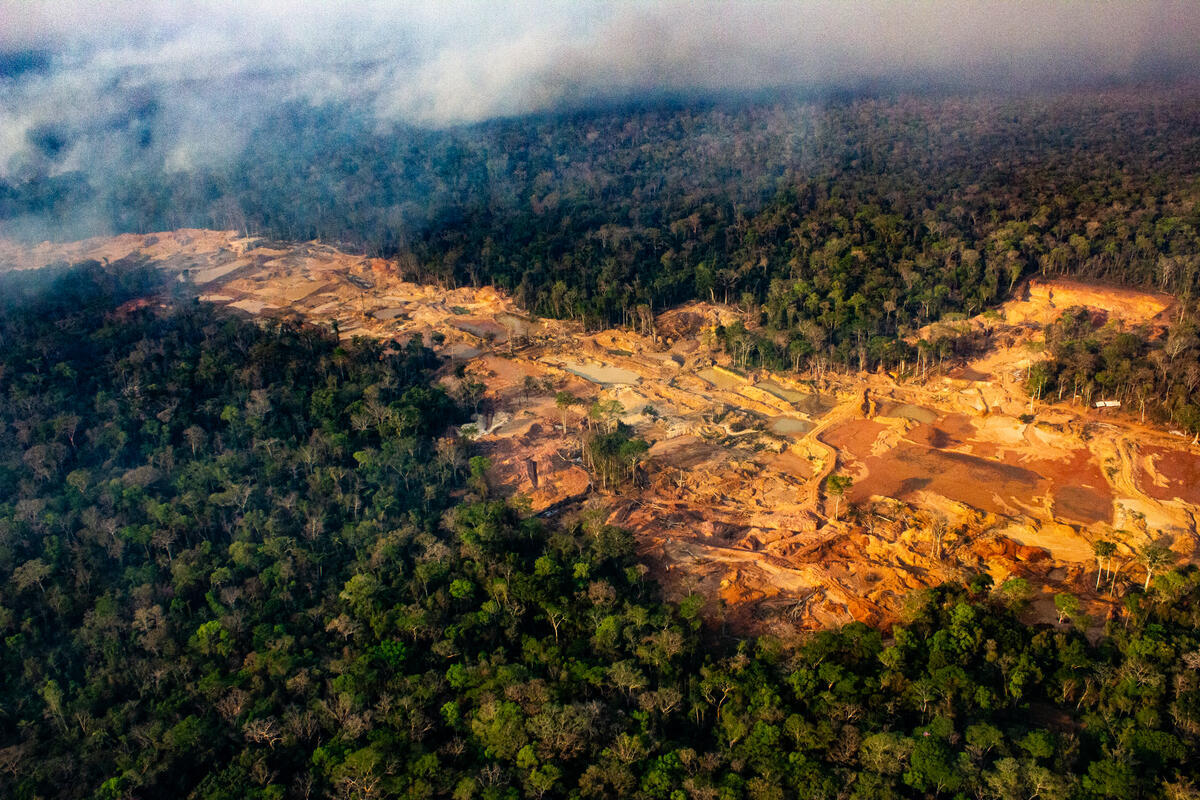
The global minerals rush
These raw Earth materials are often called “critical minerals” by governments and the mining industry, typically a reflection of national political priorities rather than essential societal or energy transition needs. This risks turning these minerals into the focus of a new neo-colonial resource grab, with powerful countries and corporations racing to control them, and wasting their potential to power a fair and green transition.
Globally – from Chile, Argentina, DRC, Indonesia, Sweden to the deep sea – the extractivist rush for minerals puts vital ecosystems, peoples’ rights and the lives and livelihoods of Indigenous Peoples and local communities at risk. The geopolitical scramble over minerals has also been linked to the current US government’s aggressive annexation threats to Greenland.
Minerals have different uses, and there are no guarantees that the minerals mined “in the name of energy transition” are used for wind turbines or energy storage. For example, big tech companies are consuming more and more of these minerals to expand AI infrastructure (such as datacenters). In addition to driving up energy demand and emissions, the vision of ‘progress’ advocated by big tech oligarchs also threatens to worsen extractive pressures on people and nature, and divert minerals away from energy transition. Moreover, mineral use in the expansion of AI-driven warfare systems has been found as a particularly concerning development.
In light of this, it is more important than ever to demand coordinated action to ensure that minerals are used where they matter most: principally, for a fast fair fossil fuel phase out and a transition to clean, affordable renewable energy and sustainable transport systems.
So how do we protect people and nature in the energy transition?
Reduce, recycle, restrict for a safeguarded energy transition
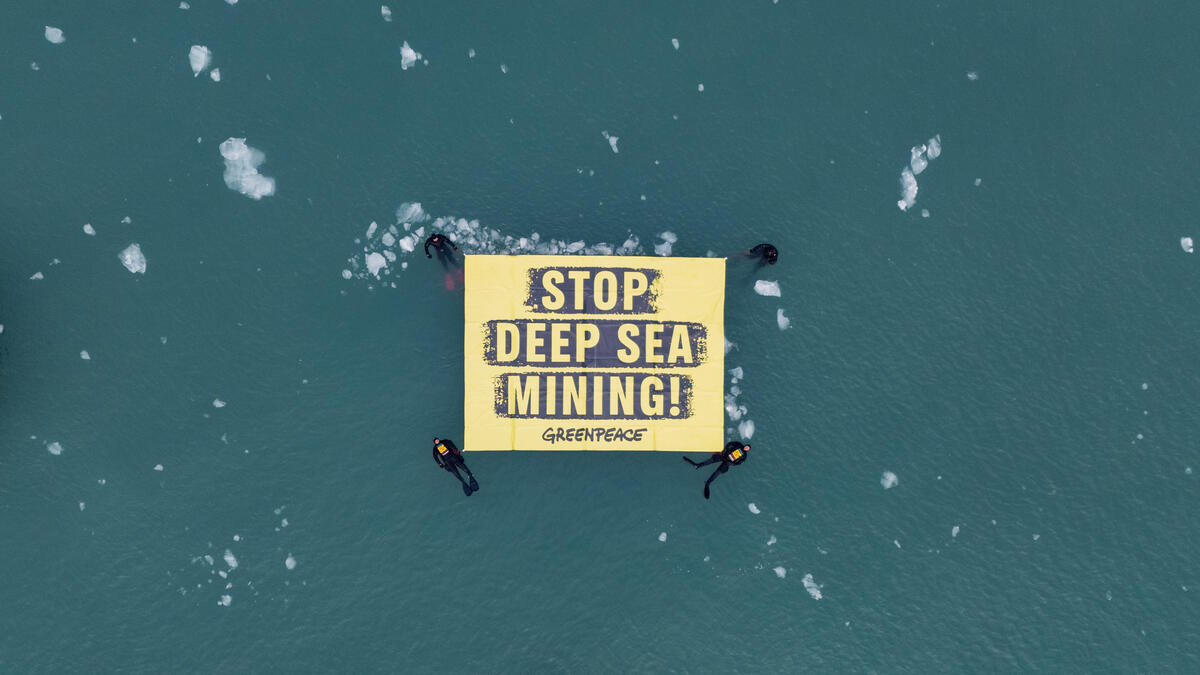
In a report commissioned by Greenpeace International, and authored by academics at the Institute for Sustainable Futures at the University of Technology, Sydney (UTS) in Australia, we’ve found that an ambitious energy transition can be achieved without mining in vital ecosystems – whether on land or at sea. With visionary leadership, sound policies, and innovative technologies, we can keep global warming within 1.5°C, safeguard vital ecosystems and reduce extractive pressures on people and nature.
Here’s five ways how:
1. Reduce mineral demand with improved public transport, car-sharing, and smaller, more efficient vehicles

Accessibility, efficiency, and reliability in how cities are governed make them great places to live in. Having improved public transport systems is one of the most effective ways to reduce the need for mineral-intensive electric vehicles and the batteries that power them. In addition to expanding high-quality public transport, employing car-sharing schemes, and investing in active mobility (e.g. walking and cycling infrastructure) would significantly decrease reliance on individual car ownership.
As an added bonus improving our public transport systems is essential not just for climate, but for connecting people to opportunities. Mobility justice is climate justice.
2. Incentivise and substitute battery technology towards alternatives requiring less lithium, cobalt, or nickel

Think about how many items you use that require batteries? Without it, our personal gadgets would be useless; we wouldn’t have advancement in items like electric cars or bikes; and batteries can also help store and use more eco-friendly sources of energy, such as solar and wind. But the production of large batteries is highly mineral-intensive.
Luckily, over the last decade, technological innovation has transformed the market. Lithium iron phosphate (LFP) batteries, now widely commercialised, eliminate the need for cobalt and nickel, reducing pressure on these supply chains. At the same time, sodium-ion (Na-ion) batteries are advancing rapidly, and offer a pathway to significantly reduce mineral demand for lithium, according to the report. It shows that, using innovative battery technologies and energy storage systems that do not require these key minerals would significantly reduce supply gaps for key minerals and ease potential development pressures for new mines targeting them.
3. Design for circularity and scale up recycling

We all know the drill by now – reduce, reuse, recycle. When it comes to transition minerals, this maxim is of key importance.
By maximising collection and the recovery of transition minerals from end-of-life transition technologies, recycling can significantly reduce the need for new extraction. Investing in advanced recycling technologies and collection systems, alongside policy incentives that reward high recycled mineral content in new products, ensures that transition minerals re-enter the supply chain.
Additional circularity measures like extending technologies’ lifespans, improving repairability, incentivising reuse, designing and standardising components for easy disassembly to help with repair and recycling, and enforcing extended producer responsibility (EPR), could also contribute to reducing overall mineral demands.
4. Prioritise mineral use for essential energy transition needs

Minerals are finite resources, and the practice of mining carries significant social, labour, and environmental risks. Therefore, the use of mineral resources should be prioritised where they matter most – in renewable energy and its storage and in electric mobility to enable a fast fair fossil fuel phase out.
Governments and industries must prioritise mineral use towards a fast, fair, and just energy transition. Coupled with supply chain transparency, prioritising minerals for energy transition ensures finite minerals are used to advance climate goals that benefit all people and the planet.
5. Protect key ‘Restricted Areas’ from mining development

Protecting human rights and ecological integrity is a non-negotiable foundation of a just and green transition. Restricted Areas have high environmental, ecological, and natural values, and may include Indigenous Peoples and local community territories. Defining and protecting these Restricted Areas is a crucial step to ensuring that mining of transition minerals respects the rights of Indigenous Peoples and local communities to their territories, and does not destroy biodiversity, critical natural ecosystems, natural carbon storage, freshwater systems and oceans.
After all, what is “critical” here is not a minerals scramble largely driven by geopolitical rivalry. Neither the AI race, nor the power and profit chased by States and corporations.
Critical are the ecosystems that all living beings on the planet depend on.
Critical are the rights of Indigenous Peoples and local communities.
Critical is meeting peoples’ needs and ensuring that current and future generations can live in a safe climate.
For this, it’s essential for our world leaders to take courageous and coordinated action to protect people and the planet, and ensure our Earth’s minerals help create a green and just future, rather than being exploited for short-term profit.
Author: Elsa Lee is the Co-Head of Biodiversity at Greenpeace International
Water negotiators are facing a worsening water supply forecast with record-low snowpack across the West.
Critical negotiations about the future of the Colorado River took a two-week hiatus last month after the seven states in the basin missed a key Valentine’s Day deadline for striking a deal, New Mexico’s water negotiator said Thursday.
Colorado River Negotiations Resume With Focus on Stopgap Measures
Climate Change
Climate-Fueled Wildfires and Dust Storms Drove Up Air Pollution Around the World Last Year
A new report shows air pollution threatens the majority of the world’s population, while information gaps increase the risks.
A new report on global air pollution shows that the majority of the world’s population breathes unhealthy air, and climate change is making the problem worse.
Climate-Fueled Wildfires and Dust Storms Drove Up Air Pollution Around the World Last Year



-
Greenhouse Gases7 months ago
Guest post: Why China is still building new coal – and when it might stop
-
Climate Change7 months ago
Guest post: Why China is still building new coal – and when it might stop
-

 Greenhouse Gases2 years ago
嘉宾来稿:满足中国增长的用电需求 光伏加储能“比新建煤电更实惠”
-
Climate Change2 years ago
Bill Discounting Climate Change in Florida’s Energy Policy Awaits DeSantis’ Approval
-

 Climate Change2 years ago
嘉宾来稿:满足中国增长的用电需求 光伏加储能“比新建煤电更实惠”
-
Climate Change Videos2 years ago
The toxic gas flares fuelling Nigeria’s climate change – BBC News
-

 Carbon Footprint2 years ago
US SEC’s Climate Disclosure Rules Spur Renewed Interest in Carbon Credits
-

 Renewable Energy5 months ago
Sending Progressive Philanthropist George Soros to Prison?