


Article Contents


Elections for the European Parliament are taking place between 6-9 June, kicking off a process that will establish a new EU leadership.
Around 360 million EU citizens are eligible to vote. They will choose between representatives of national parties, each of which is affiliated with a broader political grouping at EU level, ranging from communists to the far-right.
The grouping or coalition with the most parliamentary seats will shape the leadership of the next European Commission – the EU’s executive branch – and help to determine the bloc’s overall direction of travel for the 2024-2029 term.
The balance of power in parliament, which is one of the EU’s legislative bodies, will also play a key role in determining whether or not ambitious new climate policies are voted through.
The elections come at a critical time for climate and energy policy across Europe. Amid geopolitical turmoil, EU member states face mounting pressure to provide secure energy supplies and compete with other major powers such as China and the US.
Meanwhile, there has been widespread reporting of a “green backlash” in many EU countries, exemplified by farmers protesting against perceived injustices that include environmental policies. (Based on recent EU-wide polling, the so-called backlash has been dismissed as “largely overblown”.)
The new European Parliament, the new Commission and member states must also agree in the coming months on an emissions target for 2040, a stepping stone on the bloc’s wider path to “climate neutrality” by 2050.
These decisions will be influenced by which parties triumph in the parliamentary elections.
In the interactive grid below, Carbon Brief tracks the commitments made by each of the main European Parliament groupings in their election manifestos, across a range of issues related to climate and energy. The parties covered are:
Each entry in the grid represents a direct quote from a manifesto document.
When the last European Parliament elections were held in 2019, a “green wave” saw climate-focused politicians winning seats across the continent. This was interpreted as a clear mandate to set ambitious, EU-wide climate targets and policies.
In the years that followed, the EU approved a European Green Deal, with goals to cut emissions by 55% from 1990 levels by 2030, and reach net-zero by 2050. It also passed a package of policies to help member states achieve these goals.
These measures have “significantly improved” the EU’s performance on tackling climate change, according to independent analysis by Climate Action Tracker. However, the group says that the bloc would need to implement further policies to align itself with the goals of the Paris Agreement.

With the 2024 election looming, forecasters predict a swing to the right in EU politics. A surge in far-right MEPs could result in a right-wing majority coalition within parliament.
This, in turn, could jeopardise the next phase of the EU’s climate ambitions, including negotiations over a European Commission proposal to reduce emissions by 90% by 2040.
For example, the right-wing ECR’s manifesto says that it will “prioritise the implementation of existing legislative requirements…before considering any new regulations”.
It also refers to “review[ing] the more problematic objectives” and “negative impacts” of “green” policies, implying it might support weakening existing climate goals.
The centre-right EPP says it is “clearly committed” to existing targets – which include the 2030 and 2050 goals – but it does not mention the mooted 2040 ambition.
There have been reports of internal disputes within the EPP over the 2040 target and broader environmental policies. An earlier draft of its manifesto illustrated these disputes, with a commitment to “rejecting” bans on any technologies and “revising” the 2035 ban on petrol and diesel cars. This language is missing from the final manifesto.
In contrast, parties that are further to the left have backed more ambitious emissions targets, as shown in the chart below.
The relatively centrist S&D and Renew Europe Now groupings support the proposed 90% goal for 2040. (While S&D only mentions achieving “strong” 2040 goals in its manifesto, elsewhere the party has voiced support for the target.)
Meanwhile, other parties have gone even further. The European Green Party has proposed a “revised EU climate law” with a 2030 target that goes “beyond” the current 55% goal and achieves net-zero by 2040. The Left specifies a 65% reduction by 2030 and net-zero by 2035.

All the major parties with manifestos broadly support the European Green Deal, with the ECR stating it backs it “in principle” while noting its concerns about a “centralised top-down approach”. (Identity and Democracy, which has not released a manifesto, broadly opposes the green deal and includes many climate sceptics in its ranks.)
Some groups appear to go further. Both S&D and the Greens mention the creation of a new “Green and Social Deal”, with a greater emphasis on affordable energy, social protections and jobs in low-carbon sectors.
In a piece reflecting on the need for a left-wing vision to combat the growing “anti-green backlash”, Politico argued that, with virtually every party emphasising the need for a “just transition”, it was “not clear” what the S&D’s new deal was “supposed to be”.
Of the major parties, only the Green party includes a target for “phasing out” fossil fuels in its manifesto. (At COP28 last year, the EU and other parties to the Paris climate regime agreed to “transition away” from fossil fuels.) The Greens target a 2030 phaseout of coal, with all fossil fuels phases out by 2040.
From France to Romania, EU farmers have been engaging in often dramatic protests in recent months.
While their demands have been wide-ranging, many have focused on climate and environmental issues. This follows anger from farming communities about cuts to fuel subsidies and efforts to curb the use of fertilisers and pesticides.
All of the manifestos speak directly to these ongoing issues, with some calling for major reforms to the Common Agricultural Policy (CAP) – the EU’s flagship farming policy. Others try to strike a balance between supporting farmers and maintaining strong climate ambitions.
Agriculture is responsible for one-tenth of the EU’s greenhouse gas emissions. It is the only major sector that is expected to see almost no progress in emissions cuts in the coming decades.
The EPP says climate policies can be achieved “only with and not against farmers” and says more funding for agriculture will be vital to support their environmental efforts. Liberals in Renew Europe Now say they have proposals to “simplify farmer’s lives” because they “want to focus on farming, not filling out forms”.
The ECR, meanwhile, says it “reject[s] unfettered green ideology” in agriculture.
S&D says its members “fundamentally disagree with the conservatives’ approach that sustainability is the enemy of farmers”. Like the EPP, it emphasises the need for more financial support to help farmers transition to “environmentally friendly” practices.
Many of the manifestos focus on promoting the EU’s economic success and competitiveness, particularly in relation to the US and China, as well as ensuring it is not reliant on other nations for resources.
This comes amid a period of instability, triggered partly by Russia’s invasion of Ukraine, which threatened the bloc’s energy security due to its reliance on Russian gas.
Often, parties explicitly make the link between these wider geopolitical struggles and the need to scale up low-carbon industries. This is exemplified by the EPP when it states:
“We are developing the home market for our clean-tech industries. We are decarbonising and revitalising our energy-intensive industries to sell clean products worldwide. Thus, we are increasing our energy independence and overall sovereignty and resilience.”
Both S&D and the Greens focus on the need for investment across industrial sectors, in order to maintain the EU’s competitive edge. ALDE, the main party in Renew Europe Now, emphasises “cross-border” public investment in order to “achieve the economies of scale that the single market offers”.
Right-wing and liberal parties stress the need for “technology neutrality” in their plans.
Greens and left-wing parties, on the other hand, either explicitly reject nuclear power or do not mention it. They also place more emphasis on developing public transport options, including improved rail networks, alongside investment in electric vehicle infrastructure.
The post EU election 2024: What the manifestos say on energy and climate change appeared first on Carbon Brief.
EU election 2024: What the manifestos say on energy and climate change
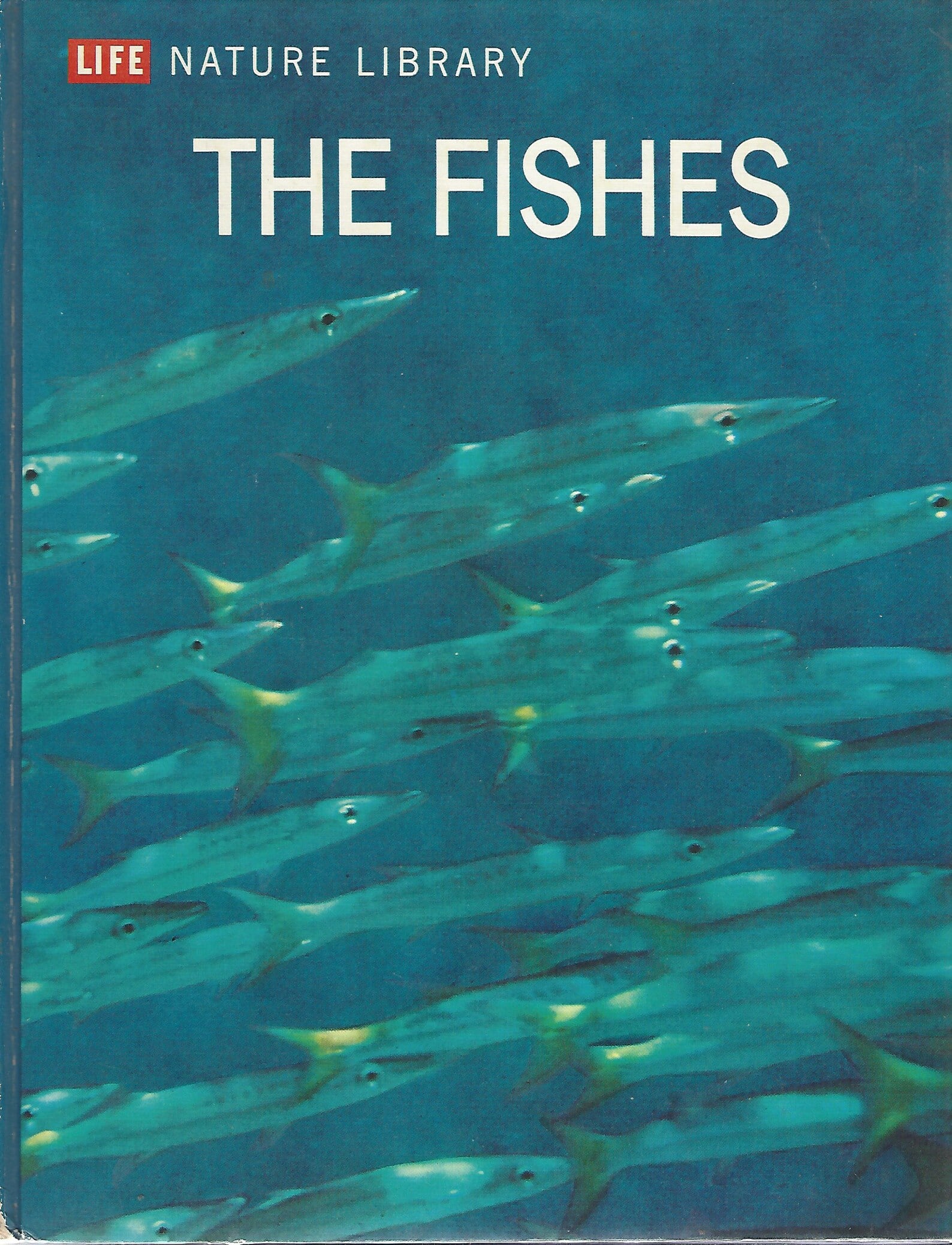
When I was very small, it was the TimeLife book of The Fishes, by F. D. Ommanney, which I remember endlessly poring over, my child’s mind gripped, in total fascination. The cover illustration showed a shoal of barracuda, mid-water and heading upwards, lit up as an iridescent blue by a column of sunlight. Oddly, it is only the cover and the illustrations of the deep sea creatures which I now remember—but I loved that book, as the weakened spine, blunted pages and dog-eared corners attested.
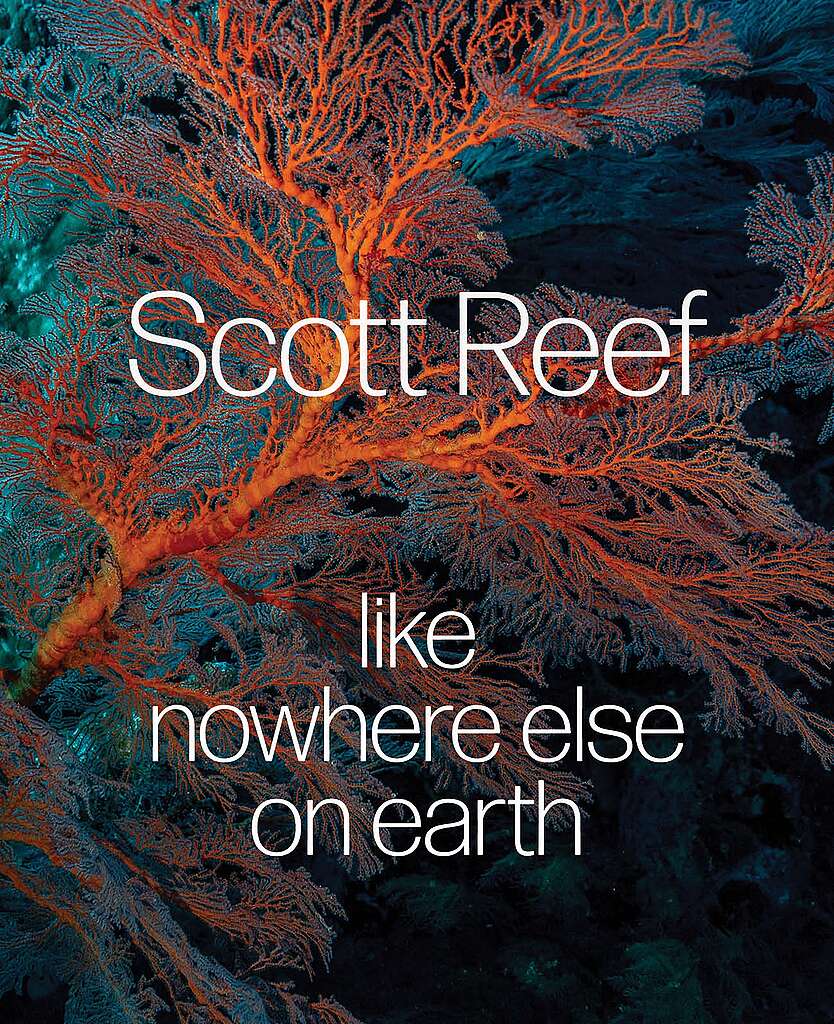
The Fishes has been on my mind recently, because I’ve been working with some dear friends on our own illustrated oceans book, to be published by Upswell Publishing. The book is called Scott Reef: Like Nowhere Else on Earth, and I want to share with you a bit of the story behind its creation.
Scott Reef is absolutely magnificent: Australia’s largest freestanding oceanic reef, brimming with life, including rare and threatened species such as a genetically distinct population of green sea turtles, pygmy blue whales and the wonderfully elegant dusky sea snake. But Scott Reef isn’t near our capital cities; it is way off the north-west coast of WA. And it is threatened with devastation by Woodside, which wants to drill up to 57 toxic wells at the Reef for its vast, dirty Browse gas project.
One of the main challenges in the fight to save Scott Reef from being turned into an industrialised gas zone by Woodside is bringing this incredible location to life for people who haven’t actually experienced it first hand. Because despite its ecological significance and dazzling beauty, ‘Scott Reef’ is also—at least not yet—exactly a household name.
To help get over this barrier, Greenpeace has enabled a number of photographers to travel to Scott Reef by boat (including the Rainbow Warrior) to document its astonishing diversity of colour and life. We then brought these images together in a remarkable photobook, produced by our talented in-house team, which we’ve been putting into the hands of as many leaders as possible—including the MPs whose decisions can determine the Reef’s future.
Back in June this year, I was sharing a copy of our in-house book at a business gathering in Perth when someone pulled me aside. Had we thought about publishing the book commercially? Apart from anything else, he wanted to buy a copy himself! He had a point. We were proud of what we’d created, but a commercially published version could reach a much wider audience and have even greater campaign impact. I immediately turned to my dear friend, Terri-ann White, who runs Upswell Publishing in WA, for advice.
Terri-ann has a huge heart and terrific vision. So many wonderful things in WA owe their existence to her doings, and, true to form, she was immediately encouraging and enthusiastic. “But,” she said, “it would add a whole new dimension if we had some words to accompany the incredible pictures.”
Fair enough, I thought. I could ask a few authors.
“And when would you like it published?” she asked.
“Ideally November,” I answered sheepishly.
Now, in publishing terms, nobody goes from idea to finished work, beautifully produced by a commercial publisher, in just four months. It. Just. Doesn’t. Happen. A book of this scale would ordinarily take nine months, I was told. But Terri-ann was undeterred. “If you can get a rapid turnaround on the writing, I will give it a shot.”
Over the following few days, I sent out 24 emails to prospective writers. To my joy and surprise 23 of them responded almost immediately with an enthusiastic yes!
Terri-ann was somewhat alarmed and perplexed when I told her the good news… we’d discussed a few authors, not more than twenty! “Impossible,” she texted. “Editing is important and you are talking about thousands of words!” But I also know Terri-ann. She does the impossible. And so, here we are… Terri-ann is going to hit that improbable deadline. Scott Reef: Like Nowhere Else on Earth will be on shelves in November.
The contributors are a wonderfully diverse bunch, united by their enthusiasm for Scott Reef — and their extraordinary speed!
It’s a brilliant mix. The book brings together national icons like Peter Garrett, Tim Winton, Mick Dodson, Janet Holmes à Court and Fiona Stanley; the intellectual heft of professors Frank Bongiorno, Jessica Meeuwig, Rick Steiner and Samantha Hepburn; the poetic vision of Prema Arasu, Berndt Sellheim and Saadiah Freeman; the field expertise and passionate first hand witnessing of Imogen Zethoven, Tooni Mahto, Ben Fitzpatrick, Geoff Bice, Olaf Meynecke, Paul Gamblin, Sarah Gittoes and Hayley Baillie; and the determination of emerging activist voices Jackson Reid and Emma Sangalli.
Their elegant words wrap themselves around the sheer wonder of the underwater world, brought to life by the work of the photographers — of whom one, Wendy Mitchell, has also contributed a wonderful essay.
Terri-ann showed me the full physical proofs this week and they are breathtaking. This book contains some of my absolute favourite images of wildlife beneath the waves -– and believe me, after almost 20 years at Greenpeace, I’ve been privileged enough to see some remarkable shots! The essays bring a whole new depth and richness to the story of Scott Reef.
If I am being honest, and maybe a bit sentimental, I hope that a four or five-year-old child somewhere in Australia will spend part of their summer holidays turning the pages of this book, wide-eyed with curiosity and awe at the beauty and strangeness of the creatures that call our oceans home.
Our shared commitment is to make sure that, as those children grow up, the wonders of Scott Reef will exist not just in the pages of the book, but out there in the wild waters off north-western Australia—alive, thriving, and every bit as extraordinary as they are today; a living wonder beneath the waves.
Pre-orders of Scott Reef: Like Nowhere Else on Earth are available here.


Q & A
Sometimes you get asked a question so often that you decide to produce a report to answer it!
We know there is strong public opposition to voter opposition to gas drilling at Scott Reef and fracking in the Kimberley in Western Australia. But I am frequently asked whether, even if people don’t want it, more gas drilling is a necessary evil to sustain WA’s prosperity?
The short answer is an unequivocal ‘No’. The longer answer is our new report, From Gas to Green: Building Western Australia’s Future State, which makes the comprehensive case that Asia’s gas market is declining — while WA has an enormous untapped opportunity to become a global leader in green industries and exports, helping drive the region’s shift away from fossil fuels. The faster that WA embarks on a decisive shift away from gas—and that includes no fracking in the Kimberley, or drilling at Scott Reef — so much the better for the state’s people, ecology and economy.