

Enerteck Expands Wind Services Across Canada
Alex Fournier, General Manager at Enerteck Wind Services, returns to the spotlight to discuss the company’s growth from specialized blade repair into a full-service wind maintenance provider. Fournier shares how Enerteck is positioning itself to support Quebec’s ambitious wind expansion plans while navigating the unique challenges of Canada’s shortened repair seasons.
Sign up now for Uptime Tech News, our weekly email update on all things wind technology. This episode is sponsored by Weather Guard Lightning Tech. Learn more about Weather Guard’s StrikeTape Wind Turbine LPS retrofit. Follow the show on Facebook, YouTube, Twitter, Linkedin and visit Weather Guard on the web. And subscribe to Rosemary Barnes’ YouTube channel here. Have a question we can answer on the show? Email us!
Welcome to Uptime Spotlight, shining Light on Wind. Energy’s brightest innovators. This is the Progress Powering tomorrow.
Allen Hall: Alex, welcome back to the show. Thank you so much guys for having me. It sounds like we had a busy blade season with Enerteck up in Canada. It’s just a different environment up there. What kind of, uh, repairs have you been working on this year?
Alex Fournier: Uh, really busy. Been some, uh, doing some transfer crack, open window and lighting damage, VGs, installation, polytech, erosion, uh, all that kind of stuff from road access on platform.
Um, so we been pretty busy. Yeah. What parts of Canada are you focused on right now? Uh, at the beginning of the season we trying to focus on Quebec ’cause the temperature is getting colder faster. Um, so usually we start with Quebec and then we’re making our way up west. So right now our blade season is pretty much done in Quebec, [00:01:00] so now we’re focusing in Ontario.
Uh, Ontario have way better, uh, temperature right now in Quebec. It might be around 15 to 20 degrees up north. Versus in Ontario that right now it’s around 22, 25 degrees Celsius.
Joel Saxum: Celsius being the big thing there. Right. For our, for our US listeners, it’s 25 degrees is really cold to us, but very nice to you.
Yeah. Thanks. It’s pretty cold.
Allen Hall: Yeah. I think for a lot of listeners, they don’t realize how short the blade repair season is in Canada. How many days do you really have it? It depends where you are, right? There’s some
Alex Fournier: site that, there’s still some snow in May. Um, but, uh, if, if, if we’re in a. Nice area. It can be from, uh, April, may to September, October, November.
You’re really pushing it. I think if, if you want to do, uh, blade work in November and que back, you need to have like a 360 platform with the heater and uh, and closed platform. Which we don’t have yet,
Joel Saxum: but yet, [00:02:00] yet is an interesting concept there. You say we don’t have that platform yet, but that kind of points to the eTech.
Uh, I mean, of course. Congratulations. A new, new role over there I think, clue us in on that. What is the new role?
Alex Fournier: So it’s general manager, so right now I’m taking care of the whole company, which is either composite or maintenance. Um, I’m doing boat. Um, so if you have any requests either on composite or maintenance and Quebec or candidate, just let me know.
But yeah, when I first started I was, uh, director of composite operation and then, uh. Climbing at the ladder to turn on Azure. Now
Joel Saxum: what it makes sense is eTech is, uh, expanding, you know, strategically expanding services. Right? So you guys, uh, of course when we were talking with you and you joined the team there, you had a composite.
So we, they just, this is your first big blade season. Sounds like it’s gone very well. Um, but the eTech is a company does a lot more than that. You off air, you’re clueing us in on some of the really cool things you guys are doing. Some, some stuff we’ve never actually really dealt with or heard too much of and wind, [00:03:00] but, um.
Yeah, share some of the new things and, uh, areas you guys are expanding into.
Alex Fournier: Yeah, for sure. Well, one of the big thing is Rob access. Um, coming from a Rob access background and as a level three, I really wanted to, uh, break that in, which can help us too with composite, but it can help us with other, uh, maintenance and a turbine like tire cleaning, uh, deck, both removal, all this stuff that you can access in the ladder, we can access by rope.
So. That was a big thing for us. Uh, also we’re doing now touring, tensioning, um, constriction as well. Uh, in Quebec there’s a lot of constriction sites coming up. Um, so we got our constriction license with inner deck so we can participate to construction. So. Composite is a big thing, but also everything related to maintenance.
Uh, we can do it as well and we’re about to do it.
Allen Hall: What is a construction environment in Canada? We’ve been most recently seeing a lot of good news from Canada regarding [00:04:00] offshore wind, and that is maybe a big push of putting gigawatts out off the coast of Nova Scotia. But what’s happening onshore in Canada, Quebec right now is pretty busy,
Alex Fournier: um, from last year to this year and ongoing year.
Um, there’s seven new sites coming up. Um, so we’re pretty busy. Um, and also the, the views of Quebec is to have 10,000, uh, megawatt by 2035. Hydro Quebec is signing big contracts, um, by operating and developing their own site too. Um, they just announced a site, I think it’s a thousand or 2000 megawatt that they wanna build, um, around, uh, second area that, that, that is up north.
So with all that, uh, I think Quebec’s gonna be really busy in the next, uh, couple years,
Allen Hall: and Antech is helping those new construction projects. How, because, but so many different phases from scooping the dirt, pouring the concrete. Uh, getting the towers up, getting the cells on, getting the [00:05:00]blades installed, all the pre-inspection, post inspection things that have to happen.
And then all the, uh, ohs that they see as they’re putting the towers together. Where are, are you guys focused? At our
Alex Fournier: side, we’re focusing on, uh, more quality control, more or less. Um, and pre-inspection and deliveries. Um, so when pieces come to site, inspect them. If there’s something wrong with them, we will let engineering know and, uh, they can do some action about it.
Um, receiving tool, uh, component blade, you know, uh, sometimes they get a little bit messy on the train or the boat, so we’re there to inspect them and repair them. If, if there’s something. Um, air quality control is a big thing, Joel.
Allen Hall: That’s what we’ve been talking about for years. It sounds like Alex is actually doing it.
That’s fantastic. How much work is that on a new site right now? What are you seeing as, uh, blades are offloaded from the trains or the trucks? I mean,
Alex Fournier: it’s, uh, it’s not all the time that the blade get banged up, but when it does, we’re at least we’re [00:06:00] there to, uh, repair it. But normally it’s, it’s pretty slow.
Um. It doesn’t happen too often, but when it happen, at least they have the manpower to, to repair it. And as of quality control, I mean, uh, in Quebec there’s the union too that is taking care of building the sites. Um, so we’re just there to help the union, uh, making sure that everything is, is made right.
Joel Saxum: I think that’s a good strategic initiative though, because you hear about, or, or Alan, like you said, our conversation we’ve been having, we should be inspecting these things properly when they arrive at site, da, da dah.
We, we talk about this and, and people will say, oh, we do that. Oh. Um, but for many times, like in the States, what I’ve seen is, is the person doing the receiving inspection is like what their training is. They’re trained to take the straps off, and that’s about it. And then they’re like, yeah, there’s a big white thing here.
Check, like, um, you know, to have an, to have an actual, uh, trained technician, trained subject matter expert, doing those qa QC inspections when they, [00:07:00] when those components arrive on site, is huge. And if I’m an operator, I’m, I want that, that’s what I want. I don’t want. Uh, a warm body telling me that it arrived.
Yeah, I know that. Um, but to have some, and then having the capabilities of it’s say, say it’s an Enerteck person, right? And they, and they’ve been around the, they’ve been around blades. They may be a blade repair technician, uh, accepting the blades at site and they go, we can fix this. This is how we can do this.
And then you have that continuity there, um, to make sure that these things are done right. They’ve been accepted. They’re good to go up tower, so you’re not. Uh, having delays in trying to mobilize a repair crew or, that’s a big thing. I know because sometimes people just don’t want to, they’re like, we’re not gonna repair this one because we need to get this thing hung so we’re not gonna deal with it.
You run into that stuff,
Alex Fournier: it’s not too bad. ’cause since we have experts that know what they’re doing, we can tell people like, look, you shall not, let’s say crane that blade like this, he should already repair it. Normally, like people, you know, they’re not that, uh, outta wrench that they will say, oh, let’s just do it anyway.
Um. [00:08:00] So it’s, it’s not too bad, but definitely having someone that know what they’re doing, it’s definitely a, an advantage there.
Allen Hall: One of the things we’ve been talking about also recently, and it seems to be a, a bigger and bigger issue, is, uh, icing systems or de-icing systems. And I’m really curious where Canada is heading in that realm.
Are new turbines arriving on site in Quebec? It seems like they would have to have anti-icing systems. What kind of systems are they? Getting, what are they thinking about? How are they planning ahead for some of the winters? Hey, Quebec, at
Alex Fournier: least it’s the power utility company. I drew Quebec that said you’re not putting a tower there if there’s no active, the icing system.
Um, so a paint doesn’t work ’cause it needs to be active, the icing system. Um, so yeah, the, the only two companies that was able to, uh, accomplish the mission of having turbine with the deicing system was STOs and Nordex. So big, uh, big shout out to them. Um, but what I heard that the are getting [00:09:00] is ema um, so I think Nordex and Vestus are equipped with ema
Allen Hall: and you’re coming up on, uh, winter season Really quickly, what’s the outlook like over the next couple of months and what are, what are customers asking you to go do?
Um, so in the winter for us
Alex Fournier: it’s pretty slow, at least in Quebec because I, Quebec have actually like a rolling that you’re not supposed to stop turbine, uh, in the winter. So. Unless it’s something major, um, you’re not supposed to stop a turbine. So that’s why we’re doing all the preventive maintenance in the summer.
Um, so when the winter gets here, we, we don’t need to stop the turbines. Um, obviously if it’s, if the turbine just shut down ’cause there’s a problem, like a pitcher or something, it’s okay to go, uh, troubleshoot it. But, uh, you’re not supposed to stop a turbine if it’s not supposed to be stopped.
Joel Saxum: So no planned outage is all winter long.
Yeah. What do the boys do then? They go ice fishing, is it, is that, is that what the plan is?
Alex Fournier: Well, first of all, the turbines are getting, uh, they’re pretty icy, [00:10:00] uh, coming from, uh, ice background. Uh, I seen some turbines in the winter and, and they get pretty messy. Um, so most of the time people cannot even access the turbine ’cause it’s too ice, ice tea.
Um. So, yeah, we’re, I guess it’s pretty, uh, pretty chill in the winter
Joel Saxum: for us. I wanna, I wanna rewind a little bit back to the, talking about icing and de-icing systems. Uh, Canada being, uh, its own kind of special market like that, right? Like the Scandinavian countries have the same issues and problems for the most part.
But if Nordex investors were the only two OEMs to qualify for the big hydro Quebec deal, ’cause that Hydro Quebec basically controls the power output in Quebec. Right. So they get to kind of put their stamp on things. So Nordex, I know Nordex has a, uh, uh, not a want, but like a strategic direction to be more like boutiquey.
Like, if you wanna change something, we’ll help, we’ll work with you to change it, to make it, you know, good for your locale. So, [00:11:00] and Vestas, I don’t know exactly what their active heating system is because I know that they have the operations with ICE kind of thing that they do, the algorithmic changes and whatnot.
But if an active heating system. Are they putting this on or will they be putting it on from the factory, or would it be put on, on, on site? Like, and if it’s active, if it’s, if it’s like a thermoelectric heating mat in the leading edge, or what does that look like?
Alex Fournier: Um, yeah, the, the both or them are coming straight from the factory with it.
Um, they don’t, I don’t think they want to do like, retrofit thread on site. So yeah, both of them are coming straight from the factory with it. Um, and yeah, from what I heard and seen, it’s uh, about, uh, I, uh. Speed in Matt. Um, so yeah, we’ll be in the leading edge a little bit, like, uh, a good friend at Wet Tech, a little bit the same, uh, technology.
And also I think Intercon have, Intercon has some DING system as well, so they qualified also, but. From what we’ve seen from the RFP coming out, it’s mostly Vestus and Nordex that will be [00:12:00] installed there. And Quebec,
Allen Hall: I wanna hop onto to the lightning question ’cause we’re a lightning company and I’m always curious what’s happening up in Canada?
What kind of lightning season has it been up in Canada? Honestly, it was not too bad.
Alex Fournier: Well, at least on the site that I was working at, uh, it was really good. Um, we, I know last year and the year before it was really rainy. Um, and this summer was actually like pretty good. So as of lightning, honestly, we didn’t have too much standby ’cause of lightning.
So it was, it was pretty good. Uh, when it was popping off though. It was popping off
Allen Hall: and the, and the wildfires. There’s been a number of wildfires up in Canada again this year. We were recently up in North Dakota at a site in, there was just an immense amount of smoke coming down from Canada. Are you experiencing difficulties with that in the wind area?
Dealing with some of the, the wildfires and the after effects of that in Canada we’re getting
Alex Fournier: affected in wildfires mostly, um, in the west. So BC I know they had a lot of [00:13:00] trouble a couple years ago with wildfires. Um. So far this year, I didn’t hear anything too bad at the beginning of the season. We had some co of fires in Quebec, but it didn’t really affect us.
No.
Allen Hall: Well, I’m wondering because one of the things when we were in North Dakota was there’s just a lot of partic in the air, and that tends to lead to leading edge erosion issues. Are you seeing more leading edge erosion issues up in Canada? Just in general, it depends where you are.
Alex Fournier: Um, and I talked with this with Polytech, uh, couple, couple months ago.
Um, but what I’ve seen from my side is, uh, a lot of farming area. I don’t know if it’s because when they, they put the machine in the field, like there’s a lot of dusts coming up. Uh, but every time that I’ve been working on farms that are closed to farming, uh, field, uh, we’re gonna see more erosion.
Joel Saxum: Yeah, we see that too.
Allen Hall: We were talking to some operators who said that, uh, aerial spraying may have something to do with some of the erosion issues, that the [00:14:00] chemicals that are being distributed over the farms may have some sort of impact on the leading edge protection. Do you notice that too? Or is that something that’s just, uh, lore old live tale?
Alex Fournier: Yeah, I don’t know. It’ll be a wild dead to, uh, to say that, uh, ’cause actually, like, I don’t know what, what the chemical is that they use. Maybe it can have an impact on, on it. My idea is that, uh, it will come from dust, uh. Some experts saying that it’s caused by the rain too, which I agree. Like, uh, when there’s heavy rain in place, that heavy rain, it will probably cause erosion.
But I think from my side that uh, the dust will, uh, have an impact on it.
Allen Hall: Is there anything being done to try to minimize that impact? Uh, you, you said you’re putting on some leaning edge protection. Is it working?
Alex Fournier: Yeah. Uh, the Polytech, I will say that is one of the best. Um, I, I, I love Polytech from the start, so shout out to the team at, at Polytech.
But, uh, yeah, they’re shells. They have the shells, um, that works pretty well. It’s [00:15:00] like you put on your blade and it’s good for 20, 30 years. Um, and also there new product, uh, Polytech, l onshore, like the, the tape, um, I think you put on your brain’s good for like 20 years, 15 to 20 years. So. It works pretty well.
And also the customer that we are working with right now has been a big fan from Polytech from a couple of years. He’s only putting that up and uh, it’s been working really good for him. So,
Allen Hall: so both shells and the, the film are working The difficulty or the, the amount of time it takes to install it? It’s, I’ve run across a couple of crews this year that have been.
Doing both those things. What is your experience on the install times and how they apply? Uh, install time is
Alex Fournier: not too bad. Um, I would say if, if you just need to do basic, uh, preparation, like sending and filling. Um, a day, a deeper blade. So three days per turbine can be easily, uh, doable. So it’s not too long though.
Allen Hall: Oh, okay. Yeah, so we, that’s [00:16:00] been my experience is it goes on pretty quick, but it really depends on how much blade damage there is before you start putting on any kind coating or protection. Right. Uh, and. Generally, what are you seeing when you get on site to some of these, uh, wind turbines? Are you seeing a lot of erosion before these they put protection on or are they trying to catch it early where it’s less expensive to do?
Alex Fournier: Um, some of them are trying to catch it early. I know some of the blades now are coming out with, um, leading edge protection already from the factory, so that’s good. Um, but what I’ve been seeing, it’s. Some of them are pretty aggressive. Uh, some of them you’ll need to do blade repair before you apply the air, the, the tape.
Um, but what I’ve been seeing is most of the customer will, will prevent it and, you know, before it gets too bad and they’ll say, okay, well, we’ll put a solution on the blade so we don’t need to do that every other year.
Allen Hall: Oh, wow. Okay. That’s a, that’s a quite a different approach. And what are the things you’re seeing happening?
Up north that we should know about in terms of [00:17:00] operations, maintenance, preventative maintenance in particular. Where is Canada heading? Where is Canada heading? That’s a good question.
Alex Fournier: We’re heading the same way as usual. Um, but like I said, I think, uh, what we do as actually in Quebec like that, we, we do pre all preventive maintenance in the summer.
So then in the winter when the winds are strong, uh, we can actually make more money. Um, I don’t know if it’s the same way in other province, but us in Quebec, uh, that’s how we do it. Preventive maintenance. In the summer we try to do everything. Substation, blade, uh, turbine maintenance, everything in the summer.
First of all, it’s more enjoyable to work. Um, I. Second, the, the wind is stronger in the winter. So that’s, I think that’s where they’re making a big box. It’s in the winter.
Allen Hall: The power production in cold weather is always really good. And the PPA prices in Canada are also pretty good, aren’t they? Pretty good.
But it’s fixed price. If
Alex Fournier: you compare to Europe that it’s like spot price. Um, and Quebec’s not too [00:18:00] good. They negotiate for a couple of years. Um, but yeah, I think, uh, that’s what we were talking about when I was, uh, in the deicing market. It was that like. In Europe with, you know, at deicing system they will be bulletproof because when they need power and the turbine all icy, the spot price go up so they can actually de ice and make the turbine run and make a bunch of money.
But that’s, uh,
Allen Hall: I dunno, it seems a no brainer to me. Secondarily to that, there’s, there’s an availability issue. Are you seeing more emphasis on the availability? For turbines, particularly as you get into the winter, winter months, that they expect a 96, 90 7% availability number. Oh, yeah. Well, you know, with, like
Alex Fournier: I said, with the preventive maintenance that they’re shooting, like big score with, uh, the availability.
Um, but of course, like, like I said, if some, some place, you know, they don’t have a deicing system or whatever. So if you have your turbine down for three months. Uh, [00:19:00] you’re probably not gonna shoot for availability, but I mean, it, it’s not, uh, it’s not all site that we’ll have turbine down for a while, but I mean, uh, until the weather gets, uh, warm again, it, it could take some times.
As you guys seen in Texas when the big ice storm come in, there was like, for two weeks everything was shut down until the sun is warm against sun.
Allen Hall: Yeah. And I’m wondering in Canada, because you’re so far ahead of things that are happening in the states, in a lot of aspects. The use of these anti-icing coatings, these sort of spray on rub on coatings, that getting a lot more activity around and seeing more and more and more places.
Have you had experience with that? Are you, are they trialing that up in Canada and what is the outcome of that? Uh, yes they do. Uh,
Alex Fournier: another farmer trying it, uh, my experience with it, uh, I had the chance to install it a couple years ago. Um. But at the same time, uh, [00:20:00]it will be, um, if you install it in a place that have a lot of erosion, uh, well then you’ll, you’ll apply your paint and then after a couple of, uh, summer, and then you’ll need to reapply again.
So if, if someone is okay to have people coming to reapply. Every year, every two years. Um, I mean, that, that’s good. But if, uh, if I was in charge of a wind farm, it will go for a more, uh, a more bulletproof approach. So we don’t need to come back every year. ’cause I mean, yeah, you need to mobilize team, you need to buy more product.
You, I would need to check the numbers. Uh, but, uh, on my side it’s, I, I see it as the same thing as when you buy a tent and you put some, uh, spree on it to make it, uh, water repealing. I mean, it will work for a couple of weeks, and then you’ll wake up with your feet wet. If there’s some farm owners that have different, uh, opinion and they, they apply it and it, it works for them, that’s awesome.[00:21:00]
Uh, but from my background, I think, uh, that, that will be the, uh, I’ll go for more like, uh. A better approach than paying.
Allen Hall: Well, I know having good Blade people up in Canada is really critical and Enerteck is a place to get them. What does your spring look like? Are you starting to get booked up already? Uh, spring is still pretty busy.
Alex Fournier: Spring is still pretty busy. Uh, but yeah, we’re starting to receive some bookings from next year, for next year, so that’s really good. Um, this year it’s been pretty late, like people were reaching to, uh, reaching out to us in like March. Um, but now I think that we made our name and, uh, we’ve been putting some stuff out there, so people are now reaching out, uh, right now to have some, uh, people for next year.
So that’s, that’s good.
Allen Hall: And you’re gonna be at some of the conferences up in Canada and around the world at least I see. In us once in a while. Where, where are you gonna be for
Alex Fournier: this winter? I’ll try to pass by, uh, [00:22:00] OMS, um, from ECP. And, uh, proud of the American clean power. And, uh, by the end, well, we’re already planning the end of next year, but, uh, we’re gonna be at Hamburg too.
Wow, that’s terrific. Yeah, from what I’ve seen is that European are always a low nudge in advance than, uh, everyone. So. We’re trying to go there to see all we can bring back, uh, that knowledge in Canada.
Allen Hall: So you’re everywhere. Well, that’s good. And if, if, if someone wants to connect with you and try to get scheduled for the springtime and get some blade repair or other work done with their turbines.
What’s the best way to reach you? LinkedIn is the best way. I’m always
Alex Fournier: on it. I’m a big fan. Uh, I I love it. So just, uh, shoot a text on LinkedIn and I will send you my email and we can get in touch.
Allen Hall: Yeah, so reach out to Alex Forney on LinkedIn, but you can also reach out to Enerteck on the web. What’s the web address?
Uh, enter take.ca, E-N-E-R-T-E-C-K and up in [00:23:00] Canada. Alex, we love having you on the program. It’s great to connect like this and I hope to see you soon in person. Oh yeah. That would be awesome. Well, thank you guys again for
Alex Fournier: having me, and it’s always a pleasure to be there and uh, I will see you guys soon.
https://weatherguardwind.com/enerteck-wind-services-canada/

To the a uthor of the meme here, I would suggest that hate and ignorance are far more aggressive forms of cancer.
 Yes, Hegseth and RFK, Jr. will be gone, but I think what’s going to happen first is the decapitation of the snake itself, i.e., the removal of Trump from the presidency.
Based on the news on social media, this could happen via the 25th Amendment, based on Trump’s mental deterioration. In my view, that’s a shame. If he’s not criminally prosecuted, this nation will be deprived of letting the American people and the rest of the world know that rule of law still matters in the United States.
Steve Bannon on the Consequences of a Blue Tsunami in November
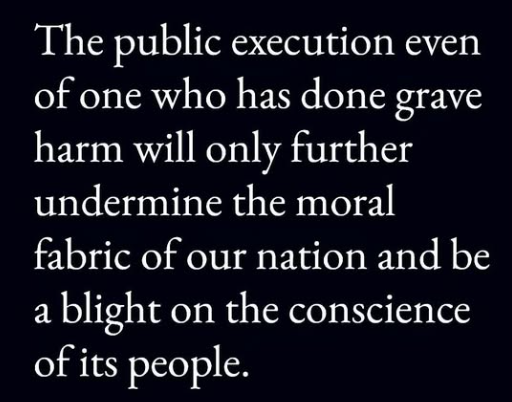 When I was young, I heard someone say, “The first execution this country televises will be the last one ever performed here.”
I think he was right at that time. You’d have millions of people watch that barbarism and realize that it was done in their name.
But today, we’re a far more insensitive, brutal, and stupid people that we were 50 years ago. If you doubt that, just look at the quality of the people at the top of the federal government–people like RFK, Jr., Hegseth, and Trump.



-
Climate Change1 year ago
Guest post: Why China is still building new coal – and when it might stop
-

 Greenhouse Gases2 years ago
嘉宾来稿:满足中国增长的用电需求 光伏加储能“比新建煤电更实惠”
-
Greenhouse Gases1 year ago
Guest post: Why China is still building new coal – and when it might stop
-

 Climate Change2 years ago
嘉宾来稿:满足中国增长的用电需求 光伏加储能“比新