

A used dog crate can save you $80 and keep a perfectly good piece of gear out of a landfill. A used food bowl with a few hairline scratches can seed your pet’s water with bacteria for months. The difference between a smart secondhand buy and a risky one usually comes down to two questions: what the item is made of, and whether you can actually clean it.
Americans spent $158 billion on their pets in 2025, and a growing share are looking for ways to spend less; the American Pet Products Association found roughly 22% of owners cut back on pet spending last year. Reused pet gear sits right at the intersection of saving money and cutting waste. But pets add a wrinkle that used furniture or clothing doesn’t: some of the germs that ride along on old bowls, beds, and toys are remarkably hard to kill, and the popular vinegar-and-soap cleaning advice doesn’t do what most people think it does.
This article contains affiliate links. If you purchase an item through one of these links, we receive a small commission that helps fund our Recycling Directory.
Why Buying Used Makes Sense
The resale habit that reshaped clothing is spreading to durable goods. Pet supplies are a natural fit: crates, carriers, and hard toys are built to last far longer than one animal’s use of them.
Keeping those items in circulation matters, because pet gear leans heavily on plastic. Pet products generate an estimated 300 million pounds of plastic waste a year in North America, according to Earth.Org, and most worn-out toys and beds aren’t recyclable through curbside programs. Every crate or bowl bought secondhand is one that didn’t have to be manufactured, and one that isn’t clogging a landfill.
A few manufacturers are building reuse into the product itself. West Paw runs a closed-loop reuse program called Join the Loop, which grinds down worn Zogoflex toys and remakes them, and Petmate now makes kennels from roughly 95% recycled polypropylene. When you can’t find a safe used version of what you need, durable, recycled-content, take-back-eligible gear is the next-best circular choice.

Start With the Material, Not the Price Tag
The single most useful rule for secondhand pet shopping is this: hard, nonporous items can be cleaned and disinfected; soft, porous ones often can’t. Stainless steel, glass, glazed ceramic, and smooth hard plastic have surfaces you can scrub and sanitize down to bare material. Fabric, foam, wood, rope, and sisal soak up saliva, urine, and whatever lived in them before, and no amount of wiping reaches all the way in.
Use this as a quick field guide when you’re standing over a yard-sale table:
| Item | Buy used with confidence | Think twice — or skip |
|---|---|---|
| Food & water bowls | Stainless steel, glass, or glazed ceramic with no cracks or chips | Any plastic bowl, or ceramic that is cracked, chipped, or crazed |
| Crates & carriers | Metal or hard-plastic crates with intact joints, latches, and no cracks | Cracked plastic, bent wire, loose handles; any airline travel crate (buy new) |
| Toys | Hard rubber and nylon chews with no gouges; treat-dispensers you can scrub | Chewed, gouged, or split toys; rope and plush toys from unknown homes |
| Beds & clothing | Machine-washable fabric you can run hot and dry on high heat | Foam beds you can’t fully wash; anything torn enough to be a choking hazard |
| Cat trees & scratchers | Frames you can wipe down; replaceable sisal or cardboard inserts | Carpet-covered posts saturated with another animal’s scent — usually not worth it |
| Aquariums & tanks | Glass tanks that hold water after a leak test; check seams and silicone seals | Tanks with cracked glass or failing seals; anything you can’t leak-test first |
| Leashes, collars & harnesses | Nylon or biothane with sound stitching and working hardware | Frayed webbing, cracked buckles, or rusted clasps that could fail |
Food and Water Bowls
Stainless steel, glass, and glazed ceramic bowls are ideal secondhand buys because they’re durable, and boiling water or a dishwasher cycle sanitizes them completely. Just check ceramic for cracks, chips, and crazing (that fine web of surface cracks in old glaze), any of which can trap bacteria and, in some imported glazes, leach lead.
Skip used plastic bowls entirely. Even hairline scratches in plastic harbor bacteria that can’t be removed by routine washing, and the bacteria that live in a pet’s mouth recolonize those grooves fast. For example, the Cornell Feline Health Center notes that 70–90% of cats carry Pasteurella multocida, a pathogen which can cause wound infections in people.
A new stainless bowl costs a few dollars and lasts for years, so this is one place not to economize.
Crates and Carriers
Metal and hard-plastic crates are among the best secondhand values in pet care. Inspect your options for cracks, sharp edges, missing screws, weak joints, and a carrying handle that’s loose or damaged. On wire crates, check that the door latches securely and the pan slides in flush.
Fabric crates need intact seams and zippers that fasten smoothly; a failed zipper on the road can lead to a lost pet. One firm exception: don’t buy a used airline travel crate. Most carriers require a new, IATA-compliant crate for animals flying as cargo, and a secondhand one may not meet current standards.
Beds, Clothing, and Soft Toys
Fabric items can be great buys if, and only if, you can launder them properly. Wash on the hottest setting the fabric allows and dry on high heat; a full hot wash-and-dry cycle kills fleas at every life stage, along with their eggs. Use a plant-based, pet-safe detergent so you’re not leaving fragrance and residue against your pet’s skin.
Inspect for rips and loose parts that could become choking hazards and be realistic about foam beds; if you can’t remove and wash the cover and you can’t wash the core, you can’t truly clean it.
Plush and rope toys are the least recommended soft items to buy used, because their fibers can hold saliva-borne bacteria and even worm eggs that laundering doesn’t fully kill.
Cat Trees, Scratchers, and the Scent Problem
Cats and dogs mark territory with scent, and a secondhand scratching post or cat tree can come pre-loaded with another animal’s signature. Some cats respond by refusing the item; others try to overwrite it, sometimes by urine-marking. Carpet- and sisal-covered posts are also porous and nearly impossible to disinfect.
Give any soft-covered item the sniff tests a cat would give it. If you can smell the previous animal, your pet certainly will. A better secondhand strategy is to buy a solid frame you can wipe down and add fresh sisal rope or replaceable cardboard inserts yourself.
The Cleaning Advice Most Guides Get Wrong
Here’s the part worth slowing down for. Soap and water, including natural Castile soap, and vinegar are fine for everyday grime and routine bacteria. Physically scrubbing an item removes most of what’s on it, and for gear coming from a healthy household, that plus a hot wash and sunlight is usually enough.
But vinegar is not a disinfectant against the pathogens that matter most in used pet gear. The viruses of real concern, including canine parvovirus and feline panleukopenia, are nonenveloped, meaning they lack the fatty outer coat that makes other germs easy to kill. That structure lets them resist most common cleaners, including vinegar and quaternary ammonium products, and survive in the environment for a long time.
|
The good news for anyone who came to secondhand shopping for environmental reasons: the most effective option is also one of the greenest. Accelerated hydrogen peroxide (AHP), which is sold to shelters and vets under the brand Rescue, kills parvovirus yet breaks down into water and oxygen, carries Green Seal and GREENGUARD Gold certifications, and doesn’t require the ventilation and skin protection bleach does. It’s the rare case where the responsible choice and the effective choice are the same bottle.
How Long Germs Actually Linger
Older advice often says viruses and parasites survive on secondhand items for “up to a month.” For the tough ones, that’s a serious underestimate. Canine parvovirus can persist in a contaminated environment for as long as seven months, according to the Indiana State Board of Animal Health, and veterinary sources put its outdoor survival at up to a year under cool, shaded conditions. Fleas and their eggs can stay viable in bedding for weeks. That long tail infection potential is why an effective disinfection method, not just “give it a wash,” matters.
When to Skip Secondhand Altogether
A few situations tilt the math toward buying new, or passing entirely:
- You have an unvaccinated puppy or kitten. Young animals are most vulnerable to exactly the viruses that resist cleaning. Until vaccinations are complete, favor new, easily sanitized gear.
- The item comes from a home with a known illness. If a previous pet had parvo, panleukopenia, ringworm, or a flea infestation, skip any porous item and disinfect hard ones with an AHP or bleach solution.
- You can’t clean it to the core. Foam beds, saturated cat trees, and gouged chew toys can’t be reliably disinfected. When in doubt, they go.
- The damage is structural. Cracked crates, frayed harness webbing, failing tank seals, and chipped ceramic aren’t bargains, they’re hazards that can harm your pet.
Products Worth Knowing About
A short, practical kit makes secondhand pet shopping safe without much fuss.
- Accelerated hydrogen peroxide disinfectant (e.g., Rescue). The eco-forward way to kill parvovirus and panleukopenia on hard, nonporous gear.
- Enzymatic odor cleaner. Breaks down the proteins in urine and scent marks that plain soap leaves behind, which is useful for reclaiming a lightly-marked crate or hard scratcher frame.
- Stainless steel bowls. When a used bowl is plastic or questionable, a new stainless set is inexpensive, dishwasher-safe, and effectively permanent.
- A fine-tooth flea comb. A dollar-store tool that tells you fast whether a secondhand bed or blanket is carrying hitchhikers.
- Durable, recycled-content toys (e.g., West Paw Zogoflex). For the soft-toy gap secondhand can’t safely fill, and they’re take-back recyclable at end of life.
What You Can Do
- Shop by material first. Reach for stainless steel, glass, glazed ceramic, and smooth hard plastic; be cautious with fabric, foam, wood, rope, and sisal.
- Inspect before you buy. Check for cracks, sharp edges, frayed webbing, failed zippers, and chewed-through spots. Structural damage is a dealbreaker.
- Match the cleaning method to the risk. Hot wash and dry for fabric; scrub-and-sanitize for hard items. For anything from a home with illness, use an AHP or bleach solution at full contact time.
- Know when to buy new. Airline crates, food bowls to replace plastic, and gear for unvaccinated young animals are worth buying new.
- Close the loop at the other end. When your own pet gear wears out, donate what’s still usable, and check Earth911’s recycling search for options on what isn’t.
Related Reading
- A Guide to Safe and Sustainable Pet Products
- Eco-Friendly Laundry Detergents
- Reduce Rover’s CO2 Pawprint: Fruits and Veggies Dogs Enjoy
Editor’s Note: Originally published by Tammi Avallone, a writer and managing editor of FiveBarks.com, on June 30, 2022, this article was substantially updated in July 2026.
The post How Safe Are Secondhand Used Pet Supplies? appeared first on Earth911.
https://earth911.com/living-well-being/are-used-pet-supplies-save/

There’s something undeniably special about wearing uniquely handcrafted, fair trade jewelry that you can know was made slowly and thoughtfully with care. Equally special is wearing an elevated set of jewelry crafted with recycled materials and sustainable processes.
Whether you’re looking for an investment piece or more affordable pieces, there are options for any budget on this list. The aesthetics of these fair trade and sustainable jewelry brands also vary, so you’ll also be able to discover an ethical brand that matches your unique style.
What is Fair Trade Jewelry?
Fair trade can both be a general term used to describe a brand’s sourcing practices — like direct relationships with artisan cooperatives, wages above local standard rates, and safe working conditions — or a third-party “Fair Trade” verification through an organization like Fair Trade Federation, Fair Trade USA, or World Fair Trade Organization. When a brand doesn’t have a certification, we verify a brand’s practices by their own published information.
In the cases where brands do go the extra mile and get a third-party verification for their fair trade practices, we’ve noted it directly in their entries.
Note that this guide includes affiliate links and partners. As always, we only feature brands that meet high standards for responsibility we love, and that we think you’ll love too!
2. Ana Luisa
Best for: affordable everyday jewelry
Conscious Qualities: Recycled Gold, Lab-Grown Diamonds, Small-Batch Production, Direct-to-Consumer
Ana Luisa creates stunning, elegant jewelry from responsibly-sourced materials including 100% recycled gold and lab-grown diamonds. The sustainable jewelry brand also produces in small batches to minimize waste.
By using a direct-to-consumer model, Ana Luisa is able to provide luxury, high-quality jewelry at accessible prices.

3. Monica Vinader
Best for: recycled demi-fine jewelry
Conscious Qualities: Woman-Founded, Recycled Silver & Gold Vermeil, Traceable Gemstones, Lab-Grown & Conflict-Free Diamonds, Supply Chain Transparency
Price Range: $85 (studs) – $2,495 (diamond ring)
British jewelry brand Monica Vinader was one of the first brands to meet the gap between fashion jewelry and fine jewelry with their “demi fine” jewelry. The women-founded brand has necklaces, earrings, bracelets, and rings crafted from 100% recycled sterling silver and gold vermeil, fully traceable gemstones, and lab-grown or conflict-free diamonds. Monica Vinader also launched Product Passports, taking an active effort towards full supply chain transparency.

4. WorldFinds
Best for: unique statement jewelry with a story
Conscious Qualities: Fair Trade Verified, Upcycled Materials, Artisan-Made
WorldFinds provides sustainable employment and just wages for hundreds of women artisans in India and Bali. These artisans handcraft both sleek metal fair trade jewelry and unique recycled Kantha pieces. WorldFinds is Verified by the Fair Trade Federation, which assesses members against fair trade principles including fair wages, safe conditions, and transparent supply chains.
Plus WorldFinds’ signature Kantha jewelry is made from upcycling materials: wood scraps from a furniture factory and locally sourced Kantha fabric remnants.

5. Astor + Orion
Best for: drop earrings and charm necklaces with symbolism
Conscious Qualities: Certified Ethical Factory, Recycled Materials, Designed for Recyclability, Repair Program
Ethical jewelry brand Astor + Orion sources their jewelry from a factory with multiple certifications ensuring worker safety, fair production practices, and responsible environmental management. Astor + Orion’s stunning jewelry is made from recycled materials and designed in a way to make it easily recyclable! Their pieces also come with a quality assurance — the brand will repair any piece within 6 months of purchase.

6. Laura Elizabeth
Best for: non-toxic jewelry in organic shapes
Conscious Qualities: Locally Sourced Recycled Metals, Woman-Owned, Fair Wages, Safe Working Conditions
Price Range: $45 – $330
Crafted from recycled metals sourced locally in LA, Laura Elizabeth creates stand-out sustainable jewelry. All of the brand’s jewelry is sourced ethically from a small, woman-owned studio in Los Angeles that ensures reasonable working hours (35 hr/week), fair wages, and safe working conditions (such as proper ventilation). Check out more on Laura Elizabeth in this post!
The jewelry is also non-toxic, free of cadmium or lead.

7. Ten Thousand Villages
Best for: giftable fair trade jewelry
Conscious Qualities: Fair Trade Production, Artisan-Made
Price Range: $6 – $175
Founded in 1946, Ten Thousand Villages is one of the fair trade pioneers and a founding member of the World Fair Trade Organization (WFTO), the global network that verifies fair trade practices across its member organizations.
They’ve developed relationships with artisans around the world, providing valuable economic opportunities for thousands of makers in 30 countries around the world. Their marketplace has handmade necklaces, earrings, bracelets, and rings, along with a variety of other fair trade goods.
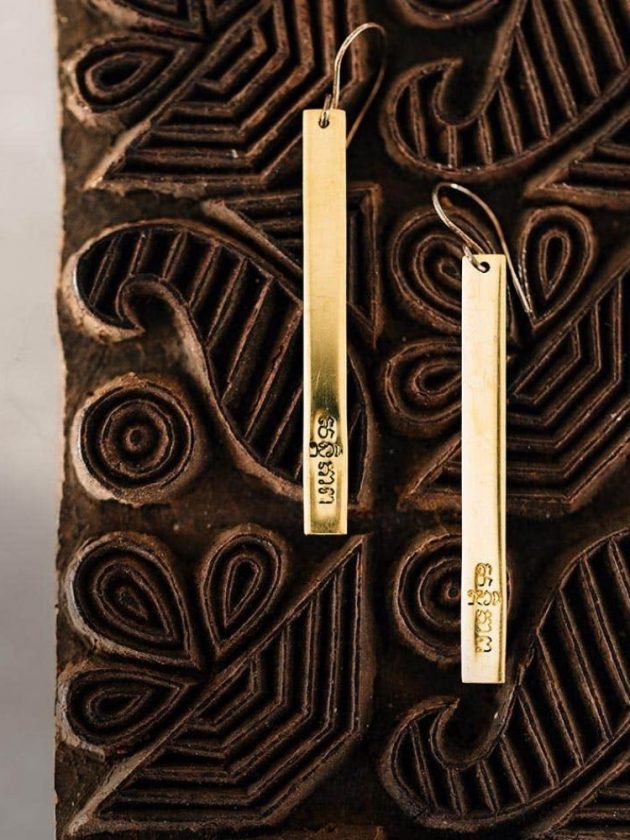
8. Edge of Ember
Best for: gemstone jewelry
Conscious Qualities: Recycled Gold & Silver, Artisan-Made, Ethical Production
Price Range: $49 (ear cuff) – $2,730 (diamond tennis bracelet)
Edge of Ember’s timeless jewelry is responsibly crafted by makers working in artisan groups and small-scale factories. Their delicate necklaces, bracelets, rings, and other pieces are crafted by skilled artisans in India, Hong Kong, Germany, and Thailand. The brand carries out independent social audits to ensure ethical working conditions and environmental responsibility.
Edge of Ember has a wide selection of recycled gold and silver rings, bracelets, and necklaces adorned with stunning gemstones, including many birthstone jewelry options perfect for gifting.

9. Aurate
Best for: ethical diamond fine jewelry
Conscious Qualities: 100% Recycled Gold, Lab-Grown & Conflict-Free Diamonds, Vintage Collection
Price Range: $18 (stainless steel chain) – $19,000 (diamond tennis necklace)
Responsibly-sourced quality jewelry — that’s Aurate’s promise. The jewelry brand’s sleek, timeless pieces are thoughtfully made by seventh-generation craftspeople using 100% recycled gold and lab-grown or conflict-free diamonds.
Aurate also has a curated collection of vintage fine jewelry from cocktail watches to signet rings up to 50% off.

10. SOKO
Best for: modern, minimalist artisan-made jewelry
Conscious Qualities: Above-Market Artisan Wages, Black-Owned
Price Range: $78 – $298
SOKO is an innovative Black-owned ethical jewelry brand using mobile tools to bridge the barriers for artisan entrepreneurs in Kenya. In partnership with SOKO, independent artisans can operate a “virtual factory”, earning 5x more than an average artisan workshop in their local areas.
The jewelry is made with 24K gold or silver-plated brass — an affordable metal that also happens to consist of 90% recycled content on average. Other materials include reclaimed horn and bone, locally-sourced teak wood offcuts, and ceramic beads made by a fair trade women’s collective in Kenya.

10. Raven + Lily
Best for: affordable artisan jewelry
Conscious Qualities: Fair Trade Verified, Artisan-Made, Women-Led
Price Range: $40 – $240
Raven + Lily is an ethical fashion and jewelry brand verified Fair Trade by the Fair Trade Federation. The women-led brand partners with artisan women around the world who use natural materials to craft both classic, elegant pieces and statement jewelry.

11. NAKIIT
Best for: one-of-a-kind, solo-handcrafted pieces
Conscious Qualities: Made-to-Order, Recycled Silver & Gold, Zero-Waste Scrap Recycling
Price Range: $21 – $485
As a small, slow-minded jewelry brand, NAKIIT’s founder + owner handcrafts each piece with intention. In fact, every piece of jewelry the brand sells is made by the founder herself!
Nearly all of NAKIIT’s ethically-made jewelry is either made-to-order or one-of-a-kind, ensuring a minimal ecological impact and the highest attention to quality.
As if we could love this brand even more, NAKIIT also sources recycled sterling silver and gold, plus recycles any remaining metal scraps or dust after production.