

Welcome to Carbon Brief’s DeBriefed.
An essential guide to the week’s key developments relating to climate change.
This week
COP16 kicks off
HOLA CALI: The largest ever UN biodiversity summit, COP16, is officially underway in Cali, Colombia. At the talks, countries will grapple with how to put the Kunming-Montreal Global Biodiversity Framework – often described as the “Paris Agreement for nature” – into action, alongside debates on finance for developing countries and how to best share the benefits from genetic information.
TRACKING NEGOTIATIONS: Carbon Brief has produced an interactive grid of where each party stands on the key negotiating issues and a live tracker of the texts under negotiation. On Tuesday, Carbon Brief’s team of five journalists on the ground in Cali held an online webinar on the key issues up for discussion at the summit. A recording is available.
Around the world
- CLIMATE PLANS: The UK must decide “how far and how fast” to cut emissions amid preparations to release a new national climate pledge at the COP29 climate summit in November, the Guardian reported. Carbon Brief understands that the US, Brazil and UAE are planning to do the same, three months before the deadline.
- LOBBYING: An “influential” group of 30 oil and gas producers drafted “detailed plans” for “dismantling” key US climate rules after the upcoming presidential election, the Washington Post reported. Members of the group were “aggressively pursued for campaign cash by Donald Trump”, the newspaper noted.
- CUBA CHAOS: At least six people were killed as Hurricane Oscar brought heavy rainfall to Cuba, according to the New York Times.
- ENERGY BOOST: South-east Asia must accelerate clean-energy investments to $190bn by 2035 – around five times current levels – to meet climate goals, according to a new International Energy Agency (IEA) report covered by Reuters.
3,071
The number of “square brackets” remaining in negotiating documents at COP16, as of Thursday night, according to Carbon Brief’s COP16 text tracker. (Square brackets denote areas of disagreement in UN texts. They must all be resolved before countries can reach consensus.)
Latest climate research
- The extreme floods that hit Sudan in August were made nearly 20% more intense by human-driven climate change, according to a new World Weather Attribution analysis.
- Research in the Proceedings of the National Academy of Sciences found that a 1% increase in deforestation in the Brazilian Amazon was associated with a 6.3% jump in malaria cases the following month.
- Over the past 30 years, polar bears have been increasingly exposed to a range of pathogens, due in part to the loss of sea ice habitat and rapid warming in the Arctic, a new PLOS One study said.
(For more, see Carbon Brief’s in-depth daily summaries of the top climate news stories on Monday, Tuesday, Wednesday, Thursday and Friday.)
Captured

Greenhouse gas emissions remain far off track to meet global climate goals, according to the UN Environment Programme’s (UNEP) 2024 emissions gap report covered by Carbon Brief. The chart above, based on a figure from the report, shows how emissions will change by 2035 under current policy and under current national climate plans, known as “nationally determined contributions” (NDCs). The chart compares this with the emissions reductions needed by 2035 to put the world on track with a scenario where global temperatures are kept to 1.5C (red) or 2C (pale red).
Spotlight
Where countries stand on reversing nature loss
This week, Carbon Brief reports on how countries plan to get back on track after the majority of them missed a deadline to release new nature pledges ahead of COP16.
In a cold and snowy Montreal in the depths of December 2022, countries agreed to the landmark Kunming-Montreal Global Biodiversity Framework (GBF), often referred to as the “Paris Agreement for nature”.
The GBF is a list of four goals and 23 targets that collectively aim to halt and reverse biodiversity loss by 2030 and to put Earth “in harmony with nature” by 2050.
At the Montreal talks, countries pledged to release new national plans to lay out how they plan to implement the goals and targets within their borders.
These plans are known as national biodiversity strategies and action plans, or “NBSAPs”.
Under the GBF and its underlying documents, countries agreed to submit new NBSAPs by the COP16 biodiversity summit, which is currently taking place in Cali, Colombia.
Carbon Brief analysis shows that just 30 countries and the EU met the deadline to submit an updated NBSAP ahead of COP16.
Since then, a further five countries have published new NBSAPs, including COP16 host Colombia.
That leaves 162 parties that are yet to submit updated NBSAPs.

Countries that were unable to meet the deadline to submit NBSAPs ahead of COP16 were requested to instead submit national targets. These submissions simply list biodiversity targets that countries will aim for – without an accompanying plan for how they will be achieved.
As of 25 October, 113 parties had submitted national targets.
Next steps
One of the major tasks for negotiators in Cali will be to decide how to move forward after the majority of countries failed to produce new NBSAPs ahead of the talks.
On Thursday, a draft decision submitted for review by COP16 president and Colombian environment minister Susana Muhamad laid out the next steps for countries when it comes to NBSAPs.
The text still contains some brackets, meaning countries will need to negotiate the finer details before it can be officially adopted.
The draft “urges” countries that have not yet done so to release new NBSAPs “as soon as possible”. (In UN language terms, “urges” is stronger than “invites” or “encourages”, but not as strong as “requests” or “instructs”.)
Eyebrows may be raised at the failure to include a specific timeframe for when laggard countries should submit new NBSAPs.
One NGO observer told Carbon Brief that they had hoped to see the language say “as soon as possible, but no later than the end of 2025”, adding:
“Generally having a clear deadline is good to keep countries to account. ‘As soon as possible’ is commonly understood as ‘really really soon’ and we can only hope that parties see it that way too.”
The text also “requests” the Global Environment Facility (GEF), a major multilateral environmental fund, “provide[s] timely support to all eligible parties, aligned with national circumstances and needs, upon request, to enable them to” release new NBSAPs.
It comes after developing countries said that a lack of timely funding from the GEF had prevented them from being able to produce new biodiversity plans on time.
Watch, read, listen
‘BLENDED’ FINANCE: Writing in Le Monde ahead of COP29, Mette Frederiksen and Mia Mottley, the prime ministers of Denmark and Barbados, respectively, argued in favour of scaling up state-backed “blended” finance instruments to channel private investment for climate action.
COP16 OUTSIDER: Vox examined why the US is the only country in the world, other than the Vatican, to refuse to join the UN biodiversity convention.
PANTANAL JAGUARS: A podcast by the Brazilian Report covered how extreme fires in Brazil’s Pantanal wetlands are affecting jaguars, “the biome’s most emblematic species”.
Coming up
- 21-26 October: World Bank and IMF annual meetings, Washington DC
- 21 October-1 November: UN Biodiversity Conference COP16, Cali, Colombia
- 25-28 October: International Union for the Conservation of Nature (IUCN) Species Survival Commission Leaders’ Meeting 2024, Abu Dhabi, United Arab Emirates
Pick of the jobs
- California Governor’s Office of Land Use and Climate Innovation, senior climate research specialist | Salary: $6,963-$8,650 per month. Location: Sacramento, California
- Australian Government Department of Climate Change, Energy, the Environment and Water, ember vacancy on the Great Artesian Basin Stakeholder Advisory Committee | Salary: Unknown. Location: Remote, Australia
- Caribbean Community Climate Change Center, project development specialist | Salary: Unknown. Location: Belize
DeBriefed is edited by Daisy Dunne. Please send any tips or feedback to debriefed@carbonbrief.org.
This is an online version of Carbon Brief’s weekly DeBriefed email newsletter. Subscribe for free here.


The post DeBriefed 25 October 2024: COP16 kicks off; ‘Quantum leap’ needed for 1.5C; Where countries stand on reversing nature loss appeared first on Carbon Brief.

When José Antonio Kast took office as Chile’s new president in March, one of his first moves was to put the brakes on plans to expand two protected marine parks – raising doubts about the country’s high-profile bid to host the headquarters of the High Seas Treaty.
But during the UN General Assembly last month, the right-wing leader reaffirmed his leftist predecessor’s ambition for Chile to host the landmark global pact, which came into effect in January and provides a legal framework to protect the waters of the high seas beyond national jurisdiction that cover about two-thirds of the world’s oceans.
Hailing the country’s “maritime vocation”, Kast’s government said the bid to host the treaty’s secretariat in the port city of Valparaíso was state policy and testament to its commitment to multilateralism.
“For the government of Chile, it is of high interest to achieve this recognition, and we will carry out all the efforts to obtain the necessary support,” Foreign Minister Francisco Pérez Mackenna was quoted as saying by local media.
-
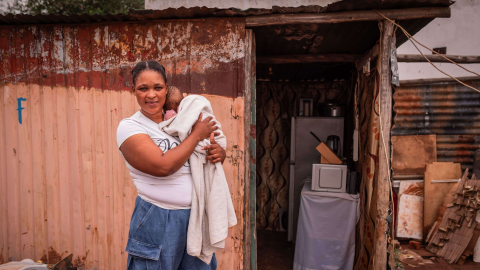
At pre-COP, UN climate chief warns of heat threat to mothers and babies
The spotlight on maternal health came on the first day of the pre-COP31 meeting in Fiji, where Pacific concerns are set to top the agenda as ministers gather for talks -
Big banks behind “net zero” alliance continued lending to coal firms
New data shows coal finance has stayed steady at the global level since 2022, as international efforts to cut the ties between lending and emissions faded -
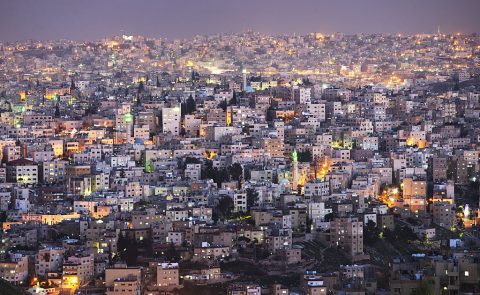
Jordan’s mega-plan for water security risks locking in fossil gas demand
A giant desalination plant will help Jordan confront water scarcity, but solar power’s limited role in the energy-hungry project has raised questions about how climate adaptation finance is being spent

Tough competition from Chinese, Belgian bids
But to garner the votes it needs, Chile must fend off competing bids by Belgium – which has proposed its well-connected capital, Brussels – and China, whose well-funded bid includes the provision of free premises in the coastal city of Xiamen and five years of free utility costs.
Parties to the treaty, formally called the Agreement on Marine Biological Diversity of Areas Beyond National Jurisdiction (BBNJ), will choose the headquarters at their first summit (COP1), in New York from January 11 to January 22, 2027. They will seek consensus, falling back on a two-thirds majority in successive secret ballots.
Chile has offered to provide a restored waterside warehouse “at its own expense” as office space, pitching itself to developing countries as a Global South alternative to Europe-centred Brussels. Among richer countries, it is promoting its democratic credentials and greater transparency as an alternative to China.
Rolling back environmental safeguards at home?
While the South American country remains the top pick among environmental campaigners and other civil society groups, critics of Kast’s government say recent policy moves may make it harder for the country to garner the support it needs.
On March 12, the day after Kast took office, the Environment Ministry withdrew 43 decrees awaiting legal approval, including a push to expand the Mar de Juan Fernández and Nazca-Desventuradas marine parks – vast protected areas in Chile’s Pacific Ocean waters. Both remain under review, the ministry told Climate Home News.
The decrees also included an emission standard for coal power plants and regulations for Chile’s new biodiversity and protected areas service.
A month after holding up the decrees, Kast questioned aspects of Chile’s urban wetlands protection law, suggesting it was sometimes an unjustified obstacle to much-needed housing development, and his administration has also sought to ease the rules on salmon farming in the world’s second-largest producer.
In August, the Constitutional Court struck down the salmon farming reform after a challenge by opposition lawmakers and warnings from green groups including Greenpeace, which said it could help farms relocate into protected areas such as the Kawésqar National Reserve.
Valparaíso mayor Camila Nieto, from former leftist President Gabriel Boric’s party, backs the bid to host the High Seas Treaty, but said she hoped “the government’s support also translates into public policies consistent with the goals of protecting and conserving the oceans”.
“The decisions a country makes on environmental matters can influence international perceptions of its commitment to protecting the oceans. That is something we cannot ignore,” Nieto told Climate Home News.

China’s bid stirs concerns over data access, fishing
Chile’s past record on marine protection – it has protected 43% of its jurisdictional waters – could yet give it an edge.
“Chile deserves it for its conservation record as a state. For more than 15 years Chile has been following this path,” Liesbeth van der Meer, executive director at conservation group Oceana in Chile, told Climate Home News.
Concerns in some quarters about the rival bid by China – for example, over a potential conflict of interest due to the vast Chinese fishing industry – may also weigh in Chile’s favour, experts say.
Chinese-flagged vessels did about 30% of detected high seas fishing between 2022 and 2024, according to an Oceana analysis of Global Fishing Watch data. China also sponsors five of the International Seabed Authority’s 31 deep-sea mining exploration contracts, more than any other country.
The secretariat would host sensitive marine data, making transparency paramount, experts say.
China says hosting the secretariat in Xiamen would help make the treaty more globally representative, fostering cooperation between rich and developing countries and aiding equitable access to marine science and technology.
Wang Yi, China’s minister of foreign affairs, said in a statement that the country has “all along championed true multilateralism” and “firmly defended” UN institutions. Given Xiamen’s $38-billion ocean industry, the city lives up to the treaty’s “significance and promising future”, he added.
Meanwhile, Chile is proposing the treaty’s first high seas marine protected area for the Salas y Gómez and Nazca ridges, a chain of more than 110 seamounts stretching about 4,000 km from off Peru to Rapa Nui (Easter Island) that is rich in endemic fish and other marine species.
The ridges are “a true oasis of productivity”, said Carlos Gaymer, director of the Centre for Ecology and Sustainable Management of Oceanic Islands at Universidad Católica del Norte and co-author of a 2021 scientific review of the area.
The water is so clear that phytoplankton thrive around 200 metres down, feeding zooplankton, small fish and, up the chain, sharks and seabirds. Whales, turtles and sharks use the ridges as “a real highway” across the Pacific, Gaymer said. Parts of the Nazca ridge are likely nursery grounds for jack mackerel and swordfish.
Chile has already asked the body that regulates the industry in the area – the South Pacific Regional Fisheries Management Organisation (SPRFMO) – to close the ridges to all fishing vessels. According to Chilean data, more than 80% of fishing in the area involves Chinese vessels.
Meeting on the Chilean request in early September, SPRFMO’s scientific committee agreed only to recommend closing the area to bottom fishing. SPRFMO’s commission will take the final decision at its next meeting, in early 2027.
For Gaymer, Chile’s push to close the area to fishing should be seen as a “starting point” for the treaty proposal.
“Every time there’s a new expedition, species new to science appear,” Gaymer said. “If you don’t protect areas like these … those species simply disappear from the planet.”
The post Race to host High Seas Treaty HQ heats up as Chile reaffirms bid appeared first on Climate Home News.
Race to host High Seas Treaty HQ heats up as Chile reaffirms bid
Mohamed Adow is the founder and director of Power Shift Africa.
What does it mean to ask a continent to adapt to a crisis it did little to create? For Africa, that question has stopped being philosophical as it is answered every day in flooded communities, failed harvests, disappearing livelihoods and public budgets stretched by disasters they cannot afford.
Africa produces a negligible share of global emissions, but between 1970 and 2021 it accounted for around 35% of climate-related deaths worldwide. The continent is therefore confronting a brutal contradiction that is exemplified by the fact that those who have contributed least to the climate crisis are carrying some of its heaviest costs.
And that explains why, for us, it is worrying that much of the climate debate treats adaptation as a technical exercise. Build better infrastructure, they say. Improve early-warning systems, they urge. Develop drought-resistant crops, they preach. Strengthen disaster preparedness, they yell. All of these things matter, but they do not answer the harder question of why some people and countries are so much more vulnerable in the first place.
At pre-COP, UN climate chief warns of heat threat to mothers and babies
That is the question we have spent the last couple of years trying to answer, and it culminates in our recently launched thought-provoking report that shows how Africa’s vulnerability is not an accident of geography, but has instead been shaped by history, economics and power.
Colonial extraction, unequal development, debt dependency, global economic asymmetries and exclusion from international decision-making have all constrained the resources and choices available to African countries, and climate change is intensifying those existing inequalities, shows the report, titled “A Just Transition for Adaptation: A Framework and Vision for Africa”.
Widening adaptation finance gap
I say it is ‘thought-provoking’ because it asks us to rethink adaptation itself – not as a collection of projects designed to help people cope with climate impacts, but as a question of justice, power and structural change.
That distinction might not sit well with some people, but for Africa it matters, because there is a danger in asking vulnerable countries simply to become more “resilient”. Resilient against what? How can you ask people to toughen up while letting them be strangled by a system that continues to reproduce the very inequalities that have made resilience so difficult?
If you want to know where the problem is, see where the money is coming from and where it is going. That becomes quite stark when you consider the fact that Africa’s annual adaptation needs are close to $70 billion but its adaptation finance flows are only aro