

Welcome to Carbon Brief’s DeBriefed.
An essential guide to the week’s key developments relating to climate change.
This week
EU easing up
HITTING THE BREAKS: The EU “walked back” its target to ban the sale of petrol and diesel cars by 2035, “permitting some new combustion engine cars”, reported Agence-France Presse. Under the original plan, the bloc would have had to cut emissions entirely by 2035 on new vehicles, but will now only have to cut emissions by 90% by that date, compared to 2021 levels. However, according to the Financial Times, some car manufacturers have “soured” on the reversal.
ADJUSTING CBAM: Meanwhile, the Financial Times reported that the EU is making plans to “close loopholes” in the bloc’s carbon border adjustment mechanism (CBAM) before it goes into effect in January. CBAM is set to be the world’s first carbon border tax and has drawn ire from key trading partners. The EU has also finalised a plan to delay its anti-deforestation legislation for another year, according to Carbon Pulse.
Around the world
- NCAR NO MORE: The Trump administration is moving to “dismantle” the National Center for Atmospheric Research in Colorado, said USA Today, describing it as “one of the world’s leading climate research labs”.
- DEADLY FLOODS: The deadliest flash flooding in Morocco in a decade killed “at least” 37 people, while residents accused the government of “ignoring known flood risks and failing to maintain basic infrastructure”, reported Radio France Internationale.
- FAILING GRADE: The past year was the “warmest and wettest” ever recorded in the Arctic, with implications for “global sea level rise, weather patterns and commercial fisheries”, according to the US National Oceanic and Atmospheric Administration’s 2025 Arctic report card, covered by NPR.
- POWER TO THE PEOPLE: Reuters reported that Kenya signed a $311m agreement with an African infrastructure fund and India’s Power Grid Corporation for the “construction of two high-voltage electricity transmission lines” that could provide power for millions of people.
- BP’S NEW EXEC: BP has appointed Woodside Energy Group’s Meg O’Neill as its new chief executive amid a “renewed push to…double down on oil and gas after retreating from an ambitious renewables strategy”, said Reuters.
29
The number of consecutive years in which the Greenland ice sheet has experienced “continuous annual ice loss”, according to a Carbon Brief guest post.
Latest climate research
- Up to 4,000 glaciers could “disappear” per year during “peak glacier extinction”, projected to occur sometime between 2041 and 2055 | Nature Climate Change
- The rate of sea level rise across the coastal US doubled over the past century | AGU Advances
- Repression and criminalisation of climate and environmentally focused protests are a “global phenomena”, according to an analysis of 14 countries | Environmental Politics
(For more, see Carbon Brief’s in-depth daily summaries of the top climate news stories on Monday, Tuesday, Wednesday, Thursday and Friday.)
Captured
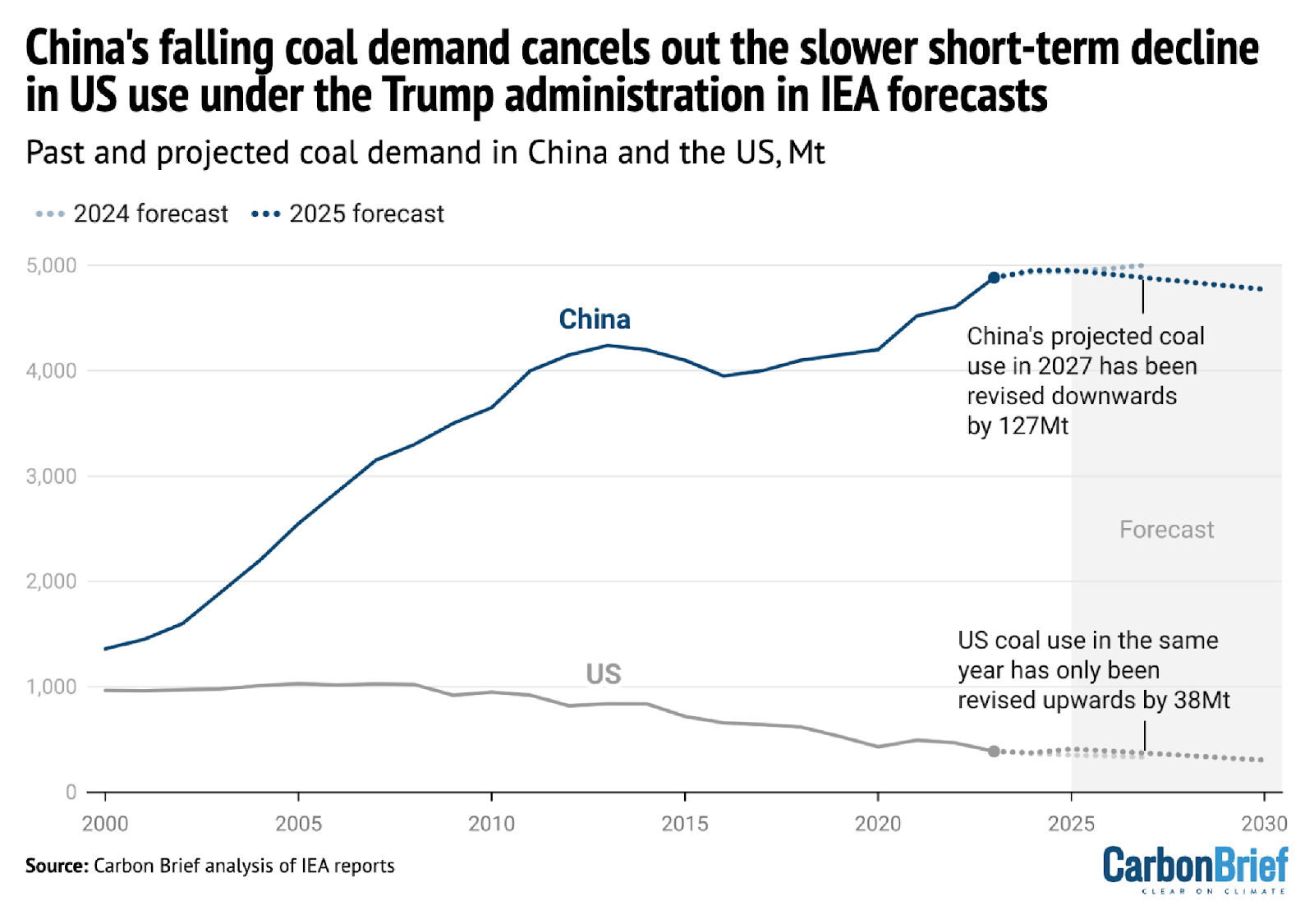
The latest coal market report from the International Energy Agency said that global coal use will reach record levels in 2025, but will decline by the end of the decade. Carbon Brief analysis of the report found that projected coal use in China for 2027 has been revised downwards by 127m tonnes, compared to the projection from the 2024 report – “more than cancelling out the effects of the Trump administration’s coal-friendly policies in the US”.
Spotlight
What climate scientists are curious about
This week, Carbon Brief spoke to climate scientists attending the annual meeting of the American Geophysical Union in New Orleans, Louisiana, about the most interesting research papers they read this year.
Their answers have been lightly edited for length and clarity.
Dr Christopher Callahan, assistant professor at Indiana University Bloomington
The most interesting research paper I read was a simple thought experiment asking when we would have known humans were changing the climate if we had always had perfect observations. The authors show that we could have detected a human influence on the climate as early as the 1880s, since we have a strong physical understanding of how those changes should look. This paper both highlights that we have been discernibly changing the climate for centuries and emphasises the importance of the modern climate observing network – a network that is currently threatened by budget cuts and staff shortages.
Prof Lucy Hutyra, distinguished professor at Boston University
The most interesting paper I read was in Nature Climate Change, where the researchers looked at how much mortality was associated with cold weather versus hot weather events and found that many more people died during cold weather events. Then, they estimated how much of a protective factor in the urban heat island is on those winter deaths and suggested that the winter benefits exceed the summer risks of mitigating extreme heat, so perhaps we shouldn’t mitigate extreme heat in cities.
This paper got me in a tizzy…It spurred an exciting new line of research. We’ll be publishing a response to this paper in 2026. I’m not sure their conclusion was correct, but it raised really excellent questions.
Dr Kristina Dahl, vice president for science at Climate Central
This year was when we saw source attribution studies, such as Chris Callahan‘s, really start to break through and be able to connect the emissions of specific emitters…to the impact of those emissions through heat or some other sort of damage function. [This] is really game-changing.
What [Callahan’s] paper showed is that the emissions of individual companies have an impact on extreme heat, which then has an impact on the GDP of the countries experiencing that extreme heat. And so, for the first time, you can really say: “Company X caused this condition which then led to this economic damage.”
Dr Antonia Hadjimichael, assistant professor at Pennsylvania State University
It was about interdisciplinary work – not that anything in it is ground-shakingly new, but it was a good conversation around interdisciplinary teams and what makes them work and what doesn’t make them work. And what I really liked about it is that they really emphasise the role of a connector – the scientist that navigates this space in between and makes sure that the things kind of glue together…The reason I really like this paper is that we don’t value those scientists in academia, in traditional metrics that we have.
Dr Santiago Botía, researcher at Max Planck Institute for Biogeochemistry
The most interesting paper I’ve read this year was about how soil fertility and water table depth control the response to drought in the Amazon. They found very nicely how the proximity to soil water controls the anomalies in gross primary productivity in the Amazon. And, with that methodology, they could explain the response of recent droughts and the “greening” of the forest during drought, which is kind of a counterintuitive [phenomenon], but it was very interesting.
Dr Gregory Johnson, affiliate professor at the University of Washington
This article explores the response of a fairly coarse spatial resolution climate model…to a scenario in which atmospheric CO2 is increased at 1% a year to doubling and then CO2 is more gradually removed from the atmosphere…[It finds] a large release of heat from the Southern Ocean, with substantial regional – and even global – climate impacts. I find this work interesting because it reminds us of the important – and potentially nonlinear – roles that changing ocean circulation and water properties play in modulating our climate.
Cecilia Keating also contributed to this spotlight.
Watch, read, listen
METHANE MATTERS: In the Guardian, Barbados prime minister Mia Mottley wrote that the world must “urgently target methane” to avoid the worst impacts of climate change.
CLIMATE WRAPPED: Grist summarised the major stories for Earth’s climate in 2025 – “the good, the bad and the ugly”.
COASTING: On the Coastal Call podcast, a biogeochemist spoke about “coastal change and community resilience” in the eastern US’s Long Island Sound.
Coming up
- 27 December: Cote D’Ivoire parliamentary elections
- 28 December: Central African Republic presidential and parliamentary elections
- 28 December: Guinean presidential election
Pick of the jobs
- BirdLife International, forest programme administrator | Salary: £28,000-£30,000. Location: Cambridge, UK
- World Resources Institute, power-sector transition senior manager | Salary: $116,000-$139,000. Location: Washington DC
- Fauna & Flora, operations lead for Liberia | Salary: $61,910. Location: Monrovia, Liberia
DeBriefed is edited by Daisy Dunne. Please send any tips or feedback to debriefed@carbonbrief.org.
This is an online version of Carbon Brief’s weekly DeBriefed email newsletter. Subscribe for free here.


The post DeBriefed 19 December 2025: EU’s petrol car U-turn; Trump to axe ‘leading’ research lab; What climate scientists are reading appeared first on Carbon Brief.

Climate Change
After a week of plenty of activity and drama for Greenpeace at sea, I felt like writing to you on a much quieter theme…
Do you have a favourite book, poem or story about the ocean?
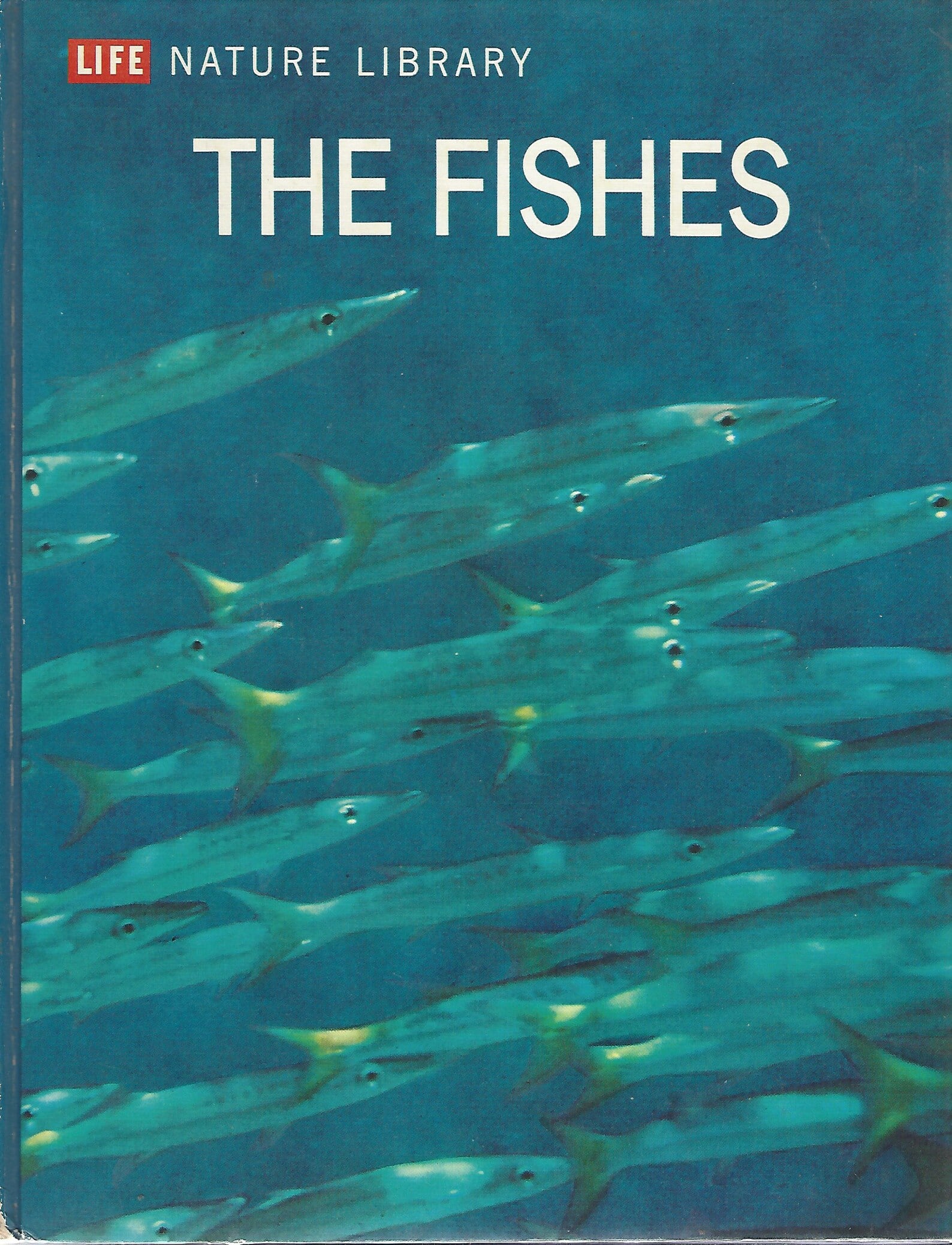
When I was very small, it was the TimeLife book of The Fishes, by F. D. Ommanney, which I remember endlessly poring over, my child’s mind gripped, in total fascination. The cover illustration showed a shoal of barracuda, mid-water and heading upwards, lit up as an iridescent blue by a column of sunlight. Oddly, it is only the cover and the illustrations of the deep sea creatures which I now remember—but I loved that book, as the weakened spine, blunted pages and dog-eared corners attested.
The Fishes has been on my mind recently, because I’ve been working with some dear friends on our own illustrated oceans book, to be published by Upswell Publishing. The book is called Scott Reef: Like Nowhere Else on Earth, and I want to share with you a bit of the story behind its creation.
Scott Reef is absolutely magnificent: Australia’s largest freestanding oceanic reef, brimming with life, including rare and threatened species such as a genetically distinct population of green sea turtles, pygmy blue whales and the wonderfully elegant dusky sea snake. But Scott Reef isn’t near our capital cities; it is way off the north-west coast of WA. And it is threatened with devastation by Woodside, which wants to drill up to 57 toxic wells at the Reef for its vast, dirty Browse gas project.
One of the main challenges in the fight to save Scott Reef from being turned into an industrialised gas zone by Woodside is bringing this incredible location to life for people who haven’t actually experienced it first hand. Because despite its ecological significance and dazzling beauty, ‘Scott Reef’ is also—at least not yet—exactly a household name.
To help get over this barrier, Greenpeace has enabled a number of photographers to travel to Scott Reef by boat (including the Rainbow Warrior) to document its astonishing diversity of colour and life. We then brought these images together in a remarkable photobook, produced by our talented in-house team, which we’ve been putting into the hands of as many leaders as possible—including the MPs whose decisions can determine the Reef’s future.
Back in June this year, I was sharing a copy of our in-house book at a business gathering in Perth when someone pulled me aside. Had we thought about publishing the book commercially? Apart from anything else, he wanted to buy a copy himself! He had a point. We were proud of what we’d created, but a commercially published version could reach a much wider audience and have even greater campaign impact. I immediately turned to my dear friend, Terri-ann White, who runs Upswell Publishing in WA, for advice.
Terri-ann has a huge heart and terrific vision. So many wonderful things in WA owe their existence to her doings, and, true to form, she was immediately encouraging and enthusiastic. “But,” she said, “it would add a whole new dimension if we had some words to accompany the incredible pictures.”
Fair enough, I thought. I could ask a few authors.
“And when would you like it published?” she asked.
“Ideally November,” I answered sheepishly.
Now, in publishing terms, nobody goes from idea to finished work, beautifully produced by a commercial publisher, in just four months. It. Just. Doesn’t. Happen. A book of this scale would ordinarily take nine months, I was told. But Terri-ann was undeterred. “If you can get a rapid turnaround on the writing, I will give it a shot.”
Over the following few days, I sent out 24 emails to prospective writers. To my joy and surprise 23 of them responded almost immediately with an enthusiastic yes!
Terri-ann was somewhat alarmed and perplexed when I told her the good news… we’d discussed a few authors, not more than twenty! “Impossible,” she texted. “Editing is important and you are talking about thousands of words!” But I also know Terri-ann. She does the impossible. And so, here we are… Terri-ann is going to hit that improbable deadline. Scott Reef: Like Nowhere Else on Earth will be on shelves in November.
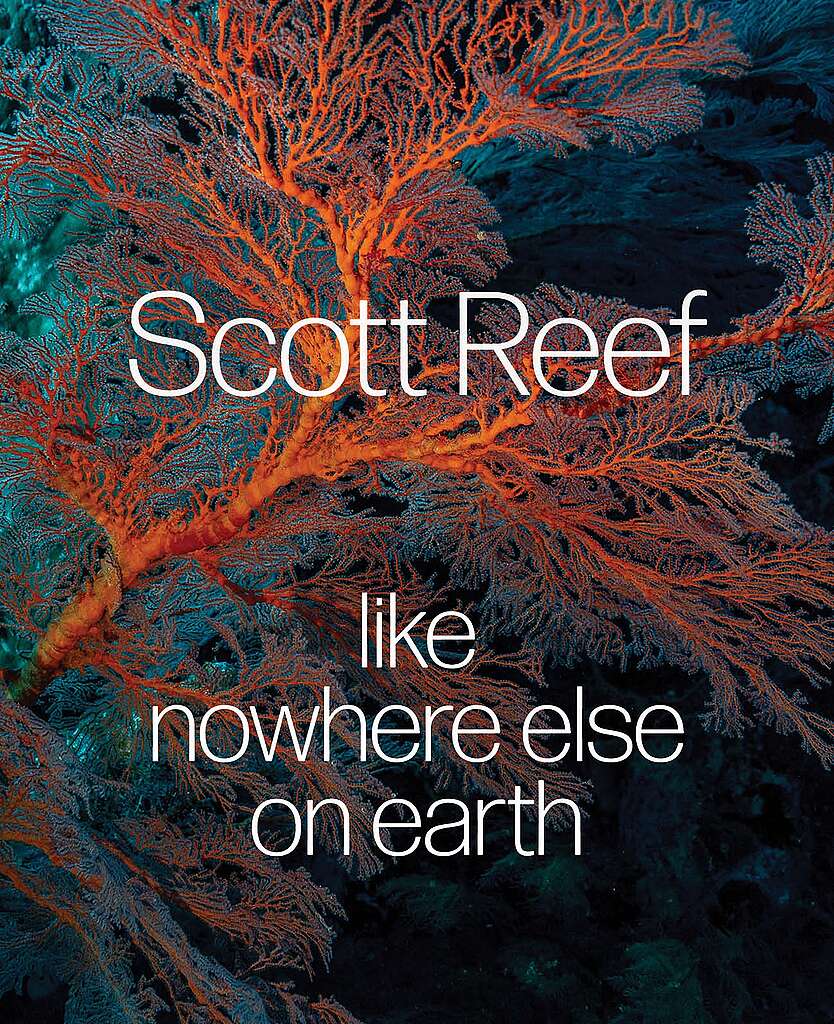
The contributors are a wonderfully diverse bunch, united by their enthusiasm for Scott Reef — and their extraordinary speed!
It’s a brilliant mix. The book brings together national icons like Peter Garrett, Tim Winton, Mick Dodson, Janet Holmes à Court and Fiona Stanley; the intellectual heft of professors Frank Bongiorno, Jessica Meeuwig, Rick Steiner and Samantha Hepburn; the poetic vision of Prema Arasu, Berndt Sellheim and Saadiah Freeman; the field expertise and passionate first hand witnessing of Imogen Zethoven, Tooni Mahto, Ben Fitzpatrick, Geoff Bice, Olaf Meynecke, Paul Gamblin, Sarah Gittoes and Hayley Baillie; and the determination of emerging activist voices Jackson Reid and Emma Sangalli.
Their elegant words wrap themselves around the sheer wonder of the underwater world, brought to life by the work of the photographers — of whom one, Wendy Mitchell, has also contributed a wonderful essay.
Terri-ann showed me the full physical proofs this week and they are breathtaking. This book contains some of my absolute favourite images of wildlife beneath the waves -– and believe me, after almost 20 years at Greenpeace, I’ve been privileged enough to see some remarkable shots! The essays bring a whole new depth and richness to the story of Scott Reef.
If I am being honest, and maybe a bit sentimental, I hope that a four or five-year-old child somewhere in Australia will spend part of their summer holidays turning the pages of this book, wide-eyed with curiosity and awe at the beauty and strangeness of the creatures that call our oceans home.
Our shared commitment is to make sure that, as those children grow up, the wonders of Scott Reef will exist not just in the pages of the book, but out there in the wild waters off north-western Australia—alive, thriving, and every bit as extraordinary as they are today; a living wonder beneath the waves.
Pre-orders of Scott Reef: Like Nowhere Else on Earth are available here.


Q & A
Sometimes you get asked a question so often that you decide to produce a report to answer it!
We know there is strong public opposition to voter opposition to gas drilling at Scott Reef and fracking in the Kimberley in Western Australia. But I am frequently asked whether, even if people don’t want it, more gas drilling is a necessary evil to sustain WA’s prosperity?
The short answer is an unequivocal ‘No’. The longer answer is our new report, From Gas to Green: Building Western Australia’s Future State, which makes the comprehensive case that Asia’s gas market is declining — while WA has an enormous untapped opportunity to become a global leader in green industries and exports, helping drive the region’s shift away from fossil fuels. The faster that WA embarks on a decisive shift away from gas—and that includes no fracking in the Kimberley, or drilling at Scott Reef — so much the better for the state’s people, ecology and economy.