

Welcome to Carbon Brief’s DeBriefed.
An essential guide to the week’s key developments relating to climate change.
This is an online version of Carbon Brief’s weekly DeBriefed email newsletter. Subscribe for free here.
This week
2023 ‘smashes’ records
RECORD-SHATTERING: 2023 “smashed” the record for the hottest year by a large margin, reported the Guardian. The newspaper said on Tuesday that, according to the EU’s Copernicus Climate Change Service, 2023 was 1.48C hotter than pre-industrial times. This is 0.17C higher than the last record set in 2016 – “marking a very large increase in climate terms”, according to the Guardian. And today the record was confirmed by the UN’s World Meteorological Organization, which has just published the findings of six leading climate datasets.
CHARTING CHANGE: In its coverage of the data, BBC News produced a number of charts and figures illustrating the path of global warming. Its analysis showed that almost every day since July has seen a new global air temperature high for the time of year. Meanwhile, the Independent published a feature examining whether 2024 could be even hotter than 2023.
STATE OF THE CLIMATE: Carbon Brief has just published the last of its quarterly state of the climate updates for 2023. It explains that 2023 was the warmest year “by a large margin”, at between 1.34C and 1.54C above pre-industrial levels across different datasets. Last year was also the warmest on record for ocean heat content, which increased notably between 2022 and 2023.
UK MP quits over fossil fuels
‘TRAGEDY’: The UK’s former energy minister Chris Skidmore quit as an MP in protest at the government’s plans to drill for more oil and gas in the North Sea, the Financial Times reported. In his resignation letter, Skidmore said it was “a tragedy that the UK has been allowed to lose its climate leadership” under prime minister Rishi Sunak, according to the newspaper.
BILL DELAYED: Skidmore quit over the government’s offshore petroleum licensing bill, which aims to “maximise” new oil and gas production, the FT said. The bill was due to be read in the House of Commons this week, but ended up being postponed, the Times reported. BBC News reported that Sir Alok Sharma, the Conservative MP and COP26 president, said he would vote against the bill, calling it “a total distraction” which reinforces the idea the UK is “not serious” about tackling climate change.
Renewables on the rise
RECORD RENEWABLES: A boom in Chinese solar power drove another record-breaking year of renewables growth in 2023, according to a new International Energy Agency (IEA) report covered by Carbon Brief. The world is now on track to build enough solar, wind and other renewables over the next five years to power the equivalent of the US and Canada combined, according to Carbon Brief’s analysis of the findings.
UK SOLAR: Along with the increase in global renewable capacity, there has been continued growth in low-carbon upgrades on UK homes, with solar and heat pumps driving record installations in 2023, according to separate Carbon Brief analysis.
Around the world
- US COAL DROP: US emissions fell by 1.9% in 2023, largely due to coal declining to its lowest level in 50 years, the New York Times reported. By contrast, US oil and gas production is set to hit a record in 2024 and 2025, said the Financial Times.
- ‘A LA CARTE’: Saudi Arabia’s energy minister has claimed that the headline COP28 agreement to transition away from fossil fuels is just one of several “choices” on an “a la carte menu”, reported Climate Home News.
- WAR EMISSIONS: Israel’s assault on Gaza since 7 October has produced more greenhouse gas emissions than 20 of the world’s most climate-vulnerable countries create in a year, according to new analysis covered by the Guardian.
- GERMANY PROTESTS: Farmers took to the streets of Berlin to protest against the German government’s decision to cut agricultural subsidies, Deutsche Welle reported.
- DEEP SEA MINING: Norway has become the first nation to approve commercial deep-sea mining, opening up a vast area of the Arctic to the extractive practice despite warnings from scientists, Mongabay reported.
- OFFSETS CONTROVERSY: The first-ever carbon-offset exchange under a new Paris Agreement mechanism, involving Switzerland buying credits for the rollout of electric buses in Thailand, is facing integrity questions, Climate Home News said.
40%
The proportion of North Sea oil and gas licences in UK waters owned by foreign companies and investors, according to EnergyMonitor.
Latest climate research
- A new research paper in Nature Climate Change presented a “conceptual framework” for considering the role of justice within climate research.
- The presence of urban green space is associated with “significantly lower rates of violent crime committed outside”, according to an International Journal of Biometeorology study conducted in Australia.
- A pair of studies in the Journal of Climate delved into an “exceptional heatwave” in east Antarctica in 2022, which brought “widespread 30-40C temperature anomalies across the ice sheet”.
(For more, see Carbon Brief’s in-depth daily summaries of the top climate news stories on Monday, Tuesday, Wednesday, Thursday and Friday.)
Captured

A record 42 editorials opposing action to tackle climate change were published by UK newspapers in 2023, according to new Carbon Brief analysis. Written almost exclusively by right-leaning papers, these editorials called for delays to UK bans on the sale of fossil fuel-powered cars and boilers, as well as for more oil-and-gas production in the North Sea, according to the findings. In response to such demands, prime minister Rishi Sunak performed a “U-turn” in September on some of his government’s major net-zero policies.
Spotlight
Investigating Antarctica’s colossal icebergs
This week, Carbon Brief speaks to Dr Oliver Marsh, a glaciologist who is principal investigator of a British Antarctic Survey (BAS) mission currently studying iceberg calving events at Antarctica’s Brunt ice shelf (pictured).

Carbon Brief: Can you please explain what fieldwork you are currently working on?
Dr Oliver Marsh: We are drilling ice cores to collect ice samples from the Brunt ice shelf. These will be brought back to Cambridge [where BAS is located] and University College London (UCL) in order to test their physical and chemical properties. We are also setting up seismic and GPS equipment to monitor fracture growth and strain rates on the ice shelf. We will then link the properties of the ice to the behaviour of the fractures.
CB: What do you hope to find out by conducting this fieldwork?
OM: We are interested in the mechanism and timing of crack growth leading to iceberg calving [where chunks of ice break off from the front of a glacier]. In particular, we want to understand how changes in ice properties change calving rates. The ice shelf we are working on has a well-documented history of crack growth, with two large calving events in the last three years, and the new information we gain from precise laboratory measurements will help us to understand how – and under what conditions – fractures occur in the lead-up to these calving events.
CB: What are the biggest hazards with conducting fieldwork on the Brunt ice shelf?
OM: The Brunt ice shelf is a good location to monitor fracture growth due to its dynamic behaviour. This means there are rifts and other cracks in the ice that can be hazardous for travel. These cracks are heavily monitored with a suite of geophysical instruments, including ground-penetrating radar, GPS and satellite data, and precautions are taken when moving around. Fieldwork in Antarctica also has significant hazards associated with the weather, for example, strong winds and wind chill.
CB: How is climate change affecting iceberg calving events in Antarctica?
OM: Calving occurs as a normal process of ice loss from the continent. But, as it occurs in discrete events and very infrequently for some ice shelves, it is difficult to determine whether rates are changing from a short satellite record. Other fracturing processes, such as hydrofracture and ice shelf collapse, are linked to both ocean and atmospheric warming, so it is possible that calving rates may increase in the future.
CB: What would be the implications of accelerated iceberg calving for the climate and ecosystems?
OM: Increased calving is likely to weaken ice shelves that fringe the continent and support the glaciers inland. This can help to speed up glacier flow and ice loss to the ocean, contributing to sea level rise. An increase in the volume of icebergs may also cause issues for ecosystems, particularly in areas where icebergs ground on the ocean floor, blocking foraging routes for penguins and seals, for instance.
Watch, read, listen
IDAI AFTERMATH: An audio documentary from the BBC World Service explored how communities in Beira, Mozambique are still reeling five years after Cyclone Idai.
PEOPLE FIRST: Context spoke to a range of experts about how the deal to transition away from fossil fuels agreed at COP28 can be achieved in a way that prioritises people’s needs.
INFLECTION POINTS: Robinson Meyer, founding editor of the climate publication Heatmap, appeared on the Chris Hayes Podcast to talk about rising fossil fuels and falling low-carbon technology prices.
Coming up
- 13 January: Taiwan presidential and parliamentary elections
- 15-19 January: World Economic Forum, Davos, Switzerland
- 16-19 January: 60th session of the Intergovernmental Panel on Climate Change, Istanbul, Turkey
- 17-18 January: G20 women’s sustainability working group meeting, Vila do Conde, Brazil
Pick of the jobs
- Global Forest Coalition, director | Salary: €32.50 per hour. Location: Remote
- The New York Times, Climate Forward editor | Salary: $170,000-180,000. Location: New York
- Department for Energy Security and Net Zero, deputy director, strategy development | Salary: £75,000. Location: Choice of various UK cities
DeBriefed is edited by Daisy Dunne. Please send any tips or feedback to debriefed@carbonbrief.org
The post DeBriefed 12 January: 2023 ‘smashes’ global heat record; UK MP quits over oil and gas; Studying Antarctica’s mammoth icebergs appeared first on Carbon Brief.

Saturday, 17 October 2026
7.18 AM AWST
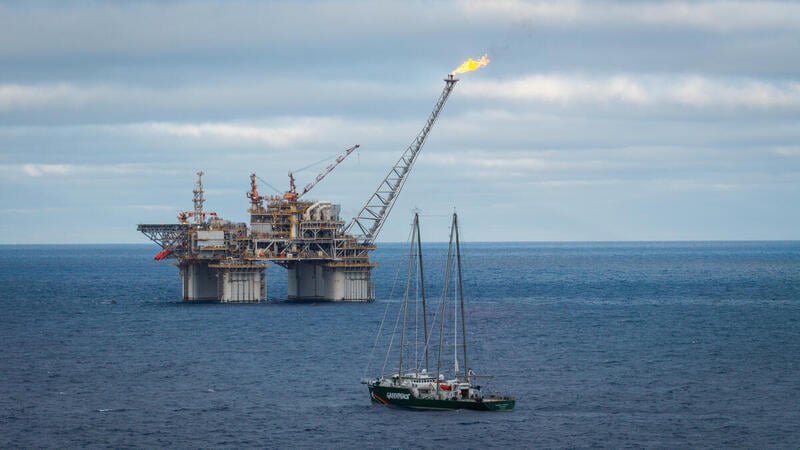
Hi folks! We’re joining you live from the Rainbow Warrior where we will be providing you with updates as our four activists continue scaling and occupying Woodside’s gas platform. The activists are peacefully protesting against Woodside’s latest gas expansion plans, the Browse project, which would see up to 57 toxic wells drilled at Scott Reef.
“Right now our activists are scaling Woodside’s massive Floating Production Unit. They are scaling the South-East pillar and the underside of the Helideck. They’ll be setting up camp soon and have plenty of provisions with them – so stick around!”
5:45 AM AWST
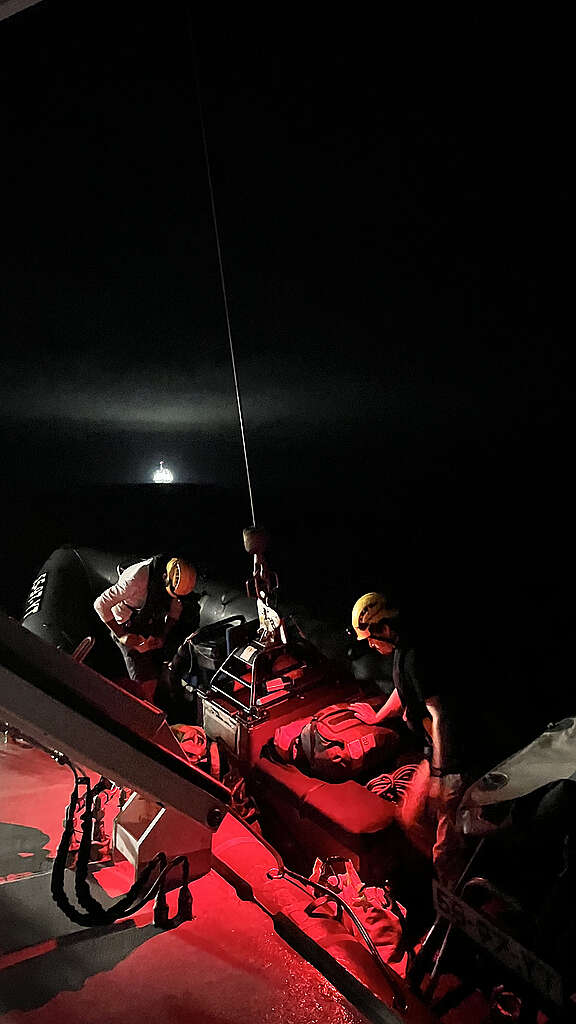
Our RHIBS are in the water! We’ve deployed our four activists and our ship crew on our small fast boats, headed to the gas platform. We’re carrying crew and equipment, plenty of food, all of our safety climbing gear, some big banners, cameras and a whole lot of heart… someone even has something to read after they get settled in.
5:26 AM AWST
Before sunrise activists prepared to launch RHIBS from the Rainbow Warrior.
Looking for a front seat view?
You can follow along with the Live Rainbow Warrior bow cam here!
Looking for more?
Follow us on Instagram for a peek behind the scenes and hear from our Rainbow Warrior crew.
Live blog: Greenpeace activists occupy Woodside gas project to save Scott Reef
Climate Change
Greenpeace activists climb and occupy Woodside’s Scarborough gas project calling on the Australian government to “Stop Woodside’s Dirty Gas” and “Save Scott Reef”
PERTH, Saturday 17 October 2026 — Four Greenpeace Australia Pacific activists are scaling and occupying a Floating Production Unit at Woodside’s Scarborough gas project off the coast of Western Australia, displaying banners reading: “Stop Woodside’s Dirty Gas. Save Scott Reef.”
- Photos and video available here and here. More will be uploaded throughout the day.
- Content and live updates will be uploaded to a live blog and to Instagram
Early this morning at 05:45 AWST, Greenpeace Australia Pacific activists launched from the Rainbow Warrior, Greenpeace’s flagship vessel, scaling and attaching themselves to a Floating Production Unit (FPU), a key piece of gas processing infrastructure at the Scarborough gas field over 200km off the coast of Exmouth.
Woodside has since confirmed it has initiated a temporary shut down of the FPU.
Greenpeace Australia Pacific is occupying the gas platform in peaceful protest of Woodside’s plans to drill for oil and gas at Scott Reef as part of its Browse proposal.
David Ritter, CEO at Greenpeace Australia Pacific, said: “Greenpeace Australia Pacific is taking action today to expose the unacceptable risk to Scott Reef posed by Woodside’s plans.
“Australians love our oceans. Woodside’s reckless Browse gas proposal would turn the magnificent Scott Reef into an industrial gas zone. Woodside wants to drill up to 57 toxic wells around Scott Reef, Australia’s largest oceanic reef, home to nesting green sea turtles, and endangered species like pygmy blue whales and the dusky sea snake; it is a place like nowhere else on Earth.
“Woodside has an alarming track record of oil spills, incidents and environmental neglect, and can’t be trusted with our oceans. From whaling in Albany in the seventies, to Woodside’s threat to Scott Reef today, there’s more than fifty years of history, of Greenpeace taking action off WA’s coasts to protect our oceans.
“There’s no future in new gas projects. Our future is in secure homegrown renewable energy, green industry and exports, where communities and places like Scott Reef are protected — there’s no future in dirty gas shipped offshore.
“The prospect of drilling for oil or gas on the Great Barrier Reef would be considered absolute madness today, but that is exactly the decision before the government: save Scott Reef or risk its destruction at the hands of a gas corporation.”
From aboard the Floating Production Unit, Dr Chris Holden, Greenpeace Australia Pacific activist said: “As a doctor, when I see new fossil fuel projects like Woodside’s Browse project being put forward, I can’t help but think about the impact this is going to have on the health of our communities and planet, and feel a sense of duty to act.
“Not only will this project do irrevocable harm to nature at Scott Reef, it will have a terrible impact on our climate, putting all of our lives at risk.
“On the Rainbow Warrior I’m carrying a copy of the 2025 Lancet countdown report, which warns that health impacts of climate change are worsening, with millions dying needlessly each year due to fossil fuel dependence, growing emissions, and failure to adequately adapt.
“With warnings like this from the leading global health professionals, our government simply can’t allow fossil fuel projects like Woodside’s Browse project to go ahead. It is their duty to do what is in the best interest of our communities.”
Almost half a million people have signed a petition calling on the government to Save Scott Reef and Woodside’s Browse gas project.
-ENDS-
Notes:
- Dial-in, SimSat and Zoom interviews with Geoff Bice, WA Campaign Lead at Greenpeace Australia Pacific, currently aboard the Rainbow Warrior, can be organised separately
Media contact:
Greenpeace Australia Pacific media team on +61 406 231 892 or +61 407 581 404
The board of the Fund for Responding to Loss and Damage (FRLD) will decide on Thursday on whether to “provisionally set aside” $20 million for Nepal to deal with some of the effects of the climate-driven flood it suffered in August.
The motion, seen by Climate Home News, has been drafted by a group of board members from both developed and developing countries and so is likely to pass easily at the fund’s first-ever extraordinary board meeting on October 22.
It invites the government of Nepal to submit a proposal for how to use the money, with the board then deciding at one of its regular board meetings whether to approve the proposal or not.
While Nepali officials have described $20 million as merely “symbolic” in the face of the $4.8 billion estimated costs of recovery and reconstruction, it would be the first time the new FRLD – agreed in 2022 months after devastating floods in Pakistan – has set aside money for a specific disaster.
Until now the fund has only taken requests through a single call for proposals, launched at COP30 in Belém last November, that gave countries six months to submit requests.
Most of the 180 projects the FRLD is currently considering are designed to help countries avoid damage from future climate disasters, for example by strengthening responses to floods in Bangladesh and Lagos.
The draft decision says Nepal’s proposal will serve as a pilot for how funding requests can be submitted outside of the fund’s current timetable. That could let governments seek funds quickly after a climate disaster strikes, rather than waiting for the next call.
This arrangement would set the fund apart from other United Nations funds designed for climate adaptation or cutting emissions like the Green Climate Fund.
Climate campaigners from Fill the Fund said the draft decision is “a real step forward” as it is “the first time this Fund has moved to respond to a specific disaster”.
Too little, too late
The FRLD was agreed by governments at COP27, set up and operationalised at COP28 in 2023 but has yet to award any money. The 180 funding requests it is currently considering would cost around $2.8 billion, but it only has $350 million to allocate.
The United Nations Secretary-General António Guterres has described the amount of money available in the fund as “ridiculously small” and Fill the Fund said $20 million “is a meaningful signal but it is a drop against an ocean of need”.
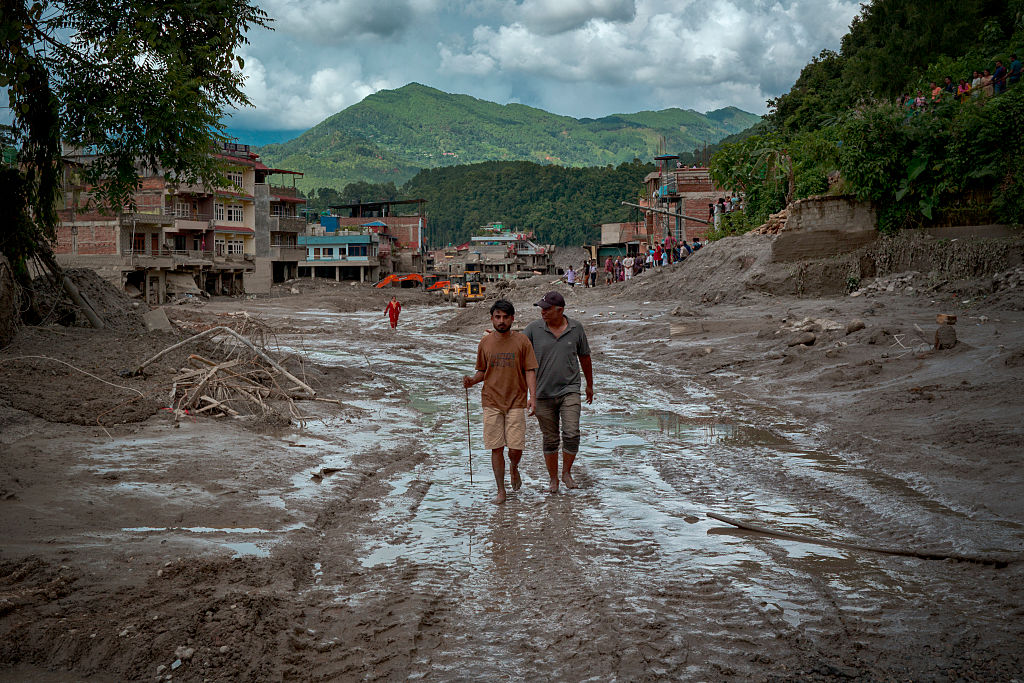
A glacial rock and ice collapse sent a torrent of water and debris through Nepal and the Chinese-administered region of Tibet on August 26. It killed more than 1,400 people, left thousands more missing and destroyed homes, bridges, roads and hydropower plants. Nepal’s finance and environment ministers quickly appealed to the FRLD board for funds, saying that “time is of the essence”.
Their call was followed swiftly by a letter from developing country FRLD board members urging the board’s co-chairs to organise an extraordinary meeting to allocate funds to Nepal.
But developed countries initially called for an informal consultation rather than a full board meeting. It took a further 45 days for the board’s co-chairs to organise an extraordinary board meeting for October 22 and to draft a motion for adoption.
Fill the Fund called for a permanent way of the fund rapid responding to disasters as “Nepal should not have required historic letters, an informal drafting group and the Fund’s first-ever extraordinary meeting simply to unlock an emergency response. The next country cannot wait two months and a bureaucratic marathon. Speed must be built in, not improvised.”
The post UN’s loss and damage fund set to give Nepal $20m for flood recovery appeared first on Climate Home News.
UN’s loss and damage fund set to give Nepal $20m for flood recovery


