

We handpick and explain the most important stories at the intersection of climate, land, food and nature over the past fortnight.
This is an online version of Carbon Brief’s fortnightly Cropped email newsletter. Subscribe for free here.
Key developments
Forest and biodiversity funds
TRANSFORMING FOREST FINANCE: A Forest Declaration Assessment report revealed that global forest finance is “not only falling short, but actively fuelling deforestation”, said Down to Earth. According to the report, for every dollar allocated to forest protection, six dollars go to activities driving deforestation. In 2023 alone, private financial institutions invested $6.1tn in sectors linked to deforestation, while governments spent $500bn in subsidies harmful to nature. Relatedly, several organisations launched a call to action for forest protection. It listed the priority actions for governments in 2025, which include enhancing ambition in forest goals, promoting deforestation-free trade, scaling up forest finance and securing land rights of forest communities.
NEW CONTRIBUTIONS: Brazil’s planned $125bn “Tropical Forests Forever Facility” is on track to be launched at COP30 this year, the Straits Times reported. The outlet said that several countries, including Germany, France and the United Arab Emirates, have expressed interest in contributing to the fund. Brazilian outlet ((o))eco said that the fund “would pay countries for each hectare of rainforest maintained or restored”. Meanwhile, Ireland announced its first donation, of $16m, to Brazil’s Amazon Fund, according to Reuters. The fund, which is already supported by seven other countries, seeks to halt deforestation and boost sustainable development in the Amazon rainforest.
SHORT SCOPE: The Kunming Biodiversity Fund is only supporting six projects of $1.2m, according to the UN Development Programme, cited by Dialogue Earth. The fund was launched by China at the first part of the COP15 biodiversity summit in 2021. The outlet noted that China’s $207m pledge is the only contribution to the fund so far. The fund approved its first nine projects at COP16 last year, with six of them currently underway. Elsewhere, carbon credit registry Verra suspended the activities of four auditors that “overlooked integrity problems” with methane-cutting rice offset projects in China, Climate Home News reported.
England’s new national forest
INTO THE WOODS: BBC News reported that 20m trees will be planted to create England’s first new national forest in three decades. The “Western Forest” will be composed of new and existing woodlands in the south-west of the country, the outlet said. It will be the first of three new national forests to help meet woodland goals, according to the UK government. The 20m trees will be planted over the “coming decades”, the Times noted, and will be spread across farmlands and urban areas. Meanwhile, a new government-led group of major landowners in England met to discuss ways to cooperate on nature restoration goals, Business Green said.
BUDGET WOES: Farming representatives “reacted with fury” after the UK government closed England’s sustainable farming incentive subsidy scheme to new applicants until next year, the Times reported. The newspaper said: “Labour promised £5bn in nature-friendly farming subsidies over this year and the next financial year, but has burnt through the budget already.” The 37,000 existing agreements will still be honoured, the newspaper said. Gavin Lane from the Country Land and Business Association described it as a “disaster for nature recovery”. A “reformed” version of the scheme will be announced this summer, the Department for Environment, Food and Rural Affairs said in a statement.
PESTICIDE CUTS: Meanwhile, the UK government announced plans to cut pesticide use on farms by 10% by 2030 to help “protect bees and other pollinators”, according to the Guardian. The plan, which the newspaper said had been delayed since 2018, included penalties for irresponsible pesticide use. A spokesperson for Pesticide Collaboration, a group of health and environmental organisations, academics, farmers and others, said they were “thrilled” with the plan. The group told the Guardian that they were pleased that it “takes into account both how much of a pesticide is used and how toxic it is”, but added that they had hoped for a higher target.
HABITAT CHANGES: Elsewhere, proposed changes to the UK’s planning system “sparked job security fears among thousands of ecologists”, the Financial Times said. The newspaper explained: “The proposed measures will significantly reduce the number of protected species surveys required for development to be approved, as part of a government drive to speed up delivery of big infrastructure projects”. Ecologists who complete these surveys are concerned about the impacts for their work, according to the FT. The proposed reforms survived their “first Commons test” this week, the Independent said, while the Guardian reported that UK nature charities called on ministers to “urgently strengthen environmental protections in new planning laws”.
Spotlight
Third of US birds should be prioritised for conservation
This week, Carbon Brief looks at the 2025 US State of the Birds report, which assesses the health of bird populations in the country.
Nearly a third of all bird species in the US face a decline in their populations or other threats, such as habitat loss, a new report concluded.
The 2025 State of the Birds report, published by a coalition of conservation organisations under the North American Bird Conservation Initiative, used bird population data over 1970-2022 to identify the avian species most at risk.
The “at-risk” species were those with low population numbers or declining populations, as well as those facing external threats.
These species – 229 in all – “should be prioritised in conservation planning to protect existing populations and build toward population recovery”, the report said.
Conservation concerns
Of the birds studied, 112 species are of “high concern” for conservation.
These species have faced “steep” population losses and have lost at least half of their populations in the last 50 years. They include the whooping crane, chimney swift and California condor. The report termed these species “tipping point species” and called for increased scientific research to determine the drivers of their declines, as well as “immediate help through voluntary and proactive conservation action”.
Another 117 bird species are of “moderate concern”, meaning they have small or declining populations, but have not faced such steep declines as the higher-risk species. This category also includes common birds that have “experienced large losses”, such as sparrows and blackbirds.
The remaining 489 bird species are of “low concern” for conservation, although the report noted that half of these have also experienced long-term declines in population, but “fall short of the thresholds for priority conservation planning”.
Threatened species
The report also looked at the changes in the population of species from different ecosystems.
The chart below shows the population change, since 1970, for eight types of birds classified in the report.

Notably, grassland birds have seen the largest overall declines, losing around 43% of their total population since 1970 and with several species reaching the “tipping point” described in the report. US grasslands are “in collapse”, the report noted, due to expanding agriculture, drought and invasive alien species.
Aridland birds have also lost more than 40% of their population since 1970, the report said. About a quarter of the 31 aridland species analysed, including the scaled quail and rufous-crowned sparrow, are in the “high concern” category. Shorebirds have the largest number of species listed as high concern. The report noted that the largest declines of these species are registered in migratory staging sites along the Atlantic coastline.
By contrast, ducks and waterbirds are the best-placed groups, with 24% and 16% increases in their populations, respectively. The abundance of duck populations coincides with policies aimed at conserving their wetland habitats and other conservation programmes.
Nonetheless, individual species within these groups have also seen declines in population, the report said. Additionally, while their numbers have still improved since 1970, duck populations have dropped steeply over the past decade.
The document also listed various benefits provided by birds. Nearly 100 million people in the US are birdwatchers, a hobby that contributes to the mental well-being of people with depression and reduces symptoms of stress and anxiety. Moreover, birding yields $108bn annually in trips and equipment and generates 1.4m jobs.
The report concluded:
“Restoring bird populations and addressing causes of their declines benefits millions of Americans.”
News and views
COP ‘CONTRADICTION’: Earlier this month, BBC News reported on the building of a new highway “to ease traffic to” COP30 host city Belém that would run through “thousands of acres of protected Amazon rainforest”. The Brazilian newspaper O Globo quoted scientists who said the 13km road is a “contradiction in the governor’s environmental discourse”. In response, the Brazilian government clarified that the highway is not “part of the 33 infrastructure projects planned for COP30” and said that the initial framing “misinforms readers by misleadingly suggesting a connection between the construction project and the federal government’s actions” preparing for COP30.
US AG CUTS: The US Department of Agriculture (USDA) cut two programmes that paid farmers $1bn to provide food to schools and food banks for low-income families, the New York Times reported. It added that the agriculture secretary has “broad discretion” to use the funding “for purposes aligned with the administration’s aims”. A smallholder farmer from Missouri told the newspaper that her production had doubled thanks to those programmes, but now she is concerned about how she will make payments on her debts. The Washington Post reported that the USDA also cancelled an additional $500m in deliveries to food banks.
NATURE DEALS: Colombia rejected a number of debt-for-nature swap offers due to “fears” about the impact they could have on the country’s credit rating, Bloomberg reported. Susana Muhamad, who resigned as Colombia’s environment minister in February, told the outlet that these swaps could “send the wrong message to the markets and make our financial situation worse”. This is also the government’s current stance, a spokesperson for the environment ministry told Bloomberg. (See Carbon Brief’s Q&A for more on these financial agreements, where a developing country’s debt is effectively exchanged for investment in conversation.)
PAYOUT PUSHBACK: Context News reported that farmers in India’s most vulnerable districts can pay higher crop insurance premiums, but receive lower payouts, than farmers in less vulnerable areas. The outlet cited a thinktank report saying that this “undermines the purpose” of India’s government-run crop-insurance scheme, which is the world’s largest. The report, from the Centre for Science and Environment, found that farmers living in “climate-vulnerable districts” faced higher premiums, lower levels of insurance cover and smaller payouts than farmers in lower-risk areas, Context News said.
‘FRAGILE’ MOUNTAINS: “Unprecedented changes” to mountains and glaciers threaten fresh water access for more than two billion people, according to a UN report covered by Carbon Brief. Mountains and glaciers are becoming “increasingly vulnerable” to climate change and unsustainable human activities, the report said. This is having a wide range of impacts on agriculture, local ecosystems and other aspects of life. One expert told Carbon Brief that glacier loss is already causing “loss of life, loss of livelihood and, most importantly of all, the loss of a place that many communities have called home for generations”.
‘METHANE MESS’: Major supermarkets are not reporting on their methane emissions or setting targets to reduce emissions of the potent greenhouse gas, according to a new report. The analysis, published by environmental campaign groups the Changing Markets Foundation and Mighty Earth, said that there is a “disconnect between retailers’ climate promises and action”. The report analysed climate reports and other data from 20 “top-grossing” food retailers in the US and Europe to assess their progress on mitigating methane emissions. It identified a “significant lack of action” to address methane emissions, with US retailers performing “especially badly”.
Watch, read, listen
REN-EWE-ABLE?: Ambrook Research explored whether grazing sheep under solar panels “count[s] as clean energy”.
OFF THE MENU: A Climate Home News comment article by a former Colombian negotiator argued that food systems have been “sidelined” in the agenda for the COP30 climate summit.
IN DANGER AGAIN: Euractiv covered the increase in wolf hunting in the EU, against a backdrop of “manipulated numbers” and lax regulations.
MARINE LIFE: A “sustainable blue economy” is needed to protect the ocean from “surging” threats, including overfishing and climate change, researchers wrote in Dialogue Earth.
New science
- A Nature Communications study found that three-quarters of species’ ranges in border areas between countries are not under protection. The findings, based on analysis of the distributional ranges of almost 20,000 land-based species, show the “urgent” need for cross-border cooperation to meet global biodiversity goals, the researchers wrote.
- Grass-fed beef in the US is generally more carbon-intensive than industrially produced beef, according to a study in Proceedings of the National Academy of Sciences. The research found that the emissions per kilogram of protein in “even the most efficient” grass-fed beef are 10-25% higher than industrial beef – and as much as 40 times higher than plant protein and other animal alternatives.
- Nearly 30% of forest loss in 15 tropical countries over 2001-20 occurred within one kilometre of a road, a Communications Earth and Environment study found. The researchers used datasets of roads and forest loss to produce high-resolution maps of deforestation, highlighting the “urgent need” to protect and restore forests along tropical roads.
In the diary
- 24-28 March: 20th session of the UN FAO commission on genetic resources for food and agriculture | Rome
- 30 March: International day of zero waste
- 2-3 April: 41st UN-Water meeting | Rome
Cropped is researched and written by Dr Giuliana Viglione, Aruna Chandrasekhar, Daisy Dunne, Orla Dwyer and Yanine Quiroz. Please send tips and feedback to cropped@carbonbrief.org

The post Cropped 26 March 2025: US birds in peril; UK ecologists ‘job fears’; Finance ‘fuelling’ deforestation appeared first on Carbon Brief.

Scientists have vowed to keep working on the next flagship set of reports for the Intergovernmental Panel on Climate Change (IPCC), after a political row over the timeline for their release saw its latest session suspended on Friday evening without agreement.
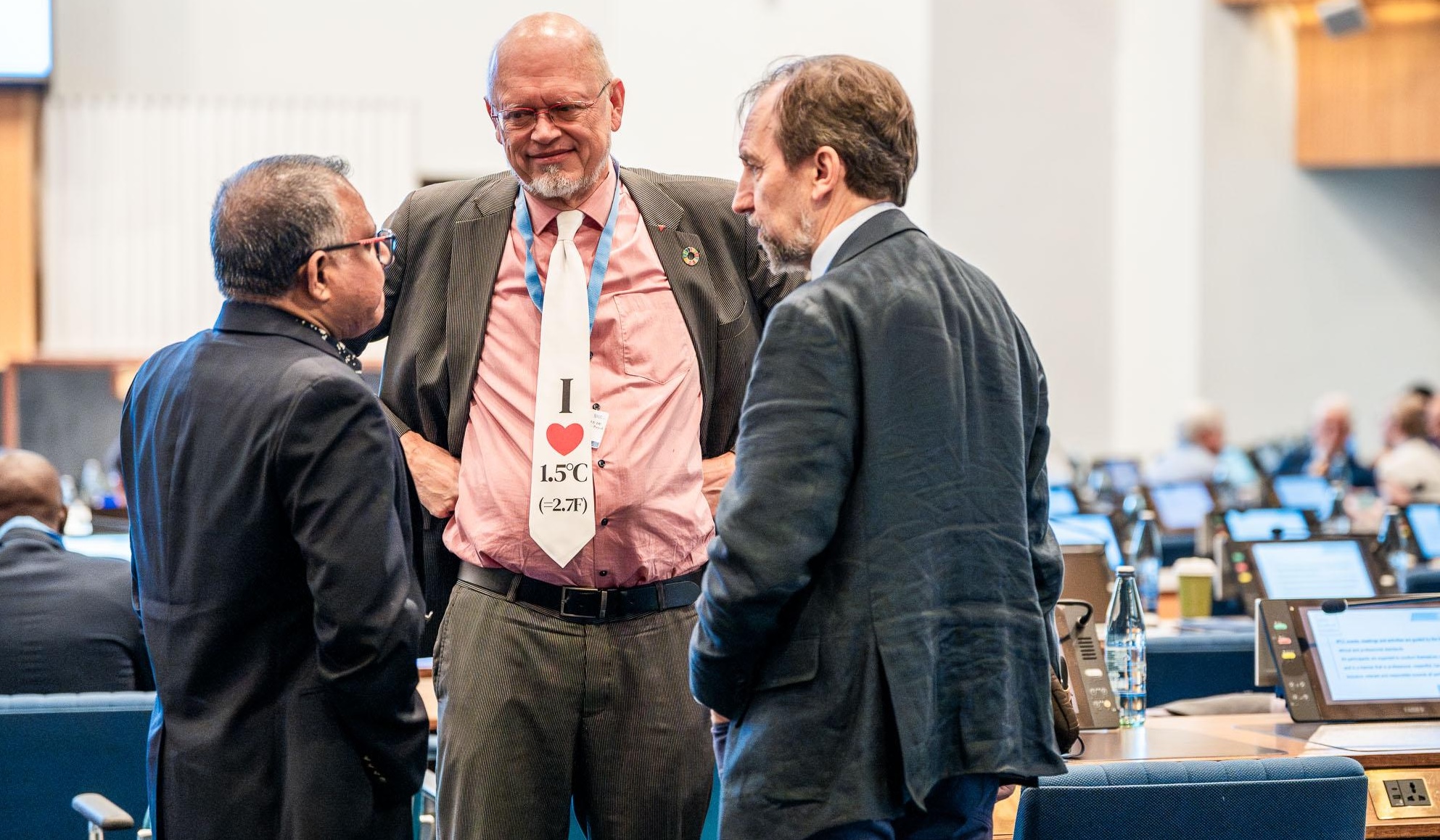
During the weekend, government officials and scientists alike expressed disappointment over the inability to reach a compromise before some delegates from developing countries and small island states had to leave the week-long meeting in Ethiopia to catch flights home.
The disagreement – which has persisted since early 2024 – turns on whether the three key parts of the AR7 assessment should all be published before the conclusion of the UN’s next Global Stocktake of global climate action, which is due to be completed in late 2028.
The IPCC issued a statement after the close of the session, saying that “key agenda items” – the timelines for the three AR7 reports, as well as the IPCC budget – remain open and under discussion. It said the IPCC’s plenary session and its deliberations on the pending agenda “will resume at the earliest opportunity”, giving no further details of when.
IPCC Chair Jim Skea told delegates in closing remarks that recent months had been some of the most turbulent for the climate science panel and that, if there were stronger words than “profound disappointment” he would use them, according to a summary published by the Earth Negotiators Bulletin (ENB). IPCC discussions happen behind closed doors.
IPCC scientists remained committed
In an open letter, issued on Monday, a group of nearly 120 scientists – from a total of 664 AR7 authors – said they “stand committed to continue working to deliver the AR7 reports in a manner that is rigorous, timely and inclusive, in line with our mandate to be policy-relevant”.
“An assessment that arrives after the decisions it is meant to inform cannot serve its purpose,” they emphasised. “The second Global Stocktake in 2028 is such a decision point, and the world should not have to face it without the IPCCʼs latest assessment.”
Europe, small islands and the least developed countries, plus many Latin American and developed nations, want the IPCC to meet this deadline, arguing that the findings from the UN climate science body are irreplaceable in the UN climate policy-making process.
However, around a dozen developing countries plus Russia have argued that the reports should come later in order to allow for greater research input from the Global South – something that, in their view, would make the findings fairer. They also claim that a shorter timeline would put excessive pressure on experts.
-
Who shapes climate science? The equity question facing the IPCC
Early completion of the next global climate science assessment reports risks excluding research from the Global South, which is key to ensuring the findings are fair -
Governments that support climate science must stand firm against naysayers
The IPCC is meeting to decide the timing of its next major report, as some countries try to delay it and weaken the case for faster emissions cuts


The most vocal of this group at last week’s meeting were India and Saudi Arabia, according to the ENB summary and a developed country diplomat. Critics see this push for a longer timeline as an excuse to deprive government decision-makers of the latest science and ease pressure on emerging economies to raise their ambition, particularly on cutting emissions.
Commenting on last week’s meeting, France’s ambassador for climate negotiations Benoît Faraco said a broad coalition of developed and developing countries from all five continents, “united in their support for science and the timeline proposed by scientists”, had withstood pressure “from a few countries” seeking to slow down the process of adopting the IPCC reports.
He added that France would not back down and would “continue to fight tirelessly for science, protect the integrity of information, and convince our partners that without the best available scientific data, we will be less effective in tackling climate change and protecting our populations”.
Inclusivity proposal stalled
In a bid to unlock a solution for the AR7 timeline, countries discussed ways to improve the inclusivity of the IPCC’s work. One option put on the table was for the IPCC to expand its funding for delegates from developing countries to attend some or all of its sessions from one to two participants, according to the ENB summary and a delegate speaking to Climate Home News.
That would increase the costs for the IPCC to complete AR7 by up to a quarter, according to an assessment shared by the secretariat. The panel’s budget is under severe strain and its officials have warned that, without additional voluntary contributions, it risks running out of money before it can deliver on this assessment cycle.
Climate Home News understands that some of the IPCC’s traditional donors – which mainly include European countries, Japan and Australia – indicated a willingness to support funding for an additional developing country participant. But without an agreement over the budget or the timeline for the reports, that option was ultimately not adopted.
‘Disappointed and worried’
The three reports are managed by working groups that collate and draw overall findings from the latest scientific studies and data on the physical effects of global warming around the world, how to adapt to it, and pathways for cutting planet-heating emissions in order to meet the temperature goals of the Paris Agreement.
Winston Chow, an urban climate professor at Singapore Management University who co-chairs Working Group II on adaptation, wrote in a LinkedIn post that he was “disappointed and worried” for the IPCC authors who have worked “extraordinarily hard” to assess the relevant climate science over the past two years.
He said he shared their concern that “the rigour, time and goodwill they’ve invested are now being put at risk by the Panel’s stalemate”.
As science comes under attack at UN talks, climate movement splits over how to respond
For Working Group II, a meeting for 250 experts writing that report is scheduled for January 2027, followed by the approval of a special report on cities and climate change in Singapore next March.
But because the IPCC’s budget has not been confirmed due to uncertainty about the AR7 schedule, travel support for those researchers is at risk, wrote Chow. “If they cannot participate, our assessments will lose vital expertise, perspectives and scientific breadth, and the collective effort of our authors will be undermined,” he warned.
Scientific work continues
Despite the political holdups, he – together with French climate scientist Robert Vautard, co-chair of Working Group 1 – agreed with IPCC head Skea who told the IPCC’s closing session on Friday: “The engine room of the IPCC is working, and it’s healthy.”
Vautard commented in a separate post on LinkedIn after it ended: “The boat is at full steam.” Working groups I and II are due to start revising the first drafts of their reports, while Working Group III on reducing emissions is finalising its first draft which will be out soon, he wrote.
“The most exciting two years of the cycle are ahead, for the authors. The momentum in the engine room is here and now. Trust the engine room!” he added.
The IPCC and some scientists report that progress has been made towards achieving an equitable balance of authors from the Global North and the Global South.
The group of researchers who signed the open letter on Monday noted that “inclusivity is at the heart of how we work”, with author teams bringing together experts from developed and developing countries with diverse backgrounds and at different stages of their careers.
Plea to overcome political differences
The signatories include several scientists from some of the countries opposed to the alignment of all IPCC reports with the Global Stocktake.
“We are committed to an assessment in which the knowledge, experience and priorities of every region are fully reflected, a commitment we share with the leadership of the IPCC.
Equity is built into how our assessment is being drafted,” they added.
They appealed to governments that make up the IPCC “to overcome their political differences and work together as we do as a global scientific community, so that we can deliver the IPCC reports the world needs to hear”.
In a statement published on Monday, IPCC chair Skea said reaching consensus on the schedule for the reports is “vital”. He added that the assessments provide authoritative scientific evidence to inform national climate policies, strengthen adaptation and resilience and support access to climate finance, as well as helping communicate the scale of the climate crisis and the urgency of efforts to tackle it.
The post IPCC scientists vow to press on with climate reports despite political deadlock appeared first on Climate Home News.
IPCC scientists vow to press on with climate reports despite political deadlock