

Over two weeks in November, more than 55,000 government negotiators, business representatives, activists and journalists gathered in Azerbaijan’s capital Baku for the annual conference of parties (COP) to the UN’s climate change convention (UNFCCC).
They were joined on the opening days of COP29 by about 105 heads of state and government who made back-to-back speeches. Most, like UNFCCC Executive Secretary Simon Stiell, emphasised the urgency of addressing the climate crisis. But the host, Azerbaijan’s President Ilham Aliyev, went the other way with a speech praising fossil fuels as a “gift of the god” and calling on leaders to be “realistic”.
Negotiators and ministers then got to work hammering out a new goal to finance climate action in developing countries after the current one runs out next year. Those talks inched forward for two weeks, with rich nations refusing to put a concrete offer on the table.
At the last minute, as the pavilions of the international trade show that accompanies COPs were packed away on the official closing day, the negotiations exploded. On that Friday, a number for the core finance goal was finally put on the table, sparking anger among developing nations which dismissed it as too low. On Saturday evening, negotiators from small islands and the world’s poorest countries stormed out – and a target of $300bn a year by 2035 was pushed through in controversial circumstances in the early hours of Sunday.
Fractious COP29 lands $300bn climate finance goal, dashing hopes of the poorest
Climate Home had a reporting team in Baku throughout, producing a bulletin and newsletter each day. As well as our explainer on what was agreed at COP29, below we bring you our five most dramatic moments from the Baku talks.
1.UN’s climate head gets personal
At the start of every COP, the head of the UN’s climate body gives what amounts to a motivational speech, calling on governments to do more to tackle the climate crisis.
This year, instead of reeling off statistics or listing climate-driven disasters, Simon Stiell got personal. He became emotional as he put up on a big screen a photograph of him hugging his neighbour Florence in front of her hurricane-destroyed house on their native Caribbean island of Carriacou (part of Grenada).
“At 85, Florence has become one of the millions of victims of climate change this year alone,” he said. In perhaps a coded reference to Donald Trump’s recent election as US president, he said Florence was “knocked down and getting back up again” – and government officials in the audience should too.
2. Host-nation leader calls fossil fuels “gift of the god”
On COP29’s second day, after a long cultural ceremony of music and dancing, Azerbaijan’s President Ilham Aliyev kicked off a series of speeches by the UN secretary-general and world leaders – and used it to double down on his past public backing of fossil fuels.
After attacking American”fake news media” and “so-called independent NGOs”, Aliyev repeated his claim that fossil fuels are “a gift of the god” and called out the European Union for criticising fossil fuels while doing a multi-year deal to buy gas from Azerbaijan.
He later used a summit of small island developing states to accuse France and the Netherlands of ongoing “colonial rule”, sparking a diplomatic spat with those countries and the European Union, which sprang to their defence. As a result, France’s environment minister decided to boycott COP29.
3. Finance goal: “Is it a joke?”
Nine days into COP29, developed countries had yet to put forward a proposal for how much they were willing to contribute to the post-2025 climate finance goal.
The most anyone had to go on was a Politico report that the European Union was considering $200bn-300bn a year – so the $200bn figure was raised by a journalist at a press conference of Bolivia’s chief negotiator Diego Pacheco, Uganda’s Adonia Ayebare and Kenya’s Ali Mohamed.
“Is it a joke?” asked Pacheco with a smile, to applause from climate campaigners in the room.
Ayebare laughed and repeated his words, before Mohamed added more sternly: “We don’t know where you’re getting the 200 but, joke or otherwise, the quantum we are putting forward is nothing near to what you have just suggested.”
This off-the-cuff remark led to the word “joke” being used repeatedly by campaigners and negotiators about the finance goal for the rest of the summit. The next day, the COP29 presidency published a $250-billion-a-year proposal, which increased to $300 billion in the final agreement.
View this post on Instagram
4. Vulnerable nations storm out
On the last night of the negotiations, all government delegations were summoned to a meeting room where Azeri diplomats showed them a copy of the latest draft text.
According to Michai Robertson, finance negotiator for the Alliance of Small Island States (AOSIS), developed countries and big developing nations like China, India and Brazil had been consulted by the presidency the night before, with those conversations informing the new text.
But, he said, AOSIS and the Least Developed Countries (LDCs) had not been asked for their views. So after reading it, the chair of the LDC group Evans Njewa told the room: “We are not ready to associate with this paper and our sitting here means nothing to us.”
“If you want to continue discussing on this paper, then you can do so – this will allow us to leave this room – when you are done, maybe you call us back,” he added.
1 day over time at the #COP29 & LDCs walked out in protest for the iteration of the new #NCQG which is far from the €1.3trill needed in public grant based #ClimateFinance @social_rights https://t.co/cfUnICc9Qf pic.twitter.com/ZuRvMhFUls
— MariaRonBalsera.bsky.social (@MariaRonBalsera) November 23, 2024
He called for the meeting’s suspension, stood up, picked up his bag and walked out. So did the rest of the negotiators for his group and those of AOSIS.
Robertson was among them. He told Climate Home the walk-out was unplanned and spontaneous.
Video of the #COP29 walkout from Panama’s lead negotiator Juan Carlos Monterrey: pic.twitter.com/9H2HM0oDA4
— Richard Delevan Wicked Problems Climate Tech (@rdelevan) November 23, 2024
Robertson said the presidency then gathered representatives of the LDCs, small island developing states (SIDS) and developed countries upstairs, where the LDCs and SIDs won compromises like a commitment to triple the amount of finance that goes through multilateral UN climate funds like the Green Climate Fund.
On their way to that meeting, rich-country negotiators were mobbed by climate campaigners and journalists who had gathered in the hall outside the meeting rooms. Germany’s climate envoy Jennifer Morgan rushed out, leaving journalists running after her as she refused to answer questions on her way to the presidency’s private office.
US climate envoy John Podesta, meanwhile, walked off more slowly and was surrounded by security and TV cameras as a campaigner shouted “shame” and “you’re selling us out”. He told reporters that he hoped this was the “storm before the calm”.
US climate envoy John Podesta heckled with cries of “shame” after climate vulnerable countries (temporarily?) walk out of finance talks #COP29 https://t.co/VnsmUcEE1L pic.twitter.com/bh8tmKEOf8
— Joe Lo (@joeloyo) November 23, 2024
5. India ignored?
As negotiators huddled in the plenary room in the early hours of Sunday morning, a rumour spread to journalists at the back of the room that India was preparing to block the agreement on the post-2025 finance goal.
Their objection, it was said, was over language that recognised “the voluntary intention of [governments] to count all climate-related outflows from and climate-related finance mobilised by multilateral development banks towards achievement of the goal”.
A big chunk of climate finance comes from multilateral development banks (MDBs) like the World Bank. These banks are mostly owned by developed countries – but big emerging economies like China and India also have stakes in some of them.
Currently, developed countries are only given credit for 70% of the climate finance flowing through MDBs – roughly equivalent to their share in these banks. But the change in the new goal to include all of it could count developing countries’ share of MDB funding as well, making it easier for developed nations to meet the target without mobilising additional money.
Shortly before 3am on Sunday morning after a string of mundane decisions, COP29 President Mukhtar Babayev invited the room to adopt the draft and without pausing for a second, banged down his gavel to signal official agreement.
Some negotiators stood up to applaud, some stayed sitting and clapped politely, while others looked on sternly. Babayev and Stiell hugged on stage and Azerbaijani negotiators punched the air.
Three members of the Indian delegation rushed onto the stage where Babayev was presiding, said something to the officials there and walked back looking angry.
When given the floor to speak, India’s head of delegation Chandni Raina said: “This has been an unfortunate incident and it is in continuation of a string of such unfortunate incidents that we have seen of not following inclusivity”.
She said she had informed the UNFCCC and COP29 presidency that she had wanted to make a statement before any decision was made. “However,” she said to whoops and applause, “this has been stage-managed and we are extremely, extremely disappointed with this incident.”
Later in the plenary, Nigeria’s climate envoy Nkiruka Maduekwe said she “lent [her] voice to India”, adding that “we have a right as countries to choose if we are going to take this or not – and I am saying that we do not accept this.”
“It is 3am and we are going to clap our hands and say this is what we are going to do – I don’t think so,” she finished. “Your statement will be reflected in the report,” replied Babayev.
Despite the objections of two nations representing a fifth of the world’s population, the deal appeared to have been done. Joanna Depledge, who researches climate talks at Cambridge University, said that “once a decision has been gavelled through, it would be a really big thing for it to be overturned”.
(Reporting by Joe Lo and Mariel Lozada; editing by Megan Rowling)
The post COP29: Five most dramatic moments from the UN climate summit in Baku appeared first on Climate Home News.
COP29: Five most dramatic moments from the UN climate summit in Baku

After witnessing the effects of sea-level rise in the low-lying island nation of Tuvalu, Pacific leaders on Tuesday used the pre-COP31 summit in Fiji to voice their frustration at the difficulties they have experienced in tapping the global climate finance system.
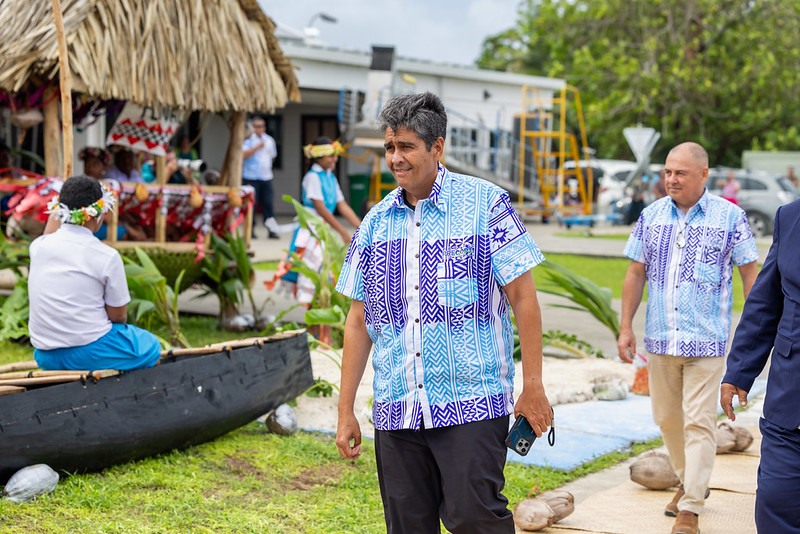
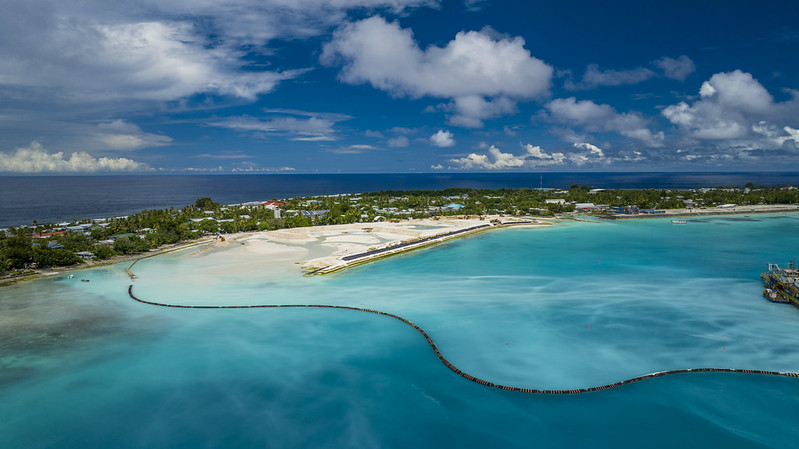
A small group of government leaders, climate negotiators and heads of development banks and climate funds took a trip to Tuvalu’s Funafuti atoll on Tuesday morning, travelling by road over land just 10-20 metres wide to visit a project that is building barriers to keep the sea from the land.
They then flew to Fiji for the pre-COP summit, where several Pacific leaders said they had been let down by the insufficient quantity, bad terms and slow speed of international finance to help them adapt to a warming climate that is bringing higher oceans, drought and more powerful storms to their shores.
“Right now, our islands are like a canoe that has been rammed by a massive foreign ship. Our canoe is taking on water, we are sinking, and what is the world’s response?” asked Palau’s President Surangel Whipps Jr.
“They hand us a tiny patch to cover a gaping hole,” he continued, “but the bureaucratic process just to receive that patch is so slow that the water fills the hole while we wait. Then to rebuild the vessel so that we can survive the next storm, we are offered loans, debt that adds weight to a sinking boat packaged in red tape so thick we can barely access it. And while we wait, the water continues to fill.”
Pacific leaders and Australia called again on governments to invest in the new Pacific Resilience Facility (PRF), which has been designed by the Pacific Islands Forum and is seeking $500 million in investments by COP31 in November.
It has around $180 million so far, but did not receive additional pledges during the UN General Assembly in New York. The PRF aims to invest to generate annual returns which it can give to projects like water tanks for drought-hit communities.
Witnessing sea level rise
The annual pre-COP gathering is usually a low-profile technical meeting of climate negotiators. But this year, Australia – which is the president of negotiations at COP31 – partnered with the Pacific to introduce a “leaders segment” in an attempt to shine a spotlight on climate issues affecting the region.
Fourteen government leaders – from Australia, Timor-Leste, Mauritius and the Pacific – made the trip. They were joined by the European Union’s climate commissioner Wopke Hoekstra, the heads of the Green Climate Fund and the Asian Development Bank and former Australian prime minister Julia Gillard.
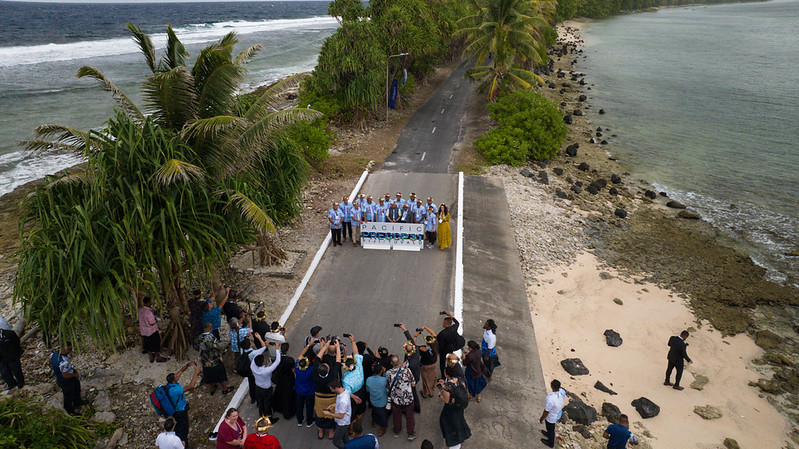
On their return to Fiji, Solomon Islands Prime Minister Matthew Wale told the pre-COP leaders roundtable that the sea level rise they had witnessed was personal for him.
“Tuvalu was not just a site visit for me. I saw the story of my own saltwater people,” he said, adding that he, his daughter and his grandfather had lost their houses to sea level rise and that three-quarters of his electorate live on land that will be underwater in the next 30 years.
From the other side of the world, Antigua and Barbuda’s environment minister Michael Joseph said Tuvalu’s problems felt similar to those of his own Caribbean islands. “I saw vulnerable communities… just metres from the sea and people determined to remain on their land, preserve their culture and way of life,” he said.
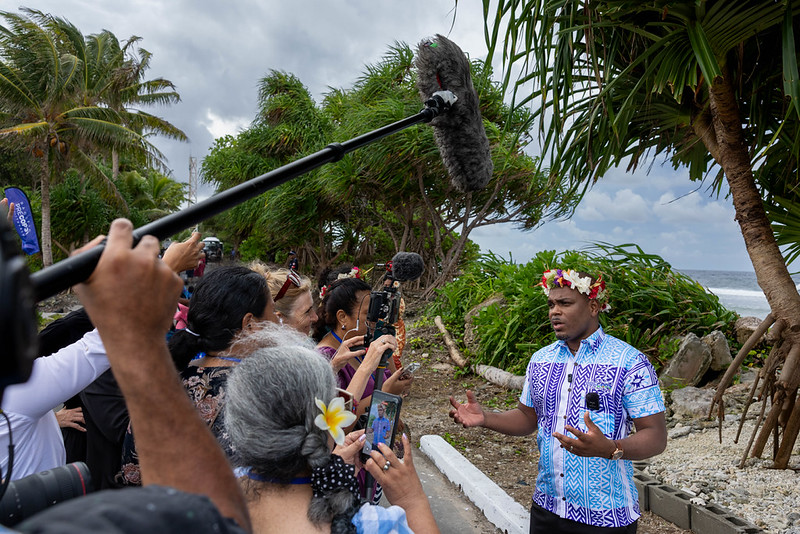
A group of Fijian schoolchildren told the leaders it was not just sea level rise the Pacific struggles with but also heatwaves, droughts and storms, which worry their families and prevent them from learning.
Climate finance red-tape
Several Pacific leaders criticised the world’s leaders for not doing enough to combat climate change. Cook Islands Prime Minister Mark Brown expressed disappointment that only two non-Pacific leaders had come to the pre-COP, a fact Australian media widely picked up on to label the event a flop and question its A$20 million (US$14m) price tag.
“We’ve heard a lot of numbers these last two days,” Brown said. “Let me share one of my own. More than 50 invitations extended to world leaders… to see for themselves what high emissions are doing to our nations and our ocean – an ocean that covers nearly one-third of the Earth’s surface.”
-
Pacific islands seek backing for new regional fund ahead of COP31
Pacific leaders will appeal for pledges to a new regional fund designed to swiftly channel climate finance to local communities -
The Pacific made history in the courts – now we must do it in the negotiations
Legal clarity alone will not lead to reduced emissions, more finance or stronger national climate plans – political will is key to meeting states’ obligations -
Civil servants warn fossil fuel exploration could harm New Zealand’s climate reputation
Advice to politicians says revoking a ban on oil and gas drilling could damage relations with Pacific neighbours and risk lawsuits
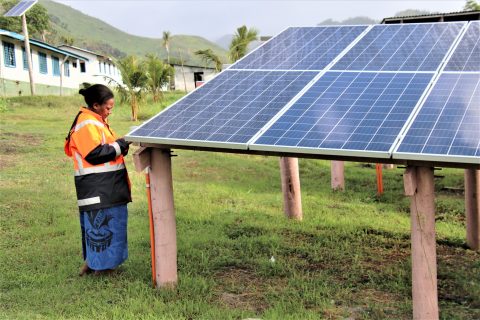


He called for more climate finance for the Pacific, asking “if the world is prepared to assess our suitability for climate finance, why is it not equally prepared to scrutinise whether those responsible for delivering it are meeting their obligations?”
Like Palau’s president Whipps, Naoero’s President David Adeang criticised the red tape that is hindering access to climate finance as well as a lack of money, complaining especially about “complicated procedures, heavy reporting, delays in approval and disbursement”.
Adeang added that “the way we assess vulnerability matters”, adding that it should be measured by more than income. Naoero, for example, is classified by the World Bank as high-income, restricting which climate finance it is eligible for.
Action plan to improve access
On Thursday, the Australian government will present a statement and action plan on improving access to climate finance for small island developing states and least developed countries, which it is asking other countries and organisations to endorse.
The statement addresses some of these Pacific complaints as well as acknowledging that progress has already been made on simplifying access by multilateral development banks and climate funds.
In Fiji, Asian Development Bank head Masato Kanda said his institution is “tailoring our finance and operations to island realities” because “your children and their children should be able to grow old in the countries their ancestors have called home for millennia”.
The executive director of the Green Climate Fund (GCF), Mafalda Duarte, said that the GCF-backed coastal adaptation project leaders visited in Tuvalu shows that “climate finance works” although – as the project took eight years to implement – “it takes time, and therefore we have no time to waste”.
Australia calls for optimism
While Pacific leaders expressed concern that the world is set to blast past its agreed 1.5C warming limit, endangering their nations, Australia’s Prime Minister Anthony Albanese called for “optimism”. “If people think there is no hope, then they will not strive to get the change that we need,” he said.
He said that when he attended his first COP in 2005, Australia’s renewable energy target was 2%. Its target is now 82% renewable electricity by 2030.
While Albanese promoted Australia’s success at electrifying homes and businesses and rolling out renewables, he has been criticised by climate campaigners for extending the production of fossil fuels, including coal – largely for export.
France’s Minister for Ecological Transition Monique Barbut defended the European Union’s climate action at the pre-COP meeting. She said the continent was heating up and reducing emissions faster and providing more climate finance than anywhere else in the world.
“It is time for all major emitters to step up and do their fair share” on climate finance, she said. Most developing countries with large emissions have fiercely resisted joining the club of climate finance donors, arguing they have played a disproportionately small historic role in causing climate change.
Barbut, as well as Palau’s president Whipps, called for the next flagship scientific assessment report of the Intergovernmental Panel on Climate Change (IPCC) to be finished by COP33 in 2028, in time to inform the next global stocktake of national climate action.
This timeline has been opposed by countries like India, Saudi Arabia and China, who argue it would put an unfair burden on developing countries. Barbut said countries should “support the work of the IPCC rather than sabotage its calendar”.
Barbut said that governments should agree at COP31 to aim to raise the share of “clean electricity” in final energy consumption to 35% by 2035. The Turkish and Australian governments have pushed for this goal although without specifying that the electricity should be “clean”. Barbut added that COP31 should also agree to cut emissions of methane, a particularly potent greenhouse gas.
The post Pacific leaders rail at climate finance failures after pre-COP trip to Tuvalu appeared first on Climate Home News.
Pacific leaders rail at climate finance failures after pre-COP trip to Tuvalu
Jacynta Fa’amau is a Pacific campaigner at global grassroots climate movement 350.org and a secretariat member of Pacific Climate Warriors.
The first thing that struck me was the sheer size of Queensland’s Saraji coal mine. Standing at the edge of the enormous pit, my brain scrambled for words as I scanned the earth’s open wound – a whole island could probably fit inside it.
Looking down, I noticed footprints of an emu and a koala, pressed and dried in what was once a puddle – signs of how drought had driven animals in desperate search of water, so dangerously close to the coal trucks and heavy machinery ahead.
Earlier this year, I joined a small group of Pacific Islanders on a journey through the Bowen Basin to learn from First Nations communities battling Australia’s mammoth coal industry. Of the more than 40 coal mines operating in the area, BHP & Mitsubishi Alliance’s Saraji mine is one of the largest. So it came as a painful shock to us when in August, the Australian government approved the mine’s extension just months after our visit.
-
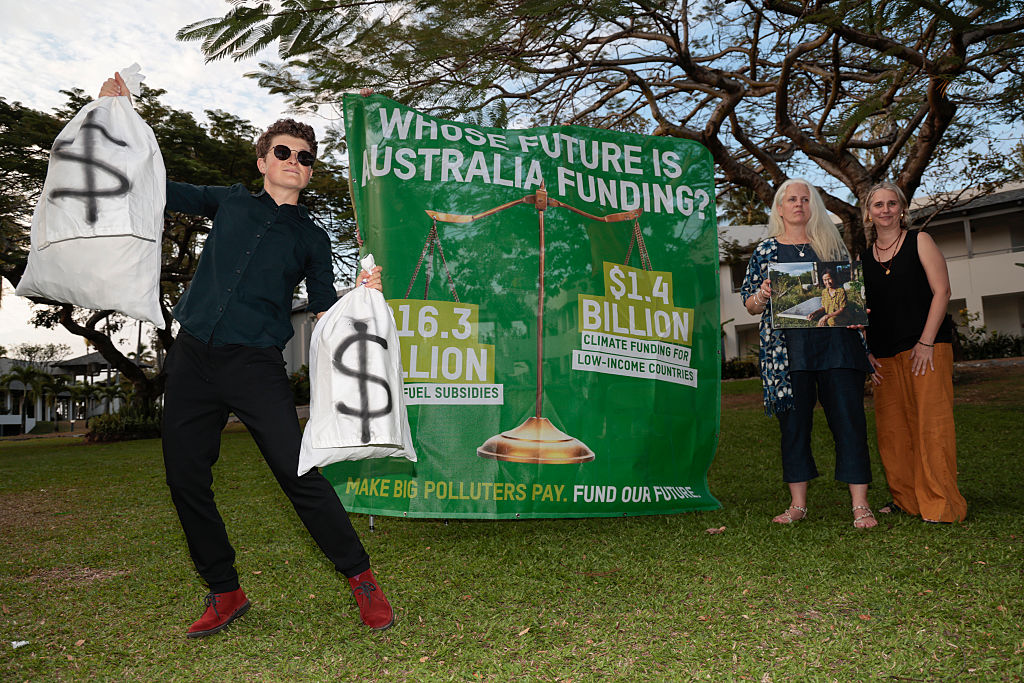
As COP31 co-host, Australia should make its polluters pay for climate damage
With UN climate funds running short on cash, now is the time to start taxing the companies whose emissions are driving harm in the Pacific and other vulnerable parts of the world