Brazil’s new climate pledge, launched at the COP29 climate summit in Baku, aims to cut greenhouse gas emissions by as much as two-thirds by 2035 compared to 2005 levels.
The new pledge makes Brazil one of the first countries to release its latest plan – known as a “nationally determined contribution” (NDC) – ahead of the February 2025 deadline.
NDCs are updated every five years under the Paris Agreement, with countries outlining how they intend to reduce greenhouse gas emissions as part of global efforts to limit warming.
Brazil is hosting the next UN climate summit, COP30, in November 2025, where NDCs from all around the world will be assessed.
Brazil’s submission is keenly watched as it is one of the largest economies in the world, as well as a top-10 annual and historical emitter. It is also the world’s most biodiverse country, hosting tens of thousands of animal and plant species, with major biomes such as the Amazon and Cerrado.
In order to implement the NDC, Brazil will also be updating its national climate plan, which will include national mitigation and adaptation strategies. These will be broken down into 16 sectoral adaptation plans and seven sectoral mitigation plans, “which are intended to be finalised around the mid[dle of] 2025”.
The NDC sets two headline targets: a “less ambitious” target of cutting emissions to 1.05bn tonnes of carbon dioxide equivalent (GtCO2e) by 2035; and a more ambitious target, which would mean cutting emissions to 0.85GtCO2e by 2035.
These would result in a 59% or 67% reduction in emissions, respectively, compared to 2005 levels.
A 2016 pledge from Brazil set reduction targets of 37% by 2025 and 43% by 2030 – corresponding, respectively, to emissions levels of 1.3GtCO2e and 1.2GtCO2e.
The new targets are “ambitious, but also feasible”, Brazil’s vice-president Geraldo Alckmin told COP29.
The establishment of dual targets is a “confirmation that [Brazil] could do much more” when it comes to its ambition, Claudio Angelo, the international policy coordinator at Brazilian climate NGO group Observatório do Clima, tells Carbon Brief.
A technical note from this group warns that, while other countries – including Brazil – previously included a “band” of targets in their NDCs, the size of Brazil’s target range “creates complications to both analysis and implementation”.
Below, Carbon Brief analyses Brazil’s NDC to identify five key points that will define the country’s emissions trajectory over the next decade.
- Combat deforestation and restore degraded lands
- Fossil fuels and energy transition
- ‘Sustainable’ expansion of agricultural production
- Funding the transition, including carbon markets
- Adaptation and sustainable development
1. Combat deforestation and restore degraded lands
Since his 2022 election win, Brazil’s president Luiz Inácio Lula da Silva has pledged to reach “zero deforestation” in the country by 2030.
The country’s new NDC, however, does not explicitly contain this pledge.
The plan outlines the “coordinated and continuous efforts to achieve zero deforestation, by eliminating illegal deforestation and compensating for the legal suppression of native vegetation and the greenhouse gas emissions resulting from it”.
Observatório do Clima, a coalition of Brazilian civil-society organisations, warns that this “still allows high levels of deforestation by 2035” within the higher and lower ends of Brazil’s emissions-cutting target.
Dr Ane Alencar, the director of science at the Amazon Environmental Research Institute (IPAM), notes the uncertainty with illegal deforestation because laws can change over time. She tells Carbon Brief:
“I think it’s important to have a clear target that cannot be challenged. Brazil knows that fighting deforestation is very important for many reasons.”
(Brazil accounts for almost 60% of the Amazon, the world’s largest rainforest.)

A 2023 adjustment to Brazil’s previous NDC committed to reaching zero deforestation by 2030. A 2022 update, sent when former president Jair Bolsonaro was in power, said the country committed to “eliminating illegal deforestation” by 2028.
Forest restoration will be a “key factor” in Brazil’s climate action, the new NDC says, “as it consists of the nature-based removal of greenhouse gases from the atmosphere and, at the same time, allows the goal of climate neutrality by 2050 to be achieved”.
To halt deforestation and preserve native vegetation, it adds that current restoration work will need to be “strengthen[ed] and deepen[ed]”, with more “positive incentives” to maintain forests and vegetation on private rural properties.
Alencar says that existing incentives against deforestation, such as direct payments to conserve forests, “seem not to be enough”, telling Carbon Brief:
“We need more than payments for these areas, paying them for the environmental services. We need the engagement of the private sector, for example, and we need the engagement of local governments.”
Nonetheless, Alencar notes, the Brazilian government has “done a very good job” to reduce deforestation levels in recent years.
Deforestation rates in the Brazilian section of the Amazon dropped by almost one-third between 2023 and 2024, the NDC said. Deforestation is also falling in the Cerrado after rising in recent years.
Alencar notes that stopping all deforestation is near-impossible, telling Carbon Brief:
“There are many people like smallholders and also some producers that will keep deforesting. It’s part of their rotation system…So zero deforestation, I think, is something hard to reach. But I think we can have deforestation at the minimum level.”
2. Fossil fuels and energy transition
According to Brazil’s new NDC, renewable energy sources – primarily, hydropower, but with growing contributions from wind and solar – already comprise 89.1% of the country’s electricity mix and nearly half of its energy mix.
Still, the document says, the country will “seek to expand electricity generation with an increased share of technology and clean sources”.
Several of the sectoral mitigation plans sit under this overarching goal, including one on energy (including electricity, mining and fuels), one on industry and one on transportation.
In terms of industry, the country will “reduce emissions intensity by progressively replacing fossil fuels with biofuels and electrification”. The NDC also calls for developing carbon capture and storage (CCS) technologies in certain industries.
Similarly, the mitigation plan for the transportation sector will seek to “replac[e] fossil fuels with electricity and biofuels”, according to the NDC. It also says that infrastructure improvements will “contribute to an immediate reduction in fuel consumption”.
While there are references to other national plans and policies, there are no specific numerical targets laid out in the NDC for any of these sectors.

The NDC’s 26 “priority issues” include many that relate to creating a legal and regulatory framework to accelerate a transition to clean energy, including on:
- Offshore wind energy production.
- Low-carbon hydrogen production.
- Production of sustainable aviation fuel.
- Carbon dioxide capture and storage.
- Synthetic-fuel production and biofuels.
A technical note published by Observatório do Clima notes that Brazil “keeps silent about its own fossil-fuel expansion plans, implying that the problem is all in the demand side”.
On fossil-fuel phase-out, the NDC quotes the deal struck at COP28, saying:
“Brazil would welcome the launching of international work for the definition of schedules for transitioning away from fossil fuels in energy systems, in a just, orderly and equitable manner.”
It caveats that this would be done “with developing countries taking the lead” and reflecting “common but differentiated responsibilities”. (This is the principle that all countries are responsible for addressing climate change, but not to the same degree – and that those more responsible for causing climate change should bear greater responsibility to address it.)

Multiple NGOs have praised this aspect of Brazil’s NDC, with the ECO NGO newsletter calling it a hidden “jewel” in the pledge.
Política por Inteiro, a Brazilian publication from the Talanoa Institute climate-policy thinktank, says that it “demonstrates that Brazil is ready to position itself as a climate leader among oil, gas and coal-producing nations”.
Alencar says the plan could have been more ambitious, but adds that she believes it is notable that Brazil was among the first to submit an updated climate pledge. She tells Carbon Brief:
“Even with all the difficulties we have in Brazil, there is a commitment of the government to actually move forward and be more ambitious [on climate change]. I think they did that, they renewed their commitment and they were more ambitious, even though I think it could be a little bit more. But I think this is an important step.”
3. ‘Sustainable’ expansion of agricultural production
Agriculture is an important sector in Brazil, with agribusiness making up almost half of the country’s exports. The sector also accounts for around a quarter of Brazil’s greenhouse gas emissions each year.
The country produces and exports vast amounts of meat, coffee, soybeans, corn and other products. Brazil intends to encourage and incentivise more “sustainable” agriculture as part of its emission-cutting efforts, the NDC says.
One of the country’s “national mitigation objectives” is to encourage the “widespread adoption of sustainable agricultural and livestock production models with low greenhouse gas emissions, guaranteeing food security for all”, the NDC says.
It adds that, in this sector, Brazil wants to “continue to demonstrate that it is possible to sustainably expand agricultural production while guaranteeing food security and energy security through the sustainable production of biofuels”.
For this, the country will rely on “two fundamental transformations”:
- Converting new areas, mostly from degraded pastures, for agricultural production, while also expanding “integrated systems” where crops, livestock and trees are grown on the same land.
- “Productivity gains” in agriculture through these integrated growing methods and an “increase in high productivity systems”.
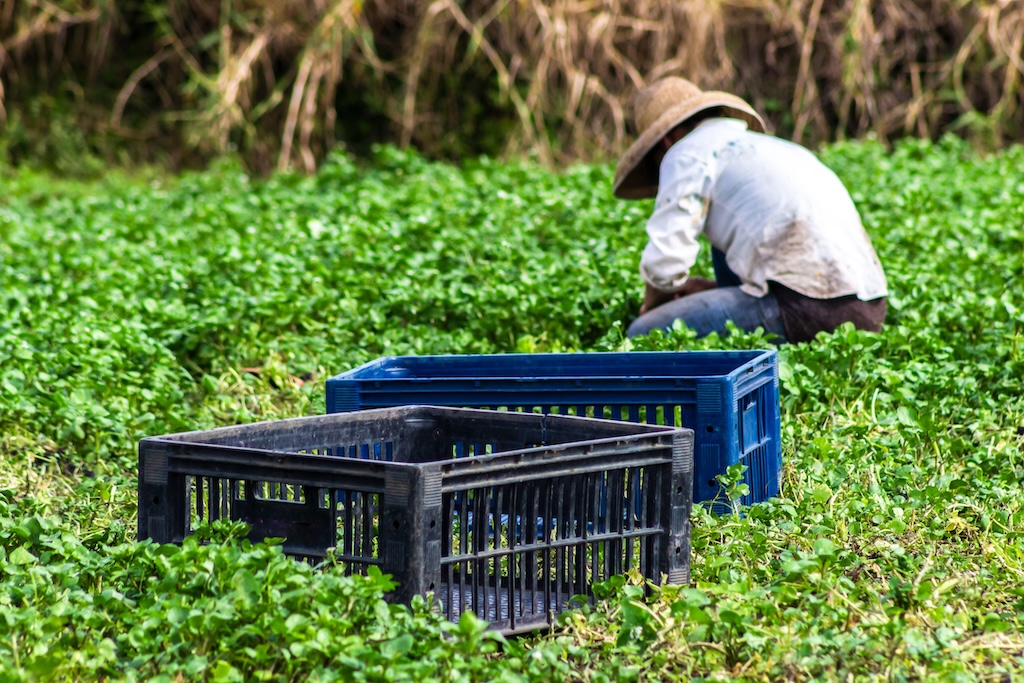
The NDC further outlines a number of plans the country has or will put in place to achieve this, such as a 2021 agriculture adaptation plan.
Further agriculture and livestock mitigation and adaptation strategies are among the sectoral plans in development in Brazil, the NDC says. Alencar tells Carbon Brief:
“I think the agriculture sector is one that can provide lots of contribution, by improving their practices, investing in technologies to reduce cattle contributions and also with soil management.”
One “barrier” for emissions-cutting in agriculture is “land grabbing in the Amazon” and other illegal activities, she notes, saying these actions “generate a burden to the sector as a whole”:
“If the Brazilian agriculture sector really goes in the direction of sustainability, then I think it’s possible to actually fulfil the NDC targets. But, the thing is, part of the sector is actually not [going] in that direction.”
Dr Karen Silverwood-Cope, the climate director of the World Resources Institute Brasil, said in a statement:
“To position itself as a climate leader, Brazil must make progress in the energy and agriculture sectors, which are projected to be major sources of pollution in the years to come.”
4. Funding the transition, including carbon markets
Brazil’s new NDC lays out an ecological transformation plan (ETP) for the country, which contains a range of financial mechanisms – both existing and proposed – that can be used to fund the transition to a net-zero economy.
The Amazon Fund is one of the most well-known financial mechanisms for supporting efforts to reduce emissions from deforestation and degradation, with more than 100 projects in its portfolio. Last year, the fund committed R$1.3bn ($226.3m) for such projects.
Brazil’s Climate Fund, established by law in 2009, but “reformulated” last year to include new financial streams, is “one of the main instruments for financing Brazil’s ecological transformation in the short- and medium-term”, according to the NDC.
The plan also points out the benefits of tax reform, noting that Brazil’s simplified consumption tax, amended into the constitution last year, created funds that have been used for “reducing regional and social inequalities”.
Sustainable sovereign bonds are another potential financing source for positive ecological change. (Sovereign bonds are essentially loans issued by the government with the promise of future repayment on a specific date.) The government has pledged to allocate the net proceeds to projects with positive environmental outcomes.
The NDC notes that Brazil issued $2bn in sustainable sovereign bonds in November 2023 and again in June 2024. These funds “will be used to control deforestation, to conserve biodiversity, to replenish the [Climate Fund], with a focus on renewable energy and clean transport, and to programs against poverty and hunger”.
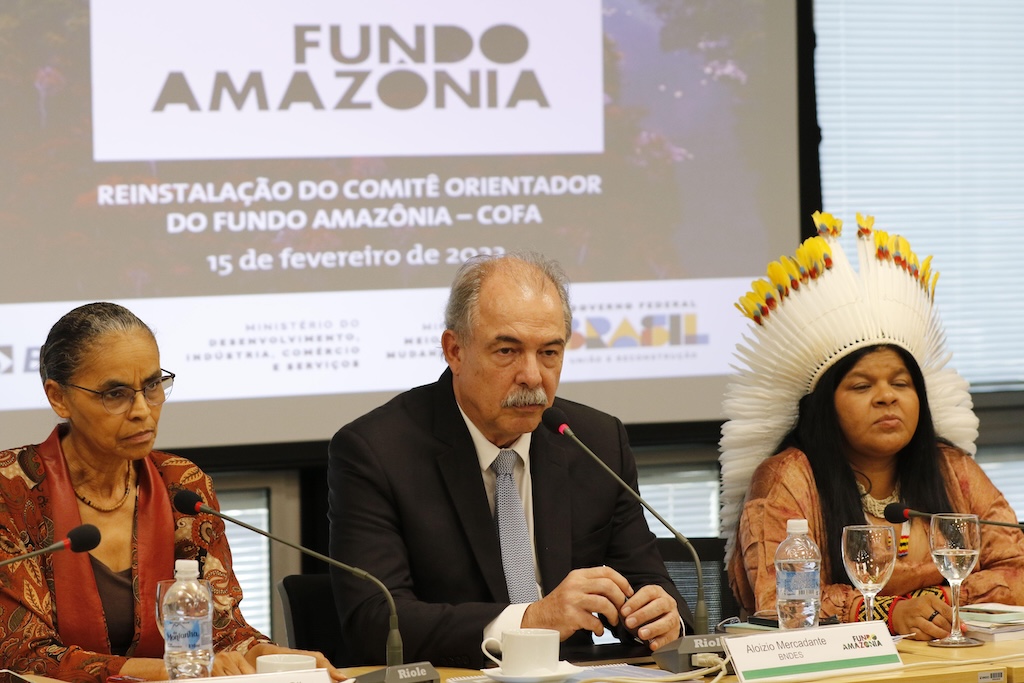
At COP28 in 2022, Brazil proposed the creation of a new financing mechanism, the Tropical Forests Forever Fund (TFFF). The TFFF “uses blended finance to generate financial returns” to pay countries for keeping their forests intact, including allocating a percentage of the funds raised directly to Indigenous peoples.
The NDC also calls for the “approval of the legal framework and regulation of the carbon market” as one of its 26 priority issues.
The Brazilian Congress is currently considering legislation to create the Brazilian emissions trading system, with revenue directed towards encouraging decarbonisation and low-carbon technology development.
The new NDC is the first time that the country “has openly stated its plan to trade emissions reductions with other countries under the rules of the Paris Agreement”, according to Política por Inteiro.
According to the NDC, the government will use the lower-ambition target of 1.05GtCO2e as the “reference for assessing the progress and ambition of future contributions” and, if it surpasses this target, “may” authorise transfers of emissions-reductions up to that level.
Claudio Angelo, international policy coordinator at Observatório do Clima, tells Carbon Brief:
“I think the institutions are there, the tools are there, and this is one of the reasons why we don’t understand why Brazil aimed so low in the NDC – because we have the institutional capacity. We have the finance tools to go much further than we are going.”
5. Adaptation and sustainable development
Adaptation measures – which aim to improve the resilience of populations, ecosystems and species to the impacts of climate change – feature prominently in Brazil’s new climate commitment.
The country will review its national adaptation plan and encourage the creation of local adaptation plans and sectoral plans (16 for adaptation and seven for mitigation) by mid-2025. Such plans will lay out sector-by-sector contributions to emissions reductions.
The NDC also commits to mainstreaming adaptation into policies and projects vulnerable to climate change, promoting public awareness of climate change and transparency and adopting ecosystem-based adaptation approaches.
The government will widen the presence and strengthen the capacities of the three branches of government – Congress, head of state and courts – to implement the goals of the NDC.
Observatório do Clima says the NDC “makes extensive and important references to the topic of adaptation”. It adds:
“This is an extremely relevant issue for a country whose population is already experiencing the consequences of the climate crisis.”
Hand in hand with adaptation, Brazil’s new NDC sets out plans to use the state’s institutional and financial capacity to “foster” sustainable development and a just transition while reducing inequalities.
For example, its national adaptation objectives include increasing the resilience of populations by promoting water and energy security and socioeconomic development.
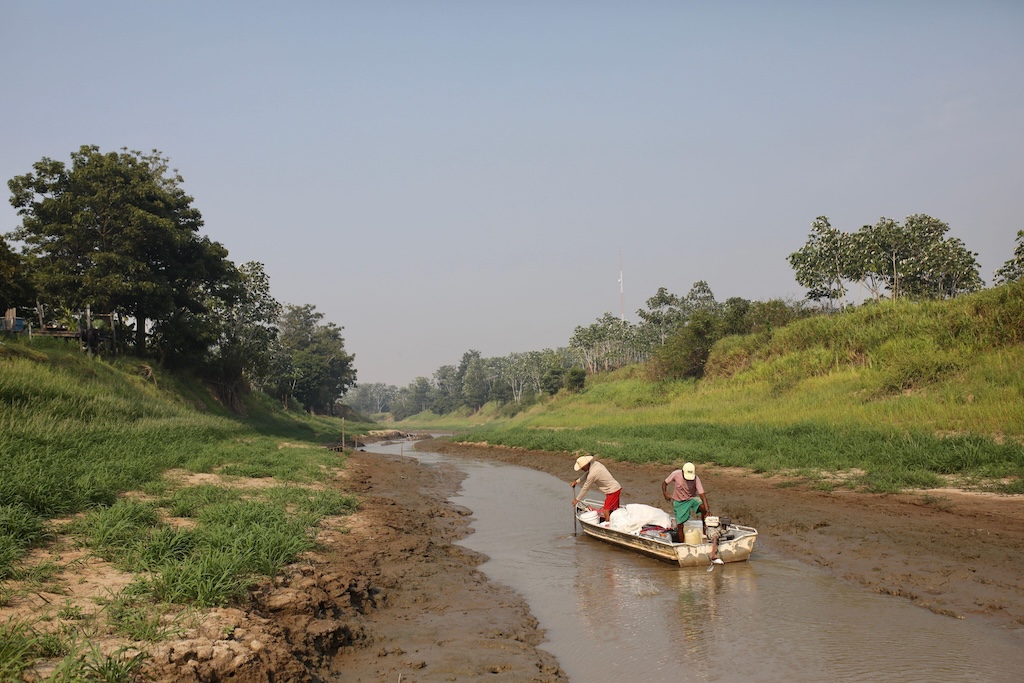
The NDC mentions a “renewed emphasis on promoting sustainable development” and cites recent policies such as the National Bioeconomy Strategy, which aims to ensure that products and services derived from biological resources are produced in a sustainable way. The bioeconomy strategy will aid the state in conserving biodiversity, decarbonising energy use and promoting recycling of such resources, the NDC says.
Elsewhere, the NDC says that the country aims to develop the Brazilian Sustainable Taxonomy, a classification system of projects that benefit the climate, environment or society.
Additionally, Brazil will expand financing and improve insurance mechanisms for sustainable sectors and practices. It will deploy an investment plan for boosting sustainable development called the Ecological Transformation Plan, comprising various economic instruments to encourage sustainable investments. (See: Funding the transition, including carbon markets.)
Angelo, from Observatório do Clima, tells Carbon Brief:
“Policy-wise, it’s a pretty good NDC. It does mention a series of policies that are already in place or being planned…But the NDC [emissions reduction target] is very weak; it is [not] 1.5C aligned. I would say the direction of travel is right, but the speed is totally wrong.”
The post COP29: Five key takeaways from Brazil’s 2035 climate pledge appeared first on Carbon Brief.
Climate Change
Looking Ahead to a Deepening Affordability Crisis, an Election and the Threat of an AI Investment Bubble
Seven experts weigh in on what they expect in 2026.
U.S. energy markets and policy are heading toward the equivalent of a multicar pileup in 2026.
Climate Change
DeBriefed 9 January 2026: US to exit global climate treaty; Venezuelan oil ‘uncertainty’; ‘Hardest truth’ for Africa’s energy transition
Welcome to Carbon Brief’s DeBriefed.
An essential guide to the week’s key developments relating to climate change.
This week
US to pull out from UNFCC, IPCC
CLIMATE RETREAT: The Trump administration announced its intention to withdraw the US from the world’s climate treaty, CNN reported. The move to leave the UN Framework Convention on Climate Change (UNFCCC), in addition to 65 other international organisations, was announced via a White House memorandum that states these bodies “no longer serve American interests”, the outlet added. The New York Times explained that the UNFCCC “counts all of the other nations of the world as members” and described the move as cementing “US isolation from the rest of the world when it comes to fighting climate change”.
MAJOR IMPACT: The Associated Press listed all the organisations that the US is exiting, including other climate-related bodies such as the Intergovernmental Panel on Climate Change (IPCC) and the International Renewable Energy Agency (IRENA). The exit also means the withdrawal of US funding from these bodies, noted the Washington Post. Bloomberg said these climate actions are likely to “significantly limit the global influence of those entities”. Carbon Brief has just published an in-depth Q&A on what Trump’s move means for global climate action.
Oil prices fall after Venezuela operation
UNCERTAIN GLUT: Global oil prices fell slightly this week “after the US operation to seize Venezuelan president Nicolás Maduro created uncertainty over the future of the world’s largest crude reserves”, reported the Financial Times. The South American country produces less than 1% of global oil output, but it holds about 17% of the world’s proven crude reserves, giving it the potential to significantly increase global supply, the publication added.
TRUMP DEMANDS: Meanwhile, Trump said Venezuela “will be turning over” 30-50m barrels of oil to the US, which will be worth around $2.8bn (£2.1bn), reported BBC News. The broadcaster added that Trump claims this oil will be sold at market price and used to “benefit the people of Venezuela and the US”. The announcement “came with few details”, but “marked a significant step up for the US government as it seeks to extend its economic influence in Venezuela and beyond”, said Bloomberg.
Around the world
- MONSOON RAIN: At least 16 people have been killed in flash floods “triggered by torrential rain” in Indonesia, reported the Associated Press.
- BUSHFIRES: Much of Australia is engulfed in an extreme heatwave, said the Guardian. In Victoria, three people are missing amid “out of control” bushfires, reported Reuters.
- TAXING EMISSIONS: The EU’s landmark carbon border levy, known as “CBAM”, came into force on 1 January, despite “fierce opposition” from trading partners and European industry, according to the Financial Times.
- GREEN CONSUMPTION: China’s Ministry of Commerce and eight other government departments released an action plan to accelerate the country’s “green transition of consumption and support high-quality development”, reported Xinhua.
- ACTIVIST ARRESTED: Prominent Indian climate activist Harjeet Singh was arrested following a raid on his home, reported Newslaundry. Federal forces have accused Singh of “misusing foreign funds to influence government policies”, a suggestion that Singh rejected as “baseless, biased and misleading”, said the outlet.
- YOUR FEEDBACK: Please let us know what you thought of Carbon Brief’s coverage last year by completing our annual reader survey. Ten respondents will be chosen at random to receive a CB laptop sticker.
47%
The share of the UK’s electricity supplied by renewables in 2025, more than any other source, according to Carbon Brief analysis.
Latest climate research
- Deforestation due to the mining of “energy transition minerals” is a “major, but overlooked source of emissions in global energy transition” | Nature Climate Change
- Up to three million people living in the Sudd wetland region of South Sudan are currently at risk of being exposed to flooding | Journal of Flood Risk Management
- In China, the emissions intensity of goods purchased online has dropped by one-third since 2000, while the emissions intensity of goods purchased in stores has tripled over that time | One Earth
(For more, see Carbon Brief’s in-depth daily summaries of the top climate news stories on Monday, Tuesday, Wednesday, Thursday and Friday.)
Captured
The US, which has announced plans to withdraw from the UNFCCC, is more responsible for climate change than any other country or group in history, according to Carbon Brief analysis. The chart above shows the cumulative historical emissions of countries since the advent of the industrial era in 1850.
Spotlight
How to think about Africa’s just energy transition

African nations are striving to boost their energy security, while also addressing climate change concerns such as flood risks and extreme heat.
This week, Carbon Brief speaks to the deputy Africa director of the Natural Resource Governance Institute, Ibrahima Aidara, on what a just energy transition means for the continent.
Carbon Brief: When African leaders talk about a “just energy transition”, what are they getting right? And what are they still avoiding?
Ibrahima Aidara: African leaders are right to insist that development and climate action must go together. Unlike high-income countries, Africa’s emissions are extremely low – less than 4% of global CO2 emissions – despite housing nearly 18% of the world’s population. Leaders are rightly emphasising universal energy access, industrialisation and job creation as non-negotiable elements of a just transition.
They are also correct to push back against a narrow narrative that treats Africa only as a supplier of raw materials for the global green economy. Initiatives such as the African Union’s Green Minerals Strategy show a growing recognition that value addition, regional integration and industrial policy must sit at the heart of the transition.
However, there are still important blind spots. First, the distributional impacts within countries are often avoided. Communities living near mines, power infrastructure or fossil-fuel assets frequently bear environmental and social costs without sharing in the benefits. For example, cobalt-producing communities in the Democratic Republic of the Congo, or lithium-affected communities in Zimbabwe and Ghana, still face displacement, inadequate compensation, pollution and weak consultation.
Second, governance gaps are sometimes downplayed. A just transition requires strong institutions (policies and regulatory), transparency and accountability. Without these, climate finance, mineral booms or energy investments risk reinforcing corruption and inequality.
Finally, leaders often avoid addressing the issue of who pays for the transition. Domestic budgets are already stretched, yet international climate finance – especially for adaptation, energy access and mineral governance – remains far below commitments. Justice cannot be achieved if African countries are asked to self-finance a global public good.
CB: Do African countries still have a legitimate case for developing new oil and gas projects, or has the energy transition fundamentally changed what ‘development’ looks like?
IA: The energy transition has fundamentally changed what development looks like and, with it, how African countries should approach oil and gas. On the one hand, more than 600 million Africans lack access to electricity and clean cooking remains out of reach for nearly one billion people. In countries such as Mozambique, Nigeria, Senegal and Tanzania, gas has been framed to expand power generation, reduce reliance on biomass and support industrial growth. For some contexts, limited and well-governed gas development can play a transitional role, particularly for domestic use.
On the other hand, the energy transition has dramatically altered the risks. Global demand uncertainty means new oil and gas projects risk becoming stranded assets. Financing is shrinking, with many development banks and private lenders exiting fossil fuels. Also, opportunity costs are rising; every dollar locked into long-lived fossil infrastructure is a dollar not invested in renewables, grids, storage or clean industry.
Crucially, development today is no longer just about exporting fuels. It is about building resilient, diversified economies. Countries such as Morocco and Kenya show that renewable energy, green industry and regional power trade can support growth without deepening fossil dependence.
So, the question is no longer whether African countries can develop new oil and gas projects, but whether doing so supports long-term development, domestic energy access and fiscal stability in a transitioning world – or whether it risks locking countries into an extractive model that benefits few and exposes countries to future shocks.
CB: What is the hardest truth about Africa’s energy transition that policymakers and international partners are still unwilling to confront?
IA: For me, the hardest truth is this: Africa cannot deliver a just energy transition on unfair global terms. Despite all the rhetoric, global rules still limit Africa’s policy space. Trade and investment agreements restrict local content, industrial policy and value-addition strategies. Climate finance remains fragmented and insufficient. And mineral supply chains are governed largely by consumer-country priorities, not producer-country development needs.
Another uncomfortable truth is that not every “green” investment is automatically just. Without strong safeguards, renewable energy projects and mineral extraction can repeat the same harms as fossil fuels: displacement, exclusion and environmental damage.
Finally, there is a reluctance to admit that speed alone is not success. A rushed transition that ignores governance, equity and institutions will fail politically and socially, and, ultimately, undermine climate goals.
If Africa’s transition is to succeed, international partners must accept African leadership, African priorities and African definitions of development, even when that challenges existing power dynamics in global energy and mineral markets.
Watch, read, listen
CRISIS INFLAMED: In the Brazilian newspaper Folha de São Paulo, columnist Marcelo Leite looked into the climate impact of extracting more oil from Venezuela.
BEYOND TALK: Two Harvard scholars argued in Climate Home News for COP presidencies to focus less on climate policy and more on global politics.
EU LEVIES: A video explainer from the Hindu unpacked what the EU’s carbon border tax means for India and global trade.
Coming up
- 10-12 January: 16th session of the IRENA Assembly, Abu Dhabi
- 13-15 January: Energy Security and Green Infrastructure Week, London
- 13-15 January: The World Future Energy Summit, Abu Dhabi
- 15 January: Uganda general elections
Pick of the jobs
- WRI Polsky Energy Center, global director | Salary: around £185,000. Location: Washington DC; the Hague, Netherlands; New Delhi, Mumbai, or Bengaluru, India; or London
- UK government Advanced Research and Invention Agency, strategic communications director – future proofing our climate and weather | Salary: £115,000. Location: London
- The Wildlife Trusts, head of climate and international policy | Salary: £50,000. Location: London
- Children’s Investment Fund Foundation, senior manager for climate | Salary: Unknown. Location: London, UK
DeBriefed is edited by Daisy Dunne. Please send any tips or feedback to debriefed@carbonbrief.org.
This is an online version of Carbon Brief’s weekly DeBriefed email newsletter. Subscribe for free here.
The post DeBriefed 9 January 2026: US to exit global climate treaty; Venezuelan oil ‘uncertainty’; ‘Hardest truth’ for Africa’s energy transition appeared first on Carbon Brief.
Climate Change
Melting Ground: Why Permafrost Matters for Climate Change and Indigenous Peoples
When people discuss climate change, most envision melting glaciers, smoke-filled skies from wildfires, or hurricanes ravaging coastlines. However, another crisis is unfolding in Canada’s North, one that is quieter but just as perilous: the melting of permafrost.
Permafrost is ground that has remained frozen for at least two years, though in many places, it has been frozen for thousands of years. It is a mix of soil, rock, and ice, and it covers almost half of Canada’s landmass, particularly in the Arctic. Think of it like the Earth’s natural deep freezer. Inside it are ancient plants, animal remains, and vast amounts of carbon that have been trapped and locked away for millennia.
As long as the permafrost stays frozen, those gases remain contained. But now, as temperatures rise and the Arctic warms nearly four times faster than the global average, that freezer door is swinging wide open.
Why the Arctic Matters to Everyone
It might be tempting to think of the Arctic as far away, remote, untouched, or disconnected from daily life in southern Canada. But the reality is that what happens in the Arctic affects everyone. Permafrost contains almost twice as much carbon as is currently in the Earth’s atmosphere. When it melts, that carbon escapes in the form of carbon dioxide and methane, two of the most potent greenhouse gases.
This creates a dangerous cycle: warmer air melts permafrost, which releases greenhouse gases, and those gases in turn contribute to even greater warming of the Earth. Scientists refer to this as a “feedback loop.” If large amounts of permafrost thaw, the gases released could overwhelm even the strongest climate policies, making it almost impossible to slow global warming.
The ripple effects are already visible. Melting permafrost worsens heatwaves in Ontario, intensifies wildfires in Alberta and British Columbia, and fuels stronger Atlantic storms. Rising global temperatures also bring increased insurance premiums, higher food prices, and strained infrastructure due to new climate extremes. The Arctic may be far north, but it is the beating heart of global climate stability.
Impacts Close to Home in Canada
For northern communities, the impacts of melting permafrost are immediate and deeply personal. Buildings, schools, and homes that were once stable on frozen foundations are cracking and sinking. Road’s twist and buckle, airstrips become unsafe, and pipelines leak as the ground beneath them shifts. This is not just inconvenient; it is life-threatening, as these systems provide access to food, medical care, and basic supplies in places already cut off from southern infrastructure.
The hamlet of Tuktoyaktuk, Northwest Territories, sits on the edge of the Arctic Ocean. As the permafrost beneath it thaws, the coastline is collapsing at an alarming rate of several meters each year. Entire homes have already been moved inland, and Elders warn that parts of the community may disappear into the sea within a generation. For residents, this is not just about losing land but losing ancestral ties to a place that has always been home.
In Inuvik, Northwest Territories, traditional underground ice cellars, once reliable food storage systems for generations, are collapsing into the permafrost. Families now face soaring costs to ship in groceries; undermining food security and cultural practices tied to country food.
Even the transportation routes that connect the North to the South are threatened. In the Yukon, the Dempster Highway, Canada’s only all-season road to the Arctic coast, is buckling as thawing permafrost destabilizes its foundation. Engineers are racing to repair roads that were never designed for melting ground, costing governments tens of millions of dollars each year.
And the South is not spared. The carbon released from permafrost melt contributes to the greenhouse gases driving climate extremes across Canada, including hotter summers in Toronto, devastating wildfires in Kelowna, severe flooding along the St. Lawrence, and worsening droughts on the Prairies. What melts in the North shapes life everywhere else.
Why Permafrost is Sacred in Indigenous Worldviews
For Indigenous Peoples of the Arctic, permafrost is not just frozen soil; it is a living part of their homeland and identity. Inuit, First Nations, and Métis Peoples have lived in relationship with frozen ground for thousands of years. The permafrost preserves sacred sites, traditional travel routes, and hunting lands. It has long been a source of stability, shaping the balance of ecosystems and making possible the cultural practices that sustain communities.
For Inuit in particular, permafrost has always been a trusted partner in food security. Ice cellars dug into the ground kept caribou, seal, fish, and whale meat fresh throughout the year. This practice is not only efficient and sustainable but also deeply cultural, tying families to cycles of harvest and sharing. As the permafrost melts and these cellars collapse, Inuit food systems are being disrupted. Families must rely more heavily on expensive store-bought food, which undermines both health and cultural sovereignty.
The thaw also threatens sacred spaces. Burial grounds are being disturbed, rivers and lakes are shifting, and the plants and animals that communities depend on are disappearing. In Indigenous worldviews, the land is kin alive and relational. When the permafrost melts, it signals not just an environmental crisis but a breaking of relationships that have been nurtured since time immemorial.
The Human Face of Melting Permafrost
The impacts of permafrost melt cannot be measured solely in terms of carbon emissions or financial costs. They must also be seen in the daily lives of the people who call the North home. In some communities, houses tilt and become uninhabitable, forcing residents to relocate, which disrupts family life, education, and mental health. In others, health centres and schools need constant repair, straining already limited budgets.
Travel across the land, once a predictable and safe experience, is now risky. Snowmobiles break through thinning ice. Trails flood or erode unexpectedly. Hunters face danger simply by trying to continue practices that have sustained their people for millennia.
For many Indigenous families, this is not only about the loss of infrastructure but also the loss of identity. When permafrost thaws, so do the practices tied to it: storing food, travelling safely, caring for burial sites, and teaching youth how to live in balance with the land. These changes erode culture, language, and ways of knowing that are inseparable from place.
Why the World Should Pay Attention
The melting of permafrost is not just a northern problem it is a global alarm bell. Scientists estimate that if even a fraction of the carbon stored in permafrost is released, it could equal the emissions from decades of current human activities. This is enough to derail international climate targets and lock the planet into a state of runaway warming.
This matters for everyone. Rising seas will not stop at Canada’s borders; they will flood coastal cities around the globe. Droughts and crop failures will disrupt food supplies and drive-up prices worldwide. Heatwaves will claim more lives in cities already struggling to keep cool. Economic costs will skyrocket, from insurance payouts to rebuilding disaster-hit communities. If the permafrost continues to thaw unchecked, the climate shocks of the past decade will look mild compared to what lies ahead.
But beyond the science, there is also a moral responsibility. The Arctic has contributed the least to climate change yet is suffering some of its most significant impacts. Indigenous communities, which have lived sustainably for generations, are now bearing the brunt of global emissions. For the world to ignore this crisis is to accept an injustice that will echo through history.
The Arctic is often referred to as the “canary in the coal mine” for climate change, but it is more than a warning system; it is a driver of global stability. If we lose the permafrost, we risk losing the fight against climate change altogether. Paying attention to what is happening in the Arctic is not optional. It is a test of whether humanity can listen, learn, and act before it is too late.
Moving Forward: Responsibility and Action
Addressing permafrost melt means tackling climate change at its root: cutting greenhouse gas emissions and transitioning to renewable energy. Canada must lead in reducing its dependence on oil and gas while investing in clean energy and climate-resilient infrastructure. But technical fixes alone are not enough. Indigenous-led monitoring, adaptation, and governance must be supported and prioritized.
In Nunavut and the Northwest Territories, Indigenous guardians and community researchers are already combining traditional knowledge with Western science to track permafrost thaw, monitor wildlife, and pilot new forms of housing built for unstable ground. These projects demonstrate that solutions are most effective when they originate from the individuals most closely connected to the land.
For families in southern Canada, the issue may seem distant. However, the truth is that every decision matters. The energy we use, the food we waste, and the products we buy all contribute to the warming that melts permafrost. By reducing consumption, supporting Indigenous-led initiatives, and advocating for robust climate policies, households far from the Arctic can still play a role in protecting it.
The permafrost is melting. It is reshaping the Arctic, altering Canada, and posing a threat to global climate stability. However, it also offers us a choice: to continue down a path of denial, or to act guided by science, led by Indigenous knowledge, and rooted in care for the generations to come.
Blog by Rye Karonhiowanen Barberstock
Image Credit : Alin Gavriliuc, Unsplash
The post Melting Ground: Why Permafrost Matters for Climate Change and Indigenous Peoples appeared first on Indigenous Climate Hub.
Melting Ground: Why Permafrost Matters for Climate Change and Indigenous Peoples
-
Greenhouse Gases5 months ago
Guest post: Why China is still building new coal – and when it might stop
-
Climate Change5 months ago
Guest post: Why China is still building new coal – and when it might stop
-
Climate Change2 years ago
Spanish-language misinformation on renewable energy spreads online, report shows
-
Greenhouse Gases2 years ago嘉宾来稿:满足中国增长的用电需求 光伏加储能“比新建煤电更实惠”
-
Climate Change Videos2 years ago
The toxic gas flares fuelling Nigeria’s climate change – BBC News
-

Climate Change2 years ago嘉宾来稿:满足中国增长的用电需求 光伏加储能“比新建煤电更实惠”
-
Carbon Footprint2 years agoUS SEC’s Climate Disclosure Rules Spur Renewed Interest in Carbon Credits
-
Climate Change2 years ago
Bill Discounting Climate Change in Florida’s Energy Policy Awaits DeSantis’ Approval