

At the COP15 biodiversity summit in December 2022, nearly every country in the world committed to a new global agreement to “halt and reverse” biodiversity loss by 2030 and “restore harmony with nature” by 2050.
Under the Kunming-Montreal Global Biodiversity Framework (GBF), countries pledged to release new national plans for how they will achieve a range of goals and targets.
These plans are known as national biodiversity strategies and action plans (NBSAPs).
The GBF requires countries to submit new NBSAPs ahead of COP16, the next global biodiversity summit being held in Cali, Colombia in October.
Below, Carbon Brief tracks which countries have submitted new NBSAPs and analyses how each country has pledged to meet the key targets outlined in the GBF.
Table design by Tom Pearson. NBSAP translations by Anika Patel, Yanine Quiroz and Alice Vernat-Davies. A full spreadsheet of this data is available to view.
What are NBSAPs and why are they important for global action on nature loss?
NBSAPs are blueprints for how individual countries plan to tackle biodiversity loss within their borders, as well as ensure they meet the international targets outlined in the GBF.
Each country that is party to the UN’s Convention on Biological Diversity (CBD) is expected – but not legally required – to submit NBSAPs.
There are 196 parties to the CBD including the EU. This includes every country of the world except the US and the Holy See, the governing body of the Vatican. (Republican lawmakers have blocked the US from joining the CBD, citing concerns over “American sovereignty” and “financial burdens”.)
Under the GBF, countries agreed to submit updated NBSAPs ahead of COP16, which is scheduled for 21 October to 1 November 2024 in Colombia.
NBSAPs are similar to nationally determined contributions (NDCs), plans that outline how individual countries envisage meeting the goals of the Paris Agreement. However, a key difference is that countries are legally obliged to submit NDCs, but not NBSAPs.
(The Paris Agreement is an international treaty agreed in 2015 aimed at keeping global temperatures well below 2C, with an ambition of limiting them to 1.5C, by the end of the century.)
The GBF contains a set of four goals and 23 targets, which collectively aim to reverse the rapid decline of biodiversity by 2030 and “restore harmony with nature” by 2050.

One of the most publicised targets is target 3, which commits countries to protecting 30% of their land and seas for nature by 2030 (commonly known as “30 by 30”). The full list of targets is included below.
| Target | Description |
|---|---|
| 1 | Effective management of land- and sea-use change, loss of highly important biodiverse areas close to zero by 2030 |
| 2 | Effective restoration of 30% of degraded ecosystems by 2030 |
| 3 | Effective conservation and management of 30% of land and 30% of oceans by 2030 |
| 4 | Halt human-induced extinctions and maintain and restore genetic diversity |
| 5 | Sustainable use, harvesting and trade of wild species |
| 6 | Mitigate or eliminate the impacts of invasive alien species, reduce the rates of establishment of invasive species by 50% by 2030 |
| 7 | Reduce pollution risks and impacts from all sources by 2030, reduce the overall risk from pesticides by half |
| 8 | Minimise the impacts of climate change and ocean acidification on biodiversity |
| 9 | Ensure sustainable use and management of wild species, while protecting customary use by Indigenous peoples |
| 10 | Sustainable management of areas under agriculture, aquaculture, fisheries and forestry |
| 11 | Restore and enhance ecosystem function through nature-based solutions and ecosystem-based approaches |
| 12 | Increase the area and quality of urban green and blue spaces |
| 13 | Fair and equitable sharing of the benefits arising from the use of genetic resources |
| 14 | Integration of biodiversity into policies and development across all sectors |
| 15 | Enable businesses to monitor, assess and disclose their impacts on biodiversity |
| 16 | Encourage sustainable consumption, including by reducing food waste by half by 2030 |
| 17 | Strengthen capacity for biosafety measures and ensure benefits-sharing from biotechnology |
| 18 | Phase out or reform harmful subsidies in a just way, reducing them by $500bn by 2030 |
| 19 | Substantially increase financial resources, mobilise $200bn per year by 2030 from all sources, including $30bn from developed to developing countries |
| 20 | Strengthen capacity-building and technology transfer |
| 21 | Integrated and participatory management, including the use of traditional knowledge |
| 22 | Equitable representation and participation of Indigenous peoples and local communities |
| 23 | Ensure gender equality in the implementation of the framework |
In their NBSAPs, countries are expected to set out how they will work towards achieving these goals and targets.
But while countries are working towards a shared set of goals, each NBSAP will be highly unique. This is because every country has its own unique blend of species and habitats – and its own challenges when it comes to conserving them.
For example, Ireland’s NBSAP speaks about restoring commercial fish stocks in Irish waters to sustainable levels and repairing the nation’s highly degraded peatlands.
By contrast, Japan’s NBSAP talks about ensuring “appropriate distance between human beings and wildlife is maintained”, likely referring to its booming nature tourism industry.

Which countries have submitted NBSAPs?
As of 2 May 2024, just seven countries and the EU had fulfilled the request to submit an updated NBSAP.
That leaves 188 countries that are yet to submit updated NBSAPs.
The map below shows countries that have submitted updated NBSAPs in green.

At the COP28 climate summit in December 2023, the UK indicated that it will release its updated NBSAP by May.
COP16 host Colombia is among the countries that are yet to submit an updated NBSAP.
What are some key takeaways from the updated NBSAPs?
Reversing biodiversity loss
Examining NBSAPs can offer clues into how countries are responding to the targets set out in the GBF – and their views on traditionally contentious issues such as biodiversity finance, Indigenous rights and the sharing of genetic resources.
The headline “mission” of the GBF is to halt and reverse biodiversity loss by 2030.
While many people associate “biodiversity” with iconic species and tropical rainforests, the term actually covers the whole spectrum of Earth’s biological diversity, ranging from the organisation of genes within organisms to the communities of animals and plants that make up ecosystems.
Last year, a group of biologists explained to Carbon Brief that halting and reversing all biodiversity loss by 2030 would be a “huge challenge”, with one expert saying they were “highly doubtful” it was scientifically possible.
Out of the small group of countries that had released updated NBSAPs at the time of publication, the vast majority did not mention halting and reversing biodiversity loss by 2030 in their plans.
The EU and some of its member states, such as Ireland and Luxembourg, did make a reference to halting and reversing the loss of pollinators, a target set out in the EU biodiversity strategy.
France’s plan says that it will aim to reverse the decline of “threatened flagship species, especially endemic species in overseas territories”.
All of these references are a far cry from reversing the loss of all biodiversity.
The only country to explicitly mention this target in its NBSAP was China, the host nation for COP15.
Invasive species and pesticides
There are some areas of convergence among the very small number of countries that have released updated NBSAPs.
Target 6 of the GBF is to “mitigate or eliminate the impacts of invasive alien species” and to “reduce the rates of establishment of invasive species by 50% by 2030”.
The EU, China and Japan all mention targets to reduce the impact of invasive species.
However, there are differences in what the targets aim to achieve. For example, EU nations are targeting a 50% reduction in the number of Red List species threatened by invasive alien species, whereas China and Japan are targeting a 50% reduction in the rate of invasive species establishment.
Target 7 of the GBF is to “reduce the overall risk from pesticides by half”. (It is worth noting that some parties wanted a more ambitious target to reduce the use – rather than the risk – of pesticides by half.)
In its NBSAP, the EU references a target whereby “the risk and use of chemical pesticides is reduced by 50% and the use of more hazardous pesticides is reduced by 50%”.
This wording is repeated in the NBSAPs of many of its member states – so far, Ireland, France, Luxembourg and Spain.
By contrast, Japan references a need for a “reduction in risk-weighted use of chemical pesticides”, while China commits to “reduce” pesticides and to “gradually phase out highly toxic and high-risk pesticides”.
Biodiversity finance
When it comes to the topic of developed nations providing more finance to help developing nations protect biodiversity – one of the most contentious issues at COP15 – there is little consistency among NBSAPs.
Japan makes the clearest pledge when it comes to supporting developing nations, with a target that says the country will aim to ensure “financial resources for the conservation of biodiversity are secured to improve biodiversity global finance gap”.
Japan will also aim to ensure that “capacity-building…in developing countries by Japan’s support are further implemented”.
Ireland also mentions a target to “strengthen the inclusion of biodiversity in international diplomacy and financing”.
In addition, Japan makes reference to target 18 of the GBF, which is to “phase out or reform harmful subsidies in a just way, reducing them by $500bn by 2030”. (“Harmful subsidies” refer to those that prop up industries known to harm nature, such as large-scale meat farming and fossil-fuel extraction.)
Japan says it will “consider” the “identification and reforms of subsidies harmful for biodiversity”.
Spain has a more clear target for subsidy reform, stating:
“By 2025, 50% of identified harmful subsidies will be reformed, redirected or eliminated and ensure that by 2030 all subsidies or incentives are neutral or positive for natural heritage and biodiversity and adequately incorporate environmental externalities.”


The post COP16: Tracking country pledges on tackling biodiversity loss appeared first on Carbon Brief.
COP16: Tracking country pledges on tackling biodiversity loss

After witnessing and hearing stories of Pacific islands’ vulnerability to climate change, senior climate officials have promised to strengthen efforts to limit global warming to 1.5C, despite an expected overshoot, and to help the region adapt to rising seas and other impacts.
More than 30 world leaders, ministers, climate negotiators and international development bankers travelled to the sinking atoll nation of Tuvalu on Tuesday before attending the pre-COP31 talks in Fiji, where schoolchildren told them about the effects warming-driven droughts, heatwaves and storms are having on their education.
Australia and the Pacific nations hoped to use the pre-COP to reinforce the urgency of tackling climate change to the officials from around 50 countries who travelled to the region. Fiji’s climate minister, Lynda Tabuya, told a closing press conference on Thursday they had wanted to “bring decision-makers to the climate frontlines”.
Many of those decision-makers said they had been moved by what they had seen and heard this week, and their speeches emphasised the importance of limiting global warming to 1.5C above pre-industrial levels, a key goal of the 2015 Paris climate agreement.
-
Pacific leaders rail at climate finance failures after pre-COP trip to Tuvalu
Island nations seek invest in their own Pacific Resilience Facility, as they struggle with the red-tape of international climate funds -
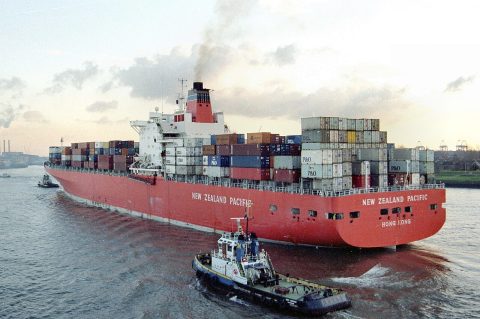
New Zealand accused of breaching EU trade deal over climate rollbacks
The EU’s climate trade rules face their first major test after a green group alleged New Zealand violated binding environmental provisions under its trade deal with the bloc

In September, a UN report acknowledged that the 1.5C threshold will be breached but said temperatures could still be brought back down to that level by the end of the century with stepped-up climate action.
A month ago, Türkiye‘s COP31 President Murat Kurum told a press conference in the northern Turkish city of Trabzon that limiting global warming to 1.5C “does not really look possible”, adding that “around 1.5C, that will be a success”.
But after seeing the “anxiety” of children and mothers in Tuvalu caused by rising sea levels, Kurum told reporters in Fiji that 1.5C is a “matter of survival – the survival of cultures, history, memories, your homeland, your homes – it’s that important.”
“The 1.5C target is in jeopardy and we do not have a single minute, a single day to lose,” he added through an interpreter.
Jacobo Ocharan, head of political strategies at Climate Action Network International, warned that “words of concern will not protect anyone”. “The Pacific has shown the world what is at stake. Now governments must show they are ready to act,” he said. “[COP31 in] Antalya must deliver decisions that change people’s lives for the better.”
$1.5 billion for 1.5C
In Fiji, Kurum echoed the call of Australia and Pacific nations for contributions to the fledgling Pacific Resilience Facility (PRF), which aims to use the returns on its investments to fund community climate adaptation projects like water storage, building sea walls and protecting homes from storms. “$1.5 billion for 1.5 degrees will save the Pacific,” he said. “It’s that easy. Life will continue in Tuvalu. Children will be smiling again.”
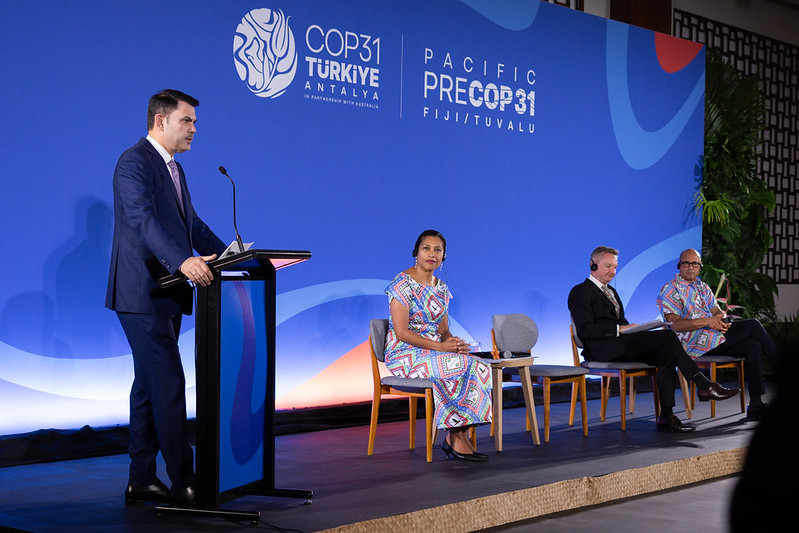
Sitting next to him, Fiji’s Tabuya said she was “encouraged” by his words. “$1.5 billion for 1.5. We will hold COP 31 to that,” she said. The PRF has been promised just under $200 million so far – including about $15 million pledged by European and Pacific governments at pre-COP – and is aiming for $500 million by COP31. It has a longer-term target of mobilising $1.5 billion in capital.
After Pacific leaders on Tuesday aired a litany of concerns about the barriers to accessing the global climate finance system, Kurum joined in at Thursday’s press conference. “Justice in climate finance is essential,” he said. “Resources must reach those in need in a timely and accessible manner, not through a lot of red-tape, and we cannot accept that the same countries should always bear the burden.”
Plan for easier access to climate finance
Australian climate and energy minister Chris Bowen, who is COP31’s president of negotiations, also lamented that “the countries that need the finance the most get it the least”. He said he would ask governments and multilateral development banks to support an access to finance plan for small island states and the world’s poorest nations, launched by Australia on Thursday.
The plan says that while there has been progress in making it easier and quicker to obtain international climate funding, “multiple persistent challenges have continued to limit access to climate finance for developing countries”.
It adds that the amounts available are insufficient to meet climate goals and stresses the need for “grant-based and highly concessional financing”, especially for adaptation and responding to loss and damage. The plan proposes an annual high-level forum on climate finance access to track implementation.
The pre-COP summit closed with an emotional plea from Fiji’s host minister Tabuya. Fighting back tears before finally succumbing, she asked delegates to “carry something of the Pacific with you”.
“Remember the people you met, the stories you heard and why we gathered. This pre-COP draws to a close tonight. Our responsibility does not,” she said to applause.
The post Pre-COP draws attention to Pacific’s climate plight and 1.5C goal appeared first on Climate Home News.
Pre-COP draws attention to Pacific’s climate plight and 1.5C goal
Climate Change
Australia’s climate credibility tested at Pacific Pre-COP talks, as High Court fossil fuel ruling puts government on notice
NADI, FIJI Thursday 8 October 2026 — As the Pacific Pre-COP talks wrap up and Australia prepares to take the reins of COP31 Negotiations in Türkiye next month, Greenpeace Australia Pacific says the government is on notice over fossil fuel expansion and exports, and must accelerate action to align with a 1.5°C pathway.
Following yesterday’s landmark High Court ruling that the climate impacts of coal and gas exports must be considered by New South Wales planning authorities, Greenpeace Australia Pacific is calling on the Albanese government to find the “courage, leadership and grit” to chart a new course away from fossil fuels.
High res images and video from yesterday’s ‘Keep 1.5C Alive’ flotilla in Nadi can be found here
Speaking from Nadi, Shiva Gounden, Head of Pacific at Greenpeace Australia Pacific, said:
“The outcomes of this week’s talks are a drop in the ocean given the scale of need, and urgency of the crisis our communities are facing. It is like taking a glass of water to a burning house if we do not urgently act to address the root cause of the existential threat facing Tuvalu, Fiji and all Pacific countries: fossil fuel expansion.
“The Electrification Pledge must end fossil fuel dependence, not be an end in itself — its ultimate success depends on ensuring electricity comes from renewable sources that displace fossil fuels and align with a 1.5°C pathway. It must be underpinned by justice and backed by finance flowing from polluters to communities.
“Limiting global warming to 1.5°C is a non-negotiable survival line for humanity and Australia must act. The landmark climate advisory ruling from the ICJ is clear — 1.5°C is the moral, the scientific and the legal limit. Continuing down the fossil fuel path, and failing to align efforts with limiting warming to 1.5°C, is a breach of our international legal obligations, and risks making Australia liable for future reparations from climate-vulnerable nations.”
Also in Nadi, Dr Simon Bradshaw, COP31 Lead and climate expert at Greenpeace Australia Pacific, said: “The Pacific was never going to be a mere backdrop for Australia in its role as incoming chair of the COP31 climate talks, but where its credibility and commitment to climate leadership would be tested.
“Here we see communities fighting for their survival and doing everything possible to hold the line on returning warming to 1.5°C. When governments profess to take their concerns seriously, only to then throw more fuel on the fire, the pain and sadness is visceral.
“This week the High Court of Australia recognised what the Federal Government refuses to — that Australia is responsible for the climate damage of our fossil fuel exports and if governments don’t act, the courts will intervene. The message is simple: this is not someone else’s problem, it is ours.
“We must now follow other countries in developing a national roadmap away from fossil fuels that ensures a managed wind-down of fossil fuel production, including exports, in line with our legal obligation to help return warming to 1.5°C.”
ENDS
Media contact: Kate O’Callaghan in Nadi on +61 406 231 892 (Whatsapp/Signal)
A Dutch NGO has filed the first climate complaint under the European Union’s trade rules, arguing that New Zealand violated the environmental provisions of its free trade agreement with the bloc by weakening its climate regulations.
The case will test whether binding climate provisions in the EU’s free trade deals can be enforced to hold governments accountable to their climate obligations, experts told Climate Home News.
The EU-New Zealand free trade agreement, which came into force in 2024, was the first in the world to include legally-binding climate provisions and possible sanctions for violating them, as the EU seeks to use its trade partnerships to advance greater environmental protection.
Under the deal, both parties committed not to weaken their environmental law to promote trade or investment and to “refrain from any action or omission that materially defeats the object and purpose of the Paris Agreement”.