

This year marks a decade since nations successfully negotiated the Paris Agreement, a landmark treaty that has been the guiding force for international climate politics ever since.
Yet, with another round of negotiations looming at COP30 in November, there has been growing discontent with the UN climate process.
Critics say the talks are not doing enough to accelerate emissions cuts, tackle fossil fuels or raise climate funds for developing countries, among other concerns.
Influential figures in climate politics and civil society groups say COPs are in need of an “urgent overhaul” and have launched various manifestos for change.
This has been recognised by the Brazilian COP30 presidency, which has acknowledged the “growing calls for change” and asked parties to “reflect on the future of the process itself”.
All of this comes amid concerns about a “crisis” of multilateralism, widespread conflict and escalating climate hazards.
Carbon Brief asked 16 leading experts about how they think the UN climate talks could be reformed, including Christiana Figueres, Todd Stern, Prof Navroz K Dubash, Bernice Lee, Paul Watkinson, Dr Joanna Depledge, Dr Jennifer Allan, Sandrine Dixson-Declève and Li Shuo.
The contributors’ answers are presented via the thematic sections below.
- Has the Paris Agreement been a success?
- How could the negotiations themselves be improved?
- Can UN climate talks drive faster emissions cuts?
- How could COPs ensure broader accountability?
- Do UN climate talks need majority voting?
- What should the role of the COP presidency be?
- Do fossil-fuel companies have too much influence?
- Are COPs too big?
- How could COP participation be improved?
- How can COPs drive change outside the UN process?
Has the Paris Agreement been a success?
Todd Stern, former US special envoy for climate change: Paris has performed well in some respects, including strengthening both its temperature and emission goals in light of evolving science. It also led to a first global stocktake that called for tripling renewable energy and doubling energy efficiency by 2030 – and transitioning away from fossil fuels – in order to achieve net-zero emissions by 2050.
Bernice Lee, distinguished fellow and senior advisor at Chatham House: It can be hard to remember that the process remains one of the most successful multilateral endeavours in recent history. It has delivered what few thought possible: agreement among nearly 200 countries on a global issue that cuts to the core of national sovereignty, economic models and domestic politics. That the COP process delivered the Paris Agreement – and more recently, an agreement to transition away from fossil fuels – is no small feat. It is also easy to forget that, prior to Paris, the world was on track for a catastrophic 4-5C of warming. Today’s pledges, while still inadequate, have bent that curve closer to 2.5-3C – still unsafe, but a meaningful shift…Rather than dwelling on the system’s imperfections, the question is whether it can evolve, realistically and politically. Dismantling the current system is unlikely to yield a stronger or more equitable one with the authority to override national decisions. The current process, after all, emerged from the ruins of earlier failures.
Kaveh Guilanpour, vice president for international strategies at the Centre for Climate and Energy Solutions: In the aftermath of every COP, there are calls to reform the UNFCCC. But we should be aiming for an evolution, not a revolution, for three reasons. Firstly, a revolution would almost certainly not result in something stronger than we already have. It is hard to imagine that it would be possible to adopt the Paris Agreement in the current geopolitical and economic context. Secondly, the Paris Agreement is working, albeit not fast enough. Thirdly, and most importantly, the biggest barriers to the effective functioning of the UNFCCC and delivering on the Paris Agreement are deficiencies in the underlying politics. No amount of tweaking of the UNFCCC process can make up for that.
How could the negotiations themselves be improved?
Dr Monserrat Madariaga Gomez de Cuenca, environmental lawyer at Legal Response International: It is time to fully acknowledge that there is a crisis of trust in the UN climate process and take appropriate measures to limit it. Parties mistrust each other and stakeholders mistrust the limited results emerging from 30 years of climate talks.
Paul Watkinson, former EU climate negotiator: Whilst the negotiating process can be frustrating, it remains essential. I would focus on making the workload more manageable, for example by grouping items on agendas and organising work on a multiannual basis. The aim should be to give enough time to every item – rather than addressing everything together each time – and develop the understanding that not every item needs a negotiated outcome at each meeting.
Kaveh Guilanpour: [We should] embrace the role of multilateral negotiations at the core – and recognise that this is what attracts world leaders and non-parties to COPs – but work towards contextualising the negotiations in a wider ecosystem of climate action, to which they are clearly linked. Do not place all expectations only on the negotiated outcomes.
Christiana Figueres, former executive secretary of the UNFCCC: We could…streamline repetitive and overloaded agendas – and elevate the accountability of COP presidents through a public oath of office, potentially administered by the UNFCCC bureau, that reminds the COP presidency of its role.
Dr Joanna Depledge, research fellow at the University of Cambridge and former UNFCCC secretariat staff member: Overall, the negotiations have proved resistant to anything but very limited reform. Why so? The fact is that many of the perceived inefficiencies are not flaws as such, but inherent to a global process where all nations are sovereign and equal – and all want a say. They are also inherent to the very issue of climate change, which, because it is so multifaceted…inevitably spawns an ever-expanding agenda, while attracting ever more government and civil society participants. And process is politics: moves to restructure the negotiations inevitably come up against powerful forces who know how to maximise their influence in the existing system and far prefer the status quo.
Dr Monserrat Madariaga Gomez de Cuenca: [COPs should] avoid rushed, closed-door negotiations without party consultations, which make implementation impossible. When draft text appears in the eleventh hour and is forwarded to the closing plenary without proper discussion, the possibilities of parties gaslighting each other on the actual “meaning” and “intention” of the text multiply. Language such as “transitioning away from fossil fuels” or the path towards the “Baku to Belém Roadmap to $1.3tn” – where the wording is not clear – allows parties to cherry-pick the most favourable interpretation, undermining the implementation of decisions that were already difficult to achieve.
Dr Joanna Depledge: Streamlining agendas and limiting government delegation size are worth fighting for, but imposing criteria for selecting COP hosts and excluding private companies involved in high-carbon activities are non-starters. If the real problem is that the COP is not taking decisions in line with the science, then the answer is not tinkering around the edges of procedure and process. What is needed is a major strategic rethink and more fundamental reforms – notably to decision-making practices and voting – as I argue elsewhere.
Harjeet Singh, founding director at the Satat Sampada Climate Foundation: The process must change: streamline negotiations, review consensus rules and ban fossil-fuel lobbyists from influencing texts. Centre the voices of Indigenous peoples, frontline communities and civil society. And scale up public climate finance to enable a just transition and real support for adaptation and addressing loss and damage – by making polluters pay. The recent International Court of Justice advisory opinion has reinforced the demand for climate reparations. COP30 must open a new era of accountability and justice.
Can UN climate talks drive faster emissions cuts?
Dr Jennifer Allan, senior lecturer in international relations, Cardiff University: The UNFCCC is only as effective as parties allow it to be. The Paris Agreement is working precisely how some feared and how some major emitting countries hoped. It is premised on the promise of transparency: that national reports and the global stocktake, coupled with principles of progression, will – somehow – inspire climate ambition. But transparency is not the same as accountability.
Todd Stern: The Paris regime itself has an important role to play. For starters, the regime needs to develop much more of a broad partnership in the spirit of the 2015 High Ambition Coalition. Part of such a shift will depend on considering whether country emission targets are adequate. Of course, Paris was built on the principle of “nationally determined contributions” and that principle cannot be thrown overboard. But Paris was also built on the promise that it would strive to prevent dangerous climate change, that new emission targets every five years would reflect countries’ highest possible ambition and that global stocktakes would, in fact, take stock.
Claudio Angelo, head of international policy at the Climate Observatory: The “nationally determined” nature of nationally determined contributions (NDCs), and the fact that no assessment of progress is formally done outside the five-year period of the global stocktake, mean that the ambition gap will become more difficult to close the more urgent it becomes to close it. The irony of it is that the Paris architecture was tailor-made to accommodate the idiosyncrasies of the US, which has pulled out of the agreement anyway.
Prof Navroz K Dubash, professor of public and international affairs at Princeton School of Public and International Affairs: A bumper sticker for reform of the UN climate talks might read: “Less talk of ambition; more action on implementation”. An “ambition-first” approach rests on extracting national statements of emissions reduction intent, leveraging these up through country “naming and shaming” and strengthening compliance through enhanced accountability. But the conditions are not favourable for this approach. National politics rarely privilege emissions reductions over other objectives and global politics is increasingly non-responsive to climate shame. By contrast, the conditions for a “learning-by-doing” approach based on on-the-ground implementation appear brighter. Many countries are experimenting with pragmatic efforts to turn their economies in low-carbon directions.
Todd Stern: There is nothing about the nationally determined character of country pledges that says countries cannot be questioned, prodded and critiqued. Protecting thin skin is not as important as protecting a liveable world.
Prof Navroz K Dubash: How might global talks enable learning by doing, rather than doubling down on ambition-first approaches? NDCs could be liberated to be templates for experimentation rather than rigid bases for accountability alone. Detailed sectoral low-carbon development pathways would highlight country commonalities, reveal productive scope for international cooperation and incentivise finance…A renewed international process should be focused on the hard, detailed work of enabling low-carbon, resilient development transitions and less on extracting statements of intent.
Kaveh Guilanpour: [We should] move to an approach where progress is measured predominantly by the impact of implemented national level policies, not NDCs on paper. Focus as much on enhancing international cooperation to deliver implementation as on increasing formal ambition on paper through NDC target-setting.
How could COPs ensure broader accountability?
Paul Watkinson: The biggest opportunity to support implementation is outside the formal process, putting order and structure into the “action agenda”. It has grown enormously in recent years and there have been many valuable initiatives…But there has been insufficient continuity and not enough follow-up and tracking to ensure that what is announced and promised is delivered. That is why I welcome the proposal of the incoming Brazilian COP30 presidency to structure the action agenda around six broad themes, drawn from the outcomes of the global stocktake, including a cross-cutting theme around enablers including the vital role of finance. They have the power, in close coordination with the high-level champions, to relaunch the action agenda on stronger foundations that could serve for years to come.
Dr Jennifer Allan: Within the negotiations, there is a glaring need to track the many commitments made outside of the regular negotiation process, either in presidency-led declarations or cover decisions. A central, publicly available hub needs to collate these promises and track progress. Presidencies may broker these commitments, but have few incentives to follow up on them.
Bernice Lee: What can – and must – change is how the system functions. Every decade or so, the climate regime has adapted – from Kyoto’s top-down legalism to Paris’s nationally determined flexibility. These shifts were not just philosophical, they also enabled new capacities. The collapse in Copenhagen helped catalyse renewable energy investment plans, while Paris introduced NDCs. The next phase must embed delivery and equity more deeply into the process including, for example, mechanisms aligning corporate transition plans with country transition, national policies and sectoral pathways. The outcomes of any reform process should mean fewer theatrics, earlier decisions and sharper accountability. All of this would enhance not only country but also public engagement, as well as the credibility of the global climate process.
Harjeet Singh: Rather than catalysing ambition, the Paris Agreement has been used by developed countries to shirk their historical responsibilities…It is not the Paris Agreement or the UNFCCC that failed – it is rich countries that undermined the system to protect polluters and preserve an unsustainable growth model. True reform begins with accountability. Wealthy nations must be held responsible for their historical emissions and must pay for the loss and damage they have caused.
Sandrine Dixson-Declève, honorary president at the Club of Rome and executive chair of Earth4All: Strengthen climate target enforcement through scientific oversight, peer review and robust reporting – ensuring governments, COP presidencies and corporations are held accountable. [There should be] a permanent scientific advisory body within the COP. Science must be central to negotiations, with all delegations regularly briefed on the latest data around risks, equity, solutions and scenarios.
Prof Navroz K Dubash: Ambition and implementation can be complementary, but they are not necessarily so. The former is driven by a relentless focus on emissions, comparability in emission pledges and building accountability. The latter is enabled by linking climate to other objectives, seeking country-specific formulations that buy political support and flexible experimentation that allows for learning from failure. Being more, not less, in the sectoral weeds might reveal opportunities not apparent from the stratospheric heights of climate negotiations. Well-developed, home-grown visions of sustainable futures are the most robust basis for developing countries’ legitimate claims for finance and other support.
Do UN climate talks need majority voting?
Erika Lennon, senior climate attorney at the Centre for International Environmental Law: Voting is the elephant in the room. The parties to the UNFCCC have never been able to adopt the “rules of procedure” because they cannot agree on the provision related to voting in the absence of consensus. Instead, they proceed meeting after meeting using them as “draft rules of procedure”. This has created a race to the bottom whereby countries that want to stall progress can do so. For 29 years, other parties have had to agree to the lowest common denominator in the name of consensus.
Claudio Angelo: The decision made in 2023 to “transition away from fossil fuels” needs both fleshing out and monitoring, but it is nowhere to be seen in the formal negotiations towards Belém. Such omissions reflect one fundamental problem of the UNFCCC and one fundamental flaw of the Paris Agreement: the consensus rule. Some countries are now shamelessly backtracking on their previous commitment and saying that any mention of cutting back on fossil fuels anywhere is a red line for them…A handful of countries are holding the future of humanity hostage because they can block whatever they want [due to the consensus rule]. Even COP presidencies that do want to move the agenda forward are afraid to be bold, lest “the process should collapse”. But a process that is unfit for purpose might as well collapse.
Christiana Figueres: In the context of the formal negotiations, we could reconsider our tradition of having to adopt all decisions unanimously. UNFCCC procedures require consensus for the adoption of decisions, not necessarily unanimity. The difference is important and admittedly challenging to manage, but worth examining.
Erika Lennon: The fix would be to adopt the rules of procedure, including the paragraphs on voting. The UNFCCC would then join many other multilateral environmental agreements – and its own financial instruments – that sometimes use majority voting.
Bernice Lee: In recent months, many well-meaning critics have called the UN multilateral climate process broken, arguing it should be dismantled and replaced, but with no viable alternatives waiting in the wings. Reforming core procedures – such as introducing majority voting or amending the convention – would require agreement from three-quarters of countries, followed by domestic ratification. Even without today’s fractured geopolitics, this would be a tall order.
What should the role of the COP presidency be?
Dr Monserrat Madariaga Gomez de Cuenca: [COPs should] avoid adding more pressure by clarifying duties and processes for the COP president. Rules of procedure simply give the COP president the power to formally conduct the negotiations, which should be done in a neutral manner. Increasingly, we see COP presidents setting exceedingly ambitious plans for their respective COPs. Ideas of “success” and “legacy” permeate what should be a facilitative role towards the collective progress of UN climate talks. COPs finish with statements and reports of achievements that do not reflect the actual progress. Reviewing the conduct of negotiations and the role and expectations of COP presidencies could help in restoring some of the damaged trust in the process.
Prof Thomas Hale, professor in public policy at the University of Oxford: The “action agenda” needs to escape the “boom-bust” cycle that shifting presidencies and high-level champions have imposed on it, in which new announcements trump delivery. The COP30 presidency has laid out a positive approach here, but the acid test lies in making it real.
Sandrine Dixson-Declève: Only countries with high climate ambition should be eligible to host COPs.
Li Shuo, director of the China Climate Hub at the Asia Society Policy Institute: Instead of – or alongside – three more paragraphs specifying how the world will “transition away from fossil fuels” or “triple renewable energy”, how about three renewable projects in the COP host country, to be announced in conjunction with the climate summit?…Efforts to advance the implementation agenda through additional multilateral rulemaking and COP decisions risk missing the point. The COP presidency…could showcase a handful of large‑scale renewable energy projects in their own countries, backed by concrete financing. Such a “trade fair” function of the COP would help bridge the widening gap between what is agreed at COPs and what is happening on the ground.
Do fossil-fuel companies have too much influence?
Erika Lennon: The fossil fuel industry’s survival depends on the UNFCCC’s failure, as meeting the goals of the UNFCCC and Paris Agreement undeniably means phasing out fossil fuels. It is therefore no wonder that, since the beginning, fossil-fuel industry lobbyists have been present at COPs and working to undermine ambition.
Dr Jennifer Allan: Presidencies have much to answer for and can be key to raising accountability. COP is becoming the new Davos: a place for billionaires to meet, without scrutiny of their activities or announcements. This must end. Presidencies should revoke invitations to [Amazon chief executive] Jeff Bezos and others who have been offered high-level platforms.
Erika Lennon: Parties could adopt a conflict-of-interest policy to, at the very least, make [fossil-fuel lobbyists’] influence transparent and subsequently exclude those who aim to unduly influence the process. Parties, including the presidency team, could refuse to give them badges…In addition, they could end greenwashing at COPs in the form of corporate sponsorships and pavilions.
Are COPs too big?
Prof Thomas Hale: COP is both too big and too small for an era of implementation. Its cost and complexity eat up scarce resources. Meanwhile, it creates a gravity well that warps the climate community’s work into an annual rush to the end of the year…At the same time, even the biggest COPs are puny compared to the problem. Climate change demands action from all of society…In this complex system, the UNFCCC process plays the critical function of setting agendas and goals. No other body has the multilateral legitimacy to serve as a lighthouse.
Dr Jennifer Allan: Climate summits could shift from a talkshop to a demonstration of leadership if invitations are only extended to countries that have submitted and maintained more progressive NDCs and are implementing them.
Prof Thomas Hale: We need COPs to be everything, everywhere, all at once. Alongside a single, two-week meeting in one place, we need lots of smaller, focused meetings in many places. Instead of an intergovernmental process that talks about action, we need to fully shift the “action agenda” into the heart of the UNFCCC. The good news is that the elements of this shift are already well in motion, with more and more cities hosting “climate weeks”…Regional meetings with more flexible formats reach more people, in a more targeted way, much more cheaply and efficiently than a COP.
Dr Jennifer Allan: I’ve been researching the role of side events, pavilion activities and Global Climate Action Hub panels in the “expo” that now dominates COP space and participation opportunities. There has been a decided shift, from a smaller number of events focused on negotiation and implementation to a huge array of panels showcasing new initiatives or national actions. It is about what is new, not following up on what has been agreed. Side events and Global Climate Action Hub events could shift focus under the secretariat and the high-level champions. Pavilion spaces could be reserved for those who can demonstrate that their presence will advance climate action.
Sandrine Dixson-Declève: COPs must evolve from negotiation-heavy forums to more frequent, smaller, solution-focused meetings centred on progress and implementation, with broad stakeholder participation.
How could COP participation be improved?
Erika Lennon: Civil society, youth, Indigenous peoples, women, local communities and people with disabilities, among others, have increasingly faced shrinking civic space in the UNFCCC process. They have to fight to have their voices heard, to be present in the rooms where decisions happen, for access to information and open decision-making, and to assemble peacefully.
Shreeshan Venkatesh, global policy lead at Climate Action Network International: Structural barriers…undermine inclusivity and equitable participation in UNFCCC meetings, from the high cost of accommodation at COPs to discriminatory visa practices and shrinking civil society quotas. These barriers must be dismantled to ensure all parties and stakeholders can participate fully and on equal terms.
Erika Lennon: Parties should incorporate and support participation not only at COPs, but also in climate action and decisions on the ground. They can do this by creating space across all agenda items to hear from rightsholders and ensuring human rights and civic space are guaranteed during all negotiations.
Shreeshan Venkatesh: Civic space and freedoms are under threat, even at COPs. Host agreements must guarantee freedom of speech, assembly and accessibility, backed by an independent body to address violations.
How can COPs drive change outside the UN process?
Sandrine Dixson-Declève: COP must transform from a forum of negotiation to a platform of delivery, inclusion and accountability, anchoring climate action in the lived realities of people and the demands of science.
Kaveh Guilanpour: There should be a thorough and honest analysis of the value add of the UNFCCC process and what is best left to other fora.
Christiana Figueres: While some negotiations remain necessary, the most urgent action has shifted to implementation in the context of market forces and climate economics. There is no doubt that civil society, businesses, cities and communities are moving faster than governments. These actors, traditionally considered and labelled as mere “observers” in the formal UNFCCC space, have become the true engines of transformation. One could consider the pros and cons of creating a semi-detached “real world” space alongside COP – one that amplifies their progress, showcases innovation and feeds actionable insights back into the formal process.
Todd Stern: The Paris regime has a role to play in encouraging and tracking strong action outside its purview. This includes the public and private sectors working together on rapid decarbonisation and on unlocking the kind of large-scale investment needed for countries in the global south to build sustainable and resilient economies.
Shreeshan Venkatesh: The UNFCCC, and other multilateral fora that have become central to the formulation and implementation of climate policy and international cooperation, must align with international law. This includes the recent advisory opinions from the ICJ and the Inter-American Court of Justice, and the obligations they clearly lay out.
Claudio Angelo: [There is] a final, bigger problem, which no UNFCCC reform can solve: the climate regime is a child of the democratic world order and the lynchpin of that world order has become a rogue state. The rise of the far-right and the erosion of democracy are rendering multilateralism itself useless – a world that is unable to stop genocides in Gaza and Sudan can’t solve the climate crisis.


The post COP experts: How could the UN climate talks be reformed? appeared first on Carbon Brief.

Saturday, 17 October 2026
7.18 AM AWST
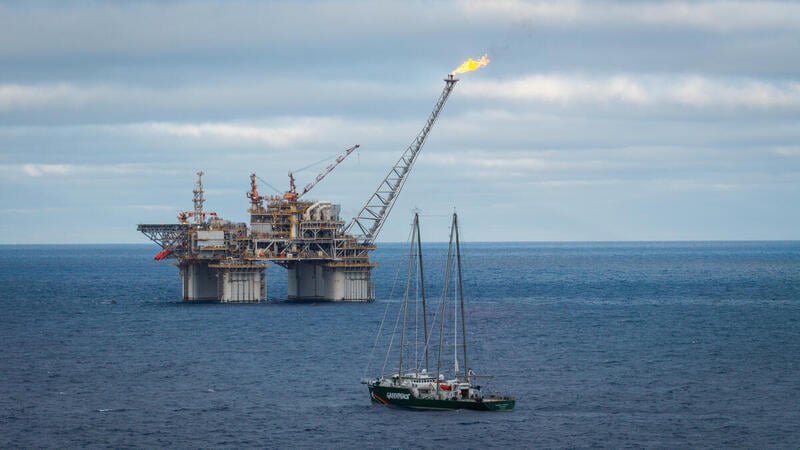
Hi folks! We’re joining you live from the Rainbow Warrior where we will be providing you with updates as our four activists continue scaling and occupying Woodside’s gas platform. The activists are peacefully protesting against Woodside’s latest gas expansion plans, the Browse project, which would see up to 57 toxic wells drilled at Scott Reef.
“Right now our activists are scaling Woodside’s massive Floating Production Unit. They are scaling the South-East pillar and the underside of the Helideck. They’ll be setting up camp soon and have plenty of provisions with them – so stick around!”
5:45 AM AWST
Our RHIBS are in the water! We’ve deployed our four activists and our ship crew on our small fast boats, headed to the gas platform. We’re carrying crew and equipment, plenty of food, all of our safety climbing gear, some big banners, cameras and a whole lot of heart… someone even has something to read after they get settled in.
5:26 AM AWST
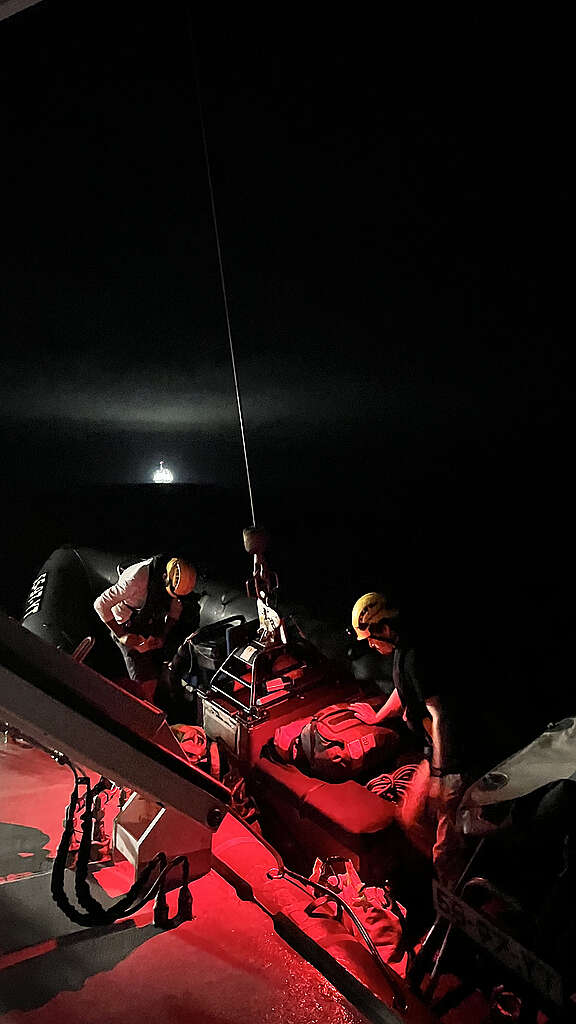
Before sunrise activists prepared to launch RHIBS from the Rainbow Warrior.
Looking for a front seat view?
You can follow along with the Live Rainbow Warrior bow cam here!
Looking for more?
Follow us on Instagram for a peek behind the scenes and hear from our Rainbow Warrior crew.
Live blog: Greenpeace activists occupy Woodside gas project to save Scott Reef
Climate Change
Greenpeace activists climb and occupy Woodside’s Scarborough gas project calling on the Australian government to “Stop Woodside’s Dirty Gas” and “Save Scott Reef”