

Climate change could lead to half a million more deaths from malaria in Africa over the next 25 years, according to new research.
The study, published in Nature, finds that extreme weather, rising temperatures and shifting rainfall patterns could result in an additional 123m cases of malaria across Africa – even if current climate pledges are met.
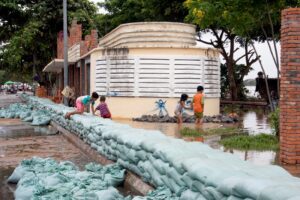
The authors explain that as the climate warms, “disruptive” weather extremes, such as flooding, will worsen across much of Africa, causing widespread interruptions to malaria treatment programmes and damage to housing.
These disruptions will account for 79% of the increased malaria transmission risk and 93% of additional deaths from the disease, according to the study.
The rest of the rise in malaria cases over the next 25 years is due to rising temperatures and shifting rainfall patterns, which will change the habitable range for the mosquitoes that carry the disease, the paper says.
The majority of new cases will occur in areas already suitable for malaria, rather than in new regions, according to the paper.
The study authors tell Carbon Brief that current literature on climate change and malaria “often overlooks how heavily malaria risk in Africa is today shaped by climate-fragile prevention and treatment systems”.
The research shows the importance of ensuring that malaria control and primary healthcare is “resilient” to the extreme weather, they say.
Malaria in a warming world
Malaria kills hundreds of thousands of people every year. The World Health Organization (WHO) estimates that 610,000 people died due to the disease in 2024.
In 2024, Africa was home to 95% of malaria cases and deaths. Children under the age of five made up three-quarters of all African malaria deaths.
The disease is transmitted to humans by bites from mosquitoes infected with the malaria parasite. The insects thrive in high temperatures of around 29C and need stagnant or slow-moving water in which to lay their eggs. As such, the areas where malaria can be transmitted are heavily dependent on the climate.
There is a wide body of research exploring the links between climate change and malaria transmission. Studies routinely find that as temperatures rise and rainfall patterns shift, the area of suitable land for malaria transmission is expanding across much of the world.
Study authors Prof Peter Gething and Prof Tasmin Symons are researchers at the Curtin University’s school of population health and the Malaria Atlas Project from the The Kids Research Institute, Australia.
They tell Carbon Brief that this approach does not capture the full picture, arguing that current literature on climate change and malaria “often overlooks how heavily malaria risk in Africa is today shaped by climate-fragile prevention and treatment systems”.
The paper notes that extreme weather events are regularly linked to surges in malaria cases across Africa and Asia. This is, in-part, because storms, heavy rainfall and floods leave pools of standing water where mosquitoes can breed. For example, nearly 15,000 cases of malaria were reported in the aftermath of Cyclone Idai hitting Mozambique in 2019.
However, the study authors also note that weather extremes often cause widespread disruption, which can limit access to healthcare, damage housing or disrupt preventative measures such as mosquito nets. These factors can all increase vulnerability to malaria, driving the spread of the disease.
In their study, the authors assess both the “ecological” effects of climate change – the impacts of temperature and rainfall changes on mosquito populations – and the “disruptive” effects of extreme weather.
Mosquito habitat
To assess the ecological impacts of climate change, the authors first identify how temperature, rainfall and humidity affect mosquito lifecycles and habitats.
The authors combine observational data on temperature, humidity and rainfall, collected over 2000-22, with a range of datasets, including mosquito abundance and breeding habitat.
The authors then use malaria infection prevalence data, collected by the Malaria Atlas Project, which describes the levels of infection in children aged between two and 10 years old.
Symons and Gething explain that they can then use “sophisticated mathematical models” to convert infection prevalence data into estimates of malaria cases.
Comparing these datasets gives the authors a baseline, showing how changes in climate have affected the range of mosquitoes and malaria rates across Africa in the early 21st century.
The authors then use global climate models to model future changes over 2024-49 under the SSP2-4.5 emissions pathway – which the authors describe as “broadly consistent with current international pledges on reduced greenhouse gas emissions”.
The authors also ran a “counterfactual” scenario, in which global temperatures do not increase over the next 25 years. By comparing malaria prevalence in their scenarios with and without climate change, the authors could identify how many malaria cases were due to climate change alone.
Overall, the ecological impacts of climate change will result in only a 0.12% increase in malaria cases by the year 2050, relative to present-day levels, according to the paper.
However, the authors say that this “minimal overall change” in Africa’s malaria rates “masks extensive geographical variation”, with some areas seeing a significant increase in malaria rates and others seeing a decrease.
Disruptive extremes
In contrast, the study estimates that 79% of the future increase in malaria transmission will be due to the “disruptive” impacts of more frequent and severe weather extremes.
The authors explain that extreme weather events, such as flooding and cyclones, can cause extensive damage to housing, leaving people without crucial protective equipment such as mosquito nets.
It can also destroy other key infrastructure, such as roads or hospitals, preventing people from accessing healthcare. This means that in the aftermath of an extreme weather event, people face a greater risk of being infected with malaria.
The climate models run by the study authors project an increase in “disruptive” extreme weather events over the next 25 years.
For example, the authors find that by the middle of the century, cyclones forming in the Indian Ocean will become more intense, with fewer category 1 to category 4 events, but more frequent category 5 events. They also find that climate change will drive an increase in flooding across Africa.
The study finds that without mitigation measures, these disruptive events will drive up the risk of malaria – especially in “main river systems” and the “cyclone-prone coastal regions of south-east Africa”.
Between 2024 and 2050, 67% of people in Africa will see their risk of catching malaria increase as a result of climate change, the study estimates.
The map below shows the percentage change in malaria transmission rate in the 2040s due to the disruptive impacts of climate change alone (left) and a combination of the disruptive and ecological impacts (right), compared to a scenario in which there is no change in the climate. Red and yellow indicate an increase in malaria risk, while blue indicates a reduction.
Colours in lighter shading indicate lower model confidence, while stronger colours indicate higher model confidence.
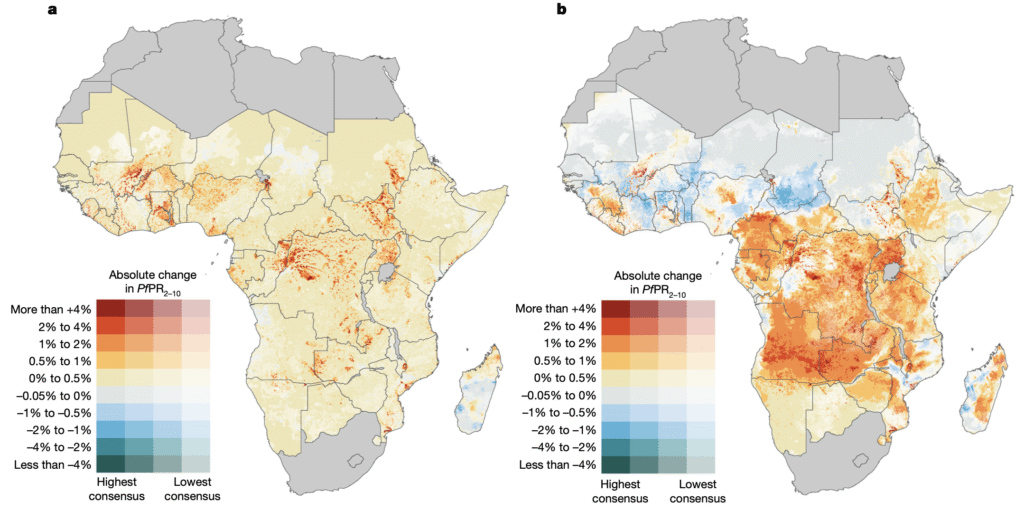
The maps show that the “disruptive” effects of climate change have a more uniform effect, driving up malaria risk across the entire continent.
However, there is greater regional variation when these effects are combined with “ecological” drivers.
The authors find that warming will increase malaria risk in regions where the temperature is currently too low for mosquitoes to survive. This includes the belt of lower latitude southern Africa, including Angola, southern Democratic Republic of Congo (DRC) and Zambia, as well as highland areas in Burundi, eastern DRC, Ethiopia, Kenya and Rwanda.
Meanwhile, they find that warming will drive down malaria transmission in the Sahel, as temperatures rise above the optimal range for mosquitoes.
Rising risk
The combined “disruptive” and “ecological” impacts of climate change will drive an additional 123m “clinical cases” of malaria across Africa, even if the current climate pledges are met, the study finds.
This will result in 532,000 additional deaths from malaria over the next 25 years, if the disease’s mortality rate remains the same, the authors warn.
The graph below shows the increase in clinical cases of malaria projected across Africa over the next 25 years, broken down into the different ecological (yellow) and disruptive (purple) drivers of malaria risk.
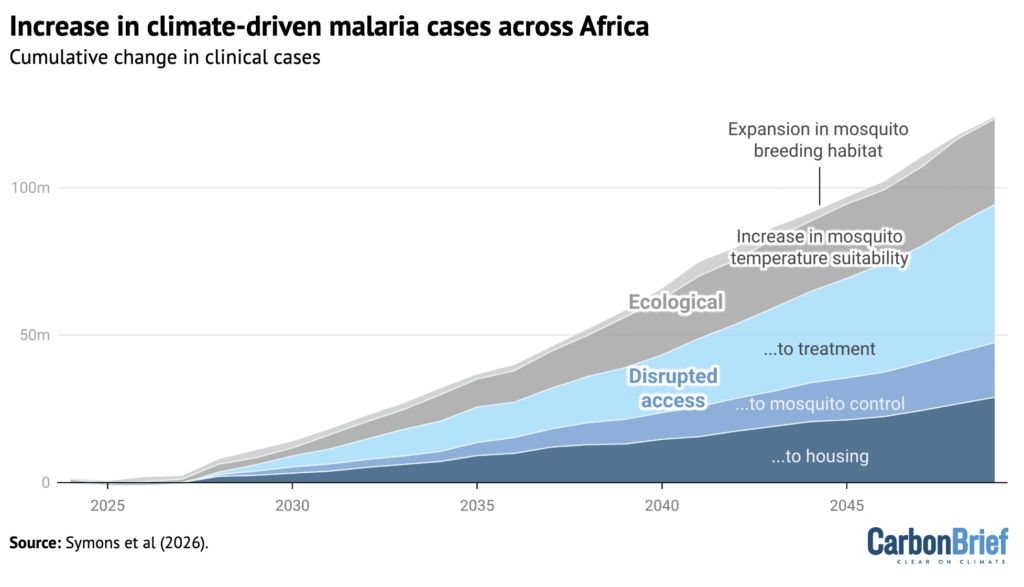
However, the authors stress that there are many other mechanisms through which climate change could affect malaria transmission – for example, through food insecurity, conflict, economic disruption and climate-driven migration.
“Eradicating malaria in the first half of this century would be one of the greatest accomplishments in human history,” the authors say.
They argue that accomplishing this will require “climate-resilient control strategies”, such as investing in “climate-resilient health and supply-chain infrastructure” and enhancing emergency early warning systems for storms and other extreme weather.
Dr Adugna Woyessa is a senior researcher at the Ethiopian Public Health Institute and was not involved in the study. He tells Carbon Brief that the new paper could help inform national malaria programmes across Africa.
He also suggests that the findings could be used to guide more “local studies that address evidence gaps on the estimates of climate change-attributed malaria”.
Study authors Symons and Gething tell Carbon Brief that during their study, they interviewed “many policymakers and implementers across Africa who are already grappling with what climate-resilient malaria intervention actually looks like in practice”.
These interventions include integrating malaria control into national disaster risk planning, with emergency responses after floods and cyclones, they say. They also stress the need to ensure that community health workers are “well-stocked in advance of severe weather”.
The research shows the importance of ensuring that malaria control and primary healthcare is “resilient” to the extreme weather, they say.

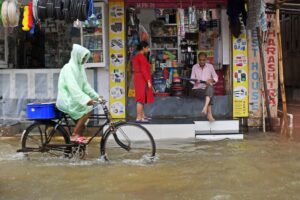
The post Climate change could lead to 500,000 ‘additional’ malaria deaths in Africa by 2050 appeared first on Carbon Brief.
Climate change could lead to 500,000 ‘additional’ malaria deaths in Africa by 2050

Business has never been as brisk for Nigerian solar panel retailer Samuel Okechukwu and his team of installation technicians, who are struggling to keep up with orders since the Iran war caused local fuel prices to double.
“There’s too much work, I’m even having to outsource some services to keep up with the work rate,” Okechukwu told Climate Home News, as he installed solar panels on the roof of an apartment building in the southern city of Port Harcourt.
Before the war, he had installations once or twice a week, but is now busy almost every day.
Okechukwu’s surge in orders in recent weeks suggests that more Nigerians are buying solar systems due to soaring fuel prices caused by the conflict in the Middle East, which has effectively blocked the Strait of Hormuz through which a fifth of the world’s oil and liquefied natural gas previously flowed.
-
Africa records fastest-ever solar growth, as installations jump in 2025
Africa’s solar power installations have increased sharply, driven by utility-scale projects and privately financed rooftop and commercial systems -
Boom in solar panel imports boosts hopes for clean energy take-off in Africa
Africa’s solar imports from China jumped 60% in the 12 months to June 2025, reaching an all-time high -
Ugandan farmers use British court to try to stop East Africa oil pipeline
The farmers and their lawyers will argue that a UK-based entity linked to the East African Crude Oil Pipeline has breached Ugandan law and construction should halt


Plagued by frequent failures on Nigeria’s national grid, many homes and businesses buy diesel and petrol to supply generators to keep the lights on and equipment operating.
Even before the latest fuel price shock, solar installations had been increasing in Nigeria in recent years as an alternative to generators among those able to afford the initial outlay.
It costs about 600,000 naira ($450) to buy just one inverter battery and two 300-watt solar panels to charge it – roughly 10 times the minimum monthly wage – and eyebrows were raised when the government announced last year that the presidential villa was being kitted out with a $6 million solar mini-grid.
Power plants hit by gas shortages
Nigeria’s erratic power supplies have become even more unreliable in recent weeks as gas shortages constrain already fragile power generation. Most of Nigeria’s electricity supply comes from gas-fired plants.

Last month, the Nigerian Independent System Operator said several of the oil- and gas-producing nation’s thermal power plants were being affected by “persistent gas supply constraints” that were causing a decline in electricity generation.
While Nigeria has abundant gas reserves, the shortages are largely driven by structural issues, including mounting government debts owed to gas suppliers and pipeline constraints. Power Minister Adebayo Adelabu said last week that gas suppliers are prioritising export markets which have become more attractive and offer better returns over domestic markets.
This week, the Nigerian government increased gas prices for power generation companies, a move likely to deepen cost pressures in the electricity sector already struggling with debt and supply shortages.
At the same time, Okechukwu said rising temperatures in recent years were also increasing demand for an affordable source of electricity to power air conditioners.
Global oil shock makes case for renewables
Installations of solar power in Africa jumped 54% in 2025, according to a report by the Global Solar Council (GSC), marking the fastest annual growth on record.
The continent’s solar power capacity still represents only about 1% of the world’s total, though industry experts say the continent may have significantly more than official data reflects, with many rooftop installations going uncounted.
Precarious power supplies are already a key driver of solar adoption in many African nations, propelling fast growth rates in countries including Nigeria, which was Africa’s second-largest solar installer last year, installing more than 800 MW of capacity, according to the GSC, a nonprofit trade body.

Surging energy costs due to the Iran war could give further momentum to growth, the GSC’s CEO Sonia Dunlop told Climate Home News.
“It’s clear the people of Nigeria saw the writing on the wall … and have gone all in on rooftop solar as a result,” Dunlop said.
The increase in energy prices since the conflict began have cost consumers and businesses around the world more than $100 billion, according to a March 2026 analysis by 350.org, a non-profit organisation.
It said that would be enough to build sufficient solar capacity to supply about 150 million people in lower-consumption countries, for example in Africa, adding that investing in renewables was the best way to stabilise prices and strengthen energy security.
Anne Jellema, 350.org’s CEO, urged governments meeting in Colombia next month to discuss the transition away from oil and gas to “seize this moment to adopt binding targets to phase out fossil fuels and ramp up investment in a clean, safe energy future”.
Africa records fastest-ever solar growth, as installations jump in 2025
The global energy shock unleashed by the U.S.-Israeli war “definitely supports the case for longer-term mitigation, not being reliant on imported oil”, said Karl Boyce, CEO of ARC Power, a mini-grid developer operating in Africa, adding that securing sufficient investment would be crucial to realising Africa’s renewables potential.
“It’s so reliant on really heavy investment,” Boyce said. “So globally, there should be a focus on seeing how more investment can go into that sector just to give more stability in the longer term.”

“Forget about buying petrol”
In Port Harcourt, another solar trader, Sunday Onuchukwu, said his business has been “moving faster than before” as people get tired of power cuts and rising fuel costs that make investing in panels seem a better bet.
Located in a solar panels retail market, Onuchukwu’s shop was busy with customers, but the market itself was unusually quiet – without the usual whirr of generators thanks to the solar panels on the roof.
“Most of my customers complain that the fuel issue is one reason why they have decided to go solar. I have clients who transition both their offices and homes at the same time and move away from the bad power supply,” Onuchukwu told Climate Home News.
He said many businesses spend more than 20,000 naira ($15) per day on petrol to power generators.
Green Climate Fund picks locations for five developing country hubs
“With that money, calculated over a one-year period, you can install solar and forget about ever buying petrol,” he said, adding that some lower-cost solar products were now becoming available such as a 50,000-naira ($36) kit that provides enough power to light a single bulb and charge a mobile phone.

Lifting two heavy panels onto his head in Onuchukwu’s shop, one customer said ensuring a steady supply of power – after months without mains supplies – was vital for his barber shop and would also help his wife’s small business.
“This is what I am using to run my business and ensure electricity,” the man said, giving his family name as Amadi.
“With these two panels, I can also power my wife’s inverter freezer for her to be selling frozen foods.”
The post Nigerians bet on solar as global oil shock hits wallets and power supplies appeared first on Climate Home News.
Nigerians bet on solar as global oil shock hits wallets and power supplies
Climate Change
Pennsylvania Lawmakers Are Talking the Talk on Data Center Regulations. But Will They Walk?
As public opposition to AI data center development ratchets up in Pennsylvania, politicians are promising to protect local communities. Whether the state’s fractious politics can deliver is another question.
Ask Gemini, Google’s AI chatbot, whether Pennsylvania politicians are doing anything about the swelling public concern over data center development in the commonwealth, and it answers confidently.
Pennsylvania Lawmakers Are Talking the Talk on Data Center Regulations. But Will They Walk?
Greenpeace International and Greenpeace organisations in the US filed on 27 March 2026 a motion for a new trial in North Dakota District Court. This demand for justice follows the absurd and flawed US$ 345 million judgment issued by the same court in Energy Transfer’s SLAPP lawsuit against the Greenpeace parties returned on 27 February 2026. Energy Transfer’s back-to-back SLAPP lawsuits are attempts to erase Indigenous leadership of the Standing Rock Movement, punish solidarity with the ongoing resistance to the Dakota Access Pipeline, and intimidate environmental activists from speaking out against Big Oil companies.
The motion for a new trial should be granted to prevent one of the largest miscarriages of justice in North Dakota’s history. We are demanding the court right the wrongs committed at trial and to ensure the rights and freedoms promised under the US constitution are protected.
Greenpeace will not rest until justice is served and Big Oil can no longer use and abuse the legal system in North Dakota or anywhere else.
Greenpeace International General Counsel Kristin Casper
There is no question the Greenpeace defendants were denied a fair trial — even a concise summary of the errors and injustices that marred the trial runs to over 100 pages.
Among the numerous egregious flaws documented in the motion for a new trial are:
- The Greenpeace defendants could not receive a fair and impartial trial in Morton County.
- Seven out of nine jurors that decided the case had clear biases due to fossil fuel industry ties, experiences with the Standing Rock protests, and/or preexisting negative views of the Greenpeace defendants.
- Despite the fact that thousands of individuals and hundreds of organisations were involved in actions at Standing Rock and speaking out against DAPL, and North Dakota law clearly requiring damages to be split among everyone who contributed to alleged harms, the jury and the court assigned 100% of the claimed damages to the Greenpeace defendants.
- The jury’s verdict was contrary to the weight of the evidence on each and every count.
- The jury verdict was tainted by the inclusion of inadmissible, prejudicial information.
- The jury was improperly prevented from hearing relevant, admissible evidence that was favorable to the Greenpeace defendants.
- The jury was provided erroneous and incomplete instructions and a flawed verdict form.


Nigerians bet on solar as global oil shock hits wallets and power supplies
Pennsylvania Lawmakers Are Talking the Talk on Data Center Regulations. But Will They Walk?

Classic Sustainability In Your Ear: Coastal Flooding in 2050 With Climate Scientist James Renwick
-
Climate Change8 months ago
Guest post: Why China is still building new coal – and when it might stop
-
Greenhouse Gases8 months ago
Guest post: Why China is still building new coal – and when it might stop
-

 Greenhouse Gases2 years ago
嘉宾来稿:满足中国增长的用电需求 光伏加储能“比新建煤电更实惠”
-
Climate Change2 years ago
Bill Discounting Climate Change in Florida’s Energy Policy Awaits DeSantis’ Approval
-

 Climate Change2 years ago
嘉宾来稿:满足中国增长的用电需求 光伏加储能“比新建煤电更实惠”
-
Climate Change Videos2 years ago
The toxic gas flares fuelling Nigeria’s climate change – BBC News
-

 Renewable Energy5 months ago
Sending Progressive Philanthropist George Soros to Prison?
-

 Carbon Footprint2 years ago
US SEC’s Climate Disclosure Rules Spur Renewed Interest in Carbon Credits