Connect with us

Published

on

Climate change is the defining issue of our time, and we are at a defining moment. We face a direct existential threat.

According to the World Economic Forum’s 2022 Global Risks Report, climate change risks are now classified as worlds’ biggest threats.

The Urgency of Climate Change Risks

Failure to take climate action and extreme weather events top the list of threats for the next 5-10 years. These risks lead to additional environmental issues such as biodiversity loss, resource scarcity, and environmental degradation. In 2022, environmental risks dominated the top five global risks for the first time.

Financial Impact on Global Companies

Climate-related risks significantly impact a company’s revenues, costs, operations, and strategy. A 2019 report found that over 200 of the largest global companies faced nearly $1 trillion in climate impacts over five years.

Climate Change – An Investment Concern for SMEs

Climate change is not just an environmental issue but also a critical investment issue for small and medium-sized enterprises (SMEs). The SEC’s 2021 examination priorities reflect a growing focus on climate-related risks as investors increasingly consider these risks in their decisions. SMEs face new and growing risks such as natural hazards, technological risks, real estate loss, and rising energy and raw material costs due to climate change. Furthermore, concerns regarding costs for maintenance and infrastructure reconstruction must also be addressed.

Financial Risk Mitigation for SMEs

By proactively managing their environmental impact, SMEs can mitigate these risks and safeguard their financial stability.

Regulatory Compliance

Governments are increasingly implementing policies and regulations aimed at reducing GHG emissions, such as carbon taxes, emissions trading systems, and stringent reporting requirements. SMEs need to comply with these regulations to avoid penalties and remain competitive in their markets.

Investor Expectations

Increasingly investors are considering climate risks and prioritizing sustainability. SMEs that fail to address their environmental impact will find it harder to attract investment, while those that demonstrate robust environmental management practices are likely to gain traction.

Market Competitiveness

Millennials’ and Gen Zs’ attitudes and demand for environmentally friendly products and services is growing steadily. SMEs that want to appeal to these increasingly dominant demographics must commit to reducing their GHG emissions and developing sustainable products. These are tactics that can lead to increased market share and customer loyalty with these consumers.

Operational Efficiency

Monitoring and reducing GHG emissions can lead to increased energy efficiency and lower operational costs. By optimizing energy use and reducing waste, SMEs can achieve cost savings and improve their bottom line, which in turn also increases their appeal to potential investors.

Corporate Reputation

Companies that manage their environmental impacts proactively are seen as responsible and forward-thinking. This enhances their brand reputation, builds trust with internal and external stakeholders, and leads directly to better financial outcomes:

  1. Sales increase due to increased customer satisfaction and loyalty
  2. Employee retention increases in response to employees’ higher job satisfaction, leading to increases in operational efficiency, and savings on recruitment costs.

Businesses’ Perspective on Climate Change

Michael E. Porter and Forest L. Reinhardt from Harvard Business School emphasize that treating climate change as a business problem, rather than just a corporate social responsibility issue, is essential. Companies that fail to adapt will face severe consequences. By monitoring and reducing GHG emissions, businesses can increase energy efficiency, which lowers costs and enhances profitability.

Starting Sustainable Business Practices

In the context of managing climate-related risks and optimizing operational efficiency, it’s clear that integrating sustainable practices, such as utilizing carbon credits (more on this below) is vital for SMEs. According to Michael E. Porter and Forest L. Reinhardt from Harvard Business School: “Companies that persist in treating climate change solely as a corporate social responsibility issue, rather than a business problem, will risk the greatest consequences”.

Achieving Net-Zero: Key Steps

Unlocking the aforementioned benefits, reducing financial risks, meeting regulatory compliance, and meeting investor expectations all hinge on a company’s ability to, not only manage its carbon footprint, but also bring it to net-zero. This requires the company to:

  • Have awareness for, and keep tabs on, its greenhouse gas (GHG) emissions.
  • Create and enact a plan for reducing these emissions through improvements to operational efficiency, technology, and practices.
  • For those GHGs that cannot be reduced or removed thanks to improved efficiencies and changed business practices, companies must engage in carbon emission trading, where they buy and sell carbon credits to account for whatever emissions remain.

But before we can consider these trades, it’s important to understand the global frameworks that have been developed and approved to help businesses do their greenhouse gas emission accounting correctly.

Introducing the GHG Protocol Standard for SMEs

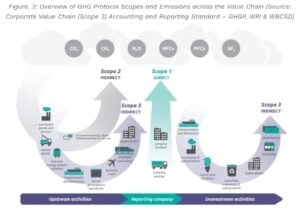
The GHG Protocol Standard, published by the World Resources Institute (WRI) and the World Business Council for Sustainable Development (WBCSD), is a crucial framework for SMEs aiming to manage and reduce their greenhouse gas emissions. It is the most comprehensive, policy-neutral evaluation tool for quantifying GHG. This globally recognized standard helps define, measure and report emissions across three scopes:

  • Scope 1 – Direct emissions
  • Scope 2 – Indirect emissions from purchased energy.
  • Scope 3 – Other indirect emissions within the value chain.

The GHG Protocol Corporate Standard requires businesses to report their scope 1 and 2 emissions, whereas scope 3 is voluntary, however companies that report all three scopes stand to gain the most definitive and sustainable advantages. Let’s dive in and understand these three scopes a little better…

Scope 1: Direct Emissions

Scope 1 emissions are those directly produced by the company’s activities. These include:

  • Stationary Combustion: Emissions from fuel used for heating and other stationary sources.
  • Mobile Combustion: Emissions from company-owned vehicles.
  • Fugitive Emissions: Greenhouse gas leaks from equipment like air conditioning units.
  • Process Emissions: Emissions released during manufacturing and industrial processes.

Scope 2: Indirect Emissions-Owned

Scope 2 emissions are indirect emissions from the consumption of energy that the company purchases from utility providers, such as electricity.

Scope 3: Indirect Emissions-Not Owned

Scope 3 emissions are all other indirect emissions occurring in the company’s value chain. These emissions come from sources not owned or directly controlled by the company, such as:

  • Purchased goods and services
  • Financial investments
  • Storage by other companies
  • Transportation and distribution of manufactured goods
  • Use and disposal of sold products
  • Activities of the company’s franchisees
  • Leasing of assets
  • Business travel and staff commuting
  • Waste management and processing
  • Capital goods like machinery, vehicles, buildings, and offices

Aggregate and Report Emissions

Once the company is aware of its emissions across all three scopes, these should be aggregated into the company’s total emissions value, which may then be reported using standardized formats, such as the GHG Protocol reporting template.

Using the GHG Protocol Standard helps companies not only to create effective strategies for managing and reducing emissions, but also to achieve related business goals:

  • Identifying GHG Reduction Opportunities: Find ways to lower emissions.
  • Managing Emission Risks: Assess and handle risks related to GHG emissions.
  • Public Reporting: Participate in voluntary programs for monitoring and reducing GHGs.
  • Regulatory Compliance: Meet mandatory GHG emissions reporting requirements.

The GHG Protocol Standard can be viewed as the roadmap by which a company may align its sustainability efforts to global best practices. It’s a research backed pathway towards better environmental and business performance.

Financial metrics

While measuring a company’s environmental impact is a painstaking process, it’s ultimately an exercise in accounting. As can be expected, this accounting becomes more complex when a number of companies are working together to complete a project, since it becomes increasingly difficult and messy to figure out how to allocate the projects’ environmental impact among the participating companies. This is where financed emissions come into play.

Understanding Financed Emissions

Financed emissions involve aggregating GHG emissions at the portfolio level, linked to the underlying entities or projects. These emissions are allocated proportionally based on the financial stake in the underlying entity or project.

The Role of Carbon Credits

Once a company has a clear insight into its overall carbon footprint, it can start formulating a plan on how to reduce it. This typically includes steps towards optimizing energy consumption and reducing waste, however in most cases there’s a certain portion of the company’s environmental impact that can’t be “optimized” away. It’s precisely for handling the zero-ing out the carbon accounting of this remainder that Carbon Credits were invented.

Carbon credits are certificates denoting audited equivalents for the removal of one metric ton of carbon dioxide, or its equivalent in GHGs, from the atmosphere, and can be bought and sold on specialized markets.

Companies can purchase these credits to cover whatever emission deficit they have remaining after eliminating as much as their footprint as possible through process, energy and waste optimizations.

By effectively managing their GHG emissions and utilizing carbon credits, companies can reduce their environmental impact, comply with regulations, and meet investor expectations.

The Practicality Aspects of Carbon Accounting

In terms of practicality, the effort required to estimate GHG emissions/financed emissions at the group level is highly dependent on the level of accuracy desired – Tracking such emissions from the bottom up for each relationship can become impractical and exceed the estimated value of the entire effort. Approximation methods exist, but these are subject to critiquing over their accuracy and value.

Conclusion

Ultimately an organization’s commitment to becoming net-zero comes down to the degree to which every individual in the organization feels committed to this goal. The existing frameworks provide best practice guidelines for organizations’ for strategy, reporting, and implementations, but the degree to which execution is motivated by mere compliance or by deeply held beliefs are what will dictate the outcome. The overarching principle should be to focus on the forest – becoming net-zero, rather than the trees – overthinking the accounting.

Image Credit

Thomas Richter on Unsplash

Carbon Footprint

Trump EPA’s Largest Climate Deregulation: What the 2009 “Endangerment Finding” Repeal Means for U.S. Emissions and the EV Market

Published

on

On February 12, President Donald Trump and the U.S. Environmental Protection Agency (EPA) Administrator Lee Zeldin announced what they called the largest deregulation in U.S. history in the White House’s Roosevelt Room.

The EPA finalized a rule that removes the 2009 Greenhouse Gas (GHG) Endangerment Finding. The Obama administration created this finding, and it gave the federal government the legal authority to regulate greenhouse gas emissions under the Clean Air Act for more than a decade.

The new rule also removes all federal greenhouse gas standards for cars, trucks, and engines built from model year 2012 through 2027 and beyond. In addition, the EPA ended compliance credits tied to certain technologies, including start-stop systems.

In short, the administration rolled back the key rule that supported federal climate regulations on vehicles.

The Role of the 2009 Endangerment Finding

In 2009, the EPA said that six major greenhouse gases—including carbon dioxide—harm public health and the environment. The agency concluded that these gases drive climate change and damage air quality. That decision gave the federal government the authority to set emission limits for light-, medium-, and heavy-duty vehicles. It also supported climate rules for power plants and the oil and gas industry.

Because of this finding, the EPA introduced several greenhouse gas standards over the past decade. These rules shaped vehicle design, fuel economy targets, and broader climate policy across multiple sectors.

Why the EPA Repealed It Now

In 2025, the Trump administration began reviewing the 2009 decision. Officials argued that some of the science behind the finding was weaker than originally believed. They also said earlier climate projections were too pessimistic.

Now that the repeal is final, the EPA says it no longer has authority under Section 202(a) of the Clean Air Act to regulate greenhouse gases the way it did before. The agency believes Congress—not federal regulators—should decide major climate policy.

EPA leaders say this move restores a strict reading of the law and ends what they call regulatory overreach. Critics strongly disagree. Many scientists and public health experts argue that the repeal removes an important tool that protects Americans and helps address climate change.

Most importantly, the EPA estimates the final rule will save more than $1.3 trillion. It removes requirements for automakers to measure, report, certify, and comply with federal greenhouse gas standards. The agency says the rollback will lower vehicle prices, expand consumer choice, and reduce transportation costs for families and businesses.

Administrator Zeldin commented,

“The Endangerment Finding has been the source of 16 years of consumer choice restrictions and trillions of dollars in hidden costs for Americans. Referred to by some as the ‘Holy Grail’ of the ‘climate change religion,’ the Endangerment Finding is now eliminated. The Trump EPA is strictly following the letter of the law, returning commonsense to policy, delivering consumer choice to Americans and advancing the American Dream. As EPA Administrator, I am proud to deliver the single largest deregulatory action in U.S. history on behalf of American taxpayers and consumers. As an added bonus, the off-cycle credit for the almost universally despised start-stop feature on vehicles has been removed.”

U.S. Emissions Trends in 2025: Mixed Signals

At a climate crossroads, the United States saw a rebound in greenhouse gas emissions in 2025 after years of overall decline. According to estimates from the Rhodium Group, total U.S. emissions rose about 2.4% in 2025, reaching roughly 5.9 billion tons of CO₂ equivalent—139 million tons higher than in 2024. This uptick ended a two‑year downward trend that had been driven by cleaner energy and transportation shifts.

us emission

Several factors pushed emissions higher: colder winter weather increased demand for heating; rising electricity demand from data centers and cryptocurrency mining boosted fossil fuel use; and higher natural gas prices led utilities to burn more coal. The power sector alone saw a 3.8% rise in emissions, while buildings’ emissions jumped 6.8%. Transportation emissions, the largest U.S. source, remained largely flat, increasing only modestly due to continued adoption of hybrid and electric vehicles.

us emissions

Despite the 2025 increase, total emissions are still below pre‑pandemic levels and well under 2005 baselines—roughly 18% below 2005 levels—showing that long‑term trends toward decarbonization have not entirely reversed yet.

Preliminary sector data from Climate TRACE also indicates that U.S. emissions continued rising throughout 2025, adding more than 71 million tonnes of CO₂ equivalent through the first three quarters of the year.

The EV Market in 2025: Growth and Slowdowns

In contrast to emissions trends, the U.S. electric vehicle (EV) market continued to grow in 2025, though the pace and dynamics evolved. EVs made notable gains in sales and market share, reflecting both consumer demand and industry transitions.

In the first quarter of 2025, nearly 300,000 battery‑electric vehicles were newly registered, marking over a 10% year‑over‑year increase. EVs accounted for about 7.5% of all new car registrations during that period.

By the third quarter, sales surged again. Cox Automotive reported that EV sales jumped nearly 30% year‑over‑year, pushing EV market share to a record 10.5% of total vehicle sales in Q3 2025—a milestone reflecting strong consumer uptake in several segments.

ev sales
source: Cox Automotive

Even so, EV adoption remains far from dominating the U.S. market. Estimates show that electric vehicles comprised around 8–10% of total U.S. new car sales in 2025, with internal‑combustion engine vehicles still accounting for the large majority of the fleet.

Tesla remained the largest EV brand in the U.S. in 2025, holding about 46% market share, though this marked a slight decline from previous years. Rivals like Chevrolet and Hyundai grew their shares, reflecting broader model availability and shifting consumer preferences.

Market analysts also project that by 2025, the U.S. EV market’s size, sales, and technology focus will continue expanding—with battery‑electric vehicles expected to dominate EV segments. The broader EV market size had substantial growth in 2025, with further expansion expected toward the end of the decade.

us ev market

Balancing Regulation, Consumer Choice, and Emissions Goals

EPA officials say that removing federal GHG standards and related compliance credits will lower vehicle costs by about $2,400 per car. This will ease financial pressure on families and businesses and give buyers more choice. The agency calls it a step toward restoring the American Dream, making transportation more affordable without high regulatory costs.

Supporters argue the rollback removes artificial mandates, letting automakers and consumers focus on market-driven solutions. The EPA also ended “off-cycle” credits, which allowed carmakers to meet emission targets with minor technology changes. Critics called these credits gimmicks with little real environmental benefit.

Litigation and Future Policy

Environmental groups, scientists, and several states sharply criticized the move. They warn that it weakens climate action, public health protections, and emission reductions. Many fear that removing these rules while emissions are rising could set back U.S. climate goals.

Legal challenges are expected, with lawsuits likely to block or reverse the repeal. As federal rules change, state policies, corporate commitments, and Congress may play a larger role. Some states have already set carbon standards and EV incentives, creating a patchwork of climate policies across the country.

In conclusion, the 2026 repeal of the GHG Endangerment Finding marks a major shift in U.S. climate policy. With emissions rising and clean technology markets evolving, the country faces tough choices about balancing economic growth, innovation, and climate risk. The coming years will be shaped by lawsuits, state leadership, private investments, and the global move toward low-carbon economies.

The post Trump EPA’s Largest Climate Deregulation: What the 2009 “Endangerment Finding” Repeal Means for U.S. Emissions and the EV Market appeared first on Carbon Credits.

Continue Reading

Carbon Footprint

DECARBON 2026 Concludes with Two Days of Strategic Debate and Practical Decarbonisation Insights

Published

on

Hosted by Shell and held in partnership with Moeve, Fluor, Gasunie, The International Association of Oil & Gas Producers, Repsol, Spiecapag and Germany Trade and Invest, DECARBON 2026 centred on practical decision-making at the intersection of policy, technology and implementation across the oil and gas value chain in Vösendorf, Austria.

On 9 February, the first day opened with an Executive Opening Panel that set the strategic context for DECARBON by linking emissions targets with the operational capabilities required to deliver them. Drawing on perspectives from Petro IT, Shell Austria, Saipem SpA, Austrian Gas Grid Management AG, Chromalox, NEUMAN & ESSER Deutschland GmbH & Co KG and PCK Raffinerie GmbH, the discussion addressed investment priorities, data-driven decision-making and on-site constraints, clarifying why a strategic approach and clearly defined NetZero targets play a central role in modern oil and gas operations.

As Rainer Klöpfer, Country Chair & Managing Director at Shell Austria, emphasised, the conversation around net-zero must account for the full carbon intensity of energy products, spanning production, supply chains and end use. He underlined that operating plans are updated regularly and reflect today’s economic realities, while long-term net-zero targets sit beyond immediate planning cycles and require steady structural progress. This perspective shifted the focus from ambition to execution and naturally opened the floor to the next strategic question: which concrete low-carbon solutions can integrate into existing systems at scale.

This was followed by the Leaders Panel on low-carbon hydrogen as a decarbonisation tool, with contributions from a broad range of energy, infrastructure and technology players, including MOL Group, Eurogas, NextChem, Alléo Energy, Moeve and Italgas Reti. The panel examined hydrogen’s role within decarbonisation strategies and its interaction with existing infrastructure and regulatory frameworks.

Pedro Medina, Hydrogen Technology Manager at Moeve, outlined the company’s transformation of its refineries in San Roque and Palos de la Frontera into diversified energy parks adapted for renewable fuels, including biofuels and green hydrogen. He emphasised Southern Europe’s strong production potential and referred to the development of European hydrogen corridors connecting hubs such as Huelva and Algeciras with

Rotterdam, illustrating how green hydrogen is taking shape as a cross-border value chain within the evolving European energy landscape.

The conversation then continued through two roundtable discussions. The first roundtable on the digital approach to emissions performance brought together representatives from Siemens AG, Gradyent and other industry participants to explore digitalisation, automation and data-driven sustainability initiatives. The next roundtable on institutional readiness, with participants from Wood, OPEC, OGE and others, addressed regulatory risk, compliance requirements and policy developments.

Day One also featured two thematic sessions examining decarbonisation pathways in downstream operations through low-carbon fuels and feedstock, alongside practical levers for emissions reduction in upstream activities, with contributions from companies including TotalEnergies, Chromalox, VEM Sachsenwerk GmbH and others.

It concluded with a gala dinner and prize draw at Casino Baumgarten, located in the heart of Vienna. Live music, a magician’s performance and a gift raffle from BGS Group and participating delegates created a vibrant atmosphere, while conversations continued over dinner in an informal setting that strengthened professional connections.

The second day moved the discussion toward evaluation and optimisation, bringing sharper focus to cost, performance and implementation. During a moderated debate, representatives of Reganosa, Saras, Gas Infrastructure Europe and The Carbon Capture and Storage Association examined the financial implications of decarbonisation and the investment logic behind transition pathways. Roundtable 3 then turned to energy efficiency in downstream, where Fluor, Akselos and other sector specialists shared operational case studies and technical insight. The Congress concluded with a Closing Panel on CCUS, featuring perspectives from Petrofac, DESFA, Worley Comprimo and others, highlighting carbon capture, utilisation and storage within long-term emissions reduction strategies.

Phillip Cooper, Project Director at Petrofac for the Design of the Aramis CCS Pipeline System, summarised the key lesson from project delivery: effective CCS development requires a collaborative and knowledgeable client and FEED team in the room from the outset to ensure alignment and accelerate resolution. He stressed that system engineering across the entire value chain is critical, as the whole system must function as one despite contractual boundaries, and that early involvement of contractors and vendors is essential to understand what the project will realistically cost and to avoid unnecessary cost premiums.

Over the two days, DECARBON 2026 reinforced its role as a closed-door platform for senior executives, technical leaders and policy experts to engage in implementation-oriented dialogue grounded in real operational contexts. More than 180 pre-arranged B2B sessions took place within a structured networking format, coordinated by dedicated personal managers assigned to each delegate. Participants highlighted the productivity and efficiency of these targeted exchanges, with many confirming follow-up discussions and outlining future joint projects.

Registration for DECARBON 2027, taking place on 15-16 February 2027 in Berlin, Germany, is now open. Follow the Congress updates and secure participation in the next edition focused on real-world decarbonisation strategies: https://sh.bgs.group/3ui

The post DECARBON 2026 Concludes with Two Days of Strategic Debate and Practical Decarbonisation Insights appeared first on Carbon Credits.

Continue Reading

Carbon Footprint

Albemarle Shuts Lithium Plant But Bets Big on Strong Demand Outlook for 2026

Published

on

Albemarle Shuts Lithium Plant But Bets Big on Strong Demand Outlook for 2026

Albemarle Corporation, one of the world’s largest lithium producers, has closed its Kemerton lithium hydroxide processing plant in Western Australia. The company made the decision due to rising costs and competitive pressures in hard-rock lithium processing. The closure affects more than 250 jobs and dozens of contractors.

The Kemerton plant processed lithium from the Greenbushes mine and was intended to supply battery-grade lithium chemicals. Albemarle invested over US$4 billion in the site, but the facility never reached its target performance. The company cited structural challenges and higher operating costs compared with plants in China.

The shutdown highlights difficulties in building competitive lithium processing outside China. China currently dominates lithium refining and battery supply chains. Many Western firms have struggled to build profitable chemical conversion capacity, even with recent lithium price improvements.

Solid Earnings, Shaky Investor Sentiment

Albemarle reported its fourth-quarter and full-year 2025 earnings in mid-February 2026. The company posted net sales of US$1.4 billion, up about 16% year-on-year, driven by growth in energy storage volumes and pricing. Adjusted earnings before interest, tax, depreciation, and amortization (EBITDA) rose about 7% compared with 2024.

Albemarle financial results 2025
Source: Albemarle

Despite these positive metrics, Albemarle’s stock fell sharply after the earnings release. Morningstar reported that on February 12, 2026, shares fell about 7%. This drop happened during a wider market sell-off. Still, the company’s profit outlook was better than what analysts expected.

Albemarle stock price

Investors reacted to a mixed message from the earnings data. The company had sales growth and strong cash flow. However, the closure of the Kemerton plant and ongoing cost pressures affected sentiment. Some investors were cautious about near-term guidance amid global market volatility.

But Management Bets on a 2026 Demand Rebound

Despite short-term pressures, Albemarle’s management outlined a strong demand outlook for lithium in 2026. In a recent earnings call, company leaders projected that global lithium demand could grow by 15% to 40% in 2026.

Albemarle lithium demand outlook
Source: Albemarle

This growth is driven in part by a sharp rise in stationary energy storage demand and continued EV adoption. Stationary storage includes large battery systems used for grid balancing, renewable energy smoothing, and data centers. These systems are becoming major new consumers of lithium-ion batteries.

Industry reports say global energy storage installations more than doubled in 2025. This rise shows growing demand, extending beyond just electric vehicles.

global energy storage market 2025
Source: Wood Mackenzie

Albemarle also reported that its free cash flow in 2025 was about US$692 million after cost controls and capital discipline. The company plans to keep capital expenditures steady in 2026. It will focus on boosting productivity and developing resources instead of expensive expansion projects.

EVs and Grid Storage Keep the Battery Boom Alive

Lithium is a key metal for lithium-ion batteries. These batteries power electric vehicles (EVs), grid storage systems, portable electronics, and more.

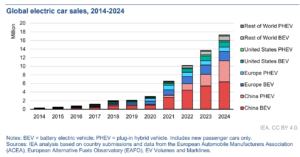
Electric vehicle adoption continues to grow globally. The International Energy Agency says EV sales hit around 20 million units in 2025. This makes up nearly 25% of all car sales globally. EVs alone account for about 75% of total lithium demand in 2025 in battery markets.

In addition, stationary energy storage systems are becoming more common. Battery storage helps balance renewable energy like wind and solar on the grid. Storage growth is part of broader climate and energy policies in many countries.

  • Demand growth is also supported by new battery applications, such as data centers and backup power systems.

Some market analysts expect global lithium demand to more than double by the decade’s end. This will depend on EV adoption rates, renewable energy growth, and storage needs.

Processing Bottlenecks and Price Swings Complicate Supply

While demand is rising, the supply side of lithium faces challenges.

Mining output increased sharply between 2021 and 2025. Australia, Chile, and China expanded production during that period. However, processing capacity, especially outside China, has lagged.

2025 lithium global production

The closure of Albemarle’s Kemerton plant underscores these supply constraints. Western plants face higher labor, energy, and infrastructure costs compared with counterparts in China. These factors make lithium hydroxide production less profitable in some regions.

China dominates downstream lithium processing and battery cell production. The country holds 60–70% of the world’s lithium chemical processing capacity. It also makes around 75% of lithium-ion batteries, based on data from the International Energy Agency.

At the same time, some supply projects have delayed expansion, held back by financing costs, permitting hurdles, and fluctuating prices.

Price volatility has been a feature of the lithium market over the past few years. After reaching multiyear highs in 2022, lithium carbonate prices plunged through 2023 and 2024 due to oversupply. Prices bounced back in late 2025 and further skyrocketed in early 2026.

lithium carbonate spot price

Cost Cuts and Capital Discipline Take Center Stage

Albemarle’s recent actions illustrate how lithium producers respond to shifting conditions.

The company cut costs, lowered capital spending, and sold non-core assets to boost its balance sheet. These moves helped Albemarle generate strong free cash flow even with price swings.

Management noted cost and productivity gains of US$100–150 million aimed for 2026. This will help boost profit margins, particularly in energy storage segments.

Albemarle’s strategy focuses on maintaining stable operations while positioning for long-term demand growth. This includes optimizing asset portfolios, managing supply chains, and shifting production toward lower-cost channels.

Other companies in the lithium sector are also adapting. Some are concentrating on mining expansions, processing partnerships, and technology improvements. Others are exploring recycling and alternative battery chemistries to reduce reliance on lithium.

Miners like Pilbara Minerals, SQM, and Sigma Lithium are expanding and optimizing supply. They do this to stay competitive during price cycles. Refiners like Ganfeng Lithium and Tianqi Lithium are expanding their conversion capacity. They are also integrating their supply chains.

Moreover, firms like Standard Lithium and EnergyX are developing direct lithium extraction methods. These aim to boost recovery and lower water impacts. Recycling companies like Redwood Materials, Li-Cycle, and Umicore are expanding systems. They recover lithium and other metals from used batteries.

Battery makers such as CATL are also investing in sodium-ion technology, which can reduce lithium demand in some market segments.

A Tightening Market in the Making?

The lithium market continues to evolve. There are signs of a structural shift as demand grows faster than supply in some scenarios.

Analysts expect that demand from EVs and energy storage will keep pushing lithium consumption up for the rest of the decade. Albemarle’s plant closure shows that supply issues and processing challenges might tighten the market. This could happen if new capacity isn’t ready soon.

Long-term forecasts suggest many countries and companies will need secure lithium sources. They will also need more downstream processing capacity to meet climate and clean energy goals.

For Albemarle, the mix of cost discipline, demand growth forecasts, and strategic positioning could help the company navigate a market that is both dynamic and competitive.

The post Albemarle Shuts Lithium Plant But Bets Big on Strong Demand Outlook for 2026 appeared first on Carbon Credits.

Continue Reading

Trending

Copyright © 2022 BreakingClimateChange.com