Welcome to Carbon Brief’s China Briefing.
China Briefing handpicks and explains the most important climate and energy stories from China over the past fortnight. Subscribe for free here.
Key developments
China missed 2024 targets
INTENSITY SLIP: China’s carbon intensity – its carbon dioxide (CO2) emissions per unit of economic output – only fell by 3.4% in 2024, “below its goal of 3.9%”, Reuters reported. Citing official data, it added that “fossil-fuel energy consumption per unit of economic growth [energy intensity] fell by 3.8% in 2024, beating an annual target of 2.5%”. The National Development and Reform Commission (NDRC), China’s top economic planner, attributed the shortfall to “rapid growth in the energy consumption in industries and the civilian sector as a result of post-Covid economic recovery and frequent extreme weather events”.
EMISSIONS RISE: The data showed China’s “fossil[-fuel related] CO2 emissions increased by 0.7%”, wrote Lauri Myllyvirta, lead analyst at the Centre for Research on Energy and Clean Air (CREA), adding that China’s 2025 carbon-intensity target of an 18% cut on 2005 levels will now be “extremely hard to meet”. Yao Zhe, global policy advisor at Greenpeace East Asia, told Carbon Brief that changes to the energy-intensity methodology – which now only covers energy from fossil fuels – “may be a key reason” for its sharp drop in 2024.
-
Sign up to Carbon Brief’s free “China Briefing” email newsletter. All you need to know about the latest developments relating to China and climate change. Sent to your inbox every Thursday.
RECORD HEAT: China’s climate in 2024 was “generally poor”, the current affairs newspaper Guangming Daily reported in its coverage of China’s Climate Bulletin 2024, citing a China Meteorological Administration (CMA) official as saying extreme weather events were “more frequent and stronger”, partly due to “climate warming”. Xinhua said in its coverage that 2024 was the warmest year on record and that the number of “heavy rain” events was “four times higher than normal”.
STAYING THE COURSE: Meanwhile, China’s National Energy Administration (NEA) outlined a number of “key tasks” for 2025 in a new notice, Xinhua reported. These included adding 200 gigawatts (GW) of “new energy capacity” and for non-fossil energy to comprise 60% of capacity and 20% of consumption. (China’s solar association estimated that at least 215GW of solar alone will come online this year, Bloomberg said.) The NEA also aims in 2025 to increase total electricity generation to 10,600 terawatt-hours, Xinhua added. The notice stated that coal and gas production will “increase”. Echoing its earlier work conference, the NEA also listed a number of priority thematic tasks – first among these is to “strengthen” energy security, followed by “deepening” China’s energy transition.
Climate veteran returns to government
LI’S RETURN: The Ministry of Environment and Ecology (MEE) brought back former official and “climate diplomacy veteran” Li Gao as a vice-minister, replacing the outgoing Zhao Yingmin, Shanghai-based news outlet the Paper reported. Li, it added, joined MEE when it was formed in 2018 and was responsible for “organising China’s response to climate change”. Economic news outlet Caijing noted that one of the “most important” tasks awaiting Li will be “promoting” China’s voluntary carbon market (CCER), as well as “helping [to] finalise and publish” China’s next climate pledge (nationally determined contribution, NDC).

BLUE-SKY THINKING: MEE has pledged to “effectively eliminate severe air pollution by the end of 2025”, Reuters reported, by “ramp[ing] up efforts in pollution control and emissions reduction”. Part of this effort, it added, will be to “boost the share of new energy vehicles and machinery”. Other plans to reduce air pollution include addressing “clean heating, ultra-low emission transformation [and] volatile organic chemical controls”, the state-run newspaper China Daily said.
POLICY FLURRY: Meanwhile, MEE issued a new policy to improve innovation “in the field of ecological and environmental protection”, energy news outlet International Energy Net reported. China Daily reported MEE “unveiled two new [CCER] methodologies” for coal-mine gas and streetlights. The ministry will also establish mechanisms for “voluntary disclosure” of corporate greenhouse gas emissions by 2027, business news outlet EastMoney said. Elsewhere, China Daily reported on the ongoing “compilation” of China’s ecological code. The Communist party-affiliated People’s Daily said China released new guidelines on “green finance”.
China hosts IPCC meeting
HANGZHOU HUDDLE: The Intergovernmental Panel on Climate Change (IPCC) held a meeting in China for the first time, the science-focused newspaper Science and Technology Daily reported. The outlet quoted CMA director Chen Zhenlin telling delegates gathered in the city of Hangzhou that China, as a “developing country”, is “actively” promoting a “comprehensive” energy transition. Chinese climate envoy Liu Zhenmin also said at the event that China is an “active contributor to IPCC reports and a diligent practitioner of scientific response to climate change”, according to Xinhua.
TIMELINE CONTROVERSY: The IPCC failed for a third time to agree on a timeline for the organisation’s seventh assessment cycle, Carbon Brief coverage of the event explained, although the outlines for several key reports were agreed. Climate Home cited unnamed delegates as saying there was a “disconnect between public statements from Chinese officials and negotiating positions in closed meetings”, which it said included pushing back against including the IPCC reports in the next “global stocktake”.
CLIMATE LEADER?: In response to a question about the US’ absence from the meeting, China’s foreign ministry said China will “fulfil its climate commitments and make active contributions” to climate action, the Paper reported. Elsewhere, COP30 president-designate Andre Aranha Correa do Lago told Reuters that “others may look to [China] for additional leadership” on climate change. These comments were not quoted by Xinhua, which only reported him saying: “We have to work even harder with China, because China has provided some excellent solutions to combat climate change.”
Trade frictions hit steel
INVESTMENT RESTRICTIONS: The US issued a memo on curbing Chinese investment into “tech, energy and other strategic American sectors”, Bloomberg reported. Separately, the US announced plans to impose an “additional 10% levy on goods from China”, BBC News said. Industry newspaper China Energy Net quoted the state-run trade association China Council for the Promotion of International Trade (CCPIT) saying the investment curbs will “disturb the security and stability of global supply chains”. Chinese president Xi Jinping told policymakers they must “calmly respond to challenges” Bloomberg said. However, the state-supporting Global Times said China may take “retaliatory measures” to the tariffs.
STEEL YOURSELVES: Vietnam, South Korea, India and the EU have revealed new “measures or plans” to curb their Chinese steel imports, Reuters reported, following earlier US tariffs. The “flurry of protectionism will pile pressure on Beijing” to scale back steel production, Bloomberg said. New CREA analysis covered separately by Bloomberg found that China would need to cut coal-based steel production capacity by 15% this year for mills “to meet their 2025 climate goals”.
BATTERY DIPLOMACY: China’s commerce ministry “hopes” for more “green industry cooperation with Europe”, including on electric vehicles (EVs), China Daily reported. Spain has urged the EU to “forge China policy without the US”, according to the Financial Times, which added that it recently received “two Chinese investments in lithium battery production”. Chinese firm CATL will work with Volkswagen on “EV battery research and development”, the Wall Street Journal said. Elsewhere, China and Nigeria have “signed a €7.6bn (£6.3bn) green hydrogen energy deal”, Nigerian newspaper the Nation reported.
Spotlight
What does the 2025 ‘government work report’ say about climate and energy?
China’s “two sessions” kicked off in Beijing this week, with Premier Li Qiang outlining the country’s main policy priorities in the 2025 “report on the work of the government”, widely known as the “government work report”.
Carbon Brief assesses what the report means for climate and energy policy this year.
Key meeting
The “two sessions” (两会) is the annual gathering of the National People’s Congress (NPC) and the Chinese People’s Political Consultative Conference (CPPCC). This year, it runs from 4 to 11 March.
Its centrepiece is the “government work report”, a speech delivered by the premier – the head of China’s State Council, the top body of the country’s central government. This outlines the previous year’s achievements and priorities for the year ahead, including the annual GDP target.
At the meeting, China also releases a report by the National Development and Reform Commission (NDRC), the country’s top economic planning body, as well as a central and local government budget report.
Climate and energy policy
China pledged to reduce energy intensity – a measure of energy consumption per unit of GDP – by 3% in 2025, the report said. (Note that this measure now excludes renewables and nuclear, meaning it only applies to fossil fuels.)
This target means China will likely “miss its 14th five-year plan energy-intensity target”, Yao Zhe, global policy advisor at Greenpeace East Asia, told Carbon Brief. Analysis for Carbon Brief found that energy intensity would have needed to fall 6% in both 2024 and 2025.
Lauri Myllyvirta, lead analyst at the Centre for Research on Energy and Clean Air (CREA), wrote on Bluesky that the target was “not strong”, adding that this showed the government “is not prioritising controlling CO2 [carbon dioxide] at the moment”.
He said the new methodology for calculating energy intensity would, in theory, allow fossil-fuel demand to grow by 1.9% in 2025, pushing CO2 emissions up by more than 2%.
The 14th five-year plan’s carbon-intensity target, which measures CO2 emissions per unit of GDP, will likely also be missed, according to the Carbon Brief analysis. China does not typically announce annual carbon-intensity targets in the “government work report”.
Priorities in 2025
China’s climate and energy policy in 2025 will likely follow well-established priorities, such as balancing decarbonisation and energy security, based on the report’s language.
The state-run newspaper China Daily highlighted the report’s support of China’s “dual-carbon” goals on its frontpage, saying that China pledged to “diligently work” towards them.
According to the report, China “will develop major projects for climate-change response and engage in and steer global environmental and climate governance”, it added
A number of climate measures were announced, but Li Shuo, director of the China climate hub and senior fellow at the Asia Society Policy Institute, told Carbon Brief that there were “no major surprises”.
Climate and environmental protection remained a key priority. Renewable energy buildouts will continue, with a particular focus on “new energy bases in desert areas” and offshore wind. The report also recognised the need for China to upgrade its electricity grid to cope with vast renewables additions.
But the report also continued to commit to fossil-fuel infrastructure. This year, it said China will launch “low-carbon upgrade trials” for coal-fired power plants, which are seen as necessary for energy security. (Recent analysis found that a “substantial amount” of new coal capacity will soon come online.)
The separate NDRC report also reinforced coal’s position as a “baseline power source”, announcing that China will “continue to enhance coal production”, Reuters reported.
Consumption and ‘involution’
China’s approach to boosting growth includes a number of stimulus measures. The net impact of these measures on China’s emissions is currently unknown, however.
At this year’s meeting, the government stated that domestic consumption was a key “driving force” for economic growth.
In part, China is putting its hopes – and 300bn yuan ($41bn) – into a consumer trade-in programme, which will likely continue to allow drivers to swap combustion-engine cars for electric vehicles (EVs).
The report also pledged to incentivise “eco-friendly consumption”.
While technological innovation remained a major priority, clean-energy technologies were not explicitly mentioned in this context.
Last year’s “government work report” emphasised the need to “consolidate and enhance [China’s] leading position” in industries such as EVs and hydrogen, as well as to “create new ways of storing energy”.
Instead, this year’s report emphasised the need to combat “involution”, stating it will take “comprehensive” steps to address the problem. Involution refers to the overcrowded markets and price wars plaguing sectors, including EVs and solar panels.
Extreme weather
There was continued recognition of the drag of “natural disasters” on China’s economic growth, with the report pledging to “better guard against and respond” to floods, droughts, typhoons and other extreme weather events.
The “government work report” noted that floods “occurred frequently in some parts of China” last year. This was not explicitly linked to climate change.
However, the NDRC report attributed China’s failure to meet its energy intensity goal in 2024 in part to “frequent extreme weather events””.
A recent Carbon Brief analysis found that, of 114 attribution studies for Chinese extreme weather events, 88 had their “severity or likelihood” increased by climate change.
A full analysis of the climate and energy signals from the two sessions will be published by Carbon Brief after the meetings conclude on 11 March.
Watch, read, listen
HUMAN IMPACT: Shanghai-based current affairs outlet Sixth Tone released a two-part report on how extreme weather in Hunan province, and the government response, has affected some of China’s poorest citizens.
STOCKTAKE: The China consultancy Trivium China’s podcast hosted a wide-ranging discussion on Chinese climate policy, including the recent renewables pricing reform.
ENERGY SECURITY: The Wire China carried a wide-ranging interview with Anders Hove, senior research fellow at the Oxford Institute for Energy Studies, on China’s approach to energy security and other matters.
FINANCE LOOPHOLES: Perspectives Climate Research outlined how Chinese lenders could improve clean-energy lending and “close loopholes for continued fossil fuel support” in a new report supported by Peking University.
2028
The year in which China could peak its carbon emissions, meteorologist Dr Zhang Xiaoye, IPCC Working Group 1 co-chair, said at an event attended online by Carbon Brief.
New science
Impact of climate change on farmers’ crop production in China: a panel Ricardian analysis
Humanities and Social Sciences Communications
A new paper concluded that the impact of climate change on Chinese farmers’ crop production is more pronounced for cash crops than grain crops, as well as affecting large farms more than small farms. The authors found that changes in temperature and rainfall “significantly impact” crop revenue, but that adaptation measures by farmers can partly reduce these effects.
Climate change is leading to an ecological trap in a migratory insect
PNAS
Climate change-induced changes in the East Asian summer monsoon are making seasonal migration a “riskier strategy” for the rice leafroller moth – a “severe pest of rice that annually invades the Lower Yangtze River Valley of China from winter-breeding areas further south” – according to a new study. This is resulting in “declining” pest pressure, the paper said.
Follow Carbon Brief on WeChat
Scan the QR code to follow Carbon Brief’s Chinese-translated articles
Recently published:
China Briefing is compiled by Wanyuan Song and Anika Patel. It is edited by Wanyuan Song and Dr Simon Evans. Please send tips and feedback to china@carbonbrief.org
The post China Briefing 6 March 2025: ‘Two sessions’ climate news; New vice-minister; Targets missed appeared first on Carbon Brief.
China Briefing 6 March 2025: ‘Two sessions’ climate news; New vice-minister; Targets missed

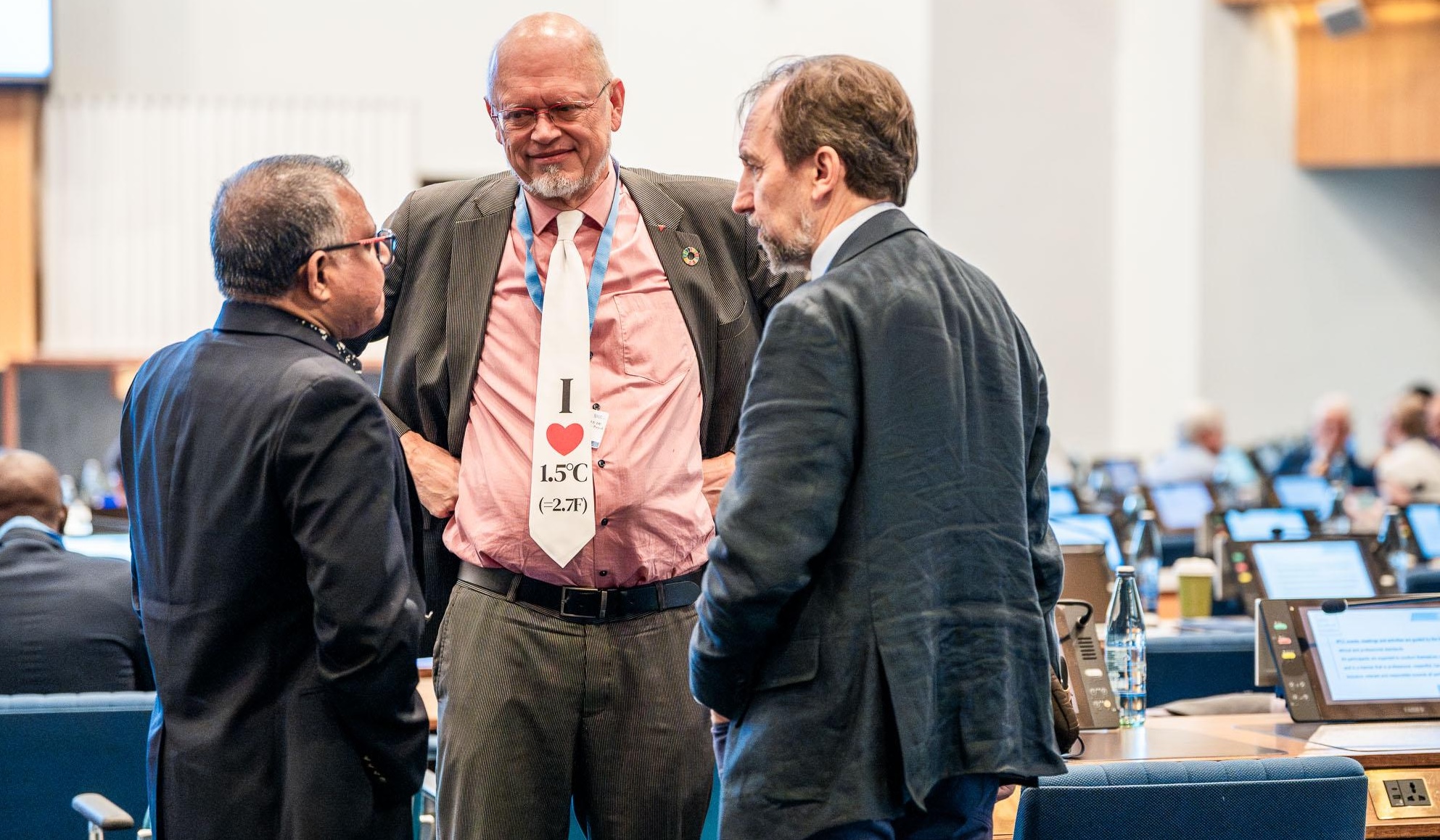
Scientists have vowed to keep working on the next flagship set of reports for the Intergovernmental Panel on Climate Change (IPCC), after a political row over the timeline for their release saw its latest session suspended on Friday evening without agreement.
During the weekend, government officials and scientists alike expressed disappointment over the inability to reach a compromise before some delegates from developing countries and small island states had to leave the week-long meeting in Ethiopia to catch flights home.
The disagreement – which has persisted since early 2024 – turns on whether the three key parts of the AR7 assessment should all be published before the conclusion of the UN’s next Global Stocktake of global climate action, which is due to be completed in late 2028.
The IPCC issued a statement after the close of the session, saying that “key agenda items” – the timelines for the three AR7 reports, as well as the IPCC budget – remain open and under discussion. It said the IPCC’s plenary session and its deliberations on the pending agenda “will resume at the earliest opportunity”, giving no further details of when.
IPCC Chair Jim Skea told delegates in closing remarks that recent months had been some of the most turbulent for the climate science panel and that, if there were stronger words than “profound disappointment” he would use them, according to a summary published by the Earth Negotiators Bulletin (ENB). IPCC discussions happen behind closed doors.
IPCC scientists remained committed
In an open letter, issued on Monday, a group of nearly 120 scientists – from a total of 664 AR7 authors – said they “stand committed to continue working to deliver the AR7 reports in a manner that is rigorous, timely and inclusive, in line with our mandate to be policy-relevant”.
“An assessment that arrives after the decisions it is meant to inform cannot serve its purpose,” they emphasised. “The second Global Stocktake in 2028 is such a decision point, and the world should not have to face it without the IPCCʼs latest assessment.”
Europe, small islands and the least developed countries, plus many Latin American and developed nations, want the IPCC to meet this deadline, arguing that the findings from the UN climate science body are irreplaceable in the UN climate policy-making process.
However, around a dozen developing countries plus Russia have argued that the reports should come later in order to allow for greater research input from the Global South – something that, in their view, would make the findings fairer. They also claim that a shorter timeline would put excessive pressure on experts.
-
Who shapes climate science? The equity question facing the IPCC
Early completion of the next global climate science assessment reports risks excluding research from the Global South, which is key to ensuring the findings are fair -
Governments that support climate science must stand firm against naysayers
The IPCC is meeting to decide the timing of its next major report, as some countries try to delay it and weaken the case for faster emissions cuts


The most vocal of this group at last week’s meeting were India and Saudi Arabia, according to the ENB summary and a developed country diplomat. Critics see this push for a longer timeline as an excuse to deprive government decision-makers of the latest science and ease pressure on emerging economies to raise their ambition, particularly on cutting emissions.
Commenting on last week’s meeting, France’s ambassador for climate negotiations Benoît Faraco said a broad coalition of developed and developing countries from all five continents, “united in their support for science and the timeline proposed by scientists”, had withstood pressure “from a few countries” seeking to slow down the process of adopting the IPCC reports.
He added that France would not back down and would “continue to fight tirelessly for science, protect the integrity of information, and convince our partners that without the best available scientific data, we will be less effective in tackling climate change and protecting our populations”.
Inclusivity proposal stalled
In a bid to unlock a solution for the AR7 timeline, countries discussed ways to improve the inclusivity of the IPCC’s work. One option put on the table was for the IPCC to expand its funding for delegates from developing countries to attend some or all of its sessions from one to two participants, according to the ENB summary and a delegate speaking to Climate Home News.
That would increase the costs for the IPCC to complete AR7 by up to a quarter, according to an assessment shared by the secretariat. The panel’s budget is under severe strain and its officials have warned that, without additional voluntary contributions, it risks running out of money before it can deliver on this assessment cycle.
Climate Home News understands that some of the IPCC’s traditional donors – which mainly include European countries, Japan and Australia – indicated a willingness to support funding for an additional developing country participant. But without an agreement over the budget or the timeline for the reports, that option was ultimately not adopted.
‘Disappointed and worried’
The three reports are managed by working groups that collate and draw overall findings from the latest scientific studies and data on the physical effects of global warming around the world, how to adapt to it, and pathways for cutting planet-heating emissions in order to meet the temperature goals of the Paris Agreement.
Winston Chow, an urban climate professor at Singapore Management University who co-chairs Working Group II on adaptation, wrote in a LinkedIn post that he was “disappointed and worried” for the IPCC authors who have worked “extraordinarily hard” to assess the relevant climate science over the past two years.
He said he shared their concern that “the rigour, time and goodwill they’ve invested are now being put at risk by the Panel’s stalemate”.
As science comes under attack at UN talks, climate movement splits over how to respond
For Working Group II, a meeting for 250 experts writing that report is scheduled for January 2027, followed by the approval of a special report on cities and climate change in Singapore next March.
But because the IPCC’s budget has not been confirmed due to uncertainty about the AR7 schedule, travel support for those researchers is at risk, wrote Chow. “If they cannot participate, our assessments will lose vital expertise, perspectives and scientific breadth, and the collective effort of our authors will be undermined,” he warned.
Scientific work continues
Despite the political holdups, he – together with French climate scientist Robert Vautard, co-chair of Working Group 1 – agreed with IPCC head Skea who told the IPCC’s closing session on Friday: “The engine room of the IPCC is working, and it’s healthy.”
Vautard commented in a separate post on LinkedIn after it ended: “The boat is at full steam.” Working groups I and II are due to start revising the first drafts of their reports, while Working Group III on reducing emissions is finalising its first draft which will be out soon, he wrote.
“The most exciting two years of the cycle are ahead, for the authors. The momentum in the engine room is here and now. Trust the engine room!” he added.
The IPCC and some scientists report that progress has been made towards achieving an equitable balance of authors from the Global North and the Global South.
The group of researchers who signed the open letter on Monday noted that “inclusivity is at the heart of how we work”, with author teams bringing together experts from developed and developing countries with diverse backgrounds and at different stages of their careers.