Connect with us

Published

on

 biofuel industry

 Sustainable Energy 

 Sustainable Aviation Fuel  

4 minutes read

Introduction Challenges facing the Biofuel industry

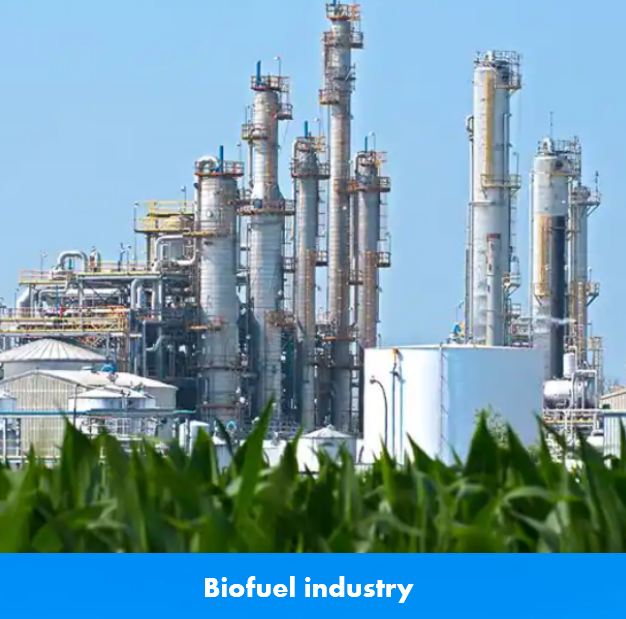
The biofuel industry involves the production and use of fuels derived from organic matter, such as plants and animal waste, as an alternative to fossil fuels. Biofuels can be divided into three main categories: first-generation, second-generation, and third-generation biofuels.

First-generation biofuels are produced from crops that can be used for food, such as corn, sugarcane, and vegetable oil. Second-generation biofuels are produced from non-food crops, agricultural waste, or forestry residues. Third-generation biofuels are produced from algae or other microorganisms.

The biofuel industry has the potential to reduce greenhouse gas emissions and dependence on fossil fuels. However, the production of biofuels can also have negative environmental impacts, such as deforestation, water pollution, and soil degradation.

The development of the biofuel industry has been influenced by government policies and incentives, such as subsidies and mandates for blending biofuels with conventional fuels. The industry has also faced challenges such as competition with food production, land use conflicts, and technological limitations.

The biofuel industry continues to evolve and innovate in pursuit of sustainable and economically viable alternatives to fossil fuels.

Challenges for the biofuel industry

While the biofuel industry offers several benefits, there are also several challenges that it faces. 

Here are some of the challenges facing the biofuel industry:

Land Use Changes: The production of biofuels often requires large amounts of land, which can lead to deforestation and habitat destruction if not managed sustainably. This can have negative impacts on biodiversity and ecosystem services.

Competition with Food Crops: Some biofuels are made from food crops, which can lead to competition for resources such as water and land. This can lead to higher food prices and food insecurity, particularly in developing countries.

High Production Costs: Biofuel production can be expensive, particularly for advanced biofuels that use non-food feedstocks. This can make it difficult for biofuels to compete with traditional fossil fuels, particularly when oil prices are low.

Infrastructure and Distribution: Biofuels require a different infrastructure and distribution system than traditional fossil fuels. This can make it challenging to distribute biofuels to consumers and can increase the cost of biofuel production.

Regulatory Uncertainty: The biofuel industry is heavily regulated, and changes in government policies and regulations can create uncertainty for producers and investors. This can make it challenging for the biofuel industry to attract investment and grow.

Technical Challenges: The production of biofuels can be technically challenging, particularly for advanced biofuels that use non-food feedstocks. This can require significant research and development, which can be expensive.

Addressing these challenges is essential for the biofuel industry to realize its full potential as a sustainable and renewable energy source. This requires a collaborative effort between governments, industry stakeholders, and researchers to develop sustainable biofuel production methods, policies, and regulations that support the growth of the industry while minimizing its negative impacts.

Collaborative effort between governments, industry stakeholders, and researchers to develop sustainable biofuel production

Collaborative efforts between governments, industry stakeholders, and researchers are crucial for the development of sustainable biofuel production. Such efforts can help address the various challenges facing the biofuel industry and promote its growth.

One important aspect of such collaborations is the establishment of policies and regulations that support the development of sustainable biofuels. Governments can provide incentives for the production and use of biofuels, such as tax credits or subsidies, and set standards for their production and quality.

Industry stakeholders, including biofuel producers, agricultural producers, and fuel distributors, can play a significant role in the development of sustainable biofuel production. Collaboration between these stakeholders can help to identify opportunities and challenges in the supply chain, and develop strategies to optimize production and distribution.

Researchers can also contribute to the development of sustainable biofuel production through their work on new technologies and methods. For example, researchers can explore new feedstocks, such as algae or waste materials, or develop more efficient production processes that minimize waste and environmental impacts.

In addition, collaboration between governments, industry stakeholders, and researchers can help to ensure that sustainable biofuel production is aligned with broader environmental and social goals, such as reducing greenhouse gas emissions and supporting rural development.

Collaborative efforts between governments, industry stakeholders, and researchers are essential for the development of sustainable biofuel production, and can help to ensure that biofuels play a positive role in the transition to a more sustainable energy system.

Conclusion for Challenges facing the biofuel industry

The biofuel industry has faced a number of challenges in its development and growth. These challenges include competition with food production, land use conflicts, environmental impacts such as deforestation and water pollution, and technological limitations.

However, there have been significant efforts by governments, industry stakeholders, and researchers to address these challenges and develop sustainable biofuel production. Collaborative efforts have led to the establishment of policies and regulations that support the production and use of biofuels, the development of new technologies and methods, and the identification of opportunities and challenges in the supply chain.

Despite the challenges facing the biofuel industry, there is continued optimism that sustainable biofuels can play a positive role in the transition to a more sustainable energy system. With ongoing collaboration and innovation, the biofuel industry can continue to evolve and contribute to the development of a more sustainable and diversified energy mix.

https://www.exaputra.com/2023/04/challenges-facing-biofuel-industry.html

Renewable Energy

ACORE Applauds Maryland Gov. Moore’s New Executive Order on Energy Affordability and Reliability

Published

on

ACORE Applauds Maryland Gov. Moore’s New Executive Order on Energy Affordability and Reliability

ACORE Applauds Maryland Gov. Moore’s New Executive Order on Energy Affordability and Reliability

FOR IMMEDIATE RELEASE
Dec. 19, 2025

WASHINGTON, D.C. — The American Council on Renewable Energy (ACORE) issued the following statement from ACORE President and CEO Ray Long in response to Governor Wes Moore’s announcement of new initiatives to build an affordable and reliable energy future for Maryland.

“ACORE applauds Gov. Wes Moore for setting forth a new series of energy initiatives that seek to stabilize energy bills while ensuring grid reliability and efficiency for Marylanders. In particular, ACORE commends key provisions in the order to increase the deployment of advanced transmission technologies; streamline the siting and permitting of high-voltage transmission, energy storage, and other infrastructure; advance wholesale market reforms; and more. As the country enters a new era of electricity demand, initiatives like Gov. Moore’s will facilitate significant progress toward building a modern and reliable grid needed to maintain economic competitiveness and keep the lights on,” said ACORE President and CEO Ray Long.

###

ABOUT ACORE

For over 20 years, the American Council on Renewable Energy (ACORE) has been the nation’s leading voice on the issues most essential to clean energy expansion. ACORE unites finance, policy, and technology to accelerate the transition to a clean energy economy.

For more information, please visit http://www.acore.org.

Media Contacts:
Stephanie Genco
Senior Vice President, Communications
American Council on Renewable Energy
communications@acore.org

The post ACORE Applauds Maryland Gov. Moore’s New Executive Order on Energy Affordability and Reliability appeared first on ACORE.

https://acore.org/news/acore-statement-on-gov-wes-moores-new-energy-executive-order/

Continue Reading

Renewable Energy

Meat–It’s What’s for Dinner, if You Don’t Care about the Animals or the Planet

Published

on

We often hear meat-eaters say things like, “If beef isn’t good, why do the manufacturers of plant-based burgers try so hard to make their burgers taste like real meat?”

There is no doubt that cow and pig meat tastes and smells great; every vegan on Earth will tell you that.

The problem lies elsewhere, in a) the environmental impact of clearing the rainforests to make room for more cows, and b) the cruelty inherent in factory farming and the slaughtering of the animals.

Meat–It’s What’s for Dinner, if You Don’t Care about the Animals or the Planet

Continue Reading

Renewable Energy

FAQs: Your Most Common Commercial Solar Questions Answered 

Published

on

Currently, if you’re exploring solar energy for your business, you’re likely drowning in questions about solar panel installation costs, potential savings, government rebates, installation requirements, long-term value, and more.

At Cyanergy, we work with thousands of Australian businesses, ranging from small, family-run citrus farms to large industrial manufacturing facilities, that want cleaner, cheaper, and more reliable energy but aren’t sure where to begin.

Don’t worry!

To help you out, we’ve created the ultimate Commercial Solar FAQ guide, featuring straightforward answers drawn from Cyanergy’s extensive experience and expertise.

We’ve also added helpful sections that explain what commercial solar installation actually is, why it matters, its key benefits, and a complete walkthrough of the installation process so you understand the entire journey from start to finish.

So, let’s see how this Cyanergy guide answers the most common commercial solar FAQs, explaining them in simple, practical terms!

What Is Commercial Solar Installation?

Commercial solar installation refers to the design, engineering, and installation of solar power systems specifically tailored for businesses or commercial properties.

In Australia, large offices, manufacturing facilities, or retail buildings are equipped with photovoltaic (PV) systems to generate clean, renewable electricity.

By adopting solar energy, businesses can reduce their utility costs, lower their carbon footprint, and enhance long-term energy reliability. However, the process is complicated and requires professional installation to ensure efficiency and obtain necessary regulatory approvals.

The commercial solar PV systems are best as they:

  • Have higher power demands.
  • Use more advanced engineering.
  • Can range from 10 kW to multi-megawatt systems.
  • Often involves roof, ground, or carport mounting.
  • Require strategic planning around operating hours and energy patterns.

Cyanergy’s Commercial Solar Power Solutions

Switching to solar isn’t just an upgrade for Australians, it’s a strategic investment that transforms how your business powers its future.

At Cyanergy, our commercial solar installations go far beyond placing panels on a roof. We deliver a complete, long-term energy solution designed to slash your operating costs and maximise energy efficiency for decades.

Our comprehensive service includes:

  1. Full energy analysis
  2. Tailored system design
  3. Engineering approvals
  4. High-efficiency Tier-1 solar panels
  5. Premium, reliable inverters
  6. Installation by certified electricians
  7. Ongoing monitoring & maintenance for peak performance

Key Components of Commercial Solar Panel System

  • Solar panels (solar PV modules)
  • Inverters
  • Roof or ground-mounted racking systems
  • Electrical wiring and monitoring equipment
  • Additional Backups (Battery storage, Generators)

Your Answers to the Most Common Commercial Solar Questions| Get the Facts!

Before you go solar, it’s wise to know all the truth without any guesswork.

Why? This clear understanding of the most asked commercial solar FAQs can be the game-changer for your business that
needs to operate sustainably while reducing annual energy costs.

So, here are the 15 key answers every homeowner needs to know before investing in solar panel
technology:

1. Is commercial solar really worth it for my business?

Short answer: Absolutely yes, if you consume power.

Long answer: Undoubtedly, Commercial solar energy has become one of the smartest financial decisions
an Australian business owner can make.

At Cyanergy, we consistently see commercial clients slash their electricity bills by 40-80%, depending on system
size, energy usage patterns, and solar exposure. With power prices rising year after year, solar acts as a financial
shield.

Let’s see why it’s worth it:

  • Lower operational expenses, so the power bills drop dramatically
  • Offering fast ROI (many Cyanergy clients see payback in 2 to 4 years)
  • Government
    rebates
    reduce the upfront cost.

  • Protection against energy price volatility
  • Increased property value and aesthetics
  • Boosted sustainability credentials, grabbing the attention of eco-conscious buyers.

Remember! Solar isn’t just a cost; it’s an investment that pays you back in the long run.

2. How much does a commercial solar system cost?

The cost depends on the system, design, and equipment quality. At Cyanergy, systems are tailored based on estimates
from the site audit and other criteria. It’s not “one-size-fits-all”.

Typical price ranges in general we see are:

  • 30 kW commercial system: $25,000 – $40,000
  • 50 kW sized system: $45,000 – $70,000
  • 100 kW system: $90,000 – $150,000
  • 200–500 kW systems: highly customised, vary depending on installation complexity and many other
    factors.

Cyanergy installs Tier-1 solar panels and
uses premium inverters or high-efficiency
alternatives. However, you can always customise them to suit your preferences and goals.

Cyanergy’s every solar quote includes:

✔ Full energy assessment

✔ Custom ROI modelling

✔ Design, engineering & installation

✔ Government rebate calculation

✔ Monitoring setup

✔ Industry-leading warranties

3. What rebates or incentives are available for commercial solar?

Businesses and any C&I
properties in Australia
can take advantage of generous solar financial incentives that began on October 1,
2025.

Besides that, at Cyanergy, we assist our customers with all major schemes, including:

STCs (Small-scale Technology Certificates)

This rebate applies to systems up to 100 kW. The discount often saves commercial clients $10,000 to $40,000 off the
solar installation price.

LGCs (Large-scale Generation Certificates)

LGCs apply only to systems above 100 kW. These provide ongoing financial returns for the clean electricity you
generate.

State Grants & Industry Programs

Depending on your industry and location, extra funding and
other incentives
may be available. Cyanergy’s team stays updated to ensure you never miss a rebate you’re
eligible for.

We handle all the paperwork, from start to finish, so you get the maximum savings with zero hassle.

4. How long is the payback period?

The typical payback period for Cyanergy commercial clients is 2–5 years. However, it depends on:

  • Energy consumption pattern
  • Electricity rates
  • System size
  • Solar design & orientation
  • Your operating hours
  • Shading & roof structure

Businesses with high daytime usage, for example, manufacturing
facilities
, warehouses, retail, aged care, schools, etc, often recover their investment even faster.

And the best part? After payback, your system produces free power for 20+ years, which is a substantial competitive
advantage.

5. Can my roof support commercial solar panels?

In Australia, rooftop solar is a very common sight. Most commercial and residential buildings already have solar systems installed, and the number continues to grow rapidly each year.

In many cases, roofs can support solar panels, but an assessment is always essential for commercial setups.

What to look for? Here’s your checklist:

  • Roof age and condition
  • Structural integrity
  • Roofing material type
  • Weight load capability
  • Angle, orientation, and shading
  • Complexity for installation and maintenance

However, if your roof isn’t suitable for mounting solar panels, there are alternatives, such as ground-mounted solar, solar carports, and tilt-frame designs for flat roofs.

You can also use solar paints or window facades to generate solar power.

6. What’s the lifespan of a commercial solar system?

A high-quality commercial solar panel system installed by accredited professionals can last for 25 to 30 years or more.

Cyanergy uses equipment from reputable manufacturers with bankable warranties. We design systems to last well beyond the payback period, ensuring strong long-term ROI

7. Do commercial solar panels require regular maintenance?

Even though solar is low-maintenance, it is not maintenance-free. To make your system function efficiently, you might need to

  • Perform an Annual inspection.
  • Cleaning every 6–12 months, depending on dust and debris.
  • Monitoring system performance through the provided platform.

Remember, this routine maintenance helps prevent downtime, keeps panels efficient, protects your warranty, and lets you catch issues earlier.

8. Will solar affect my business operations during installation?

Based on our previous installation experience, disruptions are minimal or nonexistent in most cases. The reason is that Cyanergy schedules installations:

  • Outside peak business hours whenever possible.
  • For larger systems, we install the panels in stages.
  • With safety barriers that allow your operations to continue safely and smoothly.

Most commercial clients continue business as usual. We always keep communication clear so you know what’s happening.

9. What brands does Cyanergy use? Are they reliable?

Cyanergy only works with Tier-1 solar panel manufacturers and top-performing inverter brands that are trusted globally.

We choose equipment based on performance, warranty, availability, and your budget. Reliability and lifespan are our top priorities.

Our most used solar panels and inverters are:

Solar Panels

Inverters

  • Fronius
  • SMA
  • Sungrow
  • Huawei

10. How much energy will my business actually save?

After installing a solar panel, actual savings can range from 40 to 80% on electricity bills. However, the exact amount depends on:

  • When your business consumes power
  • Solar system size
  • Local weather conditions
  • Electricity tariffs
  • Whether battery storage is added for nighttime use

11. What if my energy usage increases in the future?

Expanding a system is not a problem for Cyanergy. The reason is that we always design systems with scalability in mind. We believe that as your businesses grow, your solar system should grow with you!

However, for the expansion, the options include extra roof space for the future, inverter oversizing, Upgradable circuit capacity, and an integrated battery-ready design.

12. Can I add batteries to a commercial solar system?

Yes, and it’s becoming increasingly popular not only in Australia but also worldwide.

Commercial batteries help to reduce peak demand charges, store excess solar for nighttime usage, improve power quality and provide backup protection during grid outages.

Cyanergy supplies commercial-grade battery solutions for business sizes ranging from small offices to large industrial facilities.

13. What if my business moves? Can I take the solar system with me?

Even though the answer is technically yes, practically, it depends!

Removing and reinstalling a large commercial solar system can be costly in most cases. Therefore, many businesses choose to leave the system and increase the property’s value or install a new, tailored system at the new site.

If you are still perplexed about what to do, Cyanergy helps you evaluate the ROI of both options before making a decision.

14. What warranties does Cyanergy offer?

At Cyanergy, we provide comprehensive warranty coverage on our solar panel system:

  • 25–30 year panel performance warranty
  • 10–25 year inverter warranty
  • 10–15 year product warranty on panels
  • 10+ year workmanship warranty
  • Full after-sales support

However, we also offer attractive warranties on heat pumps, air conditioners and other energy-efficiency upgrades throughout Victoria, New South Wales and Queensland.

So you can contact us for reliable products and outstanding services!

15. Why choose Cyanergy for commercial solar?

Because we don’t just “install” solar, we build long-term renewable energy solutions.

What sets us apart? Let’s see:

✔ Proven commercial expertise

Cyanergy has completed thousands of installations across small businesses, schools, warehouses, factories, councils, and national chains.

✔ End-to-end service

We handle everything:

  • Energy assessment
  • System design
  • Approvals and paperwork
  • Engineering
  • Installation
  • Monitoring setup
  • Maintenance

✔ Premium equipment only

At Cyanergy, there is no cutting corners, no cheap or unreliable products.

✔ Transparent ROI modelling

Our previous reports show actual savings, not inflated marketing numbers.

✔ Exceptional after-sales support

From the first consultation to post-installation monitoring, we stay with you every step of the way.

Have A Project In Mind? Let’s Talk Solar!

Contact us for a solar quote today!

Closing Remarks: Ready to Switch with Cyanergy’s Commercial Solar Solutions?

Well, if you’re running a business in
Australia
, chances are the answer is yes.

Whether you’re considering a 30 kW rooftop system or a multi-megawatt commercial solar farm, Cyanergy provides the
expertise, high-quality products, and customer support that you need to transition to clean, cost-effective energy
with confidence.

Also, if you have any questions that you’d like to add to the list, contact us today and talk with our solar expert team. We’re here to help you
make the switch!

Your Solution Is Just a Click Away

The post FAQs: Your Most Common Commercial Solar Questions Answered  appeared first on Cyanergy.

https://cyanergy.com.au/blog/faqs-your-most-common-commercial-solar-questions-answered/

Continue Reading

Trending

Copyright © 2022 BreakingClimateChange.com