

The “vast majority” of the UK government’s plans to prepare for climate hazards have made virtually no progress over the past two years, according to the Climate Change Committee (CCC).
In that time, the world has experienced the hottest year on record, while England has seen its wettest ever 18-month stretch between 2022 and 2024.
(Climate adaptation – outside of some issues such as defence – is mostly a devolved matter, with separate plans in place from the administrations for Scotland, Wales and Northern Ireland.)
The previous government introduced a new adaptation strategy for England in 2023, covering plans for rising temperatures and more extreme weather in the country.
However, in its latest analysis of the government’s progress, the CCC states that the current approach to adaptation in England is “not working” and requires “urgent strengthening”.
The government is failing to make “good” progress in adapting to climate change on any of the 46 outcomes measured by the committee, ranging from better healthcare during heatwaves to preparing financial institutions for climate risk.
The report marks the latest in a series of appraisals by the CCC that have repeatedly identified large gaps in the nation’s adaptation efforts.
This time, with a relatively new Labour government that has said it will act on adaptation, the committee says its report “must serve as the turning point”.
But the CCC also says it is “seriously concerned” that the government will cut funding for adaptation, ultimately leading to much higher future costs as temperatures continue to rise.
- Climate adaptation is ‘vital’
- What progress has been made?
- What does the CCC recommend?
- How prepared are different sectors for climate change?
Climate adaptation is ‘vital’
There is “unequivocal evidence” that climate change is already making extreme weather in the UK “more likely and more extreme”, the CCC says.
The report lays out major risks facing the country, noting that the number of properties at risk from flooding is set to increase from 6.3m today to 8m by 2050. Roads and railways at risk from flooding could increase from a third of the total length to half over the same timeframe.
At least 59% of top-quality farmland is already at risk from flooding, the report says, adding that this could also increase over the coming decades.
Meanwhile, annual heat-related deaths could increase “several times over” to pass 10,000 in an average year by 2050, the CCC says.
It also cites an Office for Budget Responsibility (OBR) report from 2024 that concludes the UK’s GDP could be around 3% lower by 2074, even under the Paris Agreement’s “below 2C” goal. It says this could increase to 5% in a “below 3C” scenario, according to the OBR.
High-quality climate adaptation is therefore “vital to ensure that these risks are managed most efficiently and at least cost”, according to the committee. Otherwise, government policy could “lock in” risks or even make them worse.
The CCC reports on adaptation progress in England every two years, as required under the 2008 Climate Change Act. These reports have consistently highlighted adaptation as an issue that has been “underfunded and ignored” by successive governments.
There have been a few major developments since the committee’s last report.
Notably, the previous Conservative government launched its third national adaptation programme (NAP3), which is the cornerstone of the nation’s adaptation policy, in summer 2023. (NAP3 covers adaptation policy in England, as well as non-devolved issues that affect the whole UK, such as defence.)
In a highly critical initial appraisal of the programme, the CCC concluded that it fell “far short of what is needed” and “must be strengthened”. NAP3 has also faced an ultimately unsuccessful legal challenge from activists, arguing that it breached people’s human rights.
Another big development since the committee’s last report is Labour winning the general election in 2024. The CCC acknowledges that the new government “inherited a NAP that fell short of the task”, but says it finds “little evidence of a change of course”.
What progress has been made?
The report looks at both the “policies and plans” underpinning climate adaptation, as well as the actual “delivery and implementation” of those plans. It states:
“Whilst there is some evidence of policies and plans improving [since 2023], it is clear that NAP3 has been ineffective in driving the critical shift towards effective delivery of adaptation.”
The CCC assesses the planning and delivery of 46 outcomes from adaptation policy across five overarching themes. It scores them using roughly the same monitoring framework used in its last report in 2023.
It notes that 11 policies and plans have improved over the past two years, including a new adaptation strategy from the Ministry of Justice and a green finance strategy.
Over the same period, it says four have gotten worse, among them investment in flood protection projects, as “plans no longer align with their stated objectives”.
The lack of significant improvement between 2023 and 2025, based on the CCC’s scoring system, can be seen in the chart below.

As for the government actually delivering on its plans, the CCC says the “vast majority of our outcomes have received the same score as in 2023, most at low levels”.
The small number of improvements mainly relate to the latest round of implementation of the “adaptation reporting power”, which allows the government to ask infrastructure providers to disclose how they deal with climate risks.
The chart below, which compares the scores given to different adaptation outcomes between 2023 and 2025, demonstrates the lack of progress in the intervening years.
The CCC concludes that none of the outcomes could be classified as making “good” progress, in terms of delivery. Only four of them saw improvements over this period.
It highlights the water supply as an area where there has been backsliding over the past two years, noting that “continued slow rate of leakage reduction is now clearly inconsistent with meeting the sector’s targets”.

The CCC also points out that “tracking progress on adaptation remains challenging due to limited national-scale, up-to-date and relevant data”.
While there has been an improvement since 2023, nine of the 46 assessed outcomes for England still lacked enough evidence to assess progress, the report says.
These include important areas such as the impact of climate change on food supplies and the vulnerability of telecommunications and information and communication technology (ICT) assets.
In addition, ahead of NAP3, the CCC recommended – as part of its 2023 progress report – a list of 89 actions to close what it viewed as “policy gaps in government’s adaptation planning”.
It suggested that these could be dealt with either in NAP3 itself, or as part of other policy programmes.
However, only four of these recommendations have been achieved, with a further 14 seeing “partial progress”.
The report highlights food security, community preparedness and buildings as some of the areas where the government did not follow through on its recommendations.
What does the CCC recommend?
The CCC’s report echoes previous advice that, despite some improvements in NAP3 on previous efforts, the nation’s climate adaptation strategy needs an overhaul:
“The UK’s current approach to adaptation policy making is not working. Adaptation is not the cross-government priority that it needs to be, which is holding back delivery.”
NAP3 covers a five-year period from 2023 to 2028. With the latest report coming at a halfway point in this cycle, the committee says it “must serve as the turning point” for the government on climate adaptation.
As part of the “urgent strengthening” suggested in the report, the committee sets out key areas that it says should be improved.
“Adaptation” can mean different things in different contexts. The CCC stresses the need for a set of “specific and measurable sectoral targets” that can be used to guide progress, with clarity on how to monitor them and who is responsible.
The government has signalled its intention to strengthen adaptation objectives. The committee says that such objectives “must” be developed as a priority, no later than the end of 2025.
The CCC report highlights the “data gaps” that need to be closed, with “monitoring and evaluation…still not treated with sufficient urgency”. It says the government should direct relevant agencies to collect data on climate risks and the delivery of adaptation measures.
Adaptation is a topic that affects every area of government, from healthcare to education. Yet the CCC highlights that there is not enough coordination of activities between departments and says this should be improved.
In order to carry out adaptation policies, the CCC also stresses that the government “needs to ensure sufficient funding is available” as it undertakes its spending review. Baroness Brown, chair of the CCC’s adaptation committee, told journalists in a press briefing:
“We are seriously concerned that resilience and climate adaptation may be cut in the spending review. [The] government needs to recognise that this is not a future problem, this is today’s problem…I know the government is under a lot of pressure to make cuts, but this isn’t the easy one.”
Given the cost of future climate risk, the committee stresses that ignoring adaptation would not, ultimately, save money. In fact, acting early would “minimise the overall costs of tackling climate change”, it explains.
In the press briefing, CCC chief executive Emma Pinchbeck emphasised the “real need” for the government to think about the future when implementing key policies, such as home-building programmes and other major infrastructure developments.
“If you think about potential waste in terms of investment into the NHS, if we then have to retrofit hospitals to make them cooler,” she said, as an example.
How prepared are different sectors for climate change?
The CCC progress report looks at specific outcomes broken down across five broad sectors.
Within these, it highlights key problems and makes specific recommendations for each area.
Land, nature and food
The CCC highlights various “foundational” strategies covering farming and land that the Department for Environment, Food and Rural Affairs (Defra) is expected to publish in the coming months, including the land-use framework and the food strategy.
Delays in publishing such documents have “hampered” adaptation progress. However, the report highlights them as opportunities to set out clear objectives and responsibilities for the sector.
As it stands, important issues such as boosting climate-resilient farming and protecting food supply chains are rated “insufficient” for both government planning and implementation.
The CCC highlights the relatively new “environmental land management schemes” (Elms), which constitute England’s successor to the EU’s farm payments policy.
The report says these schemes lack guidance for climate adaptation, adding that the government should provide “certainty” about how much farmers will be paid for such measures.
As for the fishing industry, the report has downgraded its climate-adaptation plans, noting that they “no longer look credible”. It says the government’s marine strategy, published earlier this year, “does not include any specific or targeted adaptation actions”.
Infrastructure
According to the CCC, when the government publishes its 10-year infrastructure strategy, it should set out “clear resilience standards” for new infrastructure projects.
It also notes that major funding packages – for new roads and electricity networks, for example – should include incentives to fund climate adaptation.
Two out of the three adaptation policies that are scored as “good” are in the infrastructure sector, namely the plans for maintaining reliability in the road and rail networks.
Despite this, actual progress in improving transport resilience is largely “stagnant”, the committee says. It highlights increased flooding on railways and an increased number of roads deemed “susceptible” to flooding.
This is also the sector that has seen the most improvement in terms of delivery and implementation. The water, energy, telecommunications and transport sectors are all described as improving the identification and management of “interdependencies”.
This refers to better evidence of links between different sectors, which is being unveiled via adaptation reporting power. Notably, none of the sectors that have seen improvements are rated as “good”, indicating they still have work to do in this area.
Built environment and communities
Flooding is highlighted as the key risk facing many communities around England.
While the Environment Agency-led flood defence programme has been successful, “its budget in real terms is shrinking as risks are escalating, meaning delivery is falling short of targets and the condition of flood defence assets is declining”, according to the CCC.
The government’s investment programme needs “long-term” targets for cutting the risk posed by floods and coastal erosion, supported by sufficient funds, the report concludes.
It also recommends a “long-term cross-sector plan to manage future heat risk and drive joined-up action”.
The CCC is currently unable to track many of the important measures around heat risk, such as how many buildings are overheating, due to a lack of data.
Overall, none of the efforts to implement better protections for homes and communities have seen any positive change since 2023, despite this being a record period of heat and flooding.
Health and wellbeing
The CCC notes that there are only “limited” policies and plans in place to protect population health and healthcare delivery in the face of escalating climate hazards.
Extreme heat is the main risk identified in this context. As it stands, there are long-term, increasing trends of heat-associated deaths and overheating in hospital settings, the committee says.
In this context, the report recommends that the government develop an “improved climate and public health adaptation plan” that builds on the existing adverse weather and health plan.
Also, as part of the government’s decade-long plan to improve the NHS, the CCC says any upgrades must “make it more resilient to climate extremes today and in the future”.
Economy
The committee says that while businesses can take action to protect their own affairs from climate change, “barriers remain” and adaptation finance “remains nascent”.
It therefore highlights an important role for the government in removing these barriers, providing high-quality information and “correcting market failures”.
The report recommends setting up a portal for adaptation-related data that can be accessed by companies.
It also says the government should ensure that the UK’s sustainable disclosure requirements incorporate “adaptation-related disclosure”, to better prepare the private sector for climate risks.
The CCC also points out that an adaptation finance “deliverables and action plan”, promised for 2024, has not been produced. Among other things, this plan should lay out ways to “mobilise” private investment into adaptation projects, it adds.


The post CCC: England’s approach to climate adaptation is ‘not working’ appeared first on Carbon Brief.
CCC: England’s approach to climate adaptation is ‘not working’

Climate Change
After a week of plenty of activity and drama for Greenpeace at sea, I felt like writing to you on a much quieter theme…
Do you have a favourite book, poem or story about the ocean?
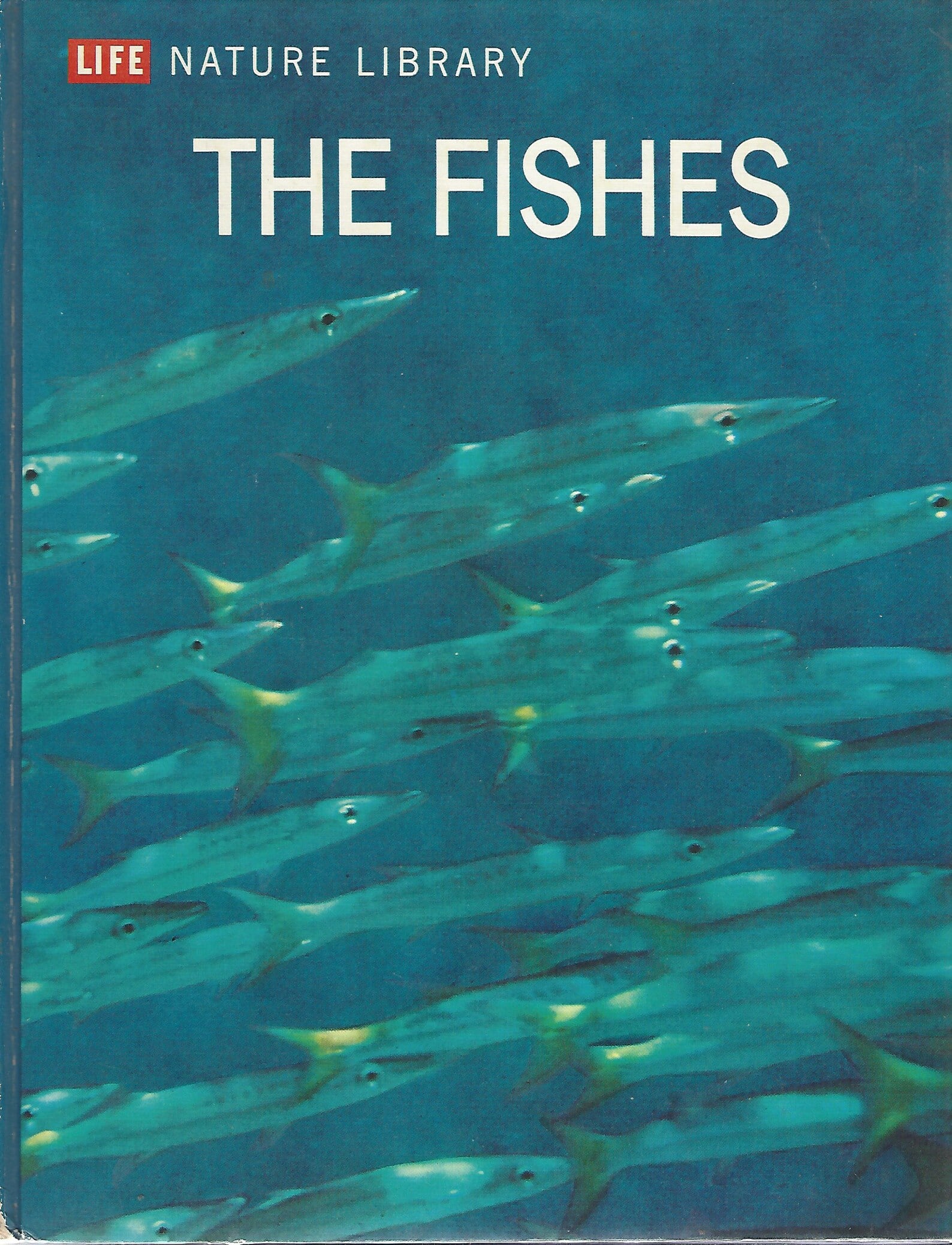
When I was very small, it was the TimeLife book of The Fishes, by F. D. Ommanney, which I remember endlessly poring over, my child’s mind gripped, in total fascination. The cover illustration showed a shoal of barracuda, mid-water and heading upwards, lit up as an iridescent blue by a column of sunlight. Oddly, it is only the cover and the illustrations of the deep sea creatures which I now remember—but I loved that book, as the weakened spine, blunted pages and dog-eared corners attested.
The Fishes has been on my mind recently, because I’ve been working with some dear friends on our own illustrated oceans book, to be published by Upswell Publishing. The book is called Scott Reef: Like Nowhere Else on Earth, and I want to share with you a bit of the story behind its creation.
Scott Reef is absolutely magnificent: Australia’s largest freestanding oceanic reef, brimming with life, including rare and threatened species such as a genetically distinct population of green sea turtles, pygmy blue whales and the wonderfully elegant dusky sea snake. But Scott Reef isn’t near our capital cities; it is way off the north-west coast of WA. And it is threatened with devastation by Woodside, which wants to drill up to 57 toxic wells at the Reef for its vast, dirty Browse gas project.
One of the main challenges in the fight to save Scott Reef from being turned into an industrialised gas zone by Woodside is bringing this incredible location to life for people who haven’t actually experienced it first hand. Because despite its ecological significance and dazzling beauty, ‘Scott Reef’ is also—at least not yet—exactly a household name.
To help get over this barrier, Greenpeace has enabled a number of photographers to travel to Scott Reef by boat (including the Rainbow Warrior) to document its astonishing diversity of colour and life. We then brought these images together in a remarkable photobook, produced by our talented in-house team, which we’ve been putting into the hands of as many leaders as possible—including the MPs whose decisions can determine the Reef’s future.
Back in June this year, I was sharing a copy of our in-house book at a business gathering in Perth when someone pulled me aside. Had we thought about publishing the book commercially? Apart from anything else, he wanted to buy a copy himself! He had a point. We were proud of what we’d created, but a commercially published version could reach a much wider audience and have even greater campaign impact. I immediately turned to my dear friend, Terri-ann White, who runs Upswell Publishing in WA, for advice.
Terri-ann has a huge heart and terrific vision. So many wonderful things in WA owe their existence to her doings, and, true to form, she was immediately encouraging and enthusiastic. “But,” she said, “it would add a whole new dimension if we had some words to accompany the incredible pictures.”
Fair enough, I thought. I could ask a few authors.
“And when would you like it published?” she asked.
“Ideally November,” I answered sheepishly.
Now, in publishing terms, nobody goes from idea to finished work, beautifully produced by a commercial publisher, in just four months. It. Just. Doesn’t. Happen. A book of this scale would ordinarily take nine months, I was told. But Terri-ann was undeterred. “If you can get a rapid turnaround on the writing, I will give it a shot.”
Over the following few days, I sent out 24 emails to prospective writers. To my joy and surprise 23 of them responded almost immediately with an enthusiastic yes!
Terri-ann was somewhat alarmed and perplexed when I told her the good news… we’d discussed a few authors, not more than twenty! “Impossible,” she texted. “Editing is important and you are talking about thousands of words!” But I also know Terri-ann. She does the impossible. And so, here we are… Terri-ann is going to hit that improbable deadline. Scott Reef: Like Nowhere Else on Earth will be on shelves in November.
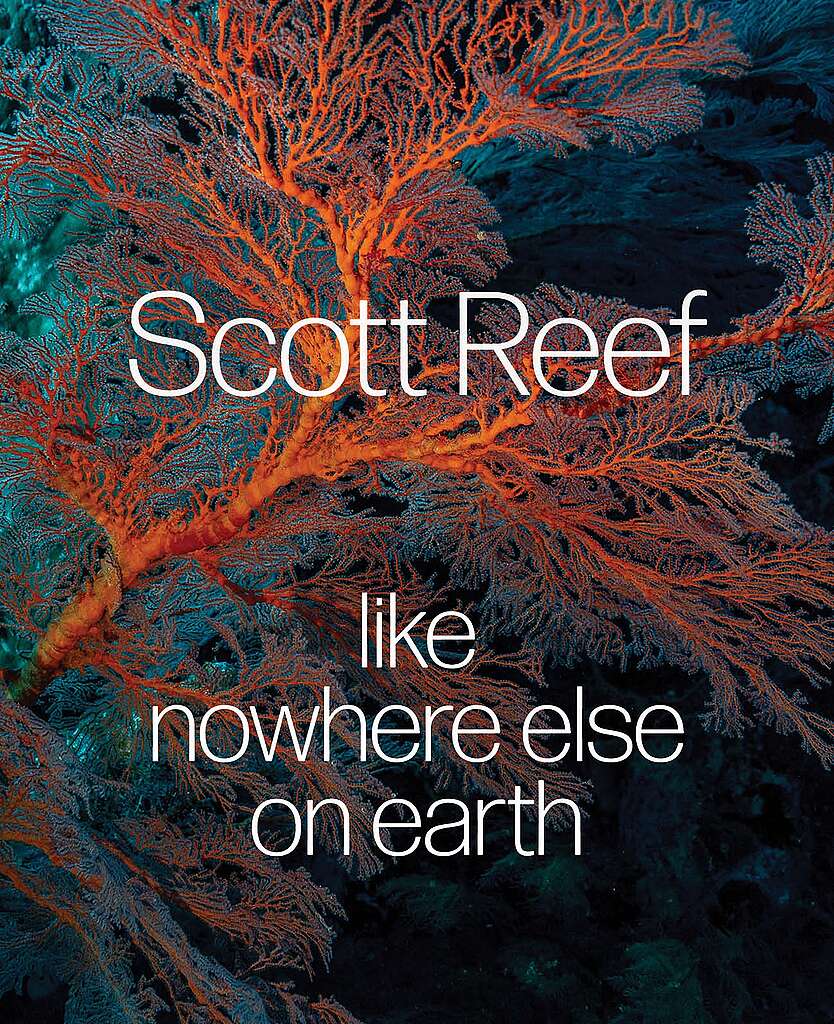
The contributors are a wonderfully diverse bunch, united by their enthusiasm for Scott Reef — and their extraordinary speed!
It’s a brilliant mix. The book brings together national icons like Peter Garrett, Tim Winton, Mick Dodson, Janet Holmes à Court and Fiona Stanley; the intellectual heft of professors Frank Bongiorno, Jessica Meeuwig, Rick Steiner and Samantha Hepburn; the poetic vision of Prema Arasu, Berndt Sellheim and Saadiah Freeman; the field expertise and passionate first hand witnessing of Imogen Zethoven, Tooni Mahto, Ben Fitzpatrick, Geoff Bice, Olaf Meynecke, Paul Gamblin, Sarah Gittoes and Hayley Baillie; and the determination of emerging activist voices Jackson Reid and Emma Sangalli.
Their elegant words wrap themselves around the sheer wonder of the underwater world, brought to life by the work of the photographers — of whom one, Wendy Mitchell, has also contributed a wonderful essay.
Terri-ann showed me the full physical proofs this week and they are breathtaking. This book contains some of my absolute favourite images of wildlife beneath the waves -– and believe me, after almost 20 years at Greenpeace, I’ve been privileged enough to see some remarkable shots! The essays bring a whole new depth and richness to the story of Scott Reef.
If I am being honest, and maybe a bit sentimental, I hope that a four or five-year-old child somewhere in Australia will spend part of their summer holidays turning the pages of this book, wide-eyed with curiosity and awe at the beauty and strangeness of the creatures that call our oceans home.
Our shared commitment is to make sure that, as those children grow up, the wonders of Scott Reef will exist not just in the pages of the book, but out there in the wild waters off north-western Australia—alive, thriving, and every bit as extraordinary as they are today; a living wonder beneath the waves.
Pre-orders of Scott Reef: Like Nowhere Else on Earth are available here.


Q & A
Sometimes you get asked a question so often that you decide to produce a report to answer it!
We know there is strong public opposition to voter opposition to gas drilling at Scott Reef and fracking in the Kimberley in Western Australia. But I am frequently asked whether, even if people don’t want it, more gas drilling is a necessary evil to sustain WA’s prosperity?
The short answer is an unequivocal ‘No’. The longer answer is our new report, From Gas to Green: Building Western Australia’s Future State, which makes the comprehensive case that Asia’s gas market is declining — while WA has an enormous untapped opportunity to become a global leader in green industries and exports, helping drive the region’s shift away from fossil fuels. The faster that WA embarks on a decisive shift away from gas—and that includes no fracking in the Kimberley, or drilling at Scott Reef — so much the better for the state’s people, ecology and economy.