

Quick Key Facts
- Bioremediation is a process that uses plants and microorganisms like bacteria, fungi and algae to treat contaminated soils, water and other pollution.
- Microorganisms are very small organisms that live naturally in the environment and bioremediation stimulates the growth of certain microbes that use contaminants as a source of food and energy.
- Bioremediation methods can be used to clean up oil and other petroleum products, chemical pollution, pesticides, wastewater and sewage, excessive nutrients in waterways, and can be used to break down plastic pollution.
- Bioremediation may take place “in situ” at the contamination site, or “ex situ” away from the site.
- For bioremediation to be effective, the right temperature, nutrients and food must be present. Proper conditions allow the right microbes to grow and multiply — and eat more contaminants.
- Bioremediation can also be used on pollution caused by natural disasters like hurricanes, tsunamis and wildfires.
What Is Bioremediation?
Over the last century, urbanization and industrialization, combined with poor waste management, has led to an alarming rise in the amount of pollution in our soils, waterways, groundwater and air.
Heavy metal toxins from industrial production, chemicals from the agriculture sector, untreated wastewater, plastic pollution, crude oil leaks and spills, toxins from the increasing wildfires, and other pollutants need systems-level change. However, natural processes in the environment do offer solutions.
Bioremediation is a process by which plants and microbes that are already present in the environment — like fungi, algae and bacteria — have the power to remove or reduce environmental pollution — even plastic pollution.
While natural bioremediation has been around since the dawn of time (microbes were the earliest known life forms), modern bioremediation offers techniques that stimulate and augment these processes.
Types of Bioremediation
There are several forms of bioremediation. Here are some of the more prominent examples.
Microbial Remediation
Microbial remediation uses microorganisms to degrade organic contaminants or to bind heavy metals to make them less available to other organisms. Microorganisms can use them for food, or metabolize them along with food.
This can be done by breeding bacteria in high numbers and then introducing them into contaminated areas, through a process called bioaugmentation, or it can be done through a process called biostimulation, which creates the conditions for an ideal habitat for bacterial growth in the contaminated soil or water.

The byproduct of microbial remediation floats in the lagoon at the French Limited Superfund site in Houston, Texas on July 1, 1993. An industrial waste facility where oils, grease, acids and solvents were dumped, the site was treated with naturally occurring bacteria that digest toxic sludge. Paul S. Howell / Liaison
Phytoremediation
Phytoremediation uses plants to clean up contaminated soil, water and air. There are several subprocesses by which plants can do this.
With phytoextraction, contaminants are removed from the soil and concentrated in the plant tissue above ground. Some plants used to extract heavy metal contaminants are sunflowers, willow and Indian mustard.
Phytostabilization uses plants to sequester toxic heavy metals below ground to prevent migration into the ecosystem, helping to reduce the chance of metals entering the food chain. Poplar trees are one of the plants used for this process.

Phytoremediation with hydroponic plants at the abandoned Cunha Baixa uranium mine in Viseu, Portugal on May 30, 2014. Daniela / Flickr
In phytovolatilization, plants can also absorb contaminants, convert them into less toxic substances, then through transpiration, which is the exhalation through pores of the plant, let them evaporate in the atmosphere. Also, in the process of rhizofiltration, plants filter water through a root system that removes toxic substances and excess nutrients.
Mycoremediation
This process uses fungi’s digestive enzymes to break down contaminants in the environment. Fungi can break down chemical pollutants, including oil and pesticides, can extract or bind heavy metals, and can filter water. Fungi can also break down certain plastics.
Bioremediation Processes
While there are numerous bioremediation types, there are also several processes that have been utilized and are either done in situ (at the place of contamination) or ex situ (off-site of the contamination).
Some in-situ processes can involve bioventing, which is a process of aerating soils in order to promote bioremediation by stimulating the biological activity of indigenous microbial populations. Or it can involve the opposite, which is biosparging, injecting pressurized air or gas into contaminated zones in order to target chemical compounds that degrade under aerobic conditions.
There are also pump-and-treat methods that remove and treat contaminated groundwater.
Ex-situ processes can include landfarming, which is a waste treatment process that transports contaminated soil and spreads it on the ground at another site, stimulating microbial activity within the soils through aeration and/or the addition of minerals, nutrients and moisture.
As mentioned above through bioventing and biosparging, processes also involve whether or not an organism requires oxygen to break down an environmental contaminant, which is aerobic bioremediation, or if an organism carrying out bioremediation can breathe some other molecule besides oxygen, which is anaerobic bioremediation.
Bioremediation of Hazardous Waste Sites
In 1980, the United States Environmental Protection Agency (EPA) established the Superfund program to clean up sites contaminated with hazardous substances. Thousands of contaminated sites exist nationally and the waste is primarily due to hazardous waste being dumped or improperly managed by manufacturing facilities, processing plants, landfills, mining sites and pollution from the military.
Since 1999, the EPA has utilized bioremediation in cleanups involving petroleum and chemicals found in crude oil, pesticides and other contaminants. One of the most common methods used is bioventing, also known as biostimulation — aerating soils to stimulate the biological activity of indigenous microbes.
One of the sites they cleaned up is an example of anaerobic bioremediation and was used to remediate the groundwater at Dover Air Force Base in Delaware.
The area was contaminated by industrial activity and hazardous waste storage. Remediation began in 2006, and since then over 240,000 gallons of a solution of vegetable oil and sodium lactate were injected into the location to provide carbon sources to fuel the growth of microorganisms.
As of 2022, 1329 Superfund sites across the country were on the national priorities list, with 452 cleaned up since the program’s establishment. Though $1 billion dollars was recently allocated toward cleaning up 22 toxic sites, the program has languished for years due to a lack of funding.

Hemp phytoremediation on the former Loring Air Force Base – a Superfund site. Upland Grassroots
Grassroots organizations have also stepped up to use bioremediation. Upland Grassroots in Limestone, Maine is working to remediate Loring Air Force Base, which has been identified by the EPA as one of several sites with PFAS (also known as forever chemicals) in the soil, which can cause cancer and other adverse health effects.
The site has since been taken over by the M’ikmaq Nation, the Indigenous Tribe of Aroostook County. Tribal members teamed up with scientists to start a phytoremediation project that involved planting fiber hemp to pull the PFAS out of the ground, which they’ve done successfully since 2019.
Bioremediation Uses on Agriculture Land
According to the Center for Biological Diversity, the United States uses more than 1 billion pounds of pesticides every year, and as little as 0.1% of an applied pesticide interacts with its targeted weed or pest. The remainder contaminates the soil, air and water and can have significant impacts throughout the ecosystem and on public health.
Pesticides can also linger in the soil for years or decades after they are applied.
Over the last century, industrial agriculture has led to more application of pesticides. The pesticides are a major threat to ecosystem biodiversity, compromising soil health alongside other unsustainable agriculture methods.

Cleanup of soil contaminated by the use of pesticides on a former orchard, at Lincoln Elementary School in Wenatchee, Washington in 2006. Washington State Department of Ecology
Application of animal waste from industrial animal facilities can also be a cause of heavy metal contamination from metals in feed, including copper, zinc and lead. Animal waste from factory farms that is spread on agricultural fields may also contain harmful microbes and antibiotics, with other pharmaceutical residues that can affect soil.
Conventional approaches to remediation, which involve chemicals and physical extraction, are costly, and introduce other pollutants. However, phytoremediation approaches are more sustainable when reclaiming soils.

The Rhizae Renewal Collective phytoremediates a lead-contaminated lot in Baltimore’s Johnston Square, using sunflowers and fungi to make it suitable for food production, pictured on Sept. 18, 2020. Baltimore Heritage / Flickr
Currently, the Upland Grassroots folks are also planting fiber hemp on farmland owned by the Tribal Nation contaminated with pesticides and fungicides.
Other microbial remediation methods include biostimulation, through using indigenous microbes, nutrients and other substances to encourage microbes to feed on chemical pollutants. Bioaugmentation can also be used by introducing bacterial microbes sourced from outside the soil to aid in remediation.
Another method studied has been the use of microalgae. With its ability to grow rapidly in moist locations, microalgae can absorb and degrade toxic contaminants and heavy metals. Some of the non-degraded particles can be absorbed by microalgae, and then be turned into biomass for use in biodiesel production.

Construction equipment levels gravel and soil during a remediation project on the site of the old Pacific Rod and Gun Club at Lake Merced in San Francisco, California on Dec. 1, 2015. Paul Chinn / The San Francisco Chronicle via Getty Images
Bioremediation of Marine and Freshwater Environments
Our marine, coastal and freshwater resources are constantly impacted by human-caused pollution. Bioremediation methods are used with plastics, industrial and agricultural waste, chemicals from pesticides contaminating waterways and groundwater, raw sewage, fuel and other pollutants.

Workers from the Lake Restoration company pump gallons of alum into Lake Rebecca near Rockford, Minnesota on Nov. 10, 2010. The compound improves water quality by precipitating out phosphates in the lake water. David Brewster / Star Tribune via Getty Images
Oil Spills
Bioremediation methods were used during the devastating 1989 Exxon Valdez Oil spill of 11 million gallons over 1300 miles of Alaska coastline, killing hundreds of harbor seals and bald eagles.
Around 110,000 pounds of nitrogen in fertilizer was applied to numerous areas for three years. Through biostimulation, the nutrients added to the soils enabled local microbes to degrade contaminants more efficiently.
Another approach to bioremediation of oil spills is bioaugmentation, which uses oil-degrading bacteria to supplement the existing microbial population.
Treatment requires certain conditions to be effective. For example, the nutrients need to remain intact with the oiled material, and the concentration of nutrients, like in the fertilizer, needs to support the maximum growth rate of the microbes, both of which don’t work in open water environments, because anything applied to a floating oil slick would disperse.
However, hundreds of kinds of bacteria, fungi and archaea (microbes different from bacteria) are capable of degrading petroleum.
Phytoremediation is also utilized in oil cleanups. In one instance, researchers reported that a floating treatment wetland, which used four different plant species to vegetate a floating mat made of locally sourced materials, successfully remediated a majority of contamination at a water stabilization pit in Pakistan. The plants and the water in the pit were inoculated with different hydrocarbon-degrading bacteria.
Eutrophication
Eutrophication is when a body of water becomes overloaded on nutrients, as a result of human activity like sewage discharge, surface runoff from industrial agricultural practices with manure and fertilizers, and home lawn practices. This leads to acidification, harmful algal blooms which produce toxins that make humans and animals sick, and the depletion of oxygen, resulting in dead zones and fish kills.
According to the National Oceanic and Atmospheric Administration (NOAA), 65% percent of the estuaries and coastal waters in the contiguous U.S. studied by researchers are moderately to severely degraded by excessive nutrient inputs.

A floating island of plants to filter stormwater runoff and remove excess nutrients from the water is installed at Angelica Creek Park in Reading, Pennsylvania on Sept. 22, 2016. Lauren A. Little / MediaNews Group / Reading Eagle via Getty Images
Phytoremediation has been used as a solution, with species that soak up the nitrates and phosphates, abating overnutrition and eutrophication. Commonly used plants for this task are macrophytes, which are aquatic plants that float on the water, such as water hyacinth or water lettuce.
After the species soaks up the excess nutrients, the plants used to target the issue are harvested and disposed of, and depending on the kinds of pollutants in the area, might be composted and reused as fertilizer.
Bioremediation and Natural Disasters
While wildfires are typically human-caused, they are still considered natural disasters, and they often leave behind many toxins through dangerous ash, remains of incinerated hazardous household waste and building materials, charred paint, pesticides, cleaning products, and other items that leave pollutants in the soil like arsenic, asbestos, copper, lead and zinc.
California, which has suffered severe wildfire devastation in recent years, has utilized bioremediation.
The California Department of Resources Recycling and Recovery, known as CalRecycle — a department within the California Environmental Protection Agency — promotes the benefits of mycoremediation after wildfires.
Wildfires eliminate the soil’s protective vegetative layer, exposing it to wind and rain. This can lead to sediments being washed during heavy rainfall into waterways, roads and neighborhoods, and potentially dangerous mudslides.
Utilizing compost restores soil properties, provides a protective layer, binds and absorbs contaminants, increases water infiltration, protects against erosion and helps reestablish vegetation.
After the wildfires in 2017, as federal and state workers used traditional methods to remove a lot of the toxic debris, a coalition of fire remediation experts, local businesses and ecological activists in Sonoma County worked together to try mycoremediation with oyster mushrooms.
Called the Fire Remediation Coalition, they installed 40 miles of wattle — straw-filled tubes designed to prevent erosion — inoculated with oyster mushrooms around parking lots, along roads and across hillsides. These divert runoff from sensitive waterways, while the mushrooms break down the toxins.
Following the 2018 Camp Fire, a mushroom farmer who lost his property founded the nonprofit Butte Remediation to provide his neighbors with no-cost mycoremediation. The founder, Cheetah Tchudi, is now working alongside ecological restoration nonprofit CoRenewal, which after the 2020 fires has been experimenting with mycoremediation in some of the burn zones.

Mushrooms sprout from wattle following California’s Camp Fire in 2018. Butte Remediation
As Lahaina on Maui moves forward with recovery from a devastating fire last August, some residents are encouraging the local government to utilize bioremediation to clean up toxic pollutants in the water and soil.
The Maui Bioremediation Group is looking to remediate the environment using genki balls — biodegradable capsules filled with clay and beneficial microorganisms to clean the waterways — and like the Fire Remediation Coalition in California, use fungi-inoculated wattles.
Bioremediation for Plastic
Bioremediation can be one of the solutions to our plastic crisis. Research has shown a few ways this can occur. One is through mealworms, which can eat and fully degrade plastic in hours due to microscopic bacteria in their guts that result in them secreting an enzyme that allows for the breakdown.
Another study from a team of researchers in Queensland has pointed to superworms as a source to devour plastic. The team has been seeking to identify which superworm gut enzyme is most effective at degrading plastic, and they hope to reproduce it at scale for recycling.
Several different microorganisms like fungi, bacteria and algae have different enzymes that lead to degradation.
To date, 436 species of fungi and bacteria have been found to degrade plastic, while researchers continue to make new discoveries.
Scientists recently found two strains of fungi in soils that can break down polypropylene (plastic that is often used to make bottle caps and food containers) in just 140 days.
In 2016, scientists in Japan discovered a bacteria in sludge outside a bottling factory in Japan had developed the ability to devour or decompose PET plastics, leading some to believe breakthroughs like this might lead to industrial-scale facilities that can tackle plastic waste that otherwise might end up in a landfill.
Bacteria and fungi have also been found in the Alps and the Arctic that only work at cold temperatures. Nineteen strains, including 11 fungi and 8 bacteria, were able to digest polyester-polyurethane, while 14 fungi and 3 bacteria were able to digest polybutylene adipate terephthalate (used in food packaging, agricultural, textile and other industries) and polylactic acid (used in clothing, disposable cutlery and medical implants).
During the process of mineralization, algae has been found to transform plastic waste into metabolites such as water and carbon dioxide as well as new biomass. Microalgae, specifically, has also been a promising candidate to destroy microplastics, and is said to be easily cultivated on a large scale, because it doesn’t require fertile land, freshwater or pesticides to grow.
Research is ongoing in the bioremediation of marine plastic pollution, utilizing bacteria, fungi and microalgae to accelerate the biodegradation process that turns certain plastics into a source of carbon, hydrogen or methane.
Policy
In 2021, the EPA put out a document for Principles for Greener Cleanups, which outlines policy for evaluating and minimizing the environmental footprint when cleaning up contaminated sites. The document includes EPA’s recommended best management practices fact sheets for project managers and stakeholders.

Before and after photos of a green remediation project at the Elizabeth Mine in South Strafford, Vermont. U.S. Department of Environmental Protection
It includes processes such as biostimulation, bioaugmentation and bioreactors, which all in some ways promote the growth of microbes, or create the right conditions to help the process of allowing them to thrive to be able to aid in the breakdown of contaminates.
It also promotes the beneficial use of locally generated industrial byproducts like wood chips, sawdust or agricultural byproducts, as well as manure, wastewater and pesticide-free compost from mushroom farms instead of using new products.
Bioremediation Projects
Formerly known as Amazon MycoRenewal Project, this nonprofit organization provides education and research in ecosystem restoration, health and healing, and sustainable community dynamics utilizing mycoremediation.
After the fires in Lahaina, a coalition of biologists, cultural practitioners, ecologists, conservationists and specialists teamed up to work towards using several bioremediation methods for cleanup of the wildfire disaster.
Established in 2018 in response to the Camp Fire in Northern California, this organization provides soil testing bioremediation with mycoremediation, and provides consulting and educational outreach.
This Illinois-based company uses fungi to reduce toxins in some landfill materials like gypsum, carpet, rubber and asphalt, as well as to absorb and digest waste, then converts it into reusable materials that can be used in compost or building materials.
This grassroots organization in Maine does phytoremediation research on fiber hemp’s ability to remove toxins. They are currently working on a Superfund site at the former Loring Air Force Base on land contaminated with jet fuel, as well as former farmland owned by the Mi’kmaq Nation that is contaminated with pesticides and fungicides.

Phytoremediation using hemp at the former Loring Air Force Base in Limestone, Maine. Chelli Stanley / Upland Grassroots
Hawai’i-based nonprofit using genki balls (mud balls made with clay, soil, rice, bran, molasses and other components) to restore the ecosystem at the polluted Ala Wai Canal on O’ahu, so it can once again be swimmable and fishable.
 (@townie.tay)
The post Bioremediation 101: Everything You Need to Know appeared first on EcoWatch.
https://www.ecowatch.com/bioremediation-facts-ecowatch.html

The right sustainable rug can completely transform a space. A plant-based fiber rug like jute or sisal can create a grounding warmth, while a thick responsibly-sourced wool rug adds a sense of luxury. An artisan handcrafted rug infuses character and authentic culture where a vintage one can add layers of history and soul.
Furniture is functional and can be beautiful, but adding an exceptional rug is what brings it all together. A rug is at the center — at the heart — of your living room or bedroom or dining room. In other words: a rug is how you start to turn those four walls into a home.
That said, unfortunately most rugs today are mass-produced from synthetic fibers like polyester (read: plastic), finished with toxic chemicals, and made in unethical labor conditions.
Thankfully, there is a better way. Let’s talk sustainable rugs.
What is a “Sustainable Rug”, Exactly?
I like to include an in-depth explanation on “sustainable” in our guides because there’s no standard definition of the term when it comes to fashion or home goods. So here’s how we define “sustainable rugs” at Conscious Life & Style.
Natural Materials:
We’re looking for natural fibers like jute, seagrass, sisal, hemp, cotton (less common) or ethically-sourced wool. Recycled natural fibers are a great bonus, as is organic. The most reputable organic certification for fibers currently on the market is Global Organic Textile Standard (GOTS).
We’re steering clear of synthetic rugs, including recycled polyester in this guide, because they risk releasing microplastics into our homes and environment.
Also natural fibers that aren’t treated with or blended with synthetics are generally biodegradable at the end of their life.
“Recyclability” when it comes to textiles is largely a misnomer. We have far more textile waste than we do textile recycling infrastructure capacity. Plus many types of fabrics still can’t be recycled properly — if at all — today.
Dyes & Chemical Usage
Another source of impact is the dyes and other finishes used on the rugs. Many of these dyes and finishes are synthetic.
One better option is a “low impact dye” — this generally refers to a synthetic dye that doesn’t contain common toxic chemicals (like heavy metals) and has a higher absorption rate, which requires less water. Natural dyes on the other hand are non-synthetic colorants derived from plants, minerals, or sometimes even insects.
There are also additional chemicals these companies may add to rugs like PFAS (forever chemicals) for stain or water resistance or flame retardants. So if you see claims like “stain resistant” or “easy care” you probably want to do some additional digging to ensure those textiles weren’t treated with toxic chemicals.
One certification to look for is OEKO-TEX® STANDARD 100, which is a label for textiles that have been tested against common harmful substances.
Ethical Production Practices:
Unfortunately forced and child labor is still happening in the carpet and rug industries. So transparency is key. Two certifications to look for are GoodWeave (assurance against child, forced, and bonded labor) and Fair Trade Certified . Certifications are certainly not an end all be all, so I’m also looking for transparency from the brand — who makes their products? How are they made? What is their relationship to those makers, artisan cooperatives, or facilities? Are they working in safe conditions? Are they paid fairly? A living wage?
Another element here is craftsmanship. Many of these rug-making techniques have been around centuries, but are at risk of dying out with the rise of mass-produced rug makers. Is the brand showing a commitment to sustaining heritage techniques and generations-old craftsmanship?
You might also like to look for local production, though local doesn’t automatically mean ethical. I still like to look for transparency here, as exposés have found there are still sweatshops in the US, too.
Durability & Longevity:
This one is the most challenging. Not only is it difficult to assess the durability of a rug before you’ve purchased it (even most reviewers only comment on their initial experience), but durability is also significantly impacted by how we care for that rug. Do you wash it often? Do you have pets? Kids? Are you putting the rug in a high-traffic area? Is it getting wet often (like in a kitchen or bathroom)?
That said, I’m looking for attention to craftsmanship from a brand, and attention to detail. There are also certain elements to look out for. For example:
- Thicker and denser rugs generally hold up better than looser or low-density tufted rugs.
- Reinforced edges prevent fraying and strong backings prevent the rug curling at the edges.
- Hand-knotted rugs are labor intensive (and may be pricier) but can last decades or even centuries.
Top Picks for Sustainable Rugs
Ok so that was a lot! But no stress — I’ve done the hours of heavy lifting and digging for you to curate this guide to brands with sustainable rugs. So let’s dive in.
Note that Conscious Life & Style is reader supported and this guide includes affiliate links, which means if you make a purchase via some of these links, I may earn a commission. As always all brands meet are rigorous sustainability criteria.
Secondhand First!
Part of our philosophy at Conscious Life & Style is to look secondhand first. So before we dive into the brands, here are some places to find vintage and pre-loved rugs first:
1. Urban Natural


Best for: Living rooms, dining rooms and bedrooms
Urban Natural is your online destination for finding responsibly-made, exceptionally crafted home goods from sustainably-minded makers. Brands on Urban Natural include Loloi, a well-respected GoodWeave certified rug brand with rugs ethically hand-woven in Varanasi, India; and Jaipur Living, a company dedicated to preserving time-honored handcrafted art and rug weaving traditions, partnering with 40,000 artisans across hundreds of rural communities throughout India.
Other sustainable rug options on Urban Natural include 100% linen rugs from Libeco, which holds the Masters of Linen® quality label; and 100% wool rugs made in the USA from Earth Weave, the first US carpet manufacturer with a completely natural product line.
Materials: Wool, Jute, Sisal, Cotton, Silk, and Linen (Note: there are a couple of “performance” rugs made with polyester)
Price Range: Starts at $179
Shipping: Ships within the US
2. Lorena Canals

Best for: Living rooms, entryways and bedrooms
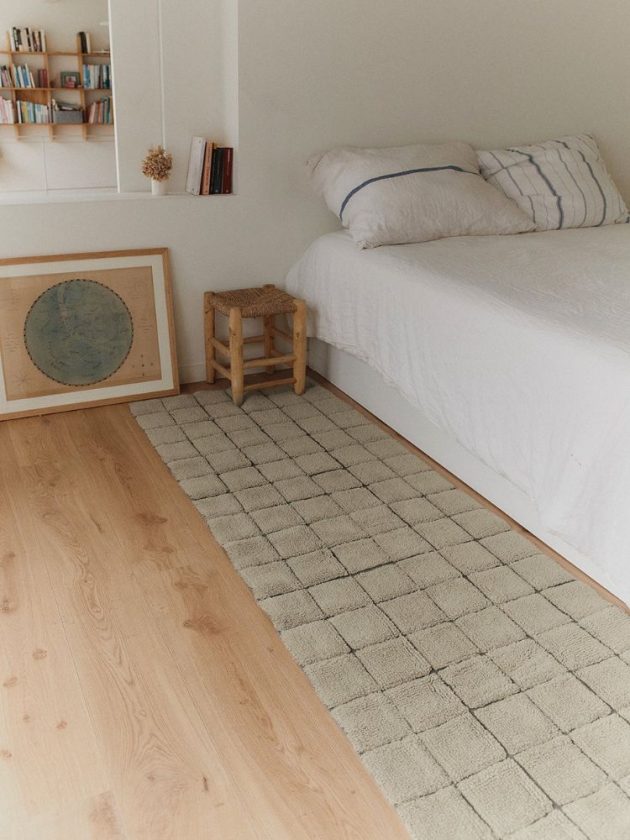
Lorena Canals revolutionized the rug industry with machine-washable cotton and wool rugs that don’t compromise on beauty or sustainability. Handcrafted in the brand’s own factory in India since 1998, each piece uses natural or recycled fibers, non-toxic azo-free dyes certified by GOTS and OEKO-TEX standards, and a water-efficient cone-dyeing method that conserves 75% of water compared to traditional processes. The aesthetic ranges from playful geometric patterns and kitchen tile motifs to minimalist neutral textures in their Woolable collection. With customizable options and designs that celebrate the natural colors of undyed wool, these rugs pair practical washability with artisan craftsmanship, all while supporting the brand’s Sakûla Project school for children in northern India.
Materials: Cotton, Wool
Price Range: From $145
Shipping: Global | Outside of US and Canada? Use this website to order instead.
3. CICIL


Best for: Living rooms, bedrooms, hallways, and dining rooms
Founded by two former Patagonia textile experts in North Carolina, Cicil brings radical transparency to rug-making with a supply chain that travels less than 1,000 miles from wool to floor. Their braided and shuttle weave rugs use 70% undyed wool sourced directly from small family farms across upstate New York, Pennsylvania, and Vermont, combined with 30% jute for durability. With shapes ranging from linear and oval to curvy and arch designs, each piece celebrates natural wool tones—from deep grays to warm beiges—without any synthetic dyes or finishes. Made in the Carolinas using traditional techniques on vintage looms, Cicil’s approach is intentionally “anti-innovation,” focusing instead on time-tested methods that create rugs built to biodegrade gracefully after a lifetime of use.
Materials: Wool, Jute
Price Point: From $459
Shipping: Ships within the US (all orders ship free)
4. West Elm Fair Trade Certified

Best for: Living rooms, dining rooms, offices, or bedrooms
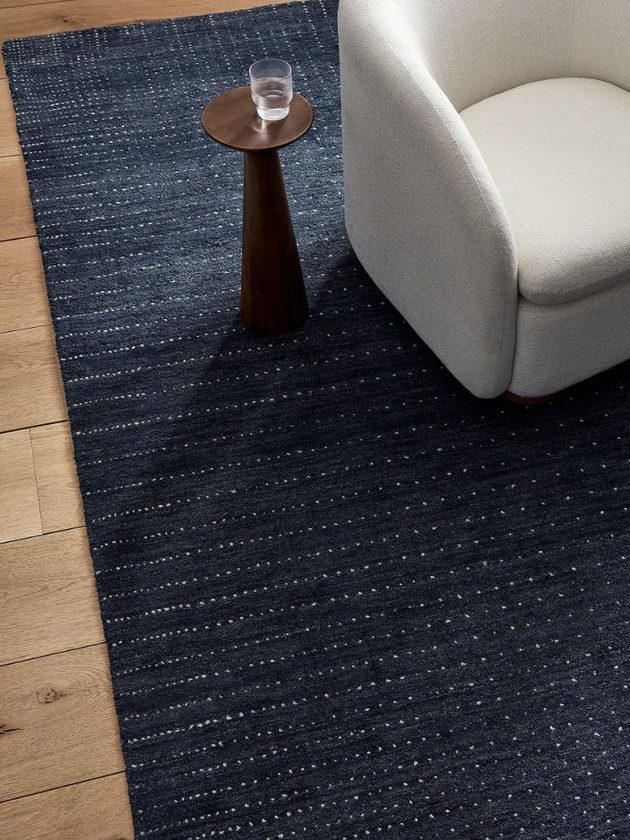
I tend to put large retailers, like West Elm, through much stricter scrutiny in my vetting process because they have larger supply chains which makes transparency much more difficult. It’s easy to know your factory without a certification if you work with one or two facilities. It’s much harder when you work with 20 — or 200. That’s why I appreciate that West Elm has such an extensive selection of rugs made in verified Fair Trade Certified factories.
Most of West Elm’s rugs are also made from 100% natural materials like sisal, jute, wool, and cotton. Though like most companies, their “Performance Rugs” are made with polyester. West Elm does use 90-100% recycled polyester for these rugs which makes it a lower impact choice from a carbon emissions point of view. It may still shed microplastics, but if you have pets that could be worth the trade-off for you to have a durable rug.
Note that West Elm does not have non-toxic related certifications for most of their rugs, so this can be a great choice if you value aesthetic variety, ethical production, and natural materials, but if your top priority or concern is that the rug was tested for potentially harmful chemicals, West Elm might not be the right fit for you.
Materials: Wool, Jute, Sisal, Cotton (Performance rugs use recycled polyester)
Price Point: From $459
Shipping: Ships within the US and select other countries
5. Schoolhouse


Best for: Bedrooms, living rooms, and dining rooms
Schoolhouse brings American design sensibility to handcrafted rugs woven in India using natural materials. Their collection spans hand-knotted wool pieces with vivid, whimsical patterns like the Sundrop design to reversible flatweave plaid styles perfect for layering. Natural-dyed wool yarn creates rich, enduring colors—from burnt orange and chartreuse to soft neutrals—while jute-chenille blends offer versatility underfoot without the typical scratchiness. With 80% of their assortment domestic and FSC-certified materials across their product lines, Schoolhouse prioritizes reducing carbon emissions through consolidated shipping and minimal plastic packaging.
Materials: Wool, Jute, Cotton, Recycled PET (note: PET is plastic, so this isn’t our top recommendation)
Price Range: From $79
Shipping: Ships to all US States and Canada
6. Nestig

Best for: Nurseries and playrooms
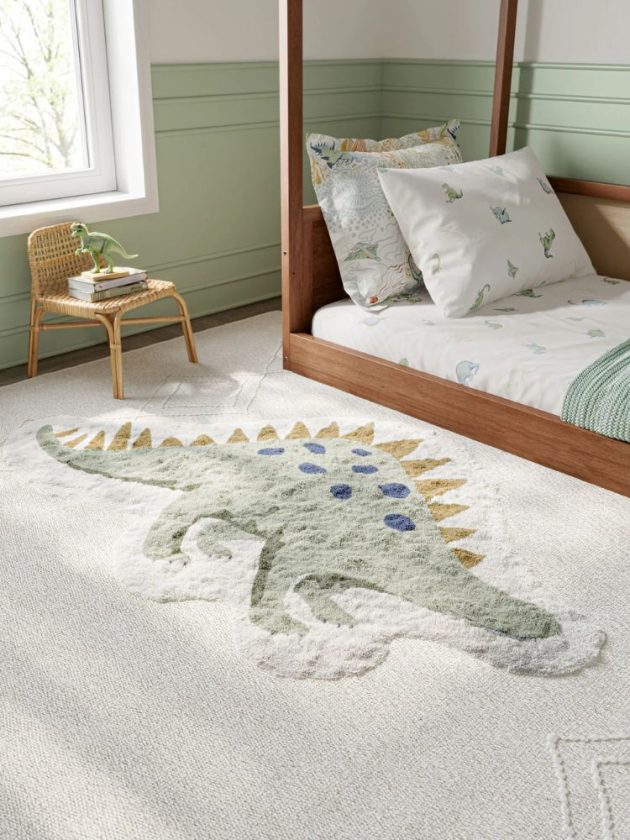
Nestig transforms nursery floors with whimsical, machine-washable rugs that parents actually want to clean. Hand-loomed in Brazil by local artisans with over 20 years of experience, each piece uses 100% GOTS-certified organic cotton grown locally and dyed with non-toxic pigments. The designs range from playful vehicles (dump trucks, airplanes, sailboats) and animals (dinosaurs, bears) to sophisticated geometric patterns and world maps. Nestig operates on a “just enough” business model that minimizes warehouse inventory and carbon footprint, partnering exclusively with sustainable, family-owned businesses. Every rug arrives as a truly one-of-a-kind piece with natural variations that come from artisan craftsmanship.
Materials: Organic Cotton
Price Range: From $399
Shipping: Ships to US, Canada, and the UK
7. Salem Hello

Best for: Living rooms, bedrooms, hallways and statement spaces
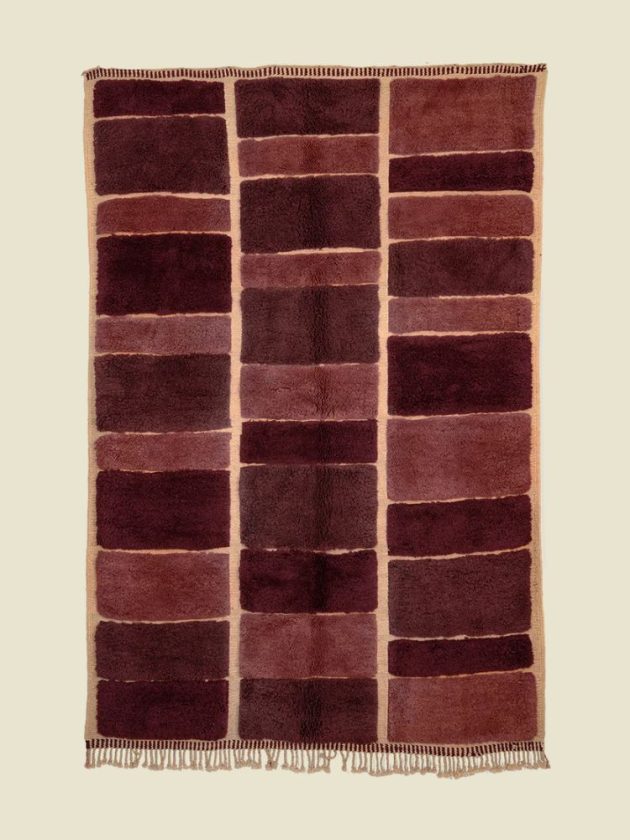
Salam Hello bridges the gap between Moroccan artisan tradition and contemporary homes with transparency at its core. Each handwoven rug is crafted by Amazigh women in Morocco’s Atlas Mountains, preserving techniques passed through generations while ensuring fair wages and artisan recognition. The collection includes ready-to-ship vintage and new pieces alongside made-to-order designs where you choose size, color, and pattern. From neutral flatweaves and textured hand-knots to bold geometric designs rich in traditional symbolism, every rug carries protective meaning woven into its fibers. With collaborations like their Izra collection with General Assembly and the Atlas Form line, Salam Hello offers refined modern interpretations alongside authentic traditional styles.
Materials: Wool
Price: From $625
Shipping: Ships Worldwide
8. Organic Weave


Best for: Living rooms, bedrooms, and kids’ rooms
Organic Weave was born after founder Linda witnessed child labor at the rug manufacturers in India her family’s rug business was sourcing from. When Linda became the buyer at her family’s company, she started sourcing exclusively from the only supplier that was committed to not employing children.
Today, Organic Weave is GoodWeave certified — a certification providing additional assurance there isn’t child labor in the supply chain. And as the name suggests, the sustainable rug company also uses organic materials: 100% organic wool for high-traffic areas like living rooms and 100% organic cotton for lower traffic areas like bedrooms. Their handmade, artisan crafted rugs are Global Organic Textile Standard Certified too.
Materials: Organic Cotton, Organic Wool
Price Range: From $1,789
Shipping: Ships Worldwide
9. LOOMY


Best for: Living rooms, bedrooms, and dining rooms
LOOMY proves that sustainable doesn’t mean sacrificing style with a curated collection of contemporary rugs made entirely by hand from indigenous artisan weaving communities worldwide. Their natural fiber collection includes wool, jute, cotton, hemp, and sisal rugs alongside performance options crafted from recycled P.E.T. plastic diverted from oceans and landfills. From shaggy textures and bold geometric patterns to minimalist flatweaves, every design is exclusively created in-house and made without mechanical assistance, using traditional spinning, natural dye baths under the sun, and generations-old loom techniques. The brand’s transparency extends to sharing exactly who made each rug, how many hours it took, and the sustainable materials used.
Materials: Wool, Jute, Cotton, Hemp, Sisal, Recycled P.E.T.
Price Range: From $278
Shipping: Ships to all US States and Canada
10. Revival
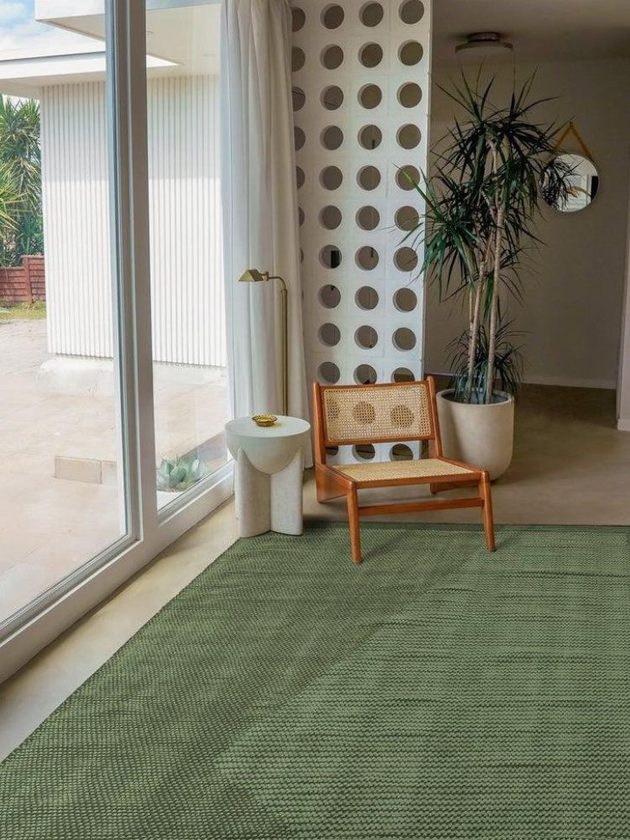

Best for: Living rooms, bedrooms, and dining rooms
Originally founded as a vintage rug curator, Revival now makes a wide range of affordable, beautiful rugs for all needs, whether you have kids, pets, or just want an easy-care washable rug.
Not all options from Revival are sustainable, and some are made from virgin polyester, so for natural fibers I’d direct you to their Wool Rugs collection and Jute Rugs collection, including their naturally dyed jute rugs. Revival also carries one-of-a-kind rugs, which include vintage options.
Materials: Wool, Jute, Recycled Polyester (also has some rugs made with new polyester, which I’d avoid)
Price Range: From $169
Shipping: Ships to contiguous US and selected other international destinations
Honorable Mentions: More Sustainable Rug Options
Here are some additional companies with sustainable rugs to check out! These didn’t make the “top 10” list based on our criteria, but you might have different priorities. So if you’re not finding what you’re looking for above, I recommend taking a look at this list too.
Hook and Loom: if you’re looking for a non-toxic organic rug, Hook and Loom has undyed organic cotton and natural wool rugs made without added chemicals. Their website doesn’t have the most modern user experience, which can make shopping a bit more cumbersome, but the brand has thousands of positive reviews.
Sabai: Sabai’s all-natural textured rugs are crafted from jute and wool in North Carolina by skilled rug makers. They are one of the few companies to manufacture their rugs in the US. That said, the rug does appear to be on the thinner side considering the price point.
The Citizenry: Hand-knotted and hand-loomed by artisan partners across the globe from Morocco to Peru each piece blends modern minimalist design with time-tested techniques passed down through generations. The Citizenry’s collection features everything from plush, textured wool designs to natural jute pieces, and the retailer guarantees 100% fair trade standards on every product, partnering directly with artisan communities. However, many customers complain online about slow shipping and poor customer service, so that’s something to keep in mind before purchasing.
Yaya & Co: this brand has some high sustainability standards like 100% organic certified materials and production in a Fair Trade Certified family-owned factory! Their designs are quite colorful and fun too, which isn’t always easy to find with organic materials. Their selection is more limited compared to the other brands and retailers, which is the only reason they didn’t make it onto the top 10 list.
The post 10 Best Sustainable Rugs For a Healthier Home and Planet appeared first on Conscious Life & Style.
Just like fashion has been overrun by fast fashion, home goods and furniture have similarly seen a rapid decline in quality. Rugs are no exception.
And similar to fashion, these cheap goods come at a high cost — namely, to the planet and to people. In fact carpet and rug production is rampant with exploitation.
On the other hand, fair trade rugs present the best of what a rug can bring to your home: artistry, craftsmanship, and heritage.
The brands featured in this guide are partnering with (and fairly paying!) skilled artisans who are using generations-old — and sometimes even centuries-old — techniques. These artisans are sustaining long lines of crafts, preserving their cultural diversity, and celebrating the richness of their time-honored crafts.
There’s simply no replacement for a timeless, quality artisan-made rug — they’re like pieces of art you can lay out on your floor or hang on your walls.
So, enjoy browsing through this guide to sustainable rug brands listed out below and best of luck on your search for the right fair trade rug!
Where to Find Ethical and Fair Trade Rugs
Note that this guide includes affiliates and partners. As always, brands must meet high standards for ethics and sustainability to be featured and all opinions are my own.
1. The Citizenry
If you’re browsing for fair trade rugs, but looking for a more minimalist or neutral aesthetic, look no further than The Citizenry.
The brand’s natural, handmade rugs — made by artisans working in fair trade conditions — feature striking prints but more subtle colors. Next to each product page you’ll be able to learn more about the workshop and the artisans behind that piece.
Price Range: $$$
Conscious Qualities: Fair Trade, Natural Fibers, Craft Preservation
Categories: Area Rugs

2. Kiliim
If you’re well-versed in rug terminology, you may recognize that this brand’s name looks similar to the word kilim. Kiliim’s rug are made using authentic, well, kilim rug craftsmanship by artisans in Egypt coming from generations of kilim artisans. To ensure ethical production and to support the preservation of this heritage craft, Kiliim pays living wages to all artisans.
Price Range: $ – $$$
Conscious Qualities: Ethical Production, Heritage Craft Preservation, Natural Fibers
Categories: Area Rugs, Accent Rugs

3. Urban Natural
This natural home and lifestyle retailer has a beautifully curated selection of sustainably-made rugs crafted with materials like jute, sisal, wool, and cotton.
Several brands on Urban Natural are also ethically hand-loomed or hand-knotted, such as Loloi — a GoodWeave partner — and Jaipur Living — a brand that partners with thousands of local artisans to sustain heritage crafts.
Price Range: $$+
Conscious Qualities: Eco-Conscious Materials
Categories: Outdoor, Area Rugs, and Accent Rugs

4. Zuahaza
Each of Zuahaza’s artisan-made rugs is creatively designed with unique patterns and expertly handwoven by weavers in Colombia. Zuahaza’s captivating rugs are made from sustainably-sourced fique, a natural fiber from Colombia that is similar to hemp. And, just like hemp, fique requires little water to grow and is rarely attacked by pests (meaning fique is always grown organically without chemical pesticides).
Price Range: $$ – $$$
Conscious Qualities: Organic Fibers & Natural Dyes, Cultural Preservation, BIPOC-Owned
Categories: Area Rugs, Runner Rugs, Accent Rugs
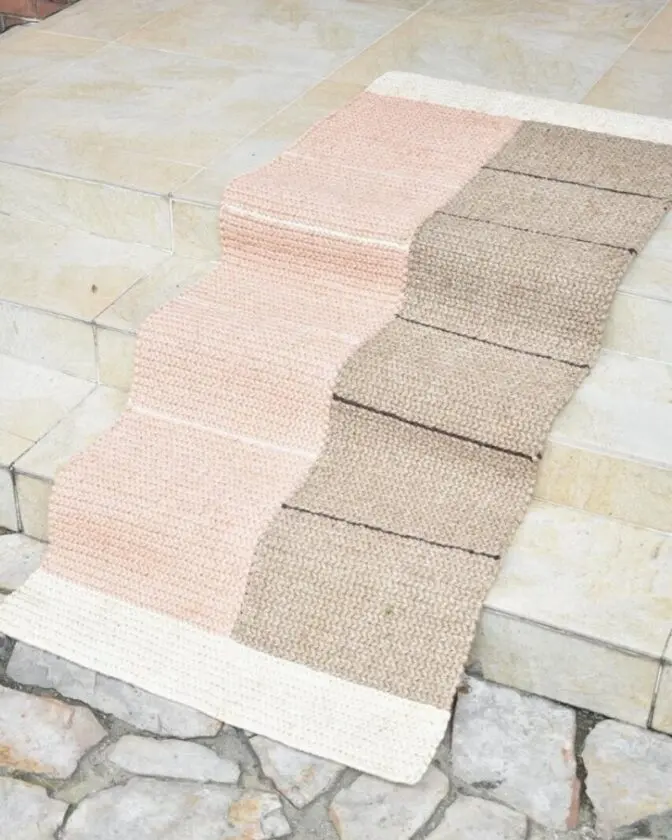
5. LOOMY
Founded by a weaver, LOOMY is dedicated to making beautiful, non-toxic rugs that will last for decades to come.
LOOMY partners with highly-skilled artisan weavers who craft quality rugs made from eco-minded materials like banana silk, jute, and recycled cotton built to withstand whatever life brings you.
Price Range: $$ – $$$
Conscious Qualities: Eco & Non-Toxic Materials, Craft Preservation
Categories: Area Rugs, Accent Rugs, Runners, Outdoor Rugs

6. Leah Singh
Leah Singh’s designs are a reflection of the designer’s background, growing up surrounded by the rich artistry of India and studying at Parsons amidst the structural, minimal lines of New York.
All of the brand’s rugs are made by artisans in India who use embroidery, weaving, and printing techniques native to their respective regions.
Price Range: $$ – $$$
Conscious Qualities: BIPOC-Owned, Ethical Production, Cultural Preservation
Categories: Area Rugs, Accent Rugs, Runners
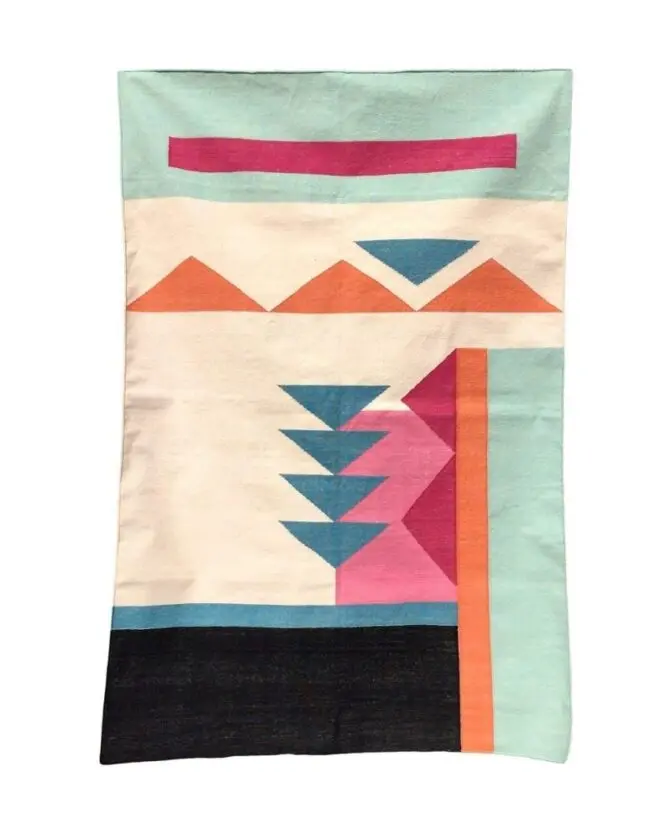
7. West Elm
West Elm is bringing ethical rugs to a broader market with their collection of Fair Trade Certified wool and cotton rugs. While I recommend browsing the smaller shops listed above first, West Elm is supporting the movement to responsibly-made, fair trade rugs.
Price Range: $$$
Conscious Qualities: Fair Trade production, Majority Natural Materials
Categories: Area Rugs, Accent Rugs

Liked this guide to sustainable rugs? You might also enjoy:
Ethical Home Decor Brands to Curate a Beautiful, Conscious Space
Eco-Friendly Furniture to Furnish Your Home Sustainably
Fair Trade and Eco-Friendly Blankets to Cozy Up With
The post 7 Best Ethical Fair Trade Rugs to Elevate Your Space appeared first on Conscious Life & Style.
A durable set of eco-friendly dinnerware is a solid ingredient for a sustainably set table! But…
What is Sustainable Dinnerware?
Well looking for secondhand and vintage dinnerware is always a good start, whether that’s your grandmother’s porcelain dining sets or a pre-loved set of colorful plates and bowls at your local thrift store.
Another great place to look is estate sales. You can likely find full sets of dinnerware! If none of those options are available to you (or your just not finding something you love) you can check out a site like Etsy Used or Chairish.
*Important note on secondhand dinnerware: the FDA started regulating the use of lead in dinnerware in 1971. So you might want to avoid any dinnerware produced before 1971, unless it’s just for display!
Here are some qualities to look for when shopping for new sustainable dinnerware:
Sustainably sourced materials: such as responsibly-harvested bamboo and recycled glass.
Quality: when it comes to products you’re going to potentially use and wash daily, durability is an important factor to keep in mind. Also consider your lifestyle! Perhaps glass and porcelain aren’t the best choices if you have little ones, or you tend to drop things often. (Guilty!!)
Usefulness: You might also want to consider if you will be hand-washing or dishwashing your dinnerware. Some materials are too fragile for the dishwasher, so consider if you’ll have the time (and willingness) to hand wash them all the time. Because part of sustainability is that you’ll actually use the products and they won’t just sit and collect dust! 
Ethical production: this could look like transparent local manufacturing or artisan-made and fair trade. In any case, an ethical dinnerware brand would prioritize fair living wages for the workers, ensure safe healthy conditions (this includes no toxic chemicals used in production!) and go above and beyond to consider the wellbeing of the people who work for them and/or produce their products.
Ownership and Equity: this means looking at who owns and profits from the brands we’re supporting; if a brand is owned by a person of color, it will be indicated in their description below (BIPOC-owned stands for Black, Indigenous, Person of Color-owned and WOC-owned stands for Woman of Color-owned).
Your Values: you may have other elements you look for in a brand, such as traditional craft preservation. Or perhaps it’s really important to you that a brand is giving back to their local community.
Where to Find Eco-Friendly Dinnerware
The eco-friendly tableware and sustainable dinnerware brands featured below meet at least one (though most of them meet several) of the above criteria.
In this roundup, you’ll find sustainable pottery (including ceramic plates, sustainable mugs, and more), recycled glassware, artisan-made ethical dinnerware, and everything in between to suit your needs. I hope that this variety of brands will help you set the table, whether that’s for fancy dinner parties, Friday night pizza, or something in between.
This article features affiliates and partners. As always, we only feature brands that meet strict standards for sustainability that we love — and that we think you’ll love too!
1. East Fork
East Fork’s ethically-made dinnerware and tableware is next level — their gorgeous sustainable ceramics, glassware, mugs, and other goods are exquisitely designed and built for durability.
Committed to creating local manufacturing jobs, all of East Fork’s eco-friendly pottery is made in Asheville, North Carolina and is working to center equity and inclusion throughout their business.
Categories: Plates, Bowls, Cups, Drinking Glasses, Flatware/Silverware,
Conscious Qualities: Locally-Made, Transparent Production
Price Range: $$$

2. Our Place
From the same brand that brought us their cult-favorite Always Pan, comes a gorgeous collection of non-toxic dinnerware and sustainable pottery.
Our Place has hand-painted main plates and side bowls made with recycled and virgin porcelain ceramic and dinner glasses handmade from recycled glass and colored with natural dyes.
Categories: Glassware, Bowls, Plates
Conscious Qualities: Eco Materials, Gives Back, WOC-Owned
Price Range: $$

3. Fable
Prioritizing timelessness and sustainability, Fable sources quality materials and simple designs that last the test of time.
The eco-minded dinnerware company partners with makers in Portugal, Germany, Italy, Japan, and the US that use conscious practices, like ethical employment, craftsmanship, and low-waste practices (like sourcing recycled clay).
Categories: Dinnerware, Drinkware, Cutlery, Serveware, and Decor
Conscious Qualities: Quality Craftsmanship, Low Waste Practices, Responsibly Sourced
Price Range: $$$

4. Zungleboo
Lightweight, shatterproof, and made from corn starch + bamboo fiber, Zungleboo creates family-friendly and eco-friendly dinnerware!
Their versatile plant-based bowls and plates are also dishwasher and microwave safe, making them easy to care for no matter how busy mealtime is. As Zungleboo writes on their website, their sustainable dinnerware is “from real plants, for real life”.
Categories: Bowls, Plates
Conscious Qualities: Eco Materials, WOC-Owned
Price Range: $$
Use code CONSCIOUS15 for 15% off!

5. Urban Natural
Green home retailer Urban Natural has stunning eco-friendly tabletop goods from leading contemporary brands like Farmhouse Pottery and Ethnicraft.
The brands Urban Natural curates source natural materials, use time-honored processes, and take quality craftsmanship seriously.
Categories: Plates, Bowls, Cups & Mugs, Flatware
Conscious Qualities: Artisan Goods, Natural Materials, Locally and Ethically Made
Price Range: $$ – $$$

6. GOODEE
For artisanal plates that can elevate your tablescape, GOODEE is the answer.
From 100% porcelain stone ceramic plates hand-crafted in the ancient Japanese town of Arita and hand-painted plates made from Egyptian clay to marble patterned ecothylene® (upcycled BPA-free plastic) plates ideal for family-friendly daily wares, GOODEE has options for everyone.
Categories: Plates, Glassware, Cups & Mugs, Serving, Flatware
Conscious Qualities: Ethical Production, Craft Preservation
Price Range: $$$

7. Ekobo
Ekobo’s colorful eco-friendly dinnerware is available in a variety of colors and sizes, perfect for mixing and matching to create a unique sustainable table setting for any space.
The eco-friendly dinnerware from Ekobo is made from upcycled bamboo and the result is durable, dishwasher-safe, and non-toxic diningware.
Categories: Plates, Bowls, Cups, Trays, Baby Diningware
Conscious Qualities: Eco Materials
Price Range: $$

More Guides For An Eco-Friendly Kitchen:
Best Fair Trade and Eco-Friendly Tablecloths
Your Sustainable and Zero Waste Kitchen Guide
The Best Zero Waste Food Storage Options
The post 7 Eco-Friendly Dinnerware Brands To Set Your Sustainable Table appeared first on Conscious Life & Style.
7 Eco-Friendly Dinnerware Brands To Set Your Sustainable Table



-

 Greenhouse Gases2 years ago
嘉宾来稿:满足中国增长的用电需求 光伏加储能“比新建煤电更实惠”
-
Climate Change1 year ago
Guest post: Why China is still building new coal – and when it might stop
-
Greenhouse Gases1 year ago
Guest post: Why China is still building new coal – and when it might stop
-

 Climate Change2 years ago
嘉宾来稿:满足中国增长的用电需求 光伏加储能“比新建煤电更实惠”
-

 Renewable Energy11 months ago
Sending Progressive Philanthropist George Soros to Prison?
-
Climate Change2 years ago
Bill Discounting Climate Change in Florida’s Energy Policy Awaits DeSantis’ Approval
-
Greenhouse Gases1 year ago
嘉宾来稿:探究火山喷发如何影响气候预测
-

 Carbon Footprint2 years ago
US SEC’s Climate Disclosure Rules Spur Renewed Interest in Carbon Credits