

The emerging market in nature protection was all over Cali during the just-ended COP16 UN biodiversity summit, with new guidelines for biodiversity credits launched on the sidelines and campaigners pushing back against the idea.
The so-called “biodiversity market” has risen in importance since the landmark Global Biodiversity Framework pact, adopted at COP15 in Montreal in 2022, which calls on countries to “stimulate” innovative finance options for nature including “biodiversity offsets and credits”.
Some experts told Climate Home the hype around an unregulated biodiversity market could repeat the mistakes of the voluntary carbon markets, whose reputation is in tatters after being plagued with revelations of exaggerated emissions reductions and social problems. Others consider the new biodiversity market as a viable way to channel private finance into nature protection and restoration.
COP16 hands power to Indigenous people but fails to bridge nature finance gap
At COP16, platforms to support the “biocredit” market were launched. An advisory panel led by the UK and France presented a framework to transact “high-integrity” credits, while carbon-offset registry Verra launched its own framework for developing nature credits.
Biodiversity credits finance projects that conserve, manage or restore key ecosystems. One in Ireland sold €2 million ($2.15 million) worth of credits by planting 600,000 native trees, for example, while another in Australia sold an undisclosed amount of credits to the global bank HSBC for improving water quality in the Great Barrier Reef.
A new report by market research company Morningstar Sustainalytics shows that global assets held in funds aiming to boost biodiversity have more than doubled over the past three years, reaching $3.7 billion in 2024. The market is still small compared to climate-related assets estimated at $520 billion.
“Nature-positive”
Unlike in the carbon market, there is a difference between biodiversity credits and offsets. In the biodiversity market, biodiversity credits are “nature-positive”, meaning that companies pay for contributions to protecting nature without necessarily compensating for harmful impacts from their own supply chains. They get a reputational benefit in exchange, such as being able to brand their products as biodiversity-friendly.
But the Campaign for Nature has warned that such credits could detract from a pledge by governments to provide $20 billion by 2025 for nature conservation in developing countries, if they believe that “somehow ‘innovative finance’ from the private sector will play a significant role” in meeting that goal. In a paper, the NGO said voluntary private finance would not be enough.
Another part of the fledgling market – biodiversity offsets – came under even more fire from activists at COP16. These are used when a company does damage to biodiversity in one place, and makes up for that impact in a different place – for example by planting native trees or reducing pollution in ecosystems.
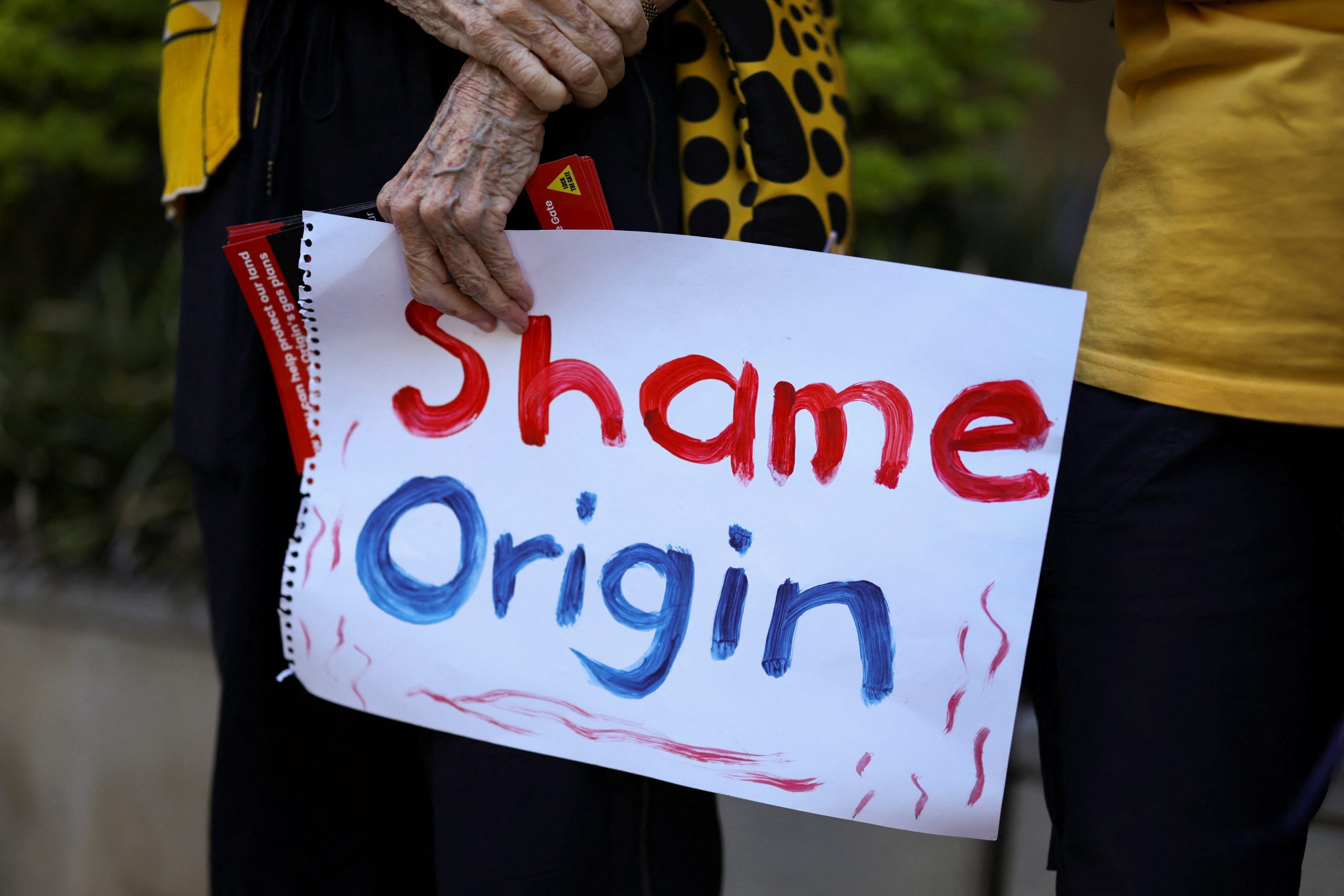
At the start of the second week of COP16, multiple green groups staged a demonstration against biodiversity offsetting and crediting, arguing that it “destroys nature and undermines the rights of peoples”.
Nele Marien, from Friends of the Earth International, said the system is seen as deeply flawed, because proper restoration of ecosystems would take too long. She also questioned whether there is enough available land with the right conditions for offsetting.
“You are destroying one ecosystem and you’re rebuilding something somewhere else, which takes decades and which really is never going to be up to the level of the original ecosystem,” Marien said.
At COP16, countries clash over future of global fund for nature protection
International guidelines
Anna Ducros, a researcher at the International Institute for Environment and Development (IIED), said offsets are a “distraction” from biocredits, which – if designed correctly – can be “genuine impactful investments” by the private sector.
The International Advisory Panel on Biodiversity Credits (IAPB), launched by the British and French governments, is one of the main initiatives aimed at achieving “high-integrity” biocredits.
The body presented its first results at COP16, announcing a set of guidelines for transacting credits in the biodiversity market. One of the key recommendations is that Indigenous people should be co-owners of projects, and participate in their design and delivery.
Asked about potential similarities between the carbon and biocredit markets, Amelia Fawcett, co-chair of the IAPB, said the new framework for biocredits builds on lessons from carbon-offsetting, adding that conversely “the carbon market can learn a great deal” from work on the biocredit market so far.
The biodiversity market has quickly developed ways to assess the impact of projects, at times collaboratively with Indigenous people. Measuring the benefits of biodiversity credits is “complex but feasible”, noted Sylvie Goulard, another IAPB co-chair.
The IAPB’s framework advises against adopting a one-size-fits-all unit for biodiversity markets – unlike carbon markets which use tonnes of CO2 as their standard measure. “Biodiversity is not fungible,” the IAPB framework reads. “So projects will be funded based on specific circumstances and outcomes.”
In COP16 host Colombia, for example, local carbon-offset verifier Cercarbono recently approved a methodology to rewards conservation projects that can demonstrate the health of “indicator species” – plants and animals that only thrive in healthy ecosystems.
Fossil fuel transition pledge left out of COP16 draft agreement
Marien from Friends of the Earth argues that a biodiversity offsetting market would be impossible in practice because with carbon “you can still have some kind of measurement”, while with biodiversity “there is none”.
“What we see is that there are so many different projects, so many different measurements. And each organisation, each company which wants to do the offset, they choose their own measurement – cherry-picking of indicators,” Marien told Climate Home News.
Small but growing
The biodiversity market is still relatively small. A report by the Compensate Foundation, a carbon-offsetting non-profit, shows that the eight most developed biodiversity credit schemes covered just 800,000 hectares of land, with only $8 million pledged in May 2023. The market is still “immature” but evolving fast, it added.
At least 11 large project developers are already working with biocredits to help pay to protect species, ecosystems and habitats: Savimbo, CreditNature, ValueNature, Replanet, Terrasos, Ekos, South Pole, Environment Bank, Wilderlands, CarbonZ and Orsa Besparingsskog.
Around 30 governments are also working on their own schemes. Some are focused on delivering net gains – meaning ecosystems must end up in a better state than when they started. The UK’s Biodiversity Net Gain approach and Australia’s Nature Repair Bill fit into this category.
New Zealand has also developed a biodiversity credit system known as Aotearoa, which sells credits to companies through voluntary contributions, certifying them as having a “nature-positive” impact in the local area. The actual conservation work is done by landowners and Indigenous people.
The apparent popularity of biodiversity credits at COP16 suggests the market could grow rapidly, experts said. IIED’s Ducros noted that one reason for the high level of interest is that under the UN nature negotiations, not much public money has yet been pledged from countries to a global biodiversity fund.
The outcomes of COP16 did little to buck this trend, as negotiators were unable to reach an agreement on scaling up biodiversity finance and only around $163 million in fresh contributions were added to a scarce pool in the Global Biodiversity Framework Fund.
Ducros added that voluntary initiatives such as the IAPB are likely to become a reference for additional efforts to ensure quality in the biocredit market.
“There needs to be supporting regulation at the national level as well as the financial architecture, which refers to standards or verification,” the researcher said.
(Reporting by Mariel Lozada; editing by Sebastián Rodríguez, Joe Lo and Megan Rowling)
The post Biodiversity market takes off at COP16, in shadow of carbon credit chaos appeared first on Climate Home News.
Biodiversity market takes off at COP16, in shadow of carbon credit chaos

Jacynta Fa’amau is a Pacific campaigner at global grassroots climate movement 350.org and a secretariat member of Pacific Climate Warriors.
The first thing that struck me was the sheer size of Queensland’s Saraji coal mine. Standing at the edge of the enormous pit, my brain scrambled for words as I scanned the earth’s open wound – a whole island could probably fit inside it.
Looking down, I noticed footprints of an emu and a koala, pressed and dried in what was once a puddle – signs of how drought had driven animals in desperate search of water, so dangerously close to the coal trucks and heavy machinery ahead.
Earlier this year, I joined a small group of Pacific Islanders on a journey through the Bowen Basin to learn from First Nations communities battling Australia’s mammoth coal industry. Of the more than 40 coal mines operating in the area, BHP & Mitsubishi Alliance’s Saraji mine is one of the largest. So it came as a painful shock to us when in August, the Australian government approved the mine’s extension just months after our visit.
-
As COP31 co-host, Australia should make its polluters pay for climate damage
With UN climate funds running short on cash, now is the time to start taxing the companies whose emissions are driving harm in the Pacific and other vulnerable parts of the world -
At pre-COP, UN climate chief warns of heat threat to mothers and babies
The spotlight on maternal health came on the first day of the pre-COP31 meeting in Fiji, where Pacific concerns are set to top the agenda as ministers gather for talks

Witnessing coal extraction is devastating. It is bad enough to see what pillaging tonnes of coal can do to a mine’s immediate surroundings: dry creek beds, dwindling wildlife, denuded land. But to know that this coal will be shipped across the ocean, bring air pollution, and eventually lead to the destruction of Pacific islands thousands of miles away is another kind of heartbreak.
Rising ocean waters
I’m an Australian-born Samoan. In 2002, I visited my family home for the first time. My father took me to the rural community where generations of my family were raised. He did not have the words to describe how much has changed since rising ocean waters had taken away almost a third of the beach.
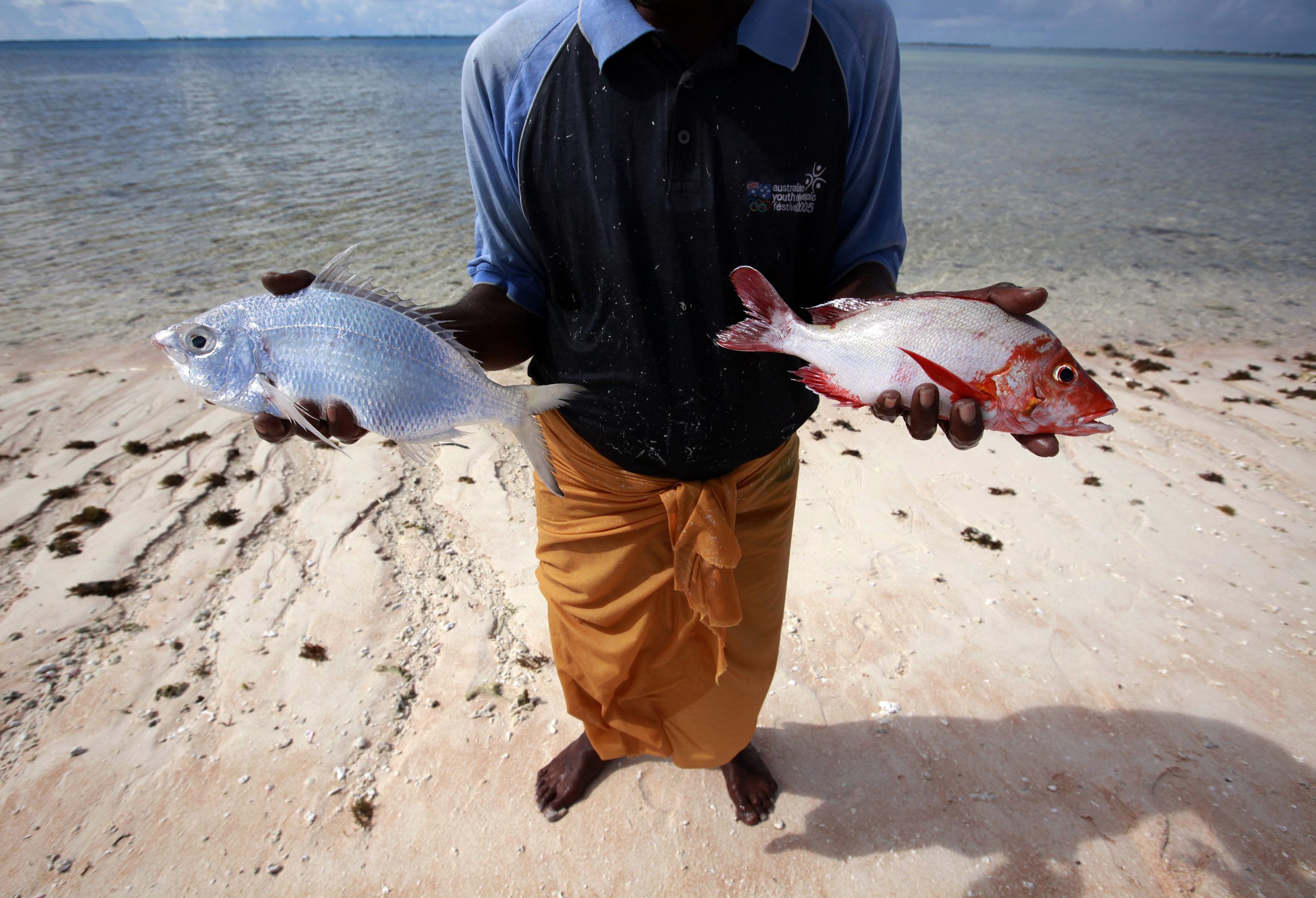
I learned of how we had to relocate my great‑great‑grandparents’ grave to higher ground twice in the last 15 years. Of how my cousins have to paddle out further to sea to catch fish, since warmer waters have destroyed much of the reef. Of how the ocean crashes so close to my uncle’s home that he had to build a new house further away.
We saw reflections of our own climate destruction in the Pacific when we shared these stories with our First Nations relatives at the edge of the Saraji mine. Murrawah Johnson and Teila Watson, both Birri Gubba and Gangulu women, made clear connections between their struggles and ours. “We don’t get to inherit our land and we don’t get to inherit our traditional roles. We are fighting a war on extinction,” Murrawah said.
Coal extraction devastated their lands and cultures – totems have disappeared, fresh water has become scarce – while the effects of using it have devastated ours. “King tide, cyclones, all the violence that has been enacted on your country and people is because of the violence that has been allowed here, to us and our country,” Teila said.
Wearing the mantle of climate leadership
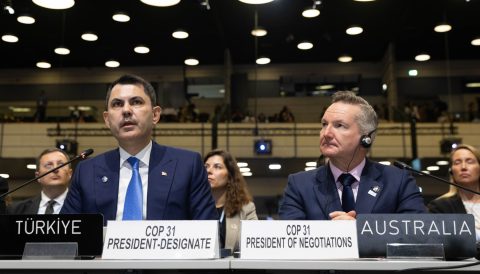
This week, Australia is assuming the mantle of climate leadership as co-president and head of negotiations of this year’s UN Climate Change Conference, COP31. It will lead on deliberating the summit’s priorities as world leaders and climate negotiators descend on Fiji and Tuvalu for the pre-COP meetings.
Ironically, just days before the pre-COP began, the New South Wales Independent Planning Commission approved the largest-ever coal project the state has seen, set to emit an extra 800 million tonnes of carbon emissions. I joined the Pacific Climate Warriors and other communities in submitting about 4,000 appeals to oppose the project – yet these all fell on deaf ears.
-
Fossil fuel expansion threatens COP31 hosts’ credibility, experts warn
Türkiye and Australia are pushing coal, oil and gas at home with no national timeline for their own fossil fuel phase-out -
This Australian coal community is co-designing its own green future
The mining town of Collie offers a promising example of how to survive – and even thrive – amid the global transition to net-zero emissions

But the fight is not yet over. The project still requires federal approval to proceed, so every promise that Australia makes while at the helm of the climate talks counts. These promises will be measured against actual decisions it makes at home: to either lock us into more decades of climate pollution, or begin shutting down coal and gas once and for all.
Pacific leaders have made it clear that countries must align their policies with the 1.5-degree warming goal, a limit that we already know will be breached within the decade. Any chance of keeping this still within reach requires an immediate end to fossil fuel expansion and concrete plans to phase out existing projects. But success will be an uphill battle if COP31’s own head of negotiations refuses to lead by example.
Australia remains the second-largest coal exporter in the world. It is one of the very few industrialised countries under the Paris Agreement’s Annex I that still has no coal phase-out plan. Since 2022, the Albanese government has approved 37 new, expanded or extended coal, oil and gas projects. It is thus unsurprising that its own mitigation policies have been rated by Climate Action Tracker as “insufficient”, even without factoring in fossil fuel exports and related expansion.
Keeping 1.5C alive
Australia must course-correct to earn the mantle it has been given, especially by Pacific nations that backed the country’s bid for the COP31 co-presidency. As a first step, the government must end all coal expansion and explicitly declare a coal phase-out date. It’s the only way to show that it’s capable of leadership that moves beyond endlessly deliberating the “if”, and starts implementing the “how” of keeping the 1.5C target alive.
The dread I felt staring down at the abyss on the edge of that coal mine months ago still exists. I carry it with me as I show up at the pre-COP to demand that leaders heed the calls of Pacific people. But it is tempered with resolve to keep our lands and communities alive. We remain steadfast in our efforts to secure an outcome that protects people everywhere and brings us back below 1.5 degrees as soon as possible.
The post Coal mines and hypocrisy must not be Australia’s COP31 legacy appeared first on Climate Home News.
Coal mines and hypocrisy must not be Australia’s COP31 legacy
When José Antonio Kast took office as Chile’s new president in March, one of his first moves was to put the brakes on plans to expand two protected marine parks – raising doubts about the country’s high-profile bid to host the headquarters of the High Seas Treaty.
But during the UN General Assembly last month, the right-wing leader reaffirmed his leftist predecessor’s ambition for Chile to host the landmark global pact, which came into effect in January and provides a legal framework to protect the waters of the high seas beyond national jurisdiction that cover about two-thirds of the world’s oceans.
Hailing the country’s “maritime vocation”, Kast’s government said the bid to host the treaty’s secretariat in the port city of Valparaíso was state policy and testament to its commitment to multilateralism.
“For the government of Chile, it is of high interest to achieve this recognition, and we will carry out all the efforts to obtain the necessary support,” Foreign Minister Francisco Pérez Mackenna was quoted as saying by local media.
-
At pre-COP, UN climate chief warns of heat threat to mothers and babies
The spotlight on maternal health came on the first day of the pre-COP31 meeting in Fiji, where Pacific concerns are set to top the agenda as ministers gather for talks -
Big banks behind “net zero” alliance continued lending to coal firms
New data shows coal finance has stayed steady at the global level since 2022, as international efforts to cut the ties between lending and emissions faded -
Jordan’s mega-plan for water security risks locking in fossil gas demand
A giant desalination plant will help Jordan confront water scarcity, but solar power’s limited role in the energy-hungry project has raised questions about how climate adaptation finance is being spent


Tough competition from Chinese, Belgian bids
But to garner the votes it needs, Chile must fend off competing bids by Belgium – which has proposed its well-connected capital, Brussels – and Chin