

This week marks a major moment in Australia’s long and frustrating struggle to fix its broken national nature laws. The federal government has finally tabled long-awaited reforms to the Environment Protection and Biodiversity Conservation (EPBC) Act, a piece of legislation that has, ever since it was enacted, failed to protect Australia’s unique wildlife and ecosystems.
But the bill the government has put forward, while offering some positive new legal architecture, unfortunately falls far too short. Critical gaps in addressing deforestation and climate impacts from big coal and gas projects remain, and there is far too much leeway in how the federal environment minister is allowed to apply the law under the proposed new provisions. We’re calling on the Australian Parliament to fix these significant problems and pass laws that properly protect nature.
The Background: A Broken System Finally Gets Attention
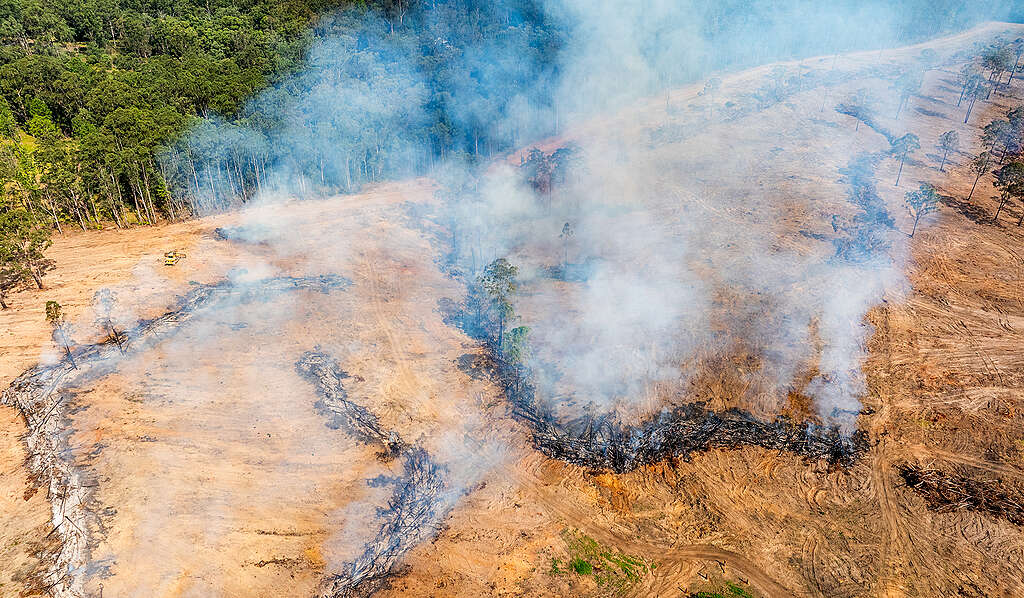
It’s been widely acknowledged for over a decade that the EPBC Act is deeply flawed. Despite being Australia’s key environmental law, it has done little to stop habitat loss, species decline, and the relentless clearing of native forests. Native habitat equal to an area the size of Tasmania has been bulldozed in Australia since the EPBC Act came into force in 2000—a stark reminder of the ineffectiveness of the laws.
A major independent review five years ago laid out a roadmap for reform, recommending stronger protections for nature and streamlined approvals for business, including renewable energy projects. The idea was simple: if we establish strong, science-based rules up front and create an independent environmental regulator, we can both protect nature and provide greater certainty for ecologically sustainable development.
Last term the government attempted a partial reform, mainly to establish a national EPA (Environment Protection Authority), but unfortunately this did not eventuate. Now, under new Federal Environment Minister Murray Watt, Labor is trying again and attempting to move at great speed to deliver a full package of legislative reforms before the end of the year.

What’s in the Reform Package?
While there is new legal architecture that could be made strong (new rules and standards and a national Environment Protection Authority), ultimately the current package falls well short of what is actually needed to protect nature. Major improvements are essential to the Bill that is now before the parliament.
At Greenpeace we have four major tests of success:
1. Closing the Deforestation Loopholes
In the current laws, agriculture (particularly beef) and native forest logging remain virtually exempt from the Act, even though deforestation is one of Australia’s major drivers of species extinction and carbon emissions. The current provisions in the Bill do not close these glaring loopholes. Without reform here, Australia’s forests, and the wildlife that depend on them remain hideously vulnerable to the mass destruction of bulldozers and chainsaws that currently has our country recognised as a global deforestation hotspot.
This is a big issue we need to keep pushing on to fix—these reforms are not credible without action to close the loopholes around deforestation
2. Stronger Upfront Protections
- The government is introducing stronger upfront environmental tests (the “unacceptable impacts” test), giving the Minister the power to reject development projects outright before assessment if they are going to do serious damage to nature.
This could be made into a strong element of reformed laws
- They are proposing to introduce ‘national environmental standards’ for those projects and regional plans which do get assessed and developed.
This could give clearer delineation of what needs to be done to protect nature but details are yet to be released and there’s too much wriggle room proposed for how these standards are applied
- There will be higher penalties and the power to halt projects that breach conditions are excellent additions.
This is good and has been a long time coming, but does not work as a standalone if the rest of the laws don’t do what’s needed.
- They are proposing to overhaul the biodiversity offset scheme, introducing a ‘net gain’ test where developers are meant to ensure improved overall nature protection and the ‘mitigation hierarchy’ where they have to prove they have tried to avoid and mitigate nature impacts before buying offsets.
But they are planning an offset fund which risks becoming a way for businesses to circumvent obligations, enabling developers to just buy their way out of responsibility- not a good thing.
- A proposal for a system of ‘accreditation’ which would allow states that meet new rules and standards to undertake assessment and approval of development projects.
This is deeply concerning. The Commonwealth should retain its approval powers-especially over damaging fossil fuel projects
- A proposal to expand on a ‘national interest’ exemption, giving the Environment Minister greater scope to circumvent the new proposed rules.
This is also deeply concerning. This exemption should be tightened to emergencies and security purposes only.
3. A Strong and Independent National Regulator
We will finally see the creation of a National Environment Protection Authority (EPA) — a long-overdue step. However, the Minister will still retain the power to override some decisions.
The proposed level of ministerial discretion risks undermining the regulator’s independence and the overall protective functioning of the Act, and would extend one of the core failures of the current system.
4. Embedding Climate Considerations
Astonishingly, the new national nature law still does not require decision-makers to consider climate impacts. The government has ruled out a ‘climate trigger’ that would require assessment of projects with significant emissions. This omission leaves Australia’s environment exposed to worsening heat, drought, bushfires, and floods driven by fossil fuel expansion. In order to be credible, the EPBC must be meaningfully cognizant of the physical reality of the impact of global warming on the environment and biodiversity that it is intended to protect.
This is another big issue on which we need to keep pushing
As our CEO David Ritter put it:
“The Albanese government was returned to power promising to fix Australia’s broken nature laws and the Bills as they stand do not deliver on that promise. We strongly support overhauling Australia’s broken nature laws. But the Bills as tabled fail to address the two key drivers of extinction and the destruction of nature-deforestation and climate change”

The Road Ahead
The Bills have been tabled in Parliament, and debate is about to heat up. Now the reforms head to a Senate Inquiry — where key negotiations with the Greens, the Coalition and crossbenchers will determine the final shape of the law.
If the Senate moves quickly, the reforms could pass by late November. Alternatively the process could carry into the new year when Parliament next sits.

What Needs to Happen Next
Parliament must now work together to fix the gaps in these Bills. Australia needs a nature law that actually protects nature. One that:
- Closes the loopholes that allow deforestation and logging to continue unchecked
- Embeds climate considerations into the functioning of the Act
- Limits ministerial discretion and strengthens the independence of the EPA
- Ensures there are strong upfront nature protections in place
Meaningful action to address the climate and nature crises will not only safeguard ecosystems, it will secure a safer, more liveable future for all Australians and reinforce our global reputation as a clean, green country.
After years of advocacy, research, and tireless campaigning, we’re closer than ever to real change. But the coming weeks will be crucial. The decisions made now will shape the fate of Australia’s forests, wildlife, and climate for generations to come.
So strap in–the fight for Australia to have effective national nature laws is entering its most important phase yet.

Climate Change
Toxic Ocean Crisis in Papua New Guinea Sparks Mass Marine Die-Off and Public Health Emergency
Thousands of dead fish are washing ashore and people are falling ill too, as officials investigate possible sources of contamination.
It started in December, when dead fish began washing ashore New Ireland—a mountainous island in Papua New Guinea’s New Ireland Province, flanked by the Pacific Ocean and the Bismarck Sea.
Toxic Ocean Crisis in Papua New Guinea Sparks Mass Marine Die-Off and Public Health Emergency
Go behind the scenes with senior editor Corey Mitchell and reporter Bob Berwyn as they discuss critical measures of the planet’s health.
“Earth is being pushed beyond its limits while every key climate indicator is flashing red,” warned U.N. Secretary-General António Guterres after the release of the latest State of the Global Climate report from the World Meteorological Organization.
Climate Change
Summit Sold Its Midwest Pipeline as a Carbon Solution. Now, It’ll Be Used for Fossil Fuels.
The pivot reveals a company adapting to Trump’s “drill, baby, drill” agenda and looking to cash in on recently boosted tax incentives for enhanced oil recovery.
For four years, battles over private property rights have gridlocked state legislatures across the Midwest and stalled plans for a pipeline to transport liquified carbon dioxide from ethanol plants in the region.
Summit Sold Its Midwest Pipeline as a Carbon Solution. Now, It’ll Be Used for Fossil Fuels.


-
Climate Change8 months ago
Guest post: Why China is still building new coal – and when it might stop
-
Greenhouse Gases8 months ago
Guest post: Why China is still building new coal – and when it might stop
-

 Greenhouse Gases2 years ago
嘉宾来稿:满足中国增长的用电需求 光伏加储能“比新建煤电更实惠”
-
Climate Change2 years ago
Bill Discounting Climate Change in Florida’s Energy Policy Awaits DeSantis’ Approval
-

 Climate Change2 years ago
嘉宾来稿:满足中国增长的用电需求 光伏加储能“比新建煤电更实惠”
-
Climate Change Videos2 years ago
The toxic gas flares fuelling Nigeria’s climate change – BBC News
-

 Carbon Footprint2 years ago
US SEC’s Climate Disclosure Rules Spur Renewed Interest in Carbon Credits
-

 Renewable Energy5 months ago
Sending Progressive Philanthropist George Soros to Prison?