

The Amazon isn’t just the world’s greatest rainforest. She has been home to her original people for tens of thousands of years, who have persisted through centuries of colonial incursions to protect their home. At each moment of each day, the Amazon breathes, dances, and sings with an endless variety of plants and animals, many of those we humans have yet to understand. The Amazon is life-giving, irreplaceable and yet profoundly vulnerable.
Here are 10 fascinating facts to inspire you to take action for the Amazon:
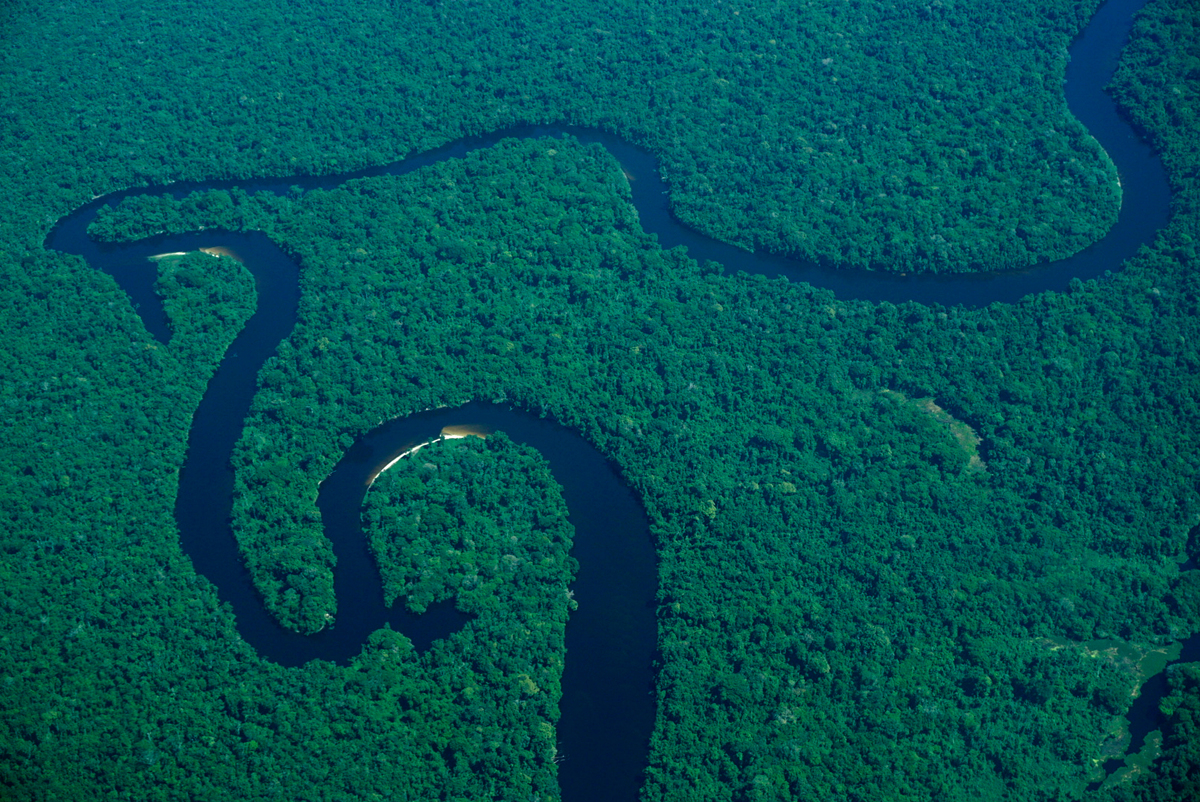
1- The Amazon is the largest rainforest in the world
Spanning over nine countries in South America, the Amazon is the largest tropical forest on the planet, covering 6.7 million square kilometres. To put it in perspective, she is twice the size of India—the largest country in South Asia. The biggest part, around 60%, is in Brazil. After the Amazon, the Congo Basin and Papua host the world’s largest remaining rainforests.
2- The Amazon is one of the most biodiverse ecosystems on Earth
The Amazon is home to approximately 10% of all known species of fauna and flora worldwide. From the beautiful hyacinth macaws to fearless jaguars and the amazing pink dolphins, this vibrant ecosystem is teeming with life. In some areas, a single hectare can contain more than 300 tree species, approximately two-thirds of the native tree species in Europe (454), making the Amazon one of the most botanically rich regions on Earth.
Studies show that the Amazon Basin harbours at least 2,716 species of fish, 427 amphibians, 371 reptiles, 1,300 birds, and 425 mammals. However, the vast majority of its biodiversity lies in her invertebrates, particularly insects, with over 2.5 million species currently known

3- There are approximately 3 million Indigenous People living in the Amazon
The Amazon is home to a diverse group of Indigenous Peoples. Over 390 Indigenous Peoples live in the region, along with approximately 137 isolated groups, who have chosen to remain uncontacted.
In Brazil, about 51.2% of the country’s Indigenous population resides in the Amazon. But the largest tropical forest in the world is also home to traditional communities that have lived in harmony with the forest for generations, such as Rubber Tappers, Ribeirinhos—who inhabit the Amazon’s riverbanks—and Quilombolas, Afro-Brazilian communities descended from enslaved people..
4- The Amazon is home to over 40 million people
The Amazon is not just a vast rainforest rich in biodiversity and home to Indigenous People—it is also home to several cities. In Brazil, These include Manaus , an industrial hub with a population of 2.2 million, and Belém , which will host the United Nations Climate Conference (COP30) in November 2025.
These people’s lives are intrinsically connected to the forest. They depend on her for their food, fresh water, and to regulate the local climate. Smoke from the fires in the Amazon directly impacts the people living in the region, darkening the skies and causing respiratory problems to the population, especially children and elders.
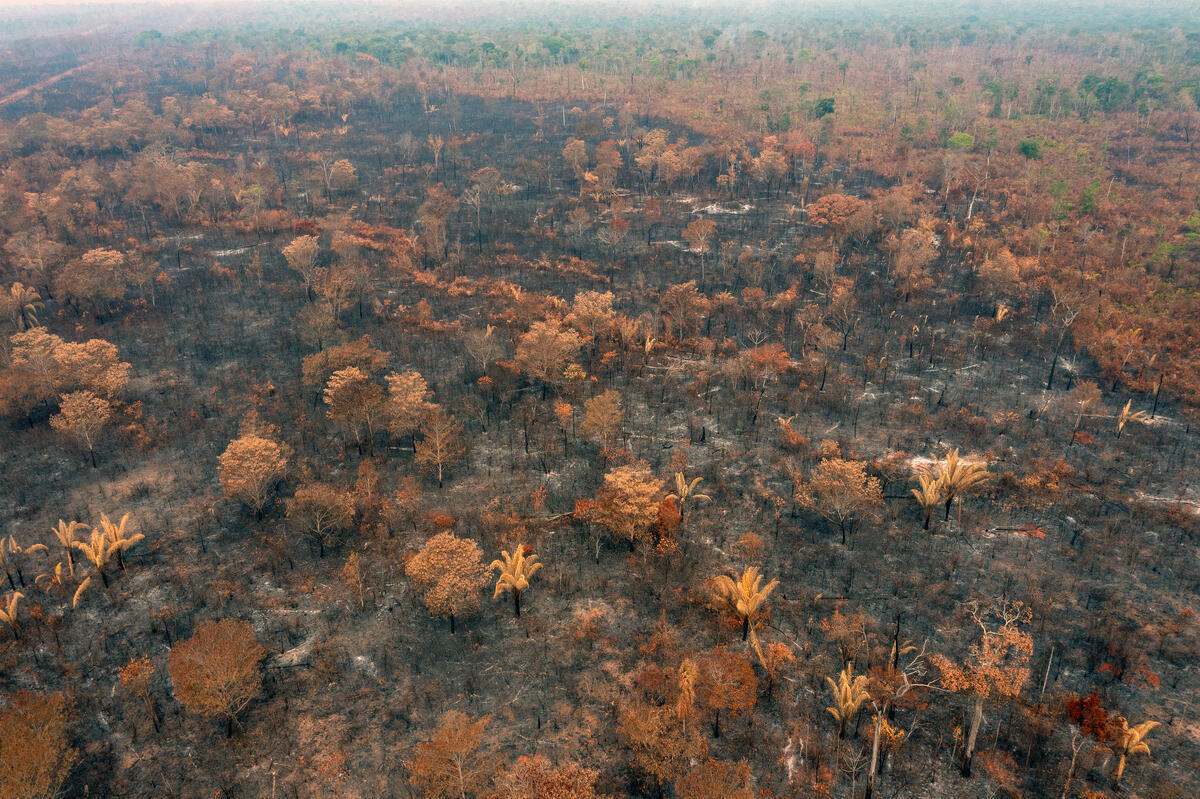
5- The Amazon is vital for the global climate
The Amazon is estimated to store about 123 billion tons of carbon, both above and below ground, making her one of Earth’s most crucial “carbon reserves”, vital in the fight against the climate crisis. However, studies show that fire- and deforestation-affected areas of the Amazon are now releasing more CO₂ into the atmosphere than they absorb. This poses a major threat to the global climate. Protecting the Amazon means protecting the future of everyone.
6- Fires in the Amazon are not natural
Unlike bushfires in Australia and other parts of the world, fires in the Amazon are not natural. In the Amazon biome, fire is used in the deforestation process to clear the land for agriculture and pasture. The use of fire in the Amazon is often illegal, and so is deforestation. This practice has a major impact on the local biodiversity, the health of the populations living in the region, and to the global climate, as the fires release vast amounts of carbon into the atmosphere.
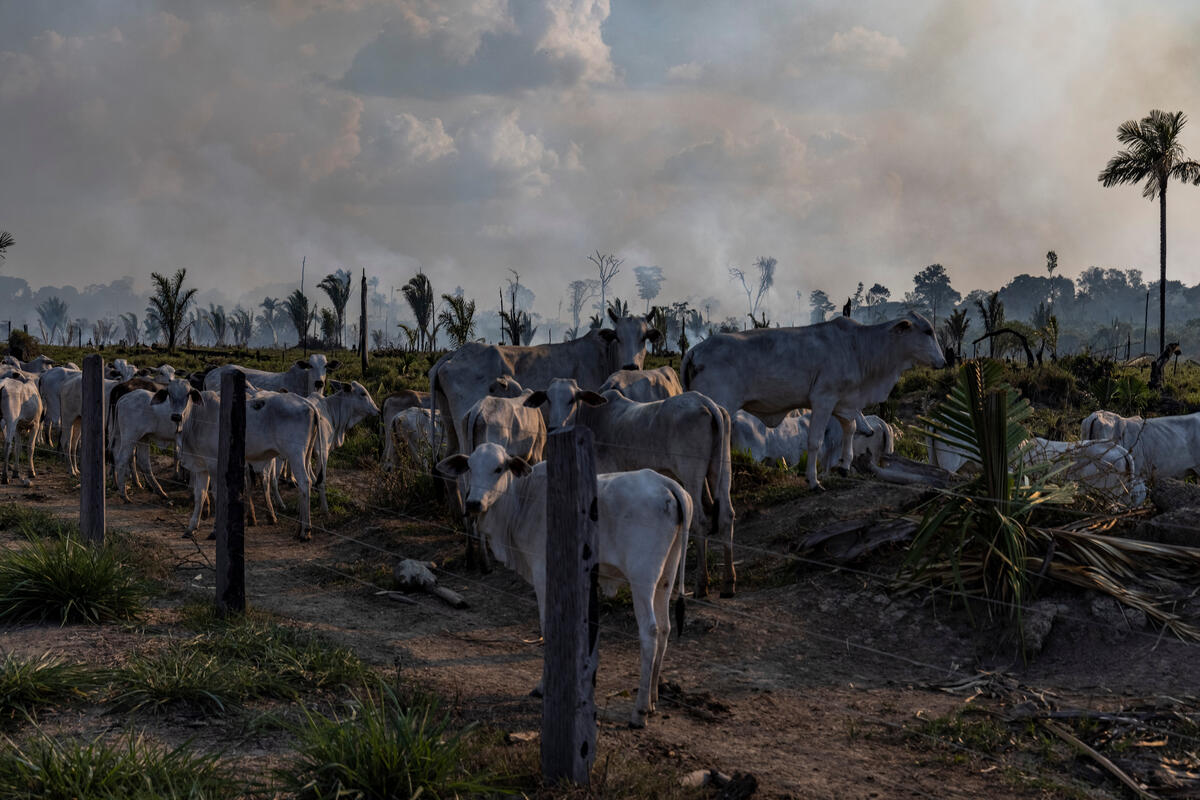
© Victor Moriyama / Amazônia em Chamas
7- Cattle ranching is the leading cause of deforestation in the Amazon
The expansion of agribusiness in the Amazon is putting more and more pressure on the forest. According to a study, 90% of the deforested areas in the Brazilian Amazon are turned into pasture to produce meat and dairy. This means the food we eat may be linked to deforestation in the Amazon. We must urge our governments to stop buying from forest destroyers and ensure supply chains are free from deforestation, and demand stronger protections for the Amazon.
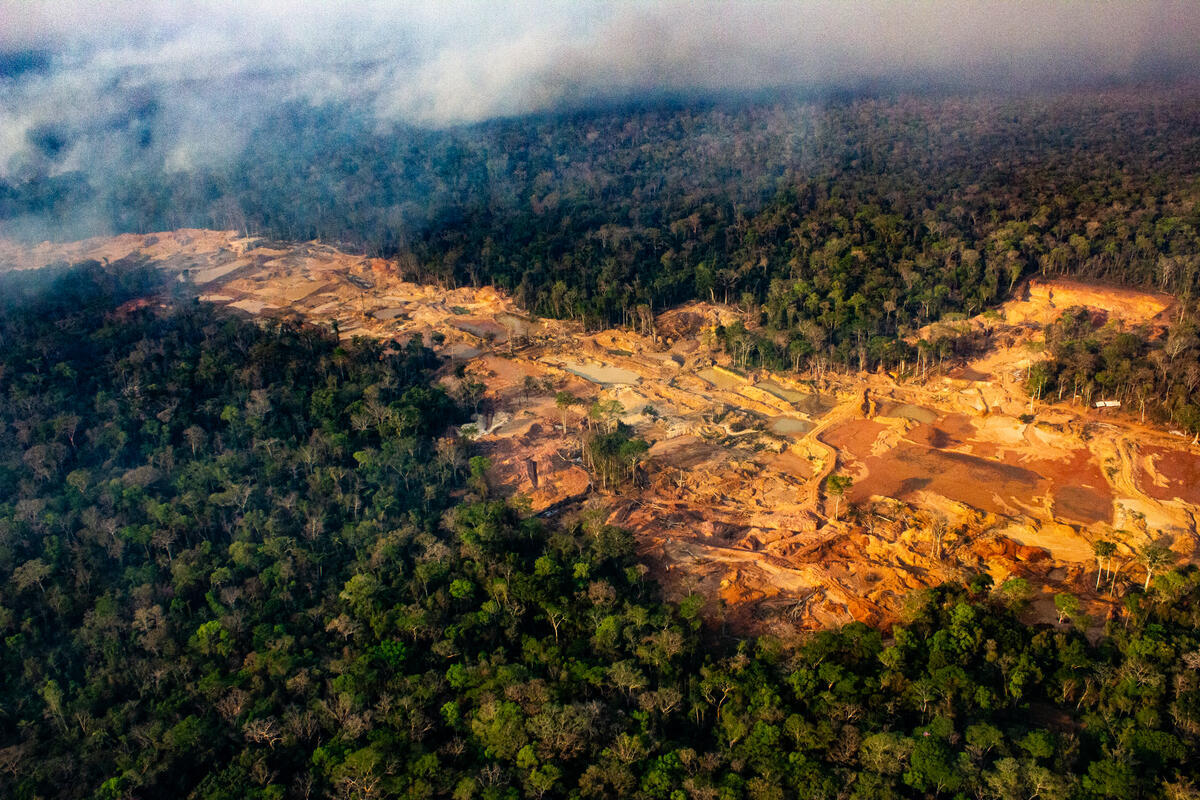
8- Illegal gold mining is a major threat to Indigenous Peoples
Illegal gold mining in Indigenous Lands in Brazil surged by 265% in just five years, between 2018 and 2022. The activity poses a severe threat to the health and the lives of Indigenous People, destroying rivers, contaminating communities with mercury and bringing violence and death to their territories.
But illegal gold mining doesn’t impact just the forest and Indigenous People. A recent study showed that mercury-contaminated fish are being sold in markets in major Amazonian cities, putting the health of millions at risk.
9- The Amazon is close to a point of no return
About 17% of the Amazon has already been deforested, and scientists warn we are getting dangerously close to a ‘point of no return’.
According to a study, if we lose between 20% and 25% of the Amazon, the forest might lose its ability to generate its own moisture, leading to reduced rainfall, higher temperatures, and a self-reinforcing cycle of drying and degradation.
As a result, vast areas of the forest could turn into a drier, savanna-like ecosystem, unable to sustain her rich biodiversity. This could have catastrophic consequences for the global climate, local communities, and the planet’s ecological balance.
10- The most important Climate Conference in the world is happening in the Amazon this year
COP30, the United Nations Climate Conference, will take place in Belém, the second largest city in the Amazon region, in November 2025. During the conference, representatives from countries all over the world will meet to discuss measures to protect the climate. Across the globe, we are already witnessing and feeling the impacts of the climate crisis. This is our chance to demand our political leaders move beyond words to urgent action. They must stop granting permission and public funds to Earth-destroying industries. Instead, our leaders must respect, pursue, and support real solutions that already exist—solutions that put the forest and her people at the heart of the response. Indigenous guardians of the forest hold true authority, and they must be respected and heard. The moment is now.
We are the turning point! Join the movement and demand respect for the Amazon.

Three countries have been named by the Paris Agreement’s compliance committee for failing to submit a nationally determined contribution (NDC) and repeatedly snubbing offers of help with their climate plans.
After months of internal debate over whether to identify serial non-responders, the Paris Agreement’s Implementation and Compliance Committee (PAICC) named the three countries which have failed to engage with it over their NDCs on Friday.
It named Democratic Republic of Congo, Senegal and North Korea in a footnote of its annual report, adding that it decided to name them “with a view to facilitating engagement”, adding that representatives of the three nations had been invited to its meeting in early 2027 “with the purpose of identifying any challenges and constraints”.
“The Committee noted the importance of Parties engaging with the Committee in a timely manner, while noting that some delays may be due to the national capabilities and circumstances of the Parties”, the report said.
-
Under US pressure, World Bank says it will back gas “where appropriate”
The US wants the World Bank to expand its gas support while climate campaigners are pushing for it to end – its head spoke this week of limited backing for the fossil fuel -
IPCC scientists vow to press on with climate reports despite political deadlock
After governments again failed to agree a timeline, nearly 120 IPCC authors pledged to complete their assessment on time and with full scientific rigour -
Paris Agreement committee snubbed over missing NDC climate plans
Many governments have still not submitted a nationally determined contribution to the UN, breaching a key requirement of the Paris Agreement



In July, PAICC said 12 countries had ignored its repeated attempts to discuss why they had not published an NDC as required every five years under the 2015 Paris accord.
Members of the committee had been divided over whether to name them, but at a September meeting decided to do so in their annual report to the annual climate COP summit.
By the time the report was published on Friday, only Congo, Senegal and North Korea “had not communicated an NDC or submitted a [Biennial Transparency Report] and had not yet responded to any of the Committee’s notifications, despite several reminders issued by the Committee in this regard”.
Rainforest and renewable energy ambitions
The silence from Congo and Senegal is notable because the former is home to much of the Congo Basin rainforest while the latter has sought billions of dollars in climate finance to support its renewable energy ambitions.
After Brazil, Congo has more rainforest than any country in the world. This forest, and the country’s peatlands, absorb huge amounts of greenhouse gas but are fast being lost to expanding farmland, charcoal production, logging and mining.
Senegal signed a Just Energy Transition Partnership with Canada and wealthy European nations in 2023, to help it meet its renewable energy targets under the-then government of Macky Sall. It was chair of the Least Developed Countries group between January 2022 and December 2023.

Tejas Rao, who is researching the PAICC as part of a doctoral thesis at Cambridge University, said the governments of the three countries should engage with the committee.
“Engagement costs these governments very little and the committee has shown it will listen,” he said.
“Silence leaves the committee with no basis to help, and it leaves the [governments] exposed to the narrative that they are simply disengaged,” he told Climate Home News.
Paris Agreement requirement
The 2015 Paris Agreement requires all parties to publish an NDC every five years outlining their emissions reduction targets, with each plan meant to be more ambitious than the country’s last NDC.
The latest set – the third round of plans, with new targets for 2035 – was due in February 2025. While most countries missed this deadline, all but around 30 – mostly small emitters but including Egypt, Vietnam and Argentina – have now submitted them.
Over the year, the PAICC – which is made up of government climate officials from developed and developing countries – has been communicating with governments that have not submitted NDCs and trying to overcome barriers to them doing so.
Some nations have cited exceptional circumstances as the reason for not submitting an NDC, a process that requires a significant amount of work in tracking emissions and consulting on how to curb them across the economy. For example, a letter from a Sudanese official to the PAICC, seen by Climate Home News, said that the country’s civil war had led to the suspension of its NDC preparation.
-
IPCC scientists vow to press on with climate reports despite political deadlock
After governments again failed to agree a timeline, nearly 120 IPCC authors pledged to complete their assessment on time and with full scientific rigour -
Under US pressure, World Bank says it will back gas “where appropriate”
The US wants the World Bank to expand its gas support while climate campaigners are pushing for it to end – its head spoke this week of limited backing for the fossil fuel -
Who shapes climate science? The equity question facing the IPCC
Early completion of the next global climate science assessment reports risks excluding research from the Global South, which is key to ensuring the findings are fair
The US and Iran are not signed up to the Paris Agreement and so do not have active NDCs, nor does Taiwan, which is not a UN member state.
Rao said that because the PAICC is “facilitative and non-punitive”, naming the countries “is meant to open a door, not close one – the invited consultation is the point”.
“In recent months, governments that explained their constraints, whether capacity, finance or domestic process, have been met with follow-up and support rather than sanction, and the number of silent governments has fallen sharply,” Rao said.
The post Paris Agreement committee names three countries snubbing it over NDCs appeared first on Climate Home News.
Paris Agreement committee names three countries snubbing it over NDCs