
Amazon (NASDAQ: AMZN) has announced a major renewable energy deal in the United States, partnering with Avangrid on a $100 million solar project. The development will add clean electricity to the U.S. grid and further support Amazon’s climate goals.
The agreement highlights the growing role of large corporations in driving clean energy demand. Amazon is one of the biggest buyers of renewable energy in the world. It is quickly growing its solar and wind portfolio.
Amazon signs long-term power purchase agreements (PPAs) to secure renewable electricity. This also helps developers like Avangrid get the funds they need to build large projects.
Net-Zero by 2040: Amazon’s Big Climate Goals, and Bigger Challenges
Amazon aims to reach net-zero carbon emissions by 2040. It also plans to run all operations on 100% renewable energy by 2025, a target it says it is close to achieving.
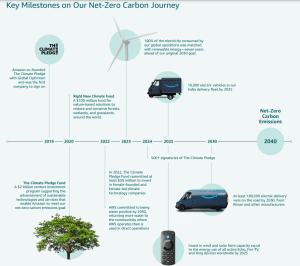
But Amazon’s emissions profile shows how hard this goal is. In 2024, the company’s total greenhouse gas emissions rose by 6%, reaching 68.25 million metric tons of CO₂ equivalent. That marked a reversal after years of reductions. All scopes saw increases.
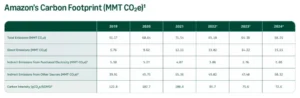
Here is how the emissions break down: Despite the growth in absolute emissions, Amazon says it improved its carbon intensity (emissions per unit of business) by 4% in 2024.
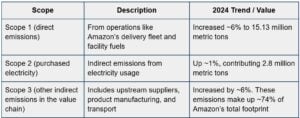
Amazon explains its carbon footprint calculation using the GHG Protocol. It includes direct operations, energy use, and activities in the value chain. This covers product manufacturing, logistics, packaging, and more.
To reduce its impact, Amazon has taken multiple steps:
- Matching electricity use with renewable energy: In 2024, Amazon used 100% renewable energy for all its data centers and facilities.
- Investing in renewable capacity: As of early 2025, Amazon had invested in 621 renewable projects, amounting to 34 GW of carbon-free energy capacity.
- Storage and grid support: Amazon pairs solar projects with battery energy storage systems, enabling more stable renewable energy integration.
- Efficiency in data centers: Amazon’s AWS data centers reported a Power Usage Effectiveness (PUE) of 1.15, better than many industry averages.
- Innovation in cooling and design: New data center components launched in 2024 provided 12% more compute power. They also reduced peak cooling energy use by 46% without increasing water usage.
These actions show the e-commerce giant is not just buying clean power, but trying to redesign how it uses energy.
SEE MORE on AMAZON:
- Amazon Flies Greener to Net Zero with 9M Liters of Sustainable Fuel from Neste
- Amazon to Power AI Data Center Expansion with 1,920 MW Nuclear PPA from Talen Energy
Avangrid’s Solar Play and Why It Matters
Avangrid, part of the Iberdrola Group, is one of the largest renewable energy companies in the United States. Its $100 million investment in the new solar project underlines the scale of capital required to expand America’s clean power supply.
The company currently operates more than 8.6 gigawatts (GW) of renewable capacity in the U.S., including wind and solar. By partnering with Amazon, Avangrid gets a steady buyer for its electricity. This deal also speeds up the growth of renewable infrastructure. This helps meet both state and national clean energy goals.
This project also illustrates how large tech and energy firms can work together. Amazon’s demand provides a stable revenue stream, and Avangrid gains the capital certainty to build more solar capacity. Over time, similar deals can help accelerate the transition of the U.S. power grid to cleaner sources.
Scaling renewable energy helps Amazon in two ways:
- It reduces operational emissions (Scope 2) in regions where Amazon operates.
- It supports grid decarbonization, which benefits all electricity users—including Amazon’s neighbors and future expansions.
How Corporate Demand Supercharges Renewable Growth
The deal comes at a time when renewable energy investment in the U.S. is accelerating. The International Energy Agency (IEA) reports that global clean energy investment hit $3.3 trillion in 2025. This amount surpassed spending on fossil fuels.
The U.S. remains a key market, with solar power installations alone expected to grow by more than 40 GW annually through 2030.
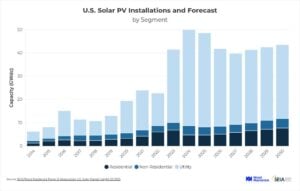
Corporations are an important driver of this trend. Companies now hold a larger share of renewable PPAs. This shift comes as investors, regulators, and consumers demand stronger climate commitments. Amazon has been the biggest buyer of renewable electricity worldwide since 2020.
Amazon’s deal with Avangrid sends a strong signal to the renewable sector. Corporate demand for clean power gives developers and financiers long-term certainty. This certainty helps make scaling projects easier. As more companies set science-based climate targets, the renewable PPA market is expected to keep expanding.
Industry forecasts say that corporate PPAs might make up 20–25% of new renewable capacity by 2030. Amazon’s scale gives it an outsized role in shaping this market. The company partners with developers like Avangrid. This helps unlock capital and speeds up the clean energy transition.
Amazon’s Hardest Climate Challenge
Amazon leads in renewable procurement, but it faces big challenges in hitting its 2040 net-zero target. The majority of its emissions come from Scope 3 sources, including suppliers, logistics, and product use by customers.
While renewable energy agreements cover operational electricity, tackling emissions across Amazon’s vast value chain will need deeper collaboration with partners and new technologies.
Analysts point out that Amazon’s total emissions haven’t dropped consistently. This shows the struggle between fast business growth and climate goals. For instance, even with renewable progress, Amazon’s overall footprint grew steadily during its years of fastest e-commerce expansion.
Balancing E-Commerce Expansion with Carbon Cuts
Amazon’s renewable energy strategy, like solar, is both a business and environmental decision. Access to low-cost clean power reduces long-term energy risks, while also positioning the company as a leader in climate action.
Partnerships with Avangrid and other developers boost the U.S. renewable energy market. They show that when companies demand clean energy, it can quicken the shift to clean electricity.
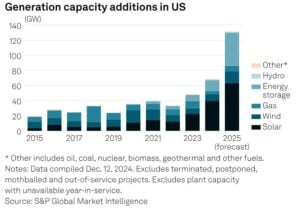
For Amazon, the challenge ahead lies in balancing growth with deeper emissions cuts. The Avangrid solar project represents progress, but a broader supply chain transformation will be needed to meet the 2040 net-zero target.
As more corporations follow Amazon’s lead, the renewable energy landscape in the U.S. is set for continued expansion. The success of these partnerships will help determine whether the country can meet its clean power goals and maintain momentum in the global shift away from fossil fuels.
The post Amazon (AMZN Stock) Strikes $100M Solar Deal with Iberdrola’s Avangrid to Power Its Net-Zero Future appeared first on Carbon Credits.
Carbon Footprint
Alphabet’s Blockbuster Q4 2025 Signals a New AI Era—But Will It Cloud Its Net-Zero Promise?
Alphabet’s latest quarterly results tell a powerful story. Google is accelerating its artificial intelligence push at historic speed, but that momentum is colliding with the hard physics of energy, emissions, and infrastructure limits. The company is scaling AI faster than any previous technology cycle—yet keeping emissions in check is becoming more complex and uncertain.
This tension between explosive AI growth and ambitious climate goals defines Google’s next decade.
Alphabet’s Blockbuster Quarter Signals a New AI Era
Alphabet closed 2025 with one of its strongest quarters ever. Revenue surged nearly 18% year over year to $113.8 billion, beating analyst expectations. Earnings per share also exceeded forecasts, and net income jumped almost 30%.
Advertising remained the company’s largest revenue driver, while Google Cloud continued its breakout growth. However, YouTube advertising slightly missed expectations, partly due to weaker comparisons against election-driven ad spending in 2024.
The biggest headline, though, came from Alphabet’s spending plans. The company expects $175–$185 billion in capital expenditures in 2026, more than double its recent annual spend. Most of that money will go toward AI infrastructure, cloud capacity, and strategic investments.
This marks one of the largest corporate infrastructure spending waves in tech history.

Gemini and AI Are Reshaping Google’s Core Business
Google’s AI ecosystem is expanding rapidly across products, platforms, and enterprise services.
Gemini now has over 750 million monthly active users, reflecting massive adoption across search, productivity tools, and developer platforms. Google claims it reduced Gemini’s serving costs by 78% in 2025 through optimization and better infrastructure utilization—highlighting how scale economics are starting to kick in.
Search, YouTube, and Cloud are Increasingly AI-driven:
Google’s main businesses performed strongly.
- Search revenue reached around $63 billion, beating analyst expectations.
- YouTube ads earned $11.38 billion, up from $10.47 billion a year earlier.
- Google Cloud stood out with $17.66 billion, growing nearly 48%.
- Subscriptions, platforms, and devices added another $13.58 billion.
AI is driving much of this growth. Search usage hit record levels as new conversational AI features let people ask longer, more interactive questions. Enterprise adoption of AI is also rising fast. Millions of Gemini Enterprise seats were sold in just a few months, showing strong demand for AI tools across industries.
Waymo Expands Autonomous Ride Services
The earnings report also mentioned that Waymo raised its largest investment to date and continues strong growth, providing over 400,000 rides weekly with safety as a priority.
In December, it surpassed 20 million fully autonomous trips and recently launched service in Miami, with plans to expand across the US, UK, and Japan, including airports and freeways.
- ALSO READ: Alphabet (Google) Surpasses Apple in Value: But How About Their Climate Ambitions and Progress?
Full-Year Context
Annual revenue topped $400 billion for the first time, driven by AI momentum like Gemini processing over 10 billion tokens per minute. Operating income was $35.93 billion for the quarter, with net income at $34.46 billion
The broader strategy is clear: AI is becoming the growth engine across Google’s entire stack, from consumer products to enterprise platforms.

GOOGL Stock Reacts to AI Spending Plans
Alphabet Inc. (GOOGL) shares fell slightly to $331.25, down 0.54% on high trading volume of 87 million shares. The stock moved after Alphabet’s earnings were out. It’s up 18% year over year.
Investors are watching the company’s $175–185 billion AI spending plan for 2026, which is driving short-term volatility. Analysts remain positive, with a price target of $344 and a “Strong Buy” rating.
The Hidden Cost: Exploding Energy Demand
Behind this AI expansion lies a massive infrastructure footprint. Training and running large AI models require enormous computing power, and that translates directly into electricity consumption.
Google openly acknowledges that AI is driving non-linear growth in energy demand. Unlike traditional digital services, AI workloads scale unpredictably, especially with the rise of multimodal models, agentic systems, and real-time inference.
This uncertainty makes forecasting emissions trajectories far more difficult. Even with efficiency gains, absolute electricity demand is rising sharply.
Let’s take a closer look at Google’s sustainability progress and see the full picture behind its climate efforts.
Google’s Sustainability Moonshot Under Pressure
Google’s climate ambition is among the most aggressive in corporate history. The company aims to cut combined Scope 1, 2, and 3 emissions by 50% by 2030 compared with 2019 levels. Its long-term goal remains net zero across operations and value chains.
There has been real progress:
- Scope 1 emissions declined 8% in 2024.
- Scope 2 emissions dropped 11% through clean energy procurement.
- Data center energy emissions fell 12% due to new carbon-free power projects.
These gains are notable because Google’s electricity consumption grew 27% in a single year. Decoupling growth from emissions is one of the hardest challenges in corporate decarbonization, and Google has partially achieved it.
But the bigger problem sits outside operational emissions.

Scope 3 Emissions: The Biggest Hurdle
Google’s total ambition-based emissions reached 11.5 million tCO₂e in 2024, up 11% year over year and 51% above its 2019 baseline. The main driver is supply chain emissions—Scope 3—which rose 22% year over year.
These emissions come from hardware manufacturing, construction materials, logistics, and third-party services. As Google builds more data centers and buys more AI hardware, supply chain emissions rise almost automatically.
This creates a paradox: AI expansion increases Scope 3 emissions faster than operational decarbonization can offset them.
Data Center Construction: A Growing Carbon Challenge
One of the fastest-growing emission sources is data center construction. Embodied carbon from steel, concrete, and heavy machinery is becoming a significant part of Google’s footprint.
In 2024, data center construction emissions reached 1.6 million tCO₂e, accounting for 19% of Google’s ambition-based Scope 3 emissions. That figure is expected to rise as AI-driven data center expansion accelerates.
Google is responding with several strategies:
- Standardized data center designs to reduce material use
- Low-carbon concrete and steel to cut embodied emissions by up to 40%
- Electrified construction equipment powered by clean electricity
- Improved space efficiency to maximize infrastructure utilization
These measures can reduce carbon intensity, but they cannot fully offset the scale of new construction.

Policy and Regional Constraints Add Complexity
The company also highlights that policy uncertainty is a major risk. Changes in climate and energy regulations can affect project timelines, costs, and investment decisions.
Regional constraints are equally critical. Many Asia-Pacific markets—key growth regions for Google—lack sufficient carbon-free electricity. Land scarcity, weak renewable resources, and high construction costs make clean energy deployment difficult.
This means AI-driven growth in Asia could significantly increase emissions unless grid decarbonization accelerates.
Google’s Dilemma: AI vs Net-Zero Equation
Alphabet is not an outlier. Every major AI company is facing the same trade-off. AI is becoming core infrastructure for the global economy, but its energy footprint is massive and rising.
Thus, the real question is whether corporate decarbonization can keep pace with AI-driven growth. Three structural tensions stand out:
- Infrastructure Scale vs Emissions Targets: AI requires massive data center buildouts, which drive Scope 3 emissions.
- Energy Demand vs Clean Power Supply: Electricity consumption is growing faster than carbon-free power deployment.
- Corporate Action vs Systemic Constraints: Many challenges, like grid capacity, policy frameworks, and supply chains, are beyond Google’s direct control.
Google’s disclosures offer a rare, transparent look into the carbon cost of the AI revolution. They highlight a broader reality: decarbonizing digital infrastructure is far harder than decarbonizing traditional IT services.
Can it Still Hit Its 2030 Climate Target?
As said before, the tech giant remains committed to cutting emissions by 50% by 2030, and the Science Based Targets initiative has validated its targets. But the path is increasingly narrow.
Operational emissions are trending downward, which is encouraging. The challenge is Scope 3 emissions tied to hardware, construction, and suppliers. Without systemic supply chain decarbonization, absolute emissions could continue rising—even if Google becomes more efficient per unit of compute.
However, its net-zero ambition is still alive, but it now depends as much on global energy systems, policy frameworks, and supply chains as on its own technology and investments.

Aggressive Investment in Carbon-Free Energy
It is investing heavily in clean energy, low-carbon materials, and carbon removal while simultaneously scaling AI faster than any previous technology wave.
Some steps include signing pioneering corporate deals for advanced geothermal and small modular nuclear reactors. The company is also using AI to speed up grid interconnections and optimize power purchasing.
In 2024, Google achieved in nine of its 20 data center grid regions. That’s a significant milestone, but it still falls short of its 24/7 carbon-free energy ambition.
Boosting Carbon Removals
Google is also expanding its carbon removal portfolio. In 2024, it signed 16 new offtake agreements worth over $100 million, bringing its total removal portfolio to around 782,400 tCO₂e.
That is a 14-fold increase from 2023, but it is still tiny compared to millions of tonnes of annual emissions. Carbon removal is a long-term tool, not a near-term solution.

All in all, Alphabet’s Q4 results show a company entering a new phase of AI-driven growth. The planned $185 billion annual infrastructure spend underscores how central AI is to Google’s future.
But the sustainability story is becoming more complex. The next decade will test whether AI can scale sustainably—or whether the world’s most advanced tech companies will struggle to keep their climate promises in the age of artificial intelligence.
- FURTHER READING:
- Google Powers U.S. Data Centers with 1.2 GW of Carbon-Free Energy from Clearway
- Tech Giants Like NVIDIA and Google Eye Space to Power AI with Orbital Data Centers
The post Alphabet’s Blockbuster Q4 2025 Signals a New AI Era—But Will It Cloud Its Net-Zero Promise? appeared first on Carbon Credits.
Carbon Footprint
Google Locks In 100 MW of Offshore Wind to Power Europe’s AI Growth
Google has signed a long-term offshore wind power deal in Germany as it expands artificial intelligence and cloud infrastructure across Europe. The agreement is a 15-year power purchase agreement (PPA) with German utility EnBW. It covers 100 megawatts (MW) of electricity from the He Dreiht offshore wind farm in the North Sea.
The deal links Google’s growing electricity demand directly to new renewable generation. It also reflects a wider shift among large technology firms toward long-term clean power contracts tied to specific projects.
Adam Elman, Director of Sustainability EMEA at Google, remarked:
“Meeting the demand for AI infrastructure requires direct investment in the energy systems that make this technology possible. By contracting for new wind power from EnBW, we are bringing more clean energy online in Germany to power our operations, while accelerating the broader transition to a more sustainable electricity grid.”
AI Is Turning Electricity Into a Strategic Asset
According to EnBW, the He Dreiht wind farm will have a total capacity of 960 MW. It will use 64 offshore wind turbines and is expected to connect to the grid by spring 2026. The site is located around 90 kilometers northwest of Borkum and 110 kilometers west of Helgoland.
For Google, the agreement supports its goal of operating on 24/7 carbon-free energy by 2030. This means matching electricity use with carbon-free power every hour of the day, not just on an annual basis.
Google’s power demand is rising quickly. The main driver is artificial intelligence. AI systems need large amounts of computing power, which in turn requires large amounts of electricity.
The International Energy Agency (IEA) estimates that data centers used about 415 terawatt-hours (TWh) of electricity in 2024. That equals around 1.5% of global electricity demand. The IEA also notes that data center demand has grown at a double-digit annual rate in recent years. The same trend is forecasted by an industry report, as shown below.

Germany plays a key role in Google’s European expansion. In late 2025, Google announced plans to invest €5.5 billion in the country between 2026 and 2029. The investment includes a new data center in Dietzenbach, near Frankfurt, and continued development of its Hanau data center campus, which opened in 2023.
Data centers need reliable power around the clock. They also face rising pressure from governments, investors, and customers to reduce emissions. Long-term renewable PPAs help companies manage both issues.
- MUST READ: Environmental Groups Urge U.S. Congress to Pause Data Center Growth as Federal AI Rule Looms
By signing a 15-year contract, Google gains price certainty and supply stability. At the same time, the contract helps EnBW finance a large offshore wind project that adds new clean electricity to Germany’s grid.
A Flagship Wind Farm in the North Sea
Germany already has one of Europe’s largest offshore wind fleets. By the end of 2024, the country had 31 offshore wind farms fully in operation. Installed offshore wind capacity reached about 9.2 gigawatts (GW) in total. Around 7.4 GW sits in the North Sea, while about 1.8 GW is in the Baltic Sea.
He Dreiht is one of the largest offshore wind projects currently under construction in Germany. With 960 MW of capacity, it will add a meaningful share to the national total once it comes online.
The project also reflects a broader trend toward larger offshore turbines. According to industry data, offshore turbines commissioned in Germany in 2024 had an average capacity of 10.2 MW. The first 11 MW turbine entered operation that year, and 15 MW turbines are expected to appear in German waters starting in 2025.

Larger turbines can generate more electricity with fewer units. This can reduce seabed disturbance and installation time. However, it also requires stronger foundations, larger vessels, and more robust grid connections.
For EnBW, He Dreiht is a flagship project. The utility has already signed multiple PPAs for the wind farm with corporate buyers. This shows how offshore wind developers are increasingly relying on long-term corporate demand alongside traditional utility customers.
Why Corporates Are Becoming Power Buyers
Power purchase agreements play a growing role in clean energy finance. A PPA is a contract where a buyer agrees to purchase electricity from a specific project at agreed terms over many years.
For developers, PPAs reduce financial risk. They help secure loans and attract investors by offering predictable revenue. For buyers, PPAs provide access to clean power without owning generation assets.
This model is becoming more common as electricity demand rises and clean energy targets tighten. The IEA reports that global energy investment exceeded $3 trillion in 2024 for the first time. Around $2 trillion of that went into clean energy technologies and infrastructure, including renewables, grids, and storage.
Europe is a key market in this shift. Offshore wind plays a major role because it can produce large volumes of electricity close to industrial and urban centers. Germany plans to keep expanding offshore wind as part of its long-term energy strategy. It plans to expand grid-connected offshore wind power capacity to at least 30 gigawatts by 2030, 40 gigawatts by 2035, and 70 gigawatts by 2045.

Corporate PPAs like Google’s agreement with EnBW help speed up this build-out. They send clear demand signals to developers and help reduce reliance on government subsidies.
From Annual Offsets to 24/7 Clean Power
Google’s long-term climate strategy goes beyond buying renewable energy certificates. The company aims to operate on 24/7 carbon-free energy in every region where it runs data centers and offices.

This approach focuses on real-time matching. It encourages a new, clean generation in the same places where electricity is used. Offshore wind PPAs fit well into this strategy in coastal countries like Germany.
Still, a 100 MW contract covers only part of Google’s total electricity needs. Large data centers can consume hundreds of megawatts on their own. As AI workloads grow, total demand could rise further.
That means Google will likely need a mix of solutions. These may include additional wind and solar PPAs, energy storage, grid upgrades, and partnerships with utilities and governments.
SEE MORE on Google:
- Google Rides the Wind: First Offshore Wind Deal in Asia Pacific For 24/7 Carbon-Free Energy
- Google Powers U.S. Data Centers with 1.2 GW of Carbon-Free Energy from Clearway
Google’s clean energy buying reached a new scale in 2024, as rising AI and digital demand pushed electricity use higher. The company signed contracts for over 8 gigawatts (GW) of new clean energy this year. This is its largest annual procurement ever and double the amount from 2023.
Since 2010, Google has secured over 22 GW of clean energy through more than 170 agreements. This amount is about the same as Portugal’s total renewable power output in 2024. More than 25 projects came online in 2024 alone, adding 2.5 GW of new generation.
Despite a 27% rise in electricity use, Google cut data center energy emissions by 12%. This shows how clean energy purchases support its goal to run on 24/7 carbon-free energy by 2030.

The EnBW agreement shows one way forward. It ties new AI infrastructure directly to new renewable supply. It also spreads investment risk between a technology company and a utility.
Big Tech Is Reshaping How Power Gets Built
Google’s 15-year offshore wind deal highlights a broader shift in how clean energy projects are financed and used. Large corporate buyers are no longer just passive consumers of electricity. They are becoming active players in energy markets.
For Germany, the deal supports offshore wind expansion at a time when power demand is rising from electrification, industry, and digital services. For EnBW, it provides long-term revenue certainty, and for Google, it helps align AI growth with climate goals.
The next phase will test execution, but the direction is clear. As AI drives electricity demand higher, long-term renewable contracts are becoming a central part of energy planning. Google’s offshore wind agreement in Germany is one of the clearest examples of how these trends are coming together.
The post Google Locks In 100 MW of Offshore Wind to Power Europe’s AI Growth appeared first on Carbon Credits.
Carbon Footprint
How BYD’s European Surge and Canada Deal Are Challenging Tesla’s EV Dominance
Chinese electric vehicle (EV) giant BYD is accelerating its global expansion, especially in Europe and Canada. In contrast, Tesla is losing ground across key markets. New sales data, policy shifts, and geopolitical deals suggest a major shift in the EV landscape.
This trend matters not just for automakers. It also impacts battery metals, supply chains, carbon markets, and the future of clean mobility.
BYD’s Germany Boom Marks Europe’s EV Shake-Up
BYD recorded a dramatic surge in German sales in January 2026. Bloomberg highlighted data from Germany’s Federal Motor Transport Authority (KBA) showing that BYD’s registrations jumped more than 10-fold from January 2025. The company sold only 235 vehicles in Germany last year, but recent data suggests sales likely exceeded 2,500 units.
Meanwhile, Tesla struggled. BYD more than doubled Tesla’s registrations in Germany during the same month.
Overall, car sales in Germany declined 6.6% to 193,981 vehicles in January. However, electric cars still accounted for 22% of new registrations, highlighting strong demand for EVs despite a weak auto market. This surge shows that BYD’s low-cost models and expanding lineup are gaining traction in Europe’s largest automotive market.
Significantly, the German numbers reflect a broader European trend. Throughout 2025, BYD recorded more than 200% year-on-year growth in many months. In December 2025 alone, its European registrations reached 27,678 units—up nearly 230%.

Breakthrough in Spain
Spain emerged as another key battleground. BYD dominated the Spanish EV and plug-in hybrid market in January 2026.
- The company registered 1,962 vehicles, a 64.6% year-on-year increase. It captured a 13.6% market share, leading both fully electric and plug-in hybrid segments.
- Fully electric sales rose nearly 30% to 1,039 units, putting BYD ahead of Kia and Mercedes-Benz. Tesla ranked fourth, with only 458 fully electric vehicles sold.
Spain’s performance highlights BYD’s strategy of combining affordable EVs with hybrids to capture diverse buyers.
Notably, BYD also sold 1,326 battery-electric vehicles in the UK, marking a nearly 21% increase from the previous year.
Tesla’s European Sales Collapse Deepens
Tesla, on the other hand, saw sales decline every month in Europe during 2025. The trend continued into 2026. Its struggles were especially visible in Northern and Western Europe.
In five major European markets, Tesla’s registrations fell 44% year-over-year in January. This marked the third consecutive year of shrinking sales across the region.
- Norway: Registrations collapsed by 88%, with only 83 vehicles sold.
- Netherlands: Sales dropped 67%.
- France: Registrations fell 42% to 661 vehicles, the lowest in over three years.
- United Kingdom: Sales plunged more than 57% to just 647 vehicles.
Policy changes played a role. Norway reduced EV tax incentives starting January 1, which hurt Tesla demand. However, the scale of the decline surprised analysts.
Even in Sweden and Denmark, where Tesla saw sales rise by 26% and 3%, the total number of cars sold remains low. These minor gains do little to offset the sharp decline compared with two years ago.

Analysts believe that one key issue is Tesla’s aging lineup. The Model Y, once a top seller, is now over four years old, and buyers are looking for newer options. Although Tesla launched more affordable “Standard” versions of the Model Y and Model 3, these updates have not been enough to reverse the downward trend.
In the current scenario, Tesla is not only losing ground to Chinese brands. European automakers are also regaining market share. Volkswagen overtook Tesla in 2025 to become Europe’s top-selling EV brand. It sold around 274,000 units, compared to Tesla’s 235,000.
This shows Europe’s EV market is becoming more competitive, with local manufacturers and Chinese brands challenging Tesla’s early dominance.

Canada Opens the Door to Chinese EVs
Europe is not the only region where BYD is gaining ground. Prime Minister Mark Carney signed a landmark trade agreement with China on January 16, 2026. This deal allows Chinese-made EVs to enter the market at low tariffs.
- So Canada will allow up to 49,000 Chinese EVs annually at a tariff rate of 6.1%. This marks a sharp reversal from the 100% tariff imposed in October 2024.
Also, the quota could rise to about 70,000 vehicles within five years. By 2030, at least half of imported Chinese EVs must be priced below CAD 35,000. In exchange, China agreed to reduce tariffs on Canadian canola seed, improving agricultural trade relations.
PM Carney said,
“At its best, the Canada-China relationship has created massive opportunities for both our peoples. By leveraging our strengths and focusing on trade, energy, agri-food, and areas where we can make huge gains, we are forging a new strategic partnership that builds on the best of our past, reflects the world as it is today, and benefits the people of both our nations.”
BYD Gains a Regulatory Edge in Canada
BYD holds a unique advantage in Canada. Its manufacturing facilities in Shenzhen and Xi’an are already approved for Canadian imports. This pre-clearance gives BYD a head start over rivals like NIO, XPeng, and Li Auto. However, other Chinese brands must wait for regulatory approvals or rely on slower case-by-case processes.
BYD also operates an electric bus assembly plant in Ontario, strengthening its local presence. Furthermore, affordable models like the Seagull and Dolphin, priced between $20,000 and $30,000, could qualify under Canada’s affordability requirements.
Political Backlash and U.S. Concerns
The Canada-China EV deal triggered political controversy. Ontario Premier Doug Ford initially urged Canadians to boycott Chinese EVs, warning the agreement could hurt domestic manufacturing.
Labor unions and automakers also expressed concern. They fear the deal could weaken North America’s automotive industry and strain U.S.-Canada trade relations.
As per reports, U.S. President Donald Trump threatened tariffs on Canadian goods if the deal moves forward, calling it a “disaster.” However, Canadian officials argue the agreement aligns with USMCA rules and will expand the EV market.
Analysts estimate Chinese EVs could capture around 23% of Canada’s EV sales in the first year, saving consumers about CAD 6,700 per vehicle.

Stock Market Snapshot: BYDDY vs TSLA
BYD’s (BYDDY) stock trades around $11.28 per share, with a market cap of roughly $102 billion. The stock is near the lower end of its 52-week range, reflecting margin pressures and geopolitical risks.

Tesla’s (TSLA) stock trades near $406 per share, with a market cap of about $1.35 trillion. Analysts expect a volatile 2026, with forecasts ranging widely depending on EV demand and margins.

Despite Tesla’s valuation premium, BYD’s rapid sales growth is reshaping investor sentiment.
The Bigger Picture: A Global EV Power Shift
BYD’s rapid rise shows how the EV industry is changing. Chinese automakers are using scale, government support, and efficient production to challenge Western rivals. At the same time, Tesla remains strong in technology, software, and brand recognition. Yet, price competition and shifting policies are reshaping the market.
In Europe, declining subsidies, along with Canada’s new trade rules and ongoing geopolitical tensions, are affecting EV adoption and corporate strategies. As BYD gains ground in Germany, Europe, and Canada, it signals a turning point in the global EV race. Tesla’s falling sales highlight the increasing pressure from both Chinese and European competitors.
For investors, policymakers, and climate advocates, these trends matter. They will influence battery supply chains, emissions targets, and the demand for carbon credits. The EV transition is no longer led by a single company—today, it has become a global contest for scale, affordability, and sustainable leadership.
The post How BYD’s European Surge and Canada Deal Are Challenging Tesla’s EV Dominance appeared first on Carbon Credits.
-
Greenhouse Gases6 months ago
Guest post: Why China is still building new coal – and when it might stop
-
Climate Change6 months ago
Guest post: Why China is still building new coal – and when it might stop
-
Climate Change2 years ago
Bill Discounting Climate Change in Florida’s Energy Policy Awaits DeSantis’ Approval
-
Greenhouse Gases2 years ago嘉宾来稿:满足中国增长的用电需求 光伏加储能“比新建煤电更实惠”
-

Climate Change2 years ago
Spanish-language misinformation on renewable energy spreads online, report shows
-
Climate Change2 years ago嘉宾来稿:满足中国增长的用电需求 光伏加储能“比新建煤电更实惠”
-
Climate Change Videos2 years ago
The toxic gas flares fuelling Nigeria’s climate change – BBC News
-
Renewable Energy2 years ago
GAF Energy Completes Construction of Second Manufacturing Facility


