

新研究显示,中国来自农业机械的碳排放快速增长,可能会“阻碍”该国实现净零排放的目标。
这项发表在《自然-食品》(Nature Food)期刊上的研究发现,自1985年以来,中国农业机械CO2(二氧化碳)排放量增加了大约七倍。
研究人员利用政府发布的不同时期农机数量统计数据,计算了1985年至2020年期间CO2排放量及其他空气污染物的变化。
他们发现,自1985年以来,农业机械的CO2排放量平均每年增长近6%。
研究指出,按照中国实现2060年净零排放目标的路径,若农业机械化程度按“预期趋势”继续提升,其相关排放在2050年可能占中国总排放量的21%。

作者表示,这可能会使中国实现减排目标更加困难,并导致空气质量“恶化”。
然而,研究还发现,如果广泛采用由可再生能源驱动的农业机械,有望减少65%至70%的相关排放。
一位未参与该研究的专家对Carbon Brief表示,尽管该研究“具有价值”,但农业机械不太可能在总排放量中占到如此高的比例。
“如果中国在减少其他排放源方面取得了快速进展……那么我预计在农业机械的脱碳方面也会取得显著成效。”她说。
农机相关排放
粮食系统大约占人类温室气体排放的三分之一。
这一数字涵盖了与粮食生产相关的所有排放——从因森林砍伐或土地使用变化导致的排放,到奶牛打嗝或粪便释放的甲烷。
这项新研究的数据来自《中国统计年鉴》,后者提供了各种社会经济指标的年度统计数据。研究者从中提取了中国农业机械的数量与功率、机械所用的燃料属性、耕地面积、人口等信息。
除了CO2排放量外,研究者还计算了三种与农业机械相关的空气污染物排放量:PM2.5(细颗粒物)、NOx(氮氧化物)和THC(总烃)。
研究者将农业机械分为四类:小型拖拉机、大型拖拉机、田间管理机械和收割机械。然后,他们计算了每类机械在每一年的CO2、PM2.5、NOx和THC排放量。
下图展示了1985年至2020年研究期间的CO2排放量。图中柱状表示不同类型农业机械的排放量:收割机械(浅蓝色)、田间管理机械(粉色)、小型拖拉机(浅绿色)和大型拖拉机(深绿色)。
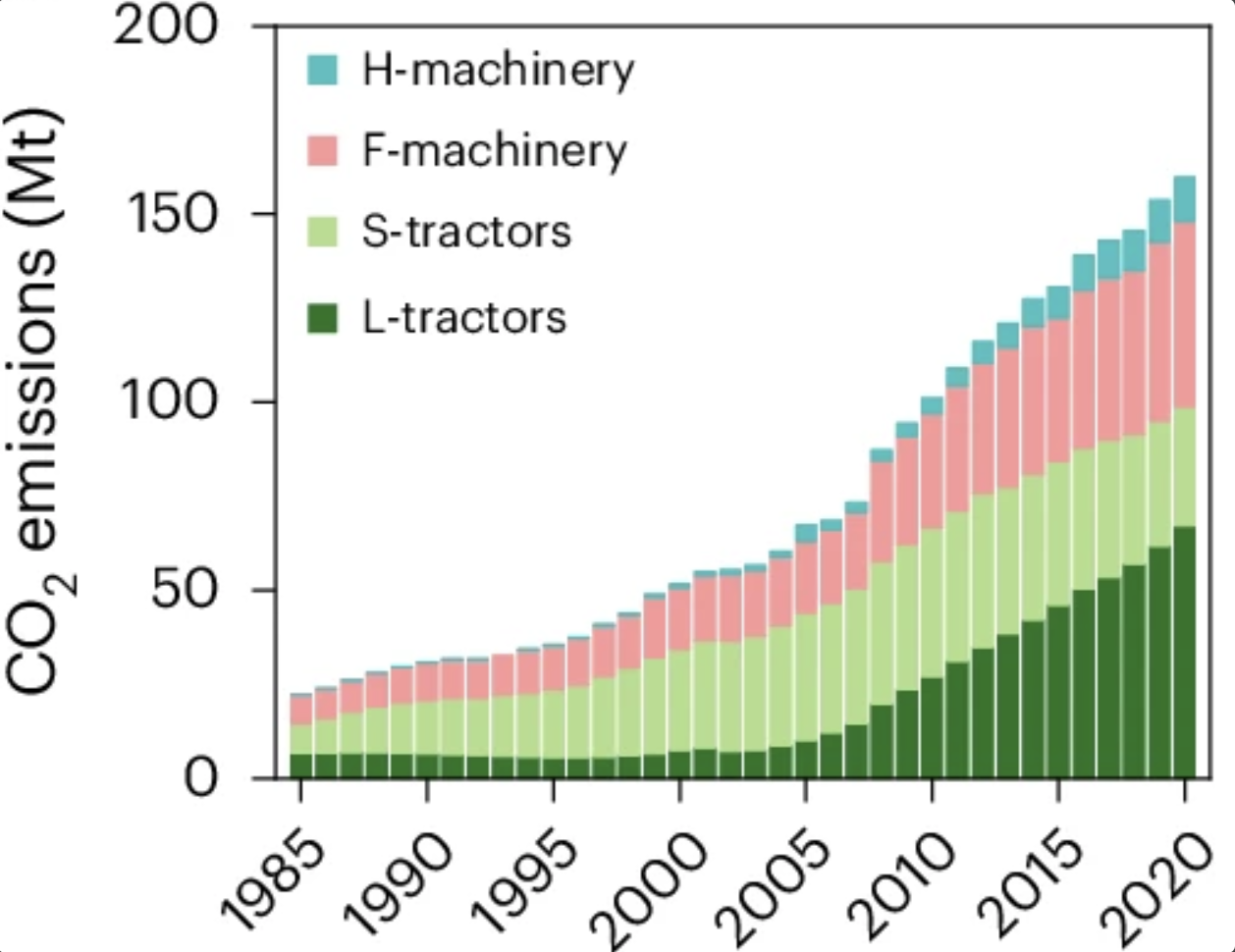
他们发现,农业机械CO2排放总量已从1985年的约23MtCO2(1MtCO2=百万吨二氧化碳),增长到2020年的近160MtCO2,年均增长率为5.7%。
这相当于2020年中国总排放量的约1.5%。虽然比例不高,但作者指出,这一排放量实际上超过了部分国家的年排放总量,如荷兰、菲律宾和尼日利亚。
尤其是,大型拖拉机所带来的排放量自2005年以来平稳增长,作者将此归因于“一系列推动大型机械化的政策”。
未参与该研究的中山大学教授覃章才表示,该研究将农业机械排放从更广泛的食品系统中拆分出来“提供了独特的视角”。覃教授表示,该做法“使政策制定者能够在不影响农业生产力的情况下,设计有针对性的干预措施”。
区域分布
研究者还将排放数据细化到省级层面,发现不同地区农业机械排放量差异很大。排放量最低省份仅有约0.1MtCO2,而排放最高的省份则达到17.5MtCO2。
他们发现,中国东部和东北的五个省份——山东、河南、黑龙江、河北和安徽,占农业机械排放总量的40%以上。这些省份合计拥有全国三分之一的耕地面积和约46%的农机总动力。
然而,即使在这些高排放地区之间,机械类型的构成也存在差异,有些省份更依赖大型拖拉机,有些则以田间管理机械为主。
未参与该研究的《Our World in Data》副主编汉娜·里奇(Hannah Ritchie)博士表示,这种次国家级排放分析是该研究的关键进展之一。
里奇博士解释说:“这种排放估算的空间分辨率极具价值,因为在中国这样幅员辽阔的国家,各地排放差异显著。它还为未来在不同机械化程度和低碳技术采纳率下的潜在排放路径,提供了重要的洞见。”
增长因素
研究人员确定了四个推动排放增加的社会经济因素:人口增长、人均耕地面积变化、机械化水平以及排放强度。
下图展示了由排放强度(深蓝色)、机械化水平(浅蓝色)、人均耕地面积(黄色)和人口(橙色)的变化所导致的CO2排放量变化(黑色)。
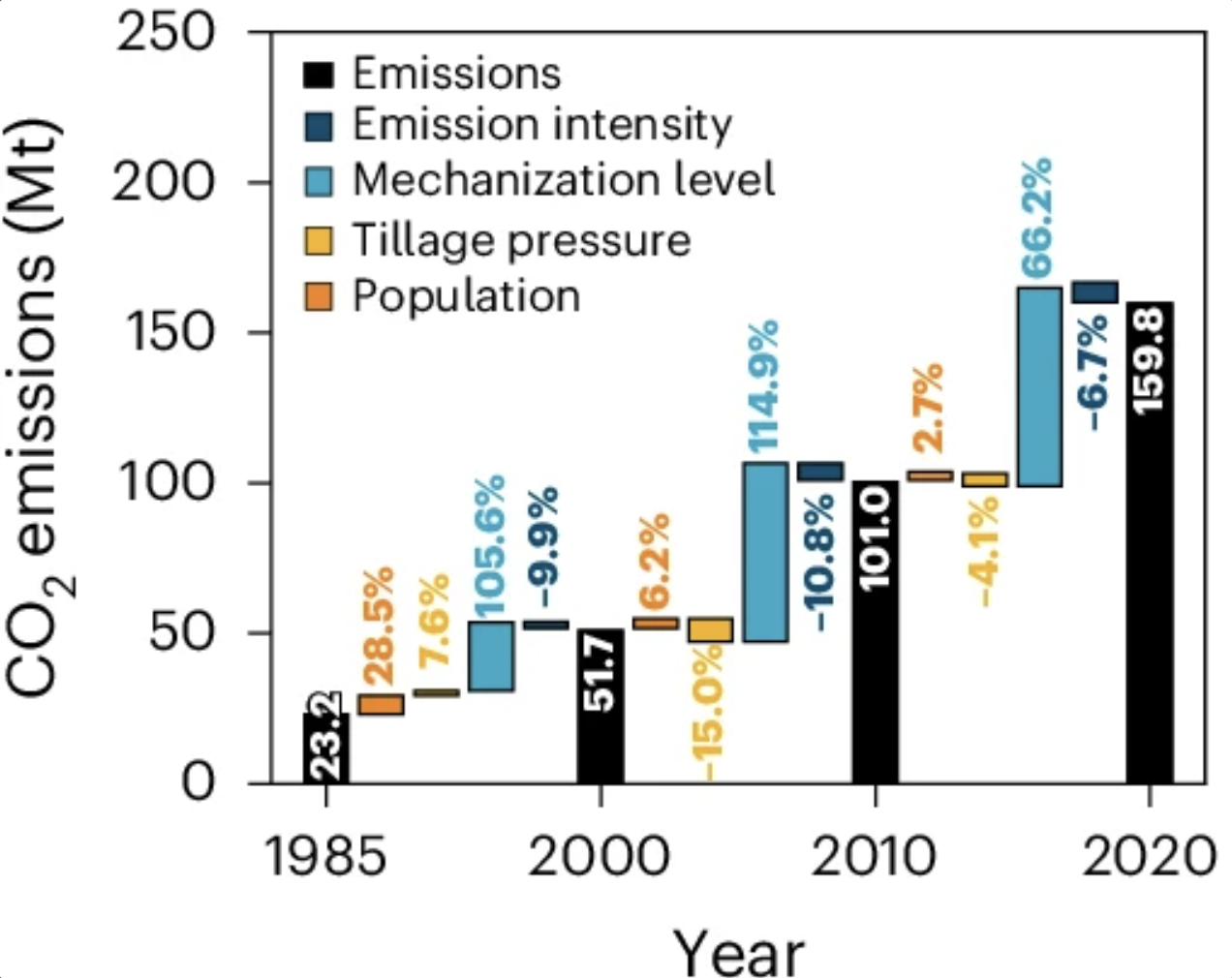
论文指出,在这些因素中,机械化水平的提升“主导”了排放变化。仅这些变化就导致1985年至2000年间排放量增加了约100%。
研究指出,人口增长也是研究区间早期农业机械排放量增长的重要驱动力,但自2000年以来,这一因素的影响有所减弱。
相比之下,作者指出,排放强度的上升总体上反而促使排放减少;而“耕作压力”在研究初期推动了排放上升,但自2000年起则转而起到抑制排放的作用。
碳排放目标
作者指出,根据现行政策,中国致力于“到2035年主要农作物生产实现全过程机械化”。
因此,他们警告称,若农业机械化持续增长且未加遏制,可能会对中国实现“双碳”目标构成挑战。(“双碳”目标指的是中国承诺在2030年前实现碳达峰,并在2060年前实现碳中和。)
作者指出,有效减排需在短期和长期分别采取不同策略,并强调从短期可用性来看,“生物燃料和天然气将在未来十年发挥重要作用”。
作者还认为,从长远来看,可再生能源以及绿氢“具有最大的减排潜力”。
此前研究表明,使用自动化设备、电动拖拉机和可再生能源可以减少90%的农业排放。
里奇表示,她“对农业机械的相对(排放量占比)在2050年能达到20%持一定怀疑态度”。
她补充道:“这基于一个假设,即这些排放大多不会减少,而其他大多数行业排放迅速下降。但如果中国在减少其他排放源,包括卡车等更大型的道路运输排放和其他农业排放方面取得快速进展……那么我预计在农业机械的脱碳方面也会取得显著成效。”

The post 中国农机排放量上升或“阻碍”净零目标实现 appeared first on Carbon Brief.
https://www.carbonbrief.org/translations-rising-emissions-from-farm-equipment-could-hinder-chinas-net-zero-goals/

Next week, diplomats from around the world will descend on Yerevan, Armenia, to negotiate a series of decisions under the UN Convention on Biological Diversity (CBD).
Between 19 and 30 October, 196 parties will gather to hammer out the precise wording of the dozens of legal texts that make up the decisions under the Conference of the Parties (COP) to the CBD.
This year’s summit is particularly significant, as it marks the halfway point between the agreement of the Kunming-Montreal Global Biodiversity Framework and the deadline for achieving its targets.
The CBD has found that countries are currently not on track to meet 22 out of the framework’s 23 targets.
During the fortnight, delegates will also be negotiating decisions relating to the two supplemental protocols to the CBD: the Cartagena Protocol, which covers biosafety; and the Nagoya Protocol, which covers access and benefit-sharing for the use of genetic resources.
(The Cartagena and Nagoya Protocols, which are each governed by a “meeting of the parties”, or “MOP”, have fewer parties than the CBD as a whole, with 173 and 141, respectively.)
Carbon Brief is tracking the progress of countries towards consensus on dozens of negotiating texts using the interactive table below.
The tracker includes texts from the COP, as well as the MOPs for the Cartagena and Nagoya protocols. It also includes draft decisions from the most recent subsidiary body meetings, as these form the starting point for the negotiations in Yerevan.
The CBD has three subsidiary bodies: the subsidiary body on scientific, technical and technological advice (SBSTTA), the subsidiary body on implementation (SBI) and the subsidiary body on article 8(j) and other provisions (SB8J).
SB8J focuses on issues related to the Indigenous peoples and local communities. It was established at COP16 in Cali, Colombia, in 2024.
The first two columns of the interactive tracker list the topic of each agenda item and the relevant body, with subsequent columns including dates, page counts and links to the original documents.
The table is searchable and can be sorted using the arrows in the header.
Areas of disagreement in UN draft texts are denoted by square brackets. Counting the brackets in a particular iteration of a text therefore gives a sense of how far parties are from reaching consensus.
The bracket column is colour-coded, with dark green indicating a low number of brackets and red indicating a high number of brackets remaining.
Texts can also present parties with choices using “options” or alternatives (“alt”), which are counted together in the sixth column of the table.
The key discussions in Yerevan will centre around two agenda items in particular. The first is the global review, which will assess progress towards the GBF and make recommendations for accelerating action.
The second is finance, which can be separated into two parts: resource mobilisation and the financial mechanism. On resource mobilisation, biodiverse global south countries are likely to push for an increased amount of international finance for conservation.
Disagreement over the creation of the financial mechanism led to the suspension of COP16 in Cali in October 2024, as parties failed to find agreement on the mobilisation of finance before the end of the summit.
Global south countries want the establishment of a separate financial mechanism under the control of the CBD; global north countries largely prefer to maintain the existing mechanism, which sits under the Global Environment Facility.
At the resumed session of COP16 in Rome in early 2025, countries agreed on a roadmap that would lead to the establishment of a permanent mechanism.
related
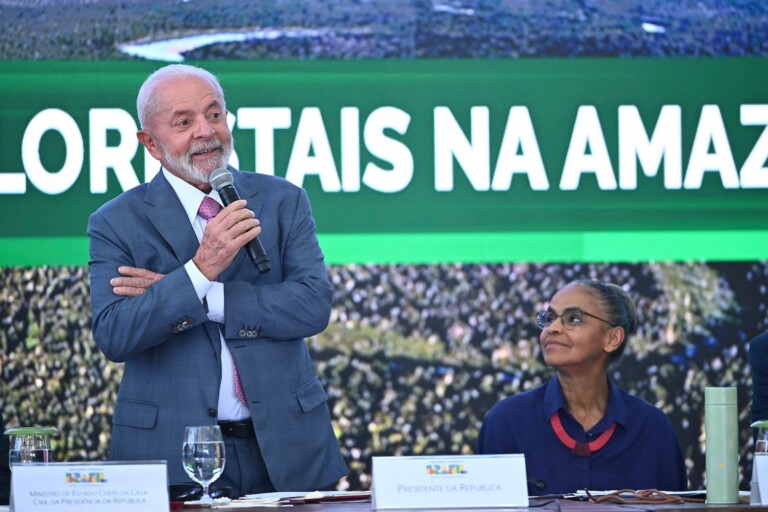
Analysis: Lula presidency saved at least 20,000km2 of Brazilian Amazon since 2022
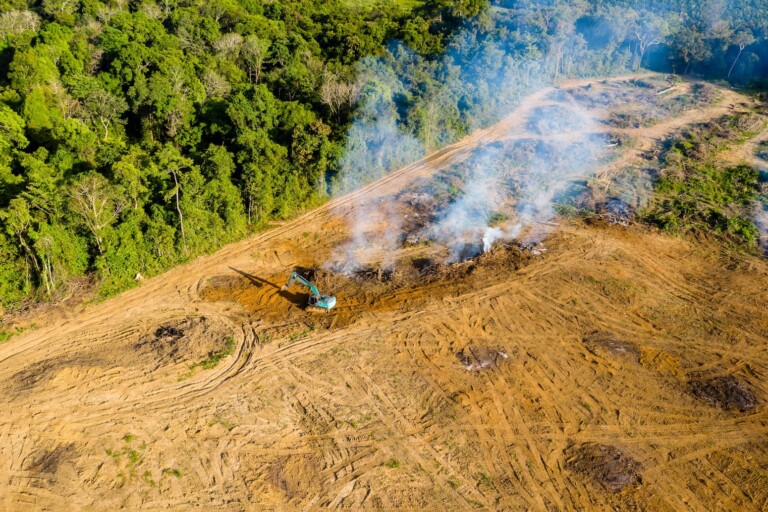
Why land-use emissions have fallen by a third this century – in six charts

Analysis: 84% of nations miss deadline to identify ‘nature-harming’ subsidies by 2025
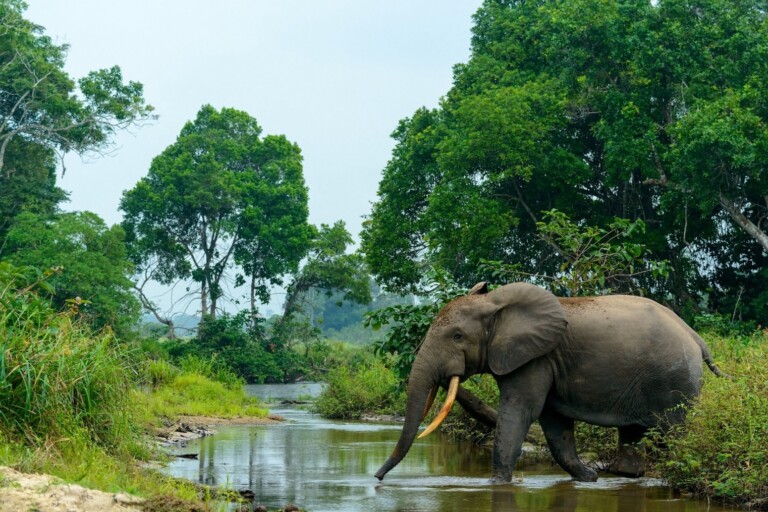
UK withdraws millions in funding from world’s second-largest rainforest in Congo
The post Interactive: Tracking negotiating texts at the COP17 biodiversity summit appeared first on Carbon Brief.
Interactive: Tracking negotiating texts at the COP17 biodiversity summit
A beacon of love
On an outer island of Fiji, two thousand nautical miles from Sydney, is a shining light of hope and resilience for our troubled world.
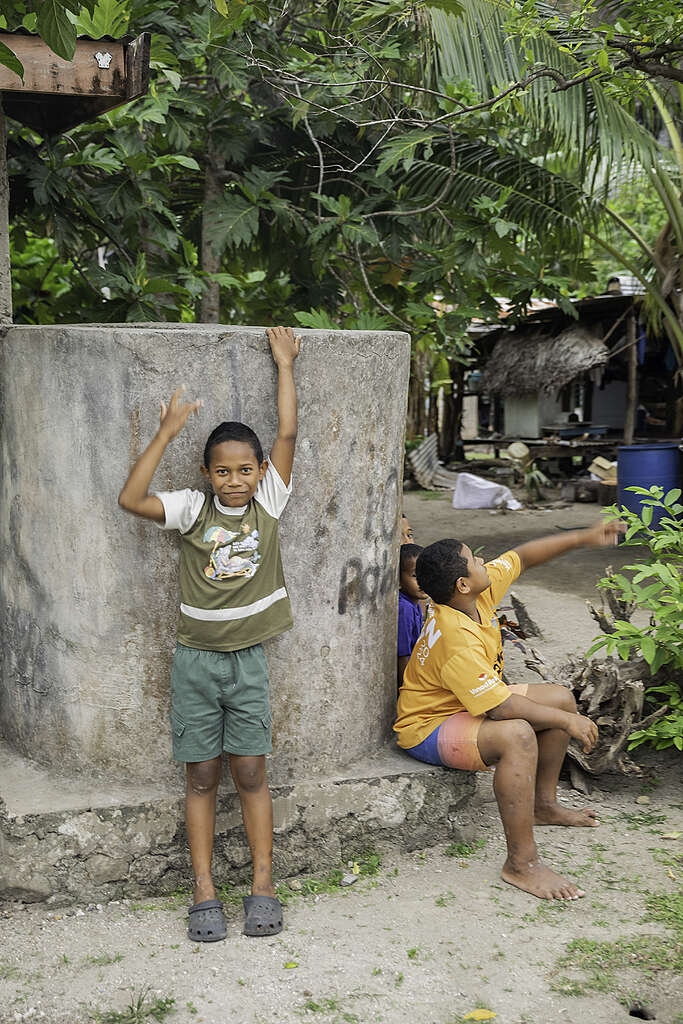
The island of Kioa is home to a Tuvaluan community who migrated from their atoll of Vaitupu in the late 1940s. It is a land of warm hearts, big smiles, and deep cultural roots; a place where the sound of a conch still summons the island together, where islanders paddle out to fish in carved outrigger canoes, and healthy happy children walk barefoot to school.
Here, culture is life. Kioans live sustainably through their traditional knowledge and practices. The island is alive with song, dance and the rhythms of a life tied to the tides, the winds, and the seasons.
Facing the future
Greenpeace has been lucky to have a relationship with Kioa for a number of years now, and we are continually learning from this remarkable community.
Last week, as part of our Voyaging Oceania project, we returned to the island. Our purpose was twofold —- to carry messages from the island to leaders gathering in Nadi this week for the Pacific Pre-COP, and to support the Kioa community in their efforts to improve water security for the island.
Unlike Tuvalu itself, with its eight atolls, Kioa is a mountainous, forested and richly fertile island. It will remain habitable far into the future. Kioans did not initially migrate from Vaitupu due to climate change, but the move was prophetic. They now have a lifeboat.
However, even Kioa faces challenges on our rapidly warming planet, in particular when it comes to water. Climate change is shifting once reliable rainfall patterns. On top of this, the island is already feeling the effect of this year’s intensifying El Niño event, which for Fiji means reduced rainfall and prolonged dry spells.
Right now, fresh water has to be carefully rationed, and is only available for a few hours a day. During last week’s visit aboard our campaigning ship Oceania, Greenpeace was privileged to work with the Kioa community on a new solar-powered water distribution project for the island.