

Dr. Mirianna Budimir is senior climate and resilience expert at Practical Action, and early warning systems lead for the Zurich Climate Resilience Alliance (ZCRA). Francisco Ianni is senior officer for climate resilience initiatives at the International Federation of Red Cross and Red Crescent Societies, and heat hazards lead for the ZCRA. Carolina Pereira Marghidan is a technical advisor at the Red Cross Red Crescent Climate Centre.
Across the world, instances of extreme heat are occurring more frequently than ever. News of temperature records being shattered – all too often accompanied by reports detailing tragic loss of life – appear with frightening regularity. The threats posed by heatwaves are considerable, and due to the climate crisis are expected only to get worse.
It’s hard to think of any aspect of daily life unaffected by an extreme heat event. Health services quickly become overstretched; power systems buckle; and economic productivity grinds to a halt.
A new study by Mercy Corps in the rural region of Madesh in Nepal reveals the impact heatwaves are having on children’s education. “The classrooms feel like furnaces,” said one student. “The air is thick with hot air and foul smell of sweat, the walls trap the heat, and all I can think about is when I can escape.”
Scientists predict global warming of more than 1.5C for 2025-2029 period
Today is Heat Action Day, a global moment for raising awareness of heat risks. While we welcome and encourage the sharing of practical advice for staying safe, there’s so much more that needs to be done.
Knowing when and where these extreme heat events will occur is key to tackling the problem, and early warning systems hold enormous potential to reduce losses, suffering and death across the world. So why do they often fall short?
The fragmented landscape of heat warnings
Given the risks presented by heatwaves, and the relative ease of predicting temperature well in advance, over a hundred meteorological services – more than half of the global total – do provide warnings for instances of extreme heat.
However, many of these are informed solely by maximum temperature, and don’t capture prolonged, intense periods of heat. When the mercury refuses to drop for consecutive days and nights, the dangers are far greater.
This points to a bigger problem with heatwave warning systems: the lack of standardization. Analysis led by the Red Cross Red Crescent Climate Centre has revealed stark inconsistencies in approaches to the monitoring, research and forecasting of heat across the world. This is in no small part due to the differing levels of capacity from region to region; but even the terminology varies wildly, with literally hundreds of definitions of extreme heat in use right now.
Then there’s an even greater concern, which is that many countries – particularly lower-income nations in Africa, Latin America, and parts of Southeast Asia – have no such warning system at all. As is too often the case, those most vulnerable to the risks are the ones with the least protection, with potentially lethal consequences.
Climate change-driven heatwaves hit Delhi’s Red Fort market traders
Break the silos to enhance resilience to heat
Closing these gaps requires the urgent scaling up of effective early warning systems for heatwaves. While national governments and donors have their part to play (particularly in the development and financing of low-cost solutions), improved coordination and cooperation at the global level would give these efforts a much-needed boost.
More standardization will certainly improve matters, and it is promising to see progress being made on this front. The World Meteorological Organization recently published a new definition for heatwaves, one that crucially captures their prolonged nature. In partnership with the World Health Organization, the WMO is also updating its decade-old guidance on heatwave warning system development. And a new handbook of extreme heat indicators, indices and metrics is expected later this year.
To continue this momentum, far greater transparency is required of all governments, institutions and organizations engaged in addressing heat-related risks. This should include the proactive sharing of knowledge, data and best practices, and collaborating wherever possible.
Low-income countries currently without protection from extreme heat events can use this information to rapidly build their capacity to assess their existing vulnerabilities, as well as develop and implement appropriate warning systems. Meanwhile, those already using such systems can make the necessary improvements to increase their effectiveness.
No one-size-fits-all solution for communities
A more coherent, coordinated approach to heatwave warning systems will be a massive step in the right direction. However, as with any such intervention, steps must be taken to avoid an overly top-down approach. If invaluable community insights go unheard, and potentially life-saving messages don’t reach the people they’re designed to help, we won’t see anything close to the levels of progress needed.
Only by taking a people-centred approach can the true potential of early warning systems be realized. Alerts need to be accessible and comprehensible to even the most remote and marginalized populations, and contain practical guidance informed by detailed, locally led risk assessments and response plans. The best way to do that is to ensure communities are active participants at every step of the process.
Women bear brunt of South Sudan’s heatwave made worse by climate change
One major flaw with the top-down model is that it rarely acknowledges how heat affects different people in different ways. Rather than issuing a blanket alert, early warning systems must target their messaging to those most at risk – be it pregnant women, elderly people, or outdoor labourers.
Where communities lack access to air-conditioned spaces and other opportunities for respite, that must also be taken into account. In every case, information on the likely impact of the heat, combined with guidance on how to mitigate it, is essential.
After over a decade enhancing resilience to floods around the world (including via warning systems), the Zurich Climate Resilience Alliance is applying the same community-centred approach to tackling heatwaves. In Pakistan, Senegal, the Philippines and more, we’re partnering with communities and national actors to conduct in-depth assessments and provide country-specific recommendations to enhance Heat Early Warning Systems.
No time to lose
By necessity, the world is beginning to act with more urgency to address the risks presented by heatwaves; but as life-threatening heat events increase in both frequency and intensity, we can’t afford to wait for the next heat-related tragedy before taking action.
This year, Heat Action Day falls on the opening day of the Global Platform For Disaster Risk Reduction in Geneva, at which Early Warning Systems will take centre stage. This is an unmissable opportunity to collaborate across continents and sectors, as part of a renewed commitment to a world in which all are protected from heatwaves and other climate hazards by effective and equitable early warning systems.
As temperatures rise, so too must our ambitions.
The post Early warnings for heatwaves can save lives – and we need them now appeared first on Climate Home News.
Early warnings for heatwaves can save lives – and we need them now

Next week, diplomats from around the world will descend on Yerevan, Armenia, to negotiate a series of decisions under the UN Convention on Biological Diversity (CBD).
Between 19 and 30 October, 196 parties will gather to hammer out the precise wording of the dozens of legal texts that make up the decisions under the Conference of the Parties (COP) to the CBD.
This year’s summit is particularly significant, as it marks the halfway point between the agreement of the Kunming-Montreal Global Biodiversity Framework and the deadline for achieving its targets.
The CBD has found that countries are currently not on track to meet 22 out of the framework’s 23 targets.
During the fortnight, delegates will also be negotiating decisions relating to the two supplemental protocols to the CBD: the Cartagena Protocol, which covers biosafety; and the Nagoya Protocol, which covers access and benefit-sharing for the use of genetic resources.
(The Cartagena and Nagoya Protocols, which are each governed by a “meeting of the parties”, or “MOP”, have fewer parties than the CBD as a whole, with 173 and 141, respectively.)
Carbon Brief is tracking the progress of countries towards consensus on dozens of negotiating texts using the interactive table below.
The tracker includes texts from the COP, as well as the MOPs for the Cartagena and Nagoya protocols. It also includes draft decisions from the most recent subsidiary body meetings, as these form the starting point for the negotiations in Yerevan.
The CBD has three subsidiary bodies: the subsidiary body on scientific, technical and technological advice (SBSTTA), the subsidiary body on implementation (SBI) and the subsidiary body on article 8(j) and other provisions (SB8J).
SB8J focuses on issues related to the Indigenous peoples and local communities. It was established at COP16 in Cali, Colombia, in 2024.
The first two columns of the interactive tracker list the topic of each agenda item and the relevant body, with subsequent columns including dates, page counts and links to the original documents.
The table is searchable and can be sorted using the arrows in the header.
Areas of disagreement in UN draft texts are denoted by square brackets. Counting the brackets in a particular iteration of a text therefore gives a sense of how far parties are from reaching consensus.
The bracket column is colour-coded, with dark green indicating a low number of brackets and red indicating a high number of brackets remaining.
Texts can also present parties with choices using “options” or alternatives (“alt”), which are counted together in the sixth column of the table.
The key discussions in Yerevan will centre around two agenda items in particular. The first is the global review, which will assess progress towards the GBF and make recommendations for accelerating action.
The second is finance, which can be separated into two parts: resource mobilisation and the financial mechanism. On resource mobilisation, biodiverse global south countries are likely to push for an increased amount of international finance for conservation.
Disagreement over the creation of the financial mechanism led to the suspension of COP16 in Cali in October 2024, as parties failed to find agreement on the mobilisation of finance before the end of the summit.
Global south countries want the establishment of a separate financial mechanism under the control of the CBD; global north countries largely prefer to maintain the existing mechanism, which sits under the Global Environment Facility.
At the resumed session of COP16 in Rome in early 2025, countries agreed on a roadmap that would lead to the establishment of a permanent mechanism.
related
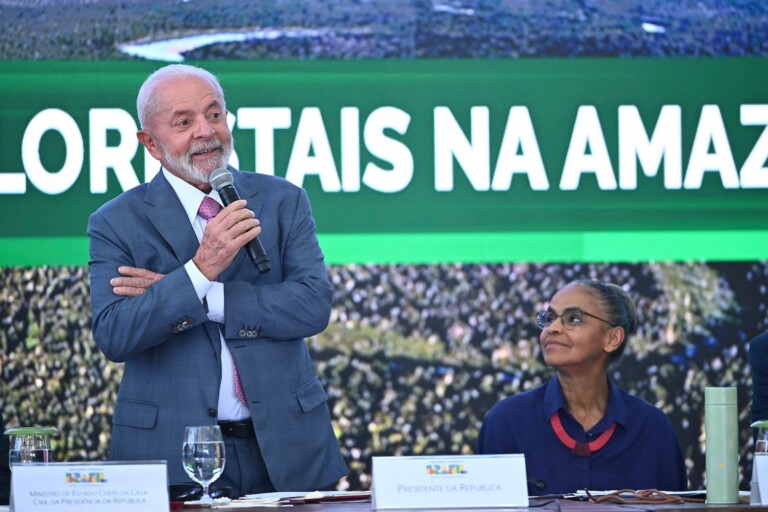
Analysis: Lula presidency saved at least 20,000km2 of Brazilian Amazon since 2022
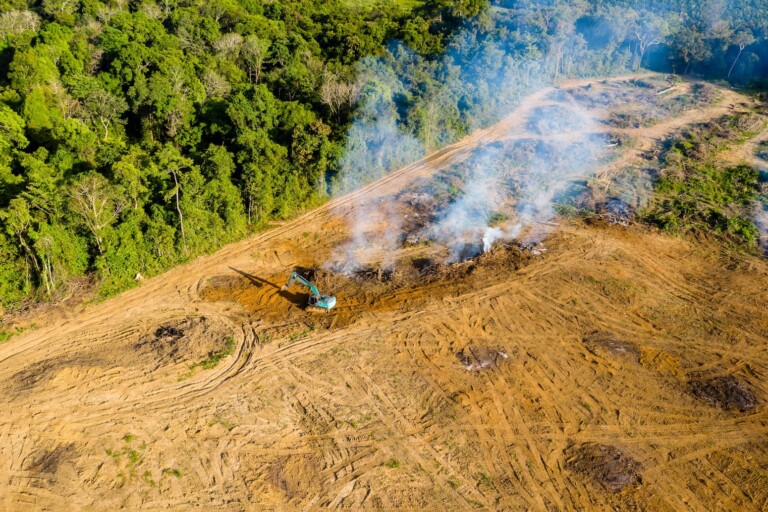
Why land-use emissions have fallen by a third this century – in six charts

Analysis: 84% of nations miss deadline to identify ‘nature-harming’ subsidies by 2025
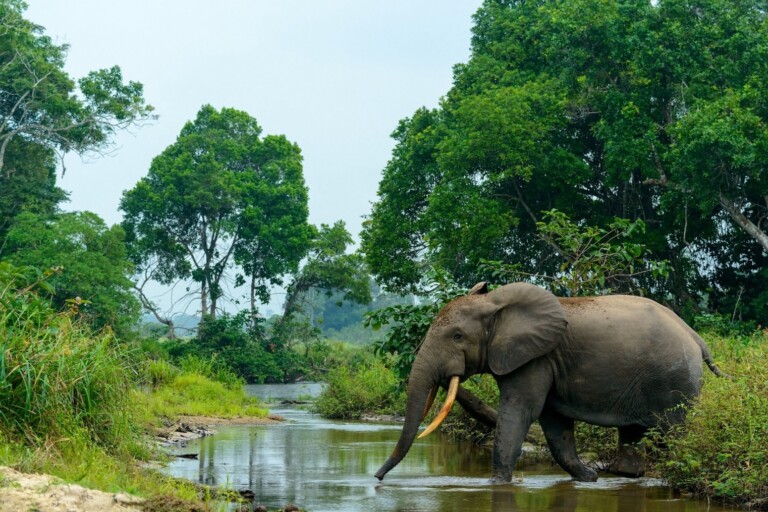
UK withdraws millions in funding from world’s second-largest rainforest in Congo
The post Interactive: Tracking negotiating texts at the COP17 biodiversity summit appeared first on Carbon Brief.
Interactive: Tracking negotiating texts at the COP17 biodiversity summit
A beacon of love
On an outer island of Fiji, two thousand nautical miles from Sydney, is a shining light of hope and resilience for our troubled world.
The island of Kioa is home to a Tuvaluan community who migrated from their atoll of Vaitupu in the late 1940s. It is a land of warm hearts, big smiles, and deep cultural roots; a place where the sound of a conch still summons the island together, where islanders paddle out to fish in carved outrigger canoes, and healthy happy children walk barefoot to school.
Here, culture is life. Kioans live sustainably through their traditional knowledge and practices. The island is alive with song, dance and the rhythms of a life tied to the tides, the winds, and the seasons.
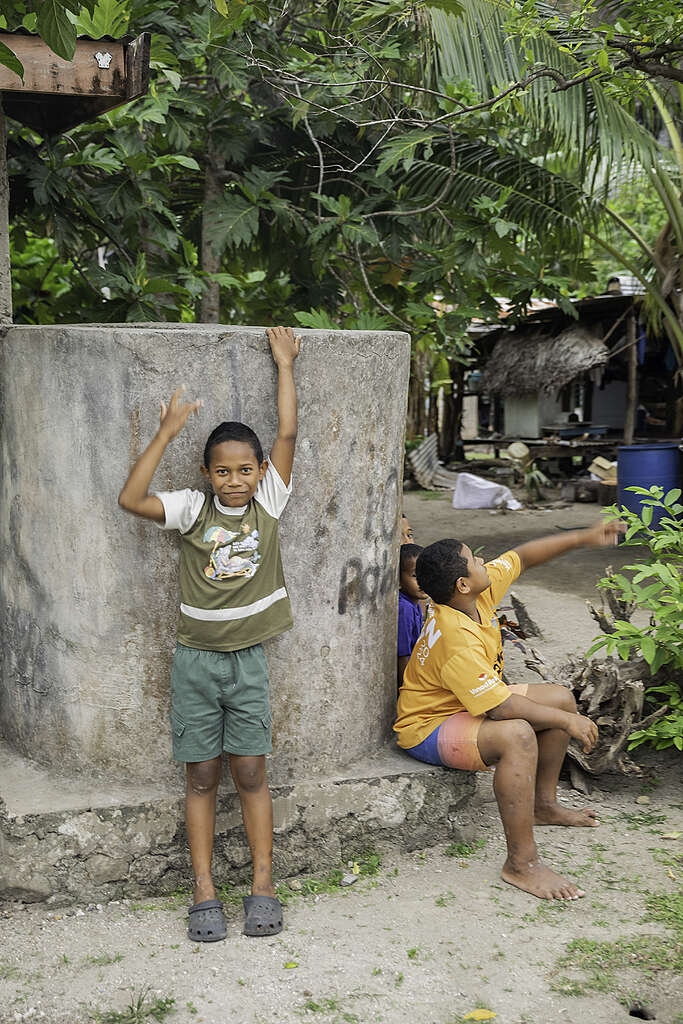
Facing the future
Greenpeace has been lucky to have a relationship with Kioa for a number of years now, and we are continually learning from this remarkable community.
Last week, as part of our Voyaging Oceania project, we returned to the island. Our purpose was twofold —- to carry messages from the island to leaders gathering in Nadi this week for the Pacific Pre-COP, and to support the Kioa community in their efforts to improve water security for the island.
Unlike Tuvalu itself, with its eight atolls, Kioa is a mountainous, forested and richly fertile island. It will remain habitable far into the future. Kioans did not initially migrate from Vaitupu due to climate change, but the move was prophetic. They now have a lifeboat.
However, even Kioa faces challenges on our rapidly warming planet, in particular when it comes to water. Climate change is shifting once reliable rainfall patterns. On top of this, the island is already feeling the effect of this year’s intensifying El Niño event, which for Fiji means reduced rainfall and prolonged dry spells.
Right now, fresh water has to be carefully rationed, and is only available for a few hours a day. During last week’s visit aboard our campaigning ship Oceania, Greenpeace was privileged to work with the Kioa community on a new solar-powered water distribution project for the island.
Designed and led by the island, the project involves using a solar pump to move water from a reliable source to a storage tank and then using gravity to distribute the water around the village.
It was a lesson in how local knowledge and ingenuity can be the backbone of today’s climate solutions. To build a dam around the source, the local community knew the exact spot where they could gather gravel at low tide to mix with the cement. They took only what was needed, knowing that all resources must be carefully conserved. Kioa has no roads and no machinery, and it was an all-of-island effort to carry the materials up to the project site, including many heavy bags of sand and rock.
Such projects truly bring to life the vision of a resilient, locally-led, fossil fuel free Pacific.
Gallery photos taken by Raeed Ali, Pacific Community Mobiliser at Greenpeace Australia Pacific