

Weather Guard Lightning Tech

Vestas Wins Big 1.1 GW Order, Videoray Underwater Workhorses, Wind Draws Extended Environmental Reviews
The Uptime Wind Energy podcast provides in-depth discussions about the latest news and developments in the wind energy industry. In this episode, the hosts Allen Hall, Joel Saxum, and Philip Totaro dive into topics including Vestas’ record 1.1 GW turbine order for a project in New Mexico, proposed federal regulations to streamline environmental reviews for some renewable projects while excluding wind, and Avangrid’s failed acquisition of PNM Resources. They also discuss underwater drone technology from VideoRay used for offshore wind farm inspections. Throughout the wide-ranging conversation, the hosts analyze these stories and more with their engineering, project management, and industry expertise, offering listeners valuable insights into the wind sector. This episode exemplifies why Uptime Wind Energy is an essential listen for anyone interested in or working in the renewable energy field.
Sign up now for Uptime Tech News, our weekly email update on all things wind technology. This episode is sponsored by Weather Guard Lightning Tech. Learn more about Weather Guard’s StrikeTape Wind Turbine LPS retrofit. Follow the show on Facebook, YouTube, Twitter, LinkedIn and visit Weather Guard on the web. And subscribe to Rosemary Barnes’ YouTube channel here. Have a question we can answer on the show? Email us!
VideoRay – https://videoray.com
Pardalote Consulting – https://www.pardaloteconsulting.com
Weather Guard Lightning Tech – www.weatherguardwind.com
Intelstor – https://www.intelstor.com
Uptime 197
Allen Hall: Phil, did you see that in Australia during a tennis tournament that they had a deadly snake appear on the court?
Philip Totaro: Yes. I know.
Allen Hall: Rosemary’s not here to defend herself, but, oh my gosh, she swears to me that when you walk around Australia, you’re not going to be attacked by a poisonous snake, and yet There it is, headline news in the United States, poisonous snake at turn, at tennis tournament.
So it was like the world’s most deadliest snake, whatever that snake is. Joel, do you know what that snake is? The world’s deadliest snake?
Joel Saxum: It was the second most, and it was like a brown. Some kind of pit, Viper Brown something. I don’t remember what it was.
Allen Hall: And there it was right in the middle of this to tennis tournament just sitting there.
Philip Totaro: Allen, you must not watch tennis that often because when they used to have the tournament in Miami before they moved it into the Hard Rock Stadium they used to have like lizards in invading the tennis courts and stuff like that. So yeah it’s not uncommon for that sort of thing to happen.
But lizards are nice. Most most of the time they won’t kill you.
Allen Hall: But in Australia, they totally will. Yeah, and we were watching you guys watch the Mike Rowe show? I like Mike Rowe. Dirty Jobs, there you go. And he was milking dangerous spiders, poisonous spiders. And the whole time, you got these massive spiders, and on the whole, I’m just watching this thinking, That’s what’s in Australia.
That’s what’s in Australia. Oh my god, that’s what’s in Australia. I, can I get that out of my head? That’s a dangerous place. Even though Rosemary swears it’s nice. I’m sure that it is. And Matthew Stead From Ping says the same thing, we’re gonna have to go, Joel. I hate to say it, but I’m not gonna be the first one to step off the airplane.
I’m gonna have someone go ahead of me. So my
Joel Saxum: brother lives in Alaska, and he told me this one time, he said, You don’t have to be the fastest one, you just gotta be faster than your buddy.
Allen Hall: Australia has become a renewable energy center. Of course, Rosemary points out that they’re full of solar, and they have Essentially a renewable energy grid at this point.
But the wind industry is growing out there. There’s been a lot of movement out that way. And I hope Vestas installs a plant out there. And this episode we’re talking about the advancement of Vestas where they had a huge project announcement and expanding their factories in Colorado. So this is going to be interesting because.
As Phil has pointed out, Vestas is making a move and it is big, so stay tuned.
Vestas have received its largest order ever in the U. S. market, 1. 1 gigawatts of turbines, which is about 242 turbines of the V163 4. 5 megawatt machines. That that are going to be built in Colorado for Pattern Energy’s Sunzea Wind Project in New Mexico, so right next door to Colorado. The turbines won’t have very far to go.
It is the largest order onshore for Vestas ever. It includes all the supply, delivery, and commissioning of the turbines and a, as Vestas has proven out, a multi year service agreement. So everybody around Pattern and Vestas is super happy. You remember Vestas had put some money in about 40 million into the two factories in Colorado, one’s a blade factory, one’s in a cell factory to expand them for this particular product line.
So this is working out for Vestas quite lovely at the moment, Joel. It seems the 4. 5 is going to be a pretty useful machine as the repowering efforts and new projects are developed in the United States.
Joel Saxum: Yeah New Mexico is a fantastic place to put a lot of these out too, right? Because where this project is sited at is It’s very rural.
It’s wide open spaces. It’s just if you’re familiar with looking at West Texas, it’s an extension of West Texas, basically. So these are some big turbines, right? These are the ones that you see from even a long ways away and say, wow, that thing is freaking massive. They’re going to have an 80 or that 163 meter rotor on them.
They’re going to have an 80 meter blade or a 79 meter blade on them. So they’re going to be some big machines. But the whole project here is the interesting thing. Because Sun Zia has been, that idea of a project has been around for a long time and that was always focused on the transmission part of it, right?
It was bringing this power from this idea of this development over towards Phoenix, crossing to Arizona and to feed that southwestern portion of the United States. And to me, I guess it was, maybe I wasn’t thinking correctly or whatnot, and suddenly they were like, Hey, Sun Z is good to go. Also, 1.
order with it. Congrats to Vestas and Pattern, really, for putting this thing together and finally getting it across the finish
Allen Hall: line. Phil, this is a big project for Pattern, isn’t it? Yeah, it’s
Philip Totaro: part of a 3. 5 plus gigawatt project. They’re spending 11 billion dollars on the entire thing, including the transmission.
Also went under the radar last week after Vestas made their announcement was that GE also made their announcement that They’re also going to be supplying some turbines. I don’t, actually, it’s funny because I don’t know if it’s actually for the rest of it the remaining 2.
4 gigawatts or not but there are three phases of this project, so it’s potential that Pattern may also want to or has yet to announce and explore a relationship with Siemens Gamesa or Nordex on that. If that’s what they’re doing, but in the meantime, yeah this entire project is it’s gonna be probably the biggest a onshore multi phase project outside of China China, there are places in.
there are Various deserts there where they’re doing something similar, they’re setting up just massive arrays of turbines and solar panels and everything. Outside of China, this is going to be the biggest onshore project in the country, certainly the country and the rest of the world.
So
Joel Saxum: Allen, I want to ask you a question on this one. Now, of course we can, from the armchair, we can sit and say, okay, this is going to be a three, three and a half gigawatt project. That’s crazy, right? The largest single phase installation in the U S is about one gigawatt. So this is three times. Of course it’s multi phase.
But we know that you probably can’t turn to Vestas and say, Hey, we need 700 V1 63s in the next 18 months. They’re not going to be able to do it. So we know that you need to probably, like you said, Phil, get some GE turbines in there, get some Vestas turbines in there. There might even be some other suppliers thrown in there.
So we know that’s just a reality from the supply chain standpoint. But on an engineering side, what does that do for the project?
Allen Hall: Holy hell it’s gonna be a big, complicated project, right? Here’s my concern about this whole project is, you’re putting all your money on the table, and you’re spinning that wheel.
A lot of these turbines haven’t been that well examined, right? And, yeah, and New Mexico’s a tough place. That’s what worries me. A lot of lightning, a lot of everything in New Mexico. The winds are strong, right? That’s why they’re there. You gotta wonder if something were to be bad on the turbine, boy, it would just explode.
This is the Siemens energy problem, right?
Joel Saxum: Man, yeah, it’s a complicated geographically, right? Because you have mountain mountains to the south in Mexico you have mountains that subtend the middle of Or the western side of this project in the middle of New Mexico And then you have that hot weather going off to the plains like it’s a complicated weather area as well strong winds Of course, that’s fantastic for the wind industry.
We deal with that all the time But also the tendency for microbursts and hail and really strong convective storms in that area.
Allen Hall: Yeah, the weather there is not great. The winds are good, but the big storms hit that part of New Mexico and that worries me. There’s just a lot of unknowns here. I would feel a lot more comfortable if this ended up in Oklahoma or Kansas or even Iowa, some places that we have a better understanding of.
Something this big in New Mexico. I don’t know
Joel Saxum: if we’ve been there before. I do think that the size of this wind farm complex, we’ll call it, has the ability to literally fuel an entire town. You’re gonna If you’re gonna have 700 some odd massive turbines, the workforce that’s going to be needed, you’re gonna need a hundred people out there regularly working on the thing that’s gonna, that are gonna be permanent residents of this area, which is a very rural area.
New Mexico is challenged For rural development and and job. So this is, it’s going to be a boon to that corner.
Allen Hall: To Phil, does this make sense in terms of the proximity? Is that part of it, of the Vestas production plants being pretty close and the tower plants are right there in Pueblo, I’m assuming.
So they’re not very far from the border of New Mexico. Is it a. Closeness that’s playing into the, to the part of this transaction that, that the factory is right up the street. Part of it,
Philip Totaro: certainly. And keep in mind that Vestas obviously sold the tower manufacturing to CS Wind and CS Wind actually just released some new projections, financial projections based on presumably the fact that they’re getting, a lot of these and other of the Vestas turbine orders.
Vestas now has, I believe, something on the order of 3 to 3. 5 or 3. 6 gigawatts worth of V163 orders now globally. Which is great for that platform. Although, like you say part of it’s unproven, certainly the blade is a new blade. It’s based on their pre existing technology, but it’s not a product that’s been out there.
GE, my understanding is that they’re going to be using the 2. 8 127s and, 2. 3 to 2. 5, 116s. Nothing that hasn’t been previously experienced there again, the question is would a company like Pattern Energy take a punt on the Nordex N 155 or N 163 or are they gonna, I don’t know what happens with Siemens Gamesa, if they’re going to be prepared to start supplying turbines.
Now that we’re in 2024, happy new year, everybody we’re, are, is Siemens Gamesa going to start selling and supplying turbines again this year for delivery later this year and into next year, which is that project is going to be under construction for. They got a lot to, they got a lot to build.
Allen Hall: Phil, there’s two pieces to this that I’m trying to learn about. One is how fast is Vestas going to try to produce those turbines? Are they really going to try to ramp up these factories with the 40 million they’ve invested in? To then rapidly turn around these turbines, or they can try to spread it out.
One, two, Siemens is in trouble. If they’re not able to get into some of these bigger projects, particularly on shore, which is a strength for them or has been historically. Does Vestas, which is looking very aggressive at the moment, really push Siemens out of the U. S. market, or try to, and then shove their way into that broader North American, South American marketplace?
Philip Totaro: If that, if the latter happens, Allen, what happens is Nordex basically takes over the number three spot in terms of U. S. wind turbine OEMs. So that would be interesting, but Nordex doesn’t have necessarily as competitive of a product offering it’s it, look at whatever metric you want the, Megawatt hours produced, the capacity factors, the and some of it is, they’re unfortunately disadvantaged by not having access to the best project sites, so they can’t really shine.
There’s nothing necessarily inherently wrong with the N149 or the N155 or 163 product platform. It’s actually a pretty solid product. But again that’s part of the issue is they’ve never really They’ve never even if Vestas starts taking business away from Siemens, and orders away from Siemens Gamesa, does that necessarily allow somebody like Nordex to flourish, or does it open up?
Is it just gonna be a knockdown drag out between GE then, a bunch of other small players also want to domesticate production in the United States. Does this open the door for them if they’re willing to come in and spend money? That’s, it’s a complicated, that’s a very complicated thing.
The other aspect of this, going back to your earlier question, was Yes, the proximity for the Vestas factories plays into them getting the supply, but also with these 45 X manufacturing tax credits that are providing a domestic content bonus, shall we say for domestic sourcing of some of the components.
That’s going to do a lot of good things both for Vestas and for Pattern because they’re going to be getting a pretty you’re talking about what, about, 550, 000 per turbine if they domestically source all the components that they can under that, that tax credit program.
So that’s a pretty decent chunk of the cost of the
Allen Hall: turbine. I want to. Tie in the Nordex piece because they did sign that extension with Eris down in Brazil to make blades down there. I’m wondering if that’s their fallback position, is to crank up Eris to make blades if they want to start going after some Siemens projects.
Philip Totaro: They’re, they have enough orders in Brazil and in adjacent markets in South America that the Eris thing is good. The question is, will Eris come, cause Eris has been talking about wanting to come to the U. S., now that we have this proposed regulations for the 45 X manufacturing tax credit. I wonder if that doesn’t, I think we’re going to see, for instance, I was mentioning this before off air, like companies like NGC with making your boxes in China, anybody.
That G. E. Vestas, Siemens Gamesa, or Nordex is using that’s a foreign company is going to want or probably need to domesticate some of their production capacity in the U. S. So that these companies can take advantage of it, because one of the provisions of this is that you can’t just import foreign made goods and just assemble it.
That doesn’t qualify fully for That bonus, tax credit. So the question here is, does Ares, does this relationship that Nordex and Ares have in Brazil, does that then help facilitate the relocation of Ares to, set up a factory in the U S either
Joel Saxum: way. I think that there’s an interesting play here.
Like Phil, you’re talking, we’re talking about market share with Siemens and all these different things. In the last I don’t know, man, two weeks, up until the end of the year, it was like Vestas, watching LinkedIn, it was like Vestas had held all of their cards right until the end of the year, and they were like, Order for 400 gigawatts, order for 1.
1 400 megawatts, Boom. they do That, though. they Always announce, like, all their orders in bulk, at the end of every quarter, financial quarter. But this was actually, they they announced a total of 17 gigawatts, but it wasn’t all Firm Orders, it was something like 12.
Philip Totaro: 8 gigawatts of Firm Orders and then the rest of it was all preferred supplier and conditional orders. But it was still, it’s a huge order haul. And again with some degree of certainty, again, they haven’t finalized these 45x tax credit rules in the U. S.
And we don’t know what the profitability of some of these orders is for places in South Korea and throughout Europe with some of these offshore orders, but this is, it’s still a big deal. That’s a lot of orders to be able to announce in one quarter. And if you go back to November the CEO was basically hinting at the fact that they were going to drop all these orders, and it was going to be a big end of the year and
Joel Saxum: it turned out to be.
The interesting take from this whole thing that we’ve been talking about here for the last ten minutes is the fact that the IRA bill, as designed, A year and a half ago, is starting to do its job.
Allen Hall: Is it? Or the Treasury Department doing it?
Joel Saxum: To be, like, like Phil was saying, if you’re using an NGC type deer box or someone from China, there it’s, will force them to be competitive, it’ll force them to do some manufacturing in the United States.
That was the point of the IRA Bill in
Allen Hall: general. Yeah, I’m still a little dubious, because the time frame is too short. so if you’re Trying to build a factory in the United States and get up and running, that’s going to take two years minimum, especially for something that’s complicated as NGC.
So The chances of that happening, I think, are small. It’s going to be those that already have factories in place, like Vestas or GE, that could easily spool up something pretty quick.
Philip Totaro: Yes and no, because like I mentioned before, if they’re already qualified for the 48C manufacturing tax credit from a previous PTC authorization.
They can’t double dip on the 45X. This, the 45X and the IRA bill is intended to facilitate new build factories in the United States. The question though is, there these credits go until 2030. At the current rates that they have. And it, again, it works out to be about 120, 000 per megawatt for an onshore turbine, 140, 000 per megawatt for an fixed bottom offshore turbine, and 160, 000 per megawatt for a floating offshore turbine, however.
As Allen just mentioned, you’re talking about a scenario where it’s going to take, I’ll give them the benefit of the doubt and say 18 months, but you’re talking about a timeframe where you’re not even really able to pull the trigger because they took so much time to clarify these regulations and they’re still not even finalized yet.
Now we’re losing opportunity and we’re losing momentum on being able to take advantage of the domestication of the. Manufacturing facilities. The other question is, if this only really runs out to 2030 and then starts ramping down, and by 2032, the 45x tax credits go away, How many companies are going to be able to secure enough of an order book to be able to justify the factory investment, because you’re talking about if you’re trying to do a, if you’re a gearbox vendor like NGC and you’re trying to domesticate production of everything that, that, GE is going to need from you and keep in mind that NGC is not their only vendor, but you’re going to you’re going to need at least.
like Three gigawatts worth of orders to be able to pull the trigger on what is going to end up being like a three hundred to four hundred million dollar factory, give or
Allen Hall: take. that’s the Problem. But if somebody is looking to put U. S. content, and I do know of a company that’s based in the United States that manufactures parts for wind energy.
That’d be Weathergard, Lightning Tech, we’re in Massachusetts and we make the thing here. That’s right. Someone Can actually pick up the phone and call us because we’re it. We’re probably one of the few that actually is a vast majority. I wouldn’t say a hundred percent, but it’s damn close to it. U. S.
content. We’re easy. I know we’re s only we’re small. But still. That’s a good plug. Come on, Phil. Does it include Intel
Philip Totaro: Store, too? we Provide digital services any anywhere in the world. Doesn’t that
Joel Saxum: count? Phil is manufacturing insights from the data.
Allen Hall: Hey, uptime listeners. We know how difficult it is to keep track of the wind industry.
That’s why we read P. E. S. Wind Magazine. PES Wind doesn’t summarize the news. It digs into the tough issues, and PES Wind is written by the experts. So you can get the in-depth info you need. Check out the wind industry’s leading trade publication, PES wind@pswind.com.
Joel Saxum: So one of the things I talk about on the podcast fairly regularly is offshore wind operations because it’s a mystery. if You’re, looking at an onshore wind farm, or if you’ve been in oil and gas, you’ve been in construction industry, you’ve seen people build highways, these are massive infrastructure projects, but you see what’s going on.
You see a dozer driving, or a surveyor out there, or some people moving drainage stuff around, you can see all of that. But when you get to offshore wind, you can’t see any of that. You see a couple of vessels on the surface driving around, but you cannot see anything that’s going on underneath them. And that’s where all the work is happening.
VideoRay is is a part of that solution. Now, they’re in PES Wind Magazine this, this quarter talking about off, offshore wind inspections. Now, They don’t just do inspections with their equipment on the operation side. They do it during development, during construction and during operations.
So think of what a VideoRay offers as a solution being a basically a drone that you see in the air. Again, I’m trying to relate it to something everybody’s seen except for much more expensive and something that swims and swims sub C. The, it’s not, I’m not going to say it’s trivial to build a drone.
But it’s not super difficult. The concepts are pretty easy. Flying in air and communications and positioning is fairly easy compared to sub C because when you go sub C, you cannot communicate very well. You cannot position very well. Cameras are hard to use because contrary to popular belief, not everything sub C looks like the great barrier reef that’s beautiful and blue and clear.
So there’s a lot of. Technology that goes into these kits that they send subsea. So in the industry, they’re called ROVs. We think about them as remotely operated vehicles and VideoRay makes a couple of different models, but they’re in the inspection class. So there’s a couple of different ones.
There’s like your hobbyist that looks like a, a drone that’s smaller than you have the inspection class ROVs, which is what VideoRay makes. That are like 20 to 40 pounds or so, about the size of, I don’t know, like a cooler? Like a Yeti cooler or something like that? And then you go to the next level of things, which is like an intervention and work class ROVs.
Work class ROVs can be the size of a truck. they’re Freaking huge. but These pieces of kit that they have, they can do all kinds of things. They can inspect things visually. They can inspect with sonar. They can put manipulators, little hands on them. They can grab things off the floor. Or off the seafloor.
They can test with NDT probes. So you can check the thickness of metal. You can check cathodic protection on things, which is basically the kind of metal blocks you put subsea to combat the seawater and alkaline steel interact, or metal interactions. So they can do a lot of things. if you’re On an SOV offshore or on any kind of construction vessel, these Little ROVs are out there.
They’re watching rock dumps to make sure that they’re laying in the right place. They’re watching cable inspection. They’re doing cable inspections. They’re watching cable hookups. Sometimes the work class ROVs down there and the inspection class is standing off just to watch what they’re doing.
They’re mapping things. They can map rock dumps, map the surface of the floor. They can do visual inspections. They can create. 3D models of monopiles and, all kinds of things subsea, so they’re very powerful tools. I think that VideoRay’s got about 4, 000 of them. When I was in oil and gas, VideoRay was a company that you thought of all the time.
Hey, we gotta get this inspection class over. Yeah, grab one of those VideoRay. Boom, throw that on board. That was something we always used. They’re using the defense space, oil and gas, civil construction, everything offshore. Inspecting nuclear plants, all kinds of cool stuff. so Think of them as a drone in the sky, but underwater.
However, they’re much more advanced. VideoRay’s Starting to use AI to do station keeping and model building and inspections. Because if you’re driving down a pipeline with a ROV, you’re just going pipe joint, oop, little bit of free span there. It’s very monotonous and very manual for the operator to do, but with AI, now you can Automate a lot of those tools. The last bit I would say here, and this is a, an idea because we’re always looking for what could be better in the wind industry. What’s innovation. What’s cool. If I was inspection company that had people mobilized around the world with drones, inspecting blades, cells, transition pieces offshore, which are part of regular tenders now.
I would also start to include inspecting subsea at the same time. And here’s the reason. You’re already there, you already have specialized employees out there, and the vessel is standing by while you fly with the drone. You might as well throw the ROV overboard and do the subsea portion of the inspection at the same time.
Now you can deliver the client value add. So you’ve got an inspection from the tip of the blade all the way to the seafloor. And you’re using the same people and the same vessel time. And that’s the big thing that costs offshore. So if you want to do that as an inspection company, call me,
Philip Totaro: I’ll walk you through.
So it sounds like there could be some acquisitions in the the in remote inspection space there should be. And if
Joel Saxum: this is the big thing to if you’re a company that has a platform, that’s looking at assets that, you have like sky specs is the nice horizons platform or. Everybody at Perceptual Robotics has their platform and ZiteView has their platform and Thread has their platform.
You should be putting in a module in that to manage that subsea data at the same time. And
Allen Hall: if you want to stay abreast of all the cool technology pieces in the wind industry in 2024, you better get the Q4 edition of PES Wind from 2023 because it is full of cool technology and it has a lot about what’s about to happen.
So you’re going to see a lot of technology in PES Wind in this latest edition. You’ll see it out in the field, come up in a couple of months when it warms up, up in the Northern Hemisphere. So check it out. You can go to PESWind. com. You can get a free, download and you can read about all the things we, we talk about in the podcast.
back in November The Department of Energy proposed a rule to speed up environmental reviews for some renewable energy projects. The proposal would have, or does expand exclusions that allow faster review of projects with minimal environmental impacts. Now, there’s a number of projects or project types that would apply it here to solar arrays, power line upgrades, batteries, flywheel storage systems, things that are pretty much neutral in the environment and have shown years of history of doing such.
Thank you very much. The one item that is not in that list is wind turbines. And I think basically anything over 200 feet tall applies where you have to get the environmental impact done, even though that has been accomplished at this point, Joel, hundreds of times in the United States. And there really hasn’t been any issue, but they the DOE kept, the environmental reviews the way that they have been historically for wind projects.
And I think the wind industry has got to scratch their head about this because that was an opportunity to make the process simpler, and they decided not to do it. So they gave it to solar on some level, and they gave it to power lines, fine, just power lines. However, come on, let’s, what has wind energy done to deserve the this they should have been able to use the history of wind projects being cited and installed.
And they have years of data, 20 plus years really of data. Why would they not? Shorten the time period these environmental
Joel Saxum: reviews happen to me. It seems like there’s an easy way to do this, right? if you Have a categorization that you fall under certain citing rules and design rules, operational rules, if you fit in that box, you shouldn’t have to go for this extra.
different kind of DOE big play. I think that if you’re going to have intense rules, or if you want to really regulate something and it’s on say BLM land, like Bureau of Land Management, federal land or something of that sort, I can understand that’s public land that has public interest to it.
but if Private entities are building on private land, for the good of the environment or the, for the good of the public, I don’t see why there should be. Long queue lines and intense rules for that.
Allen Hall: Phil, does this make sense with everything else that’s happening in the DOE and the Treasury Department trying to speed up wind industry development and installation of wind turbines?
This is one of the roadblocks. Every time, for every project, this is one of the roadblocks. It just eats up a bunch of time.
Philip Totaro: And remember back to my infamous rant last year about, how all these projects based on that study that was done by, Columbia University, there’s, 45 states that have some kind of regulation on or restriction on wind and solar development.
And the fact that we’ve never had cohesive and unified federal policy that allows for a consistent permitting application review process, we’ve never had, with the exception of rules that have been established for, what’s done on public lands. but Again, that’s not a streamlined process like we’re talking about.
the fact that they Would streamline the process for other things but not wind, I really don’t get it. we’re Now six or approaching seven percent probably by the end of 2023 now of the domestic electricity production and generation in the United States. We’re still, at this point, bigger than solar, although they’re catching up quick, but what do we have to do?
Allen Hall: Yeah, I don’t know, I don’t understand why the DOE is not having this discussion internally or why someone over there didn’t say, hey. What about wind? It’s a political issue. That’s what, okay, that’s what I wanted to get to. The
Joel Saxum: problem is it’s a political issue because they’re visible and it’s a partisan issue.
Solar panels are visible? Yeah, it’s not a technical argument anymore. It’s a political argument and that’s the
Allen Hall: problem. So do you think it was left open because there’s a pushback because of the size of the turbines and some, at some point we can have another Ted Kennedy situation where a senator can just essentially stop it.
in their Backyard. is that what This is about? Because this is getting to be a little ridiculous. and if, but that Shouldn’t, that doesn’t prohibit states from blocking projects on their own, right? They totally can. And why wouldn’t they, right? But in, in places like, Texas, Oklahoma, Kansas, Iowa, Illinois, Indiana, where there is a process in place at the state level, what, and have, they have historical data that shows they can develop these projects without all these environmental reviews, then what are we doing?
It’s confusing to
Joel Saxum: me. It even goes farther than environmental reviews as well, because I read an article today that stated Avangrid was going to buy PNM and they backed out of it because PNM. Did not get regulatory approval of, for the acquisition.
Allen Hall: So is that what they anticipate that the feds would object to the acquisition?
And so they were just hedging their bets that it’s just going to take, or they just felt like it’s going to be a long time for the reviews to
Philip Totaro: go through. It’s already been, they’ve been working on this for four years or five years already. So
Allen Hall: is, does that mean that the Fed, at the federal level, it’s taking too long?
it’s been four or five Years and they haven’t gotten all the paperwork through that they needed to? Is that what that, what this all indicates? I
Philip Totaro: think there’s probably a backroom, there was a backroom discussion that was basically like, this isn’t gonna happen, so they pulled the plug.
Joel Saxum: And it’s, there’s articles, from June April, June, July of this year that are like, We, this is going to be, this is going to happen.
This is going to be fantastic. Merger is going to go through and then
Allen Hall: you go. What’s the objection here. It’s just the size of the project of the exchange. And the resulting company, is that what it is, or is it bigger than that? That’s some of these acquisitions and mergers, how they’re not getting through the SEC.
Joel Saxum: The article today was Reuters. Eberdrola’s Avangrid, so Avangrid terminates 8. 3 billion deal to buy PNM resources. They terminated it today. And there’s no reason given. It’s, it says, because it could not get all the necessary regulatory approvals to close the deal by December 31st. Wow. Delays it from the federal.
Probably FERC and someone else. A regulatory, what else would regulatory be in that SEC maybe? Sure,
Allen Hall: that would have to be a part of the review process, right? Just because of the size of the transaction and who’s involved and it’s an energy
Joel Saxum: transaction. The deal worth 4. 3 billion excluding debt was unanimously approved by PNM’s board in 2020 and was expected to create a renewable energy operator with a combined market value topping 20 billion.
There’s
Allen Hall: going to be a lot of transactions happening in the next 24 months from what I can tell. And if there’s going to be a regulatory hurdle, then a lot of them are going to be stuck. And that’s, this is not the time for that to happen. What would be the concern? I don’t. There’s been so many other transactions across the world at the moment in renewable energy, why that one?
Again, is it politics, Phil? yeah, part Of it, but that’s, was gonna be my point, is I could see them putting a kibosh on a deal if it was like a Chinese parent company was coming in and trying to buy something, but this is a Spanish company that’s a huge utility and basically the biggest, owner operator of renewable energy in the world.
Philip Totaro: So I don’t get it. They
Allen Hall: backed out a couple of offshore wind projects in the state of Massachusetts.
Philip Totaro: But they just released that report about how many jobs they created. everybody Should be excited. They created more union jobs than expected.
Allen Hall: There is a big discussion about that in the state of Massachusetts because it has maybe created some union jobs but it’s squished some non union jobs and there’s Port and the people around the port aren’t super happy because a lot of people coming from the outside that area More to come there.
I’m sure and I and you know the thing think same things happen in New York It’s going to happen in New Jersey is going to happen up and down the east coast of United States is they try to show jobs because this is, hey, welcome to 2024. There’s going to be 10 plus months of this as good paying union jobs.
How many times are you going to hear that in the next 10 months? That’s just part of it, right? That everybody’s trying to show their credentials that they have created union jobs for these offshore wind projects, whether they. Have or not, unclear. That’s going to do it for this week’s Uptime Wind Energy Podcast.
Thanks for listening. Please give us a five star rating on your podcast platform and subscribe in the show notes below to Uptime Tech News, our weekly newsletter. And check out Rosemary’s YouTube channel, Engineering with Rosie. We’ll see you here next week on the Uptime Wind Energy Podcast.
https://weatherguardwind.com/vestas-wins-big-order/

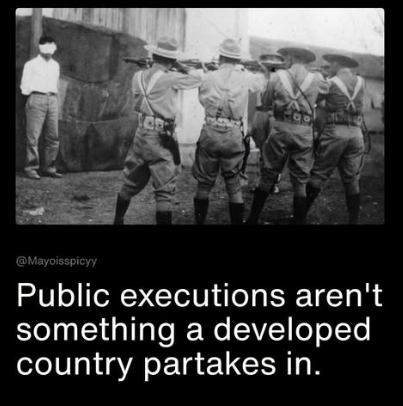 The United States seems set on propelling itself backwards.
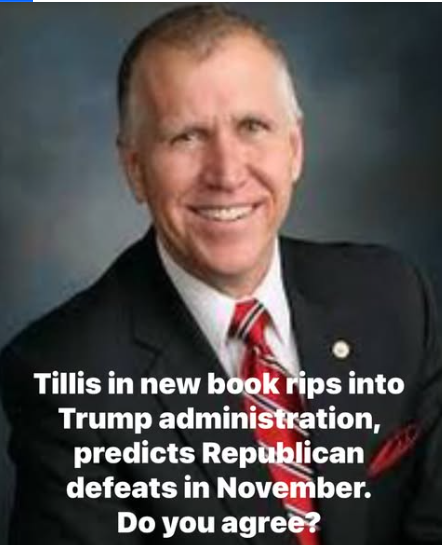 Maybe, as they say, “Hell has a special place reserved in it” for people like Thom Tillis, Republican Senator from North Carolina, who enabled Trump to rape and destroy the United States.
That was until it became clear to Tillis that he could jump ship, write a scathing book about the president, get all over mainstream news promoting it, and go on to enjoy another chapter of political success.
That we Americans are so stupid that we accept this blatant hypocrisy and criminality is sad proof that we’re not the people we were 20 years ago. Maybe what many people are saying are correct: we deserved what we got.
Here’s a short video from Elle Cordova that reminds us that science is something of a rarity in human history.
The great tyrants of history have done their best to cause the people they ruled to reject science, simply to ensure the masses are ignorant, terrified, superstitious, and thus easily controlled.
The current political administration is particularly engrossed in the rejection of science. I wonder why.
