

在特朗普(Donald Trump)开始第二个美国总统任期之际,中美再次打响贸易战几乎已成定局,而对能源转型至关重要的矿物可能会陷入这场交锋的漩涡。
特朗普已威胁要对来自中国、以及通过其他国家输往美国的中国商品加征关税。
与此同时,中国正在制定一套“多样化”的政策工具包,以应对日益加剧的贸易紧张局势。最近一个值得注意的例子是中国对锗、镓、石墨和锑等四种矿物实行出口管制。
所有这些矿物都在低碳技术中发挥着重要作用,但同时也具有军事等其他用途。
Carbon Brief等机构的分析表明,中国于2023年夏季首次实施的出口管制并未对关键矿物供应链产生持续影响。
然而,2024年12月初宣布的更严格的管控措施,特别是对美出口的限制,引发了关于这些措施可能产生多大影响的辩论。
在本文中,Carbon Brief探讨了美中之间围绕关键矿物的紧张关系,可能对供应链稳定性以及清洁能源转型产生的影响。
哪些矿物对清洁能源转型至关重要?
矿物对多种低碳技术的发展至关重要。
例如,铟和镓用于太阳能电池板的涂层,铜和“稀土”金属用于风力发电机的导体和永磁体,而从锂到锰的各种矿物则广泛应用于不同类型的电池。
中国在许多矿物的供应链中占据重要地位,尤其是在加工环节。如下表所示,全球超过一半的石墨、稀土元素(REEs)和钒的开采,以及大部分铝、钴、石墨、铟、锂、稀土元素和硅的加工均集中在中国。
然而,并非所有这些材料都被视为“关键矿物”。“关键矿物”是一个政治术语,用于描述那些在重要战略领域中发挥作用的矿物。
美国将50种矿物列为关键矿物,欧盟确定了34种关键矿物和另外16种“战略原材料”,而日本的清单上列出了35种矿物。
尽管中国自2016年以来没有更新其官方的关键矿物清单,但2023年11月,中国国家安全部官方公众号发布的一篇文章透露,中国至少将31种矿物视为关键矿物。
该文章比较了中国(橙色)、欧盟(绿色)和美国(蓝色)关键矿物清单中的重叠与差异部分。
大宗商品咨询公司CRU集团中国办事处特别顾问、前首席执行官约翰·约翰逊(John Johnson)告诉Carbon Brief,中国与欧盟和美国“清单上相似”的矿物在采购方面“竞争更激烈”。
尽管一些国家试图多样化关键矿物进口,以减少对中国的依赖,但国际能源署(IEA)的分析发现,根据已宣布的项目,从现在到2030年,矿物供应的现状不太可能改变。
不过,IEA指出,在电池制造等部分领域,欧洲和美国“已宣布的产能增加”应该“足以”满足2030年的国内应用需求。
但价格评估机构Benchmark Minerals Intelligence专注于石墨的高级分析师托尼·奥尔德森(Tony Alderson)对这一乐观预测表示怀疑。他告诉Carbon Brief,“对于设施利用率能达到100%的情况几乎闻所未闻”。他补充称,2030年以后,美国和欧盟对石墨的需求可能会远远超过供应。
中国控制关键矿物的能力如何演变?
在拜登政府时期,美国采用了“小院高墙”(small yard, high fence)策略,对半导体行业实施了一系列出口管制,并鼓励盟友采取类似措施。
作为回应,中国开始限制一些关键矿物的出口,包括在2023年8月对某些类型的镓和锗的出口实施管制,随后于2023年12月对石墨实施管制、于2024年9月对锑实施管制。
除锑之外,这些管制显然是北京对美国遏制中国半导体进口措施的回应。
与此同时,中国加强了出口管制制度,将分散的一系列出口管制政策统一整合为单一框架。
这包括制订“不可靠实体清单”、出口管制法、反外国制裁法和对被认为是“两用”物项的监管。
策纬咨询公司(Trivium China)的关键矿物和供应链研究负责人科里·康布斯(Cory Combs)告诉Carbon Brief:“(中国)过去的出口管制体系极为零散。”
他补充道,最近政策推进的主要目标之一是通过“确保所有内容集中管理且规则一致”来改善合规性。
这些举措为中国在2024年12月初加强关键矿物出口限制铺平了道路,其加大了对石墨出口的限制,并“原则上”禁止向美国出口镓、锗和锑。
中国商务部发言人表示,此举是对美国通过对中国芯片制造业实施广泛限制,将自己的出口管制“武器化”的回应。
初步出口禁令对关键矿物贸易流向的影响如何?
对中国初步出口管制(涉及镓、石墨和锗)的分析显示,尽管新规出台,但贸易大体上仍在继续。
如下方Carbon Brief汇编的图表所示,在2023年8月限制生效后,受限类型的镓和锗出口暂停了两个月。然而,这些出口从2023年10月起恢复,尽管水平略有下降。
并非所有类型的目标关键矿物都受到了为期两个月的暂停的影响,非管制产品(如锗氧化物)的流量没有明显变化。
对于石墨而言,主要产品的出口量总体保持稳定,但在限制措施实施前出现了出口量激增,这可能是由于囤积所致。2024年的平均出口量高于2022年水平。
奥尔德森告诉Carbon Brief,出口商发现,当局对韩国和日本的出口审批特别迅速,而针对美国和印度的产品“需要更长时间”才能获批。其他分析师报告说,大多数许可证似乎已经获批。
这种结果可能是有意为之。Trivium China的康布斯告诉Carbon Brief,初步出口管制的目标是提高中国对其加工的矿物使用情况的了解,这也是为何要求出口商申请许可证,而不是直接全面禁止出口的原因。
因此,立即切断对其他国家的供应并不是最初公告的目的。
对关键矿物的初步管制总体上遵循了中国之前非关税贸易措施的类似模式。除了锑以外,对关键矿物的管制都是为了应对被认为“损害中国国家主权、安全和发展利益”的企图,而非打响贸易争端的第一枪。
英国皇家联合研究所(RUSI)的一份报告指出,这是因为中国意识到全面出口禁令会加速其他国家实行去风险和实现供应链多样化,从而削弱中国的长期地位。
严格的出口管制也会让中国国内付出代价,影响工业活动和更广泛的经济增长。因此,皇家联合研究所认为,出口管制可能会被调整到既能吸引关注,又不会造成其所说的严重经济影响的程度。
对美管制是否标志着中国战略的重大变化?
2024年12月初宣布的措施显示,中国在对关键矿物出口管制方面进行了明显升级。
根据新规,镓、锗和锑“原则上”将不再允许出口到美国,石墨的销售也将受到更严格的控制。
康布斯与Trivium China联合创始人安德鲁·波尔克(Andrew Polk)在分析中写道,这些限制措施是一个信号,表明中国“准备更积极地反击美国的行动”。
这呼应了中国央行前行长易纲的说法。据《南华早报》报道,易纲表示:“我们都明白,从经济学角度,不予报复是最优解……但(面对国内压力),决策者几乎没有选择。”
奥尔德森指出,还需要更多时间观察政策实施的“严格程度”。就石墨而言,目前尚不清楚哪些产品会受到影响——更严格的管制可能仅限于“用于军事最终用途材料的99.999%(纯度)”,而非用于电动车电池的低纯度石墨。
Trivium China的评估指出,此次宣布表明中国将“堵住”允许“出口泄漏”的漏洞,但目前尚不清楚“北京会在多大程度上调查或惩罚涉嫌违规转口的第三国”。
彭博经济(Bloomberg Economics)高级地缘经济分析师杰拉德·迪皮波(Gerard di Pippo)对威胁的严重性持怀疑态度,他写道:“中国缺乏强制第三国遵守规定所需的法律影响力、出口管制监控能力和联盟网络。”
其他分析人士告诉《麻省理工科技评论》(MIT Technology Review),由于美国已采取措施使其供应链多样化,因此“在大多数情况下,这些禁令不会产生重大经济影响”。
尽管如此,奥尔德森表示,当前的不确定性凸显了对关键矿物的依赖者而言,“本地化至关重要”。
未来中美紧张局势会加剧对关键矿物的控制吗?
康布斯和波尔克写道,中国近期管制的动机尚不明确。这可能是为了抗议美国限制特定芯片及制造工具的出口,以及将140家中国公司列入贸易黑名单,也可能是为了“警告即将上台的特朗普政府”不要加剧紧张局势。
外界普遍预计,特朗普开始其第二任期后,美中贸易紧张关系将加剧。
美国两党都对中国“威胁”其工业能力表示担忧。然而,特朗普第二任期可能会优先使用广泛的关税来缩小对华贸易逆差。
康布斯告诉Carbon Brief,北京的目标是“改变美国的行为”,因此在争端中会使用特朗普能够理解的手段,如广泛的贸易关税,而不是出口管制等更细微的工具。
他补充说,特朗普的顾问们会在多大程度上重视关键矿物还有待观察。如果北京使用额外管制施压特定的美国公司,促使它们向美国政府施压,这一问题可能会进入决策视野。
约翰逊指出,中国有理由避免将关键矿物出口问题进一步升级,鉴于其在高纯度石英、铁矿石和钾肥等矿物出口等方面依赖于美国。
此外,他表示,各国认为的关键矿物“会随着时间而变化”,因为新技术会创造对新矿物的需求,同时使其他矿物变得过时。
回收技术的发展也可能缓解供应链压力。国际能源署指出,如果成功扩大回收利用规模,“到2050年,新采矿活动需求可降低25%至40%”。



The post Q&A: 中美贸易战对能源转型意味着什么? appeared first on Carbon Brief.

The head of the United Nations has called on all countries to deliver plans for phasing out their production and consumption of fossil fuels, as rising oil prices and climate shocks threaten energy and human security.
In his farewell speech to the UN General Assembly (UNGA) in New York on Tuesday, outgoing UN Secretary-General António Guterres for the first time urged “every government to adopt a national plan to transition away from fossil fuels” aligned with limiting warming to 1.5C. The plans, he said, should include “clear timelines and protection for affected workers and communities”.
“We know fossil fuel interests won’t step aside on their own. For decades, Big Oil has treated the atmosphere as an open sewer – and cashed in on the consequences,” Guterres told diplomats in his speech opening the leaders’ segment of the assembly, also calling out the industry’s windfall profits after Russia’s invasion of Ukraine.
-
COP31 electrification pledge leaves out clean power commitment
Campaigners and experts say the goal’s effectiveness in reducing emissions may be limited unless countries agree to meet it using only clean energy -
Climate change and energy transition rise up national security agenda
Leaders highlighted the national security risks posed by global warming and fossil fuel dependency at New York Climate Week

At last year’s COP30 climate summit in Belém, a group of about 80 governments led a failed push to develop a global roadmap to transition away from fossil fuels. Brazil instead proposed to draft a voluntary report that will be presented this year ahead of COP31 after countries and organisations submitted their views to the process.
Governments first agreed to transition away from fossil fuels in energy systems at COP28 in Dubai in 2023, but have since failed to agree at UN climate talks on how to move forward with that commitment, as efforts to do so have been effectively blocked by large fossil fuel-producing countries.
France, Netherlands issue plans
A few countries have moved forward with their own transition plans. France launched the first one at an international conference on the issue in April and the Netherlands followed suit this month. Not being major fossil fuel producers, both European nations aim to end their coal, oil and gas consumption by 2050, although the Dutch plan was criticised for not setting specific phase-out dates for the dirty fuels.
Adão Soares Barbosa, climate ambassador from Timor-Leste and chair of the Least Developed Countries (LDC) group in the UN climate negotiations, told a press briefing on Tuesday that last year’s discussions on shifting away from fossil fuels need to continue at COP31, adding that developed countries should lead the way with transition plans and curb their use of fossil fuels.
“We are expecting that we can make a request to major-emitting countries to limit emissions from this sector,” he said. “For LDCs, we’ll also try to reduce fossil fuel use, but it will depend on national circumstances.”
Samoa’s lead negotiator Anna Rasmussen said small island states have outlined their energy transition plans in their nationally determined contributions (NDCs) – countries’ plans for meeting the Paris Agreement goals – but added “we’re still waiting” for climate finance to help implement those plans.
Despite the global push to clean up the energy mix, countries leading climate talks are themselves also expanding fossil fuel production. COP31 co-presidents Australia and Türkiye have both recently given the green light to mine and drill more coal, oil and gas, and still depend on fossil fuels for 60% and 56% of their electricity production respectively.
Fossil fuel expansion threatens COP31 hosts’ credibility, experts warn
COP30 host nation Brazil has also persisted with its plans to explore potential new oil reserves near the mouth of the Amazon River – a region known as the Equatorial Margin.
These are moving ahead despite President Luiz Inácio Lula da Silva announcing last year at the Belém climate summit that the country would develop its own fossil fuel phase-out plan. This is still under development with little information about its progress and may be hampered by elections next month.
“We have achieved our self sufficiency in oil and will continue to explore the potential of new reserves, such as those in the Equatorial Margin,” Lula said in his speech to the UNGA on Tuesday. “But we will not abandon the environmental agenda,” he insisted. “We will move forward with the roadmap for the decarbonisation of the Brazilian economy.”
Transition far cheaper than status quo
Speaking at the main Climate Week NYC venue, Mads Christensen, executive director of Greenpeace International, said given the fast-shifting cost dynamics for both fossil fuels and renewables, countries should revise their existing energy plans because they are now out of date.
Gas power generation now costs around 150 euros per megawatt compared with around 50 euros for solar with battery storage – making the latter two-thirds cheaper.
“If these plans were updated, I think we would have a much faster transition because it simply makes good financial sense,” he said.
Tzeporah Berman, founder and chair of the Fossil Fuel Treaty Initiative, told Climate Home News that the Santa Marta process for transitioning away from fossil fuels (TAFF), launched at April’s conference, could help countries discuss, design and develop their national roadmaps, as well as mobilise the international cooperation required to actually deliver them.
“Many countries want not only national roadmaps but a global roadmap off the highway to hell,” she added. “A global plan is necessary to ensure the rules aren’t rigged against those who want to do the right thing and so all countries can make credible commitments.”
The second TAFF conference will be held in the Pacific island nation of Tuvalu next spring, co-chaired by Ireland. In New York, Tuvalu’s climate minister Maina Vakafua Talia called for stepped-up efforts to tackle the fossil fuel use that is threatening his country’s “demise” by driving global warming.
“The world is running out of time, and so I ask every government to come to… Tuvalu with solutions – real solutions, not false solutions – for us to ensure that we have a pathway and a way forward,” he urged.
The post UN chief urges countries to adopt fossil fuel transition plans with timelines appeared first on Climate Home News.
UN chief urges countries to adopt fossil fuel transition plans with timelines
COP31’s flagship initiative to accelerate the electrification of the world’s economy has been criticised for failing to include a commitment to produce the power from clean energy.
Governments that sign the voluntary pledge at this year’s UN climate summit will commit to increasing electricity’s share of total energy consumption to 35% globally by 2035 in line “with pathways consistent with keeping 1.5C alive”, the text unveiled by the Turkish presidency on Tuesday says.
While the document says that the electrification goal is “complementary to efforts to expand renewable energy and improve energy efficiency”, governments are not explicitly asked to commit to producing the extra power with clean sources and driving down greenhouse gas emissions.
The text instead says the “use of clean electricity” will vary according to national circumstances. Fossil fuels are not mentioned by name, although the pledge cites the COP28 Global Stocktake decision, which called for “transitioning away from fossil fuels” in energy systems.
-
Climate change and energy transition rise up national security agenda
Leaders highlighted the national security risks posed by global warming and fossil fuel dependency at New York Climate Week -
Fossil fuel expansion threatens COP31 hosts’ credibility, experts warn
Türkiye and Australia are pushing coal, oil and gas at home with no national timeline for their own fossil fuel phase-out

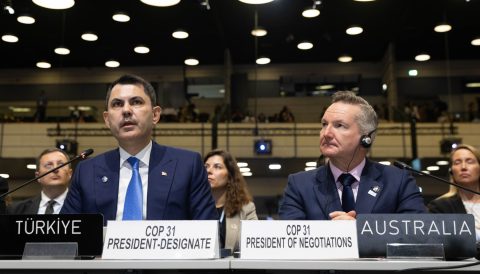
COP31 president Murat Kurum said earlier this month that the push to make electrification more “widespread” – through measures like the rollout of electric vehicles and heat pumps – will “automatically” lead to a reduction in the use of fossil fuels.
But many campaigners disagree, criticising the proposed pledge for failing to give an explicit signal on the fossil fuel transition.
Lack of clarity on energy sources
“Let’s not let electrification become the Trojan horse of our times, used to hide new fossil fuel consumption rather than promote renewable energy,” Claire Smith from civil society umbrella group Beyond Fossil Fuels said in reaction to the pledge’s publication.
She added that the commitment will only help address the climate crisis if electrification is powered by a flexible energy system where solar and wind are complemented by enhanced grids and storage.
The pledge’s text says that the electricity goal should be supported by “diverse and sustainable energy sources”, but it stops short of explaining what these sources are.
Alden Meyer, an international climate policy expert and senior associate at think-tank E3G, said the details of the pledge matter to how effective it will be in helping bring planet-heating emissions down.
“It has to be clean, and we haven’t got enough clarity on a guarantee that it will be a decarbonisation move,” he told Climate Home News.
China’s industrial engine starts to break its fossil fuel habit
According to an annual electricity review from energy think-tank Ember, in 2025 renewables edged ahead of coal power for the first time in 100 years. Continued growth in solar and wind pushed the share of renewables above a third of global electricity generation to just under 34%, compared with coal at 33%, it said.
Janet Milongo, energy Transition lead at CAN International, said success cannot be measured simply by how much of the world’s final energy consumption becomes electric.
“We must ask what generates that electricity, who has access to it, who owns the infrastructure, and whether it is helping communities transition away from fossil fuels,” she added.
Electrification alone can’t meet climate goals
Analysis published by the IEA on Tuesday, alongside the pledge, found that it would already be cost-effective to raise electricity’s share of global energy use from 23% today to around 33% with existing technologies, putting the COP31 goal “within striking distance”. Based on current policies, however, the share reaches only about 30% by 2035.
Hitting the 35% target would cut fossil fuel importers’ import bills by around $400 billion a year by 2035, the IEA said. At the higher prices caused by the conflict in the Middle East, that saving rises to more than $500 billion.
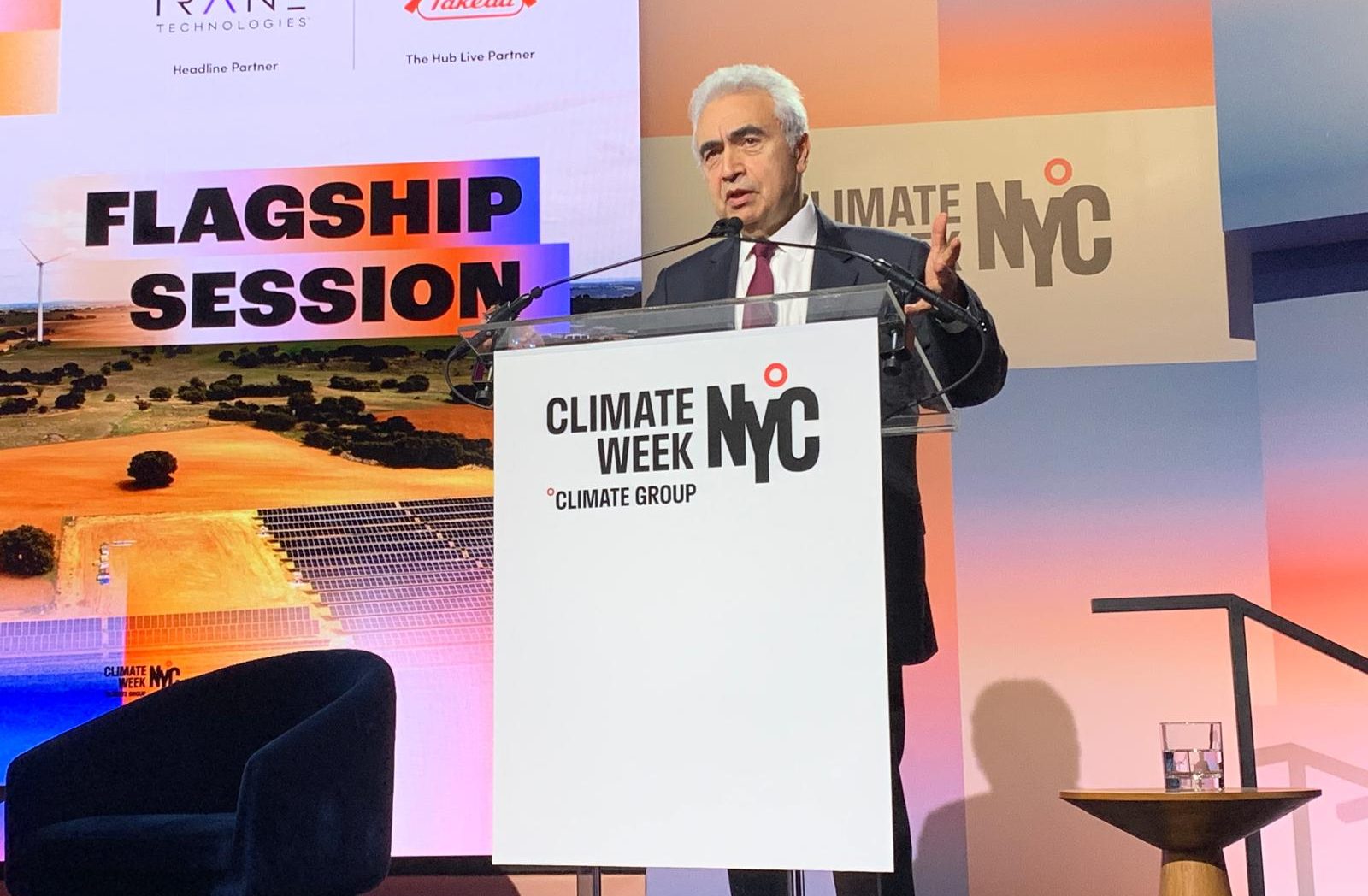
Speaking at New York Climate Week on Tuesday, IEA executive director Fatih Birol said the agency’s figures show that in 2026, about 80% of all new power plants built will run on renewables, with a few percentage points coming from nuclear power and the rest from fossils fuels. “So therefore, electrification itself will lead reduction of the [greenhouse gas] emissions,” he added.
However, the IEA warned in its new report that electrification “by itself is not enough” to meet the world’s climate targets. It noted that, if “low-emission” sources of power continue to simply grow in line with current policy scenarios, that would be only just enough to cover the extra demand from electrification, driving a modest decline in emissions.
Matt Webb, associate director of global clean power diplomacy at E3G, said the pledge is a “welcome signal of leadership” and can help COP31 be a “critical moment” for countries to double down on the energy commitments made at COP28.
But to secure the full benefits of electrification, he added, it is essential that we “urgently clean up” by speeding up the rollout of renewables and developing credible national plans to transition away from fossil fuels.
The post COP31 electrification pledge leaves out clean power commitment appeared first on Climate Home News.
COP31 electrification pledge leaves out clean power commitment
People around the world have donated almost $90 million to a government-led campaign to help Nepal recover from its recent devastating Himalayan flood, according to a Nepali climate negotiator, even as the UN chief slammed the tiny amount of money in a new fund to deal with such disasters.
Individuals and companies from Nepal and abroad have chipped in from $5 to “many millions” of dollars to the Prime Minister’s Disaster Relief Fund, Manjeet Dhakal, an advisor to the poorest countries at UN climate talks, told an event on Monday focused on early warning systems.
The prompt and substantial response from the public contrasts with the slower, more limited support that is potentially on offer from the UN’s new Fund for Responding to Loss and Damage (FRLD), set up by governments to compensate developing countries for climate disasters.
Comment: Human security relies on adapting to the world’s new climate reality
Over three weeks have passed since Nepal’s finance and environment ministers asked the FRLD board to take an urgent decision to allocate funding to help Nepal protect people and restore essential services in the wake of the disaster, which caused around 1,450 deaths and left more than 5,000 people missing.
“Time is of the essence,” the ministers wrote in an appeal to the FRLD on August 31, which was swiftly followed by a letter from a group of developing-country board members urging the FRLD board’s co-chairs to organise an extraordinary meeting to come up with a response.
Loss and damage fund hesitates
Yet, despite informal online meetings, the co-chairs have yet to convene a meeting with the power to allocate funds. The board’s next scheduled meeting begins on December 15.
Dhakal said on Monday that the request has “received some positive response, but still there is some discussion ongoing about how to respond to that”.
“If they can’t respond in a timely manner, then is [the fund] fit for purpose in terms of disasters that the world would be facing in the coming years? The scale and intensity of these disasters is increasing,” he said.
With just $820 million pledged to it by rich countries and not all of that yet delivered, the FRLD has earmarked just $350 million to spend in its initial phase and without further contributions could run out of money next year.
Because of these limited funds, and a huge number of requests for funding totalling nearly $3 billion, the FRLD has said it will only give out a maximum of $20 million to each project for now. It has yet to approve funding for any projects.
Dhakal recently told The Nation magazine that this amount was just a “symbolic gesture”. Nepal’s government has estimated the costs of recovery and reconstruction at $4.8 billion, with homes, roads, bridges, hospitals and hydropower stations in the affected area needing to be repaired and rebuilt.
“Ridiculously small” funding
In a speech to the UN General Assembly on Tuesday, the body’s outgoing Secretary-General António Guterres criticised the “ridiculously small” level of funds made available by wealthy governments to the FRLD. Developed countries should “make the loss and damage fund work at scale”, he said.

The Portuguese diplomat told world leaders that when he travelled to Nepal three years ago, he had “sounded the alarm on accelerating glacier melt, warning that the rooftops of the world are caving in”.
“Some dismissed it all as overstating dangers, but as tragic events have shown, impacts are arriving sooner, hitting harder, and spreading further than many anticipated,” he said.
A recent study by scientists with the World Weather Attribution group found that climate change contributed to the rock-ice avalanche which sparked a huge flash flood along a river valley on the Nepal-Tibet border.
Speaking at a separate event in New York on Monday, leading climate scientist Johan Rockström highlighted those findings on the role of global warming in the Himalayan disaster.
“This will be potentially the first poster-child case of a loss and damage invoice, because here we have a proven case of a catastrophe which would not have occurred if it hadn’t been for human-caused climate change,” he said.
The post As loss and damage fund stalls, Nepal crowdfunds flood relief appeared first on Climate Home News.
As loss and damage fund stalls, Nepal crowdfunds flood relief



-

 Greenhouse Gases2 years ago
嘉宾来稿:满足中国增长的用电需求 光伏加储能“比新建煤电更实惠”
-
Climate Change1 year ago
Guest post: Why China is still building new coal – and when it might stop
-
Greenhouse Gases1 year ago
Guest post: Why China is still building new coal – and when it might stop
-

 Climate Change2 years ago
嘉宾来稿:满足中国增长的用电需求 光伏加储能“比新建煤电更实惠”
-

 Renewable Energy11 months ago
Sending Progressive Philanthropist George Soros to Prison?
-
Climate Change2 years ago
Bill Discounting Climate Change in Florida’s Energy Policy Awaits DeSantis’ Approval
-
Greenhouse Gases1 year ago
嘉宾来稿:探究火山喷发如何影响气候预测
-

 Carbon Footprint2 years ago
US SEC’s Climate Disclosure Rules Spur Renewed Interest in Carbon Credits