To predict the future, you have to create it. This was the phrase I connected with this Juneteenth as I thought about the stories of my ancestors and how they flow into the stories of the future.
When I Think of Juneteenth, I Think of Energy
Jasmine Graham, Executive Director of the Mid-Hudson Energy Transition, recently spoke on “Climate with Kiana” about energy justice. She reminded the audience, “The very first form of energy to be commodified was the unpaid physical labor of enslaved people.”
Juneteenth is not only about the past – it is also a day to think about the present and the future. June 19th, 1865 was a day in history that signaled the end of chattel slavery for Black enslaved people in America, but it did not uproot the sociocultural norms and connected systems of exploitation of people and planet’s energy and the marginalization of Black communities and beyond.
From the historic discriminatory practices of redlining to build out our US highway systems to the current unethical land use and labor practices seen within green tech and manufacturing projects, there is still much work to be done to manifest a world where the collective descendants of an energy system based in enslavement are free and healthy. Transforming our energy and mobility systems is an opening and opportunity to build a better future based on just principles and a respect of life and livelihood.
Black Communities Cannot Breathe
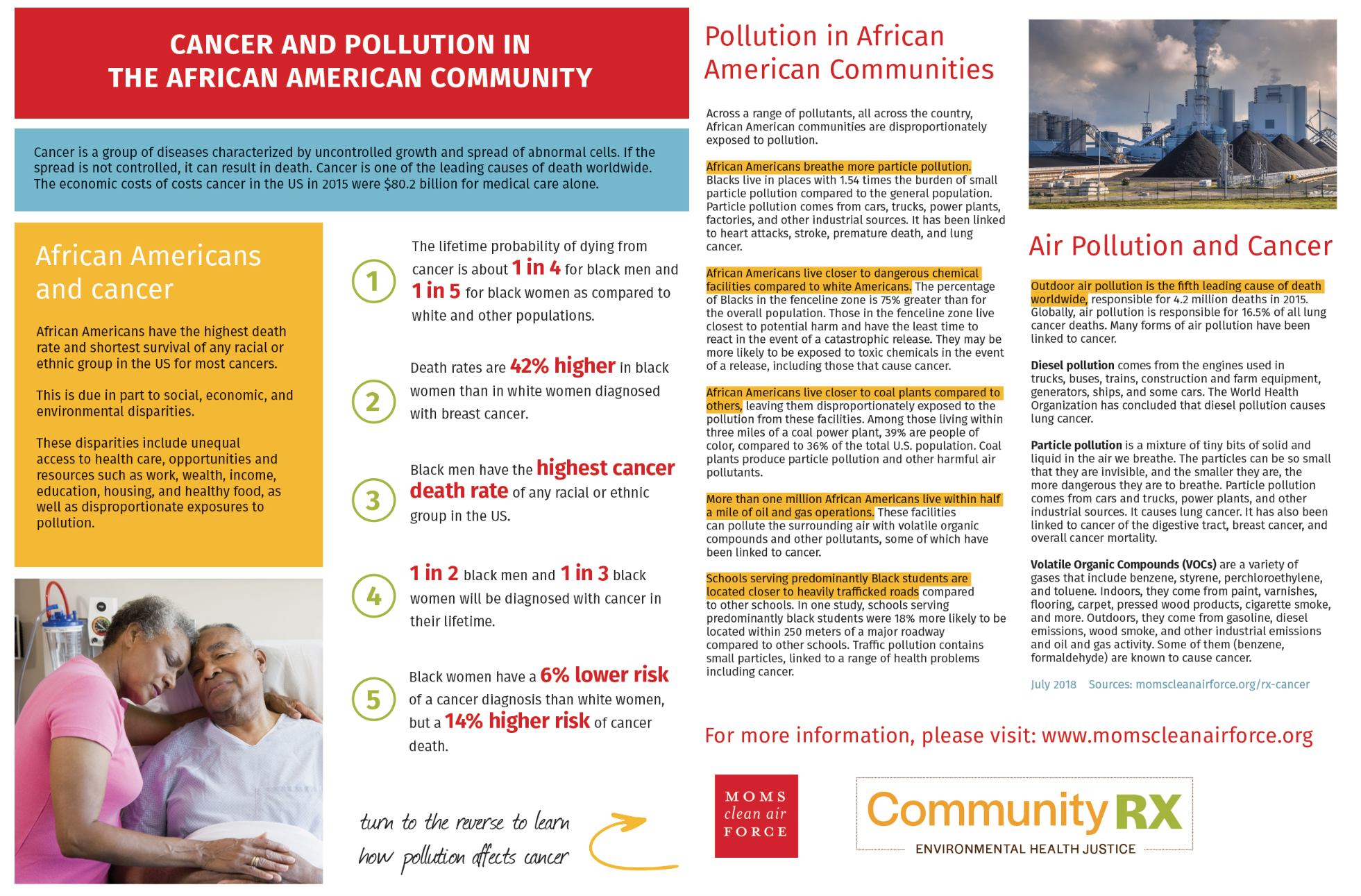
Black Americans are 75 percent more likely than other Americans to live in areas situated near facilities that produce hazardous waste. In Albany, Georgia, a majorly Black town in Southwest Georgia, there are seven brownfield sites and two superfund sites just within a mile radius from the center of town. Similarly as concerning, Black American seniors are three times more likely to die from exposure to particle pollution than white seniors. In an article from Capital B Atlanta, it was shared that in a pocket of neighborhoods in Northwest Atlanta “…there are wastewater treatment plants, a train yard, a power plant, a concrete facility, and an asphalt plant. Within the same 3-mile radius, more than 150 jets depart and arrive from Fulton County Airport each day, emitting toxic exhaust that irritates airways.” To imagine this impact plus the major polluting heavy-duty vehicles that make rounds every day, I can feel my throat constrict and my chest burn. As a Black person seeing these impacts first hand, the weight of living in a world that doesn’t value the health of all bodies feels heavy and grim.
Why Should I Keep Hope?
Environmental anxiety, also known as climate anxiety or eco-anxiety, are terms that have grown in popularity. The constant weight of the destruction of our environment and people looms over us every second. Social media shows us flowers blooming in Antarctica, children in body bags, fires sweeping through the wilderness, and leaders continuing to make decisions that see all the world’s creatures and resources as things to be exploited and depleted. The current reality in front of my eyes scares me and makes me question– what’s the point if the world is doomed?
And then I think about my ancestors. I think about all the meanings of Juneteenth. I imagine what it must have felt like for my enslaved ancestors. To live in a world where they were only valued for their metabolic energy and how daunting and hopeless it must have felt. But still, my ancestors laughed, danced, and took action toward change to predict and create a future that saw them free.
I imagine my grandmother, who used to have rocks and glass bottles thrown at her head at segregated concerts, but still, she chose to continue showing up and dancing with her friends.
I imagine my mother as a child living as part of the first Black families on the street. Waking up one night to the sound of screeching tires and a car packed with dynamite in the front yard. Yet still, my mother continued to play in that exact front yard the next day.
When I imagine my ancestors’ feelings, it always astonishes me; on the flip side of their pain is their capacity for joy. So how did they do it? How did they continue to find joy in a painful world? The answer I’ve come to is because they didn’t let others write their future for them.
In Dianne D. Glave’s book, Rooted in the Earth: Reclaiming the African American Environmental Heritage, the author boldly uses creative storytelling to recreate Black naturalists’ stories of the past to explore and reclaim the Black experience of the natural world. Glave demonstrated in each chapter how jumping into the psyche of past ancestors can aid us in understanding the world of then and its connections to now. Traveling through space and time is an imaginative and organizing power that is braided into the culture, spirituality, and philosophy of Black people.
“Black People are Self-Sufficient” – Stacey Robinson’s Tenets of Afrofuturism
Recently coined as Afrofuturism in many circles, it is a movement that imagines alternate futures or reimagines history through a lens that centers on Black experiences, identities, and perspectives from practices rooted in ancient Africa. From drumming, weaving, and metallurgy to recent historical practices in the Black dysphoria like spoken word, miming, and hip-hop culture, these are just a few of the many modes of communicative practices and knowledge production methods that guide and inform Black knowers throughout the world.
To take a page from Glave’s method, I imagined a scene. A future that sees a young Black girl traveling in her neighborhood. A vision shaped by intergenerational justice and the ability to breathe deeply. A dream of joy and freedom. Here’s a clip from my envisioned future:
Skipping out onto the porch, she is greeted with an intermingling roux of sounds. Laughter and the gentle whispers of rustling leaves spirals around her and into the mountain of curls on her head. The ground pulsates with a deep bass of footsteps pounding the sidewalk. The air is crisp and invigorating, carrying with it the sweet aroma of blooming flowers and the earthy scent of mammals sweating. Other children confidently run before her, playing a serious game of freeze tag, all hoping to be frozen under the cool shade of a poplar tree.
With jubilation, she begins to stride forward through the gumbo of sounds. As she walks through her neighborhood, her ears perk as she passes the melodious symphony of red cardinals and matriarchs gossiping away. The constant chirping soothing her soul and awakening her senses as she rounds the corner.
Syncopated and energetic beats blast through a speaker. The crunch and scrapes of high-top sneakers on cardboard slice the air as dancers glide, stomp, and spin. A pack of excited onlookers tapping their screens gather to capture the scene. The girl couldn’t help but match her pace to the groove as she shimmied by.
Moving further down the street, applauding rows of crows perched between two poles enjoy the linemen’s finale. Workers piling into their humming trucks to head towards warm dinners and much deserved rest time. Their vehicle weaves into the buzzing flow of cars, bikes, and trains on their journey home.
A few blocks down, the girl comes to a leisurely stop. A person with hair like cattails stands next to her, each loc standing taut at their scalp as they wait under the roof of a covered bench. She gasps as she realizes sitting next to her is one of the healers of the neighborhood. An elder who acts as a conduit to understanding the world. A million thoughts run wild like frenzied mice in her mind as she wonders what she should say. Should she ask about her life? The history of the town? Maybe she could just-
“Are you going to get on the bus, sweetheart?” they softly ask. Confused, the girl switches her gaze to see the bus quietly sneak up on them. The elder laughs and holds out their hand, “You mind helping me to a seat?”
Holding onto their hand, the girl leads them towards a spacious seat near the front. Feeling a little embarrassed about getting lost in her thoughts, she stays quiet.
“You know,” the elder says, breaking the silence, “Back when I was your age, these buses would spit out black smoke. The kind that makes your eyes water and your lungs burn.”
“Really?” The girl asks in surprise, happy the elder wants to make conversation.
“Yes,” they lament. “Every time we breathed, it was killing us back then. Cancer, asthma. The sky was hazy from all the pollution. We knew we had to do something about it, cause they weren’t doing anything to help us. We had to create a better future for ourselves.”
The girl’s eyes are wide as they continue to tell harrowing stories of joy, pain, wins, and losses all the way to their bus stop. These histories fascinate her but also make her realize the unfinished work that still needs to be done to honor the elders’ work. In this moment, as the nuances of daily existence and the whir of the bus surrounds them, a profound sense of peace and gratitude washed over the girl. She was thankful in that moment to hear and experience the clear rhythm of conversation, environment, and life. She took a deep breath and smiled.
Electric Black Futures
To lean on the words of Outkast, “the South got something to say”. The South is a hotbed of innovation and through the rapid creation of electric vehicle (EV) and battery hubs, this region is being put in a unique position to shape and influence a mobility culture that works better for everyone.
Georgia is one of the states being tailored as an EV hub and is positioned to receive billions of dollars in benefits from this emerging clean technology. Initiatives like Electric Black Futures, a recently launched project advocating for crafting just e-mobility futures and narratives in Black communities in Georgia, are an opportunity to reimagine an energy and transportation system that sees communities as people, not products.
By bolstering and connecting the preexisting visions and work of Black knowers to the cross-sector work of the electric transportation field, it allows us to address and dismantle oppressive energy and mobility practices from production to consumption. Expanding upon the collective efforts of environmental justice reimagining work that’s happening in Georgia has the potential to evolve an energy system based in pain into an energy system based in joy.
As the mother of the environmental justice movement, Hazel M. Johnson said, “It’s all very well to embrace saving the rain forests and conserving endangered animal species, but such global initiatives don’t even begin to impact communities inhabited by people of color.” The electric transition is a people transition as much as it is an emissions solution. As transformational funding funnels into states like Georgia, Black and other marginalized communities who experience the worst and first of environmental degradation and climate impacts must have their knowledge and minds at the helm of ideating and implementing solutions that are self-sufficient, sustainable, and transcend the barriers of our past and current energy system. As Juneteenth teaches us, freedom is not won until freedom is felt by all, people and planet must be considered as we paint a future toward collective wellness.
Electric Black Futures is a collaborative program between Southern Alliance for Clean Energy, EVNoire, and Clean Cities Georgia, committed to invigorating e-mobility leadership and job opportunities in Black communities in Atlanta, Savannah, and Albany, Georgia. By centering communities’ knowledge, vision, culture, and imagination, this project aims to put more Black hands at the helm of driving the direction and crafting the electric future. To learn more, visit the Electric Black Futures website, sign up for email updates, or email info@electricblackfutures.org.
Stay Updated With Electric Black Futures
The post A Time to Reimagine our Energy Future appeared first on SACE | Southern Alliance for Clean Energy.
Renewable Energy
Brian Cox, PhD
It’s always encouraging to see the emergence of another brilliant astrophysicist into our culture — not that his message here is particularly encouraging.
Renewable Energy
GE Vernova Backs LM Wind Power, KKR Buys EDF Assets
Weather Guard Lightning Tech

GE Vernova Backs LM Wind Power, KKR Buys EDF Assets
GE Vernova pumps $1 billion into LM Wind Power, and KKR buys EDF’s US and Canada renewables arm. Plus CIP sweeps South Korea’s offshore auction and the CME plans wind derivatives across three continents.
Sign up now for Uptime Tech News, our weekly newsletter on all things wind technology. This episode is sponsored by Weather Guard Lightning Tech. Learn more about Weather Guard’s StrikeTape Wind Turbine LPS retrofit. Follow the show on YouTube, Linkedin and visit Weather Guard on the web. And subscribe to Rosemary’s “Engineering with Rosie” YouTube channel here. Have a question we can answer on the show? Email us!
The Uptime Wind Energy podcast, brought to you by StrikeTape. Protecting thousands of wind turbines from lightning damage worldwide. Visit striketape.com. And now, your hosts.
Allen Hall: Welcome to the Uptime Wind Energy podcast. I’m your host, Allen Hall, and I’m here with Matthew Stead and Yolanda Padron. Rosemary is at GWO training this week. And we have an announcement about Wind Energy O&M Australia 2027. Matthew, you wanna give all the details?
Matthew Stead: Drum roll Um, very pleased to announce that WOMA 2027 will be at the East Pullman Hotel in Melbourne’s east, uh, not the other one, and, uh, 3rd to 5th of March.
Um, the first two days will be two days of wind O&M, uh, conferences, [00:01:00] uh, and then the Friday will be a half-day, uh, training session. More information to come.
Allen Hall: Well, she’s not here, so we can probably just announce it, that Rosemary will be giving a terrific four-hour-long seminar on blades and blade repair, so you sign up now.
Matthew, where do you go if you wanna just check out what’s happening at WOMA
Matthew Stead: 2027? Uh, well, actually, it’s woma2027.com.
Allen Hall: Uh, over at GE Vernova and LM Wind Power, there’s been a whole bunch of turmoil over the last couple of years if you haven’t been paying attention. Well, GE Vernova just injected about a billion dollars into that company.
So although LM recently has shown very little in terms of revenue, it definitely had needed some capital injection in, uh, at least according to the Danish press, the number of employees at the Danish site is about 20 to 30. So it’s really a fraction of what it once was. But [00:02:00] it does seem like GE is paying off all its existing debt and then giving it a little bit of a cash infusion to keep it rolling.
The question really is, is what is GE Vernova gonna do with that business now? Are they planning on keeping it? Are they trying to get s- to get it back to health where they can service the other, uh, OEMs that they manufacture blades for? Or is there a larger action that will happen in the near future?
What do we think?
Matthew Stead: Yeah, I’m really confused by this one. I mean, a cash injection just so that you’re not bankrupt on paper is, um, that’s just playing with money as far as I’m concerned. Or I’m not sure if it’s a US term, but, you know, shuffling deckchairs on the Titanic. It doesn’t– Does it change anything?
Allen Hall: Well, uh, th- they made no announcements about closing facilities. The LM blade facility in North Dakota still appears to be making blades. There’s the TPI factories, which are going through a transition r- right now, appear to be making GE [00:03:00] blades. I, I assume Gaspé up in Canada is still making blades, at least that’s the story.
If GE’s gonna rely upon LM to make blades, they’re gonna need to keep them open. Is, is this more of just keeping the factories open with a skeleton engineering crew and possibly moving the blade design group into the States? Is that– Or India or, or somewhere?
Yolanda Padron: And they’re still selling, right? They’re still selling blades.
It seems like they’re still planning on manufacturing blades. Do we think that maybe- They’re just trying to avoid that whole TPI bankruptcy deal to not have to kind of scrap for parts?
Allen Hall: Yeah, it’s a great question. I think TPI has been producing parts at high quantity, and some of the Things I’ve heard from the industry folk is that TPI is really busy in producing quality blades, and it’s like the bankruptcy transaction is not happening, which is great to hear because the [00:04:00]industry needs blades, and there’s a lot of repowering going on in the United States and a lot of activity in general, so they need blades.
But does LM continue to be a part of that?
Matthew Stead: Yeah, I mean, presumably the TPI, um, whole story only makes LM more important, you know, more important to have, uh, an additional manufacturer and, you know, providing, you know, options for the OEMs.
Allen Hall: It does seem like, though, the GE offshore, GE Vernova offshore is not a thing.
Although I’ve heard a couple of rumors that, yeah, GE Vernova is offering some products for offshore, it doesn’t seem like their heart is in it. I can see that happening. So are they just trying to focus on onshore business, and that’s it for the time being? Just let it play out and, uh, wait until the elections in 2028?
I know that’s gonna get me blocked on YouTube, but that, that does feel like what’s happening at the moment.
Matthew Stead: Yeah, I reckon it looks completely like that.
Yolanda Padron: I mean, it also looks like they’re [00:05:00] just kind of trying to play everything a little bit more safe, right? So they are scaling up, but not as fast as they used to, so scaling the blade sizes.
And then they’re– it seems like they’re, they’re having their FSAs cut quite a bit shorter than they used to, right? So are they maybe just trying to focus on, like, cash up front and just trying to play it safe until they can get their, their footing right again?
Allen Hall: Or is it focus on key customers? I could see GE Vernova actually doing that, that they have a history with certain operators worldwide, and they’re just gonna focus on producing and delivering for those customers.
Because you don’t see a lot of announced orders for GE turbines. Vestas is announcing things practically every week. Nordex is doing something similar. Siemens once in a while. But what you really don’t hear anything from in any quantity at [00:06:00] all at the moment is from GE Vernova. When a company needs cash badly enough, even the crown jewels go on the block.
And EDF, the French state-owned utility, has to fund the upkeep of 57 aging nuclear reactors and build six new ones, so it is selling. EDF has agreed to hand its US and Canada renewables business, EDF Power Solutions, to the private equity firm KKR. The business runs 5.6 gigawatts of renewable assets across the two countries.
Late last year, EDF’s chief executive floated selling anywhere from half to all of the unit in a deal that could be, well, it’s reported to be about $4.2 billion. That’s the latest news I’ve heard. This is a big transaction. KKR is Canadian, right? And is a massive investment firm Uh, which I, I don’t think have a lot of wind at the moment.
Uh, what is the [00:07:00] KKR play here?
Matthew Stead: I, I love this because this is, uh… So obviously I’m Australian, and Macquarie is a big Australian. So, um, Macquarie own a whole lot of wind farm, a whole lot of wind infrastructure. So I just see this as a wonderful g- you know, fight between KKR and Macquarie. And so KKR has a whole lot of, um, they o- they’ve got some, you know, stake in Australian wind farms.
They’ve got some work, you know, through Europe with wind farms. So I, I, I think this is a good thing, just a bit more global competition and a bit more global growth. And I think it’s all coming from the data centers and, you know, the future increase in growth of, um, demand.
Allen Hall: Yolanda, EDF’s wind fleet is a variety of turbines, right?
They have some GE, some Siemens. Anything else in their portfolio?
Yolanda Padron: I think they have a bit of Vestas there too, right? Is it something that we were saying? It’s– I think this is really interesting. Um, I know that there’s not– I mean, of course EDF is the latest, but there’s some [00:08:00] operators that seem to be, um, consolidating into a bit more of those just higher private equity firms, and it’s– Do we think that maybe this is the way that the US is going to lean towards?
I know we talked a lot about leaning towards funding the data centers and maybe a bit more the behind the meter things. Uh, but do we think that maybe that’s the future of the US? There’s a couple of companies that kind of just own all the major infrastructures and then- A
Allen Hall: couple Canadian companies.
Yolanda Padron: And what does it mean for, like, asset management and stuff, like, that’s really, really different from what they’re seeing in their desks in New York and stuff, and just the larger financial models versus what’s happening on the ground, and how will they connect everything?
Allen Hall: It’s a great question.
Matthew Stead: NextEra and Dominion, you know, things are only getting bigger. Scale’s, scale’s coming.
Allen Hall: Yeah. I wonder how much, uh, this transaction will have to go through regulators in the US, uh, because it scares me when you have a, a– such a [00:09:00] large foreign national company. There’s actually two involved in here, right?
So you, you have a, a French company and a Canadian company trying to transact on, in the United States on a lot of assets. Uh, it probably won’t be that quick if there’s any oversight at all. I, I’m guessing that we’ll hear noise about it. So we’re, we’ll have to keep listening to all the news sources about it and, and telling our valued listeners what’s going on.
Because there’s, uh, we know a whole bunch of people that work at EDF and like, love those people and are really concerned about what the future holds for them. I, at least it sounds like upfront that KKR is just gonna continue with operations, but I know, uh, uh, it’s a turbulent time, and if you work there, you, you hopefully things continue the way they’re, they’re supposed to because One of the things about EDF historically has been is that they’re really talented people, that they have hired well over time and that they know what they’re doing.
And every time we, Weather Guard and [00:10:00] Yolanda and I’m sure Matthew have dealt with EDF quite a bit They are on top of what they’re operating. They know how their assets work, and they know how to manage them, and so you’d hate to lose those people in a transaction like this. It would decrease the value of the assets, I would say.
Very interesting transaction.
Matthew Stead: Yeah. But, I mean, what if the counter, what if, um, this is all part of a, a growth strategy? You know, a growth strategy with wind, solar, and battery, you know, providing more power. So it might actually be an opportunity. So, you know, opportunity to do more and some more exciting work across all three disciplines.
Allen Hall: Definitely so. Uh, but it’s a little early. The ink hasn’t dried yet on the contract. So while offshore market pulls back in general, in a lot of places like the United States, another one is racing ahead. In, in South Korea’s latest offshore wind auction, one name walked away with the lion’s share, Copenhagen Infrastructure Partners, CIP.
The Danish fund [00:11:00] secured more than one gigawatt of the 1.8 gigawatts on offer, including the single largest project and the only floating wind winner. And the appetite was record-breaking. They had a whole bunch of developers trying to bid on this. You had about 3.7 gigawatts being bid in, more than twice of the capacity available.
So for a country that only began competitive offshore bidding in 2022, that’s a few short years ago, that market is coming of age. This is a huge announcement by CIP, right? That, uh, they have bid into the system. They’re, they’re winning, and they’re bringing Siemens Gamesa to the table, which we haven’t heard a lot of Siemens Gamesa’s turbines being selected, but this is a massive order and really gonna help secure at least some portion of, of the Siemens Gamesa business.
Matthew, you’re closer to it. In, in South Korea, are you seeing the South Korean industry being built within [00:12:00] the country, or are you seeing, uh, partnerships with surrounding countries like Japan? ‘Cause it doesn’t seem like when– and I’ve looked at some of the South Korea, uh, efforts. It does seem like they’re trying to stand up their own offshore built-in country plan.
Is, is that the goal? You think Siemens is gonna end up building a, a factory in, in South Korea for some of these projects?
Matthew Stead: Maybe a couple of things. First of all, I have to apologize. I think, uh, we were talking the other week, and I, I, I sort of implied that floating offshore wind was dead, and I think we copped a bit of flack from that.
But, uh, anyway, wrong, wrong on, uh,
Allen Hall: floating offshore is dead.
Matthew Stead: Um, but um, you know, I’ve had a fair bit of interaction with, uh, South Korean, um, you know, Philippines, Japan, obviously. I think they’re all trying to get their industries up, but I, I don’t think they’ve got the scale So, you know, I think they, they really need like the Siemens Gamesas, the Vestas’s, um, to come in and, and partner with them.
I just don’t think they’ve got the scale, you know, the, the [00:13:00] installed fleet, the industry to really promote it. And, you know, to get the economies of scale, they’re gonna have to pull in the big existing incumbents. So, you know, good on CIP for, for pulling this off.
Allen Hall: In terms of South Korea industry, I think steel is one of their strongest, uh, industries at the moment, and obviously shipbuilding.
Those are the, that go hand in hand, so to speak. There’s a lot of steel in wind turbines, and particularly in floating offshore wind turbines. It would seem ripe for South Korea to get into that marketplace.
Matthew Stead: I’m not sure the intellectual property is in steel tubes. Um, I, I guess what I’m trying to say is the intellectual property is in the turbine nacelle and the blades and, um, you know, I, you know, correct what I said that, you know, obviously the steel and the steel manufacturing in South Korea is, is pretty amazing.
Um, but yeah, they’re clarifying what I said before.
Allen Hall: So is this gonna turn into the leading floating project in the world? You know, Greenvolt’s gonna happen in the [00:14:00] UK. There’s some talk of things up in Scandinavia. But in terms of speed, will this be one of the leading candidates in t- in getting things in the water just because of the capability of South Korea to, to build at scale?
I
Matthew Stead: think it’s really exciting. Yeah, I, I’m, I’m gonna watch very closely.
Allen Hall: I think this is gonna be amazing. I really do.
Yolanda Padron: I was gonna say, could you imagine, like, a, a turbine and a blade where everything is just perfectly manufactured or close to perfectly manufactured? I g- I went to one farm last week, and there were…
I mean, it was in the States, and there were so many patches on new blades. I was just talking to the people in operations like, “What’s, what’s going on here?” You know? Uh, so it’s just really… I don’t know. This is exciting.
Matthew Stead: Do you think, um, they’ll build a blade factory, Yolanda? Do you think they’ll actually take on the blades?
Yolanda Padron: I don’t know. Uh, I, I mean, it’d, it’d be great for them, I think, right? It’s a new area of business that they’re diving [00:15:00] into.
Allen Hall: If they don’t have to build the building at the port, I think Siemens would be willing to erect something near the shoreline. And in Korea, there’s a lot of major industry right on the shoreline.
It would be relatively easy, I think. You know, ev- it sounds easy now because you’re not actually doing it. But in terms of, you know, building a blade factory on the coastline of United States versus doing it in South Korea, South Korea’s gonna be way easier to do that and at scale quickly. That, that one seems like a win-win.
I d- if there’s any place on the planet that could do it quick besides the UK or, you know, Denmark, someone like Netherlands, someplace like that, Germany, it’s gonna be South Korea.
Matthew Stead: Maybe that’s a bet, you know. So prove me wrong again. My money at the moment is that Nacelles blades won’t be coming from South Korea.
Allen Hall: Well, if they don’t come from South Korea, they’re gonna be on a South Korea-built ship. We’ll be bringing th- those [00:16:00] blades in country. That’s what will happen. So wind is getting its own set of financial instruments, which sounds weird, right? Wind is wind. It’s in a very legacy style industry. The Chicago Mercantile Exchange is planning to launch wind derivatives across three continents, which are contracts that are tied to the grid in Texas, the markets in the UK and Germany, and just the Victoria state in Australia.
So today, most weather hedging happens through one-off over-the-counter deals that are sort of hard to trade and thin on liquidity, so it’s not a commodity you can pass around. A standardized exchange-listed contract changes all that. A utility or a wind farm owner could lock in a hedge in about 15 minutes.
The contracts would settle against independent data that models how much power the wind should have produced in a given place, likely supplied by [00:17:00] the Finnish firm, drum roll, Vaisala. Plans are not final, but they could go live within months. So they’re hedging on the wind. Does this sound like a smart move, or w- what are some of the consequences of this?
Matthew Stead: I think it goes back to that volatility. W- when there’s volatility, people can make money. Um, you know, and a side note, that’s where, that’s where offshore wind comes in because it’s much more predictable. Um, you don’t get the same lulls with offshore wind. Yeah. So I, I, I love all these, these creative ways of, um, generating, generating demand, financial demand.
Allen Hall: It can be played though, right? I mean, that’s one of the things about wind, ’cause each turbine is its own separate little power plant that all connect to a substation, so if you have bought a hedge and the substation goes kaput for 24 hours, you could lose your shirt. It does seem kind of risky, depending on what the scale is here.
If you’re doing all of Texas or all of [00:18:00] Victoria, maybe that makes a little more sense, but yikes. That’s gonna be a rough market.
Yolanda Padron: Yeah, the market’s already open, right? Like, you can bid day ahead, um, instead of just real-time prices. But so this, this would be really interesting for owners, right? To be able to track that a lot better than just that gut feeling, which obviously I know people working in trading aren’t just going off of their gut feeling.
I know it’s a very, very intense thing. Nobody go against me, please. This is very intense, and it’s better– They do a better job than I could ever do. They do great, 10 out of 10. But this– I think this is really interesting for those of us especially who maybe aren’t super in tune with what, uh, all goes into it.
So being able to have something that helps you plan it a bit more for, you know, people like you mentioned earlier, the people that have their home batteries in Australia and are just working on the market itself and maybe [00:19:00] not– don’t have those 10, 20 years of experience of, of actually working on the market.
So this is, this is exciting.
Allen Hall: Does that explain all the weather sources and the weather companies when we go to a wind, a larger wind or solar event that there does seem to be a lot of people offering weather insights? Is that what that’s about, is they can hedge? If you have a slightly better weather model, that would give you an advantage in this kind, kind– really kind of market?
Is that the, the goal of all those weather firms?
Matthew Stead: Uh, absolutely. And, you know, we’re, we’re part of that because, um, ice, ice, um, you know, reduces power output, and ice forecasting and weather forecasting is, uh, really important in, you know, the Nordics, where you don’t want to be promising certain power and find you can’t deliver ’cause everything’s iced up.
So, you know, we, we do work with forecasting companies to improve the, [00:20:00] uh, the quality, and it does have a mer-material difference on, on the financial markets.
Allen Hall: So is that something that we can all get paid for? by these weather companies and these, uh, forecast companies if we provide insights on lightning, so to speak, and icing, uh, is that a revenue chain for at least one of us?
Matthew Stead: Absolutely.
Allen Hall: Maybe I like this more and more. I was, I was very hesitant of this exchange, thinking like, “Oh man, not a, not another highly leveraged situation with energy. That doesn’t sound smart.” But, yeah, if we can make a small fortune, Matthew, I think we should do it.
Matthew Stead: Fun fact, there was a flight from, um, yeah, from London to Australia the other week, um, and it’s a direct flight, you know, so 17 hours, and, uh, there was a change in the weather.
So there was a change in the weather, and that aircraft didn’t have enough fuel to fly to Perth anymore, so it had to land in the outback of Australia.
Allen Hall: No. Did that happen?
Matthew Stead: Yep, because there was a [00:21:00] change in the weather.
Allen Hall: Are there just, like, kangaroos lined up in a runway shape to get the airplane on the ground?
Or how do they– Is there a runway out in the outback that would accommodate a large… That’s a large airplane that’s making a London to Australia trip. Triple 7380? It
Matthew Stead: was a Dreamliner. Um, but, um, it, yeah, it landed in Kalgoorlie. So Kalgoorlie’s a mining town. Yeah, they’ve got, they’ve got big stuff in Kalgoorlie.
Allen Hall: In this quarter’s PES Wind magazine, in which there is a whole bunch of great articles, a interesting article about grease. Grease not the country, although I would love to go visit Greece. Grease the lubricant that’s in all our bearings and keeps the world moving at any one particular time. Uh, Sh-Shell was talking about doing a lot of research on grease, and when poor lubrication, uh, happens, it’s one of the leading causes of bearing failure.
And so when you see a bearing all tore up, usually the first indication is, is there’s something wrong with the grease. Uh, [00:22:00] so Sh-Shell and bearing maker SKF and the University of, uh, Twente joined forces to answer a deceptively simple question: How do you predict when grease inside a bearing will let go?
Well, their answer comes down to film thickness. The microscopic layers of grease that keeps the steel from grinding on each other is the magic variable. The work won a major tribology award and is already feeding into, uh, some of the tools that operators use to schedule relubrication before a bearing fails.
And It all comes down to lubrication. That’s the lifetime of a wind turbine. There’s so many pieces that are rotating and are heavily loaded with really complicated bearing surfaces. If you don’t have the grease right, it’s just not gonna work. And what’s happening at Shell is one of those pieces, and we’re [00:23:00] learning so much more.
And as we, uh, evolve in the technology and become smarter about the molecules we use and how we use them, uh, this is gonna have a big impact. And I know, Yolanda, you’ve been up to– Well, you’ve been to a couple of wind farms recently. Do you s- see– still see huge grease problems that I usually see when I’m on site?
Matthew Stead: Mm-hmm.
Yolanda Padron: I didn’t think that was an issue that was gonna go away anytime soon. But it’s good to know that, that there’s something being done about it that’s more revolutionary than just paying someone to clean the turbine every once in a while.
Allen Hall: And the contaminants that get into the greases are a huge problem, particularly where there’s any sort of sand, dust that climbs in.
So keeping those joints clear and those rolling surfaces clear is a major effort. And knowing when to relubricate. And, and Matthew, you guys see pitch bearings and all kinds of problems up on blades that are lubricated that have run out of their lifetime early. It does seem like the first thing you see on particularly pitch bearings [00:24:00] is grease on the side of the turbine from them.
Matthew Stead: Yeah. I think that’s– uh, there’s even a special code that the, the visual drone inspection companies have. They’ve got codes for, um, grease and so, yeah, exactly, that’s an early flag. But also dust. You know, sometimes dust from the inserts and from the bolts. Yeah. So it’s, yeah, interesting topic.
Allen Hall: Well, I, I think it’s one of the key pieces to keeping the turbines running.
And I know if you travel a lot around wind turbines, the, the grease is the thing that the technicians always talk about, and there’s so many different tools to go out and look at these things. But lubrication, we gotta get to it. And, and Shell, and SKF, and a number of others are, are working at it to make, hopefully, our lives a little bit easier.
So if you wanna go check out this article by Shell, go visit peswind.com and download a copy today. That wraps up another episode of the Uptime Wind Energy podcast. If today’s discussion sparked any questions or ideas, we’d love to hear from you. Reach out to us on [00:25:00] LinkedIn, and don’t forget to subscribe so you never miss an episode.
So for Yolanda, and Matthew, and an absent Rosie, I’m Allen Hall, and we’ll see you here next week on the Uptime Wind Energy podcast.
Renewable Energy
Trump and Illegal Aliens
As all literate Americans understand, a) illegal aliens are not eligible for welfare, and b) the vast majority of U.S. welfare dollars go to poor, uneducated white southerners who almost exclusively voted for Trump.
If it weren’t for those two facts, the author of the meme at left would have a good point.
College professors and movie producers in California, and stock analysts in New York aren’t on government assistance.
-
Greenhouse Gases11 months ago
Guest post: Why China is still building new coal – and when it might stop
-
Climate Change11 months ago
Guest post: Why China is still building new coal – and when it might stop
-
Greenhouse Gases2 years ago嘉宾来稿:满足中国增长的用电需求 光伏加储能“比新建煤电更实惠”
-

Climate Change2 years ago嘉宾来稿:满足中国增长的用电需求 光伏加储能“比新建煤电更实惠”
-
Renewable Energy9 months agoSending Progressive Philanthropist George Soros to Prison?
-
Climate Change2 years ago
Bill Discounting Climate Change in Florida’s Energy Policy Awaits DeSantis’ Approval
-
Carbon Footprint2 years agoUS SEC’s Climate Disclosure Rules Spur Renewed Interest in Carbon Credits
-
Greenhouse Gases12 months ago
嘉宾来稿:探究火山喷发如何影响气候预测