

Welcome to Cited, your essential guide to new climate research.
In the news
‘HEAT ALERT’: At least 25 people died as a “heat dome” smothered the eastern half of the US, reported the Guardian, with more than 20 states under “stifling temperatures more than 100F (38C)”. More than 140 million people were under heat alerts, the outlet said, with dead bodies found in “homes with no air conditioning, outside their residences, on the street and in parked cars”. Analysis by World Weather Attribution (WWA) found that the combined heat and humidity would have been “virtually impossible” without human-caused warming, reported the New York Times.
‘MORTALITY WILL RISE FURTHER’: Meanwhile, extreme heat continued to hit Europe, with Le Monde reporting on temperatures of 40C in France, Portugal and Spain again this past weekend, alongside “devastating” wildfires. Public Health France doubled its preliminary estimate of the “excess deaths” from the extreme heat in late June, from 1,000 to more than 2,000, according to the Guardian. The higher figure was still “probably an underestimate”, the agency said. Analysis published by Carbon Brief put the figure at 2,700 heat-related deaths. A WWA attribution study, covered by Carbon Brief, found that Europe’s June heatwave would have been “virtually impossible” even 50 years ago.
‘BOOST TO GLOBAL TEMPERATURES’: The UN World Meteorological Organization (WMO) “raised its forecast for the rapid emergence of a strong El Niño in the coming months, warning that the phenomenon is likely to drive global temperatures higher”, reported Reuters. A WMO scientist told the newswire that “El Niño conditions have emerged in the equatorial Pacific and there is a remarkable agreement between forecast models that this will be a strong El Niño”.
Research picks
Extremes
- The annual season when “intense” tropical cyclones occur has lengthened by 10-14 days per decade across the world since the 1980s | Nature Communications
- There is an “increasing” and “overlooked” global threat from glacial outburst floods from small lakes | Nature Sustainability
- Female smallholder farmers in sub-Saharan Africa experience crops losses 2-2.5 times greater than male smallholders in periods of extreme heat | Nature Sustainability
Policy
- The summaries for policymakers in Intergovernmental Panel on Climate Change (IPCC) mitigation reports over 2001-22 “have not yet become more solution-oriented while abiding by their policy-neutrality principle” | npj Climate Action
- Two-thirds of countries address inequality in their national pledges under the Paris Agreement – particularly in “countries with lower levels of human development and greater income inequality” | Climate and Development
- To “future proof” the Paris Agreement’s “well-below 2C” limit, it should be interpreted as a median “peak warming” of 1.6-1.8C, rather than a 66-90% chance of staying below 2C | Nature Climate Change
Land sink
- From 2001 to 2015, northern Eurasia absorbed about 0.47bn tonnes of carbon each year – around one-third of the total global land carbon sink | Global Biogeochemical Cycles
- Model simulations of potential land-use carbon emissions out to 2100 show that “deforestation and forest regrowth dominate variability” of emissions, with policy timing and ambition “exerting strong control” | Nature Communications
- Tropical forests are facing an increase in areas that exceed critical temperatures where their “photosynthetic system breaks down” | Proceedings of the National Academy of Sciences
Captured
On 21 June, global average sea surface temperature (SST) reached a record high for the day of the year, according to the Copernicus Climate Change Service (C3S). Daily SST for the global ocean, excluding polar regions, reached 20.86C on 21 June, exceeding the 20.83C reached on the same day in both 2023 and 2024, the C3S said. Global SST has remained at record levels for every day since. The conditions “could indicate the beginning of a new phase, leading, once more, to uncharted territory”, said C3S director Carlo Buontempo.
56 hours and 30 hours
The amount of time that the average lifespan of tropical cyclones in the north-east and north-west Pacific has shortened, respectively, over 1982-2024, according to a study in npj Climate and Atmospheric Science. This shorter lifespan “compresses the time available for weather forecasting and disaster preparedness”, the authors said.
Spotlight
The ozone hole and climate change
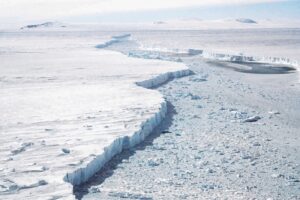
As a new “thought experiment” asks whether the hole in the ozone layer could, theoretically, have been identified decades before it was discovered, Carbon Brief explores the interactions between climate change and the ozone hole.
It is now more than 40 years since the discovery of the hole in the ozone layer over Antarctica, detailed in the journal Nature in 1985.
A study more than a decade earlier had predicted that chlorine-based substances – such as chlorofluorocarbons (CFCs) – could lead to the destruction of ozone in the stratosphere.
So, in theory, how early could the ozone hole have been detected?
New research, published in the Proceedings of the National Academy of Sciences, explored this very question.
Study co-author Prof Susan Solomon from the Massachusetts Institute of Technology is a leading atmospheric scientist. In the late 1980s, Solomon and colleagues identified the mechanism behind how CFCs were causing ozone depletion.
The new study is a “thought experiment”, Solomon told Carbon Brief, asking when scientists could have discovered the ozone hole had they had access to modern satellite observations.
“We found that depletion could have been detected as early as 1957 in the tropical upper stratosphere, where natural variability is especially small,” explained Solomon.
This would have been before the use of CFCs became widespread, Solomon added. Instead, early ozone depletion was caused by carbon tetrachloride, a chemical used as a cleaning agent, as well as in fire extinguishers and for producing refrigerants.
For many decades, the ozone hole and global warming have often been confused by the public and the media, Solomon explained:
“It’s common to imagine that because ozone is so important at shielding us from the UV [ultraviolet] light that causes skin cancer, then having less ozone must mean the Earth would warm up.”
For example, in a 1995 editorial, the Los Angeles Times congratulated the Nobel prize-winning chemists who identified the threat of CFCs to the ozone layer. The newspaper noted that these processes “threaten calamitous global warming by damaging the Earth’s protective layer of ozone”.
However, said Solomon, “the Earth is warmed much more by visible light – UV doesn’t really contribute, so ozone depletion doesn’t cause significant warming”.
Regional impacts
The depletion of ozone actually has a very small cooling effect at the Earth’s surface. But this is more than outweighed by the warming impact of CFCs and other ozone-depleting substances.
This warming impact means that efforts to reverse ozone depletion have had a beneficial impact on the climate.
The Montreal Protocol, a 1987 international agreement to phase out CFCs, “has played – and is playing – a very substantial role in safeguarding climate too”, said Solomon:
“It turns out that the CFCs and their replacement gases HCFCs [hydrochlorofluorocarbons] are strong greenhouse gases, so phasing out their production has not only avoided a lot of ozone depletion that would otherwise have occurred, it also had a big influence on global warming.”
HCFCs were considered as “transitional substitutes” for CFCs – they still damaged ozone, but to a lesser extent – until ozone-safe alternatives were commercially available.
Hydrofluorocarbons (HFCs), which are not ozone depleting, began to be used widely in the 1990s. However, HFCs are also potent greenhouse gases. HFCs and similar replacements are now being phased out under the 2016 Kigali Amendment to the Montreal Protocol.
While the ozone hole itself has only a very small impact on global temperatures, it does have a clear impact on the regional climate over Antarctica.
Prof David Thompson from Colorado State University, working with colleagues including Solomon, has published research demonstrating that “changes in southern-hemisphere winds linked to the stratospheric ozone losses extend all the way down to the ground in some seasons”, explained Solomon.
This has “reduc[ed] warming that would have occurred in interior Antarctica and enhanc[ed] warming in the Antarctic Peninsula region”, she said.
The knock-on impacts include “wind changes [that] actually extend beyond Antarctica to the mid-latitudes of the southern hemisphere, where they even affect rainfall”, she added.
Preprints to watch
Carbon Brief’s pick of new papers under review
- The drying impact over Africa from using stratospheric aerosol injections to stabilise global temperatures would only be minimised “when combined with a strong decarbonisation effort” | Earth System Dynamics
- The El Niño-Southern Oscillation and Indian Ocean Dipole could “shape” the playing conditions at the Rugby World Cup 2027 in Australia | Journal of Southern Hemisphere Earth Systems Science
- A “strong” weakening of the Atlantic Meridional Overturning Circulation (AMOC) would “profoundly alter the climate-carbon cycle system”, underscoring the “importance of explicitly accounting for AMOC risks in long-term climate assessments” | Earth System Dynamics
Noticeboard
- 6 July-25 September: Registration open for experts to review the first-order draft of the Intergovernmental Panel on Climate Change’s Working Group I report
- 7-15 July: UN High-level Political Forum on Sustainable Development, New York
- 19 July: Application deadline for a postdoctoral scholar in transdisciplinary climate research at Penn State University, US | Salary: unknown
- 22 July: Application deadline for PhD project on “climate change impacts on the Antarctic coastal ocean carbon sink” at the University of East Anglia, UK
- 26 July: Application deadline for PhD projects on “AI for land-atmosphere feedbacks during hydroclimatic extremes” at the Helmholtz School for Integrated Data Science in Environmental & Life Sciences, Germany
- 29 July: Application deadline for an assistant professor in Earth and environmental geosciences (palaeoclimatology) at Colgate University, US | Salary: $97,500-101,500
- 31 July: Application deadline for PhD project on Arctic Ocean methane oxidation at Stockholm University, Sweden
Cited is researched and written by Cecilia Keating, Robert McSweeney, Ayesha Tandon, Daisy Dunne and Dr Giuliana Viglione.
Please send tips, feedback and upcoming climate research to cited@carbonbrief.org
This is an online version of Carbon Brief’s fortnightly Cited email newsletter. Subscribe for free here.



The post Cited 7 July 2026: ‘Impossible’ heat | Global ocean record | Climate change and the ozone hole appeared first on Carbon Brief.
Cited 7 July 2026: ‘Impossible’ heat | Global ocean record | Climate change and the ozone hole

Three countries have been named by the Paris Agreement’s compliance committee for failing to submit a nationally determined contribution (NDC) and repeatedly snubbing offers of help with their climate plans.
After months of internal debate over whether to identify serial non-responders, the Paris Agreement’s Implementation and Compliance Committee (PAICC) named the three countries which have failed to engage with it over their NDCs on Friday.
It named Democratic Republic of Congo, Senegal and North Korea in a footnote of its annual report, adding that it decided to name them “with a view to facilitating engagement”, adding that representatives of the three nations had been invited to its meeting in early 2027 “with the purpose of identifying any challenges and constraints”.
“The Committee noted the importance of Parties engaging with the Committee in a timely manner, while noting that some delays may be due to the national capabilities and circumstances of the Parties”, the report said.
-
Under US pressure, World Bank says it will back gas “where appropriate”
The US wants the World Bank to expand its gas support while climate campaigners are pushing for it to end – its head spoke this week of limited backing for the fossil fuel -
IPCC scientists vow to press on with climate reports despite political deadlock
After governments again failed to agree a timeline, nearly 120 IPCC authors pledged to complete their assessment on time and with full scientific rigour -
Paris Agreement committee snubbed over missing NDC climate plans
Many governments have still not submitted a nationally determined contribution to the UN, breaching a key requirement of the Paris Agreement



In July, PAICC said 12 countries had ignored its repeated attempts to discuss why they had not published an NDC as required every five years under the 2015 Paris accord.
Members of the committee had been divided over whether to name them, but at a September meeting decided to do so in their annual report to the annual climate COP summit.
By the time the report was published on Friday, only Congo, Senegal and North Korea “had not communicated an NDC or submitted a [Biennial Transparency Report] and had not yet responded to any of the Committee’s notifications, despite several reminders issued by the Committee in this regard”.
Rainforest and renewable energy ambitions
The silence from Congo and Senegal is notable because the former is home to much of the Congo Basin rainforest while the latter has sought billions of dollars in climate finance to support its renewable energy ambitions.
After Brazil, Congo has more rainforest than any country in the world. This forest, and the country’s peatlands, absorb huge amounts of greenhouse gas but are fast being lost to expanding farmland, charcoal production, logging and mining.
Senegal signed a Just Energy Transition Partnership with Canada and wealthy European nations in 2023, to help it meet its renewable energy targets under the-then government of Macky Sall. It was chair of the Least Developed Countries group between January 2022 and December 2023.

Tejas Rao, who is researching the PAICC as part of a doctoral thesis at Cambridge University, said the governments of the three countries should engage with the committee.
“Engagement costs these governments very little and the committee has shown it will listen,” he said.
“Silence leaves the committee with no basis to help, and it leaves the [governments] exposed to the narrative that they are simply disengaged,” he told Climate Home News.
Paris Agreement requirement
The 2015 Paris Agreement requires all parties to publish an NDC every five years outlining their emissions reduction targets, with each plan meant to be more ambitious than the country’s last NDC.
The latest set – the third round of plans, with new targets for 2035 – was due in February 2025. While most countries missed this deadline, all but around 30 – mostly small emitters but including Egypt, Vietnam and Argentina – have now submitted them.
Over the year, the PAICC – which is made up of government climate officials from developed and developing countries – has been communicating with governments that have not submitted NDCs and trying to overcome barriers to them doing so.
Some nations have cited exceptional circumstances as the reason for not submitting an NDC, a process that requires a significant amount of work in tracking emissions and consulting on how to curb them across the economy. For example, a letter from a Sudanese official to the PAICC, seen by Climate Home News, said that the country’s civil war had led to the suspension of its NDC preparation.
-
IPCC scientists vow to press on with climate reports despite political deadlock
After governments again failed to agree a timeline, nearly 120 IPCC authors pledged to complete their assessment on time and with full scientific rigour -
Under US pressure, World Bank says it will back gas “where appropriate”
The US wants the World Bank to expand its gas support while climate campaigners are pushing for it to end – its head spoke this week of limited backing for the fossil fuel -
Who shapes climate science? The equity question facing the IPCC
Early completion of the next global climate science assessment reports risks excluding research from the Global South, which is key to ensuring the findings are fair
The US and Iran are not signed up to the Paris Agreement and so do not have active NDCs, nor does Taiwan, which is not a UN member state.
Rao said that because the PAICC is “facilitative and non-punitive”, naming the countries “is meant to open a door, not close one – the invited consultation is the point”.
“In recent months, governments that explained their constraints, whether capacity, finance or domestic process, have been met with follow-up and support rather than sanction, and the number of silent governments has fallen sharply,” Rao said.
The post Paris Agreement committee names three countries snubbing it over NDCs appeared first on Climate Home News.
Paris Agreement committee names three countries snubbing it over NDCs