

Weather Guard Lightning Tech

Localizing Offshore Wind: Insights from KIMA Energy’s Maya Malik
Maya Malik, co-founder of KIMAenergy, joins host Rosie Barnes to discuss local content in offshore wind. Drawing on examples from the UK, Denmark, Japan, Taiwan and Australia, they explore policies to encourage domestic manufacturing. Maya shares insights on the key factors for success, including providing certainty on project volumes, offering incentives and infrastructure, and exploiting the potential for low-emission manufacturing in Australia’s growing offshore wind industry.
Sign up now for Uptime Tech News, our weekly email update on all things wind technology. This episode is sponsored by Weather Guard Lightning Tech. Learn more about Weather Guard’s StrikeTape Wind Turbine LPS retrofit. Follow the show on Facebook, YouTube, Twitter, Linkedin and visit Weather Guard on the web. And subscribe to Rosemary Barnes’ YouTube channel here. Have a question we can answer on the show? Email us!
Pardalote Consulting – https://www.pardaloteconsulting.com
Weather Guard Lightning Tech – www.weatherguardwind.com
Intelstor – https://www.intelstor.com
Rosemary Barnes: Welcome to a special episode of the Uptime Wind Energy Podcast. I’m your host, Rosie Barnes, and I have with me today, Maya Malik, who is the co founder of KIMAenergy. Thanks for joining us, Maya. Thanks, Rosie. Happy to be here. So today we’re going to be talking all about local content and how countries can try to get more manufacturing in their region when they’re going to be installing a lot of wind energy.
So I know this is an area that you’ve worked in a lot. Would you be able to just give us a bit of background about the kinds of work that you’ve done in this industry over the years?
Maya Malik: Yeah, sure. So I have a 20 year background in energy and offshore wind. Actually I first started in, in petrochemicals working in Australia and Europe and Asia.
On the construction projects and 13 years ago, I moved to offshore wind. So I worked on projects in the UK, in Europe and Asia. And then together with my business partner, we started up KIMAenergy, which we are an advisory company focused on offshore wind in APAC. And I guess our niche is doing offshore wind in new markets.
For most of our careers, we’ve basically worked on projects that are, pioneering in nature in the countries that we’ve worked in. Now we are based in Melbourne and yeah, continuing to support other developers with their projects in new markets.
Rosemary Barnes: Okay. So you’ve worked a lot on a lot of different offshore wind projects all around the globe. I know that from the conversation that we’ve had before, before this recording. Can you tell me about yeah, just a little bit of A few examples of some interesting offshore wind projects that you’ve worked on.
Maya Malik: Most interesting and I guess most impactful for me was working on projects in Taiwan. I’d worked on projects in Europe but there, the industry developed quite organically over, a period of two decades projects, getting incrementally bigger and technology incrementally improving.
And Taiwan, I would say was the first market outside of Northern Europe to implement offshore wind and also was doing it in a way to accelerate the industrialization. So go from, doing commercial scale projects over a period of multiple years to, a handful of years. Yeah I I moved there together with another colleague from my company, and we were essentially there to win projects and, do a show in for the first time in in Taiwan.
And yeah, it was a really It was a cool experience. Yeah, just really not having, the suppliers, not having the experienced people on the ground and just, it was down to, you and what you knew and, the resources you could personally call on. To do to do projects.
Yeah, it was a real growth experience, I think for all of us in the industry at that time. But yeah, super, super great achievement.
Rosemary Barnes: You’re Australian, but you started in Australia. And then Europe, you’re in Denmark. Is that right?
Maya Malik: I was based out of the UK working for the main Danish utility.
So yeah, that was my second home. And then, I guess. Denmark did offshore wind, they were important in the innovation of the technology, but UK were the ones to really take it to a commercial scale. So put the policies and targets behind doing offshore wind at volume, allowing it to industrialize.
And then the next market to do that would be Germany. I was quite involved on those projects as well. And then we started looking outside of Northern Europe. Yeah, there was an important period in 2017 when the auction price for Osherwind showed that, the LCOE was cheaper than gas.
And then it really changed everything. And in our industry and I would say exploded at that point and then, yeah, and then the first market that, that would move to implement offshore wind fastest was Taiwan. And for me, it was, I’d lived in Asia before and I loved it and it was closer to home.
So a great chance to do lots of things and tick many boxes.
Rosemary Barnes: Okay. And now back to Australia where we’re only just getting into gear now. Can you talk a little bit about Yeah. What’s going on with offshore wind at the moment? I think a lot of our listeners are based in the US so might not be a hundred percent familiar with what’s going on in Australia, but yeah, it’s an exciting time.
Can you, yeah, to summarize where we’re up to now? Yeah, sure.
Maya Malik: So yeah, it’s a kind of, it’s a late market, quite an immature one, but actually they. did a fantastic job to very fast put in place the framework to award seabed rights. And I would say, the framework they put together is amongst the clearest I’ve seen globally.
So it was very, transparent and easy to understand what you had to do to secure exclusivity for your offshore area. So Australia is following a two stage process to award project rights. So first, there’s a competitive price to give away CBAD exclusive rights for CBAD area. And then there’s a second process to give support for revenue.
So this will be similar to U. S. and other countries like U. K. and Korea. And the process towards CBAD rights is done by the federal government. So they do it across all states in Australia. Yeah. And they have essentially looked across the states, where there’s developer interest, where it was viable to do offshore wind and where there was supporting infrastructure that could be developed by Carbis.
And they basically narrowed it down to six areas. And they have released what they call a draft declared area for all sex and some are starting to be finalized. They also have released invitations to apply for what is called a feasibility license, which is essentially your exclusive right to develop in an area.
And yeah, the first licenses have just been awarded weeks ago for an area in the state of Victoria called Gippsland. And I think the second area will be in New South Wales that will be announced soon. And then the next step, awarding revenue, is going to be run by the state government rather than the federal.
So there’s limited information on the regime and exactly how it will work, but it’s expecting that it will, be very similar to the UK CFD regime.
Rosemary Barnes: Yeah, so the, they’ve announced six, six areas right in Gippsland. And then I saw that there’s another six shortlisted. And I was a bit unsure about what happened there.
Did the government like divide up the area into parcels of, I want to always want to say land, but I guess parcels of seabed and let people bid on them. Or was it up to developers to pick what they thought would be a good spot and then choose exactly which area. First zone
Maya Malik: has awarded licenses. So this is a zone of Gippsland.
And then 12 licenses have been awarded in Gippsland. Yeah, equivalent to about 25 gigawatts of offshore wind. And of these 12 licenses, six are confirmed and the other six are in the process of being confirmed. Yeah, then in terms of how it, how the framework is designed and how you select and are awarded your sites.
So what the government does is initially announces a declared area. An issue is an invitation for developers to apply for a feasibility license. And for Gippsland, the area was 15, 000 kilometers squared and each developer could apply for as many licenses they want. Each license was allowed to be up to 700 kilometers squared in size, supporting about two and a half gigawatts of offshore wind.
And then, the process to decide. Your license area was up to individual developers. There was no coordination and there was also many prerequisites. So in other markets, you might need to pre qualify by having certain consents and so on. But here it was essentially you were. To write a proposal that showed, your technical capability, your financial capability, and also how you would benefit the economy.
And then based on that application and the area you chose, government took that and made their assessment over a period of around eight months and they first decided who would Met the minimum merit criteria. So they had a criteria, financial ability and if you met merit criteria and put into the next level, and then they reviewed who overlapped with who, and then if you’re, if you met the merit criteria, but you overlap with someone else who also met it, then the government has a kind of discrepancy to decide who has more merit.
And awarded to the person with more merit. So it’s a little bit of luck in this, if you choose an area that no one else chose, then. Then if you meet the minimum bar, you’re probably getting a license. But if you meet an area that a lot of people chose, then it’s going to go to the person who is deemed, yeah, is the best developer according to the government score sheet.
And then in some cases they could say you were equal in merit. And then they would put you into a private negotiation to decide how to divide the area that you overlapped.
Rosemary Barnes: Okay, but there was no auction or anything, like they ran in New York?
Maya Malik: No, so there were, the regulations did allow for if if the two developers that were put into a negotiation couldn’t agree, it did allow the government to ask for each developer to then submit a price.
And then the highest bidder would win that area. But of course, all developers would like to award that. And then there was yeah, that did not happen in this case. It could happen in future. But essentially yeah, it’s quite a cheap process compared to other markets where you need to, Commit to and pay for a seabed lease.
This is this is not, you’re not getting a lease either. So the rights aren’t as firm as in other markets where you get a seabed lease in return, you just get a right to do your surveys and progress your development works, but you’re also getting that right exclusively. That as long as you progress the works and get it to the next stage.
No one else is going to be able to do the same for your area.
Rosemary Barnes: It sounds like a lot, right? Up to 25 gigawatts just in this first region. Any crystal ball gazing about how many of these projects will eventually go to fruition? And when do you think the first ones will start to come online? If
Maya Malik: you step back and look at Australia, they’ve released a lot of seabed.
If you add up all these declared areas, it’s around 100 gigawatts that it can support. And consider that Australia, the full installed capacity in Australia is 80 gigawatts. That’s a lot. And what I found quite interesting is more than half of it is for floating which is, going to have higher end costs and further away.
And considering Australia also has lots of onshore energy options. And here it puts a question mark against, right? So what is actually going to be built out of all this seabed area released? That is the magic question. And then if you just look at Gippsland, so you had this, 15, 000 kilometers squared.
So now what’s awarded in licenses is a lot less, but still 25 gigawatts. Then if you look at how much grid connection capacity is being allocated and built out, That’s seven gigawatts. Then if you look at what the state target is by 2040, that’s nine gigawatts. So it’s allowing for also some to be offshore wind to be done on the other side of the state where they also have a declared area.
So of the 25 gigawatts, seven gigawatts can be connected to the grid. At least with, with the plans that are around today. Yeah, you are having still quite a lot of competition and I think like particularly in the auction stages, it will be highly competitive.
I think it’s quite interesting at the 25 gigawatts. Also, a lot of that is floating. and naturally not be as competitive in an auction. So it’s I’m not sure how they would, Like when I’ll participate unless a separate regime is created to support that technology.
Rosemary Barnes: Okay let’s move on a little bit because the main thing that I wanted to talk to you today about was the manufacturing associated with having such a, huge potential pipeline of offshore wind projects.
Another recent little bit of Australian. government action in recent weeks was this future made in Australia announcement from the government that they’ve got, like a lot of money set aside for manufacturing renewables and energy transition stuff in Australia. There’s a lot for hydrogen.
There’s a lot for critical minerals that then I think. It’s all kinds of clean energy in general. Yeah. So I just wanted to talk to you about what does it take to actually get manufacturing happening locally? And I know that this is something that you’ve been working on and you’ve seen other countries like Taiwan, let’s start with them as an example.
What did they do to, when they, wanted to start up an offshore wind industry there, what actions did they take to make sure that industry also brought manufacturing industry with it to the country? So currently
Maya Malik: you have just one state really committing to offshore wind by putting it into the energy mix.
This is Victoria saying they do nine gigawatts by 2040. And then, yeah, you have a lot of seabed being given away. It’s still not really clear how big the industry here is going to be. And and will there be appetite in other states to support the grid upgrades and the offtake regimes that you need to realize projects.
So in my view, until the industry or suppliers, can be confident about the volume and the timing of offshore wind build out in Australia, it’ll be really difficult for them to invest into manufacturing new facilities. But I think if they could see this or get this certainty, I actually I’m not as pessimistic as most Australians who are beating themselves up constantly about how bad we are at manufacturing.
I actually think there’s a lot of potential and a lot could be done here. I really think the key thing, to address is this volume and certainty of projects because that’s when you get manufacturing.
Rosemary Barnes: Yeah, you definitely see with offshore wind around the world when there’s big projects that set in stone, then you do start to see factories opening because the components are huge, right?
It’s over a hundred meters long and all the. Substructures are large as well.
Maya Malik: And it’s so correlated. And let’s look at an example in the UK, you had the industry sector deal in 2018, 2019, this is between industry and government. And government essentially saying, we want lots of local content.
What’s it going to take, and what agreements can we make around, developing local content. And, the agreement they came to is okay. Developers will aim for 60 percent local content. Starting from where they were in the twenties and thirties. And in return, government would provide a 40 gigawatts pipeline.
Volume of projects and, steadily releasing X amount per year with, CFD regimes behind it to support. And, and then behind that was a number of other things like supporting the upgrade of harbors and tax reliefs, et cetera. But yeah, in essence the top level, give and take there was you give us 60%, I’ll give you volume as it, you can really break it down to that.
And yeah, for me, that’s, that kind of piece is still missing. So it’s hard to move on to the next and then, because I think if you look at what we have now existing, so it’s not a lot of specialist vessels and a low manufacturing base capability. Okay. Thanks. So to get to that next step you need investment and you it’s hard to get the investment without the volume, without the contracts.
So that’s the sort of yeah, thing to aim for. And then you have these other enablers, grants, tax reliefs, et cetera, that all help, right? All help to pull it together. So yeah. And I guess I can also add looking at the current situation we did in the last project I was on, we did quite a detailed local content study for offshore wind in Australia.
And I found in summary, what it showed was actually the skills here. Really high quality and absolutely the right skills given our parallel heavy industries to do a lot of stuff locally. And then, yeah, the limitation is facilities quayside space, so harbors that can support manufacturing and specialist vessels.
And so that leaves you in an area because you’ve got all the right skills of people. So we’ll do great in, development phase in operations and maintenance let’s say in civil structures. So yeah, you have very high local content and job creation where it’s more dependent on skills and people.
And then you have, some scopes that are dependent on manufacturing and specialist vessels, like the turbines, foundations, installation, cables, the local content quite limited. And yeah, it needs a, it needs an investment.
Rosemary Barnes: And what are, what other models are being used around the world?
I know that when we talked before, you told me about. The approach that they took in Taiwan, for example, that was really different to that. It sounds like in the UK, it’s more a matter of, provide certainty. Manufacturers are going to want to put factories there just because that’s the most logical place to supply these huge components.
But that’s not. That’s not what Taiwan did, right? They took a much more micromanagement approach. I don’t know if that’s the right word. So I think UK
Maya Malik: is what I would call like a soft local content policy. And interestingly, I’ll go incrementally, so UK, quite soft I think they were also quite late and they were also stuck to a model for instance, when it came to developing harbors, very keen on more promoting private sector investment.
Rather than government led upgrades, which is something let’s say Denmark did, and therefore did it much faster and we’re able to capture more manufacturing opportunities despite not having a low, a big local pipeline. So yeah, one thing you can do is soft policies and give industry like a clear signal that this is what you want.
And then, those that, toe the line will get the projects and then then you have, the countries like Denmark, which is more focusing on what enablers, can I put in place and it’s a form of subsidy and they just, built a really, good, big harbor that was well placed and could support, industry and attract people to set up facilities and so on.
And therefore, despite not having their own project pipeline who could capture the opportunities in the region. Then you have someone like Japan and they have a sector deal as well. So similar to the UK got together with industry and said, okay, we would like 60 percent by I think it’s 2040.
And also gave grants for, setting up plants and factories and. And then took it a bit step further. So then also made it part of the auction process. So it’s part of the auction. You submit a proposal and percentage of score is your price and the percentage of your score is also your contribution to the local economy and your collaboration with local stakeholders.
It it’s the. Becoming a bit more, hard requirements, but still giving developers a lot of flexibility about how they do it and also how much they want to do. But then obviously the more you do, the better you score. So you have a much better chance of winning a project.
Then then we’ll go to Taiwan. And I guess they’re on extreme end. After doing their demo projects, they created a scheme. If they had the. Selection process followed by an auction process and the selection process was very much around, attracting global developers to, to come to Taiwan and, essentially make sure offshore wind happen.
And then the selection process, the reward was a very high feed in tariff. And you weren’t required to submit a price that was predetermined, that tariff was your carrot at the end. And there was a qualification criteria, which you had to promise to meet a certain amount of local content, and then you were also invited to submit a proposal that showed, how.
Great, you were technical, financial wise, but also gave you opportunity to offer even more local content. And then, person with the highest score wins and, you get a high score by offering more local content. And then this has evolved through various rounds. So in. In the very first selection round, the first project, they wanted to prioritize fast delivery, low complexity.
So they said, you guys get a break from local content. And then there was another three gigawatts that were awarded with grid connection dates, across several years. And the earlier ones had to do less. And the ones awarded with later connection dates had to do more. Ironically, this ended up in a situation where you had quite a small volume of projects that had to do the most local content.
And then therefore the contracts for these local content were quite small in nature and didn’t have the volume of pipelines ended up being very expensive. And yeah, you have this trend of, instead of cost going down cost going up. Then then you had a period of a, then you had an auction for another couple of gigawatts where they took away all of the content but they’re expecting that they had, already had enough pipeline that local content would naturally happen, but it wasn’t quite there.
And because it was so expensive, um, it wasn’t the natural choice. So then when they brought in the next auction. They, um, they didn’t make it mandatory, but they made it a competition of local content. So who can deliver the most wins? And it’s gone through various iterations because so many developers are struggling with it.
And yeah, and I would say regrettably in Taiwan, so now they have several gigawatts of projects. But. The costs there are increasing and continue to increase. So, yeah, it’s it can, it’s started to concern investors and some people have exited the market. And it, because like this increase in the content and costs is combined with reduce.
Subsidies and support on the revenue side. So there’s a big squeeze, right? From a couple of angles.
Rosemary Barnes: Yeah, it’s interesting because it sounds so obvious when you say, we’re going to have this big industry here. It sounds obvious to say, Oh yeah we have to make all of that locally. Or as much of it locally as possible.
That’s the best thing for the nation. But it obviously, the evidence shows that it comes with trade offs in terms of how fast you can get your industry started and how expensive it is too. So yeah, I guess that’s the other side of the coin that. We don’t seem to focus on too much. It’s always just, local manufacturing is good.
But yeah, there’s trade offs.
Maya Malik: Yeah. And it’s very complex, like these projects and particularly in new markets when you’re just getting an industry going. And I think the other thing is when you’re in a situation like Taiwan and potentially Australia. It’s not like a, it’s not like a natural evolution of projects.
You’re really trying to fast forward the industrialization and condense it. And almost like before your first project is built, you’re already auctioning, something 10 gigawatts later. And you’re demanding people to price in the learning curve and the cost reduction that you haven’t actually seen yet.
And so all the suppliers have seen is this first project that they did, that they really struggled with and was super expensive. Then you ask them don’t worry. This is in 10 years time, you’re going to be loads better by then. So just give me something really cheap. And they’re like, no, we’re still.
Burning from that last time we did. And so like people don’t price in those costs reductions until they actually experience them. And you will get them and they will experience them initially, but you can’t get people to price that. in ahead of time. I feel like sometimes in these regimes, yeah, it looks great on paper.
And in theory, also, you think that’s what should happen, but also because you’re pre planning and you’re running auctions many years before stuff is actually built. Yeah you Yeah, maybe it’s a bit unrealistic, the expectations that people will forecast the reductions and be confident to sign contracts against that.
Rosemary Barnes: Yeah. What is the typical timeframe to go from, starting to think about a project to actually turning on your first turbine?
Maya Malik: I would say average is about 10 years. But it does depend on the country, but to get in the development phase, the like Australia, for instance, the critical path is actually approvals.
And then these processes, these competitions for awarding CBAD and off take. Actually also add quite a bit of time to your schedule because there’s a lot that you don’t start until you have certainty because you don’t want to make investments and then that kind of has the effect of extending your overall timeline.
I think in some kind of, actually in Taiwan it’s quite accelerated. So from when, when people were awarded their sites and tariffs. Like we were financially closing two years later, which is very fast. I think in Australia, from when you get your feasibility license, I think you’re more like five years later having a financial close and it’s another three years to construct.
Rosemary Barnes: It’s
Maya Malik: our
Rosemary Barnes: expectation. So we’ll be very lucky to see anything in this decade. I think
Maya Malik: you might get something in the early 2030s. Their target is two gigawatts by 2032. I think that’s realistic.
Rosemary Barnes: I want to try and tie this up nicely. So knowing what you know about all the different, the ways that all the different kinds of local content encouragement has happened around the world, what should Australia be aiming for?
I should we be manufacturing locally and if yes, what parts of it and how to encourage that?
Maya Malik: I think, we have the volume and I would say if we have the volume, I think the first step is to really decide how much do we want and how much can really stand behind. Seabirds, it will be, my cup of tea.
What are we willing to do to build good connections, to upgrade the harbors, to, give revenue support regimes and then combine that into a national target. You might even do a collaboration with New Zealand and say regionally. We’re going to be 40 gigawatts by 2040.
I don’t know. And then then that is a kind of anchor figure. And that figure is not, I know targets get a lot of flack because people see them as, very fluffy commitments that never get delivered. The key is to make it not just a, figure that we dreamed up, but actually something that works that is, actually supports an energy mix and Yeah, I can say with kind of commitments behind it to give investors, suppliers the confidence to say, Hey, this is actually going to happen.
And so we’re going to be ready for this. And then I think then it’s then putting in place the incentives and the infrastructure. Thing about offshore wind is the components are huge, they’re massive and transporting them inland, even short distances is really slow and difficult and risky.
So all manufacturing needs to be done by the quayside. And you’re talking now big components, you’ve got to get, your materials in, you’ve got to fabricate, you’ve got to store half built stuff somewhere, you’ve got to store fully built stuff somewhere else while they’re getting ready to be shipped offshore.
And so you need a lot of space on the key side, but also hinterland space. And, that those kind of harbors that are being developed 10 years work easily, right? So you need to be thinking about that and doing that, as soon as possible. And then there’s the things you can do on top of that like grants to give.
It’s a bit like this Policy that’s recently been announced say make something here. We’ll essentially subsidize it. You can give to land that’s happened in places like us and Taiwan, where they essentially say, Hey, we give you this, this quayside land for free. Please build something here.
You can give tax breaks. Like in the UK, the big T side development, which will now be, I think the biggest brownfield development in it is essentially a free port. No customs, no taxes very easy to operate in, export out or service, your domestic needs. Yeah, so there’s a number of things you can do to then, make it an easy decision.
But I will say, so start starting with the volumes. Is really key, and you, then you and you could focus at least initially on what can you deliver just to support the domestic market. And if you can also show, then as a hub, it’s super attractive to, use this as somewhere to export out and support, other markets in the region is a natural evolution.
I think Australia, yes, it’s it’s a it’s far. So you know, logistically it’s more expensive, but that’s also what will help it because it’s also going to cost a lot to make something somewhere else and ship it here. So actually you can have a bit of a cost advantage here making stuff because you’ve got that, that cost saving from not transporting it.
And I think Ben, despite this cost and you’ll say yes, and probably, you More expensive resources. I think Australia seen, it’s got, low interest rates. It’s got a sort of stable economy, politically very stable. So I think within the region, it’s also got a lot of things going for it that will make people comfortable, English speaking workforce, things like that.
Yeah, and I see something coming next, which is a demand for things to be made. With low emissions or no emissions, and then there’s going to be a race for not just who can manufacture the cheapest, but who can manufacture the cheapest using all green energy. And then I think a lot of energy intensive manufacturing is going to depend on how cheap your green energy is.
And Australia has such a big there’s something to exploit, when that comes and in, in some, spaces it’s already there. And I think, yeah, it will be that sort of thinking that makes it more and more attractive to do stuff here, to support an industry here.
Rosemary Barnes: Yeah. That’s a really nice optimistic way to finish.
And that’s one of my big hopes for Australia too, that one of the things that I, Constantly carry on about green manufacturing in Australia. Oh, good. It’s my rant too. It’s feels like it’s starting to, enough of us are ranting about this for enough years and now, Politicians are starting to talk about it too.
So maybe we’ll finally manage to pull it together. Okay we’ll finish up there. Thanks so much for joining us. That was definitely interesting and I learned a lot give me a lot to think about. So thank you. Thanks. Thanks. I really enjoyed it.
https://weatherguardwind.com/localizing-offshore-wind-kima-energy/

 Some people may be, but, to a person, the foreigners I’ve met are deeply saddened, and terrified of the consequences of the Trump regime.
Their feeling is simply that America re-elected a convicted felon, rapist, and traitor who attempted to overthrow the U.S. federal government. If we’re willing to do that, we’re capable of anything, regardless of how depraved.
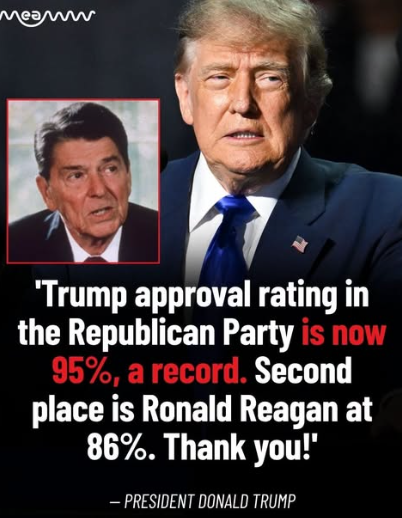 I’ve never understood why those who compose total bullshit like this don’t go for the gusto. Why 95% and not 99% or 100%?
Trump’s actual approval rating among Republicans is somewhere between 75% and 80%, as can be easily verified by anyone on Earth with a cell phone or computer. That number continues to dwindle, as he faces more pressure regarding the war, gas prices, child rape, etc.
Obviously, the president’s supporters are suckers for his lies, but isn’t this a bit over the top?
 I get a call every week or so from someone working for a start-up in oil exploration, hoping that I’ll invest. I guess my name and cell number got collected somehow from various online searches I’ve made.
I’m always quick to explain, “Oh, sorry, I don’t support wrecking the planet, even if I can profit from it. Neither should you. Bye now.”



-

 Greenhouse Gases2 years ago
嘉宾来稿:满足中国增长的用电需求 光伏加储能“比新建煤电更实惠”
-
Climate Change1 year ago
Guest post: Why China is still building new coal – and when it might stop
-
Greenhouse Gases1 year ago
Guest post: Why China is still building new coal – and when it might stop
-

 Climate Change2 years ago
嘉宾来稿:满足中国增长的用电需求 光伏加储能“比新建煤电更实惠”
-

 Renewable Energy11 months ago
Sending Progressive Philanthropist George Soros to Prison?
-
Climate Change2 years ago
Bill Discounting Climate Change in Florida’s Energy Policy Awaits DeSantis’ Approval
-
Greenhouse Gases1 year ago
嘉宾来稿:探究火山喷发如何影响气候预测
-

 Carbon Footprint2 years ago
US SEC’s Climate Disclosure Rules Spur Renewed Interest in Carbon Credits