

The Southern Alliance for Clean Energy (SACE) is proud to announce a forthcoming grant from the U.S. Department of Energy (DOE) to engage, understand, and plan for the equitable electric mobility needs and priorities of underserved Black communities in Georgia.
In partnership with EVNoire (EVN) and Clean Cities Georgia (CC-GA), SACE will utilize the DOE funding to ensure that underserved Black communities within three Georgia cities – Albany, Atlanta, and Savannah – are actively engaged and empowered to create and deploy equitable, accessible, electric mobility initiatives.
This project will gather and center community priorities, strategies, and voices to ensure that electric mobility investments from federal programs such as the Bipartisan Infrastructure Law (BIL) and the Inflation Reduction Act (IRA) deliver what communities need and want. Strategic implementation of these federal funds will help achieve the objectives of the Justice40 initiative, which aims to ensure that 40% of the benefits from national clean energy and climate investments reach disadvantaged communities disproportionately affected by environmental and socioeconomic challenges.
Our work aims to put communities in the driver’s seat to ensure this landmark federal funding reaches them and is implemented in ways that address the mobility needs and priorities they have identified. Though the project focuses on engaging and benefiting underserved Black communities in Albany, Atlanta, and Savannah, Georgia, learnings will be shared widely to help realize Justice40’s intent throughout the Southeast. – Stan Cross, SACE Electric Transportation Policy Director
As federal funding begins to flow through BIL and IRA, the Southeastern United States is ripe with opportunities to expand electric mobility, advance EV charging infrastructure, promote EV ownership, attract manufacturing jobs, and electrify fleets. Georgia leads the region across a range of transportation electrification metrics, making the state an important player regionally and nationally.

Source: Georgia – Transportation Electrification in the Southeast, SACE and Atlas Public Policy, August 2023
However, in Georgia and across the Southeast, there is an unmet need to ensure that federal money is invested efficiently and equitably to secure the best outcomes for our region’s communities, particularly the underserved.
Together with our partners EVN and CC-GA, SACE will work over the next three years with stakeholders in Albany, Atlanta, and Savannah to enlist representative partners, including grassroots organizers, to engage deeply with the cities’ underserved Black communities. Along with creating community-centric strategic plans and identifying pathways to electric mobility project funding and implementation, the project will also engage education partners, including Historically Black Colleges and Universities and the Technical Community College System of Georgia, to identify job skill gaps and ensure communities have access to the job training needed to participate in the state’s booming electric transportation sector.
Together, the partners in this project will work to understand barriers and provide pathways to equitable, accessible transportation electrification and workforce development for underserved communities in the Southeast; and to ensure that investments through BIL, IRA, Justice40, and other federal programs benefit these communities.
This project will elevate awareness and ensure that federal money is invested efficiently and equitably to bring about community-driven outcomes that are timely and relevant to the communities engaged. In addition to unlocking community-centered access to federal funding and workforce development, project partners will also leverage learnings from this work to inform utility, state agency, and EV industry investment strategies to meet the needs of underserved communities in Georgia and beyond.
ABOUT OUR PARTNERSHIP
SACE brings 35 years of experience working to promote responsible and equitable energy choices to ensure clean, safe and healthy communities throughout the Southeast. For the past decade, SACE has provided regional transportation electrification leadership through community engagement; local and state government outreach; regulatory and legislative advocacy; and research, blog, and editorial publications. SACE has provided over 1,000 ride-and-drives to consumers and fleet operators, consulted with 100+ local governments on EV planning and fleet transition, played a leading role in state-level EV planning in Ga., Fla., N.C., and S.C., and co-founded the Southeast Electric Transportation Regional Initiative. Learn more at www.cleanenergy.org.
EVNoire is a consulting group specializing in electric, connected, shared and autonomous mobility solutions. EVNoire leverages the expertise of its sister organization EVHybridNoire (EVHN), the nation’s largest network of diverse EV owners/enthusiasts, with thousands of members working to increase multimodal electrification and decarbonization efforts in under-resourced communities that are impacted worst and first by transportation emissions. EVHN’s Georgia chapter has hundreds of diverse EV owners/enthusiasts. As 1 of 4 organizing partners of NDEW and DEED, EVHN meets legislators to promote equitable e-mobility policies, public health, infrastructure deployment, and workforce opportunities. Learn more at EVHyrbridNoire.com.
Clean Cities Georgia is a DOE-designated coalition in the national Clean Cities network. Clean Cities is a nationwide effort to advance the adoption of alternative fuels, electric vehicles, and other clean transportation technologies to reduce petroleum consumption, decrease greenhouse gas emissions, and promote sustainable transportation solutions. There are more than 75 Clean Cities Coalitions across the country and Clean Cities Georgia holds the distinction of being the first coalition DOE officially designated in 1993. Clean Cities Georgia’s partnerships with federal, state, and local agencies, utilities, public interest groups, and public and private fleets are focused on the deployment and use of cleaner forms of transportation. Learn more at www.afdc.energy.gov/cleancities/coalition/atlanta.
The post SACE and Partners Earn DOE Grant to Engage Underserved Black Georgia Communities in Creating Equitable Clean Energy Transportation Initiatives appeared first on SACE | Southern Alliance for Clean Energy.

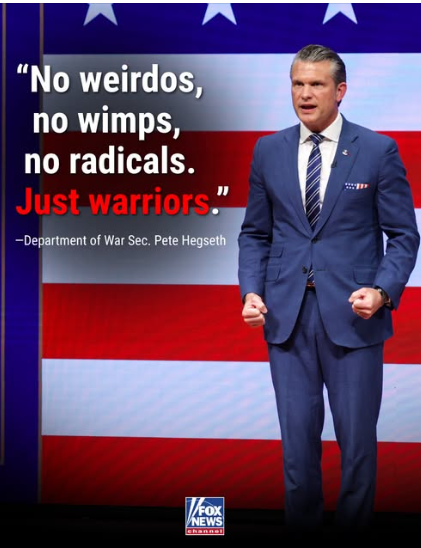 You and I live among tens of millions of people who think that, after the U.S. Marine Corps has successfully protected our nation for 251 years, it will finally be made battle-ready by Pete Hegseth, an alcoholic Fox News personality.
That’s pathetic.
 In an earlier post, I wrote: Well, of course universities are the enemy of the Trump administration, and all other things stupid.
A key characteristic of college graduates is that we are unlikely to believe that “socialism is evil,” a core platform of the current-day Republican party.
We find this this so hard to swallow because we are aware of the social democracies of Europe, Central America, and Oceana; in fact, many of us have visited these nations and have come to see why their people consistently rank at the top of the World Happiness Rankings.
We also understand that the United States is far from a pure market economy, in that it offers its people a great number of free services: roads, bridges, tunnels, firefighting, national defense, embassies, air traffic control, food safety, libraries, public schools, FEMA, criminal justice and corrections, law enforcement, OSHA, auto safety, disease control, the upkeep of our local, state, and national parks and beaches, animal control, space exploration, and dozens of other items.
Stupidity (along with mean-spiritedness) is really what U.S. politics rests on at this point; without it, the entire Republican party would collapse. Sure, it would be supported by a handful of greedy billionaires who couldn’t care less about the needs of the world’s people, but it would control a tiny fraction of the electorate.
Are we headed toward oligarchy?
We wouldn’t be the first democracy to topple. I go back to what so many of my acquaintances from overseas have told me, “You have been the envy of the world since long before I was born. Now we just feel sorry for you.”
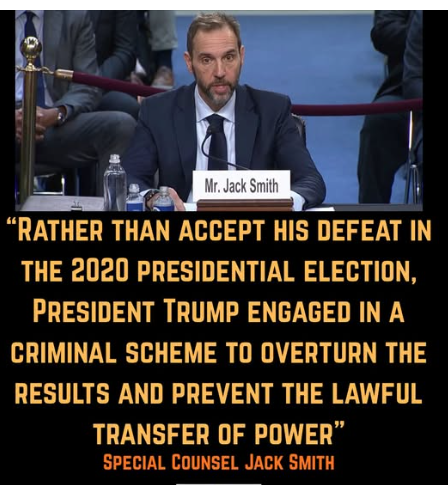 When we think of the U.S. population, we generally think of patriots who honor and respect our Founding Fathers, the flag, the Constitution, and rule of law.
That’s what makes it so incredibly bizarre that we re-elected this traitor in 2024, leaving the rest of the world shaking its head in pure disbelief.



-
Climate Change1 year ago
Guest post: Why China is still building new coal – and when it might stop
-

 Greenhouse Gases2 years ago
嘉宾来稿:满足中国增长的用电需求 光伏加储能“比新建煤电更实惠”
-
Greenhouse Gases1 year ago
Guest post: Why China is still building new coal – and when it might stop
-

 Climate Change2 years ago
嘉宾来稿:满足中国增长的用电需求 光伏加储能“比新建煤电更实惠”
-

 Renewable Energy11 months ago
Sending Progressive Philanthropist George Soros to Prison?
-
Climate Change2 years ago
Bill Discounting Climate Change in Florida’s Energy Policy Awaits DeSantis’ Approval
-
Greenhouse Gases1 year ago
嘉宾来稿:探究火山喷发如何影响气候预测
-

 Climate Change2 years ago
Analysis: China’s CO2 falls 1% in Q2 2024 in first quarterly drop since Covid-19