

Geht man auf eine Wanderung in den Bergen, so schaut man sich meistens als ersten Schritt eine Karte an. Genauso ist es auch auf dem Ozean wichtig eine Karte zu haben. Nicht nur eine Karte, in der die Küsten und Inseln verzeichnet sind, sondern vor allem eine detaillierte Karte der Topografie des Meeresbodens. Während Mitte des 19. Jahrhunderts bis Anfang des 20. Jahrhunderts Tiefenmessung noch mit einem Gewicht am Ende eines langen Seils durchgeführt wurde, wird heute in den meisten Fällen das vom Kieler Dr. Alexander Behm 1913 patentierte Echolot genutzt.
Die beste und auch wissenschaftlich anerkannte bathymetrische Daten-Zusammenstellung erstellt GEBCO (englisch: General Bathymetric Chart of the Oceans). Der Datensatz basiert auf zusammengetragenen Daten aus Schiffs-Tiefenmessungen und wurde erstmals vor 120 Jahren der Öffentlichkeit vorgestellt. Heutzutage besteht dieser Datensatz weitestgehend aus so genannter prädizierter Bathymetrie. Das bedeutet, dass Satellitenmessungen gemacht werden, die im Anschluss mit von Schiffen gemessener Bathymetrie verifiziert und ergänzt werden können. Die Satelliten können über verschiedene physikalische Zusammenhänge aus der gemessenen Meeresspiegelhöhe ableiten, ob sich unter Wasser ein Seamount befindet. Dieses Verfahren ermöglicht zwar den gesamten Ozean abzubilden, ist aber sehr ungenau. Seamounts mit einer Größe unter 2 km können zum Beispiel nicht gemessen werden. Der GEBCO Datensatz wird mittlerweile jedes Jahr erneuert. Der einzige Nachteil ist, dass es ihn an detaillierten Metadaten mangelt. Metadaten sind Hintergrundinformationen, die zum Beispiel angeben, von welchem Institut oder auf welchem Schiff die zur Verfügung gestellten Daten gemessen wurden.
Da der Datensatz in großen Teilen auf Schiffsmessungen basiert, ist er stark abhängig von Schiffsrouten, zwischen denen sich teilweise sehr große Lücken befinden. Es sind erst circa 20% des Meeresbodens auf diese Weise vermessen (Mayer et. al 2018). Auf dieser Reise wollen wir einige dieser Lücken kartieren. Genauer gesagt, wollen wir sogenannte Seamounts kartieren.
Seamounts sind unter Wasser liegende Berge meist vulkanischen Ursprungs. Sie sind typischerweise kegelförmig, haben oft Krater, lineare Kämme oder flache Gipfel. Die Form ist häufig abhängig von der Entstehung des Seamounts. Geformt werden sie an Orten, an denen es tektonische Aktivitäten gibt, so zum Beispiel in der Nähe von ozeanischen Rücken, Inselbögen oder an Stellen, wo unter der tektonischen Platte heißes Material aus dem Erdmantel aufsteigt. Seamounts, die in der Nähe von Plattengrenzen entstehen, also dort, wo die Lithosphäre (die Erdkruste und der äußerste Teil des Erdmantels) noch frisch entstanden und dünn ist, sind meistens eher klein. Klein heißt in diesem Fall weniger als 2.5 km Höhe. Größere Seamounts mit 3-10 km Höhe entstehen häufig an Stellen, wo die Lithosphäre schon älter und dicker ist. Obwohl nicht genau bekannt ist, wie viele Seamounts es gibt, ist eines sicher: es sind sehr viele!
Aufgrund ihres vulkanischen Ursprungs sind Seamounts aus geologischer Sicht sehr interessant, da sie einen Einblick in die Zusammensetzung und die Temperatur des Erdmantels geben können. Auch für ozeanographische Betrachtungen sind Seamounts wichtig, da die Bathymetrie Einfluss auf Strömungen und Vermischungsprozesse hat. So können Seamounts als Barrieren fungieren, die verhindern, dass kaltes Tiefenwasser sich mit dem warmen Oberflächenwasser mischen kann. Zu guter Letzt sind sie auch Mittelpunkt eines diversen Ökosystems. Das liegt daran, dass nährstoffreiches Tiefenwasser an ihnen aufsteigt (diesen Prozess nennt man Upwelling) und somit die perfekte Grundlage für Fische und eine vielfältige Flora und Fauna bildet.
Jetzt wissen wir also, warum wir uns für Seamounts interessieren sollten, dass es unglaublich viele von ihnen gibt und, dass viele noch nicht kartiert sind.

Auf unserer geplanten Reiseroute kommen wir an einigen Stellen vorbei, wo Seamounts vermutet werden. Durch nur leichte Kursänderung ist es möglich über einige dieser Seamounts hinweg zu fahren und sie so mit dem Schiffsecholot zu vermessen. Dabei wird ein akustisches Signal zum Meeresboden gesendet, das am Boden reflektiert und dann bei Rückkehr zum Schiff wieder empfangen wird. So kann man durch die gemessene Zeit zwischen Senden und Empfangen den Abstand zwischen Schiff und Meeresboden messen. Dieses Prinzip wird auch hier auf der Maria S. Merian genutzt, mit dem Unterschied, dass nicht nur ein Signal, sondern ein ganzer Fächer von Signalen ausgesendet wird. Damit kann ein Streifen mit einer Breite sechs Mal so groß wie die Wassertiefe vermessen werden. In unserem derzeitigen Messgebiet beträgt die Wassertiefe 2500-3000 m was einem kartierten Streifen von 15 bis 18 km Breite entspricht.
Wir befinden uns im Moment in der Nähe des Mittelozeanischen Rückens, also an einem Ort, wo neue Lithosphäre entsteht. Wie wir bereits gelernt haben, werden die hier zu findenden Seamounts eher kleiner sein. In diesem Gebiet ist auch die Anzahl und Dichte der vorhergesagten Seamounts deutlich größer. Unser erster „überfahrende“ kleine Seamount, noch weit entfernt von dem Mittelozeanischen Rückens, zeigte einen flachen Gipfel mit einer ungefähren Höhe von 450 m. Mit 7.5 km breite sowie 8 km Länge war er fast rund und äußerst sehenswert. In wie weit dieser Seamount in Zukunft weiter erforscht wird, wird sich zeigen.

Auf dieser Fahrt kümmert sich Daniel und Marianne vom „Unterwegs“-Forschungsdaten Projektes der Deutschen Allianz Meeresforschung (DAM) um alles, was mit den Seamounts und dem Fächerecholot zu tun hat. Häufig werden Fächerecholot Daten auch nebenbei erhoben, wenn der Schwerpunkt der Ausfahrt nicht in der Vermessung des Meeresbodens liegt. Im Rahmen des Projekts arbeiteten beide daran, dass diese Daten erhoben und nach der Forschungsfahrt für die Wissenschaft verfügbar gemacht werden. Beide arbeiten für PANGAEA einem Datenrepositorium für Erd- und Umweltdaten.
English version:
If you go on a hike in the mountains, you usually look at a map as the first step. It is also important to have a map being on the ocean. Not only a map listing the coasts and islands, but above all a detailed map of the topography of the seabed. During the middle of the 19th century to the beginning of the 20th century, depth measurement was still carried out with a weight at the end of a long rope, but today the echo sounder patented by Dr. Alexander Behm from Kiel in 1913 is used in most cases.
The most accurate and scientifically recognized bathymetric data collection is produced by GEBCO (General Bathymetric Chart of the Oceans). The dataset is based on collected data from vessel depth measurements and was first presented to the public 120 years ago. Today, this data set consists largely of so-called predicated bathymetry. This means that satellite measurements are made, which can then be verified and supplemented with bathymetry measured by ships. The satellites can derive from the measured sea level via various physical relationships whether a seamount is underwater. This method allows us to map the entire ocean, but it is very inaccurate. Seamounts less than 2 km in size, for example, cannot be measured. The GEBCO dataset is now renewed every year. The only drawback is that it lacks detailed metadata. Metadata are background information indicating, for example, by which institute or on which vessel the data provided were measured.
Since the data set is largely based on ship measurements, it is highly dependent on ship routes, some of which have very large gaps. Only about 20% of the seabed have been measured in this way (Mayer et. al 2018). On this journey we want to map some of these gaps. More specifically, we want to map so-called seamounts.
Seamounts are submerged mountains of volcanic origin. They are typically conical, often with craters, linear ridges or shallow peaks. The shape often depends on the origin of the seamount. They are formed in places where tectonic activity occurs, such as near oceanic ridges, arch islands, or at places where hot material rises from the Earth’s mantle beneath the tectonic plate. Seamounts that form near plate boundaries, i. e. where the lithosphere (the Earth’s crust and the outer part of the Earth’s mantle) is still fresh and thin, tend to be rather small. Small in this case means less than 2. 5 km altitude. Larger seamounts with a height of 3-10 km often form in places where the lithosphere is older and thicker. Although it is not known exactly how many seamounts there are, one thing is certain: there are many!
Due to their volcanic origin, seamounts are very interesting from a geological point of view, as they can provide insight into the composition and temperature of the Earth’s mantle. Seamounts are also important for oceanographic observations, as bathymetry influences currents and mixing processes. Seamounts can act as barriers that prevent cold deep water from mixing with warm surface water. Finally, they are also the centre of a diverse ecosystem. This is because nutrient-rich deep water rises at their flanks (a process called upwelling) and thus forms the perfect basis for fish and a diverse flora and fauna.
So now we know why we should be interested in seamounts, that there are many of them out there, and that a lot of them have not yet been mapped.

On our planned itinerary we pass some places where seamounts are suspected. By only slight course changes it is possible to drive over some of these seamounts and to measure them with the ship echo sounder. An acoustic signal is sent to the seabed, which is reflected on the ground and then received when returning to the ship. Thus, the measured time between sending and receiving can be used to measure the distance between the ship and the seabed. This principle is also used here on the Maria S. Merian, with the difference that not only one signal, but a whole range of signals is emitted. This allows a strip with a width of six times as large as the water depth to be measured. In our current measuring area the water depth is 2500-3000 m which corresponds to a mapped strip of 15 to 18 km wide.
We are at the moment near the Mid-Oceanic Ridge, a place where new lithosphere is forming. As we have already learned, the seamounts to be found here will tend to be smaller. In this area, the number and density of predicted seamounts is also significantly higher. Our first mapped small seamount, still far from the Mid-Oceanic Ridge, showed a shallow peak with an approximate height of 450 m. With 7. 5 km wide and 8 km long, it was almost round and extremely worth seeing.
On this trip, Daniel and Marianne from the “Underway” research data project of the German Marine Research Alliance (DAM) will take care of everything that has to do with the seamounts and the Multibeam Echo Sounder. Frequently, Multibeam data is collected even if the focus of the research is not in the measurement of the seabed. As part of the project, Daniel and Marianne worked to collect these data and make them available to scientists after the research trip. Both are part of PANGAEA, a data repository for earth and environmental data.
Quellen/Sources:
- Gevorgian, J., Sandwell, D. T., Yu, Y., Kim, S.-S., & Wessel, P. (2023). Global distribution and morphology of small seamounts. Earth and Space Science, 10, e2022EA002331. https://doi.org/10.1029/2022EA002331
- Mayer, L.; Jakobsson, M.; Allen, G.; Dorschel, B.; Falconer, R.; Ferrini, V.; Lamarche, G.; Snaith, H.; Weatherall, P. The Nippon Foundation—GEBCO Seabed 2030 Project: The Quest to See the World’s Oceans Completely Mapped by 2030. Geosciences 2018, 8, 63. https://doi.org/10.3390/geosciences8020063
- Damaske, D. (2013): Bathymetry and short term changes of submarine seafloor structures in the area of the former Larsen ice shelf, north west Weddel Sea, Master thesis, http://hdl.handle.net/10013/epic.67a7bbd6-5ada-4764-a961-519e334d5c56
- https://oceanexplorer.noaa.gov/facts/seamounts.html


Did you know some female sea turtles can travel hundreds—or even thousands—of miles through open ocean before returning to nest on or near the very beaches where they hatched? In fact, Leatherback sea turtles take this long-distance travel to an extraordinary level. Pacific leatherbacks nesting in Indonesia have been documented migrating more than 10,000 kilometers to the West Coast of the United States. That’s the longest migration of any air-breathing marine vertebrate. So how do they accomplish this without Google Maps?
Scientists have found that sea turtles can sense magnetic information and use it as a navigational cue. Because the strength and angle of Earth’s magnetic field vary across the planet, these subtle differences can provide turtles with information about where they are and help guide their movements across the ocean. For turtles that return to their birthplace to nest (a behavior known as natal homing), these magnetic cues may be especially important. It’s an extraordinary system, but even the best navigation can take a turtle only so far.
Despite their great sense of direction, sea turtles don’t always make it where they’re going.
A sea turtle may be capable of navigating thousands of miles, but reaching the right destination is that much more of a challenge when human-caused obstacles lie in the way.
Artificial light is one example. Artificial lighting not only discourages nesting females from coming ashore but also has a harmful impact on hatchlings, which historically emerge from their nests at night and orient toward the brightest horizon. On a natural, undeveloped beach, that is generally the open ocean. But artificial light from coastal development can overwhelm the natural cue, drawing hatchlings inland away from the water and causing them to get lost on day one.
Coastal development not only brings more artificial light and human activity to the shoreline, but it also changes turtle habitats themselves. Buildings, roads and other development can alter or reduce areas sea turtles need for nesting. Shoreline armoring, such as seawalls, can eliminate the dry sand turtles need to successfully nest, while beach driving and other activities can further disrupt nesting habitats. And these challenges extend beyond the beach.
The ocean is getting noisier, too. Sea turtles have internal ears and can hear underwater sounds. Vessel traffic, oil and gas surveys, underwater construction and sonar all add noise to the marine environment. Human-generated sound can cause stress, disrupt normal behaviors or even force marine animals to move from preferred habitats or divert from migratory paths.
Get Ocean Updates in Your Inbox
Sign up with your email and never miss an update.
Evolution never saw the plastic grocery bag coming.
Then there’s a threat sea turtles encounter almost everywhere they travel: plastic pollution. Sea turtles evolved over millions of years to spot drifting prey, like jellyfish. But plastic rapidly started to be used only around 60+ years ago.
Our plastic trash entered the ocean so quickly that animals haven’t had time to adapt. To a hungry sea turtle, a floating plastic bag still looks enough like dinner to trick even an experienced turtle. Plastic bags, balloons, soft plastic packaging and other plastics, once swallowed, can block a turtle’s digestive tract or puncture internal organs. And it doesn’t necessarily take much.
A recent Ocean Conservancy study of more than 10,000 marine animal autopsies found that nearly half of the sea turtles studied had ingested plastic. Even more alarming, researchers found that for adult loggerhead turtles, swallowing just one and a half times the plastic in a golf ball was enough to kill 50% of these creatures.
It’s a heartbreaking reminder that something we use for minutes can threaten an animal that’s been roaming Earth’s ocean for more than 100 million years.
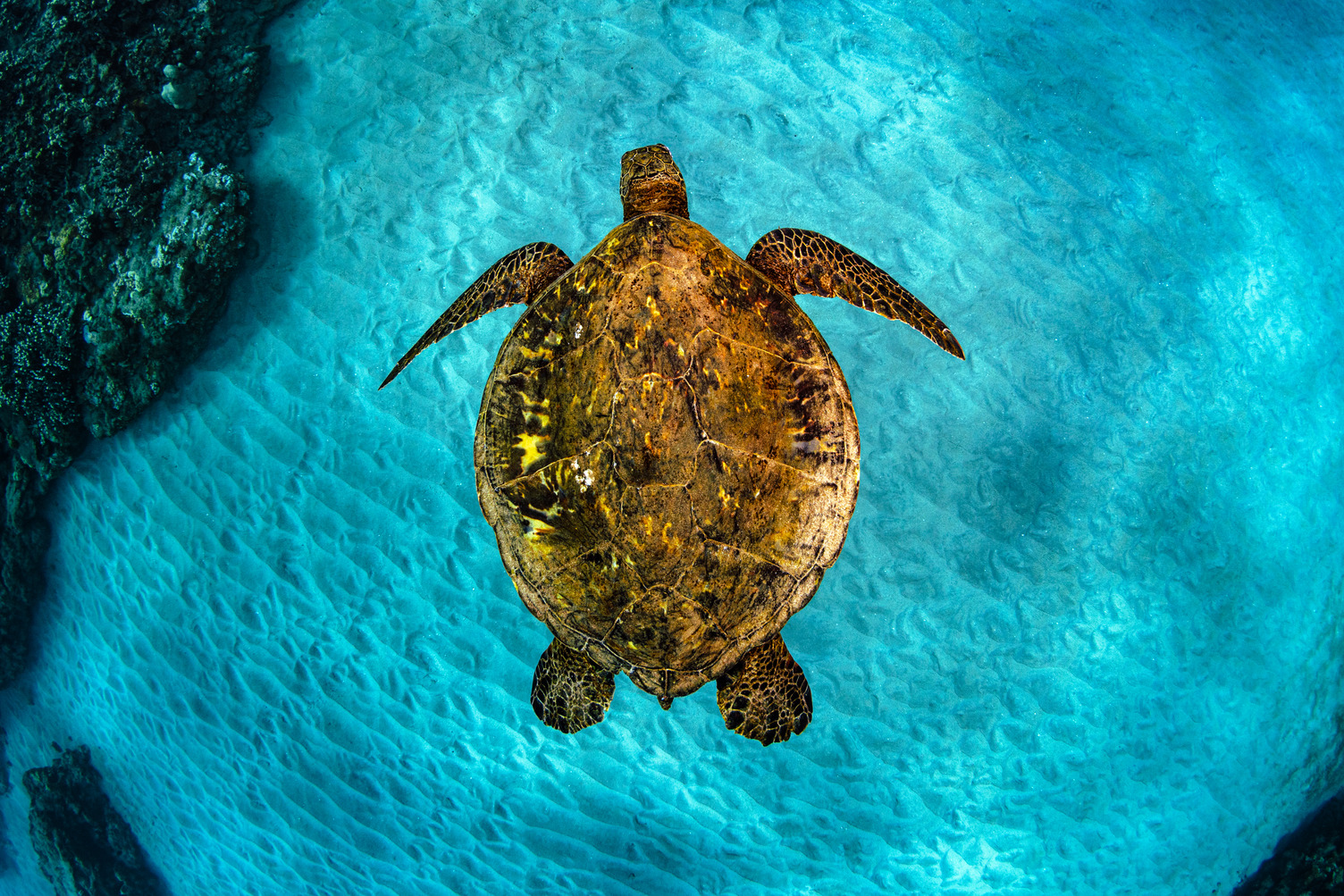
Ancient animals still face very modern threats.
Sea turtles survived the extinction event that wiped out dinosaurs. They’ve outlasted shifting continents and dramatic changes to our planet. But surviving millions of years doesn’t make them invincible. Today, they’re facing threats that appeared in the blink of an evolutionary eye: plastic pollution, habitat loss, vessel strikes, fishing gear entanglement and climate change. The remarkable thing is that many of these challenges aren’t inevitable. They’re problems we can all help solve.
Together, we can reduce the amount of plastic that reaches the ocean. We can protect and restore nesting beaches. And we can support policies that protect healthy ocean ecosystems. Every action helps make our waters a safer place for animals that depend on it.
So, do sea turtles get lost? When left to their own devices, not often. Sea turtles have an extraordinary ability to navigate across vast stretches of open oceans. But there’s a bigger question worth asking: Can we help make the ocean a safe place while they make these incredible journeys? Navigation is only part of the challenge for sea turtles trying to find their way home. Sea turtles may know where they’re going, but it’s our job to ensure the ocean and coastlines they depend on are safe when they get there. That’s why Ocean Conservancy is committed to protecting our entire ocean—and all the creatures that dwell there.
We’re fortunate to share the planet with these amazing creatures. Their journeys are a remarkable feat of science and survival. To all the turtles out there: Here’s to finding your way—wherever you’re going!
Visit Our Action Center
The post Do Sea Turtles Get Lost? appeared first on Ocean Conservancy.
https://oceanconservancy.org/blog/2026/08/27/do-sea-turtles-get-lost/
A remarkable strandline discovery deserves attention, but not exaggeration. The arrival of Velella velella on Sylt is probably Germany’s first documented record. It is not the first occurrence in the North Sea, nor is one stranding sufficient proof of a climate-driven invasion.
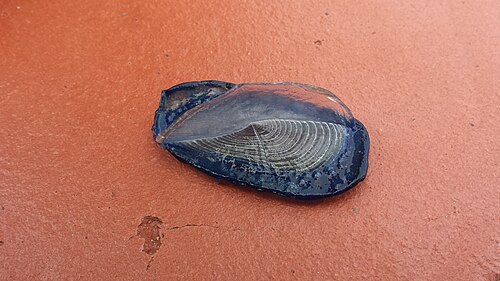
The discovery of Velella velella on Sylt on 23–24 August 2026 has been announced as the first German record of this oceanic hydrozoan (Listen to the News here). It is an exciting observation, but the word “first” needs careful interpretation. A first documented record is not necessarily the species’ first arrival. It may instead be the first time somebody recognized, photographed and reported it through the right channels. Fragile marine organisms such as Velella decompose rapidly, and their transparent floats are easily overlooked among material on the strandline.
A photographed Velella found on the west coast of Jutland in 2018 was considered the country’s first documented record. However, earlier reports exist (see here). Velella velella, known as the by-the-wind sailor or Segelqualle, is often described in the German media as a “Mediterranean jellyfish.” This is misleading. The species is a widely distributed oceanic hydrozoan found in tropical and warm-temperate waters, including the Mediterranean and the Northeast Atlantic. The familiar blue object is not a single conventional jellyfish but a floating colony of specialized polyps. Its diagonal sail allows wind to push the colony across the sea surface. Velella cannot swim effectively against this transport, so large strandings are principally the outcome of population size, surface currents and persistent onshore winds. The Sylt animals should therefore be understood as oceanic visitors transported into German waters, not automatically as an invasive species or an established North Sea population.
The North Sea has seen Velella before
In February 1988, thousands of colourless Velella floats washed ashore along the Belgian coast after strong westerly storms. The event was described as the first published North Sea record (See the article) Denmark also has a documented history. A photographed colony was found at Grønhøj on the west coast of Jutland on 26 July 2018. It was considered Denmark’s first documented record, although unverified reports exist from 1947, 1976 and 1997. Naturbasen
In Scotland, strandings have been recorded since at least the 1950s, with another mass event in the Clyde in 2002. Scottish Marine Atlas
The Sylt discovery is therefore regionally unusual, but it is part of a longer history of intermittent Velella transport into northern European waters.
Is this climate change?
Ocean warming may increase the probability that warm-water organisms survive and occur farther north, while winds and currents determine whether they reach Sylt in a particular year. Calling this one observation definitive proof of climate-driven range expansion would be premature. Equally, dismissing it as an irrelevant accident would ignore the wider pattern of warming seas and increasing biological movement into the North Sea.
This is exactly why systematic observations matter.
Historical absence from a database is not proof of ecological absence. It may reflect limited monitoring, failed identification or observations that were never preserved. The public can help close this gap. Photograph unusual strandline organisms, record the date and exact location, include a size reference, estimate their number and submit the observation to us (GoJelly/JellySpotter APP) or another biodiversity platform like the iNaturalist. Today’s carefully documented beach find may become tomorrow’s essential evidence of how marine distributions are changing.
Recommened for reading:
- Pires RFT, Cordeiro N, Dubert J, Marraccini A, Relvas P, dos Santos A (2018) Untangling Velella velella (Cnidaria: Anthoathecatae) transport: a citizen science and oceanographic approach. Mar Ecol Prog Ser 591:241-251 https://doi.org/10.3354/meps12266
- Betti, F., Bo, M., … Enrichetti, F. (2019). Massive strandings of Velella velella (Hydrozoa: Anthoathecata: Porpitidae) in the Ligurian Sea (North-western Mediterranean Sea). The European Zoological Journal, 86(1), 343–353. https://doi.org/10.1080/24750263.2019.1671506
Picture courtesy to https://commons.wikimedia.org/wiki/File:20160518_170717_Velella_velella_1.jpg
First Spotted, or Simply First Recorded? Velella and Our Ecological Blind Spots
Storytelling is one of our oldest human behaviors. Across every culture and continent, people have used stories to share values, pass down knowledge and make sense of the world around them. The tales that survive, retold across generations, kept alive through memory and ceremony, aren’t arbitrary. These coastal legends carry essential wisdom.
For countless coastal communities, that wisdom is related to the ocean.
Here are five coastal stories that are important parts of different oral traditions and teach us about our ocean.
Scotland: Selkie Stories
Early written records from the coast of Scotland describe seal-people who shed their aquatic skins to walk among humans on land.
These are the selkie. Their stories follow a familiar arc. One is discovered on shore, their sealskin is stolen and they are bound to a human life. They marry, raise children, but remain melancholy, always watching the water. When the skin is finally found, they return to the sea without hesitation.
It’s not difficult to see where the concept took root. Gray and harbor seals have strikingly humanesque features like expressive eyes, complex vocalizations, mothers who nurse their pups. Early coastal communities observed those qualities, and the selkie story began to spread. It produced a cultural taboo against the excessive hunting of seals.
Today, the selkie is one of Scotland’s most recognized figures. Conservation organizations have adopted the selkie as a bridge symbol of cultural identity and ocean protection. Gray seal populations in Scottish waters continue to face pressure from abandoned fishing gear and historical culling practices, behaviors the selkie taboo was designed to prevent.
Get Ocean Updates in Your Inbox
Sign up with your email and never miss an update.
Pasifika: Wayfinding
Pasifika is a collective term for the Indigenous Peoples of the Pacific Islands. For more than 3,000 years, they’ve managed to pass along extremely complex knowledge on how to navigate the vast expanse of the Pacific Ocean.
Their secret weapon? Storytelling.
They shared stories of the demigod Māui and his canoe, Waka-a-Māui, then navigated by their corresponding constellations in the sky. Tāwhirimātea was the god of wind and storms. When his eyes appeared in the sky (as the Pleiades cluster), it meant that it was a good time to start a long voyage. Stories like these gave navigators a framework for planning their journeys and navigating the distances.
Wayfinding is a science. The people of Pasifika developed their knowledge system through thousands of years of empirical observation, experimentation at sea and rigorous knowledge transmission. The names and stories were a medium of storing and sharing this knowledge, and an effective one at that.
Mexico: Chalchiuhtlicue
Chalchiuhtlicue is the Aztec goddess of rivers, lakes, seas and the ocean, as well as the protector of fishermen and navigators. In Aztec cosmology, she was one of the most actively worshiped deities.
In different stories, she is portrayed as both a creator and destroyer, as surges of water can result in abundant harvests or devastating floods. Today, Mexico’s Pacific and Gulf coasts are among the world’s most biologically rich but storm-exposed marine environments.
Chalchiuhtlicue’s tradition reflects an understanding of how water has the potential to be life-giving or destructive depending on amount and location. Mexico’s Indigenous cultures understood water as the foundational substance of existence, from the ocean to the hydrological routes that fed agricultural soil.
Vietnam: Grandfather Whales
The coastal communities of Vietnam have long shared stories of whales as divine protectors, often referring to them as Cá Ông or “Grandfather Whales.”
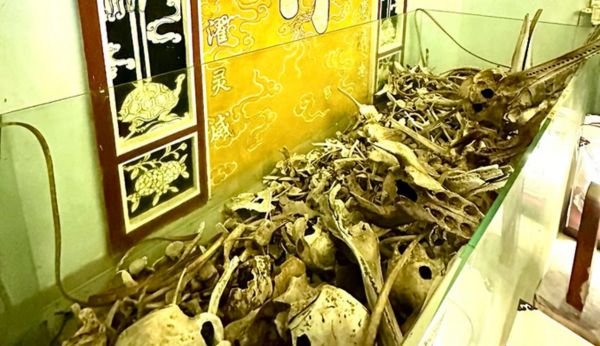
It is believed that when fishing boats are lost in a storm, whales physically rescue the crew by sending them toward shore. Several fishing villages in Vietnam still celebrate the Whale Prayer Festival twice a year. Because the whales are so revered, fishermen report whale encounters. Whales received sacred funerals whenever they are beached.
These coastal villages demonstrate a relationship with whale species marked by reciprocity. Sperm whales, humpbacks and gray whales, in fact, show behaviors that are consistent with the stories about rescue. They may approach distressed swimmers, encircle capsized vessels or even support injured kin. When a whale dies, gratitude and grief are expressed. The practice of providing a proper Confucian funeral to beached whales reflects the way that a whale carcass can still sustain hundreds of species after death.

Caribbean: Mami Wata
Many cultures in the Caribbean have carried a belief in Mami Wata. She is an ocean deity, often depicted as a mermaid, who goes by several names: La Siréne in Haiti, River Mumma in Jamaica, and Yemonja in Brazil. Her reinterpretation across several cultures maps how her oral tradition was carried across the Atlantic by enslaved Africans and adapted in different Caribbean settings. Mami Wata is depicted as a beautiful woman, skilled at music, who can be both generous and dangerous. This dual nature is parallel to the Caribbean. It is one of the world’s most biodiverse marine environments, supporting coral reef ecosystems of extraordinary productivity, but it is also a region of violent tropical storms, dangerous currents and unpredictable weather.
Sightings of Mami Wata are thought by some scholars to be related to sightings of manatees. The large, slow marine mammals with humanlike eyes and nursing behavior may match the characterizations of the deity. When the belief in Mami Wata began to decline, so did manatee populations. This reflects a phenomenon researchers call the “sacred species” effect. When a creature holds deep spiritual significance in a culture, harming it carries social and moral consequences that can be more powerful than legal ones. This provides an element of protection that is sometimes more effective than law.
Long before satellites tracked ocean temperatures, people who lived alongside the water were paying close attention. They noticed which creatures signaled safe weather and which behaviors led to abundant catches. They encoded those observations into the stories they told—deities, creatures, warnings and rituals that traveled across centuries intact.
These aren’t relics. Many are living traditions, still practiced and still relevant. And when held up alongside what marine science has since confirmed, the parallels are striking.
The stories contain lessons
What connects a fisherman’s reverence for seals in Scotland to a Vietnamese community’s funeral rites for a beached whale? Around the world, people understand that the ocean is not only a resource for extraction but also offers a relationship to be maintained.
Ocean Conservancy operates on the same understanding. This drives our work today, from protecting marine ecosystems and rebuilding fish populations to fighting the pollution and policy decisions that put our ocean at risk. Right now, aging offshore oil and gas infrastructure is corroding on the seafloor, threatening many of the species that cultures around the world hold dear. The companies that build this infrastructure exploit loopholes to avoid cleaning it up. But we can change that. The proposed Offshore Leasing Standards and Accountability Act before Congress now would require oil and gas companies to take responsibility for their operations before, during and after they drill.
The ocean has always been worth protecting. Add your name and help us pass the Offshore Leasing Standards and Accountability Act now.
The post Lessons from Coastal Legends appeared first on Ocean Conservancy.



-
Climate Change1 year ago
Guest post: Why China is still building new coal – and when it might stop
-
Greenhouse Gases1 year ago
Guest post: Why China is still building new coal – and when it might stop
-

 Greenhouse Gases2 years ago
嘉宾来稿:满足中国增长的用电需求 光伏加储能“比新建煤电更实惠”
-

 Climate Change2 years ago
嘉宾来稿:满足中国增长的用电需求 光伏加储能“比新建煤电更实惠”
-
Climate Change2 years ago
Bill Discounting Climate Change in Florida’s Energy Policy Awaits DeSantis’ Approval
-

 Renewable Energy10 months ago
Sending Progressive Philanthropist George Soros to Prison?
-
Greenhouse Gases1 year ago
嘉宾来稿:探究火山喷发如何影响气候预测
-

 Carbon Footprint2 years ago
US SEC’s Climate Disclosure Rules Spur Renewed Interest in Carbon Credits