

The head of the United Nations climate arm has called for governments at mid-year talks in Germany to make “serious progress” towards setting a new climate finance goal for after 2025.
Calling climate finance the “great enabler of climate action”, Simon Stiell told negotiators at the start of the annual June session in the city of Bonn that they must come up with concrete options for the New Collective Quantified Goal (NCQG) on finance.
The goal is one of the main decisions expected from the COP29 UN climate summit in November in Azerbaijan’s capital.
“We cannot afford to reach Baku with too much work to do. So please, make every hour here count,” Stiell said on Monday in his opening speech to the June 3-13 conference.
Following delays caused by an unauthorised pro-Palestinian protest and a complaint from the Russian delegation that not all its members had received visas to travel to Germany, government negotiating blocs made statements revealing sharp divisions on who should provide climate finance and how much it should be.
South African & Argentinian climate justice activists Tasneem Essop & Anabella Rosemberg were removed & de-badged after peacefully demonstrating (standing & singing) to alert to the unfolding genocide in Palestine at @UNFCCC #BonnClimateConference opening plenary. pic.twitter.com/xUWXY8dilU
— Center for International Environmental Law (@ciel_tweets) June 3, 2024
While developing countries have repeatedly called for the current $100 billion-a-year goal to be replaced with “trillions”, developed nations have yet to propose any numbers for the target.
Several developing countries said that at least the bulk of the money should come from developed-country governments, whose responsibility it has been so far under the UN climate regime.
Developed countries, in turn, said some of it should come from the private sector and global taxes on carbon-heavy goods, as well as from the public purses of wealthier, higher-polluting developing countries.
Other divides that need to be resolved by November include a common definition of climate finance, the period the new goal should be set for, how funding flows should be monitored, and what the money should be spent on.
A longstanding target to provide $100 billion annually from 2020 was met only in 2022, according to the Organisation for Economic Coopreation and Development (OECD), two years later than the deadline developed countries agreed to back in 2009.
Mexico elects a climate scientist as president – but will politics temper her green ambition?
Diego Pacheco, a negotiator from Bolivia, told the room in Bonn that the level of ambition on the new finance goal will affect developing countries’ level of ambition in their UN climate action plans – which all nations are supposed to publish by early next year. The NCQG will determine “how words translate into actions”, he said.
Billions to trillions
To date, very few governments have made precise demands on a top-line amount for the new goal – although all have agreed it will be set from a floor of $100 billion a year.
India and the Arab group of countries, led by Saudi Arabia, have said rich countries should provide at least $1 trillion a year, while other developing country governments have repeatedly pointed to needs reaching into the “trillions”.
At a press conference in Bonn, Michai Robertson, the lead finance negotiator for small island states, warned: “The cost of inaction if we don’t spend those trillions just far exceeds the seed money we’re putting in”. War and conflict “get trillions already”, he added.
He added that many developing countries have not yet specified a precise amount as they are doing modelling and waiting for a UN “needs determination report” which is due out in October, ahead of COP29.
In their speeches, neither the European Union or Canada gave any sense of how large the target should be.
Iskander Erzini Vernoit, founder of a Moroccan think-tank called the Imal Initiative, told journalists that developed countries have not been willing to enter into discussions about how much the goal should be.
Wide or narrow sources
Vernoit said the only dimension rich nations have been willing to discuss so far is “their proposal entailing money coming from sources other than themselves”.
The EU’s delegate said in Bonn that the money should come from “a wide variety of sources, instruments and channels including innovative sources while making all financial flows consistent with the Paris Agreement”.
“While we attach great importance to the public core of the new goal, public resources alone will not suffice,” the EU negotiator said.
Rich nations meet $100bn climate finance goal – two years late
“Innovative sources” refers to a variety of money-raising proposals such as taxing billionaires, shipping emissions, planes and financial transactions. A French and Kenyan-led taskforce is currently examining these options.
Developed countries, including those in the EU, have highlighted Article 2.1c of the 2015 Paris Agreement on making finance flows, including private finance, consistent with tackling climate change. They are also pushing to widen the pool of government donors.
The EU negotiator added in Bonn that “the provision and mobilisation of climate finance should be a global effort, reflecting solidarity – notably with the most vulnerable countries and communities, and capturing the evolved global circumstances and the dynamic nature of economic capabilities”.
Developed countries have argued that, since developed and developing countries were last categorised by the UN in 1992, some developing nations have grown much richer and more polluting – and should therefore contribute to climate finance not receive it. China, the Gulf nations and South Korea are among the most prominent examples.
Speaking on behalf of a negotiating group that includes the US, Japan, the UK and Australia, Canada's negotiator said the new goal must be "multi-layered and incorporate all sources of finance - public and private, domestic and international - it should draw from the efforts of a broad set of contributors that reflects economic realities and capabilities".
However, speaking on behalf of the biggest group of developing countries, Uganda stressed the responsibility lies with the traditional set of developed countries.
Speaking through a translator on behalf of the Arab Group, Saudi Arabia's negotiator said the new goal must reflect "the responsibilities of advanced countries" based on the rules of the Paris Agreement.
Brazil's negotiator said public finance should be "at the very core" of the goal, and that climate finance should be defined so there is transparency and accountability on whether it has been provided as promised.
The OECD - a club of wealthy nations that last week announced the $100-billion target had been met - "does not have multilateral legitimacy" to make such judgements, she added.
The great COP food systems illusion: UN climate talks deliver no real-world action
Referring to the OECD announcement, Bolivia's Pacheco said: "We see much exaltation in delivery of climate finance in the form of loans at market rates".
Over two-thirds of the climate finance recorded by the OECD came in the form of loans. Of the loans provided directly by governments, about one-fifth was offered at market rates, while nearly three-quarters of loans from multilateral development banks were categorised as non-concessional but still carrying better terms than commercial lenders.
Vernoit warned that developed countries were likely to get their way at the talks in Bonn unless the public - through civil society groups - raised "moral indignation about how the conversation is going".
"This is not a response to an emergency, it is not a response to any moral responsibility," he said.
(Reporting by Joe Lo, editing by Megan Rowling)
The post “Great enabler of climate action” – UN urges Bonn progress on new finance goal appeared first on Climate Home News.
“Great enabler of climate action” – UN urges Bonn progress on new finance goal

Climate Change
After a week of plenty of activity and drama for Greenpeace at sea, I felt like writing to you on a much quieter theme…
Do you have a favourite book, poem or story about the ocean?
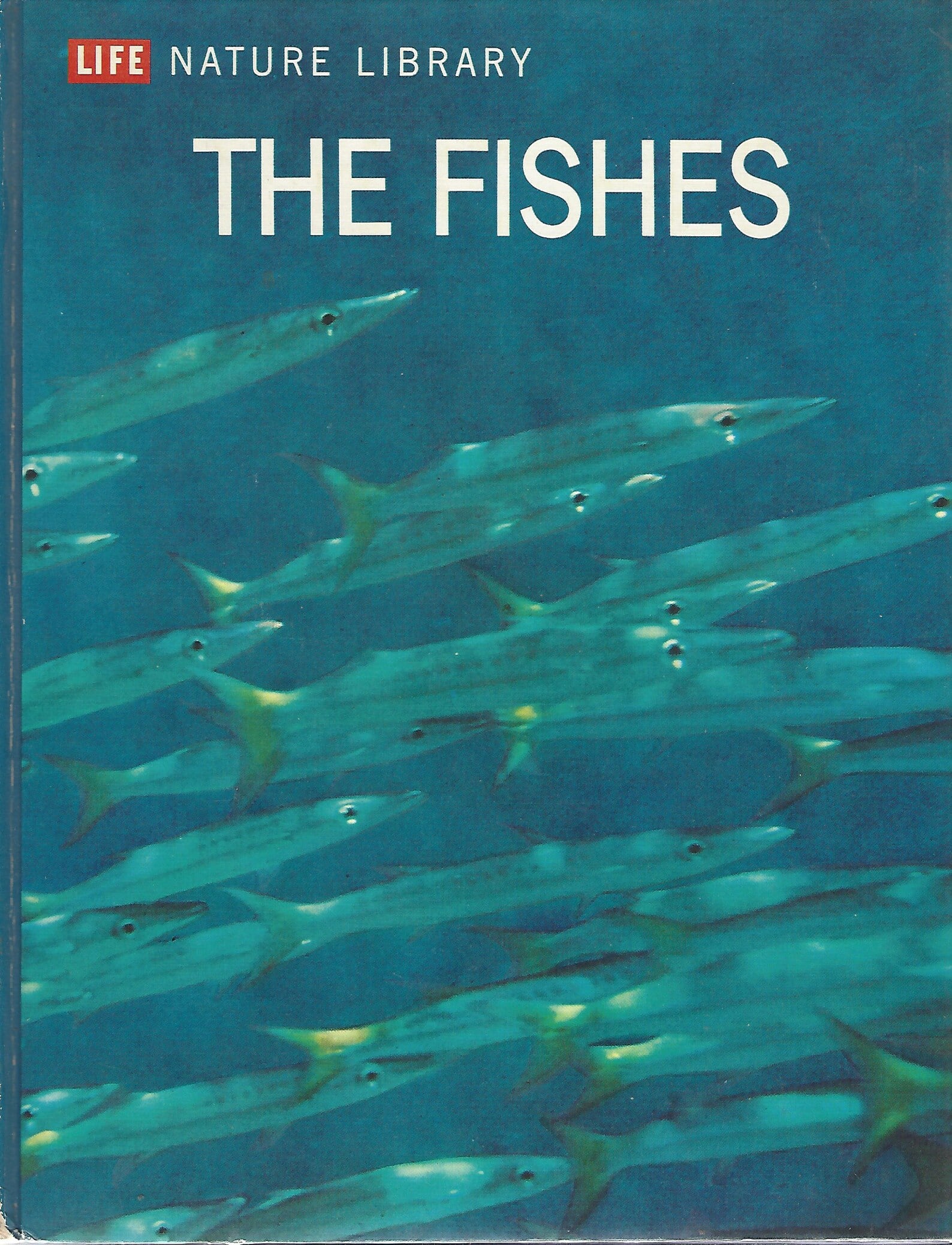
When I was very small, it was the TimeLife book of The Fishes, by F. D. Ommanney, which I remember endlessly poring over, my child’s mind gripped, in total fascination. The cover illustration showed a shoal of barracuda, mid-water and heading upwards, lit up as an iridescent blue by a column of sunlight. Oddly, it is only the cover and the illustrations of the deep sea creatures which I now remember—but I loved that book, as the weakened spine, blunted pages and dog-eared corners attested.
The Fishes has been on my mind recently, because I’ve been working with some dear friends on our own illustrated oceans book, to be published by Upswell Publishing. The book is called Scott Reef: Like Nowhere Else on Earth, and I want to share with you a bit of the story behind its creation.
Scott Reef is absolutely magnificent: Australia’s largest freestanding oceanic reef, brimming with life, including rare and threatened species such as a genetically distinct population of green sea turtles, pygmy blue whales and the wonderfully elegant dusky sea snake. But Scott Reef isn’t near our capital cities; it is way off the north-west coast of WA. And it is threatened with devastation by Woodside, which wants to drill up to 57 toxic wells at the Reef for its vast, dirty Browse gas project.
One of the main challenges in the fight to save Scott Reef from being turned into an industrialised gas zone by Woodside is bringing this incredible location to life for people who haven’t actually experienced it first hand. Because despite its ecological significance and dazzling beauty, ‘Scott Reef’ is also—at least not yet—exactly a household name.
To help get over this barrier, Greenpeace has enabled a number of photographers to travel to Scott Reef by boat (including the Rainbow Warrior) to document its astonishing diversity of colour and life. We then brought these images together in a remarkable photobook, produced by our talented in-house team, which we’ve been putting into the hands of as many leaders as possible—including the MPs whose decisions can determine the Reef’s future.
Back in June this year, I was sharing a copy of our in-house book at a business gathering in Perth when someone pulled me aside. Had we thought about publishing the book commercially? Apart from anything else, he wanted to buy a copy himself! He had a point. We were proud of what we’d created, but a commercially published version could reach a much wider audience and have even greater campaign impact. I immediately turned to my dear friend, Terri-ann White, who runs Upswell Publishing in WA, for advice.
Terri-ann has a huge heart and terrific vision. So many wonderful things in WA owe their existence to her doings, and, true to form, she was immediately encouraging and enthusiastic. “But,” she said, “it would add a whole new dimension if we had some words to accompany the incredible pictures.”
Fair enough, I thought. I could ask a few authors.
“And when would you like it published?” she asked.
“Ideally November,” I answered sheepishly.
Now, in publishing terms, nobody goes from idea to finished work, beautifully produced by a commercial publisher, in just four months. It. Just. Doesn’t. Happen. A book of this scale would ordinarily take nine months, I was told. But Terri-ann was undeterred. “If you can get a rapid turnaround on the writing, I will give it a shot.”
Over the following few days, I sent out 24 emails to prospective writers. To my joy and surprise 23 of them responded almost immediately with an enthusiastic yes!
Terri-ann was somewhat alarmed and perplexed when I told her the good news… we’d discussed a few authors, not more than twenty! “Impossible,” she texted. “Editing is important and you are talking about thousands of words!” But I also know Terri-ann. She does the impossible. And so, here we are… Terri-ann is going to hit that improbable deadline. Scott Reef: Like Nowhere Else on Earth will be on shelves in November.
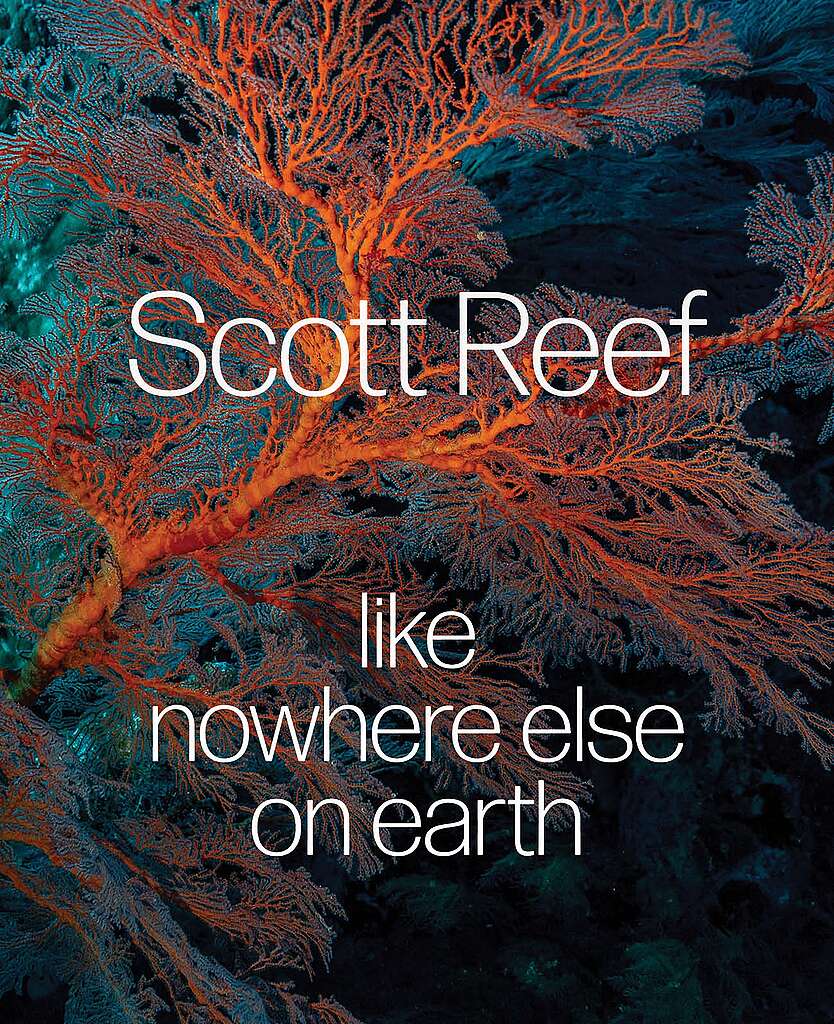
The contributors are a wonderfully diverse bunch, united by their enthusiasm for Scott Reef — and their extraordinary speed!
It’s a brilliant mix. The book brings together national icons like Peter Garrett, Tim Winton, Mick Dodson, Janet Holmes à Court and Fiona Stanley; the intellectual heft of professors Frank Bongiorno, Jessica Meeuwig, Rick Steiner and Samantha Hepburn; the poetic vision of Prema Arasu, Berndt Sellheim and Saadiah Freeman; the field expertise and passionate first hand witnessing of Imogen Zethoven, Tooni Mahto, Ben Fitzpatrick, Geoff Bice, Olaf Meynecke, Paul Gamblin, Sarah Gittoes and Hayley Baillie; and the determination of emerging activist voices Jackson Reid and Emma Sangalli.
Their elegant words wrap themselves around the sheer wonder of the underwater world, brought to life by the work of the photographers — of whom one, Wendy Mitchell, has also contributed a wonderful essay.
Terri-ann showed me the full physical proofs this week and they are breathtaking. This book contains some of my absolute favourite images of wildlife beneath the waves -– and believe me, after almost 20 years at Greenpeace, I’ve been privileged enough to see some remarkable shots! The essays bring a whole new depth and richness to the story of Scott Reef.
If I am being honest, and maybe a bit sentimental, I hope that a four or five-year-old child somewhere in Australia will spend part of their summer holidays turning the pages of this book, wide-eyed with curiosity and awe at the beauty and strangeness of the creatures that call our oceans home.
Our shared commitment is to make sure that, as those children grow up, the wonders of Scott Reef will exist not just in the pages of the book, but out there in the wild waters off north-western Australia—alive, thriving, and every bit as extraordinary as they are today; a living wonder beneath the waves.
Pre-orders of Scott Reef: Like Nowhere Else on Earth are available here.


Q & A
Sometimes you get asked a question so often that you decide to produce a report to answer it!
We know there is strong public opposition to voter opposition to gas drilling at Scott Reef and fracking in the Kimberley in Western Australia. But I am frequently asked whether, even if people don’t want it, more gas drilling is a necessary evil to sustain WA’s prosperity?
The short answer is an unequivocal ‘No’. The longer answer is our new report, From Gas to Green: Building Western Australia’s Future State, which makes the comprehensive case that Asia’s gas market is declining — while WA has an enormous untapped opportunity to become a global leader in green industries and exports, helping drive the region’s shift away from fossil fuels. The faster that WA embarks on a decisive shift away from gas—and that includes no fracking in the Kimberley, or drilling at Scott Reef — so much the better for the state’s people, ecology and economy.
For the first time, new-energy vehicles (NEVs) made up 67% of new car sales in China in September, according to the latest data from the China Passenger Car Association (CPCA).
The figures show that NEVs, which include battery electric cars and plug-in hybrids, captured a record share of sales, even though fewer were sold than last year.
This is because sales of combustion-engine cars are falling steeply, a trend that the CPCA has attributed to rising petrol prices following the start of the Hormuz crisis.
Indeed, sales of fuel-only cars were down 31% year-on-year in the first nine months of 2026, with plug-in hybrid sales down 26% – whereas battery EV sales were only down 4%.
One analyst tells Carbon Brief that China’s rapidly growing EV fleet has offset demand for 143m barrels of oil since the start of the Hormuz crisis.
Another says that the crisis is “reinforcing China’s electrification of road transport”.
Meanwhile, amid slowing domestic sales, Chinese carmakers’ exports of NEVs more than doubled [in 2026 to date / in September] from a year earlier.
NEV record
A record two out of every three cars sold in September in China were NEVs, according to CPCA data, as shown in the figure below.
(NEVs predominantly include battery electric vehicles – BEVs – and plug-in hybrids – PHEVs. BEVs only run on electricity, whereas PHEVs also have a combustion engine.)
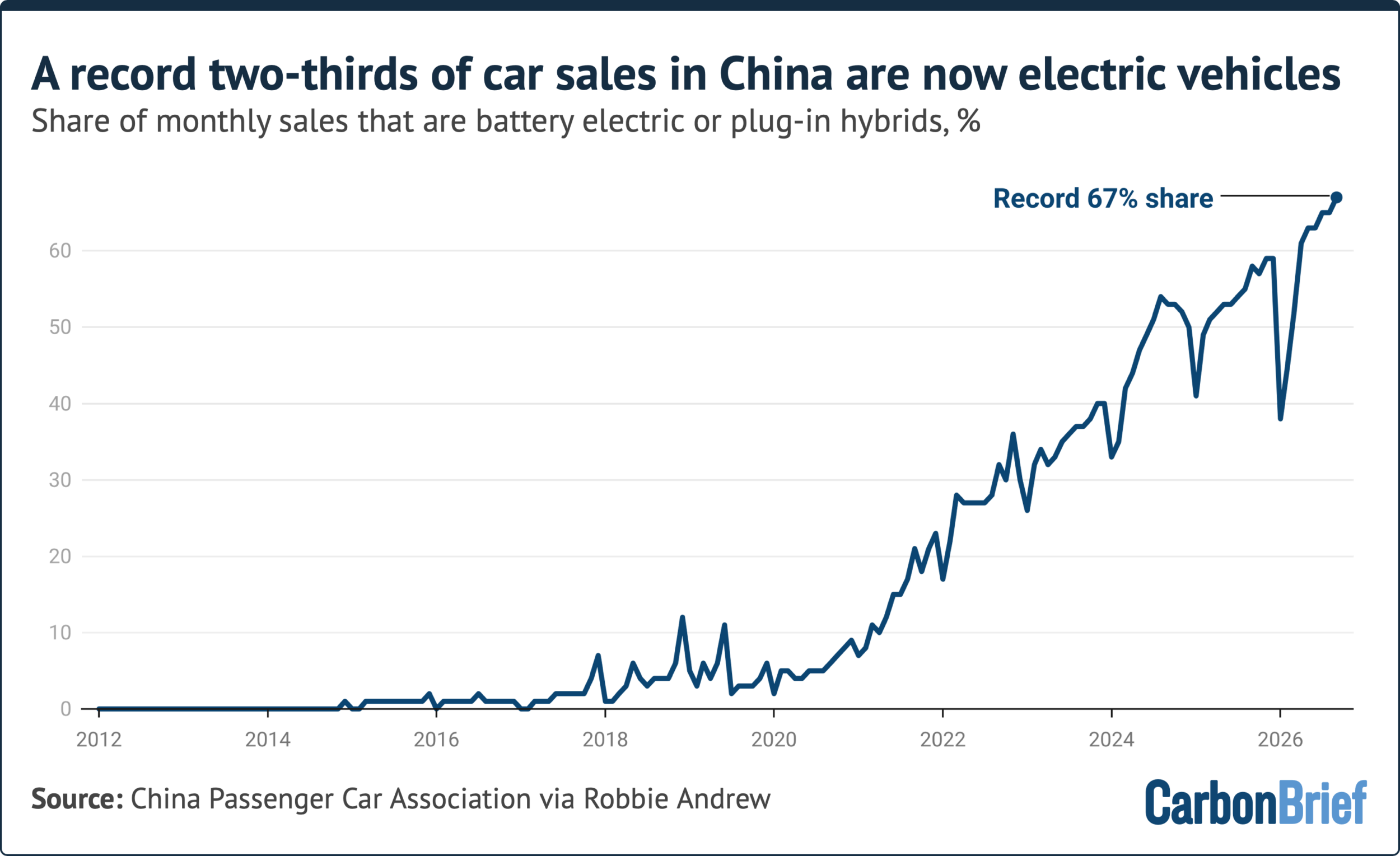
This marks a rapid rise for NEVs from just 6% of new car sales in 2020 up to 58% in 2026 to date – and a record 67% in the month of September.
This year, NEVs’ share of sales has also bounced back from a low of 39% in January, after the full purchase tax exemption that had been in place for more than a decade came to an end in December 2025.
The gain in NEV share in 2026 has come amid a slowdown across the wider domestic passenger-car market, which has hit sales of combustion-engine vehicles particularly hard.
This September, passenger-car retail sales across all categories declined, with overall sales volumes falling 28% year-on-year.
The contraction was led by combustion-engine vehicles, which saw sales fall 43% year-on-year in September and 31% in 2026 to date.
However, sales of PHEVs also fell by 36% year-on-year in September and by 26% in 2026 to date. By comparison, BEVs performed better, although sales still declined 8.5% from a year earlier in September and 4% in 2026 to date.
As a result, NEV sales overall fell by 17% in September and 13% in 2026 to date.
While the market changes in 2026 to date were particularly dramatic, they reflect a broad continuation of trends seen over the past decade.
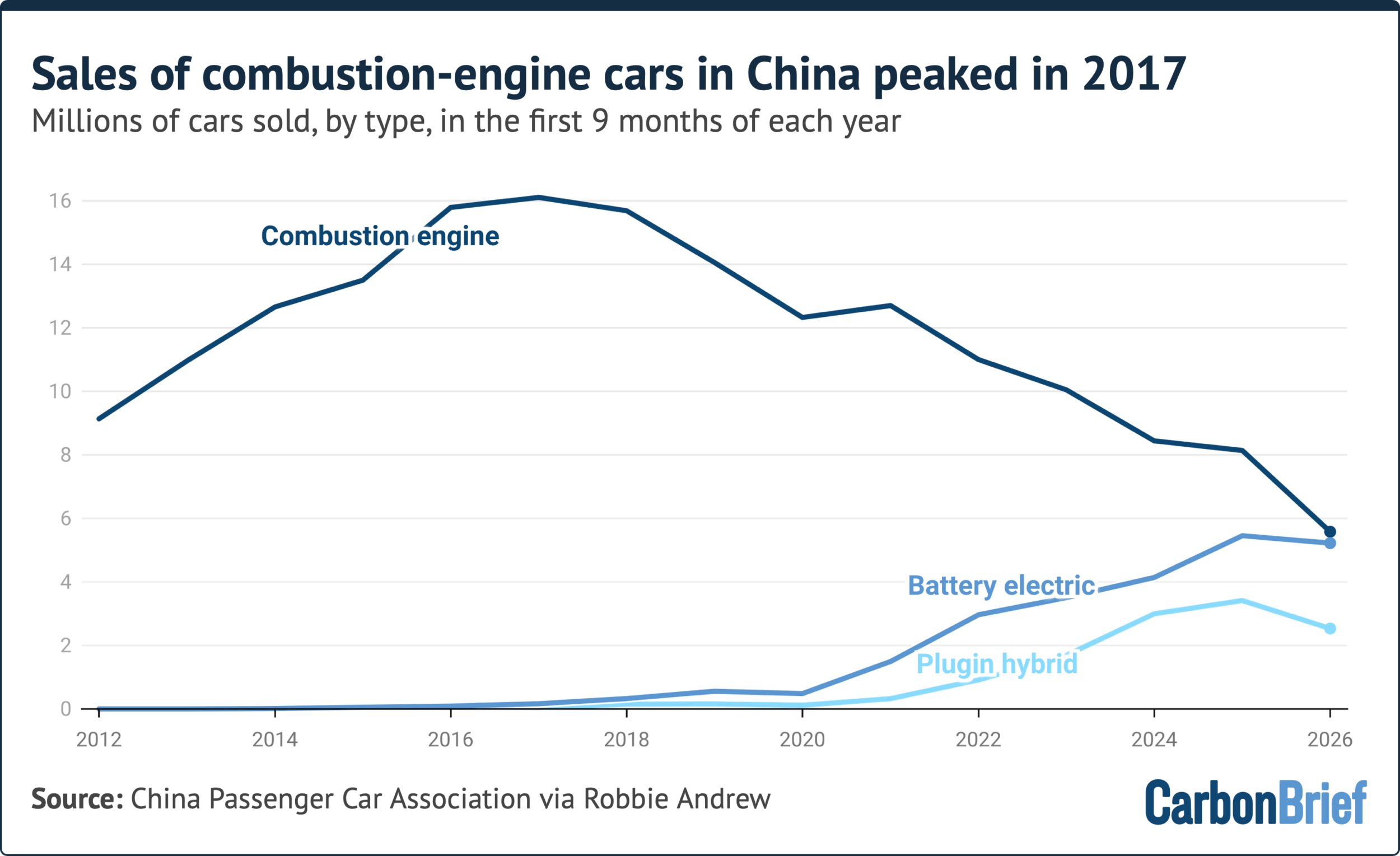
Indeed, sales of combustion-engine cars in China peaked in 2017 and they have been declining ever since, shown in the figure below.
Impact of Hormuz
Part of the reason for the advance of NEVs in 2026, said Chinese technology news outlet OFweek, was petrol cars “giving up market share” as they were outperformed by electric alternatives.
Cui Dongshu, secretary-general of the CPCA, cited higher petrol prices as an explanation for September’s weak combustion-car sales, in comments to financial news outlet National Business Daily.
Imports of oil into China in January-September have fallen 15% compared to 2025, equivalent to 470m barrels, as ongoing conflict tightened supply and drove up prices.
China’s passenger-car NEV fleet has displaced 143m barrels of oil so far during the strait of Hormuz crisis, Euan Graham, senior energy analyst at thinktank Ember, tells Carbon Brief.
EVs “accounted for 12% of the decrease in China’s oil use post-Hormuz”, according to an estimate provided to thinktank the Brookings Institute by an unnamed analyst.