

Cattle are one of the most consequential climate problems hiding in plain sight on the dinner table. Livestock are responsible for roughly 14.5% of global greenhouse gas emissions, according to the United Nations Food and Agriculture Organization, and cattle alone account for about 65% of that sector’s output. Most of it doesn’t come from manure or land use — it comes from inside the cow. Approximately one billion cattle on the planet burp around 3.7 gigatons of CO₂-equivalent emissions annually, more than the aviation and shipping industries combined. A growing number of researchers and companies are focused on a deceptively simple approach: change what a cow eats. A red seaweed called Asparagopsis taxiformis contains bromoform, a compound that blocks the enzymes used by methane-producing microbes in the rumen. Today’s guests didn’t learn about this from a graduate seminar. They’re high school students, and they built an idea for their first company around it. Every January, I judge a Shark Tank-style competition that caps a month-long entrepreneurship program at the Bush School in Seattle. This year, a pitch by three students stopped me cold. Zara, Ellie, and Kai Aizawa are the co-founders of MooBlue, whose tagline — Cut the burp, keep the beef — got a laugh, but whose business concept is entirely serious. Kai is heading to Haverford College in the fall. Zara and Ellie are still freshmen.

MooBlue proposes harvesting Asparagopsis from the Mediterranean, where it is an invasive species currently harming marine ecosystems, processing it into an oil-based feed additive and building a certification and labeling system so consumers can identify beef and dairy products raised using reduced-methane feeds. What struck me wasn’t just the idea. It was the depth of the research: from the biochemistry of rumen fermentation to the intellectual property landscape to a two-segment go-to-market strategy targeting large corporate operations and family farms. They covered the competitive white space, the supply chain, the financial incentives for farmers, and the consumer psychology of premium labeling, all with the ease of people who had genuinely internalized what they were talking about.
The conversation shows that the internet has exploded ceiling of what a curious teenager can discover. When Zara, Ellie, and Kai needed to understand the biochemistry of enteric fermentation, they found recent, peer-reviewed research. When I was their age, those journals would have been available only at a university library, if they existed at all. Today, a high school freshman in Seattle can find a paper out of, understand the biochemistry well enough to explain it clearly, and build a company around the discovery. That changes what a generation can imagine. And it may change what we can collectively accomplish.
You can learn more about the Bush School’s entrepreneurship program at bush.edu.
- Subscribe to Sustainability In Your Ear on iTunes
- Follow Sustainability In Your Ear on Spreaker, iHeartRadio, or YouTube
Interview Transcript
Mitch Ratcliffe 0:09
Hello! Good morning, good afternoon, or good evening. Wherever you are on this beautiful planet of ours, welcome to Sustainability In Your Ear. This is the podcast conversation about accelerating the transition to a sustainable, carbon-neutral society, and I’m your host, Mitch Ratcliffe. Thanks for joining the conversation.
Today we’re going to talk gas, specifically, the methane gas ruminating in the gut of cattle around the world. Livestock are responsible for roughly 14.5% of global greenhouse gas emissions, according to the United Nations Food and Agriculture Organization. Cattle alone account for about 65% of the livestock sector’s greenhouse gas output, and most of that isn’t from manure or land use. It’s due to enteric fermentation, the microbial process in a cow’s rumen — its gut — that produces methane that reaches the atmosphere as a burp or a fart.
Approximately one billion cattle live on the planet, and they emit around 3.7 gigatons of CO₂-equivalent emissions annually — more than the entire aviation and shipping industries combined. That hamburger on your plate isn’t coming without a significant environmental price. Methane is a particularly potent problem: over a 20-year period, it traps about 80 times more heat than carbon dioxide, because methane breaks down in the atmosphere in roughly a decade. Reducing the volume of this bovine gas can deliver climate benefits faster than almost any other intervention, and that’s why the Global Methane Pledge, signed by more than 150 countries, aims to reduce methane emissions by 30% before 2030.
That’s also why a growing number of researchers and startups are focused on a deceptively simple question: can you change what a cow eats and meaningfully change the climate math? The answer increasingly appears to be yes. A red seaweed called Asparagopsis taxiformis contains bromoform, a compound that inhibits the enzymes relied on by methane-producing microbes in a cow’s gut — in other words, it stops the gas. Peer-reviewed studies, including landmark research out of UC Davis and James Cook University in Australia, have shown that adding small amounts of Asparagopsis to cattle feed can reduce enteric methane emissions by up to 80%, with no adverse effects on the animal, its milk, or its meat production.
But I didn’t learn about this from reading research. It was explained to a group of adults by three high school students, and here’s the backstory. For the past couple of years, in January, I’ve been a judge at a Shark Tank competition that caps a month-long entrepreneurship program at the Bush School in Seattle. The class is taught by a friend and former business partner of mine, and it’s a rigorous program: students research real markets, build real business plans, and pitch to a panel that doesn’t pull punches. I’m the meanest shark, by the way.
This January, a pitch by three students struck me deeply, and I turned into the shark who was ready to invest. So my guests today are Zara, Ellie, and Kai Aizawa, co-founders of MooBlue.
Their tagline, Cut the burp, keep the beef, Got a laugh, but their Asparagopsis-based business concept is serious. MooBlue proposes harvesting the red seaweed from the Mediterranean, processing it into an oil-based feed additive, rather than a powder, as many other companies are considering, and building a certification system so that consumers can identify beef and dairy products raised using reduced-methane feeds.
What struck me wasn’t just the idea. It was the depth of the research these students had done, from the biochemistry of the rumen fermentation process to the competitive intellectual property landscape to a two-segment go-to-market strategy targeting both large corporate operations and smaller farms. They talked about these topics with ease, and it got me thinking about how much more information is available to students now than 50 years ago, when I was their age. They stand not just on the shoulders of historic giants like Newton or Einstein, but of cutting-edge researchers who, in the 1970s, typically worked out of sight and out of mind, sometimes for decades, until their research was found to be relevant and useful. But today, students can find out what’s going on in the lab almost immediately, and that changes the potential for innovation in everything.
So we’re going to talk with Zara, Ellie, and Kai about how they discovered the science behind Asparagopsis, why they chose an oil-based formulation over what competitors are doing, how they think about the intellectual property challenges in this space, and what it’s like to build a climate tech business plan when you’re still in high school. You can learn more about the Bush School at bush.edu.
So, can three high school students with a seaweed, a tagline, and a serious grasp of atmospheric chemistry chart a path toward lower-methane beef? Let’s find out, right after this quick commercial break.
COMMERCIAL BREAK
Mitch Ratcliffe 5:14
Welcome to the show, Zara, Ellie, and Kai. Could each of you introduce yourself so folks can hear your voice?
Zara 5:20
My name is Zara, and I’m a freshman at the Bush School.
Ellie 5:24
My name is Ellie, and I’m also a freshman at the Bush School.
Kai 5:27
I’m Kai, and I’m a senior at the Bush School.
Mitch Ratcliffe 5:29
Well, welcome to the show, guys. You did a great job during the Shark Tank competition, and I wanted to start off by asking you to quickly do the pitch you did for us.
Zara 5:38
So our idea is a product called MooBlue. Together, we can cut the burp and keep the beef. It would be a for-profit business working to make the livestock industry more sustainable.
Kai 5:49
In order to do this, our product would use Asparagopsis, a seaweed found in tropical areas that has been shown to reduce methane emissions from cows by up to 98%. Our company aims to harvest and turn Asparagopsis into oil-based feed additive capsules.
Zara 6:04
Currently, there’s a lack of sustainability in the agricultural industry, especially with the over-farming of ruminant animals, which are a high contributor to methane emission output. We hope that people will feel better when they buy methane-reduced meat or dairy products, because they’re helping the environment by contributing minimal methane output to the atmosphere.
Ellie 6:25
We have clearly identified this problem for decades, and scientists have discovered this natural solution years ago. Yet this technology isn’t well known, and so it hasn’t been implemented on a wide scale. We want to make it easier for people to help.
Kai 6:36
The two potential target audiences that we identified were large corporate farms and smaller farms in rural areas. We decided to focus on large corporate farms that have thousands of cattle. If one farm adopts your product, you can reduce emissions at scale immediately, which can help reduce methane emissions more quickly. They also have more capital and face increasing pressures from regulators, investors, and food companies to reduce emissions.
Ellie 7:00
Currently, there are a handful of companies trying to do the same thing as us, but this is still a very new market with lots of white space. We were also thinking that within a cooperative competitive relationship, we could help increase widespread adoption of sustainability, because at the end of the day, our goal is sustainability, not just profit.
Kai 7:20
A brief overview of our marketing plan would be to promote our product through agricultural media, such as Successful Farming magazine, and a strategic partnership with Wendy’s. With Wendy’s, we plan to create a limited-edition burger made using beef from calves with reduced methane emissions. This partnership builds off Wendy’s iconic Where’s the Beef? advertising campaign by reintroducing it as Where’s the Methane?. To distribute our product at scale, including in rural areas, we hope to partner with Cargill, the largest cattle feed distributor in the United States. We’ll also place a clear, visible “methane reduced” label on all of our meat products in stores. This allows farmers to differentiate their beef and charge a higher price for verified low-methane products, giving them an incentive to use our product.
Ellie 8:00
We hope to harvest our Asparagopsis from areas in the Mediterranean, relieving those ecosystems of the negative effects of this invasive species.
Zara 8:09
So in the long run, this product will improve air quality and public health by reducing methane-related ozone pollution, and it will slow climate change by targeting one of the most powerful greenhouse gases. So you should cut the burp and keep the beef with our company. Thanks.
Mitch Ratcliffe 8:24
That was great. And again, this is exactly why I was so impressed with your presentation. You thought this through end to end, not something you would expect in a high school entrepreneurship competition. Tell us how the three of you came together as a team, and what was it that sparked your interest in methane emissions from cattle in the first place?
Ellie 8:46
So for the Cascades program, each of us had to do an individual two-minute elevator pitch on our own unique idea. For me, I’d always kind of known about cows and how they’re a massive contributor to global methane emissions. It’s one of those facts that you learn and it just always stays in the back of your mind. I actually think I first learned it from a weird-but-true book I read in elementary school. I had also done a small project on the effects of Asparagopsis in middle school, but it wasn’t really anything concrete. So when I was running out of ideas for the class pitch, I decided to take my bare-bones MooBlue idea to the class, and it was received really well by my classmates and the teacher. The teacher ended up pairing us three together for the final project.
Speaking just for myself, I was excited to continue this business venture because I wanted to do something that mattered — not just to the individual consumer, but on a wider scale, touching the entire chain from farmers to consumers to the earth. So, basically, how Asparagopsis works: not just cows, but actually all ruminant animals — sheep, goats, even giraffes — have something called a rumen, the largest section of their four-part digestive system. The rumen is essentially a big fermentation vat. It contains tons of microbes and methanogens that help the animal break down the very fibrous plant matter it’s eating. When you see cows chewing their cud, that’s the regurgitation from the rumen to help break things down further, because it’s hard to digest.
This whole process of microbes breaking down fiber is called enteric fermentation, and this is what creates methane as a waste byproduct of the anaerobic microbes. The cow releases it through burping — which is a common misconception, because most people think it comes from farts. Asparagopsis reduces methane because it contains the active compound bromoform. When ingested by the cow — even at just 1% of their diet — bromoform blocks the enzymes used by the microbe to create methane. And there’s actually some hope that the energy the cow no longer wastes on producing methane could be redirected into feed efficiency, potentially lowering costs and boosting productivity for farmers.
Mitch Ratcliffe 11:08
That’s a really impressive and thorough explanation. How did you learn about all of that? One of the things that impressed me most is the research you had access to. How did you find it, and what was the process you went through?
Zara 11:23
During the time we were discovering what our unmet need was, we were looking for clear research, images, or articles that could point to the core of what our solution was going to be. I researched on many reputable sources, such as ScienceDirect, the National Institutes of Health, and Cornell’s College of Agriculture and Life Sciences. We wanted our unmet need to be grounded in a specific research topic: reducing methane emissions in the atmosphere.
I came across an article from UC Santa Cruz written by Sarah Mastrani on algae adoption for cattle feed to help reduce the methane emissions cows were producing. It gave people the main idea of our product in simpler terms. This research article provided me with the reputable knowledge needed to see the real effects of algae — how, in very simple terms, people could really understand the main mission of our company.
Mitch Ratcliffe 12:21
One of the ways you translate the mission of the company is into your labeling that you want to put on beef products, dairy products, and so forth. Tell us about methane-reduced labeling. How’d you come up with that idea?
Zara 12:33
We looked at the cage-free eggs comparison. Why do people choose to buy cage-free eggs? They’re more expensive, but consumers want to make a more humane choice. So we came up with a similar incentive for methane-reduced meat — yes, it’ll be more expensive, but it helps the environment and reduces the methane in the atmosphere. We played off the cage-free eggs example and the kind of motivation that makes people pay a premium for something that does good.
Mitch Ratcliffe 13:06
When you think about what that label looks like — is it a big, prominent label? And how do you convince people it’s legitimate? Because a lot of consumers wonder: can I trust this label, or is this just marketing?
Ellie 13:22
I think it’s really important, with something that has a large emotional marketing factor and represents newer technology, that it be authentic. As this technology gains more momentum, we hope to have an actual governing third-party oversight board, or some type of committee, that could certify products like this. A large label on the packaging that simply says “methane reduced” immediately draws the consumer’s eye, and I think even though it’s framed neutrally, it conveys the same weight that “grass-fed beef” and “cage-free eggs” do. Even though the idea is different, it draws out the same emotions and motivations in consumers.
Ultimately, people want to help the earth. They just don’t know how to do it, and they feel helpless. Something as simple as a label on beef can make people feel happy and proud and guilt-free about their food choices — the same way buying a carton of cage-free milk does.
Mitch Ratcliffe 14:33
Kai, you were the marketing mind behind this. Tell us more about your thinking.
Kai 14:38
We really wanted consumers to be bought in — we wanted returning customers, people who cared about the environment. By having a methane-reduced label, they could feel like they’re contributing, like they’re invested in our meat products.
We were always thinking about incentives. The science alone wasn’t going to keep our product afloat. Even if the technology works, adoption is only going to happen when there’s a clear benefit for the farmers, for the company, and for the consumers who feel like they’re helping the environment. So the label was an easy way to align all three of those values quickly: for consumers, it created an easy emotional signal that the purchase was going to make a difference; for producers and food companies, it created a market advantage against other meat products that don’t carry the methane-reduced label.
Mitch Ratcliffe 15:29
As I listen to you, what I’m struck by is that you believe business can make a positive impact in the world. What attracted you to the entrepreneurship program in the first place? How do you feel about the tools you have available to create a better world?
Zara 15:45
For me personally, I got into entrepreneurship from watching my mom start her own company — career consulting and college counseling. Seeing her go through the steps of finding customers and running a business over the past few years was really influential. And then when I saw the Cascades program, I got excited, because I’d attended a summer entrepreneurial program called eBay, in Berkeley, about two years ago, where you created a company based on one of your ideas and pitched it to your family after a three-week course. I really just enjoyed the idea of building a business, and those two experiences played a huge part.
Kai 16:52
During our Shark Tank program, we got to visit a lot of businesses outside the sustainability space as well — we heard the whole story from Nor’east Candles on how they grew their business from start to finish. I was personally really inspired by how quickly someone can build a business. The key factor was that you have to solve a problem. A clear problem in our world is climate change and global warming, and a really powerful way to address it is to bring as many people as possible into the solution. Creating a product to reduce methane emissions is one way to do that.
Mitch Ratcliffe 17:40
And Ellie — you were the initial founder. What about you?
Ellie 17:44
What drew me to entrepreneurship was the impact it can have when done right. You can go into government and fight for policy, and you can be a scientist and come up with new things, but it’s all somewhat wasted if there’s not someone actively working to implement it. I had noticed that California had passed policy to reduce methane. I read an article saying Asparagopsis was the future of agriculture. And I thought: we have the policy to move it forward, and we have the solution — but nobody is working to connect the two and actually solve this pressing problem. That’s what drew me to entrepreneurship: the impact it can have, and the way it brings people together to actually solve a big issue.
Mitch Ratcliffe 18:46
That’s a great place for us to take a break. We’ve set the table for a great methane-free conversation. Let’s take a quick commercial break — we’ll be right back. Stay tuned.
COMMERCIAL BREAK
Welcome back to Sustainability In Your Ear. Let’s continue the conversation with Zara, Ellie, and Kai Aizawa, co-creators of the MooBlue project and students at Seattle’s Bush School. As I listen to you, one thing I wanted to ask: would you be as interested in entrepreneurship and business in general if there weren’t shows like Shark Tank, which of course was the idea that brought us together in the first place?
Kai 19:31
I personally love watching Shark Tank, and it’s been a pretty big motivator for me to try entrepreneurship. But I think the core of entrepreneurship is trying to make as many people happy as possible.
Zara 19:48
Watching Shark Tank and other entrepreneurial shows definitely played a big part for me. When I was younger, my dad would work out in the gym and I’d come in and sit on this little bench watching whatever he was watching, and it always turned out to be Shark Tank. We’d watch episodes back to back, and it became a big bonding thing. It really influenced me into wanting to see the entrepreneurial world create connections between people who watch it and people who want to do good. And the idea of being able to build your own company — to profit or to do good for the environment — played a big part too.
Ellie 20:43
I’m a little different from Zara. I don’t really like watching Shark Tank because I don’t like seeing the investors tear down the business owners. But I think I’d still be just as interested in entrepreneurship without it, because to me, the marketing for entrepreneurship is the outcome. All of these successful businesses are really what made me think, huh, maybe I could do this one day. The success stories are actually a really big draw.
Mitch Ratcliffe 21:20
I want to jump back into the actual plan. One of the things you were particularly focused on was the difference between an oil-based approach to using Asparagopsis in feed versus powder, which is what most companies do. What was the reasoning behind that decision?
Zara 21:41
The oil form is typically considered better than the powder because it offers better stability for the active compound bromoform — lasting at least 12 weeks — whereas the powder can lose its effectiveness a lot faster. The oil also masks the seaweed’s strong taste and smell, making it easier for the cows to consume the product and increasing palatability — meaning it enhances voluntary intake. Cows are more willing to eat it because it doesn’t smell as bad and it tastes a little better mixed into their feed.
Mitch Ratcliffe 22:26
It’s great that you thought about the cows, too, rather than just force-feeding them. Another element of the plan was harvesting the seaweed in the Mediterranean, where it’s an invasive species. Who would do the harvesting, and how did you think about the full supply chain and the benefits it could create for people in those regions?
Ellie 22:47
One thing we noticed when we were researching this is that there’s currently no way to farm Asparagopsis on a scale that would support a business — it’s all very small, experimental farms just getting started, with a lot of ongoing research into the future of that. Rather than our company spending more time and money investing in that research, we decided we could temporarily kill two birds with one stone and harvest Asparagopsis in parts of the Mediterranean where it’s an invasive species wreaking havoc on some natural ecosystems.
We thought we could create partnerships with environmental task forces overseas that are already looking to remove Asparagopsis from those areas, as well as with local divers. We would pay them to harvest it and ship it back to the United States, where our scientists would process it. To be clear, Asparagopsis is causing real harm in those invasive environments — it creates behavioral feeding issues in some invertebrates and releases bromoform into the marine environment, which is toxic to submarine life. We acknowledge that as research progresses and someone does find an efficient way to farm Asparagopsis, it may no longer be cost-effective to import and hand-harvest it. But hopefully by that point, we’ll have made a real impact on the Mediterranean ecosystem as well.
Mitch Ratcliffe 24:47
Another element of your idea was to focus on large cattle feeding operations — CAFOs, or Concentrated Animal Feeding Operations — compared to small farms, to make your initial impact and prove the product’s efficacy. Why not start with a small farm and actually measure and reduce their emissions? I’m curious about your thinking there.
Kai 25:11
That’s a really good question, and we went back and forth on it for a long time. During our initial presentation, we actually said smaller farms, and then we revised that multiple times. I do see the argument for starting with smaller farms — you could test it out, see how it works, and change your approach if needed. But with our MVP being so achievable, I think jumping straight to the large corporate farms could be a pretty valuable move.
Ellie 25:42
Part of our reasoning for targeting bigger corporations is that smaller and family farms are a lot more likely to try this simply because they’re less profit-driven and more invested in the craft of farming. We didn’t want to take the easier path. Large corporations aren’t keen on spending extra when they don’t need to, so bringing them the research on potential feed efficiency improvements would be meaningful — and they also simply have more cattle, so the emissions impact is much greater.
Mitch Ratcliffe 26:28
So you found that using the Asparagopsis oil might actually mean you have to feed the cattle less, saving farmers money in the long run?
Ellie 26:38
Yes — the research is still ongoing, but scientists are suggesting that because the bromoform inhibits methane production, the energy that used to be wasted as a byproduct of that process could instead be redirected into feeding energy. It’s still being investigated, but if confirmed, it would create a meaningful financial incentive for farmers on top of the environmental benefits.
Mitch Ratcliffe 27:10
You have a slide in your pitch called Why This Matters, pointing out that we are in the process of breaching the 1.5°C threshold right now, which increases the urgency of reducing emissions. Cattle methane is a significant source, at around 14% of annual emissions. How do you respond to people who say the real answer is just to stop eating beef altogether?
Zara 27:34
I think we would respond by saying that beef and dairy are a huge staple in many communities’ diets. I’m not a vegetarian, and a lot of people rely on dairy products to feed their families. Cows also provide natural fertilizer, which is often overlooked.
Ellie 27:58
I do think the over-consumption of meat and dairy products is unsustainable as it is right now, especially with factory farms. Maybe one day we’ll be able to consume less beef and dairy or diminish factory farm herd sizes. But I also think it’s easier for people to add things to their lives than to take things away. If all farms used Asparagopsis — not even as a marketing strategy, just as a standard practice — we would virtually eliminate cattle’s effect on the climate from enteric fermentation. And I think it’s ultimately up to the consumer. For most of them, it’s easier to wrap their head around buying a piece of beef with less methane output than giving up steak forever. Reducing herd sizes would also take too long to implement, because it would drastically reduce profits for farms that depend on that income.
Mitch Ratcliffe 29:04
That’s a fair answer, and it’s a debate that’s going to continue for a long time. As you talk about your access to information and research, I’m really impressed with how much you know. But I wonder — what’s your perception of your ability to find out anything in this world? When I was your age, the likelihood that any of this information would have been available at my local library was very low. You can get on your computer or phone and find this information instantly. Do you have a sense that anything is discoverable and anything is possible if you just find the information you need?
Ellie 29:44
I think it’s a great tool that we have access to so many of these sources, because — drawing it back to this specific example — this research has been out for nearly a decade and almost nobody knows about it, even with the internet. And it makes you think: if we didn’t have the internet, how much less would it be known? We probably wouldn’t even be developing this product, because it wouldn’t show up anywhere we’d find it. I think internet access is really moving science forward by making more people’s work findable. But it can also be dangerous if you’re reading the wrong things.
Zara 30:35
Going off Ellie’s point — on the internet, you don’t know how many people are actually seeing the same document you’re seeing, or whether they’re trying to solve the same problem. So I also think a good research approach involves direct, physical conversations with someone who’s been directly affected by or connected to the problem you’re trying to solve. Those firsthand experiences bring in sources directly from the source, and that allows you to see what people have actually lived, rather than just what the internet describes.
Mitch Ratcliffe 31:36
You’re going to continue your educations, and I’m curious: do you think higher education, the way we traditionally think about it, is the right path for you to keep making progress toward a positive impact on the world? What are your thoughts on your next steps?
Ellie 32:04
Kai’s the next one going to college.
Zara 32:06
Yeah, he’s the one.
Kai 32:08
I’m obviously pretty interested in entrepreneurship. This fall, I’m going to Haverford College. I want to continue doing projects like this, where I’m trying to solve a problem. And I think it’s important to know that it’s not just the knowledge itself you’re gaining, but also the mentorship networks and the environment where people are constantly pushing you to think more and think bigger.
For me, the goal was to combine traditional education with hands-on experience — exactly like the Shark Tank program. This project wouldn’t have happened without the mentorship we had. David, our teacher and mentor, was such a great guide. He walked us through all the steps. I went into this literally knowing nothing about entrepreneurship, and by the end I felt like a pro — like I could walk someone else through building their own business step by step. Having someone constantly challenging your ideas makes a huge difference.
Mitch Ratcliffe 33:11
It sounds like the experience of learning is what’s most engaging for each of you. Is that right?
Zara 33:19
That’s fair, yeah. Our school really prioritizes experiential education, which is what the Cascades program was designed to do — we got to go visit local businesses and see how they were actually operating. That played a big part in letting us retain so much information, because we got to see how things worked in practice. And as Kai said, David always challenged our ideas and always gave us something to think about, which really pushed us to want to discover more and make the idea even better.
Mitch Ratcliffe 33:56
What’s your advice for adults? What would you recommend they do to unlock all of this knowledge you have and give you a shot at changing the world? How can adults help you get there faster?
Ellie 34:10
Well, everyone always says kids are the future, which is true. But when people say that, it sounds like they’re saying, “Okay, let’s wait 20 years for some kid to do this great thing.” Adults are still in power, and kids are always coming up with newer ideas and fresh perspectives. That’s genuinely great. But without adults using their power — in government, pushing for new legislation, or just supporting these ideas in practice — a lot of these ideas won’t get off the ground. Adults have experience that these kids don’t. If they use that experience to advocate for young people’s ideas and make them more widespread, that would really help get them off the ground.
Zara 35:07
I agree with Ellie on that. Kids are the future, but why would you wait 30 years for a problem you could solve today if you just helped a kid out? We can definitely come up with great ideas, but we can’t execute them without adult support — parents, ultimately, have the final say. If we had a joint team effort with everyone working together, it would really help take big ideas to the next level.
Mitch Ratcliffe 35:42
Multi-generational solutions are where we need to go. How would you change school? Would you make it more like adult life? Or more like childhood used to be, before students had to work 24/7 to impress parents and get good grades?
Kai 36:01
I mean, personally, I would love to be prepared for what I’m actually going to do in the future. But I also understand the value of letting people creatively express themselves, and a lot of that involves experiential learning — at the Bush School, that’s really highly valued. You’re always trying to solve problems on your own, not relying on someone else to hand you the answer. I think that’s very valuable.
Mitch Ratcliffe 36:25
The Bush School is a remarkable environment. It does allow you to stand up and do your thing, and that’s a great model for the rest of the country’s educational system.
Zara 36:35
We’re all very grateful to be able to attend this school.
Mitch Ratcliffe 36:38
What’s one thing that each of you learned during this project — whether about climate science, business, or entrepreneurship — that surprised you or changed the way you think about our potential to build a sustainable world?
Zara 36:50
I think the biggest thing for me was learning about scale in business. We start with these small ideas, but if we can scale a product, it can reach bigger communities and bigger levels. MooBlue is about creating a more sustainable atmosphere by reducing methane emissions from cattle. That’s a good idea, but an idea needs to be scaled and taken in steps to actually be achieved. If we could get it in front of people with more power than three students, that would take it to the next level. Scale is the big thing I learned.
Kai 37:47
For me, it was the importance of aligning incentives. At the beginning, I personally assumed that if something was a good idea and people could easily see its value, it would naturally become a successful product. But that’s not how it works. As we got deeper into the project, we realized that adoption only happens once it also makes financial sense. It kind of shifted how I view entrepreneurship entirely.
Ellie 38:16
For me, drawing it into the climate science aspect of your question: doing research into the sustainability side of science has really opened my eyes to just how much work has been done to create environmentally conscious solutions to some of the most pressing environmental issues. The discovery of Asparagopsis as a viable way to reduce methane is great research, but as I’ve said before, it’s essentially nothing if we fail to implement it. Sustainability will continue to build momentum, but only with the help of business owners working to implement it and make it achievable for ordinary people.
Mitch Ratcliffe 38:51
Y’all have done such an amazing job, both on the pitch and in this conversation. Thank you so much. So — is MooBlue going to be a world-changing effort? Are you going to stick with it?
Zara 39:04
One day, we’d love to see meaningful methane reduction in the atmosphere. We’d have to talk about it as a team, but I think it would be incredible to see that happen.
Mitch Ratcliffe 39:19
Well, thank you so much for your time, guys.
Zara 39:23
Thank you so much for having us.
COMMERCIAL BREAK
Mitch Ratcliffe 39:30
Welcome back to Sustainability In Your Ear. You’ve been listening to my conversation with Zara, Ellie, and Kai Aizawa, co-founders of MooBlue, a business concept developed as part of the entrepreneurship program at the Bush School in Seattle. Their idea — harvesting Asparagopsis, a methane-suppressing red seaweed, and processing it into an oil-based cattle feed additive to reduce emissions — is serious climate tech by any measure, even if its authors are still a freshman, a freshman, and a senior in high school.
What struck me most in this conversation is how clearly these three students understand the full shape of the problem they’re trying to solve. They didn’t arrive at Asparagopsis by accident. They found peer-reviewed research from UC Davis, James Cook University, and the National Institutes of Health, synthesized it, and then built a go-to-market strategy that accounts for farmer incentives, consumer psychology, supply chain logistics, and competitive intellectual property dynamics.
The clarity of their problem framing — that a scientifically validated solution has existed for nearly a decade and simply hasn’t been implemented effectively at scale — reflects the kind of systems thinking that is usually hard-won in adulthood, not assumed by people who are still learning to drive. And Zara, Ellie, and Kai’s understanding of the role business can play in bringing scientific ideas to life is a challenge to the idea that profit will always win over positive outcomes.
Ellie put it precisely: you can have policy and you can have research, but if nobody is working to connect them, the problem doesn’t get solved. And Kai came to the same conclusion from a different angle — he started with the assumption that a good idea would naturally succeed, then learned through the project that adoption only follows when incentives are aligned for everyone in the chain, from the farmer’s feed costs to the consumer’s sense of agency at the grocery store. That insight is one that a lot of experienced entrepreneurs are still working out.
Starting with the problem rather than a solution in search of a problem is the best first step when launching a company. And our conversation about media and information access was the most encouraging segment for me, and I think the most consequential.
The Shark Tank format was familiar; it’s a model that equipped them with tools for presenting and pressure-testing an idea, and it clearly shaped their intuition about what was fundable and what a good pitch looks like. But the deeper point is that the internet has done something extraordinary to the ceiling of what a curious teenager can discover. When I was their age, the journals containing this research would not have been available at my local library. They would have been at a university library, if they existed at all. Most of these journals are a product of the internet.
Today, a high school freshman in Seattle can find a paper out of James Cook University, understand the biochemistry well enough to explain it clearly, and identify white space in the competitive landscape, and then think about building a company around what she found. That changes what a generation can imagine, expanding the scope of what’s possible for all of us, and it can give us genuine hope in the climate era.
I think Zara, Ellie, and Kai are living proof of that. The harder question, which they answered honestly, is what it takes to close the gap between discovery and impact. Their answer: adult support, legislative leverage, and the willingness of established businesses to act on incentives that align sustainability with profitability. These are key to thinking about the future of our circular economy, our sustainable economy, and human life.
Kids are the future. And as Ellie challenged us: why would you wait 30 years for a problem you could solve today? That’s not being naive. That’s exactly the kind of impatience we need. Adults can step up and help these kids make the changes they imagine. After all, it is a multigenerational challenge that we face, and we’ve left the world in a state that’s going to take generations to repair.
So stay tuned, and I hope you’ll take a look at our archive of more than 540 episodes of Sustainability In Your Ear — perhaps sharing one with your friends. Writing a review on your favorite podcast platform helps your neighbors find us. You’re the amplifiers that spread ideas and create less waste. Please tell your friends, your family, your co-workers, and the people you meet on the street that they can find Sustainability In Your Ear on Apple Podcasts, Spotify, iHeartRadio, Audible, or whatever purveyor of podcast goodness they prefer.
Thank you for your support. I’m Mitch Ratcliffe. This is Sustainability In Your Ear, and we will be back with another innovator interview soon. In the meantime, folks, take care of yourself, take care of one another, and let’s all take care of this beautiful planet of ours. Have a green day.
The post Sustainability In Your Ear: The MooBlue Team Keeps The Beef, Without The Burp appeared first on Earth911.
https://earth911.com/podcast/sustainability-in-your-ear-the-mooblue-team-keeps-the-beef-without-the-burp/

The right sustainable rug can completely transform a space. A plant-based fiber rug like jute or sisal can create a grounding warmth, while a thick responsibly-sourced wool rug adds a sense of luxury. An artisan handcrafted rug infuses character and authentic culture where a vintage one can add layers of history and soul.
Furniture is functional and can be beautiful, but adding an exceptional rug is what brings it all together. A rug is at the center — at the heart — of your living room or bedroom or dining room. In other words: a rug is how you start to turn those four walls into a home.
That said, unfortunately most rugs today are mass-produced from synthetic fibers like polyester (read: plastic), finished with toxic chemicals, and made in unethical labor conditions.
Thankfully, there is a better way. Let’s talk sustainable rugs.
What is a “Sustainable Rug”, Exactly?
I like to include an in-depth explanation on “sustainable” in our guides because there’s no standard definition of the term when it comes to fashion or home goods. So here’s how we define “sustainable rugs” at Conscious Life & Style.
Natural Materials:
We’re looking for natural fibers like jute, seagrass, sisal, hemp, cotton (less common) or ethically-sourced wool. Recycled natural fibers are a great bonus, as is organic. The most reputable organic certification for fibers currently on the market is Global Organic Textile Standard (GOTS).
We’re steering clear of synthetic rugs, including recycled polyester in this guide, because they risk releasing microplastics into our homes and environment.
Also natural fibers that aren’t treated with or blended with synthetics are generally biodegradable at the end of their life.
“Recyclability” when it comes to textiles is largely a misnomer. We have far more textile waste than we do textile recycling infrastructure capacity. Plus many types of fabrics still can’t be recycled properly — if at all — today.
Dyes & Chemical Usage
Another source of impact is the dyes and other finishes used on the rugs. Many of these dyes and finishes are synthetic.
One better option is a “low impact dye” — this generally refers to a synthetic dye that doesn’t contain common toxic chemicals (like heavy metals) and has a higher absorption rate, which requires less water. Natural dyes on the other hand are non-synthetic colorants derived from plants, minerals, or sometimes even insects.
There are also additional chemicals these companies may add to rugs like PFAS (forever chemicals) for stain or water resistance or flame retardants. So if you see claims like “stain resistant” or “easy care” you probably want to do some additional digging to ensure those textiles weren’t treated with toxic chemicals.
One certification to look for is OEKO-TEX® STANDARD 100, which is a label for textiles that have been tested against common harmful substances.
Ethical Production Practices:
Unfortunately forced and child labor is still happening in the carpet and rug industries. So transparency is key. Two certifications to look for are GoodWeave (assurance against child, forced, and bonded labor) and Fair Trade Certified . Certifications are certainly not an end all be all, so I’m also looking for transparency from the brand — who makes their products? How are they made? What is their relationship to those makers, artisan cooperatives, or facilities? Are they working in safe conditions? Are they paid fairly? A living wage?
Another element here is craftsmanship. Many of these rug-making techniques have been around centuries, but are at risk of dying out with the rise of mass-produced rug makers. Is the brand showing a commitment to sustaining heritage techniques and generations-old craftsmanship?
You might also like to look for local production, though local doesn’t automatically mean ethical. I still like to look for transparency here, as exposés have found there are still sweatshops in the US, too.
Durability & Longevity:
This one is the most challenging. Not only is it difficult to assess the durability of a rug before you’ve purchased it (even most reviewers only comment on their initial experience), but durability is also significantly impacted by how we care for that rug. Do you wash it often? Do you have pets? Kids? Are you putting the rug in a high-traffic area? Is it getting wet often (like in a kitchen or bathroom)?
That said, I’m looking for attention to craftsmanship from a brand, and attention to detail. There are also certain elements to look out for. For example:
- Thicker and denser rugs generally hold up better than looser or low-density tufted rugs.
- Reinforced edges prevent fraying and strong backings prevent the rug curling at the edges.
- Hand-knotted rugs are labor intensive (and may be pricier) but can last decades or even centuries.
Top Picks for Sustainable Rugs
Ok so that was a lot! But no stress — I’ve done the hours of heavy lifting and digging for you to curate this guide to brands with sustainable rugs. So let’s dive in.
Note that Conscious Life & Style is reader supported and this guide includes affiliate links, which means if you make a purchase via some of these links, I may earn a commission. As always all brands meet are rigorous sustainability criteria.
Secondhand First!
Part of our philosophy at Conscious Life & Style is to look secondhand first. So before we dive into the brands, here are some places to find vintage and pre-loved rugs first:
1. Urban Natural

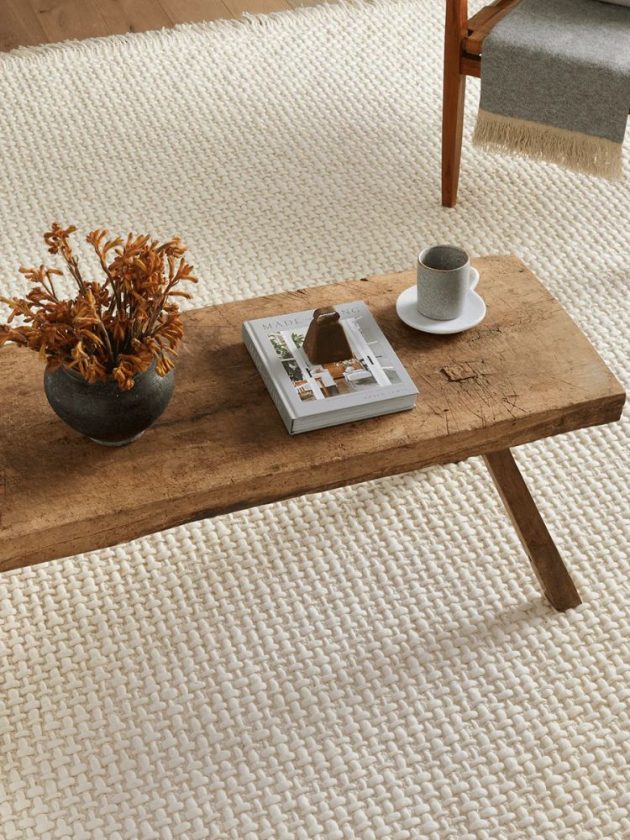
Best for: Living rooms, dining rooms and bedrooms
Urban Natural is your online destination for finding responsibly-made, exceptionally crafted home goods from sustainably-minded makers. Brands on Urban Natural include Loloi, a well-respected GoodWeave certified rug brand with rugs ethically hand-woven in Varanasi, India; and Jaipur Living, a company dedicated to preserving time-honored handcrafted art and rug weaving traditions, partnering with 40,000 artisans across hundreds of rural communities throughout India.
Other sustainable rug options on Urban Natural include 100% linen rugs from Libeco, which holds the Masters of Linen® quality label; and 100% wool rugs made in the USA from Earth Weave, the first US carpet manufacturer with a completely natural product line.
Materials: Wool, Jute, Sisal, Cotton, Silk, and Linen (Note: there are a couple of “performance” rugs made with polyester)
Price Range: Starts at $179
Shipping: Ships within the US
2. Lorena Canals
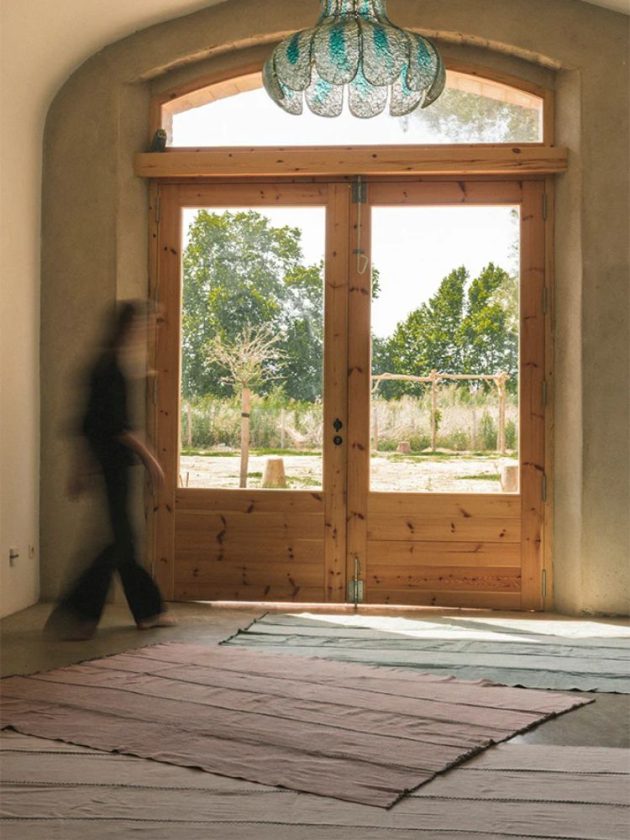
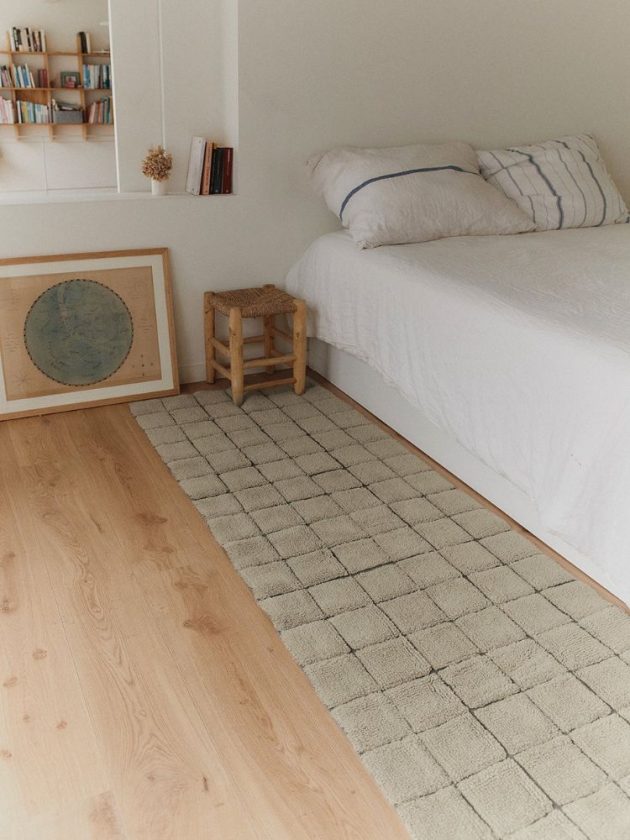
Best for: Living rooms, entryways and bedrooms
Lorena Canals revolutionized the rug industry with machine-washable cotton and wool rugs that don’t compromise on beauty or sustainability. Handcrafted in the brand’s own factory in India since 1998, each piece uses natural or recycled fibers, non-toxic azo-free dyes certified by GOTS and OEKO-TEX standards, and a water-efficient cone-dyeing method that conserves 75% of water compared to traditional processes. The aesthetic ranges from playful geometric patterns and kitchen tile motifs to minimalist neutral textures in their Woolable collection. With customizable options and designs that celebrate the natural colors of undyed wool, these rugs pair practical washability with artisan craftsmanship, all while supporting the brand’s Sakûla Project school for children in northern India.
Materials: Cotton, Wool
Price Range: From $145
Shipping: Global | Outside of US and Canada? Use this website to order instead.
3. CICIL

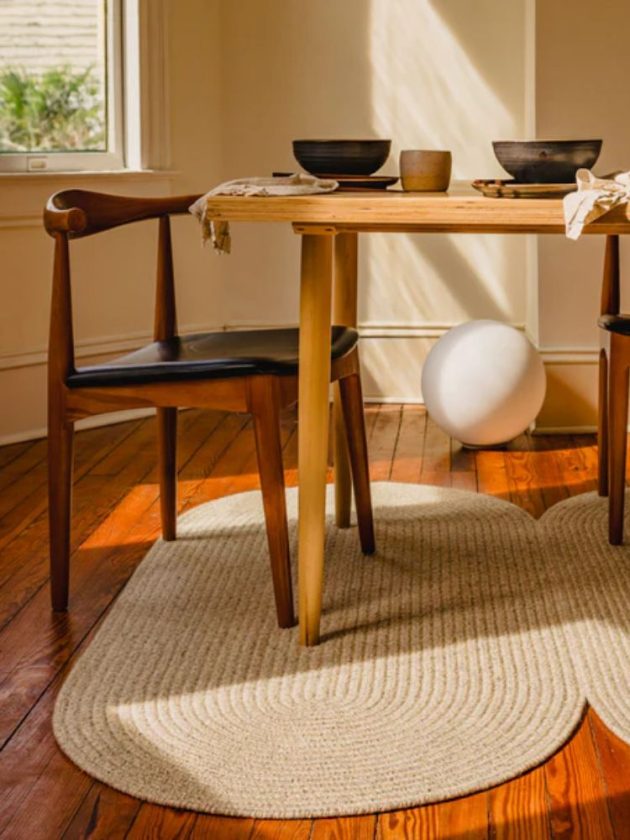
Best for: Living rooms, bedrooms, hallways, and dining rooms
Founded by two former Patagonia textile experts in North Carolina, Cicil brings radical transparency to rug-making with a supply chain that travels less than 1,000 miles from wool to floor. Their braided and shuttle weave rugs use 70% undyed wool sourced directly from small family farms across upstate New York, Pennsylvania, and Vermont, combined with 30% jute for durability. With shapes ranging from linear and oval to curvy and arch designs, each piece celebrates natural wool tones—from deep grays to warm beiges—without any synthetic dyes or finishes. Made in the Carolinas using traditional techniques on vintage looms, Cicil’s approach is intentionally “anti-innovation,” focusing instead on time-tested methods that create rugs built to biodegrade gracefully after a lifetime of use.
Materials: Wool, Jute
Price Point: From $459
Shipping: Ships within the US (all orders ship free)
4. West Elm Fair Trade Certified
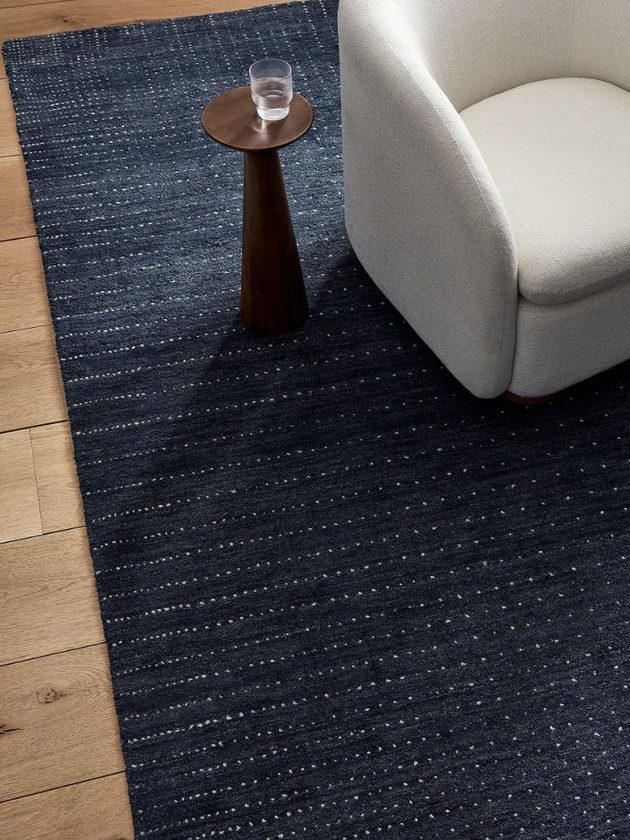
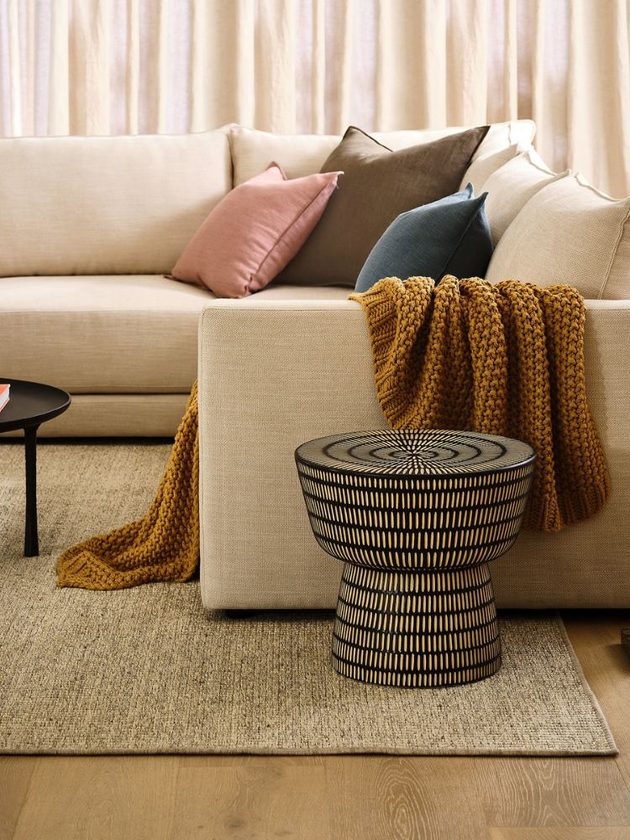
Best for: Living rooms, dining rooms, offices, or bedrooms
I tend to put large retailers, like West Elm, through much stricter scrutiny in my vetting process because they have larger supply chains which makes transparency much more difficult. It’s easy to know your factory without a certification if you work with one or two facilities. It’s much harder when you work with 20 — or 200. That’s why I appreciate that West Elm has such an extensive selection of rugs made in verified Fair Trade Certified factories.
Most of West Elm’s rugs are also made from 100% natural materials like sisal, jute, wool, and cotton. Though like most companies, their “Performance Rugs” are made with polyester. West Elm does use 90-100% recycled polyester for these rugs which makes it a lower impact choice from a carbon emissions point of view. It may still shed microplastics, but if you have pets that could be worth the trade-off for you to have a durable rug.
Note that West Elm does not have non-toxic related certifications for most of their rugs, so this can be a great choice if you value aesthetic variety, ethical production, and natural materials, but if your top priority or concern is that the rug was tested for potentially harmful chemicals, West Elm might not be the right fit for you.
Materials: Wool, Jute, Sisal, Cotton (Performance rugs use recycled polyester)
Price Point: From $459
Shipping: Ships within the US and select other countries
5. Schoolhouse
Best for: Bedrooms, living rooms, and dining rooms
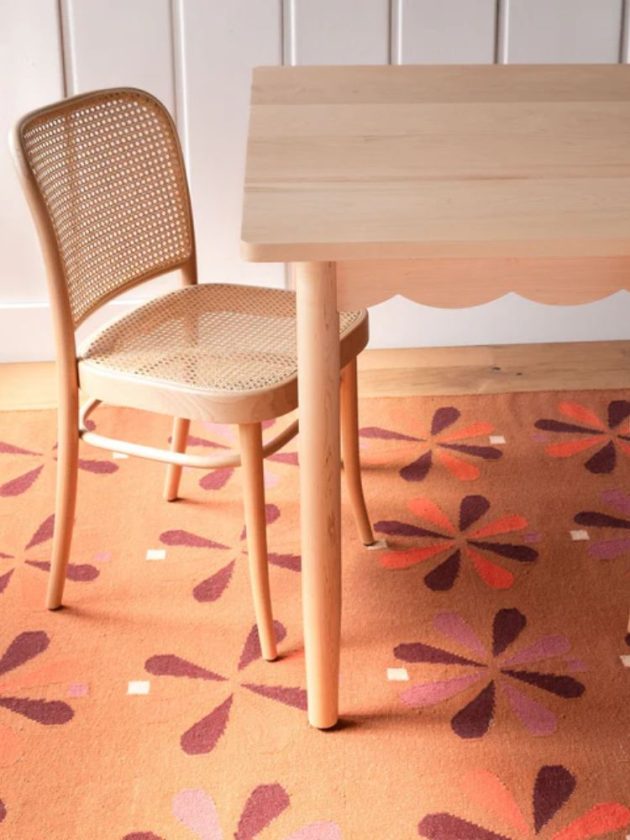
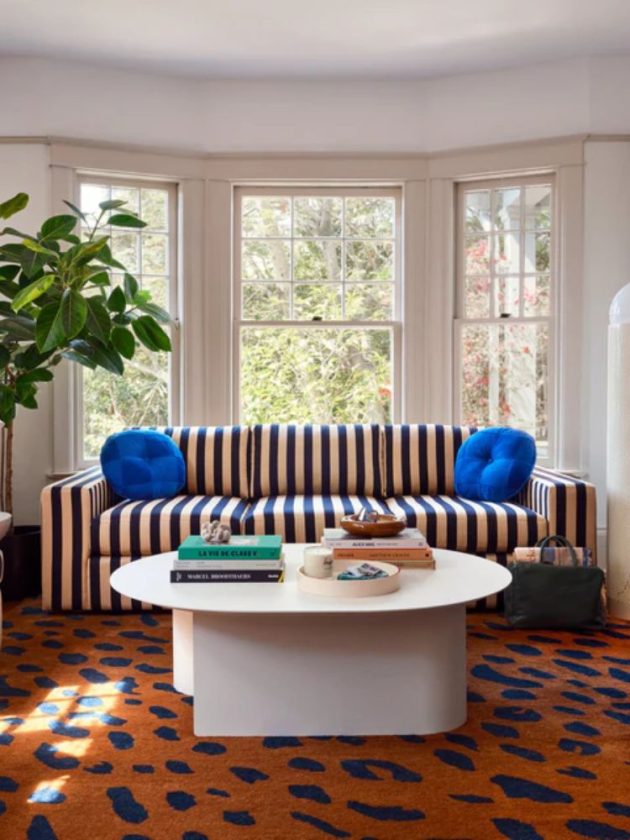
Schoolhouse brings American design sensibility to handcrafted rugs woven in India using natural materials. Their collection spans hand-knotted wool pieces with vivid, whimsical patterns like the Sundrop design to reversible flatweave plaid styles perfect for layering. Natural-dyed wool yarn creates rich, enduring colors—from burnt orange and chartreuse to soft neutrals—while jute-chenille blends offer versatility underfoot without the typical scratchiness. With 80% of their assortment domestic and FSC-certified materials across their product lines, Schoolhouse prioritizes reducing carbon emissions through consolidated shipping and minimal plastic packaging.
Materials: Wool, Jute, Cotton, Recycled PET (note: PET is plastic, so this isn’t our top recommendation)
Price Range: From $79
Shipping: Ships to all US States and Canada
6. Nestig
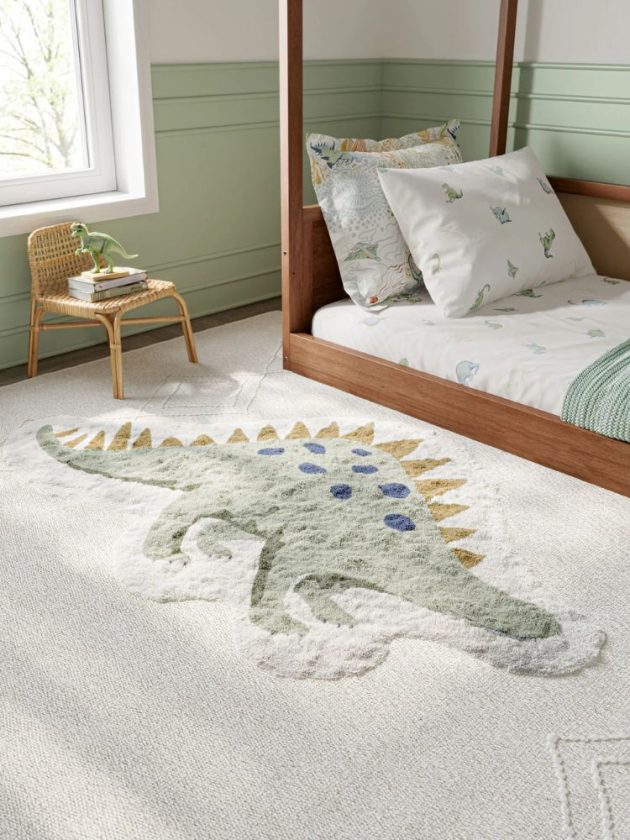

Best for: Nurseries and playrooms
Nestig transforms nursery floors with whimsical, machine-washable rugs that parents actually want to clean. Hand-loomed in Brazil by local artisans with over 20 years of experience, each piece uses 100% GOTS-certified organic cotton grown locally and dyed with non-toxic pigments. The designs range from playful vehicles (dump trucks, airplanes, sailboats) and animals (dinosaurs, bears) to sophisticated geometric patterns and world maps. Nestig operates on a “just enough” business model that minimizes warehouse inventory and carbon footprint, partnering exclusively with sustainable, family-owned businesses. Every rug arrives as a truly one-of-a-kind piece with natural variations that come from artisan craftsmanship.
Materials: Organic Cotton
Price Range: From $399
Shipping: Ships to US, Canada, and the UK
7. Salem Hello
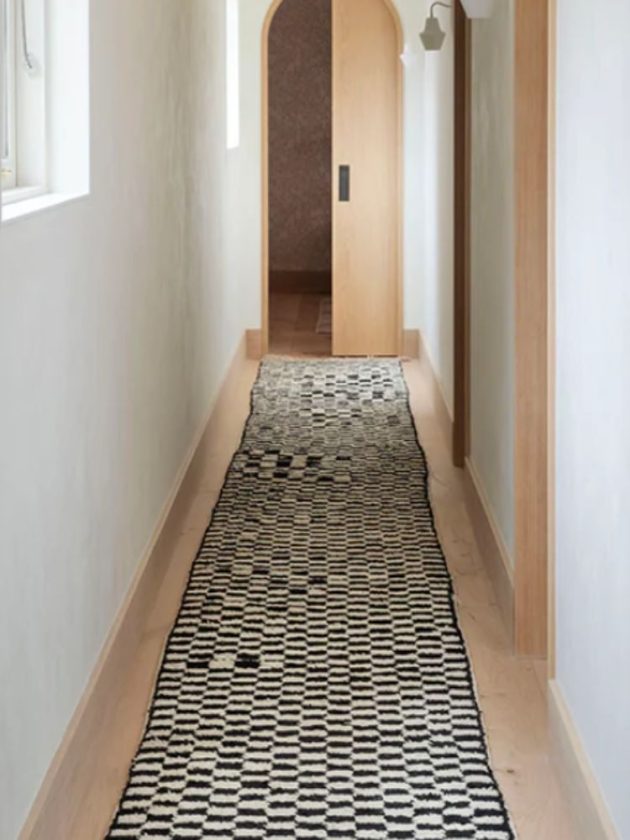
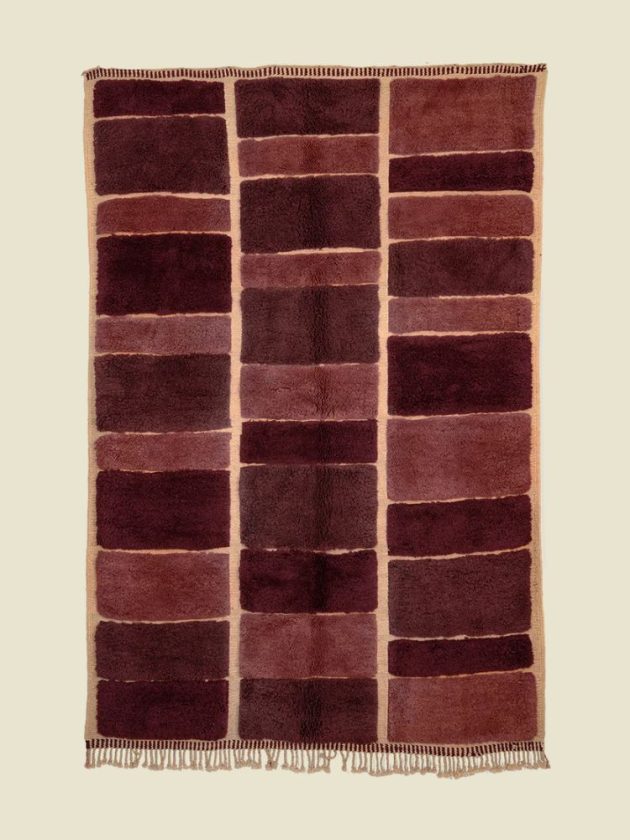
Best for: Living rooms, bedrooms, hallways and statement spaces
Salam Hello bridges the gap between Moroccan artisan tradition and contemporary homes with transparency at its core. Each handwoven rug is crafted by Amazigh women in Morocco’s Atlas Mountains, preserving techniques passed through generations while ensuring fair wages and artisan recognition. The collection includes ready-to-ship vintage and new pieces alongside made-to-order designs where you choose size, color, and pattern. From neutral flatweaves and textured hand-knots to bold geometric designs rich in traditional symbolism, every rug carries protective meaning woven into its fibers. With collaborations like their Izra collection with General Assembly and the Atlas Form line, Salam Hello offers refined modern interpretations alongside authentic traditional styles.
Materials: Wool
Price: From $625
Shipping: Ships Worldwide
8. Organic Weave
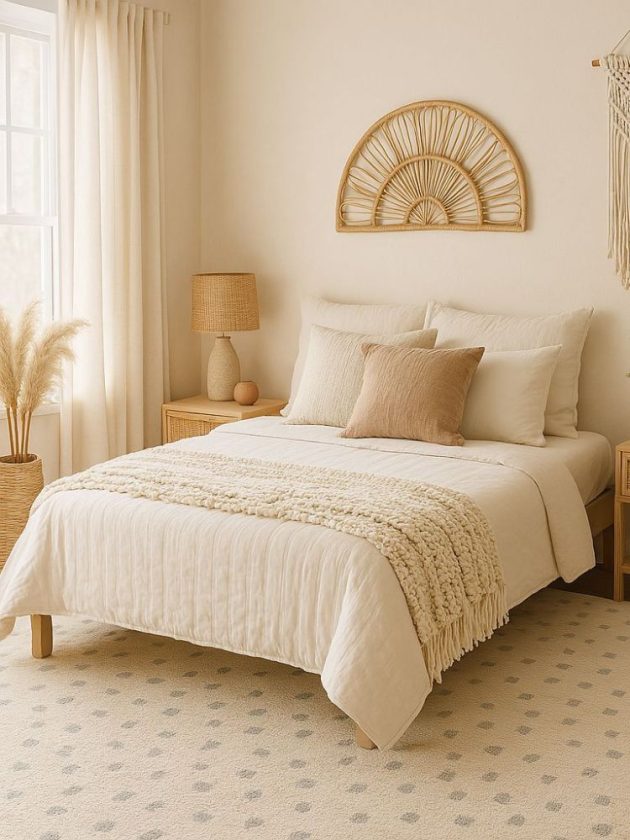

Best for: Living rooms, bedrooms, and kids’ rooms
Organic Weave was born after founder Linda witnessed child labor at the rug manufacturers in India her family’s rug business was sourcing from. When Linda became the buyer at her family’s company, she started sourcing exclusively from the only supplier that was committed to not employing children.
Today, Organic Weave is GoodWeave certified — a certification providing additional assurance there isn’t child labor in the supply chain. And as the name suggests, the sustainable rug company also uses organic materials: 100% organic wool for high-traffic areas like living rooms and 100% organic cotton for lower traffic areas like bedrooms. Their handmade, artisan crafted rugs are Global Organic Textile Standard Certified too.
Materials: Organic Cotton, Organic Wool
Price Range: From $1,789
Shipping: Ships Worldwide
9. LOOMY
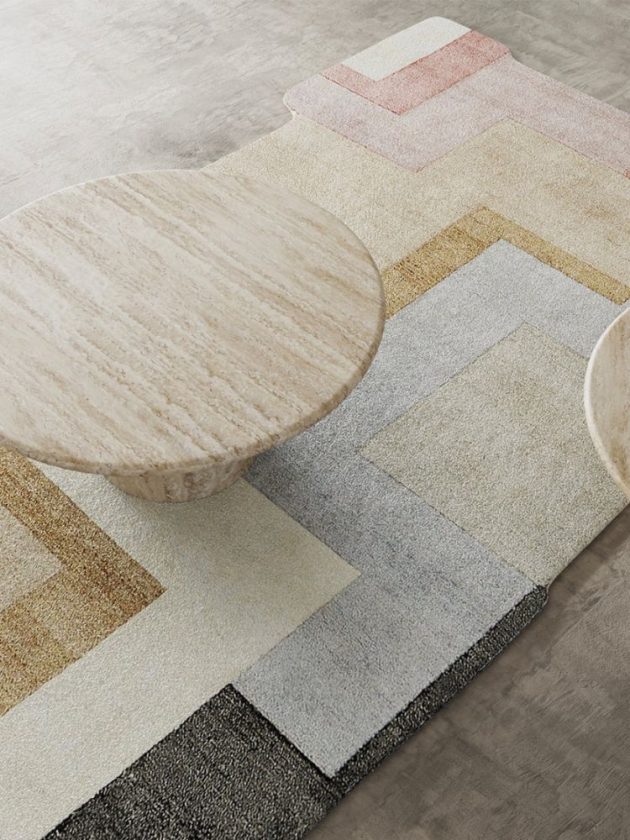
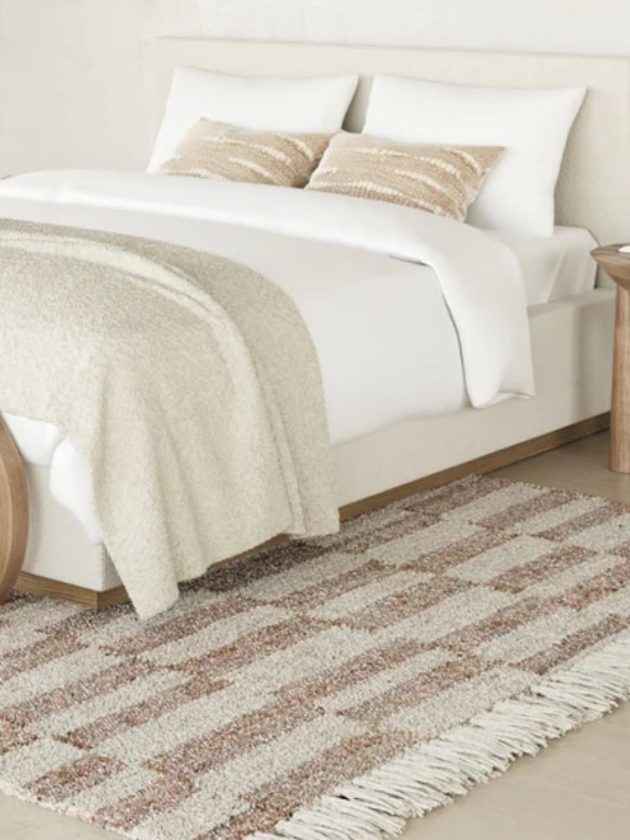
Best for: Living rooms, bedrooms, and dining rooms
LOOMY proves that sustainable doesn’t mean sacrificing style with a curated collection of contemporary rugs made entirely by hand from indigenous artisan weaving communities worldwide. Their natural fiber collection includes wool, jute, cotton, hemp, and sisal rugs alongside performance options crafted from recycled P.E.T. plastic diverted from oceans and landfills. From shaggy textures and bold geometric patterns to minimalist flatweaves, every design is exclusively created in-house and made without mechanical assistance, using traditional spinning, natural dye baths under the sun, and generations-old loom techniques. The brand’s transparency extends to sharing exactly who made each rug, how many hours it took, and the sustainable materials used.
Materials: Wool, Jute, Cotton, Hemp, Sisal, Recycled P.E.T.
Price Range: From $278
Shipping: Ships to all US States and Canada
10. Revival
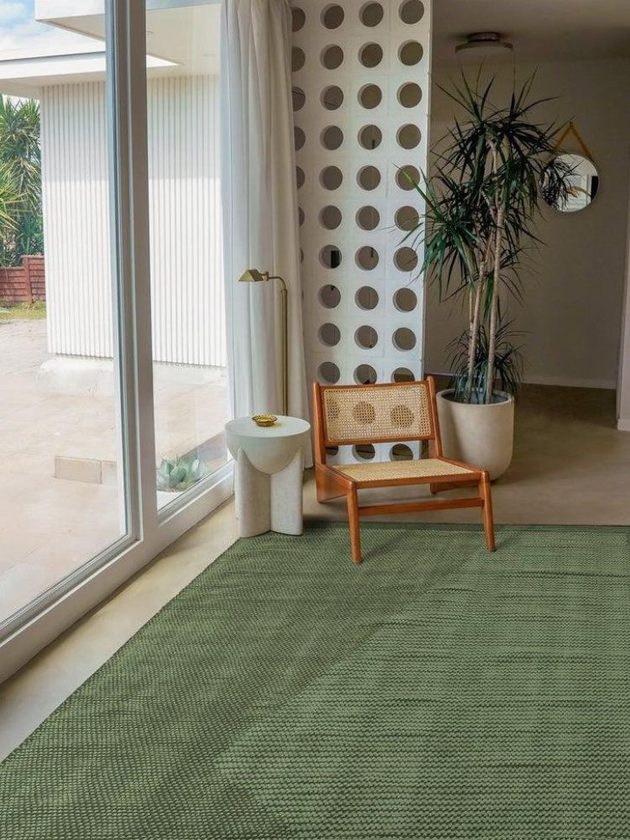

Best for: Living rooms, bedrooms, and dining rooms
Originally founded as a vintage rug curator, Revival now makes a wide range of affordable, beautiful rugs for all needs, whether you have kids, pets, or just want an easy-care washable rug.
Not all options from Revival are sustainable, and some are made from virgin polyester, so for natural fibers I’d direct you to their Wool Rugs collection and Jute Rugs collection, including their naturally dyed jute rugs. Revival also carries one-of-a-kind rugs, which include vintage options.
Materials: Wool, Jute, Recycled Polyester (also has some rugs made with new polyester, which I’d avoid)
Price Range: From $169
Shipping: Ships to contiguous US and selected other international destinations
Honorable Mentions: More Sustainable Rug Options
Here are some additional companies with sustainable rugs to check out! These didn’t make the “top 10” list based on our criteria, but you might have different priorities. So if you’re not finding what you’re looking for above, I recommend taking a look at this list too.
Hook and Loom: if you’re looking for a non-toxic organic rug, Hook and Loom has undyed organic cotton and natural wool rugs made without added chemicals. Their website doesn’t have the most modern user experience, which can make shopping a bit more cumbersome, but the brand has thousands of positive reviews.
Sabai: Sabai’s all-natural textured rugs are crafted from jute and wool in North Carolina by skilled rug makers. They are one of the few companies to manufacture their rugs in the US. That said, the rug does appear to be on the thinner side considering the price point.
The Citizenry: Hand-knotted and hand-loomed by artisan partners across the globe from Morocco to Peru each piece blends modern minimalist design with time-tested techniques passed down through generations. The Citizenry’s collection features everything from plush, textured wool designs to natural jute pieces, and the retailer guarantees 100% fair trade standards on every product, partnering directly with artisan communities. However, many customers complain online about slow shipping and poor customer service, so that’s something to keep in mind before purchasing.
Yaya & Co: this brand has some high sustainability standards like 100% organic certified materials and production in a Fair Trade Certified family-owned factory! Their designs are quite colorful and fun too, which isn’t always easy to find with organic materials. Their selection is more limited compared to the other brands and retailers, which is the only reason they didn’t make it onto the top 10 list.
The post 10 Best Sustainable Rugs For a Healthier Home and Planet appeared first on Conscious Life & Style.
Just like fashion has been overrun by fast fashion, home goods and furniture have similarly seen a rapid decline in quality. Rugs are no exception.
And similar to fashion, these cheap goods come at a high cost — namely, to the planet and to people. In fact carpet and rug production is rampant with exploitation.
On the other hand, fair trade rugs present the best of what a rug can bring to your home: artistry, craftsmanship, and heritage.
The brands featured in this guide are partnering with (and fairly paying!) skilled artisans who are using generations-old — and sometimes even centuries-old — techniques. These artisans are sustaining long lines of crafts, preserving their cultural diversity, and celebrating the richness of their time-honored crafts.
There’s simply no replacement for a timeless, quality artisan-made rug — they’re like pieces of art you can lay out on your floor or hang on your walls.
So, enjoy browsing through this guide to sustainable rug brands listed out below and best of luck on your search for the right fair trade rug!
Where to Find Ethical and Fair Trade Rugs
Note that this guide includes affiliates and partners. As always, brands must meet high standards for ethics and sustainability to be featured and all opinions are my own.
1. The Citizenry
If you’re browsing for fair trade rugs, but looking for a more minimalist or neutral aesthetic, look no further than The Citizenry.
The brand’s natural, handmade rugs — made by artisans working in fair trade conditions — feature striking prints but more subtle colors. Next to each product page you’ll be able to learn more about the workshop and the artisans behind that piece.
Price Range: $$$
Conscious Qualities: Fair Trade, Natural Fibers, Craft Preservation
Categories: Area Rugs

2. Kiliim
If you’re well-versed in rug terminology, you may recognize that this brand’s name looks similar to the word kilim. Kiliim’s rug are made using authentic, well, kilim rug craftsmanship by artisans in Egypt coming from generations of kilim artisans. To ensure ethical production and to support the preservation of this heritage craft, Kiliim pays living wages to all artisans.
Price Range: $ – $$$
Conscious Qualities: Ethical Production, Heritage Craft Preservation, Natural Fibers
Categories: Area Rugs, Accent Rugs
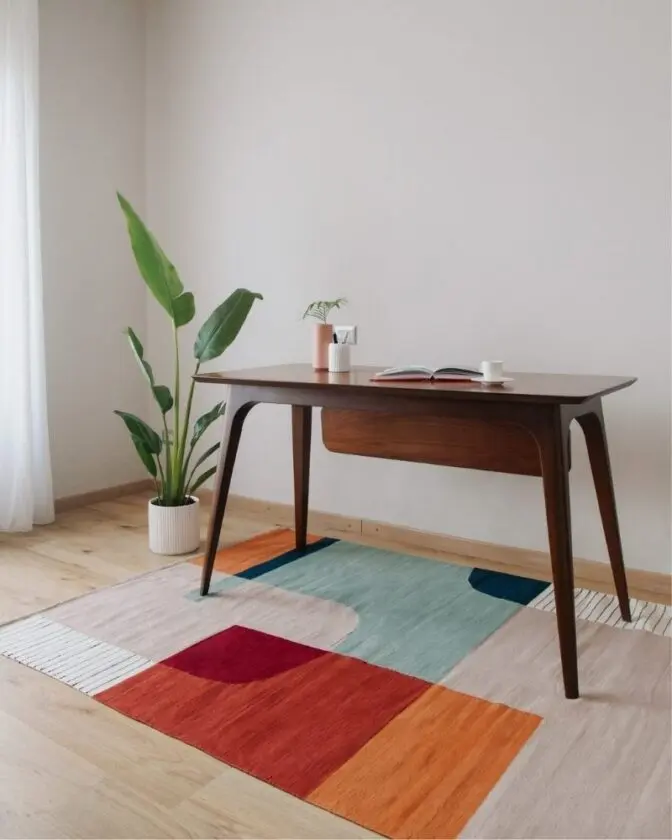
3. Urban Natural
This natural home and lifestyle retailer has a beautifully curated selection of sustainably-made rugs crafted with materials like jute, sisal, wool, and cotton.
Several brands on Urban Natural are also ethically hand-loomed or hand-knotted, such as Loloi — a GoodWeave partner — and Jaipur Living — a brand that partners with thousands of local artisans to sustain heritage crafts.
Price Range: $$+
Conscious Qualities: Eco-Conscious Materials
Categories: Outdoor, Area Rugs, and Accent Rugs
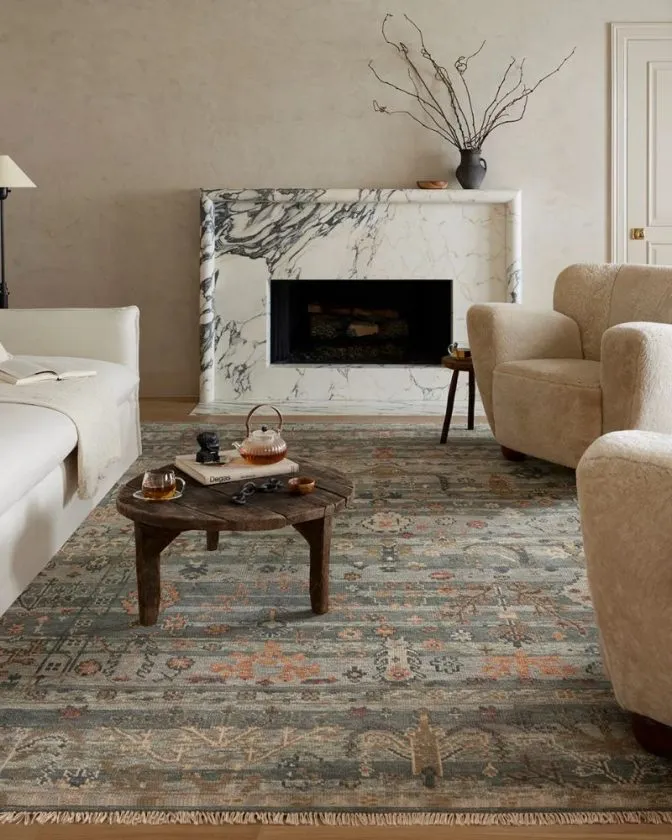
4. Zuahaza
Each of Zuahaza’s artisan-made rugs is creatively designed with unique patterns and expertly handwoven by weavers in Colombia. Zuahaza’s captivating rugs are made from sustainably-sourced fique, a natural fiber from Colombia that is similar to hemp. And, just like hemp, fique requires little water to grow and is rarely attacked by pests (meaning fique is always grown organically without chemical pesticides).
Price Range: $$ – $$$
Conscious Qualities: Organic Fibers & Natural Dyes, Cultural Preservation, BIPOC-Owned
Categories: Area Rugs, Runner Rugs, Accent Rugs
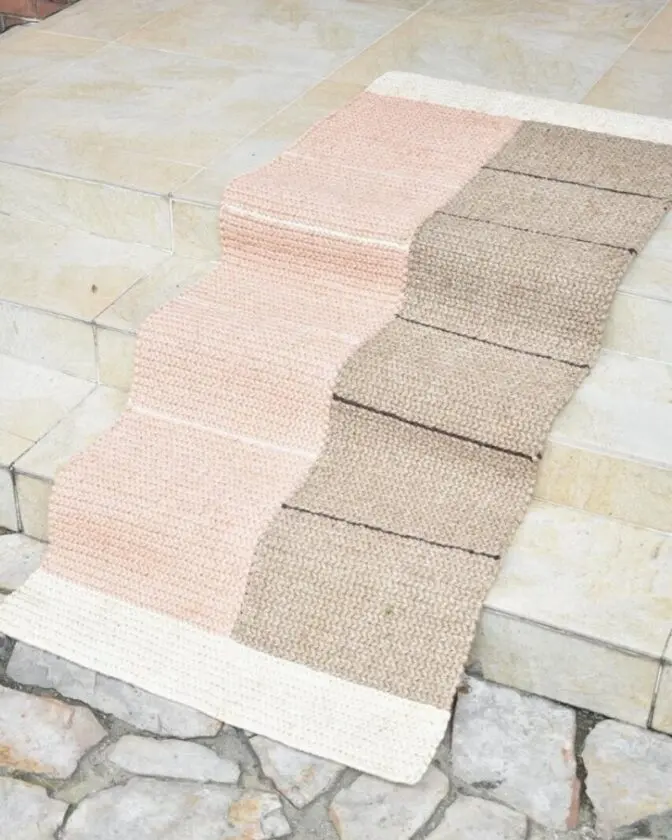
5. LOOMY
Founded by a weaver, LOOMY is dedicated to making beautiful, non-toxic rugs that will last for decades to come.
LOOMY partners with highly-skilled artisan weavers who craft quality rugs made from eco-minded materials like banana silk, jute, and recycled cotton built to withstand whatever life brings you.
Price Range: $$ – $$$
Conscious Qualities: Eco & Non-Toxic Materials, Craft Preservation
Categories: Area Rugs, Accent Rugs, Runners, Outdoor Rugs
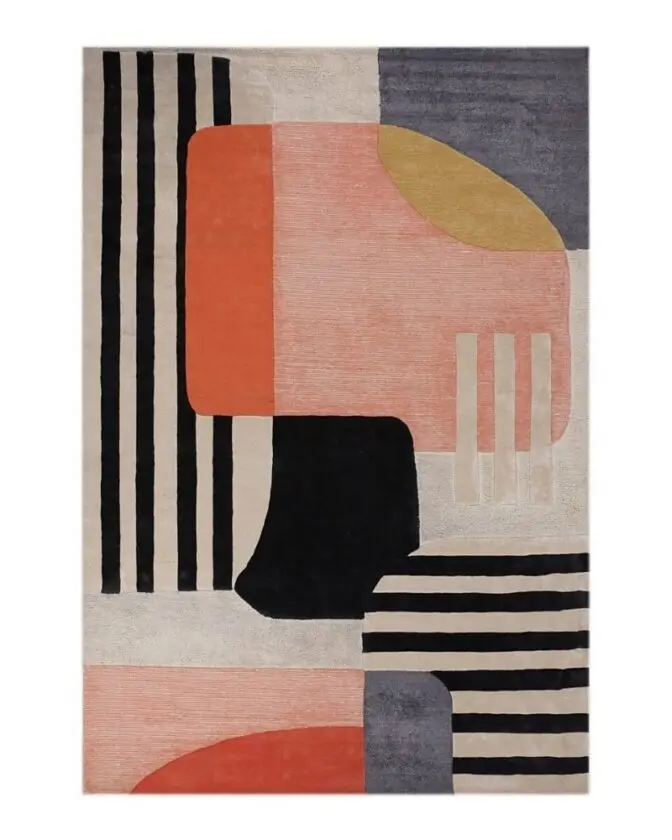
6. Leah Singh
Leah Singh’s designs are a reflection of the designer’s background, growing up surrounded by the rich artistry of India and studying at Parsons amidst the structural, minimal lines of New York.
All of the brand’s rugs are made by artisans in India who use embroidery, weaving, and printing techniques native to their respective regions.
Price Range: $$ – $$$
Conscious Qualities: BIPOC-Owned, Ethical Production, Cultural Preservation
Categories: Area Rugs, Accent Rugs, Runners
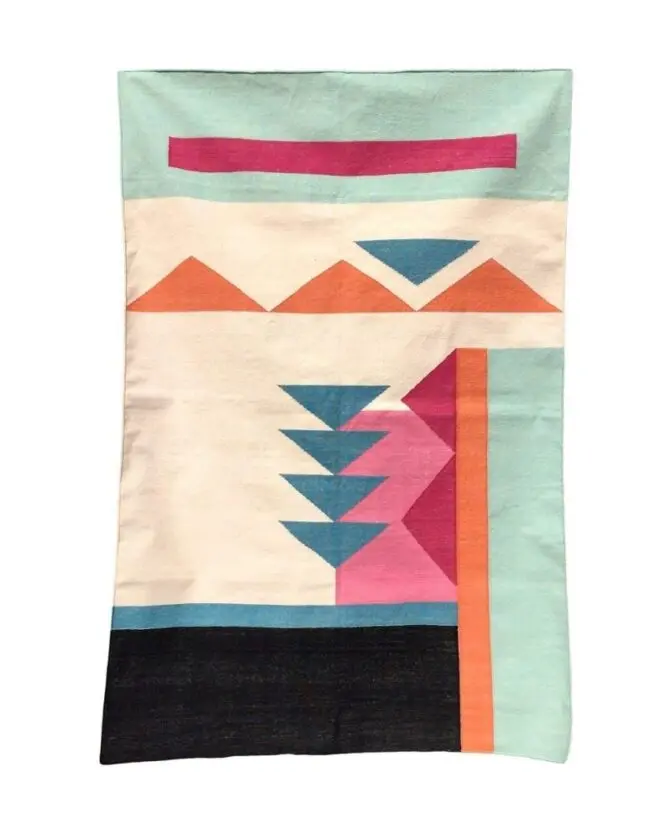
7. West Elm
West Elm is bringing ethical rugs to a broader market with their collection of Fair Trade Certified wool and cotton rugs. While I recommend browsing the smaller shops listed above first, West Elm is supporting the movement to responsibly-made, fair trade rugs.
Price Range: $$$
Conscious Qualities: Fair Trade production, Majority Natural Materials
Categories: Area Rugs, Accent Rugs
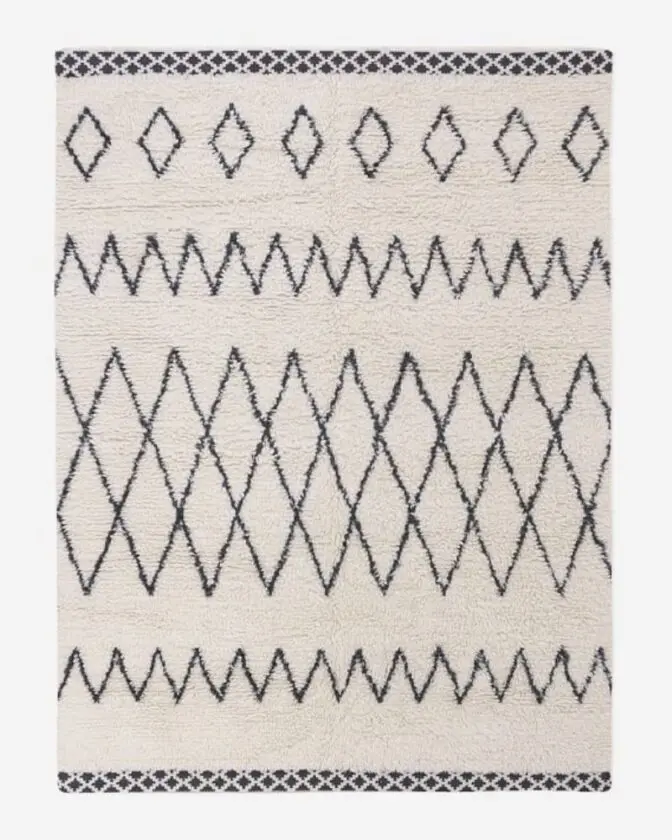
Liked this guide to sustainable rugs? You might also enjoy:
Ethical Home Decor Brands to Curate a Beautiful, Conscious Space
Eco-Friendly Furniture to Furnish Your Home Sustainably
Fair Trade and Eco-Friendly Blankets to Cozy Up With
The post 7 Best Ethical Fair Trade Rugs to Elevate Your Space appeared first on Conscious Life & Style.
A durable set of eco-friendly dinnerware is a solid ingredient for a sustainably set table! But…
What is Sustainable Dinnerware?
Well looking for secondhand and vintage dinnerware is always a good start, whether that’s your grandmother’s porcelain dining sets or a pre-loved set of colorful plates and bowls at your local thrift store.
Another great place to look is estate sales. You can likely find full sets of dinnerware! If none of those options are available to you (or your just not finding something you love) you can check out a site like Etsy Used or Chairish.
*Important note on secondhand dinnerware: the FDA started regulating the use of lead in dinnerware in 1971. So you might want to avoid any dinnerware produced before 1971, unless it’s just for display!
Here are some qualities to look for when shopping for new sustainable dinnerware:
Sustainably sourced materials: such as responsibly-harvested bamboo and recycled glass.
Quality: when it comes to products you’re going to potentially use and wash daily, durability is an important factor to keep in mind. Also consider your lifestyle! Perhaps glass and porcelain aren’t the best choices if you have little ones, or you tend to drop things often. (Guilty!!)
Usefulness: You might also want to consider if you will be hand-washing or dishwashing your dinnerware. Some materials are too fragile for the dishwasher, so consider if you’ll have the time (and willingness) to hand wash them all the time. Because part of sustainability is that you’ll actually use the products and they won’t just sit and collect dust! 
Ethical production: this could look like transparent local manufacturing or artisan-made and fair trade. In any case, an ethical dinnerware brand would prioritize fair living wages for the workers, ensure safe healthy conditions (this includes no toxic chemicals used in production!) and go above and beyond to consider the wellbeing of the people who work for them and/or produce their products.
Ownership and Equity: this means looking at who owns and profits from the brands we’re supporting; if a brand is owned by a person of color, it will be indicated in their description below (BIPOC-owned stands for Black, Indigenous, Person of Color-owned and WOC-owned stands for Woman of Color-owned).
Your Values: you may have other elements you look for in a brand, such as traditional craft preservation. Or perhaps it’s really important to you that a brand is giving back to their local community.
Where to Find Eco-Friendly Dinnerware
The eco-friendly tableware and sustainable dinnerware brands featured below meet at least one (though most of them meet several) of the above criteria.
In this roundup, you’ll find sustainable pottery (including ceramic plates, sustainable mugs, and more), recycled glassware, artisan-made ethical dinnerware, and everything in between to suit your needs. I hope that this variety of brands will help you set the table, whether that’s for fancy dinner parties, Friday night pizza, or something in between.
This article features affiliates and partners. As always, we only feature brands that meet strict standards for sustainability that we love — and that we think you’ll love too!
1. East Fork
East Fork’s ethically-made dinnerware and tableware is next level — their gorgeous sustainable ceramics, glassware, mugs, and other goods are exquisitely designed and built for durability.
Committed to creating local manufacturing jobs, all of East Fork’s eco-friendly pottery is made in Asheville, North Carolina and is working to center equity and inclusion throughout their business.
Categories: Plates, Bowls, Cups, Drinking Glasses, Flatware/Silverware,
Conscious Qualities: Locally-Made, Transparent Production
Price Range: $$$

2. Our Place
From the same brand that brought us their cult-favorite Always Pan, comes a gorgeous collection of non-toxic dinnerware and sustainable pottery.
Our Place has hand-painted main plates and side bowls made with recycled and virgin porcelain ceramic and dinner glasses handmade from recycled glass and colored with natural dyes.
Categories: Glassware, Bowls, Plates
Conscious Qualities: Eco Materials, Gives Back, WOC-Owned
Price Range: $$

3. Fable
Prioritizing timelessness and sustainability, Fable sources quality materials and simple designs that last the test of time.
The eco-minded dinnerware company partners with makers in Portugal, Germany, Italy, Japan, and the US that use conscious practices, like ethical employment, craftsmanship, and low-waste practices (like sourcing recycled clay).
Categories: Dinnerware, Drinkware, Cutlery, Serveware, and Decor
Conscious Qualities: Quality Craftsmanship, Low Waste Practices, Responsibly Sourced
Price Range: $$$

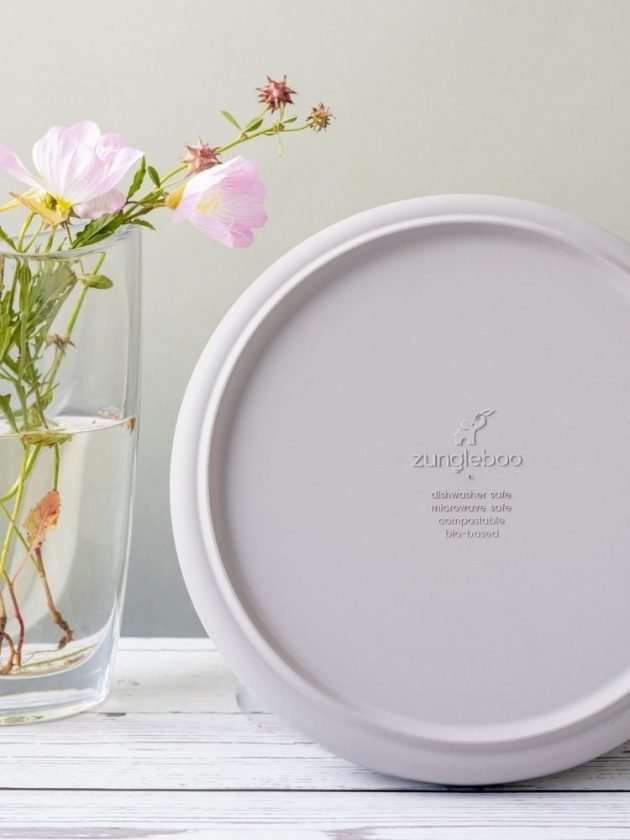
4. Zungleboo
Lightweight, shatterproof, and made from corn starch + bamboo fiber, Zungleboo creates family-friendly and eco-friendly dinnerware!
Their versatile plant-based bowls and plates are also dishwasher and microwave safe, making them easy to care for no matter how busy mealtime is. As Zungleboo writes on their website, their sustainable dinnerware is “from real plants, for real life”.
Categories: Bowls, Plates
Conscious Qualities: Eco Materials, WOC-Owned
Price Range: $$
Use code CONSCIOUS15 for 15% off!
5. Urban Natural
Green home retailer Urban Natural has stunning eco-friendly tabletop goods from leading contemporary brands like Farmhouse Pottery and Ethnicraft.
The brands Urban Natural curates source natural materials, use time-honored processes, and take quality craftsmanship seriously.
Categories: Plates, Bowls, Cups & Mugs, Flatware
Conscious Qualities: Artisan Goods, Natural Materials, Locally and Ethically Made
Price Range: $$ – $$$

6. GOODEE
For artisanal plates that can elevate your tablescape, GOODEE is the answer.
From 100% porcelain stone ceramic plates hand-crafted in the ancient Japanese town of Arita and hand-painted plates made from Egyptian clay to marble patterned ecothylene® (upcycled BPA-free plastic) plates ideal for family-friendly daily wares, GOODEE has options for everyone.
Categories: Plates, Glassware, Cups & Mugs, Serving, Flatware
Conscious Qualities: Ethical Production, Craft Preservation
Price Range: $$$

7. Ekobo
Ekobo’s colorful eco-friendly dinnerware is available in a variety of colors and sizes, perfect for mixing and matching to create a unique sustainable table setting for any space.
The eco-friendly dinnerware from Ekobo is made from upcycled bamboo and the result is durable, dishwasher-safe, and non-toxic diningware.
Categories: Plates, Bowls, Cups, Trays, Baby Diningware
Conscious Qualities: Eco Materials
Price Range: $$

More Guides For An Eco-Friendly Kitchen:
Best Fair Trade and Eco-Friendly Tablecloths
Your Sustainable and Zero Waste Kitchen Guide
The Best Zero Waste Food Storage Options
The post 7 Eco-Friendly Dinnerware Brands To Set Your Sustainable Table appeared first on Conscious Life & Style.
7 Eco-Friendly Dinnerware Brands To Set Your Sustainable Table



-

 Greenhouse Gases2 years ago
嘉宾来稿:满足中国增长的用电需求 光伏加储能“比新建煤电更实惠”
-
Climate Change1 year ago
Guest post: Why China is still building new coal – and when it might stop
-
Greenhouse Gases1 year ago
Guest post: Why China is still building new coal – and when it might stop
-

 Climate Change2 years ago
嘉宾来稿:满足中国增长的用电需求 光伏加储能“比新建煤电更实惠”
-

 Renewable Energy11 months ago
Sending Progressive Philanthropist George Soros to Prison?
-
Climate Change2 years ago
Bill Discounting Climate Change in Florida’s Energy Policy Awaits DeSantis’ Approval
-
Greenhouse Gases1 year ago
嘉宾来稿:探究火山喷发如何影响气候预测
-

 Carbon Footprint2 years ago
US SEC’s Climate Disclosure Rules Spur Renewed Interest in Carbon Credits