The European Union (EU) has taken a major step toward climate neutrality. The European Commission adopted the first certification methodologies under the Carbon Removals and Carbon Farming (CRCF) Regulation. These rules define how projects that permanently remove carbon dioxide from the atmosphere can be verified and certified across Europe.
Wopke Hoekstra, European Commissioner for Climate, Net-Zero and Clean Growth, stated,
“The European Union is taking decisive action to lead the global effort in carbon removals. By establishing clear, robust voluntary standards, we are not only fostering responsible and climate action within Europe but also setting a global benchmark for others to follow. This is a vital step toward achieving our climate neutrality targets and ensuring a sustainable future.”
Why Certification Is Critical for Carbon Markets
Carbon removals are key to meeting climate goals. Even with big emission cuts, some sectors will still release greenhouse gases, and removals can offset them.
Trust is crucial. Without clear rules, companies could overstate their climate claims, investors may hesitate, and policymakers risk losing confidence. The CRCF methodologies solve this by defining how to measure removals, ensure permanence, and manage risks. This builds credibility and reduces greenwashing.
The CRCF Regulation creates the EU’s first voluntary system to certify carbon removals, carbon farming, and carbon storage in bio-based products. It sets clear rules for what counts as a verified tonne, how to keep it permanent, and how to handle risks.
By turning carbon removals into a structured market, the framework supports innovation, attracts investment, and strengthens the EU’s path to net zero by 2050.
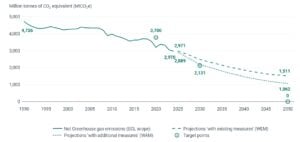
Progress towards achieving climate targets in the EU-27
Three Carbon Removal Technologies Covered
The news release revealed that the Commission selected three carbon removal pathways for the first certification methodologies. These technologies are mature and can scale in the near term.
-
Direct Air Capture with Carbon Storage (DACCS)
DACCS removes CO₂ directly from ambient air. Machines capture CO₂ and store it underground in geological formations. This approach is highly permanent because the CO₂ stays locked away for thousands of years.
DACCS is expensive today, but it has strong long-term potential. Clear certification rules could accelerate private investment and government support.
-
Biogenic Carbon Capture and Storage (BioCCS)
BioCCS captures CO₂ from biomass-based processes, such as bioenergy plants. Since plants absorb CO₂ as they grow, capturing and storing emissions can result in net negative emissions.
This pathway could help industries decarbonize while producing energy or materials.
-
Biochar Carbon Removal (BCR)
Biochar is a stable form of carbon produced by heating biomass in low-oxygen conditions. When applied to soil, biochar can store carbon for centuries and improve soil health.
This method links climate mitigation with agriculture and soil restoration.
From Policy Design to Real Project Deployment
With the certification framework in place, carbon removal projects can now apply for EU certification. This marks a shift from rule-setting to real-world implementation.
Certification schemes must apply for recognition by the European Commission. The Commission will assess them using a standardized protocol that checks compliance with EU climate rules and audit standards.
Once certified, projects can issue verified carbon removal credits. These credits could attract corporate buyers, governments, and financial institutions that want high-quality climate offsets.
Upcoming Rules for Carbon Farming and Bio-Based Construction
The Commission plans two additional delegated regulations by 2026. These will expand the CRCF framework beyond industrial carbon removals.
One regulation will cover carbon farming practices such as improved agricultural methods, agroforestry, peatland rewetting, and afforestation. These rules could allow farmers and foresters to earn payments for storing carbon, helping them diversify income and adopt resilient practices.
Another regulation will cover carbon storage in bio-based construction materials. This will help building owners prove the carbon storage performance of buildings and encourage the use of circular bioeconomy materials in construction.
EU Buyers’ Club and Funding Support
To jumpstart the voluntary carbon removal market, the Commission announced an EU Buyers’ Club. This initiative will connect buyers with certified carbon removal projects and help create early demand.
The EU is also exploring ways to mobilize public and private finance. Existing funding tools such as the European Innovation Council and the Innovation Fund already support innovative carbon removal technologies.
Together, policy support and financing could accelerate the deployment of carbon removal solutions across Europe.
Governance, Audits, and Transparency
The CRCF framework builds on earlier EU rules that define certification bodies, audit procedures, and governance structures. Certification schemes must meet strict requirements for quantification, permanence, and sustainability.
The methodologies were developed with input from the Carbon Removal Expert Group. All preparation documents and meeting recordings are publicly available, which improves transparency and trust.
This governance structure aims to ensure environmental integrity while keeping administrative complexity manageable.
Carbon Removals and the EU’s Net Zero Strategy
The EU’s goal of climate neutrality by 2050 is legally binding under the European Climate Law. Carbon removals play a critical role in reaching this target because some emissions are hard to eliminate.
The CRCF framework aligns with the European Green Deal and the EU’s commitments under the Paris Agreement. It also supports the EU’s long-term climate strategy submitted to the United Nations.
Emissions Trends Highlight the Challenge Ahead
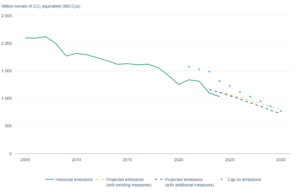
Recent data shows the difficulty of balancing economic growth and emissions reduction. EU greenhouse gas emissions reached about 900 million tonnes of CO₂-equivalent in the first quarter of 2025, up 3.4 percent from the previous year. During the same period, GDP grew by 1.2 percent.

This shows that economic activity can still drive emissions upward, even with climate policies in place. The EU Emissions Trading System has helped reduce emissions from power and industry by 51 percent since 2005. However, aviation emissions have rebounded close to pre-pandemic levels.
The EU aims to cut ETS-covered emissions by 62 percent by 2030 compared to 2005. Carbon removals will complement these policies and help close the remaining gap to net zero.
Fig: Historical and projected emissions from stationary installations covered by the EU Emissions Trading System in the European Economic Area
What This Means for Industry and Investors
The CRCF methodologies create a structured market for carbon removals. This could attract startups, large companies, and institutional investors. To summarize:
- Certified carbon removals provide high-quality offsets for net-zero strategies and reduce reputational risk for companies.
- Clear rules reduce uncertainty and improve project evaluation for investors.
- The framework provides a scalable tool for responsibly managing negative emissions for policymakers.
Despite progress, challenges remain. Carbon removal technologies are still expensive and require large infrastructure investments. Long-term liability for stored CO₂ remains complex and requires legal clarity. Demand for carbon removals is still uncertain, especially outside voluntary markets.
However, the CRCF framework provides a strong foundation for addressing these issues and building a credible market.
Final Take: A Global Benchmark for Carbon Removals
The EU’s move positions it as a global leader in carbon removal governance. Only a few regions have such detailed certification rules. Other countries may adopt similar frameworks, and global standards could emerge.
The post EU Sets Global Benchmark for Permanent Carbon Removals and Carbon Farming appeared first on Carbon Credits.
Carbon Footprint
DOE’s Nuclear Fuel and Fusion Partnership Signals a New Era for U.S. Power Markets
The United States is moving fast to rebuild its nuclear fuel supply chain, revive dormant facilities, and accelerate next-generation nuclear technologies. These efforts come as electricity demand surges from artificial intelligence (AI), data centers, and industrial electrification.
Recent announcements from the U.S. Department of Energy (DOE) show a coordinated push to strengthen uranium enrichment, revive legacy nuclear infrastructure, and deepen international collaboration on fusion power. Together, these developments highlight how nuclear energy is becoming central to U.S. energy security, economic competitiveness, and climate goals.
Hanford’s FMEF Gets a Second Life in the Nuclear Fuel Cycle
The DOE Office of Environmental Management announced a new partnership with American nuclear fuel company General Matter to explore the reuse of the Fuels and Materials Examination Facility (FMEF) at the Hanford Site in Washington State.
FMEF is a 190,000-square-foot facility originally built to support the Liquid Fast Breeder Reactor Program. However, it never operated in a nuclear role and has been idle since 1993 under surveillance and maintenance status.
Under the new lease, General Matter will evaluate the facility for potential upgrades, conduct site characterization, and engage local communities and stakeholders. The goal is to determine whether the facility can be returned to service for advanced nuclear fuel cycle technologies and materials research.
Reviving FMEF could help the U.S. rebuild critical infrastructure that was lost after decades of underinvestment in nuclear fuel production. It also fits into the Trump administration’s broader agenda to expand domestic energy production and reduce reliance on foreign nuclear fuel services.
General Matter CEO Scott Nolan said:
“Rebuilding America’s nuclear fuel capabilities is critical to strengthening our nuclear industrial base, reducing our reliance on foreign providers and lowering energy costs for utilities and consumers. We thank our partners in Hanford and the Department of Energy for supporting us in the development of a stronger, more secure nuclear fuel supply chain built here in the United States.”
General Matter’s Role in Rebuilding U.S. Uranium Enrichment
The Hanford project complements General Matter’s plans to develop a uranium enrichment facility at the former Paducah Gaseous Diffusion Plant in Kentucky. Construction is expected to begin in 2026, with enrichment operations targeted before the end of the decade.
This privately funded facility aims to supply fuel for commercial nuclear reactors, national security reactors, and research institutions. It is part of a broader effort to restore U.S. uranium enrichment capacity, which has declined sharply over the past few decades.
As part of the lease agreement, General Matter will receive at least 7,600 cylinders of uranium hexafluoride (UF6). Reprocessing this material could save U.S. taxpayers about $800 million in avoided disposal costs while providing a reliable domestic feedstock for reenrichment.
General Matter was also selected in October 2024 as one of four companies to provide enrichment services for establishing a U.S. supply of high-assay low-enriched uranium (HALEU). HALEU is a key fuel for advanced reactors and small modular reactors (SMRs), which are expected to play a major role in future power systems.

U.S.–Japan Fusion Partnership Marks a New Era of Cooperation
In another major development, the DOE and Kyoto Fusioneering (KF) announced a landmark partnership to advance fusion power technology and reduce commercialization risks.
The collaboration centers on breeding blanket systems, which produce tritium fuel needed for fusion reactors. A key project is UNITY-3, a next-generation fusion testing facility planned at Oak Ridge National Laboratory (ORNL). This facility will validate breeding blanket performance using realistic neutron environments and component designs.
The partnership also includes Idaho National Laboratory and Savannah River National Laboratory. Together, they will leverage KF’s UNITY-1 and UNITY-2 facilities in Japan and Canada to test thermal systems, tritium fuel cycles, and non-nuclear components.
This coordinated approach aims to systematically increase technology readiness levels and accelerate the path toward commercial fusion power. The initiative has already gained strong industry support, with multiple U.S. fusion companies endorsing the program.
DOE officials described fusion as a transformational opportunity for the energy sector and a critical pillar for long-term competitiveness. The partnership also strengthens U.S.–Japan strategic ties in clean energy and advanced technology.
AI, Data Centers, and Electrification Drive Nuclear Demand
Rising electricity demand is a key driver behind the renewed interest in nuclear power. AI workloads, cloud computing, electric vehicles, and industrial electrification are pushing power consumption to record levels.
According to the U.S. Energy Information Administration (EIA), total U.S. electricity consumption is expected to increase from 4,198 billion kilowatt-hours (kWh) in 2025 to about 4,256 billion kWh in 2026. This steady growth reflects expanding data centers, manufacturing, and population-driven demand.
Nuclear power remains a critical source of reliable baseload electricity. EIA forecasts that nuclear generation will remain stable through 2026, accounting for roughly 18% to 19% of total U.S. electricity generation. While renewables such as solar and wind are growing rapidly, nuclear continues to provide round-the-clock power that complements intermittent clean energy sources.
This reliability is especially important for AI data centers, which require constant power and cannot rely solely on variable renewable generation.

Uranium Production and Fuel Cycle Challenges
Despite strong policy support, the U.S. nuclear fuel sector faces significant challenges. Domestic uranium production has been volatile, highlighting the difficulty of rebuilding a mining industry after decades of decline.
EIA highlighted that, in the third quarter of 2025, U.S. uranium concentrate production totaled 329,623 pounds of U3O8, a 44% decline from the previous quarter. This drop underscores the need for sustained investment and policy support to stabilize domestic supply.
Beyond mining, the U.S. must also expand conversion, enrichment, and fuel fabrication capacity. Much of the global enrichment market is dominated by foreign suppliers, including Russia, Europe, and China. Rebuilding domestic capabilities will require large capital investments and regulatory approvals.

Trump Targets Massive Nuclear Expansion
U.S. policy is increasingly aligned with nuclear expansion. The United States currently operates 96 nuclear reactors with a total gross capacity of about 102 gigawatts, according to the World Nuclear Association.
In May 2025, President Donald Trump signed executive orders targeting 400 gigawatts of nuclear capacity by 2050. The policy includes uprates at existing reactors, construction of new large reactors by 2030, and major investments in fuel cycle infrastructure.
The strategy also emphasizes domestic supply chains for uranium mining, enrichment, fuel fabrication, and waste management. Building these supply chains is seen as critical for energy security, especially as geopolitical tensions affect global uranium and enrichment markets.
Analysts expect SMRs and advanced reactors to play a growing role, particularly for industrial facilities, hydrogen production, and large data centers seeking long-term power contracts.
Fusion and Advanced Reactors: Long-Term Game Changers
While traditional nuclear reactors are expanding, fusion and advanced fission technologies represent the long-term future of the sector.
Fusion promises abundant, low-waste energy, but it remains technologically complex and expensive. The DOE-Kyoto Fusioneering partnership aims to close key technology gaps and accelerate commercialization timelines.
Advanced fission reactors, including fast reactors and SMRs, are closer to deployment. These designs offer improved safety, lower costs, and flexibility for industrial applications. They also require new fuel types such as HALEU, reinforcing the importance of domestic enrichment capacity.
Why This Matters for US Nuclear Infrastructure
The U.S. push to revive nuclear infrastructure, expand enrichment, and accelerate fusion reflects a strategic shift in energy policy. Nuclear power is becoming a cornerstone of the digital economy and clean energy transition.
For investors, these developments could reshape uranium markets, nuclear technology companies, and infrastructure spending. Rising electricity demand from AI and electrification could support long-term growth in nuclear capacity, even as renewables continue to scale.
With AI, data centers, and electrification driving record electricity demand, nuclear power is emerging as a strategic asset for reliable, low-carbon energy. Policy support is strong, but rebuilding the full nuclear fuel cycle will require sustained investment, regulatory reform, and public acceptance.
In conclusion, the DOE’s recent partnerships with General Matter and Kyoto Fusioneering highlight a coordinated effort to rebuild the U.S. nuclear ecosystem—from mining and enrichment to advanced reactors and fusion research.
The post DOE’s Nuclear Fuel and Fusion Partnership Signals a New Era for U.S. Power Markets appeared first on Carbon Credits.
Carbon Footprint
Elon Musk’s SpaceX Eyes Solar Data Centers in Space to Power the AI Boom
SpaceX has asked US regulators to approve a new satellite system that would act like a large, space-based computing network. Several outlets report that SpaceX filed a request with the US Federal Communications Commission (FCC) for an “orbital data center” constellation. This could include up to one million satellites in low Earth orbit, powered mainly by solar energy and connected using laser links.
The idea is simple. Instead of building more data centers on land, SpaceX would place computing hardware in orbit and run it on sunlight. The system would then handle heavy computing tasks, including AI workloads, without drawing electricity from local grids on Earth.
AI Is Pushing Power Systems to the Edge
The scale is what makes the proposal unusual. Today, there are roughly 15,000 satellites in orbit, and reports say more than 9,600 are active Starlink satellites. A one-million-satellite “data center” network would be far larger than anything proposed so far.
However, the “one million” figure appears in reporting tied to the FCC filing, but regulators have not yet approved the plan. Several analysts and engineers quoted in coverage also treat the number as a maximum request, not a final build plan.
The FCC filing stated:
“By directly harnessing near constant solar power with little operating or maintenance costs, these satellites will achieve transformative cost and energy efficiency while significantly reducing the environmental impact associated with terrestrial data centers.”
SpaceX’s proposal arrives during a period of fast growth in computing demand. The International Energy Agency (IEA) estimates that data centers consumed about 415 terawatt-hours (TWh) of electricity in 2024. This is roughly 1.5% of global electricity use. Demand has grown by around 12% each year for the last five years.
Older IEA work also highlighted how quickly demand can rise. One IEA scenario noted that data centers consumed 460 TWh in 2022. In a worst-case situation, this could exceed 1,000 TWh by 2026. The increase depends on trends in AI, crypto, and efficiency.

This demand growth has significant effects on power systems. Utilities, cities, and local communities often push back when new large data centers arrive. The concerns include higher power demand, water use for cooling, and land use. Thus, SpaceX and Elon Musk have framed space-based computing as a way to reduce pressure on Earth’s power grids.
That is where renewables enter the story. Globally, clean energy investment is already rising fast. The IEA said total global energy investment exceeded US$ 3 trillion in 2024, with around US$ 2 trillion going to clean energy technologies and infrastructure. BloombergNEF reported that clean energy investment reached $2.3 trillion in 2025.
Why Space Looks Tempting for Energy-Hungry AI
Space has one obvious advantage: sunlight is steady above the clouds. Solar panels in orbit can receive strong sunlight for long periods, depending on their orbit and design.
SpaceX’s pitch, as described in reporting, leans on that idea: a solar-powered platform in orbit could run without fuel deliveries and without drawing power from Earth’s grid.

Orbital compute could also reduce “latency” for some tasks in theory. If a user needs fast responses across large regions, satellites can route data without depending on ground networks in certain cases. SpaceX already uses laser links across Starlink satellites for routing. That experience may be part of the logic for a computing-focused network.
Space also avoids some land-based constraints. On Earth, data centers need large sites, grid connections, and cooling systems. SpaceX and supporters argue that orbit may reduce some land and water issues, at least in principle.
Recent market analysis shows the orbital data center market is set for quick growth. This is due to the rising demand for AI computing and energy limits on Earth. Analysts expect the orbital data center market to rise from around US$ 1.77 billion in 2029 to nearly US$ 39.1 billion by 2035, a compound annual growth rate of about 67.4%.

The surge comes from several factors. These include prototype satellite launches, solar-powered compute ideas, and interest from companies like Google, Nvidia, and SpaceX.
However, the advantages offered by space do not remove the biggest engineering problems.
The Hard Parts: Physics, Maintenance, and the Messy Reality of Orbit
A major challenge for computers in space is waste heat. Computer chips turn much of their electricity into heat. On Earth, air and water systems carry heat away. In space, there is no air. Objects mainly lose heat through radiation, which can require large radiator surfaces.
That is why experts have raised doubts and concerns, including:
These constraints do not mean orbital data centers are impossible. But they explain why most experts treat this as an early-stage concept rather than a near-term build plan.
A Signal of Stress in the AI–Energy Equation
Even if SpaceX never launches a million satellites, the proposal highlights a key issue. The AI boom is driving up electricity demand. Energy planners are now looking for new ways to supply and use energy more efficiently.
- SEE MORE: AI Drives a Transformative Wave in Global Data Centers – and Energy Is the Real Bottleneck
The IEA’s data shows the scale of the challenge. With data centers already at about 415 TWh in 2024, even modest growth adds large new loads to power systems.
On the supply side, the global investment trend favors clean energy. The IEA expects clean energy technologies and infrastructure to take over US$ 2 trillion of global investment in 2025, larger than total spending on oil, gas, and coal.

This sets up two parallel paths:
- First, most near-term data center growth will stay on Earth. That means grids, renewables procurement, storage, and efficiency standards will do the bulk of the work.
- Second, a smaller group of companies may test space-based power or computing systems.
Beyond SpaceX, several other firms are exploring solar-powered orbital computing. Starcloud has already launched a satellite with an NVIDIA GPU to test high-performance computing in orbit, backed by seed funding and solar panel grids to power large data loads.
Axiom Space plans to send orbital data center modules to the ISS by 2027, while Google’s Project Suncatcher aims to power AI workloads via solar satellites. China’s ADA Space is developing a constellation of thousands of AI-enabled satellites.
SpaceX’s filing has also drawn attention to other efforts and interest in space-based energy and computing concepts, even if the timelines remain uncertain.
For now, its proposal highlights how quickly the search for new computing and energy models is expanding beyond Earth. Orbital data centers remain early in development, but they reflect growing interest in pairing constant solar power with high-density computing at scale.
As launch costs drop and space technology improves, orbital systems may become a good alternative to ground-based data centers. This is especially true for energy-heavy tasks. The idea signals a longer-term shift in how and where digital infrastructure may be built.
The post Elon Musk’s SpaceX Eyes Solar Data Centers in Space to Power the AI Boom appeared first on Carbon Credits.
Carbon Footprint
India Puts $2.2 Billion for Carbon Capture in 2026-2027 Budget
India is preparing a major public funding push for carbon capture, utilization, and storage, also known as CCUS. In the Union Budget for 2026–27, the government set out a plan to support CCUS with a proposed outlay of ₹20,000 crore over the next five years. That is ₹200 billion, which is about US$2.2 billion.
The budget document places the measure under efforts to improve long-term energy security and stability. It also describes CCUS as a scheme with that ₹20,000 crore outlay.
The amount matters because CCUS is expensive and hard to scale. A clear budget line signals that India wants to move beyond small pilots and research projects. It also shows the government is looking for options to reduce emissions in industries that are difficult to clean up quickly.
The plan comes as India faces a practical challenge. The country is building large amounts of renewable energy, but parts of the economy still rely on high-emitting industrial processes.
Cement, steel, refineries, chemicals, and thermal power remain central to growth. These sectors often cannot cut emissions to near zero with renewables alone, at least not in the short term. This is where the government sees a role for carbon capture.
From Policy Papers to Pipes and Storage
The budget measure points to CCUS as a way to raise “technology readiness” and expand end-use applications. In plain terms, that means the government wants more projects that move from study to real equipment in real plants. It also suggests the plan will target large emitting sectors where capture and storage could, in theory, reduce emissions without shutting down existing production too quickly.
India’s Ministry of Petroleum and Natural Gas has already described CCUS as an area where it is working to build a practical strategy and encourage collaboration across the oil and gas sector. That includes planning for how to implement capture, transport, use, and storage options in India’s energy system.
This new budget funding could connect to that effort in two ways.
- First, it can reduce early financial risk for companies. Carbon capture equipment adds cost. It also adds operating needs, such as energy use, maintenance, and monitoring. Without support, many firms delay investment because they do not see a near-term return.
- Second, it can help build shared infrastructure. CCUS is not just one machine, and it often needs pipelines, compressors, monitoring systems, and long-term storage sites. Shared infrastructure can lower costs when several plants connect to the same transport and storage network.
The budget document does not yet list every rule, incentive rate, or eligibility condition in the public summary. But the stated five-year outlay sets a clear ceiling for public support and signals that the government expects a pipeline of projects, not a single pilot.
Why India is Looking at Carbon Capture Now
India has set a long-term goal of net-zero emissions by 2070. That pledge has shaped policy planning across power, industry, fuels, and carbon markets.
In a 2022 press release on a national CCUS policy study, the government highlighted India’s climate direction, including steps toward net zero by 2070 and the need to cut emissions in hard-to-abate sectors.

In late 2025, India also released a national R&D roadmap for CCUS through the Department of Science and Technology. The roadmap aims to guide coordinated action and speed up technology deployment, with a focus on hard-to-abate sectors such as cement, steel, and power.
These moves show a pattern. India is building the “soft” parts of a CCUS system first—research priorities, policy frameworks, and coordination. The budget outlay is a step toward the “hard” parts—real projects and infrastructure.
There is also an external trade pressure. Many Indian exporters expect stricter carbon rules in major markets. Policies such as the European Union’s carbon border measures have pushed firms to look for ways to reduce the emissions tied to their products.
CCUS is one option that can reduce emissions at the facility level, especially in cement, steel, and refining, where process emissions are hard to remove.
At the same time, India still needs to expand its energy supply for growth. That includes reliable power for industry and cities. A CCUS program can fit into this reality because it aims to cut emissions without requiring an immediate shutdown of existing assets.
A Tool for Tough Emissions, Not a Silver Bullet
CCUS works in three main steps. First, a plant captures carbon dioxide from flue gases or industrial streams. Second, it compresses and transports the CO₂. Third, it stores the CO₂ underground or uses it in products such as fuels, chemicals, building materials, or enhanced oil recovery.
In practice, storage is the main constraint. Projects need suitable geology, injection tests, monitoring systems, and long-term rules on liability. Without proven storage, capture alone does not deliver lasting emissions cuts. Below is India’s carbon storage capacity shown in a geological map:

Globally, CCUS remains far below the scale required in net-zero scenarios. The International Energy Agency (IEA) estimates that global carbon capture capacity reached just over 50 million tonnes of CO₂ per year as of early 2025. This is up modestly from earlier years but still far below the levels needed in most net-zero climate pathways.
In its Net Zero pathway, capture rises to 1,024 Mt by 2030 and 6,040 Mt by 2050. As of early 2025, only just over 50 Mt per year of capture capacity is operating worldwide.

The IEA reports that even if all planned projects move forward, global capture capacity will only hit about 430 Mt per year by 2030. The planned storage capacity is around 670 Mt. This gap explains why the IEA stresses faster storage development and shorter project lead times.
India has been laying the groundwork for this challenge. A draft 2030 CCUS roadmap linked to the oil and gas sector compiles early estimates of national storage potential.
It identifies deep saline aquifers as the largest category, with about 291 gigatonnes (Gt) of estimated capacity. It mentions potential storage of 97–316 Gt in basalt formations, 3.5–6.3 Gt in coal reservoirs, and around 1.2 Gt in oil fields for CO₂-enhanced oil recovery. These figures reflect theoretical or early-stage estimates and still require site-level validation.

CCUS is most relevant in hard-to-abate sectors where emissions come from chemistry, not just fuel use. Cement is a clear example. Even with clean power, roughly half of cement emissions come from the calcination process itself. Steel also poses challenges, as the sector emits high carbon.
Costs remain a key barrier. The IEA estimates capture costs of $15–25 per tonne of CO₂ for high-purity industrial streams. In contrast, more diluted streams, like cement or power generation, cost $40–120 per tonne. Transport, injection, and long-term monitoring add further costs and complexity.
These limits explain why CCUS is not a replacement for renewables, efficiency, or electrification. India’s policy shows that the government views CCUS as a helpful tool. It can cut emissions in tough sectors, but only if storage, regulation, and project delivery happen quickly.
Where the Money Goes Will Matter Most
The headline figure—₹20,000 crore over five years—sets the scale. What matters next is how the money is used.
Project selection will shape outcomes. A focus on a few large hubs could support shared CO₂ transport and storage. A scattered approach may fund pilots but limit infrastructure build-out.
Sector priorities also matter. Budget signals point to power, steel, cement, refineries, and chemicals—all high-emitting industries with large and, in some cases, concentrated CO₂ streams.
Rules will be just as important as funding. India is developing an Indian Carbon Market under the Carbon Credit Trading Scheme. Companies will need clarity on whether captured and stored CO₂ can earn credits and under what standards.
Storage readiness remains a final test. Proven sites, test drilling, and long-term monitoring will be essential to move from plans to scale. If these pieces align, public funding could accelerate real deployment. If not, it may support pilots without delivering deep emissions cuts.
For now, the budget line makes one point clear. India is putting real public funding behind carbon capture, and it is doing so with an amount large enough to change corporate planning in several heavy industries.
The post India Puts $2.2 Billion for Carbon Capture in 2026-2027 Budget appeared first on Carbon Credits.
-
Greenhouse Gases6 months ago
Guest post: Why China is still building new coal – and when it might stop
-
Climate Change6 months ago
Guest post: Why China is still building new coal – and when it might stop
-
Climate Change2 years ago
Bill Discounting Climate Change in Florida’s Energy Policy Awaits DeSantis’ Approval
-
Greenhouse Gases2 years ago嘉宾来稿:满足中国增长的用电需求 光伏加储能“比新建煤电更实惠”
-

Climate Change2 years ago
Spanish-language misinformation on renewable energy spreads online, report shows
-
Climate Change2 years ago嘉宾来稿:满足中国增长的用电需求 光伏加储能“比新建煤电更实惠”
-
Climate Change Videos2 years ago
The toxic gas flares fuelling Nigeria’s climate change – BBC News
-
Renewable Energy2 years ago
GAF Energy Completes Construction of Second Manufacturing Facility


