

Weather Guard Lightning Tech

Morten Handberg Breaks Down Leading Edge Erosion
Morten Handberg, Uptime’s blade whisperer, returns to the show to tackle leading edge erosion. He covers the fatigue physics behind rain erosion, why OEMs offer no warranty coverage for it, how operators should time repairs before costs multiply, and what LEP solutions are working in the field.
Sign up now for Uptime Tech News, our weekly newsletter on all things wind technology. This episode is sponsored by Weather Guard Lightning Tech. Learn more about Weather Guard’s StrikeTape Wind Turbine LPS retrofit. Follow the show on YouTube, Linkedin and visit Weather Guard on the web. And subscribe to Rosemary’s “Engineering with Rosie” YouTube channel here. Have a question we can answer on the show? Email us!
Welcome to Uptime Spotlight, shining Light on Wind. Energy’s brightest innovators. This is the Progress Powering Tomorrow.
Allen Hall: Morten, welcome back to the program.
Morten Handberg: Thanks, Allen. It’s fantastic to be back on on, on the podcast. Really excited to, uh, record an episode on Erosion Today.
Allen Hall: Wow. Leading as erosion is such a huge worldwide issue and. Operators are having big problems with it right now. It does seem like there’s not a lot of information readily available to operators to understand the issue quite yet.
Morten Handberg: Well, it, I mean, it’s something that we’ve been looking at for the, at least the past 10 years. We started looking at it when I was in in DONG or as it back in 2014. But we also saw it very early on because we were in offshore environment, much harsher. Uh, rain erosion conditions, and you were also starting to change the way that the, the, uh, the coatings [00:01:00]that were applied.
So there was sort of a, there was several things at play that meant that we saw very early on, early on offshore.
Allen Hall: Well, let’s get to the basics of rain erosion and leading edge erosion. What is the physics behind it? What, what happens to the leading edges of these blades as rain? Impacts them.
Morten Handberg: Well, you should see it as um, millions of, of small fat, uh, small fatigue loads on the coating because each raindrop, it creates a small impact load on the blade.
It creates a rail wave that sort of creates a. Uh, share, share loads out on, uh, into the coating that is then absorbed by the coating, by the filler and and so on. And the more absorbent that your substrate is, the longer survivability you, you’re leading into coating will have, uh, if you have manufacturing defects in the coating, that will accelerate the erosion.
But it is a fatigue effect that is then accelerated or decelerate depending on, uh, local blade conditions.
Allen Hall: Yeah, what I’ve seen in the [00:02:00] field is the blades look great. Nothing. Nothing. You don’t see anything happening and then all of a sudden it’s like instantaneous, like a fatigue failure.
Morten Handberg: I mean, a lot of things is going on.
Uh, actually you start out by, uh, by having it’s, they call, it’s called mass loss and it’s actually where the erosion is starting to change the material characteristics of the coating. And that is just the first step. So you don’t see that. You can measure it in a, um, in the laboratory setting, you can actually see that there is a changing in, in the coating condition.
You just can’t see it yet. Then you start to get pitting, and that is these very, very, very small, almost microscopic chippings of the coating. They will then accelerate and then you start to actually see the first sign, which is like a slight, a braided surface. It’s like someone took a, a fine grain sandpaper across the surface of the plate, but you only see it on the leading edge.
If it’s erosion, it’s only on the center of the leading edge. That’s very important. If you see it on the sides and further down, then it’s, it’s [00:03:00] something else. Uh, it’s not pure erosion, but then you see this fine grain. Then as that progresses, you see more and more and more chipping, more and more degradation across the, the leading edge of the blade.
Worse in the tip of it, less so into the inner third of the blade, but it is a gradual process that you see over the leading edge. Finally, you’ll then start to see the, uh, the coating coming off and you’ll start to see exposed laminate. Um, and from there it can, it can accelerate or exposed filler or laminate.
From there, it can accelerate because. Neither of those are actually designed to handle any kind of erosion.
Allen Hall: What are the critical variables in relation to leading edge erosion? Which variables seem to matter most? Is it raindrop size? Is it tip speed? What factors should we be looking for?
Morten Handberg: Tip speeds and rain intensity.
Uh, obviously droplet size have an impact, but. But what is an operator you can actually see and monitor for is, well, you know, your tip speed of the blade that matters. Uh, but it is really the rain intensity. So if you have [00:04:00] sort of a, an average drizzle over the year, that’s a much better condition than if you have like, you know, showers in, in, in, in a, in a few hour sessions at certain points of time.
Because then, then it becomes an aggressive erosion. It’s not, it’s, you don’t, you get much higher up on the. On the, on the fatigue curve, uh, then if it’s just an average baseline load over long periods of time,
Allen Hall: yeah, that fatigue curve really does matter. And today we’re looking at what generally is called VN curves, velocity versus number of impacts, and.
The rain erosion facilities I’ve seen, I’ve been able to, to give some parameters to, uh, provide a baseline or a comparison between different kinds of coatings. Is is that the, the standard as everybody sees it today, the sort of the VN curve
Morten Handberg: that is what’s been developed by this scientific, uh, community, these VN curve, that that gives you some level of measure.
I would still say, you know, from what we can do in a rain erosion tester to what is then actually going on [00:05:00] the field is still very two very, very, very different things you can say. If you can survive a thousand hours in a rain erosion tester, then it’s the similar in the field that doesn’t really work like that.
But there are comparisons so you can do, you know, uh, a relationship study, uh, between them. And you can use the VN curves to determine the ERO erosion aggressiveness. Field. We did that in the bait defect forecasting that we did in wind pile up with DCU back in 2019, uh, where we actually looked at rain erosion across Europe.
Uh, and then the, uh, the actual erosion propagation that we saw within these different sites, both for offshore and for onshore, where we actually mapped out, um, across Europe, you know, which areas will be the most erosion prone. And then utilize that to, to then mo then, then to determine what would be the red, the best maintenance strategy and also, uh, erosion, uh, LEP, uh, solution for that wind farm.
Allen Hall: Oh, okay. Uh, is it raindrop size then, or just [00:06:00] quantity of raindrops? Obviously drizzle has smaller impact. There’s less mass there, but larger raindrops, more frequent rain.
Morten Handberg: If you have showers, it tends to be larger drops. Right. So, so they kind of follow each other. And if it’s more of a drizzle. It will be smaller raindrops.
They typically follow each other. You know, if you’ve been outside in a rainstorm before we just showered, you would have sense that these are, these are much higher, you know, raindrop sizes. So, so there is typically an a relation between raindrop size and then showers versus a drizzle. It’s typically more fine, fine grain rain drops.
Allen Hall: And what impact does dirt and debris mixed in with the rain, uh, affect leading edge erosion? I know a lot of, there’s a lot of concern. And farm fields and places where there’s a lot of plowing and turnover of the dirt that it, it, it does seem like there’s more leading edge erosion and I, I think there’s a little bit of an unknown about it, uh, just because they see leading edge [00:07:00]erosion close to these areas where there’s a lot of tilling going on.
Is it just dirt impact worth a blade or is it a combination of dirt plus rain and, and those two come combining together to make a worse case. Uh, damage scenario.
Morten Handberg: Technically it would be slightly worse than if it were, if there is some soil or, or sand, or sand contamination in the raindrops. But I mean, logically rain typically, you know, comes down from the sky.
It doesn’t, you know, it doesn’t mix in with the dirt then, you know, it would be more if you have dirt on the blades. It’s typically during a dry season where it would get mixed up and then blown onto the blades. Honestly, I don’t think that that is really what’s having an impact, because having contamination in the blade is not something that is, that would drive erosion.
I think that that is, I think that is, that is a misunderstanding. We do see sand, sand erosion in some part of the world where you have massive, uh, sand, uh, how do you say, sandstorms [00:08:00] coming through and, and that actually creates an, an abrasive wear on the plate. It looks different from rain erosion because it’s two different mechanisms.
Uh, where the sand is actually like a sandpaper just blowing across the surface, so you can see that. Whereas rain is more of this fatigue effect. So I think in the, theoretically if you had soil mixed in with rain, yes that could have an impact because you would have an a, a hardened particle. But I do, I don’t think it’s what’s driving erosion, to be honest.
Allen Hall: Okay, so then there’s really two different kinds of failure modes. A particle erosion, which is more of an abrasive erosion, which I would assume be a maybe a little wider, spread along the leading edge of the blade versus a fatigue impact from a raindrop collision. They just look different, right?
Morten Handberg: Yeah, so, so sand erosion you could have spreading across a larger surface of the blade because it, because it doesn’t bounce off in the same way that a raindrop would, you know, because that’s more of an impact angle and the load that it’s applying.
So if it comes in at a, at a st [00:09:00] at a, um, at the, at the, at a, at a steep angle, then it would just bounce off because the amount of load that it’s impacting on would be very limited. So that’s also why we don’t really see it on the, um, uh, outside of the leading edge. Whereas sand erosion would have a, would, would have a different effect because even at a steep angle, it would still, you know, create some kind of wear because of the hardened particle and the effect of that.
Allen Hall: Okay. So let’s talk about incubation period, because I’ve seen a lot of literature. Talking about incubation period and, and what that means. What does incubation period mean on a leading edge coating?
Morten Handberg: So that is, that, that is from when you start having the first impacts until you get the, the, the change in structure.
So when you get to the mass loss or first pitting, that would be your incubation period, because that is from when it starts until you can see the actual effects. Would say that, that that is what would be defined as the incubation period of leading into erosion.
Allen Hall: Okay. So you wanna then maximize the incubation period where the coating still looks mostly pristine [00:10:00] once incubation period is over and you get into the coating.
Are there different rates at which the coatings will deteriorate, or are they all pretty much deteriorating at roughly the same rate?
Morten Handberg: I mean, for the really high durability. We don’t really have good enough data to say anything about whether the, um, the, the period after the incubation period, whether that would actually, how that would work in the field.
We don’t really know that yet. I would say, because the, um, some of the, the shell solutions, some of the high end polyurethane coatings, if they fail, typically it’s because of workmanship. Or adhesion issues. It’s has so far not really been tied in directly in, into leading edge erosion. Uh, the ones that I’ve seen, so typically, and, and, you know, all of these high-end coatings, they’re just, they, they have shown, you know, some of them you couldn’t even wear down in a rain erosion tester.
Um, so, so we don’t really know. Um, how, [00:11:00] how the, how the shells, they would, they, they, they, they, how they would react over the five, 10 year period because we haven’t seen that much yet. And what we have seen have been more of a mechanical failure in, in the bonding
Allen Hall: that, I guess that makes sense. Then operators are still buying wind turbine blades without any leading edge coating at all.
It is basically a painted piece of fiberglass structure. Is that still advisable today or are there places where you could just get away with that? Or is that just not reality because of the tip speeds?
Morten Handberg: For the larger, I would say anything beyond two megawatt turbines, you should have leading edge protection because you’re at tip speeds where, you know, any kind of rain would create erosion within, um, within the lifetime of the late.
That is just a fact. Um, so. I don’t, I don’t see any real areas of the world where that would not apply. And if it, if you are in a place where it’s really dry, then it would typically also mean that then you would have sand erosion. Is that, that, [00:12:00] that would, I would expect that it would be one of the two.
You wouldn’t be in an area where it couldn’t get any kind of erosion to the blades. Um, so either you should have either a very tough gel code, um, coating, or you should have have an LEP per urethane based coating. On the blades,
Allen Hall: well do the manufacturers provide data on the leading edge offerings, on the coatings, or even the harder plastic shells or shields.
Does, is there any information? If I’m an operator and I’m buying a a three megawatt turbine that comes along with the blade that says, this is the li, this is the estimated lifetime, is that a thing right now? Or is it just We’re putting on a coating and we are hoping for the best?
Morten Handberg: The OEMs, as far as I, I haven’t seen any.
Any contract or agreement where today, where erosion is not considered a wear and tear issue, there is simply no, no coverage for it. So if you buy a turbine and there’s any kind of leading [00:13:00] edge erosion outside of the end of warranty period, it’s your your problem. There is no guarantee on that.
Allen Hall: So the operator is at risk,
Morten Handberg: well, they’re at risk and if they don’t take matters into their own hands and make decisions on their own.
But they would still be locked in because within the warranty period, they will still be tied to the OEM and the decisions that they make. And if they have a service agreement with the OEM, then they would also be tied in with what the OEM provides.
Allen Hall: So that does place a lot of the burden on the owner operator to understand the effects of rate erosion, particularly at the at a new site if they don’t have any history on it at all.
To then try to identify a, a coating or some sort of protecting device to prevent leading edge erosion. ’cause at the end of the day, it does sound like the operator owner is gonna be responsible for fixing it and keeping the blades, uh, in some aerodynamic shape. That that’s, that’s a big hurdle for a lot of operators.
Morten Handberg: The problem is that if you have a service [00:14:00]contract, but you are depending on the OEM, providing that service. Then you have to be really certain that any leading edge erosion or anywhere on the leading edge is then covered by that contract. Otherwise, you’re in, you’re in a really bad, you’re in a really risky situation because you can’t do anything on your own.
Because if you’re a service contract, but you’re beholden to whatever the, your service provider is, is, is agreeing to providing to you. So you might not get the best service.
Allen Hall: And what are the risks of this? Uh, obviously there can be some structural issues. Particularly around the tips of the blaze, but that’s also power loss.
What are typical power loss numbers?
Morten Handberg: Well, there is a theoretically theoretical power loss to it, but for any modern turbine, the blade, the, the turbine would simply regulate itself out of any leading erosion loss. So, so the blades would just change their behavior that the turbine would just change, its its operation [00:15:00]conditions so that it would achieve the same lift to the blade.
So. Uh, any study that we have done or been a part of, uh, even, you know, comparing blades that were repaired, blades that were cleaned, blades that were, uh, left eroded, and then operating the, uh, the deviation was within half, half percent and that was within the margin of error. We couldn’t read, we couldn’t see it even for really, you know, really er road blades.
Of course there is different between turbines. Some turbines, they, they could show it, but I haven’t seen any data that suggests that erosion actually leads to a lot of power loss. There is a theoretical loss because there is a loss in aerodynamic performance, but because blades today they’re pitch controlled, then you can, you can regulate yourself out of that.
Some of that, uh, power laws,
Allen Hall: so the control laws in the turbine. Would know what the wind speeds are and what their power output should be, and it’ll adjust the [00:16:00]pitch of each of the blades sort of independently to, to drive the power output.
Morten Handberg: Typically, erosion is a uniform issue, so what happens on one blade happens on three.
So it’s rare to see that one blade is just completely erod in the two other they look fine. That’s really rare unless you start, you know, doing uh, abnormal repairs on them. Then you might get something. But even then, I mean, we’re not talking, you know, 10 per 10 degrees in, in variation. You know, it’s not, it’s not anything like that.
It’s very small changes. And if they would do a lot of weird DA, you know, uh, different angles, you would get instant imbalance and then, you know, you would get scatter alarm. So, so you would see that quite fast.
Allen Hall: Well, let me, let me just understand this just a little bit. So what the control logs would do would increase the pitch angle of the blaze, be a little more aggressive.
On power production to bring the power production up. If leading edge erosion was knocking it down a percentage point or two, does that have a consequence? Are like when you [00:17:00] start pitching the blades at slightly different angles, does that increase the area where rain erosion will occur? Is like, are you just.
Keep chasing this dragon by doing that,
Morten Handberg: you could change the area a little bit, but it’s not, it’s not something that, that changes the erosion, uh, that the erosion zone, that that much. It’s very minimal. Um, and one, one of the, another, another reason why, why you might see it might, might not see it as much is because voltage generator panels is widely used in the industry today.
And, and Vortex panel, they are. Uh, negating some of the negative effect from, uh, leading erosion. So that also adds to the effect that there, that the aerodynamic effect of leading erosion is limited, uh, compared to what we’ve seen in the past.
Allen Hall: Okay. So there’s a couple manufacturers that do use vortex generators around the tip, around the leading edge erosion areas right outta the factory, and then there’s other OEMs that don’t do that at all.
Is, is there a benefit to [00:18:00] having the VGs. Right out of the factory. Is that, is that just to, uh, as you think about the power output of the generator over time, like, this is gonna gimme a longer time before I have to do anything. Is, is in terms of repair,
Morten Handberg: it does help you if you have contamination of the blade.
It does help you if you have surface defects off the blade. That, that any, uh, any change to the air, to the aerodynamics is, is reduced and that’s really important if you have an optimized blade. Then the negative effect of leading erosion might get, uh, you know, might, might, might get, might get affected.
But there are, there are still reasons why I do want to do leading erosion repairs. You should do that anyway, even if you can’t see it on your power curve or not, because if you wait too long, you’ll start to get structural damages to the blade. As we talked about last time. It’s not that leading edge erosion will turn into a critical damage right away, but if you need, if you go into structural erosion, then the, then the cost of damage.
The cost of repairing the damage will multiply. Uh, [00:19:00] and at, at a certain point, you know, you will get a re structure. It might not make the blade, you know, uh, cost a, a condition where the blade could collapse or you’re at risk, but you do get a weakened blade that is then susceptible to damage from other sources.
Like if you have a lighting strike damage or you have a heavy storm or something like that, then that can accelerate the damage, turning it into a critical damage. So you should still keep your leading edge in, in shape. If you want to do to, to minimize your cost, you should still repair it before it becomes structural.
Allen Hall: Okay. So the blades I have seen where they actually have holes in the leading edge, that’s a big problem just because of contamination and water ingress and yeah, lightning obviously be another one. So that should be repaired immediately. Is is that the, do we treat it like a cat four or cat five when that happens?
Or how, what? How are we thinking about that?
Morten Handberg: Maximum cat, cat four, even, even in those circumstances because it is a, it is a severe issue, but it’s not critical on, on its own. So I would not treat it as a cat five where you need to stop [00:20:00] the turbine, stuff like that. Of course, you do want, you don’t want to say, okay, let’s wait on, let’s wait for a year or so before we repair it.
You know, do plan, you know, with some urgency to get it fixed, but it’s not something where you need to, you know, stubble works and then get that done. You know, the blade can survive it for, for a period of time, but you’re just. Susceptible to other risks, I would say.
Allen Hall: Alright. So in in today’s world, there’s a lot of options, uh, to select from in terms of leading edge protection.
What are some of the leading candidates? What, what are some of the things that are actually working out in the field?
Morten Handberg: What we typically do, uh, when we’re looking at leading edge erosion, we’re looking at the, the raw data from the wind farm. Seeing how, how bad is it and how long have the wind farm been operated without being repaired?
So we get a sense of the aggressiveness of the erosion and. Um, if we have reliable weather data, we can also do some modeling to see, okay, what is the, what is the, the, uh, environmental conditions? Also, just to get a sense, is this [00:21:00] material driven fatigue or is it actually rain erosion driven fatigue?
Because if the, if the coating quality was not, was not very good, if the former lead leading edge, it was not applied very, very, very good, then, you know, you still get erosion really fast. You get surface defects that, uh, that trigger erosion. So that’s very important to, to, to have a look at. But then when we’ve established that, then we look at, okay, where do we have the, the, the, uh, the structural erosion zone?
So that means in what, in what part of the BA would you be at risk of getting structural damage? That’s the part where that you want to protect at all costs. And in that, I would look at either shell solution or high duty, um, put urethane coating something that has a a long durability. But then you also need to look at, depending on whether you want to go for coating or shell, you need to look at what is your environmental condition, what is your, you know, yeah.
Your environmental conditions, because you also wanna apply it without it falling off again. Uh, and if you have issues with [00:22:00] high humidity, high temperatures, uh, then a lot of the coatings will be really difficult to process or, you know, to, to. Uh, to handle in the field. And, you know, and if you don’t, if you don’t get that right, then you just might end up with a lot of peeling coating or uh, peeling shells.
Um, so it’s very important to understand what is your environmental conditions that you’re trying to do repairs in. And that’s also why we try not to recommend, uh, these shell repairs over the entire, out a third of the blade. Because you’re, you’re just putting up a lot of risk for, for, uh, for detaching blades if you put on too high, um, uh, how do you say, high height, sea of solutions.
Allen Hall: Yeah. So I, I guess it does matter how much of the blade you’re gonna cover. Is there a general rule of thumb? Like are we covering the outer 10%, outer 20%? What is the. What is that rule of thumb?
Morten Handberg: Typically, you know, you, you get a long way by somewhere between the outer four to six meters. Um, so that would [00:23:00]probably equivalate to the, out of the outer third.
That would likely be something between the outer 10 to 15 to 20% at max. Um, but, but it is, I, I mean, instead of looking at a percentage, I usually look at, okay, what can we see from the data? What does that tell us? And we can see that from the progression of the erosion. Because you can clearly see if you have turbines that’s been operating, what part of the blade has already, you know, exposed laminate.
And where do you only have a light abrasion where you only have a light abrasion, you can just continue with, and with the, with, with the general coating, you don’t need to go for any high tier solutions. And that’s also just to avoid applying, applying something that is difficult to process because it will just end up, that it falls off and then you’re worse off than, than before actually.
Allen Hall: Right. It’s about mitigating risk at some level. On a repair,
Morten Handberg: reducing repair cost. Um, so, so if you, if you look at your, your conditions of your blades and then select a solution that is, that is right for that part of [00:24:00] the blade
Allen Hall: is the best way to repair a blade up tower or down tower is what is the easiest, I guess what’s easier, I know I’ve heard conflicting reports about it.
A lot of people today, operators today are saying we can do it up tower. It’s, it’s pretty good that way. Then I hear other operators say, no, no, no, no, no. The quality is much better if the blade is down on the ground. What’s the recommendation there?
Morten Handberg: In general, it can be done up tower. Um, it is correct if you do a down tower, the quality is better, but that, that, that means you need to have a crane on standby to swap out blades.
Uh, and you should have a spare set of blades that you can swap with. Maybe that can work. Um. But I would say in general, the, your, your, your, your cheaper solution and your more, you know, you know, uh, would be to do up tower. And if, and again, if you do your, your, your homework right and, and selecting the right, uh, products for, for your [00:25:00] local environments, then you can do up tower then leading it, erosion.
Not something that you need to, you should not need to consider during a down tower. Unless you are offshore in an environment where you only have, uh, 10 repair days per year, then you might want to look at something else. But again, if we talk for offs for onshore, I would, I would always go for up, up tower.
I, I don’t, I don’t really see the need for, for, for taking the blades down.
Allen Hall: So what is the optimum point in a blaze life where a leading edge coating should be applied? Like, do you let it get to the point where you’re doing structural repairs or. When you start to see that first little bit of chipping, do you start taking care of it then there I, there’s gotta be a sweet spot somewhere in the middle there.
Where is that?
Morten Handberg: There is sweet spot. So the sweet spot is as soon as you have exposed laminate, because from exposed laminate, uh, the repair cost is exactly the same as if it was just, you know, uh, a light abrasion of the coating because the, the, the time to, to, um, prepare the [00:26:00] surface to apply the coating is exactly the same.
From, you know, from, from, from light surface damage to exposed laminate. That is the same, that is the same repair cost. But as soon as you have a structural damage to your blade, then you have to do a structural repair first, and then you’re, you’re multiplying the repair time and your repair cost. So that is the right point in time.
The way to, to determine when that is, is to do inspections, annual inspections, if you do 10% of your wind farm per year. Then you would know why, what, how the rest of your wind farm looks like because erosion is very uniform across the wind farm. Maybe there are some small deviations, but if you do a subset, uh, then, then you would have a good basic understanding about what erosion is.
You don’t need to do a full sweep of the, of the wind farm to know, okay, now is my right time to do repairs.
Allen Hall: Okay, so you’re gonna have a, a couple years notice then if you’re doing drone inspections. Hopefully you put, as you put your blades up, doing a drone inspection maybe on the ground so you [00:27:00] have a idea of what you have, and then year one, year two, year three, you’re tracking that progression across at least a sampling of the wind farm.
And then, then you can almost project out then like year five, I need to be doing something and I need to be putting it into my budget.
Morten Handberg: When you start to see the first minor areas of exposed laminate. Then the year after, typically then you would have a larger swat of, of laminated exposure, still not as structural.
So when you start to see that, then I would say, okay, next year for next year’s budget, we should really do repairs. It’s difficult when you just direct the wind farm, maybe have the first year of inspection. It’s difficult to get any, any kind of, you know, real sense of what is the, you know, what is the where of scale that we have.
You can be off by a factor of two or three if, you know, if, um, so I would, I would give it a few years and then, uh, then, then, then see how things progresses before starting to make, uh, plans for repairs. If you [00:28:00] don’t have any leading edge erosion protection installed from the start. I would say plan, at least for year, year five, you should expect that you need to go out, do and do a repair.
Again, I don’t have a crystal ball for every, you know, that’s good enough to predict for every wind farm in the world, but that would be a good starting point. Maybe it’s year three, maybe it’s year seven, depending on your local conditions. That is, but then at least you know that you need to do something.
Allen Hall: Well, there’s been a number of robotic, uh, applications of rain erosion coatings. Over the last two, three years. So now you see several different, uh, repair companies offering that. What does the robotic approach have to its advantage versus technicians on ropes?
Morten Handberg: Obviously robots, they don’t, they don’t, uh, get affected by how good the morning coffee was, what the latest conversation with the wife was, or how many hours of sleep it got.
There is something to, with the grown operator, uh, you know how good they are. But it’s more about how well, uh, [00:29:00] adjusted the, the controls of the, of the, the robot or the drone is in its application. So in principle, the drone should be a lot better, uh, because you can, it will do it the right, the same way every single time.
What it should at least. So in, so in principle, if you, you, you, when we get there, then the leading it then, then the robot should be, should outmatch any repair technician in, in the world. Because repair technician, they’re really good. They’re exceptionally good at what they do. The, the, the far majority of them, but they’re, they’re still people.
So they, you know, anyone, you know, maybe standing is not a hundred percent each time, maybe mixing of. Um, of materials and they’re much better at it than I am. So no question there. But again, that’s just real reality. So I would say that the, the, the draw, the robots, they should, uh, they should get to a point at some, at some point to that they will, they will be the preferable choice, especially for this kind of, this kind of repair.
Allen Hall: What should [00:30:00] operators be budgeting to apply a coating? Say they’re, you know, they got a new wind farm. It’s just getting started. They’re gonna be five years out before they’re gonna do something, but they, they probably need to start budgeting it now and, and have a scope on it. ’cause it’s gonna be a capital campaign probably.
How much per turbine should they be setting aside?
Morten Handberg: I would just, as a baseline, at least set aside 20,000 per per blade
Allen Hall: dollars or a Corona
Morten Handberg: dollars.
Allen Hall: Really. Okay.
Morten Handberg: Assuming that you actually need to do a repair campaign, I would say you’re probably ending up in that region again. I can be wrong with by a factor of, you know, uh, by several factors.
Uh, but, um, but I would say that as a starting point, we don’t know anything else. I would just say, okay, this should be the, the, the, the budget I would go for, maybe it’ll be only 10 because we have a lesser campaign. Maybe it will be twice because we have severe damages. So we need just to, to, to source a, um, a high end, uh, LEP solution.
Um, so, so [00:31:00] again, that would just be my starting point, Alan. It’s not something that I can say with accuracy that will go for every single plate, but it would be a good starting point.
Allen Hall: Well, you need to have a number and you need to be, get in the budget ahead of time. And so it, it’s a lot easier to do upfront than waiting till the last minute always.
Uh, and it is the future of leading edge erosion and protection products. Is it changing? Do you see, uh, the industry? Winning this battle against erosion.
Morten Handberg: I see it winning it because we do have the technology, we do have the solutions. So I would say it’s compared to when we started looking at it in 14, where, you know, we had a lot of erosion issues, it seems a lot more manageable.
Now, of course, if you’re a, if you’re a new owner, you just bought a wind farm and you’re seeing this for this first time, it might not be as manageable. But as an, as an industry, I would say we’re quite far. In understanding erosion, what, how it develops and what kind of solutions that that can actually, uh, withstand it.
We’re still not there in [00:32:00] terms of, uh, quality in, in repairs, but that’s, um, but, but, uh, I, I think technology wise, we are, we are in a really good, good place.
Allen Hall: All the work that has been done by DTU and RD test systems for creating a rain erosion test. Facility and there’s several of those, more than a dozen spread around the world at this point.
Those are really making a huge impact on how quickly the problem is being solved. Right? Because you’re just bringing together the, the, the brain power of the industry to work on this problem.
Morten Handberg: They have the annual erosion Symposium and that has been really a driving force and also really put DTU on the map in terms of, uh, leading edge erosion, understanding that, and they’re also trying to tie, tie it in with lightning, uh, because, uh.
If you have a ro, if you have erosion, that changes your aerodynamics. That in fact changes how your LPS system works. So, so there is also some, some risks in that, uh, that is worth considering when, when, when discussing [00:33:00]repairs. But I think these of you, they’ve done a tremendous amount of work and r and d system have done a lot of good work in terms of standardizing the way that we do rain erosion testing, whether or not we can then say with a hundred uncertainty that this, uh, this test will then match with.
With, um, how say local environment conditions, that’s fine, but we can at least test a DP systems on, on the same scale and then use that to, to, to look at, well how, how good would they then ferry in in the, um, out out in the real world.
Allen Hall: Yeah, there’s a lot too leading edge erosion and there’s more to come and everybody needs to be paying attention to it.
’cause it, it is gonna be a cost during the lifetime of your wind turbines and you just need to be prepared for it. Mor how do people get ahold of you to learn more about leading edge erosion and, and some of the approaches to, to control it?
Morten Handberg: Well, you can always re reach me, uh, on my email, meh, at wind power.com or on my LinkedIn, uh, page and I would strongly advise, you know, reach out if you have any concerns regarding erosion or you need support with, um, [00:34:00] uh, with blade maintenance strategies, uh, we can definitely help you out with that.
Or any blade related topic that you might be concerned about for your old local wind farm.
Allen Hall: Yes. If you have any blade questions or leading edge erosion questions, reach out to Morton. He’s easy to get ahold of. Thank you so much for being back on the podcast. We love having you. It
Morten Handberg: was fantastic being here.
Cheers. A.

Renewable Energy
Is a Team of Is a Bunch of MAGA Thugs Beating the Snot Out of a Woman a New Low, or Is it What We Now Need to Expect?
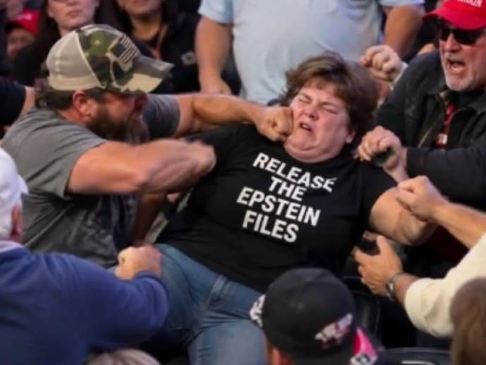 Just when we think there is a bottom, the United States sinks just a bit lower. It’s our brand nowadays.
That’s quite a left cross this thug delivered to this helpless female protestor.
It wasn’t too long ago that beating up women was taboo in America. My 11-year-old, sixth-grade son saw a male classmate of his badly bruise a girl by pushing her hard down to the ground–and proceeded to punch him in the mouth. A fellow father witnessed the scene and told me, “Your son’s fist was in that kid’s teeth within a fraction of a second.”
I had brought him up to avoid violence and achieve peaceful resolutions to conflicts, but I couldn’t fault him here.
What a disgusting bunch of turds we’ve become.
We’re starting to see intimations that stupidity like this is generated and posted by Russian data centers so as to appeal to MAGA idiots and favor the Republicans in the upcoming midterms.
 Every day, we come across articles that summarize Trump’s “accomplishments.”
I thought I’d publish this masterpiece.