

On 1 February, India’s finance minister Nirmala Sitharaman unveiled the government’s budget for 2026, which included a new $2.2bn funding push for carbon capture technologies.
In the absence of its new international climate pledge under the Paris Agreement, the budget offers a glimpse into the key climate and energy security priorities of the world’s third-largest emitter, amid increasing geopolitical tensions and trade challenges.
While Sitharaman’s budget speech did not mention climate change directly, she said: “Today, we face an external environment in which trade and multilateralism are imperilled and access to resources and supply chains are disrupted.”
Sitharaman emphasised that “new technologies are transforming production systems while sharply increasing demands on water, energy and critical minerals”.
The budget sets out: support for the mining and processing of critical minerals and rare earths; import duty exemptions for nuclear power equipment; and support for renewables, particularly rooftop solar.
However, unlike in some previous years, the 2026 budget does not include specific climate adaptation measures.
Below, Carbon Brief runs through five key climate- and energy-focused announcements from the budget.
- Carbon capture, utilisation and storage
- Critical minerals and rare earth ‘corridors’
- Nuclear energy
- Renewables
- Adaptation
Carbon capture, utilisation and storage
The biggest climate-related budget announcement was $2.2bn to support carbon capture, utilisation and storage (CCUS) technologies in India over the next 5 years.
These are technologies that capture carbon dioxide (CO2) as it is released, then use or store it underground or under the sea.
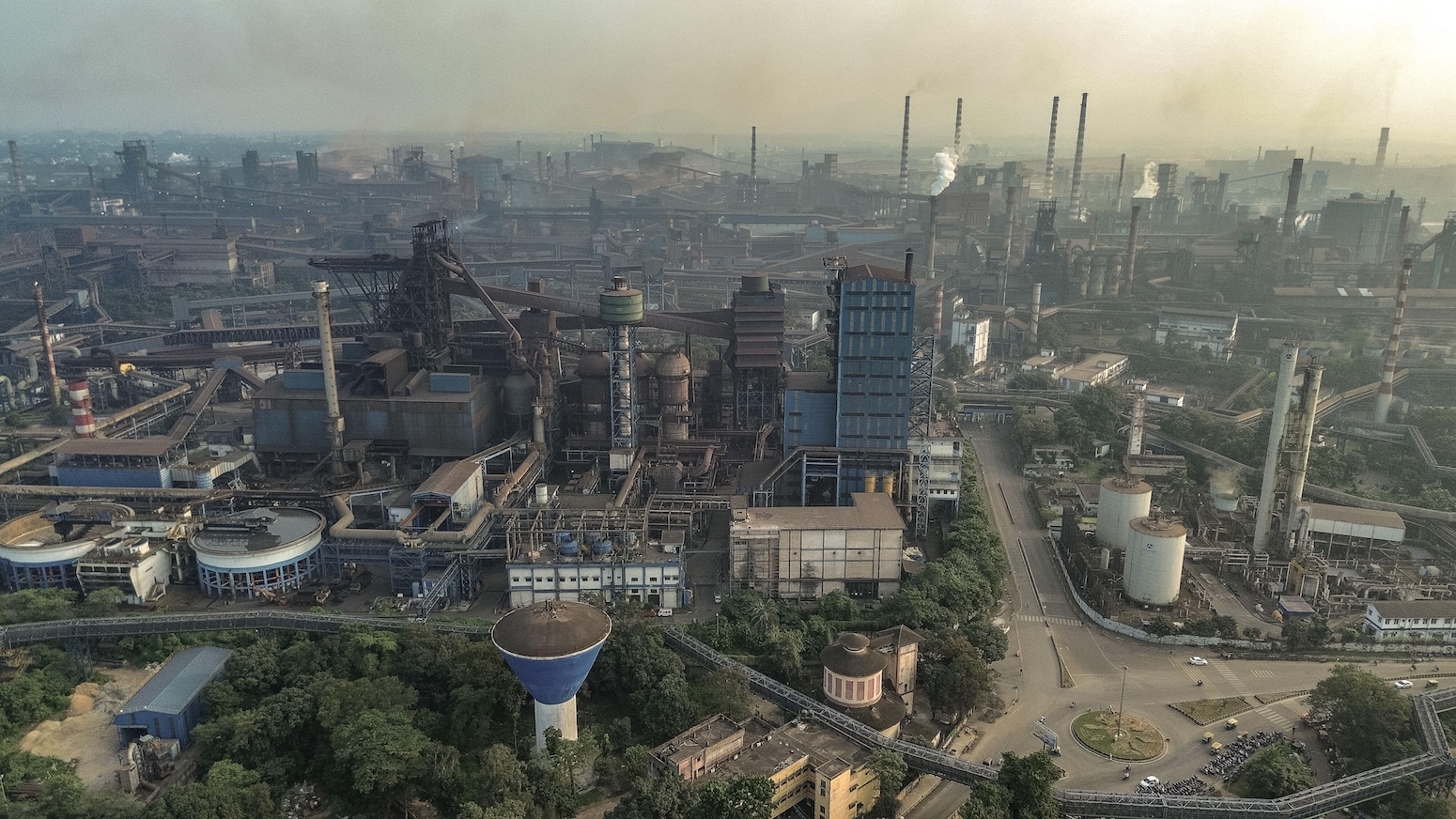
This funding is aimed at decarbonising five of India’s high-emitting industrial sectors – power, steel, cement, refineries and chemicals. These sectors are “staring at the risk” of coming under the EU’s carbon adjustment mechanism (CBAM), even after a recent EU-India trade deal, according to Sitharaman.
The funding is meant to align with a roadmap released last year that sees CCUS as a “core technological pillar” of India’s 2070 net-zero strategy, particularly for “decarbonising sectors where viable alternatives are limited”, notes the government’s roadmap.
According to the Intergovernmental Panel on Climate Change (IPCC) sixth assessment report, however, the need for CCUS to mitigate industrial emissions “may be overestimated”, compared to measures such as energy and material efficiency and electrification.
Speaking to Carbon Brief, Dr Vikram Vishal, a professor of earth sciences at the Indian Institute of Technology, Bombay (IIT-B),, describes the budget move as a “big welcome step for industrial decarbonisation and India’s net-zero ambitions as a whole”.
Vishal says that the funding could go towards getting “big demonstration plants to near-commercial plants” that could entail even bigger investments in the future.
He tells Carbon Brief:
“India is blessed with both onshore and offshore availability for carbon storage. But while utilisation exists, storage has not happened, per se, even at a decent scale. We [would] need to build transportation infrastructure from the point source of capture at scale, on land and offshore. While offshore storage is very low risk, onshore presents a closer proximity to emission sources.”
However, that could also mean closer proximity to densely populated or protected areas.
Vishal adds that India has a very large theoretical storage potential, even a quarter of which would allow for up to 150bn tonnes of CO2 to be stored. This could sustain CCUS for hundreds of years, Vishal says, adding: “And by that time, the energy transition would have happened, right?”
Critical minerals and rare-earth ‘corridors’
Mining, sourcing and processing “critical minerals” and rare earths is another key area of India’s 2026 budget.
It proposes establishing “dedicated rare-earth corridors” in the “mineral-rich” coastal states of Odisha, Kerala, Andhra Pradesh and Tamil Nadu to “promote mining, processing, research and manufacturing”. These corridors are intended to complement a $815m rare-earth permanent-magnet scheme announced in November.
In addition, the budget supports “incentivising prospecting and exploration” for rare-earth minerals, such as monazite, as well as others that the government wants to include in its list of “critical minerals”.
Last week, for instance, India classified coking coal – which is predominantly used in making steel – as a “critical and strategic mineral”, removing regulatory measures such as the need to consult affected communities before developing new mines.
Sehr Raheja, programme officer at New Delhi thinktank Centre for Science Environment, tells Carbon Brief that “moving up the critical-minerals value chain” is “increasingly essential” for the energy transition in developing countries.
She adds that some of the measures announced in India’s budget “point in that direction”, explaining:
“Globally, developing countries often stay stuck in the extraction stages of value chains and capture the least value. While duty exemptions for critical mineral processing and battery manufacturing signal intent to build domestic manufacturing capacity, the extent to which these new efforts deliver sustained value will only become apparent over time.”
Rahul Basu, research director at the Goa Foundation, which advocates for “intergenerational equity” in mining, tells Carbon Brief:
“Rare earths are not particularly rare. What is difficult is separating and refining them. China imports ore from around the world, including [the] US. Their competitive advantage lies in processing, including the ability to tolerate high pollution levels.
“India should perfect the processing technology with imported ores first. It is the critical piece. Not mining. We seem to want to mine the same beaches that are already seeing sea-level rise.”
Nuclear energy
The Indian government has also lifted customs duties on imports of nuclear power equipment within the 2026 budget.
Under the changes, equipment for all nuclear power plants will not be subject to customs duties until 2035, irrespective of capacity.
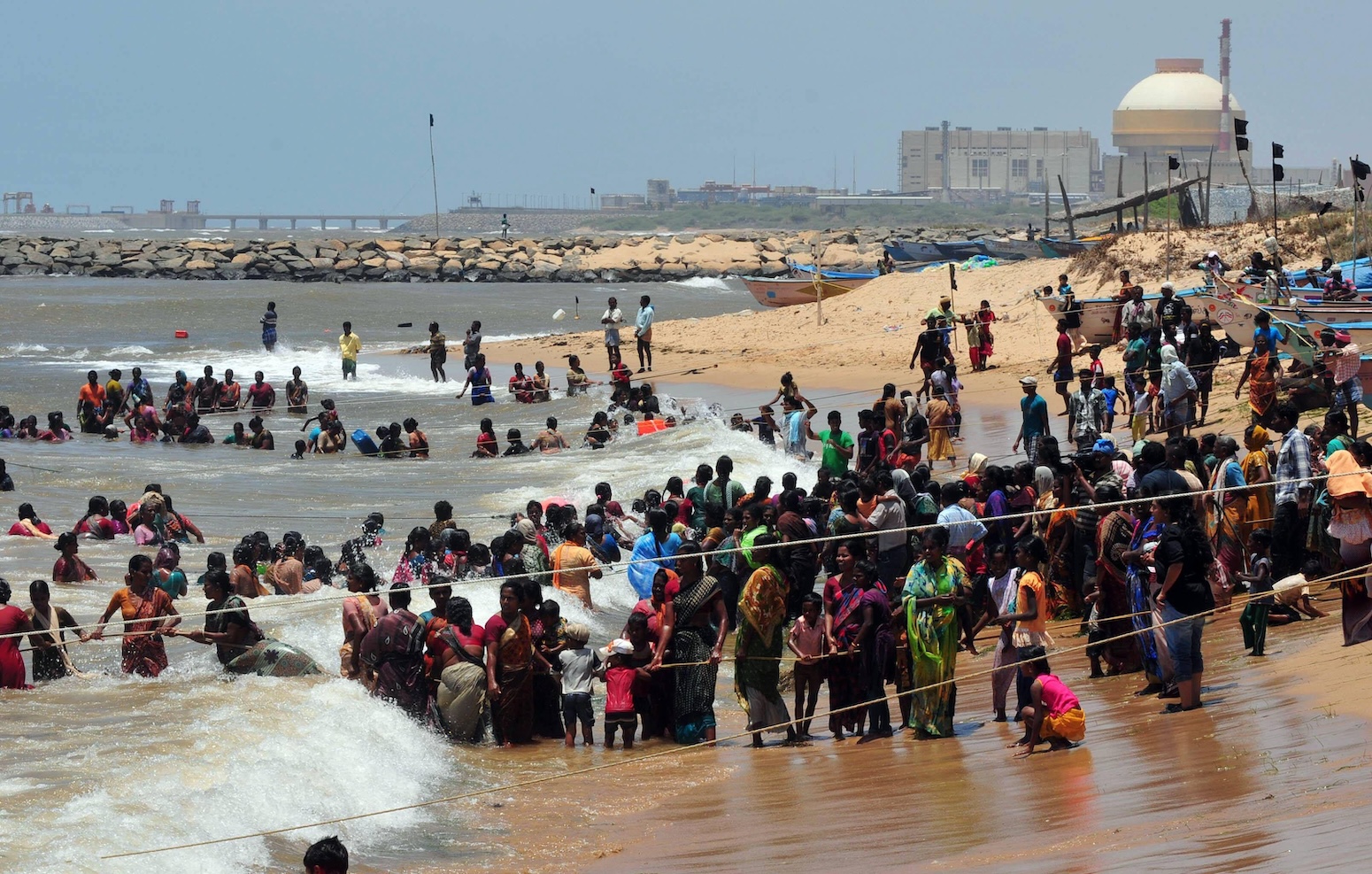
The announcement follows India enacting a landmark new nuclear act, dubbed the “Shanti” act, in December 2025. This seeks to privatise and invite foreign participation in the country’s nuclear energy sector, which has been largely state-run for decades and has a long history of public protests over safety and land-acquisition concerns.
The Shanti act – which is an acronym for “sustainable harnessing and advancement of nuclear energy for transforming India” – aims to help India increase its nuclear capacity tenfold to 100 gigawatts (GW) by 2047.
This coincides with 100 years since India’s independence and is “the year India aims to attain developed-nation status”, according to prime minister Narendra Modi.
Renewables
Support for renewables in India’s budget this year is significant, but “uneven”, experts tell Carbon Brief.
Allocations to India’s Ministry of New and Renewable Energy (MNRE) grew by 24% to a “record high” in the 2026 budget, with the bulk going to the prime minister’s flagship rooftop solar scheme. The government also cut import duties on lithium-ion cells for battery storage systems, as well as on inputs for solar-panel glass manufacturing.
However, Vibhuti Garg, South Asia director for the Institute for Energy Economics and Financial Analysis, tells Carbon Brief that spending on wind energy and – “more critically” – on transmission and energy storage has either “stagnated or declined” this year.
Garg says grid infrastructure is “fundamental” to renewable expansion. She explains:
“Transmission infrastructure and storage are fundamental to integrating higher shares of renewable energy into the grid. As renewable penetration rises, these elements become not optional but indispensable, and the current level of support falls short of what is required.”
Adaptation
The budget does not announce any specific adaptation measures or schemes, although it does mention a plan to develop and rejuvenate reservoirs and water bodies and to “strengthen” fisheries value chains in coastal areas.
The budget does not mention or include measures related to heat stress or its impact on productivity and workers in sectors such as agriculture.
According to India’s national economic survey tabled ahead of the budget, adaptation and “resilience-related” domestic spending “surged” from 3.7% of the country’s GDP in 2016-17 to 5.6% in 2022-23.
Yet, unlike earlier budgets, allocations to and expenditure from India’s National Adaptation Fund for Climate Change are not separately visible in the 2026 document.
Harjeet Singh, climate adaptation expert and founding director at the Satat Sampada Climate Foundation, tells Carbon Brief that this budget was a “missed opportunity” and a response “not commensurate to the needs [for adaptation] on [the] ground or investment at the scale of crisis that we are facing”.
Singh adds that it fails to recognise the “huge” economic impacts already being felt in India. He says:
“If a budget doesn’t recognise how climate change is already eroding India’s development – causing huge economic losses – and is going to affect our GDP growth, it means that you aren’t really acting, or nudging states to do more.
“It was a missed opportunity to tell the world that we do see adaptation as a problem and we are acting on it, but we also need international cooperation.”




The post Five key climate and energy announcements in India’s budget for 2026 appeared first on Carbon Brief.
Five key climate and energy announcements in India’s budget for 2026

Scientists have vowed to keep working on the next flagship set of reports for the Intergovernmental Panel on Climate Change (IPCC), after a political row over the timeline for their release saw its latest session suspended on Friday evening without agreement.
During the weekend, government officials and scientists alike expressed disappointment over the inability to reach a compromise before some delegates from developing countries and small island states had to leave the week-long meeting in Ethiopia to catch flights home.
The disagreement – which has persisted since early 2024 – turns on whether the three key parts of the AR7 assessment should all be published before the conclusion of the UN’s next Global Stocktake of global climate action, which is due to be completed in late 2028.
The IPCC issued a statement after the close of the session, saying that “key agenda items” – the timelines for the three AR7 reports, as well as the IPCC budget – remain open and under discussion. It said the IPCC’s plenary session and its deliberations on the pending agenda “will resume at the earliest opportunity”, giving no further details of when.
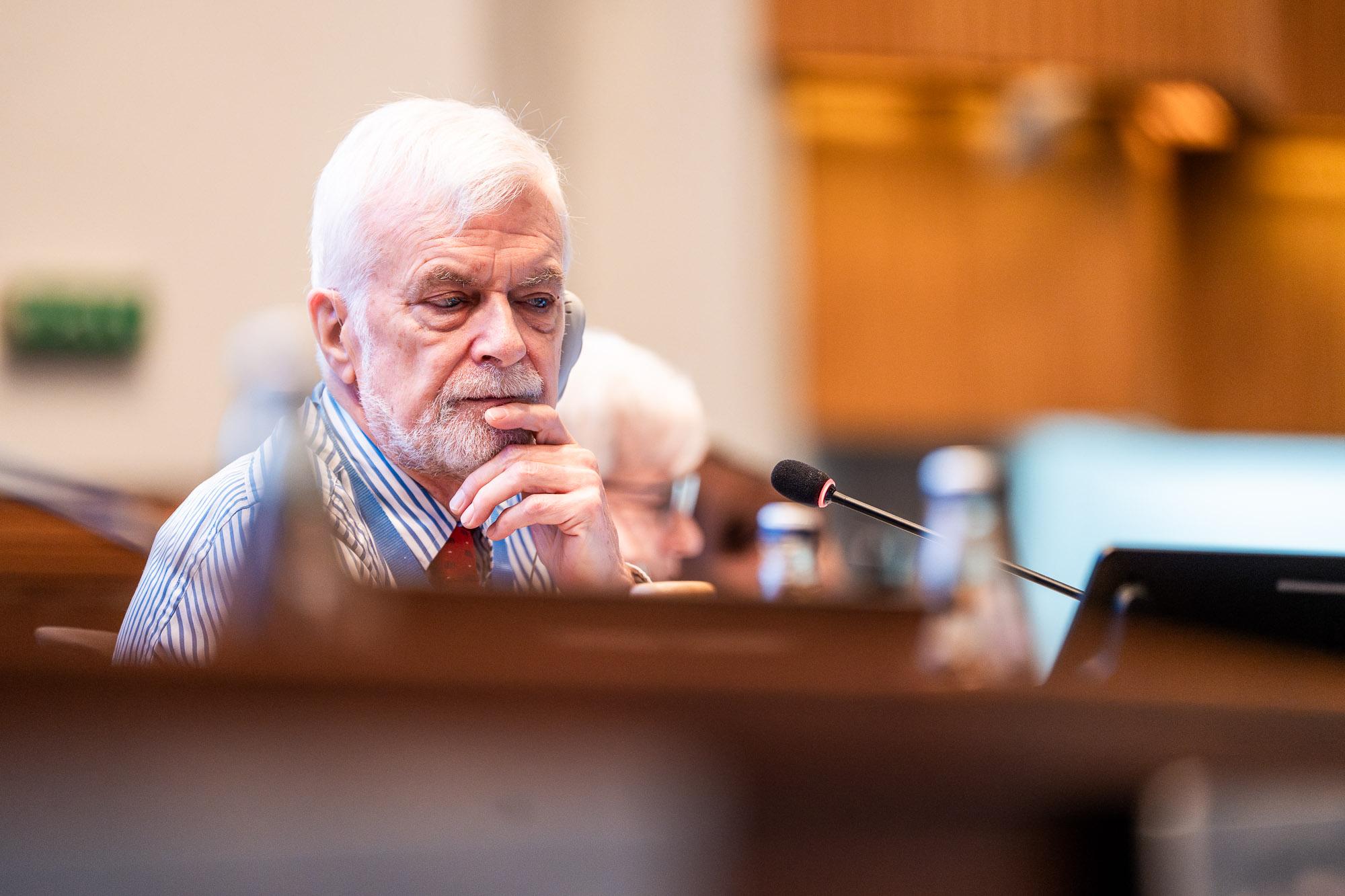
IPCC Chair Jim Skea told delegates in closing remarks that recent months had been some of the most turbulent for the climate science panel and that, if there were stronger words than “profound disappointment” he would use them, according to a summary published by the Earth Negotiators Bulletin (ENB). IPCC discussions happen behind closed doors.
IPCC scientists remained committed
In an open letter, issued on Monday, a group of nearly 120 scientists – from a total of 664 AR7 authors – said they “stand committed to continue working to deliver the AR7 reports in a manner that is rigorous, timely and inclusive, in line with our mandate to be policy-relevant”.
“An assessment that arrives after the decisions it is meant to inform cannot serve its purpose,” they emphasised. “The second Global Stocktake in 2028 is such a decision point, and the world should not have to face it without the IPCCʼs latest assessment.”
Europe, small islands and the least developed countries, plus many Latin American and developed nations, want the IPCC to meet this deadline, arguing that the findings from the UN climate science body are irreplaceable in the UN climate policy-making process.
However, around a dozen developing countries plus Russia have argued that the reports should come later in order to allow for greater research input from the Global South – something that, in their view, would make the findings fairer. They also claim that a shorter timeline would put excessive pressure on experts.
-
Who shapes climate science? The equity question facing the IPCC
Early completion of the next global climate science assessment reports risks excluding research from the Global South, which is key to ensuring the findings are fair -
Governments that support climate science must stand firm against naysayers
The IPCC is meeting to decide the timing of its next major report, as some countries try to delay it and weaken the case for faster emissions cuts


The most vocal of this group at last week’s meeting were India and Saudi Arabia, according to the ENB summary and a developed country diplomat. Critics see this push for a longer timeline as an excuse to deprive government decision-makers of the latest science and ease pressure on emerging economies to raise their ambition, particularly on cutting emissions.
Commenting on last week’s meeting, France’s ambassador for climate negotiations Benoît Faraco said a broad coalition of developed and developing countries from all five continents, “united in their support for science and the timeline proposed by scientists”, had withstood pressure “from a few countries” seeking to slow down the process of adopting the IPCC reports.
He added that France would not back down and would “continue to fight tirelessly for science, protect the integrity of information, and convince our partners that without the best available scientific data, we will be less effective in tackling climate change and protecting our populations”.
Inclusivity proposal stalled
In a bid to unlock a solution for the AR7 timeline, countries discussed ways to improve the inclusivity of the IPCC’s work. One option put on the table was for the IPCC to expand its funding for delegates from developing countries to attend some or all of its sessions from one to two participants, according to the ENB summary and a delegate speaking to Climate Home News.
That would increase the costs for the IPCC to complete AR7 by up to a quarter, according to an assessment shared by the secretariat. The panel’s budget is under severe strain and its officials have warned that, without additional voluntary contributions, it risks running out of money before it can deliver on this assessment cycle.
Climate Home News understands that some of the IPCC’s traditional donors – which mainly include European countries, Japan and Australia – indicated a willingness to support funding for an additional developing country participant. But without an agreement over the budget or the timeline for the reports, that option was ultimately not adopted.
‘Disappointed and worried’
The three reports are managed by working groups that collate and draw overall findings from the latest scientific studies and data on the physical effects of global warming around the world, how to adapt to it, and pathways for cutting planet-heating emissions in order to meet the temperature goals of the Paris Agreement.
Winston Chow, an urban climate professor at Singapore Management University who co-chairs Working Group II on adaptation, wrote in a LinkedIn post that he was “disappointed and worried” for the IPCC authors who have worked “extraordinarily hard” to assess the relevant climate science over the past two years.
He said he shared their concern that “the rigour, time and goodwill they’ve invested are now being put at risk by the Panel’s stalemate”.
As science comes under attack at UN talks, climate movement splits over how to respond
For Working Group II, a meeting for 250 experts writing that report is scheduled for January 2027, followed by the approval of a special report on cities and climate change in Singapore next March.
But because the IPCC’s budget has not been confirmed due to uncertainty about the AR7 schedule, travel support for those researchers is at risk, wrote Chow. “If they cannot participate, our assessments will lose vital expertise, perspectives and scientific breadth, and the collective effort of our authors will be undermined,” he warned.
Scientific work continues
Despite the political holdups, he – together with French climate scientist Robert Vautard, co-chair of Working Group 1 – agreed with IPCC head Skea who told the IPCC’s closing session on Friday: “The engine room of the IPCC is working, and it’s healthy.”
Vautard commented in a separate post on LinkedIn after it ended: “The boat is at full steam.” Working groups I and II are due to start revising the first drafts of their reports, while Working Group III on reducing emissions is finalising its first draft which will be out soon, he wrote.
“The most exciting two years of the cycle are ahead, for the authors. The momentum in the engine room is here and now. Trust the engine room!” he added.
The IPCC and some scientists report that progress has been made towards achieving an equitable balance of authors from the Global North and the Global South.
The group of researchers who signed the open letter on Monday noted that “inclusivity is at the heart of how we work”, with author teams bringing together experts from developed and developing countries with diverse backgrounds and at different stages of their careers.
Plea to overcome political differences
The signatories include several scientists from some of the countries opposed to the alignment of all IPCC reports with the Global Stocktake.
“We are committed to an assessment in which the knowledge, experience and priorities of every region are fully reflected, a commitment we share with the leadership of the IPCC.
Equity is built into how our assessment is being drafted,” they added.
They appealed to governments that make up the IPCC “to overcome their political differences and work together as we do as a global scientific community, so that we can deliver the IPCC reports the world needs to hear”.
In a statement published on Monday, IPCC chair Skea said reaching consensus on the schedule for the reports is “vital”. He added that the assessments provide authoritative scientific evidence to inform national climate policies, strengthen adaptation and resilience and support access to climate finance, as well as helping communicate the scale of the climate crisis and the urgency of efforts to tackle it.
The post IPCC scientists vow to press on with climate reports despite political deadlock appeared first on Climate Home News.
IPCC scientists vow to press on with climate reports despite political deadlock