

As you curate or redesign your evening sanctuary, you may be wanting to limit your exposure to VOCs (volatile organic compounds) and other potentially toxic chemicals. The EPA reports that many VOCs are 2-5 times higher indoors than outdoors, and that these VOCs are widely used in household products, including furnishings. Thus the need for this guide to non-toxic bedroom furniture companies!
Why Non-Toxic Bedroom Furniture Matters
The EPA states that they “from an indoor health perspective”, they have “no authority to regulate household products”, which is concerning to say the least.
That said, the EPA does have the authority to regulate on certain chemical substances in the Toxic Substances Control Act which has protected us from chemicals like asbestos and lead-based paint.
And after California Air Resources Board issues requirements, the EPA released formaldehyde emissions standards for composite wood products, as formaldehyde is a known human carcinogen. (The standards lower the maximum formaldehyde emissions a composite wood product can have, but does not require the emissions to be zero.)
Many states have their own regulations around VOCs. I won’t bore you with the details, but you may want to search for your own state’s stance on VOCs.
All this to say, while there is some regulation around toxic chemicals in our products the standards still allow for many toxic chemicals in what we bring into our home, like furniture.
What is Sustainable and Non-Toxic Bedroom Furniture?
I know it can be overwhelming to find out that there is relatively little control over the chemicals that are allowed to enter our home. This is why it’s essential to advocate for better consumer products regulation that actually protect our health. And, if you’re looking for companies that are taking environmental and human safety seriously, there are several non-toxic bedroom furniture brands doing so.
Here is some of the criteria I looked for when making this list.
Solid Wood is a Safer Bet
Composite wood products must be stuck together, and that’s typically done with glue that contains formaldehyde. There are some companies making composite wood products with more sustainable alternatives, but I would recommend either sticking to solid wood or looking for an explicit explanation of the alternative glue being used. (Ideally the composite wood product would also be tested by a third party. More on that in a moment.)
In terms of sustainability, look for wood that is reclaimed or responsibly sourced from well-managed forests and at the very least, not coming from old-growth or endangered forests.
Unfinished or Low VOC Finishes
Most wood furniture is finished with some type of finish. These can be natural oil finishes like linseed oil or they may also be polyurethane (plastic material). Generally natural oils and water-based finishes are recognized as emitting lower levels of VOCs. And I’m always a fan of avoiding fossil-fuel products where I can.
Some of the brands on this list even have unfinished wood options, which would be the safest bet.
Natural (or Even Organic) Materials
Synthetic fibers make up 64% of global fiber production. In other words, the majority of fabrics we see today — whether in clothes, home textiles, or upholstered furniture — are either fully or partially synthetic.
Look for materials like natural latex, organic cotton, and linen in your non-toxic bedroom furniture. Even natural materials often are colored with synthetic dyes, but we’re doing the best we can!
Third Party Certifications
To be clear, no certification is going to be perfect but there are several certifying parties adding an extra layer of protection to non-toxic related claims.
GOTS: Global Organic Textile Standard
As is in the name, GOTS is a standard for organic textile processing and certifies the entire supply chain of a textile. It can be used to certify fiber products like fabrics, clothes and mattresses.
GOLS: Global Organic Latex Standard
This standard certifies products, like mattresses, that are made from organic natural rubber latex.
GREENGUARD Gold
This is a globally recognized certification from the Greenguard Environmental Institute that verifies products for low emissions of VOCs indoors.
FSC-Certified: Forest Stewardship Council
The FSC certifies wood and other forest products to ensure that they come from forests meeting certain environmental and social standards.
Where to Find Sustainable and Non-Toxic Bedroom Furniture
With those considerations top of mind, I’ve curated my top picks for sustainably-crafted furniture (and mattresses) for your bedroom.
1. Avocado
Categories: Mattresses, Crib Mattress, Kids Mattress, Beds, Bedding, Nightstands, Dressers
Highlights: GOTS and GOLS Certified USA Mattress Factory, FSC-Certified USA Woodshop, GREENGUARD Gold Certified Products
Avocado was first founded as a green mattress company, making GOTS-certified organic non-toxic mattresses that meet STANDARD 100 by OEKO-TEX® standards. The brand has since expanded into bedding and furniture with the same high standards, using sustainably sourced wood, organic fabrics, and zero VOC finishes.

2. Savvy Rest
Categories: Beds, Mattresses, Pillows
Highlights: Organic & Natural Materials, Zero VOC Finishes, Unfinished Option, USA-Made
Savvy Rest uses the best of the best when it comes to eco and non-toxic bedroom furniture and mattress materials. The beds are made from Appalachian wood in Virginia and finished with zero VOC linseed oil, zero-VOC stain or can be left unfinished.
The mattresses are made in a GOTS-certified facility with GOLS (Global Organic Latex Standard) certified natural latex, certified organic wool and certified organic cotton.
*Use code CONSCIOUSSTYLE20 for 20% off all products on Savvy Rest

3. Medley
Categories: Beds, Mattress, Dressers, Nightstands, Accent Chairs, Benches + Ottomans
Highlights: FSC-Certified Wood, GOLS-Certified Latex, USA-Made
Medley’s specialty is contemporary sustainable and non-toxic furniture. Their eco-friendly bedroom furniture is made with responsibly-sourced wood, organic natural latex, OEKO-TEX® STANDARD 100-certified wool, and zero-VOC finishes. The brand also carries a mattress made in Illinois from 100% GOLS-certified latex.

4. Birch
Categories: Mattresses, Kids Mattress, Beds, Bedding
Highlights: GOTS-Certified Factory, Fair Trade Certified Factory, GREENGUARD Gold-Certified Products
With “Best Organic Mattress” awards from outlets like CNN and Forbes, Birch’s popular mattress is made with quality natural materials like organic cotton, organic wool, and natural latex. Birch’s foundation is made with spruce hardwood and organic cotton; note that their bed frame’s upholstery option is polyester (plastic) fabric, so I would avoid that variant due to sustainability concerns.

5. Cisco Home @ Urban Natural
Categories: Beds, Dressers, Nightstands, Accent Chairs + Sofas, Benches + Ottomans
Highlights: Sustainable Furnishing Council Founding Member, FSC-Certified Wood, Organic Material Options, USA Made,
Cisco Home’s “Inside Green” collection is your ticket to sustainable and non-toxic bedroom furniture. When you select this option on their products — from upholstered beds to benches — your selection will be made to order with FSC-certified wood, jute, hemp, organic latex, organic cotton and wool.

6. Healthier Homes
Categories: Accent Chairs, Lighting, Dressers + Nightstands, Storage + Shelving, Bedding, Rugs, Paint + Wallpaper
Highlights: Solid Hardwood Furniture, Natural Fabrics, Vets for Non-Toxic Materials
Founded by the “world’s first healthy home builders” Jenny and Rusty are on a mission to make non-toxic natural furnishings more easily accessible to their community. Healthier Homes is a destination for all things non-toxic home, including furniture, decor, home textiles, and even paint.

7. Thuma
Categories: Bed, Dresser, Shelving, Bedside Tables, Mattress, Bedding, Rugs
Highlights: Upcycled Solid Rubberwood, GREENGUARD Gold-Certified Products
Everything Thuma sells is thoughtfully designed with functionality top of mind. Thuma’s dresser is modular and adaptable to varying needs with 7 different configurations (including a bedside table). The bed’s pieces are also configurable — buy just a bed frame or add on a headboard and/or cushion knowing that everything is designed to work together seamlessly.

8. My Green Mattress
Categories: Mattresses, Kids Mattresses, Crib Mattress, Bed Frames, Bedding
Highlights: GOTS + GOLS Certified Mattresses, USA Made, Zero Wood Stains
The certified organic mattresses from My Green Mattress are all made in their own factory in Illinois. These quality mattresses come with a year-long sleep trial and 20-year warranty so you can rest easy about your purchase. The Amish-made platform bed is made with the same commitments and is left unfinished with zero wood stains.

9. Natural Home by the Futon Shop
Categories: Mattresses, Beds, Futons, Dressers & Bedside Tables, Bedding
Highlights: Organic Materials, Solid Wood Options, Zero VOC Finish Options
If you’re looking for a non-toxic futon frame or sofa bed mattress, The Futon Shop is just your place. The retailer offers organic cotton, natural Dunlop latex, and natural wool mattresses for both sofa beds and regular beds. Many of their futons and platform beds are made with solid wood. Look for the options like this one that say “Chemical Free” or “Natural” for non-toxic bed frames finished with linseed oil only.

More Furniture Guides:
15 Best Non-Toxic Furniture Brands for a Healthier Home
11 Eco-Friendly and Non-Toxic Beds for a Sustainable Slumber
7 Best Places for Sustainable and Non-Toxic Nightstands
The post 9 Sustainable Non-Toxic Bedroom Furniture Companies for a Safer Sleep appeared first on Conscious Life & Style.
9 Sustainable Non-Toxic Bedroom Furniture Companies for a Safer Sleep

These brands have all types of sustainable socks for just about all of your footwear or around-the-house needs, from no-shows and performance-ready ankle socks to comfy crew-length and cozy knee-high socks.
I originally wrote this guide about four years ago, and I must say that sustainable socks have upped their game since then. We’ve been able to raise the bar on what it takes to get included in this guide.
What Qualifies as (More) Sustainable Socks?
There are several criterion I’ve used to determine the brands in this guide. Some brands meet several of these criteria and some even meet all of the criteria below.
- Use of at least 70% natural and organic materials, like organic cotton, hemp, and organic wool
- Uses certified organic materials and sources from certified GOTS (Global Organic Textile Standard) factories and/or Fair Trade factories
- Minimal to no use of synthetic fibers, preferring recycled when there are some synthetics used
- Use of either no dyes, natural dyes or low impact dyes
- Responsibly manufactured, ideally locally made or produced in fair trade environments
You’ll find that most of the sustainable socks in this guide do have a small percentage of synthetics for some stretch. (Though there are three brands with 100% organic cotton socks — check them out below!) I like to use a Guppyfriend Washing Bag to prevent the microplastics from synthetic textiles from being released into our waterways.
In case you have sensitive skin or want a pair of organic socks with an even lower environmental impact, there are also several brands with dye-free sock options.
As mentioned, the brands featured in this guide have all types of socks whether you’re looking for breathable moisture-wicking socks to play tennis in or comfy socks to cuddle up and say warm with. However if you’re looking for more substantial slippers, my guide to eco-friendly and ethical slippers will be a better bet.
The guide features affiliate links. As always, we only feature brands that meet high standards for sustainability that we love — and that we think you’ll love too!
Where to Find Sustainable and Organic Socks
1. Cottonique
Best for: latex-free organic cotton socks for sensitive skin
Materials: 100% GOTS-Certified Organic Cotton
Price: $18 for Kids (3 pairs) | $23-$28 for Adults (2 pairs)
Categories: Quarter, Crew, Ankle, Kids
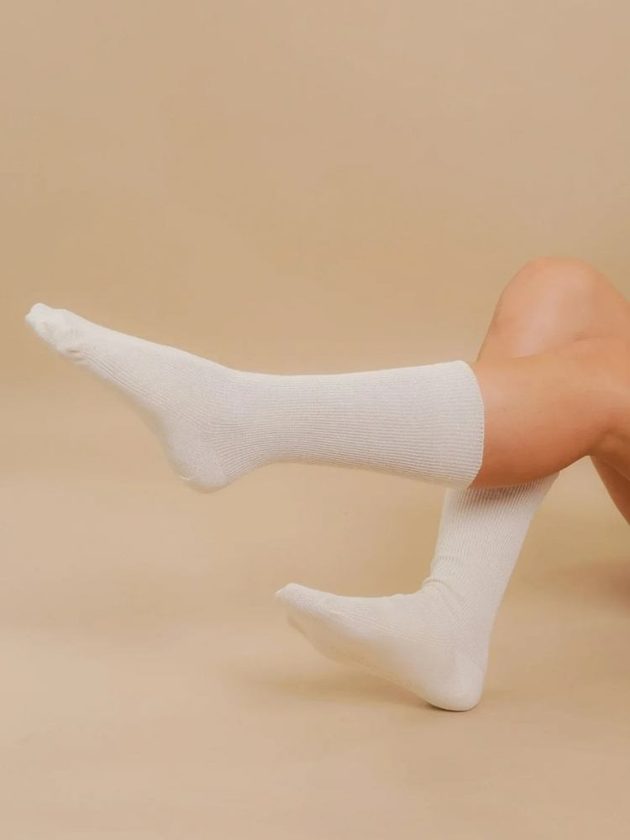
Cottonique is the only brand I’ve found so far that sells exclusively 100% organic cotton socks. Founded by and designed for individuals with skin sensitivities, Cottonique’s socks are free of latex, spandex, or any other synthetic stretch.
The socks are also OEKO-TEX Standard 100 certified and sewn in the brand’s owned GOTS- and B Corp-certified factory in the Philippines.
I tried out the brand’s crew-length socks and found them to be quite comfortable, and I appreciated the ribbed detail. Without elastic for stretch, they fit snug in order to stay in place, so it’s important to get the right size! I wear a shoe size 7.5-8 and the medium was perfect.
2. Q for Quinn
Best for: soft, dye-free organic cotton socks
Materials: 98 – 100% Organic Cotton
Price: Kids’ from $10 | Adults from $15 / Pair
Categories: Ankle, Crew, and Trouser Socks
Made from 98% GOTS-certified organic cotton (with one pair of socks made of 100% cotton), Q for Quinn’s socks are breathable and super soft. One reviewer calls them the “softest socks I’ve ever worn!” and hundreds of other customers giving five-star reviews seem to agree.
Q for Quinn also has organic dye-free adult and kids’ socks perfect for sensitive skin.

3. Maggie’s Organics
Best for: 100% merino wool socks
Materials: 73% – 99.8% Organic Cotton | 60 – 100% Organic Merino Wool
Price: From $8.50 / Pair
Categories: Footie, Ankle and Crew Socks; plus Allergy, Recovery, and Diabetic
Sourcing GOTS-certified organic fibers and knitting all of their socks in the US, Maggie’s Organics is the real deal when it comes to sustainably-made socks.
The company is also committed to “Real Fair Trade” — they invest in the wellbeing of their farmers and suppliers and are on a journey to become employee-owned.

4. Rawganique
Best for: 100% natural fiber socks (cotton, linen, and wool)
Materials: 100% Organic Cotton, 100% Hemp, and 100% Wool Options
Price: From $12 / Pair
Categories: Anklet, Crew, Knee-High, and Dress Socks
If you’re looking for plastic-free socks, you will love Rawganique. The brand has several options of 100% natural fiber socks that are free of polyester, spandex, or nylon. Select from breathable 100% organic cotton socks, temperature-regulating 100% linen socks, or cozy 100% wool socks.
There are also several options of organic socks blended with a bit of synthetics for some stretch. These options will likely be more suitable for sport and hiking use.

5. Organic Basics
Best for: core-color basics with recycled synthetic blends
Materials: 70 – 75% Organic Cotton
Price: From $14 for 2-Pack
Categories: No-Show, Ankle, Crew, and Knee-High Socks
Focused on only the essentials — and doing them well — Organic Basics creates a range of quality organic socks in core colors like black, gray, blue and white. While these (more) sustainable socks do contain a percentage of synthetics, the majority of the synthetic content is recycled. I also appreciate that the product pages suggest a cooler washing temperature of 30C since clothing care and cleaning can make up a significant portion of a product’s total impact.

6. PACT
Best for: GOTS-certified organic no-show socks
Materials: 75 – 83% Organic Cotton
Price: From $14 for 2-Pack
Categories: No-Show and Crew Socks
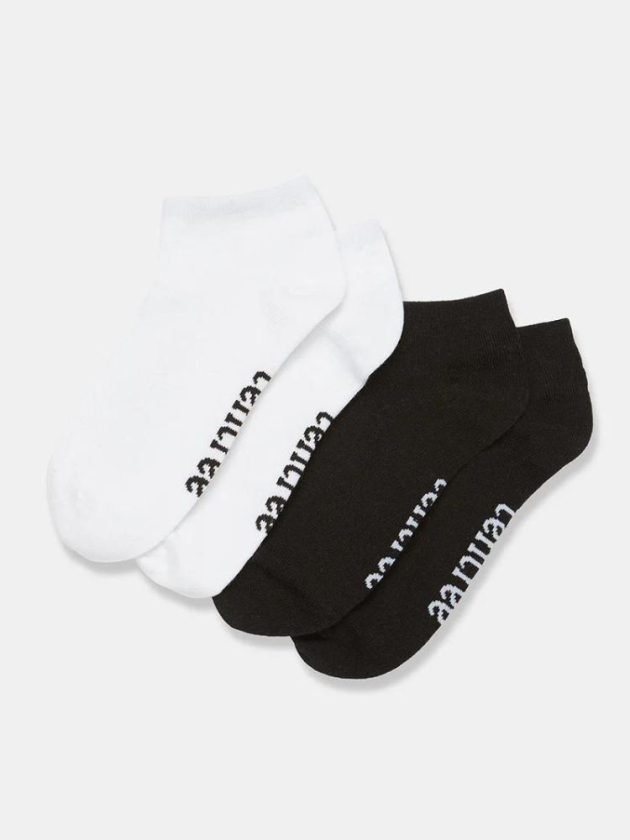
PACT’s organic cotton no-show socks are made in a Global Organic Textile Standard certified factory. The no-show pairs come in basic black, white, and tan as well as some cute prints. They feature a new design and silicone grips to make sure they stay in place. That said, the socks unfortunately only come in one size — some of the reviewers who wear a shoe size 9 note that they are a bit too small for them.

7. Harvest & Mill
Best for: Naturally-colored dye-free cotton socks
Materials: 88% Organic Cotton
Price: $10 – $12 / Pair
Categories: Ankle and Crew Socks
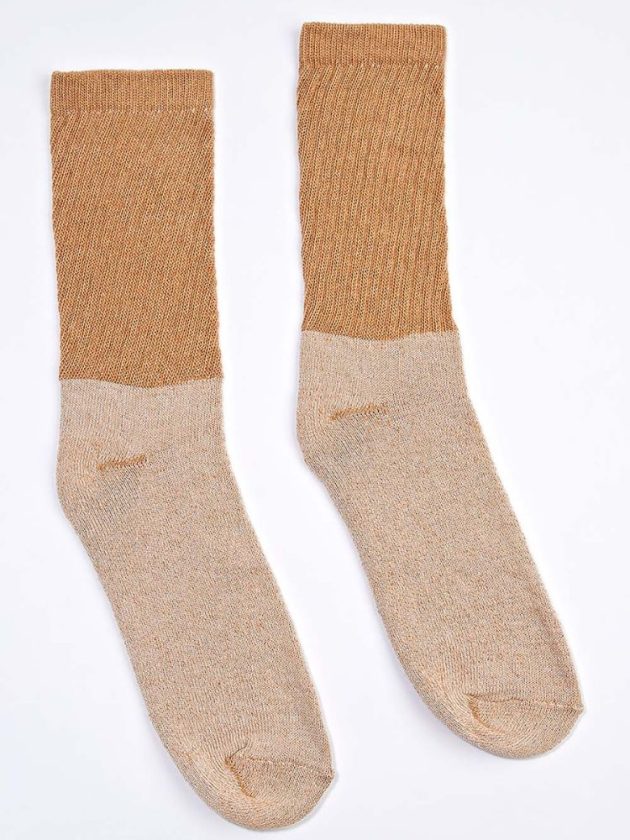
Sustainable basics brand Harvest & Mill uses USA-grown and spun cotton for their ankle and crew organic socks. While these socks might look dyed with their earthy colors, they are actually completely dye-free — the natural color cotton varieties Harvest & Mill uses are naturally a muted brown or green.
8. tentree
Best for: hemp-blend white socks that plant trees
Materials: 71% Hemp and TENCEL Lyocell
Price: $10 – $14 for 2-Pack
Categories: Ankle, Quarter, and Crew Socks
Socks are the crucial foundation of any closed-toe shoe and tentree’s basics are here to ensure you’re always putting your best foot forward. Crafted from a comfortable blend of hemp, TENCEL Lyocell, recycled polyester, their socks come in several lengths in basic pairs.
Plus, every pair plants 10 trees (the reason for their namesake ten-tree).
9. Conscious Step
Best for: giftable cause-driven organic socks
Materials: 75% Organic Cotton
Price: $15.95 / pair
Categories: Ankle and Crew Socks
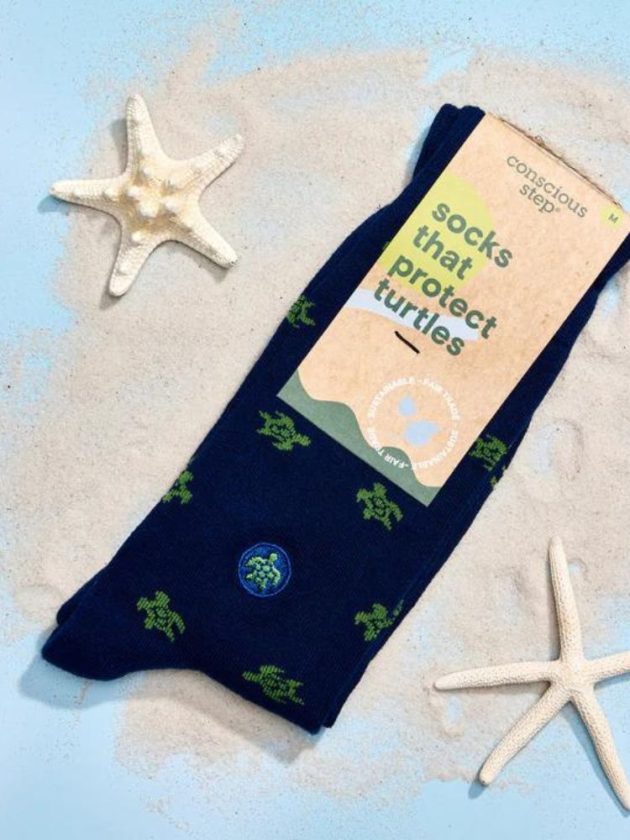
Conscious Step’s socks are made with Fairtrade and GOTS-certified organic cotton and recycled polyester. The brand’s organic cotton socks are made with an exceptional quality too — with some even featuring a cushioned insole and arch support. But perhaps what this brand is really known for is that each design is associated with a different cause where a portion of your purchase goes.
10. Kind Socks
Best for: organic socks with fun prints
Materials: 80% Organic Cotton
Price: $12 – $14 / pair
Categories: Crew and Ankle Socks
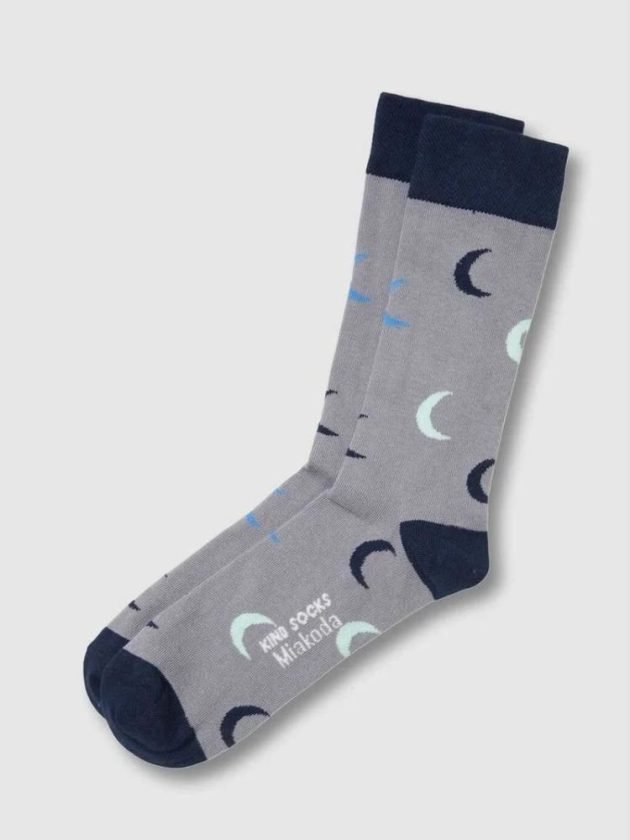
KIND Socks is a Black-owned sustainable sock brand using GOTS-certified organic cotton for their vibrant collections. With prints like monstera leaves, watermelons, and bumblebees, KIND Socks will bring a touch of whimsy to any outfit.
The post 10 Sustainable Socks Made with Organic Fabrics appeared first on Conscious Life & Style.
When the temperatures go up, all I want to reach for is natural fibers — specifically, my linen clothing. There’s nothing quite as breathable or breezy as linen. So in this guide I break down what to know about this quintessential summer fiber, and share my top selections for linen clothing brands. They’re all small to mid-sized brands, mostly women-led!
Some Background on Linen
Where does linen come from?
Linen fiber is extracted from the stalks of flax plants. This plant is also known for providing us with nutritious flaxseeds and linseed oil — talk about an overachiever!
In fact, linen is one of the oldest fibers known to man, dating back to the prehistoric era. Archaeologists and paleobiologists have discovered flax fibers during excavations that were twisted, indicating they were used to make ropes or strings among many proposed applications that must have been a great advantage to the hunter-gatherer society. In fact, linen wrappings were even used for mummification in ancient Egypt.
Linen fabric is then created by obtaining its fibers from the inner bark (or stalks) of the flax plant.
How is the linen cloth made?
Before the fibers are spun into the breezy linen you know and love, its fibers are loosened and separated from the rest of the stalk through a process known as “retting”. At that point, the fibers are still straw-like and coarse in texture.
To soften it, the fibers are broken up into small, short bits, while the actual fiber is left unharmed, and then “scutched”, where the straw is scraped off the fiber. After which they are then pulled through “hackles”, that comb the straw out of the fiber to finally prepare flax for spinning into linen fabric.
And linen clothing is, of course, garments comprised of linen fiber in its entirety or blended with other fibers. For this guide, I tried to select brands that only used 100% linen or at the minimum blended linen with other natural fibers like cotton.
The Benefits of Linen Clothing
Why wear linen? Known for being ideal during the summers, clothing made from linen will allow heat to escape from the body while absorbing moisture and drying relatively quickly. While linen may have a notorious reputation for wrinkling rather quickly, when blended with other fibers, the creases aren’t as discernible as they would be with pure linens.
While linen may be notorious for its high energy consumption owing to its need to be ironed more, linen clothing’s pros easily outweigh its cons.
Flax plants can be grown in the harshest of climate conditions that require minimum water. What’s more impressive is the plant’s ability to absorb carbon. The European Confederation of Flax and Hemp (CELC) states that one hectare of flax absorbs 3.7 tons of CO2 every year.
Is Linen More Sustainable Than Cotton?
While there are benefits and drawbacks to every fiber when it comes to environmental sustainability, there are a few points where linen stands out when compared to cotton.
First, we know that durability is a key aspect of sustainability, because it means our clothes will last, enabling us to keep our clothes longer and buy new clothing less frequently.
So how long does linen clothing last in comparison to cotton? Linen clothing is up to 12 times stronger than cotton, helping increase its longevity and taking away the need to be replaced so often.
Another question might be about flax’s water usage. While the irrigation needs of the crop are dependent on the region’s climate (just as with cotton), 450–750 mm of water per season is sufficient for flaxseed. In fact, some studies even indicate that flax could be regarded as a drought-tolerant crop.
How to Care for Linen Clothing
When it comes to caring for linen clothing, linen can be washed on a gentle machine cycle with a mild detergent. (Check out these low waste low-impact detergent options.)
In case you’re curious whether linen stretches or shrinks, then there isn’t much to worry about. Linen is mostly pre-shrunk during the manufacturing stages but pure linens may show about 4% shrinkage.
And when it comes to stretch, linens aren’t known to stretch out over time but can show some level of elasticity when blended with other fibers.
Finally, it’s no secret that linen clothing tends to wrinkle easily! You may choose to embrace the natural characteristics of linen and wear your linen clothing as is, or if you want a crisper look, you may either want to look for a linen blended fabric, or be prepared to steam and/or iron your garments relatively frequently.
Note: This guide includes partners and/or affiliates. As always, brands must meet high standards for sustainability and ethics — and I only share brands that I believe in.
How to Find Sustainable Linen Clothing
So of course, I’m a big advocate for “secondhand first” when it comes to all fashion, including linen clothing. While your local thrift store might not be filled with 100% linen clothes, online secondhand shops can be a great resource. For luxury and premium brands, Vestiaire Collective and The RealReal. For more affordable options, my favorite pick is ThredUp because you can filter by natural fibers only. To be clear: the listings aren’t always accurate, so I still double check the descriptions of any product that shows up with that filter, but it does save some time to start there.
When looking for new linen clothing, I always prioritize small to mid-size women-led businesses. And I check the product details to see if they use 100% linen or if they’re deceptively saying “linen blend” and then it’s actually 50% polyester!
And while not perfect you can also look for certifications. These are the ones most relevant to linen clothing and linen fashion brands.
OEKO-TEX Standard 100 certifies that the finished textile product has been tested for harmful substances (heavy metals, formaldehyde, pesticide residue). This is a chemical-safety certification, not a guarantee of fair labor or environmental practices. So it tells you the linen has been tested for potentially toxic chemicals, but it doesn’t tell you who made it or how. Note that some brands just say “OEKO-TEX certified” — that virtually always refers to OEKO-TEX Standard 100, the most common certification from OEKO-TEX.
GOTS (Global Organic Textile Standard) certifies that a textile contains a minimum percentage of certified organic fiber and meets environmental and social criteria through processing. It’s the standard for verifying a fabric is genuinely “organic,” not just marketed that way.
B Corp certifies the company as a whole against social and environmental performance standards (labor, governance, environmental impact). This is a business-level cert, not a product-level one, so it doesn’t speak to any single garment’s materials.
Fair Trade Certified verifies that the specific factory/facility producing the item meets standards for labor conditions, wages, and worker safety, and that a Community Development Premium is paid to workers. It’s a labor and production-facility certification. It doesn’t certify the fabric’s environmental footprint or chemical content (that’s what OEKO-TEX covers), so a garment can carry both certifications and they’re speaking to different things.
Where to Find Eco-Friendly Linen Clothing
I scoured through dozens of brands to find my top picks for brands with sustainably-crafted linen clothing for women (some have men’s clothing too). I’ve included their conscious qualities, what they’re best for, and any caveats so you can make the best decision for yourself. Keep in mind while shopping that 100% linen garments won’t have any stretch — so if you run between sizes, I’d default to sizing up. But of course, check the size chart and reviews for each brand!
1. Linen Handmade Studio
Best for: tailored, elevated linen clothing
A lot of linen clothing can feel quite casual. And while Linen Handmade studio does have relaxed-fit options, what differentiates the brand in my opinion is their tailored options. I often hear from conscious readers that they want to wear natural fibers to work, but they can’t find something nice enough. Enter in: Linen Handmade Studio’s tailored pieces.
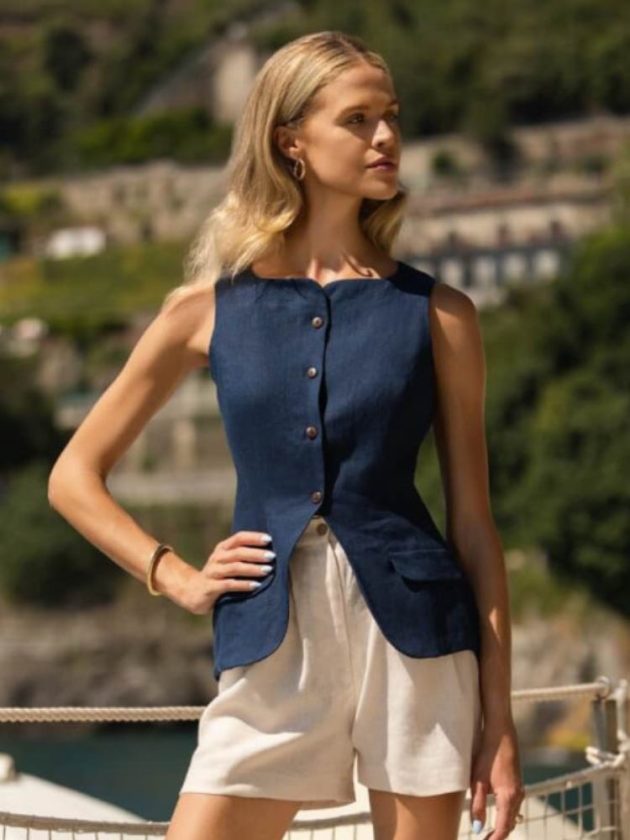
The brand has linen blazers and jackets, linen vests, and linen pants elevated enough for work or an evening out. (They even have bridesmaid dresses.) I’ve been wearing their Evelyn Longline Linen Vest in red clay on repeat and gotten so many compliments on it.
Price Range: $68 – $305
Size Range: US 2-18 (runs slightly small, I’d size up!)
Based in: Lithuania | Ships: Internationally; free U.S. shipping on orders $300+
2. MATE
Best for: casual GOTS-certified organic linen clothing
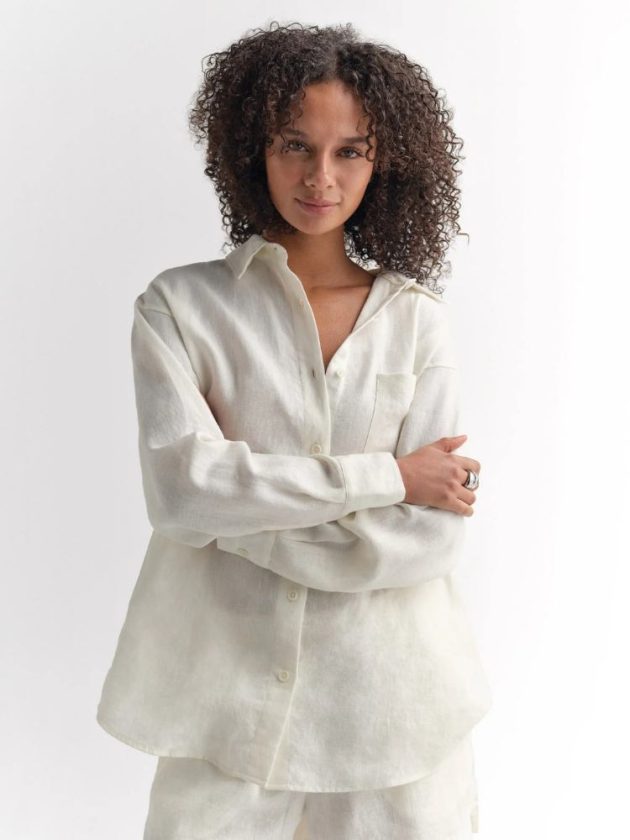
Prioritizing natural non-toxic materials, MATE has a collection of effortless linen shorts, button-downs, and pants made from GOTS-certified organic linen and colored with low-impact dyes.
That means that the color options at MATE are a bit more limited than you might see at other brands. They carry white, black, and “dune” — a soft beige.
I have their organic linen button-down in white and it’s been a reliable staple for me the past two years that’s held up beautifully.
Price Range: $88 – $178
Size Range: XS – XL
Based in: U.S. | Ships: Internationally
3. Linen Fox
Best for: romantic pastoral clothing in trend-forward colors and prints
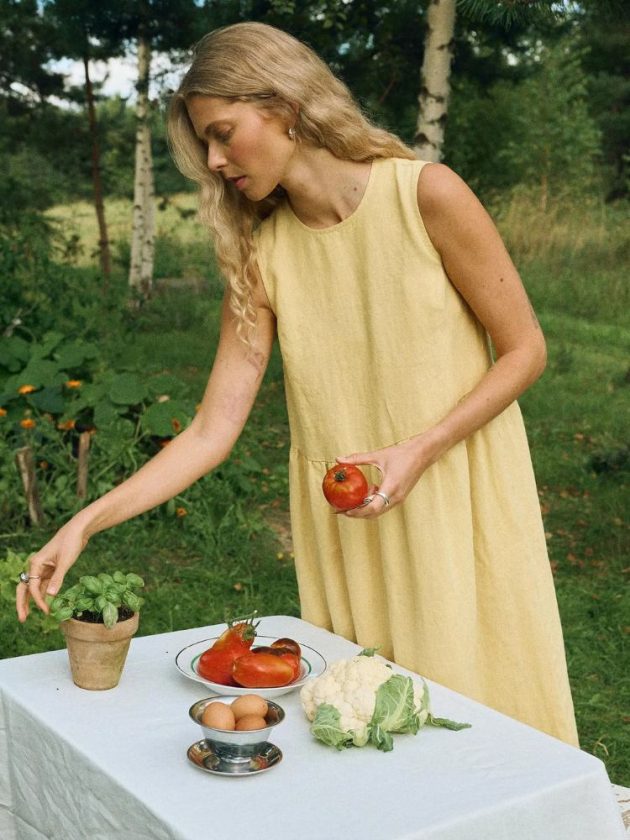
Linen Fox is a Lithuanian small independent fashion brand — their team of 16 people make all of their linen clothing — including womenswear, menswear, and kids clothes.
The brand’s garments are made from OEKO-TEX Standard 100 certified linen fabric. The label follows fair trade principles to production and reduces fabric waste by selling their fabric scraps as samples, and crafting accessories like scrunchies. They also ship in 98% plastic-free packaging.
Price Range: $74 – $187
Size Range: XS – XL (several products fit oversized; check each description!)
Based in: Lithuania | Ships: Internationally
4. Magic Linen
Best for: linen separates plus matching home linens
From classic linen shirts to linen aprons and linen pajamas, Magic Linen is your destination for finding summer-ready sustainable linen clothing for men or women.
The small business’ linen clothing is made with European flax linen certified by OEKO-TEX Standard 100.
The Etsy shop also has plenty of linen home goods — I have linen curtains and bedsheets from Magic Linen and the quality of the fabric has been fantastic, with the sheets holding up well even after years of washing.
Price Range: $93 – $298
Size Range: XS – XXL
Based in: Lithuania | Ships: Internationally
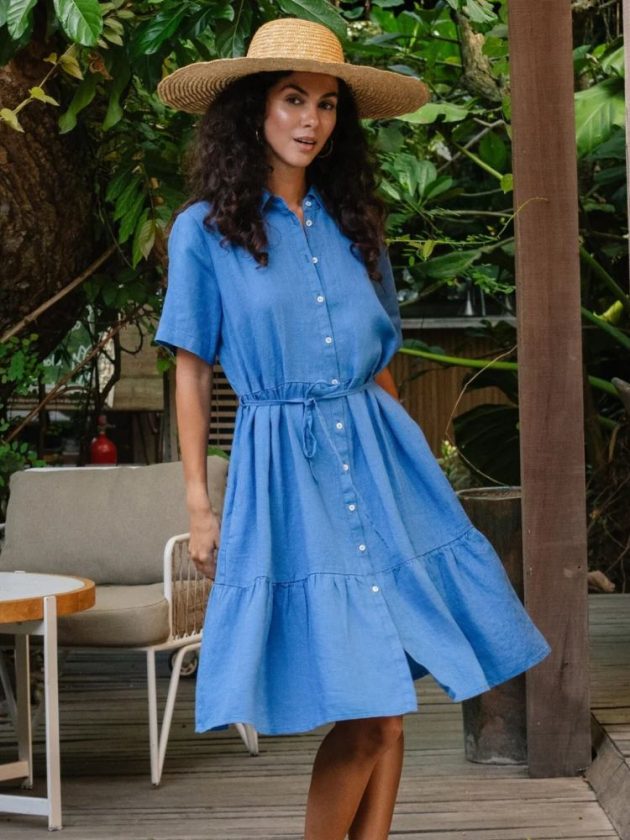
5. Beaumont Organic
Best for: European-made linen clothing with full factory transparency
Looking for breathable garments perfect for your summer getaway to the English countryside or sea? Look no further than Beaumont Organic.
Beaumont Organic is a UK slow fashion brand with garments made from natural fabrics, like flax linen clothing! The brand publishes a directory of the factories they source from — 97% of production takes place in Northern Portugal.
They also have a repair program and are launching a resale program (currently available within the UK only).
Price Range: $211 – $300
Size Range: XS – L
Based in: UK | Ships: Internationally
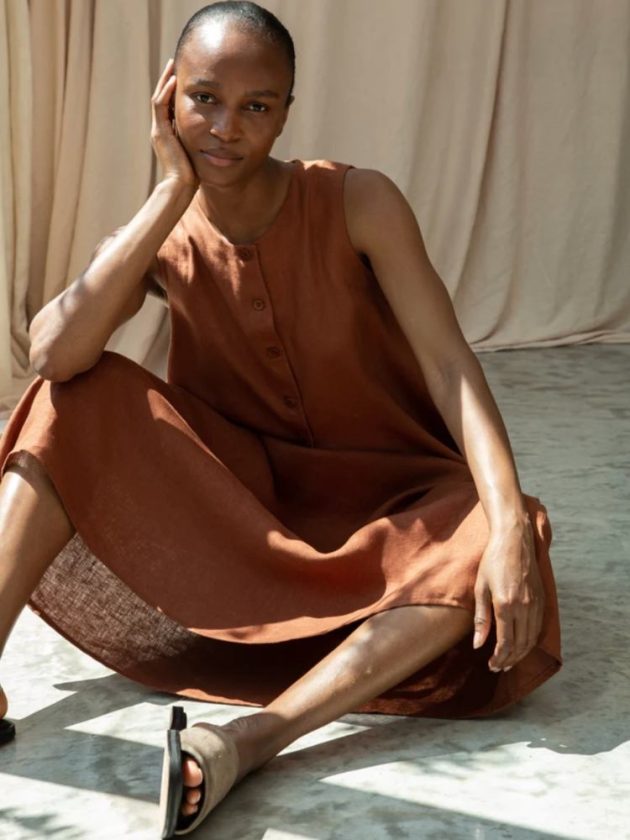
6. LoveAndConfuse
Best for: feminine style linen clothing
The linen clothing from this lovely small Lithuanian brand on Etsy are truly swoon-worthy!
From wrap dresses to ruffled midi’s to high-waisted linen shorts and linen crop tops, their collection of linen fashion will have you dreaming of a slow travel escape to somewhere warm and sunny.
Price Range: $116 – $225
Size Range: XS – XL
Based in: Lithuania | Ships: Internationally
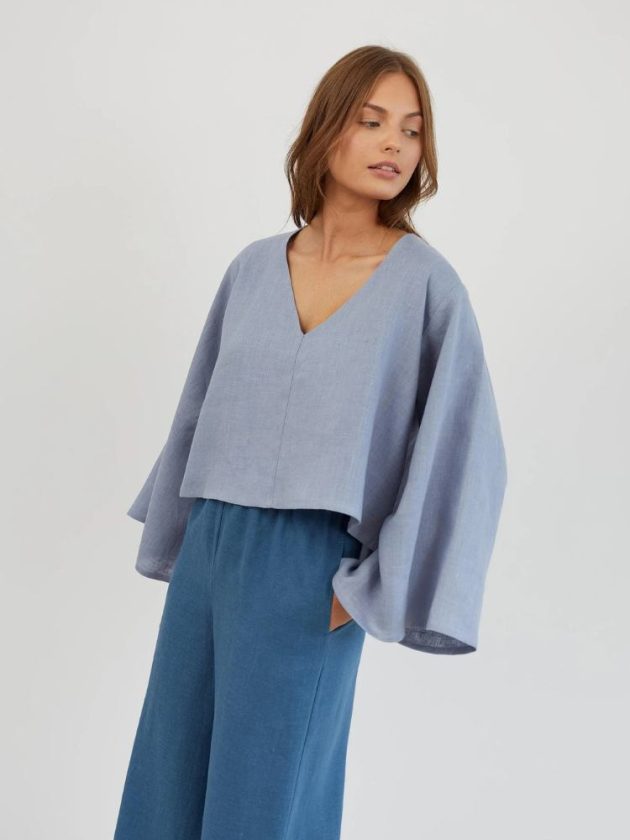
7. Neu Nomads
Best for: classic linen garments and resortwear
With a mission to create simple, sustainable luxury, Neu Nomads offers quality classics made from earth-minded materials, including 100% OEKO-TEX Standard 100-certified linen.
You’ll find linen trousers, effortless shirts, resort-ready kaftans, and tailored linen blazers in classic colors like white, black, olive, and bright coral.
Price Range: $159 – $359
Size Range: XXS – XXL
Based in: U.S. | Ships: Internationally
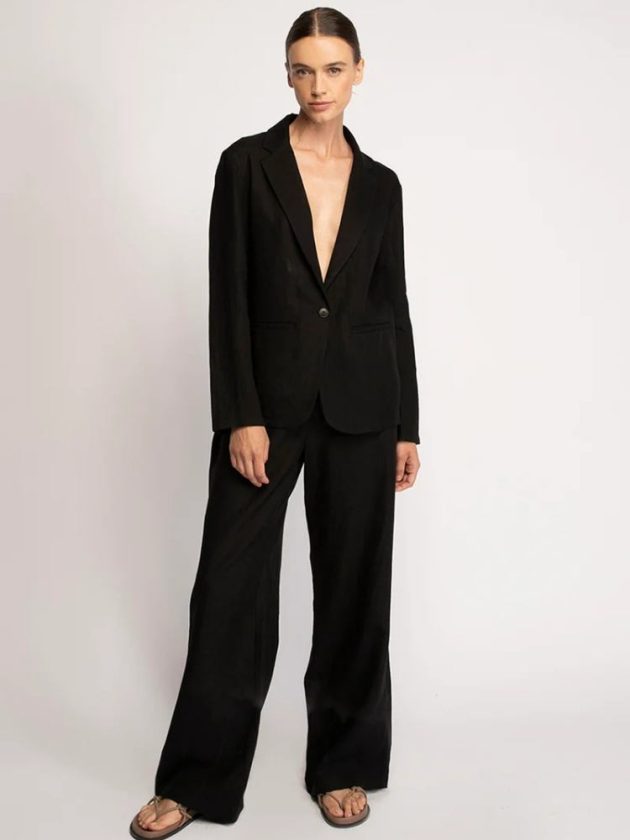
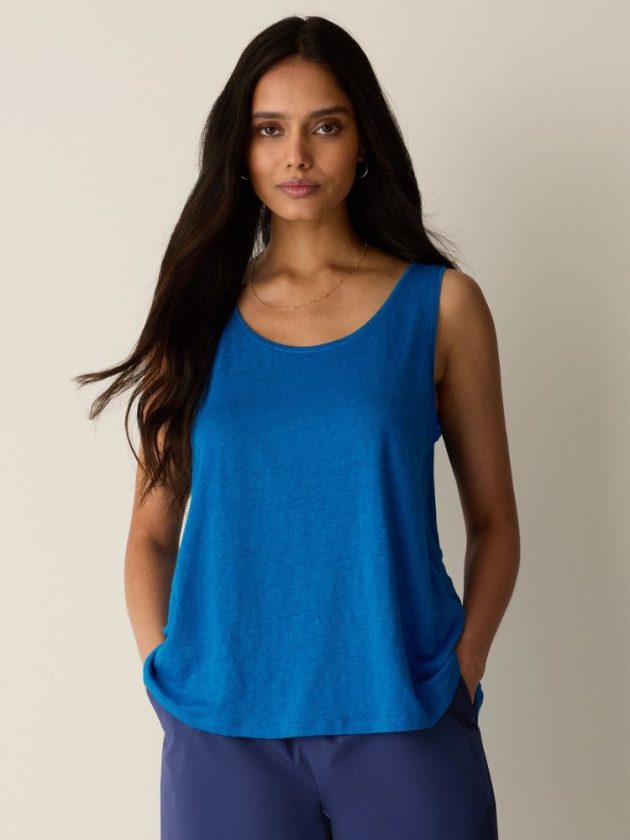
8. EILEEN FISHER
Best for: classic linen clothing with circularity programs
Slow fashion brand EILEEN FISHER has elegant, minimalistic garments made from eco-minded fabrics including organic linen. Several of the pieces are made in Fair Trade Certified factories.
This is the largest company on the list, but still considered a medium-sized enterprise — and, of course, this namesake label is woman-founded.
EILEEN FISHER’s organic linen clothing is timeless and made with quality, as part of their circularity efforts. In addition to ensuring their pieces last, the brand also has a resale program called Renew and a “third life” program that repurposes unwearable garments into unique artwork and other goods.
Price Range: $98 – $268
Size Range: XXS – XL
Based in: U.S. | Ships: Within U.S.
Your Questions, Answered:
What about Quince’s linen clothing?
While Quince offers more affordable linen clothing, in my experience their linen clothing is ok quality, but does not compare with the quality of some of the other brands on this list. Also, I personally want to prioritize women-led small businesses for my guides, not venture-backed billion-dollar companies.
Should I look for organic linen clothing?
While organic linen is wonderful, it is quite rare. Only two brands on this list use certified organic linen. Note that OEKO-TEX Standard 100 linen is not “organic” linen, but rather linen clothing that has been tested against common harmful substances. The most common certification for organic fiber clothing is Global Organic Textile Standard, or GOTS.
Is there any linen clothing that’s work-appropriate?
This one depends on your work place’s dress code, but there are a few options on this list with linen blazers, trousers, and other more tailored pieces like Linen Handmade Studio and Neu Nomads.
More Sustainable Clothing Guides:
The Best Organic Cotton Fashion Brands
Actually Fashionable Hemp Clothing Brands
The post 8 Best Linen Clothing Brands With Easy Breezy, Beautiful Pieces appeared first on Conscious Life & Style.
9 Best Linen Clothing Brands With Easy Breezy, Beautiful Pieces
Breezy, light, and breathable, we take a deep dive into how one of the best summer fabrics fares when it comes to sustainability while discovering these brands that are doing right by linen.
Some Background on Linen
Where does linen come from?
Linen fiber is extracted from the stalks of flax plants. This plant is also known for providing us with nutritious flaxseeds and linseed oil — talk about an overachiever!
In fact, linen is one of the oldest fibers known to man, dating back to the prehistoric era. Archaeologists and paleobiologists have discovered flax fibers during excavations that were twisted, indicating they were used to make ropes or strings among many proposed applications that must have been a great advantage to the hunter-gatherer society. In fact, linen wrappings were even used for mummification in ancient Egypt.
Linen fabric is then created by obtaining its fibers from the inner bark (or stalks) of the flax plant.
How is the linen cloth made?
Before the fibers are spun into the breezy linen you know and love, its fibers are loosened and separated from the rest of the stalk through a process known as “retting”. At that point, the fibers are still straw-like and coarse in texture.
To soften it, the fibers are broken up into small, short bits, while the actual fiber is left unharmed, and then “scutched”, where the straw is scraped off the fiber. After which they are then pulled through “hackles”, that comb the straw out of the fiber to finally prepare flax for spinning into linen fabric.
And linen clothing is, of course, garments comprised of linen fiber in its entirety or blended with other fibers. For this guide, I tried to select brands that only used 100% linen or at the minimum blended linen with other natural fibers like cotton.
The Benefits of Linen Clothing
Why wear linen? Known for being ideal during the summers, clothing made from linen will allow heat to escape from the body while absorbing moisture and drying relatively quickly. While linen may have a notorious reputation for wrinkling rather quickly, when blended with other fibers, the creases aren’t as discernible as they would be with pure linens.
While linen may be notorious for its high energy consumption owing to its need to be ironed more, linen clothing’s pros easily outweigh its cons.
Flax plants can be grown in the harshest of climate conditions that require minimum water. What’s more impressive is the plant’s ability to absorb carbon. The European Confederation of Flax and Hemp (CELC) states that one hectare of flax absorbs 3.7 tons of CO2 every year.
Is Linen More Sustainable Than Cotton?
While there are benefits and drawbacks to every fiber when it comes to environmental sustainability, there are a few points where linen stands out when compared to cotton.
First, we know that durability is a key aspect of sustainability, because it means our clothes will last, enabling us to keep our clothes longer and buy new clothing less frequently.
So how long does linen clothing last in comparison to cotton? Linen clothing is up to 12 times stronger than cotton, helping increase its longevity and taking away the need to be replaced so often.
Another question might be about flax’s water usage. While the irrigation needs of the crop are dependent on the region’s climate (just as with cotton), 450–750 mm of water per season is sufficient for flaxseed. In fact, some studies even indicate that flax could be regarded as a drought-tolerant crop.
How to Care for Linen Clothing
When it comes to caring for linen clothing, linen can be washed on a gentle machine cycle with a mild detergent. (Check out these low waste low-impact detergent options.)
In case you’re curious whether linen stretches or shrinks, then there isn’t much to worry about. Linen is mostly pre-shrunk during the manufacturing stages but pure linens may show about 4% shrinkage.
And when it comes to stretch, linens aren’t known to stretch out over time but can show some level of elasticity when blended with other fibers.
Finally, it’s no secret that linen clothing tends to wrinkle easily! You may choose to embrace the natural characteristics of linen and wear your linen clothing as is, or if you want a crisper look, you may either want to look for a linen blended fabric, or be prepared to steam and/or iron your garments relatively frequently.
Note: This guide includes partners and/or affiliates. As always, brands must meet high standards for sustainability and ethics — and I only share brands that I believe in.
How to Find Sustainable Linen Clothing
So of course, I’m a big advocate for “secondhand first” when it comes to all fashion, including linen clothing. While your local thrift store might not be filled with 100% linen clothes, online secondhand shops can be a great resource. For luxury and premium brands, Vestiaire Collective and The RealReal. For more affordable options, my favorite pick is ThredUp because you can filter by natural fibers only. To be clear: the listings aren’t always accurate, so I still double check the descriptions of any product that shows up with that filter, but it does save some time to start there.
When looking for new linen clothing, I always prioritize small to mid-size women-led businesses. And I check the product details to see if they use 100% linen or if they’re deceptively saying “linen blend” and then it’s actually 50% polyester!
And while not perfect you can also look for certifications. These are the ones most relevant to linen clothing and linen fashion brands.
OEKO-TEX Standard 100 certifies that the finished textile product has been tested for harmful substances (heavy metals, formaldehyde, pesticide residue). This is a chemical-safety certification, not a guarantee of fair labor or environmental practices. So it tells you the linen has been tested for potentially toxic chemicals, but it doesn’t tell you who made it or how. Note that some brands just say “OEKO-TEX certified” — that virtually always refers to OEKO-TEX Standard 100, the most common certification from OEKO-TEX.
B Corp certifies the company as a whole against social and environmental performance standards (labor, governance, environmental impact). This is a business-level cert, not a product-level one, so it doesn’t speak to any single garment’s materials.
Fair Trade Certified verifies that the specific factory/facility producing the item meets standards for labor conditions, wages, and worker safety, and that a Community Development Premium is paid to workers. It’s a labor and production-facility certification. It doesn’t certify the fabric’s environmental footprint or chemical content (that’s what OEKO-TEX covers), so a garment can carry both certifications and they’re speaking to different things.
Where to Find Eco-Friendly Linen Clothing
I scoured through dozens of brands to find my top picks for brands with sustainably-crafted linen clothing for women (some have men’s clothing too). I’ve included their conscious qualities, what they’re best for, and any caveats so you can make the best decision for yourself. Keep in mind while shopping that 100% linen garments won’t have any stretch — so if you run between sizes, I’d default to sizing up. But of course, check the size chart and reviews for each brand!
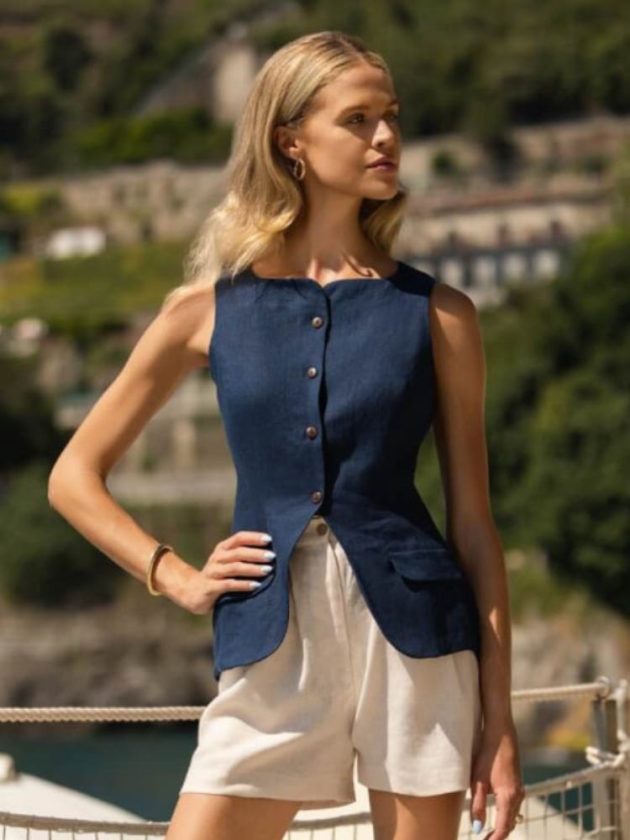
1. Linen Handmade Studio
Best for: tailored, elevated linen clothing
A lot of linen clothing can feel quite casual. And while Linen Handmade studio does have relaxed-fit options, what differentiates the brand in my opinion is their tailored options. I often hear from conscious readers that they want to wear natural fibers to work, but they can’t find something nice enough. Enter in: Linen Handmade Studio’s tailored pieces.
The brand has linen blazers and jackets, linen vests, and linen pants elevated enough for work or an evening out. (They even have bridesmaid dresses.) I’ve been wearing their Evelyn Longline Linen Vest in red clay on repeat and gotten so many compliments on it.
Price Range: $68 – $305
Size Range: US 2-18 (runs slightly small, I’d size up!)
Based in: Lithuania | Ships: Internationally; free U.S. shipping on orders $300+
2. MATE
Best for: casual GOTS-certified organic linen clothing
Prioritizing natural non-toxic materials, MATE has a collection of effortless linen shorts, button-downs, and pants made from GOTS-certified organic linen and colored with low-impact dyes.
That means that the color options at MATE are a bit more limited than you might see at other brands. They carry white, black, and “dune” — a soft beige.
I have their organic linen button-down in white and it’s been a reliable staple for me the past two years that’s held up beautifully.
Price Range: $88 – $178
Size Range: XS – XL
Based in: U.S. | Ships: Internationally
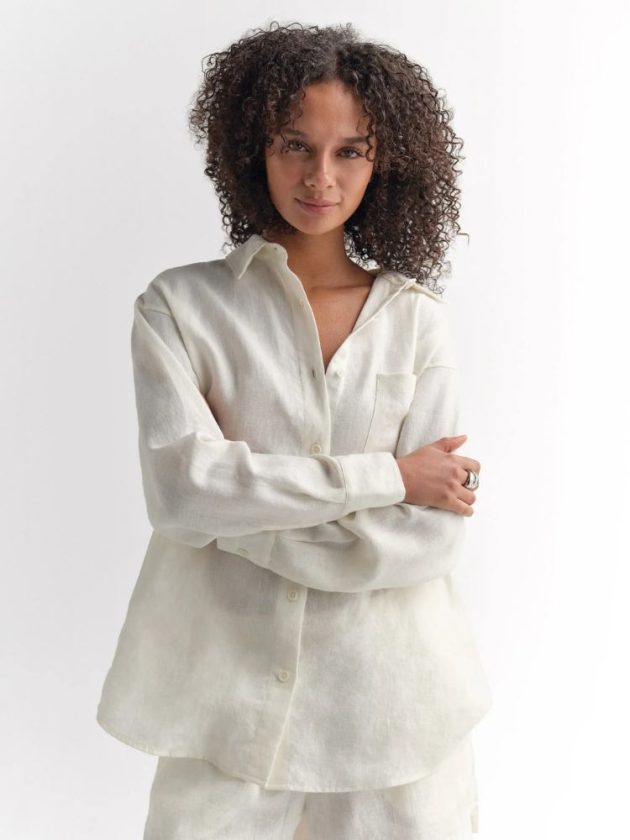
3. Linen Fox
Best for: romantic pastoral clothing in trend-forward colors and prints
Linen Fox is a Lithuanian small independent fashion brand — their team of 16 people make all of their linen clothing — including womenswear, menswear, and kids clothes.
The brand’s garments are made from OEKO-TEX Standard 100 certified linen fabric. The label follows fair trade principles to production and reduces fabric waste by selling their fabric scraps as samples, and crafting accessories like scrunchies. They also ship in 98% plastic-free packaging.
Price Range: $74 – $187
Size Range: XS – XL (several products fit oversized; check each description!)
Based in: Lithuania | Ships: Internationally
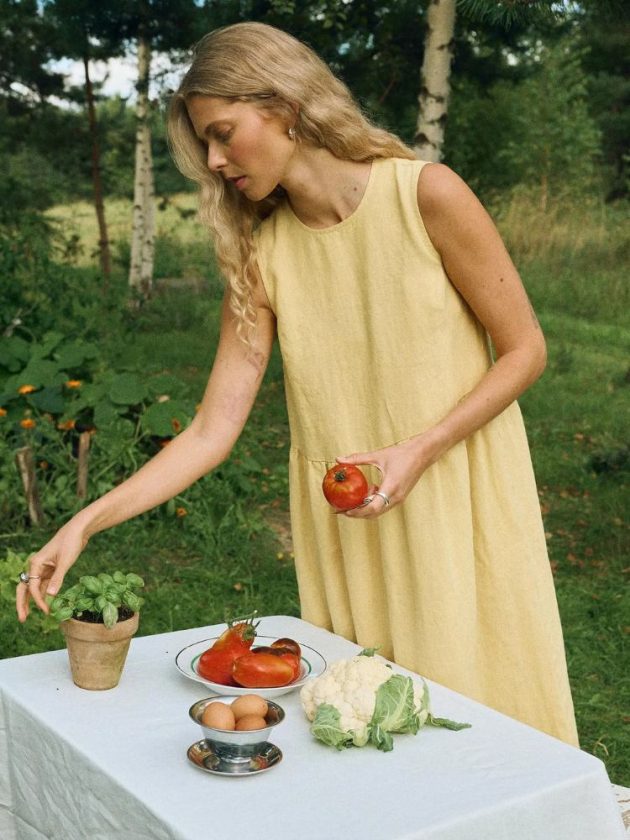
4. OhSevenDays
Best for: deadstock linen with custom sizing available
OhSevenDays was founded by Megan Mummery after seeing the vast supply of surplus fabrics (i.e. deadstock) in Istanbul, Turkey.
While originally sourcing their deadstock fabric from middleman sellers, OhSevenDays now sources their surplus fabrics (including linen) directly from OEKO-TEX fabric mills for better transparency.
Price Range: $$
Size Range: XS-XL + custom sizing options
Based in: Turkey | Ships: Internationally
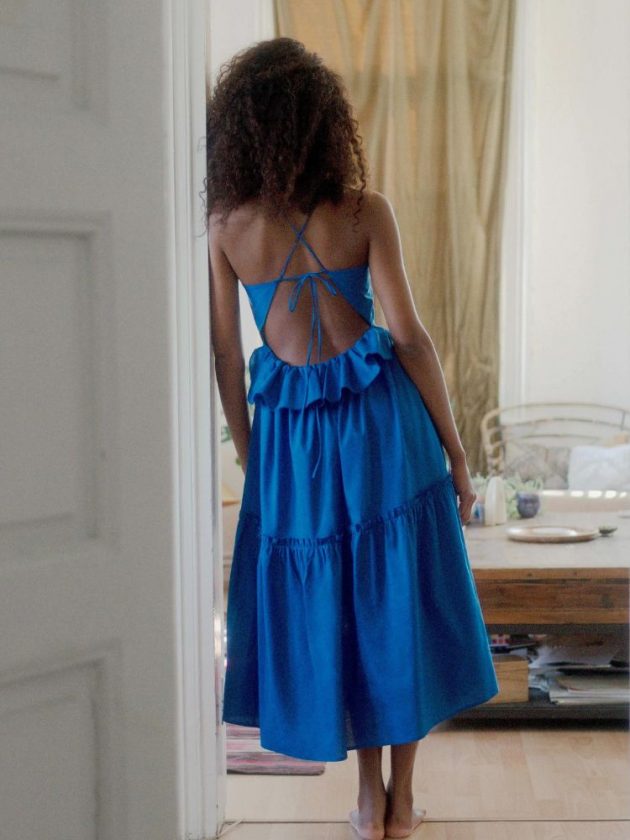
5. Magic Linen
Best for: linen separates plus matching home linens
From classic linen shirts to linen aprons and linen pajamas, Magic Linen is your destination for finding summer-ready sustainable linen clothing for men or women.
The small business’ linen clothing is made with European flax that means the pre-certification guidelines of OEKO-TEX Standard 100.
The Etsy shop also has plenty of linen home goods — I have linen curtains and bedsheets from Magic Linen and the quality of the fabric has been fantastic, with the sheets holding up well even after years of washing.
Price Range: $-$$
Size Range: XS – XXL
Based in: Lithuania | Ships: Internationally

6. Beaumont Organic
Best for: UK-made linen with full factory transparency
Looking for breathable garments perfect for your summer getaway to the English countryside or sea? Look no further than Beaumont Organic.
Beaumont Organic is a UK slow fashion brand with garments made from natural fabrics, like flax linen clothing! The brand publishes a directory of the factories they source from — 97% of production takes place in Northern Portugal.
They also have a repair program and are launching a resale program (currently available within the UK only).
Price Range: ££ – £££
Size Range: XS – L
Based in: UK | Ships: Internationally; covers EU customs & fees
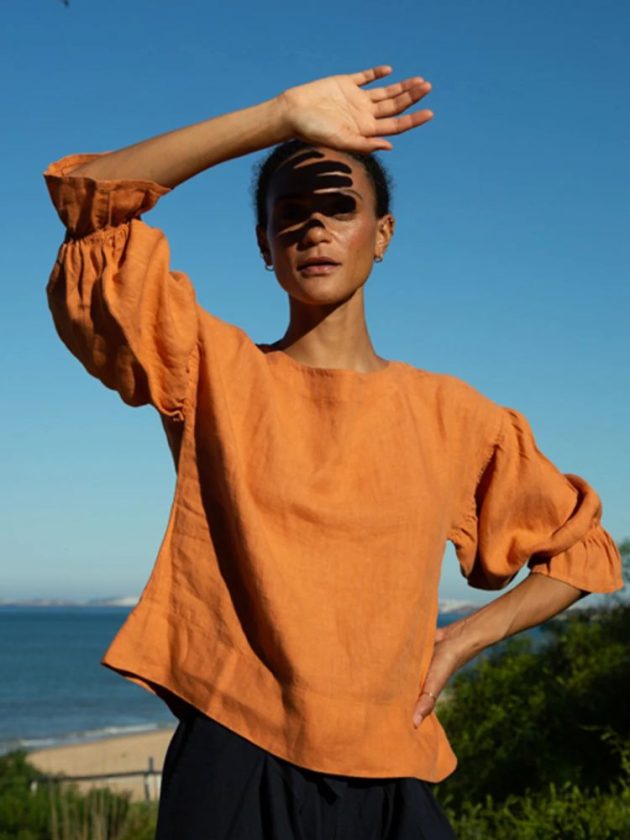
7. LoveAndConfuse
Best for: ultra feminine style linen clothing
The linen clothing from this lovely small Lithuanian brand on Etsy are truly swoon-worthy!
From wrap dresses to ruffled midi’s to high-waisted linen shorts and linen crop tops, their collection of linen fashion will have you dreaming of a slow travel escape to somewhere warm and sunny.
Price Range: $ – $$
Size Range: XS – XL
Based in: Lithuania | Ships: Internationally
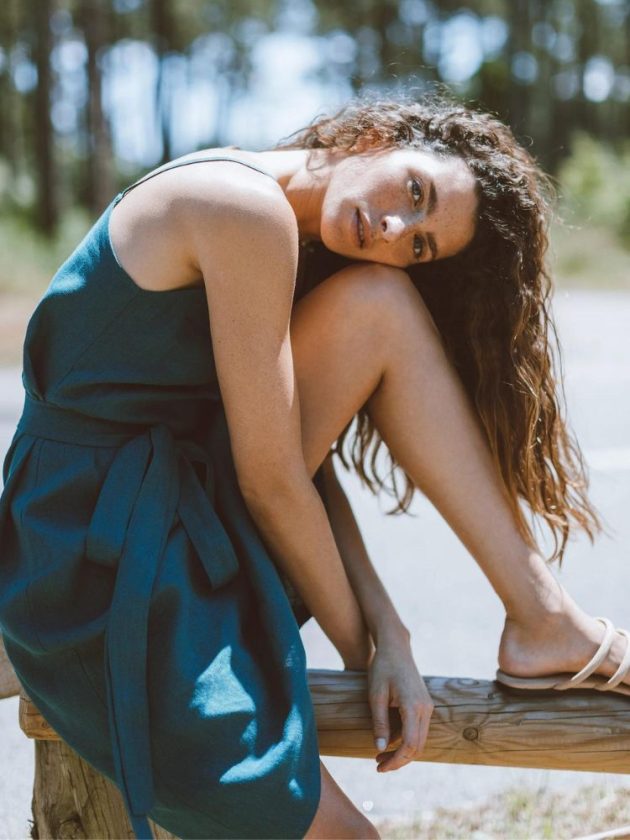
8. Neu Nomads
Best for: affordable linen garments
With a mission to create simple, sustainable luxury at affordable prices, Neu Nomads offers quality classics made from earth-minded materials, including organic linen.
You’ll find linen trousers, effortless shirts, chic blouses, summer dresses, and even linen blazers in a range of colors among Neu Nomad’s consciously crafted selection.
Price Range: $ – $$
Size Range: XS – XL
Based in: U.S. | Ships: Internationally
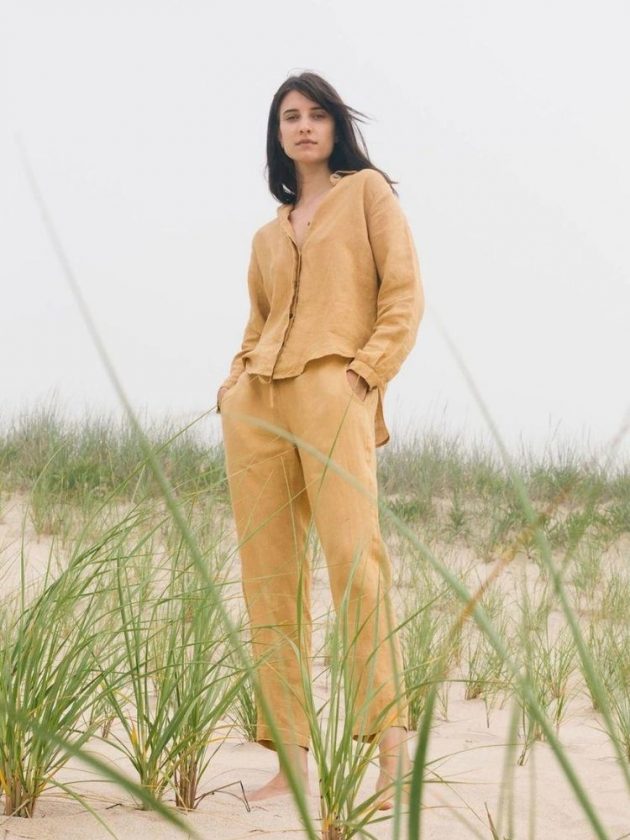
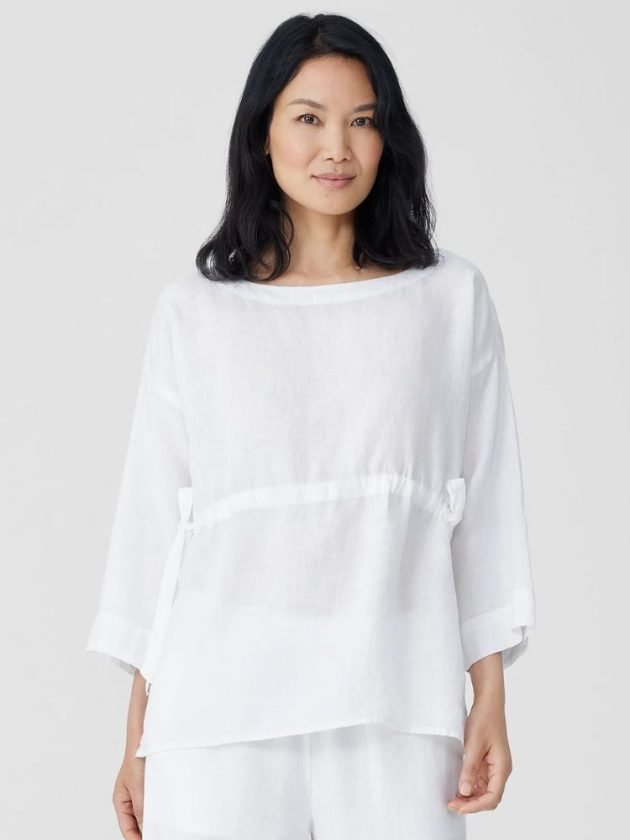
9. EILEEN FISHER
Best for: investment-piece linen with a circularity program
Slow fashion label EILEEN FISHER has elegant, minimalistic garments made from eco-minded fabrics including organic linen.
EILEEN FISHER’s organic linen clothing is timeless and made with quality, as part of their circularity efforts. In addition to ensuring their pieces last, the brand also has a resale program called Renew and a “third life” program called Waste No More that repurposes unwearable garments into unique items.
Price Range: $$$
Size Range: XXS – XL
Based in: U.S. | Ships: Within U.S.
Your Questions, Answered:
What about Quince’s linen clothing?
While Quince offers more affordable linen clothing, in my experience their linen clothing is ok quality, but does not compare with the quality of some of the other brands on this list. Also, I personally want to prioritize women-led small businesses for my guides, not venture-backed billion-dollar companies.
Should I look for organic linen clothing?
While organic linen is wonderful, it is quite rare. Only two brands on this list use certified organic linen. Note that OEKO-TEX Standard 100 linen is not “organic” linen, but rather linen clothing that has been tested against common harmful substances. The most common certification for organic fiber clothing is Global Organic Textile Standard, or GOTS.
More Sustainable Clothing Guides:
The Best Organic Cotton Fashion Brands
Actually Fashionable Hemp Clothing Brands
The post 9 Best Linen Clothing Brands With Easy Breezy, Beautiful Pieces appeared first on Conscious Life & Style.
9 Best Linen Clothing Brands With Easy Breezy, Beautiful Pieces



-
Climate Change1 year ago
Guest post: Why China is still building new coal – and when it might stop
-
Greenhouse Gases1 year ago
Guest post: Why China is still building new coal – and when it might stop
-

 Greenhouse Gases2 years ago
嘉宾来稿:满足中国增长的用电需求 光伏加储能“比新建煤电更实惠”
-

 Climate Change2 years ago
嘉宾来稿:满足中国增长的用电需求 光伏加储能“比新建煤电更实惠”
-
Climate Change2 years ago
Bill Discounting Climate Change in Florida’s Energy Policy Awaits DeSantis’ Approval
-

 Renewable Energy10 months ago
Sending Progressive Philanthropist George Soros to Prison?
-
Greenhouse Gases1 year ago
嘉宾来稿:探究火山喷发如何影响气候预测
-

 Carbon Footprint2 years ago
US SEC’s Climate Disclosure Rules Spur Renewed Interest in Carbon Credits