

One of the hurdles to adopting electric vehicles (EVs) is the perceived lack of charging stations to support the technology.
In order to increase consumer confidence and offer Americans more freedom in purchasing an EV, Congress, through the Bipartisan Infrastructure Law, allocated $7.5 billion for the buildout of a nationwide charging network. Expanded accessibility to charging stations increases the choice for Americans to drive the vehicle type they want. This is especially critical to our region for several reasons. First, the Southeast lags at 0.40 charging stations per 1,000 people compared to the national average of 0.53 per 1,000 people. Second, we are heavily dependent on tourists being able to travel to and through our beautiful region easily. More charging stations mean more tourists who need charging stations to drive through on vacation can, and EV drivers who live and work in the region can as well. Additionally, the projects will create jobs to install and maintain the equipment and support the manufacturing that the Southwest is leading on. Finally, the projects, which require a local capital match, will inject private capital into the charging infrastructure market across the region.
The Charging and Fueling Infrastructure (CFI) Program is a competitive grant program that is complementary to the formula funding provided to each state through the National Electric Vehicle Infrastructure (NEVI) Program. CFI is appropriated through the aptly named Bipartisan Infrastructure Law, which was legislated through bipartisan cooperation in Congress in 2021. The CFI Program, begun in 2022, was designed to fund $2.5 billion in projects in annual tranches through 2026. To date, the program has awarded three rounds totalling $1.779 billion in grant funding and $142 million to the Southeast. The first rounds (1A and 1B) were announced in 2024.
On January 10, 2025, 31 states, four Tribal Nations, and the District of Columbia were awarded $636 million in funding. Notably, the Southeast was very successful in the most recent award round. $89.7 million will support projects expanding access to community charging and long-range travel along highway corridors in the Southeast.

Map of Round 2 Grant Recipients
A Closer Look at the Projects
Florida
City of Jacksonville, FL
$2,829,740.00 Community Program
The City of Jacksonville, Florida, and Florida State College will receive $2.8 million to install 100 EV chargers across public spaces and educational campuses. This initiative aims to address the region’s electric vehicle charging gap, particularly in disadvantaged communities, and promote greenhouse gas emission reductions.
Broward Metropolitan Planning Organization, FL
$17,902,595.00 Corridor Program
The Broward Metropolitan Planning Organization will receive $17.9 million to install 20 EV charging stations with 339 EV charging ports along the county’s Alternative Fuel Corridors. The project will address the county’s EV charging infrastructure needs.
City of Gainesville, FL
$11,655,593.00 Community Program
The City of Gainesville, Florida, will receive nearly $11.7 million to deploy 47 publicly accessible EV charging stations on City-owned properties in or near alternative fuel corridors and disadvantaged communities. This project aims to improve access to electric vehicle charging for low-income residents and build the charging network along alternative fuel corridors. This initiative aligns with the City’s efforts to reduce greenhouse gas emissions and support low-income residents with energy efficiency improvements and affordable housing projects.
City of Hollywood, FL
$4,975,926.75 Community Program
The City of Hollywood, Florida, will receive nearly $5.0 million to install 154 EV charging ports across public parks, community centers, and city facilities. The project also includes 10 micro-mobility charging units for electric scooters and bicycles. This project aims to reduce carbon emissions, stimulate local economic growth, and enhance access to charging infrastructure in disadvantaged communities.
Georgia
Athens-Clarke County Unified Government, GA
$4,941,889.00 Charging Community Program
The Athens-Clarke County Unified Government will receive $4.9 million to install 58 EV chargers, nearly doubling the number of publicly available chargers in the community. Many proposed sites will be in or around disadvantaged communities.
DeKalb County Government, GA
$2,806,965.34 Charging Community
The DeKalb County Government will receive $2.8 million to expand its EV charging infrastructure by installing 259 EV charging ports at 48 sites, including public libraries, parks, senior centers, public safety facilities, and disadvantaged communities. The project will increase sustainable transportation options for low and moderate-income neighborhoods and energy-burdened communities. The initiative aims to reduce greenhouse gas emissions and improve air quality while promoting economic opportunity and transportation equity for all residents.
North Carolina
City of Raleigh, NC
$2,439,864.00 Charging Community
The City of Raleigh will receive $2.4 million to deploy 56 EV charging ports across the city. The project will prioritize serving multifamily residents and the city’s fleet, with 66% of funds directed to disadvantaged communities.
South Carolina
Berkeley-Charleston Dorchester Council of Governments, SC
$6,602,400.00 Charging Community
The Berkeley-Charleston-Dorchester Council of Governments will receive $6.6 million to build out a robust EV charging network consisting of 124 ports in disadvantaged communities. The project will expand access to electric vehicle technician training and use targeted community engagement to promote the availability of EV charging and monitor the impacts of new infrastructure.
Tennessee
Tennessee Department of Environment and Conservation, TN
$35,520,000.00 Charging Corridor
The Tennessee Department of Environment and Conservation will receive $35.5 million to establish an Alternative Fuel Corridor in Nashville by developing two zero-emission vehicle infrastructure hubs with 94 electric vehicle charging ports. The first hub will be located near Exit 56 of I-24, near the Nashville International Airport. The second hub will be near Exit 47 off I-24 and Jefferson Street. Both sites are within disadvantaged communities. The project aims to deploy Nashville’s first public medium- and heavy-duty zero-emission vehicle charging infrastructure, supporting fleet electrification and electric freight corridor designations.
Programs In Jeopardy
In an unprecedented power grab, President Trump seeks to cut climate spending from the Inflation Reduction Act and Bipartisan Infrastructure Law through a series of executive orders, including Executive Order 14154 (EO 14154). Although the Constitution explicitly gives the power of the purse to Congress, President Trump’s attack on clean energy and Congress’ constitutional spending authority put all the funding that supports these programs at risk. The Harvard Law School’s Environmental and Energy Law Program explains the Executive and Congressional control mechanisms over the Bipartisan Infrastructure Law (Infrastructure Investments and Jobs Act).
Two separate lawsuits have been filed in response to the executive orders, and federal district courts issued temporary restraining orders (TRO). The TROs compel the Trump administration to cease withholding funding. However, those TROs have largely been ignored. The degree of risk to various projects depends on the phase of their contract execution. Some projects had been awarded but did not have the funds “obligated;” some were in the final process of getting signatures for their contracts, while others are now being denied drawdown requests for approved projects. Delays and funding cuts are putting all of these projects at risk and are an act of bad faith from the federal government.
Chaos is not a pathway to solutions; it is a distraction and a tactic designed for us to lose focus on the right thing to do in these challenging times.
Take Action
SACE will continue to track these developments and provide updates on the actions being taken as well as their outcomes as they become known. Here are two things you can do right now:
- Send a message telling your elected leaders that you expect them to stand up for clean energy,
- Join our next Clean Energy Generation call at noon on Mar. 14 to learn about ways we will keep moving forward.
The post $89.7 Million Awarded to Southeast from CFI EV Charging Program appeared first on SACE | Southern Alliance for Clean Energy.
$89.7 Million Awarded to Southeast from CFI EV Charging Program

 Does this guy have a solid point?
Is war a bad thing? What about rape and torture?
Do they point to weaknesses that must be strengthened?
Is Bullying a Bad Thing? Not if We Want a Society of Brutality
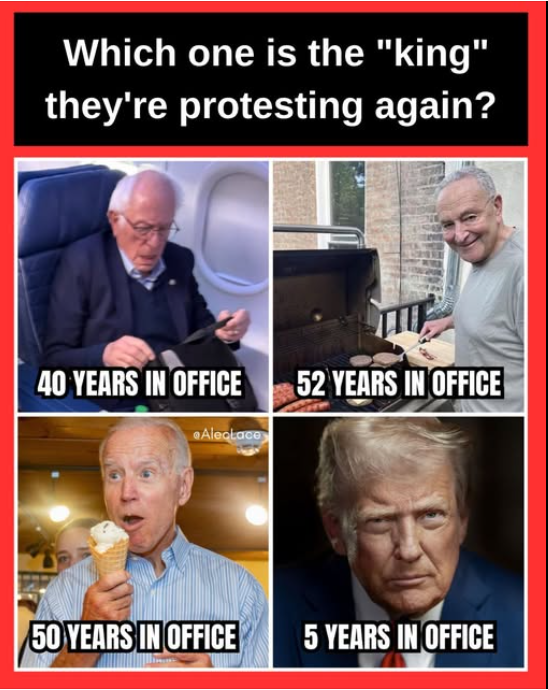 Maybe the protestors are less concerned about length of time in office, and more with criminal authoritarianism.
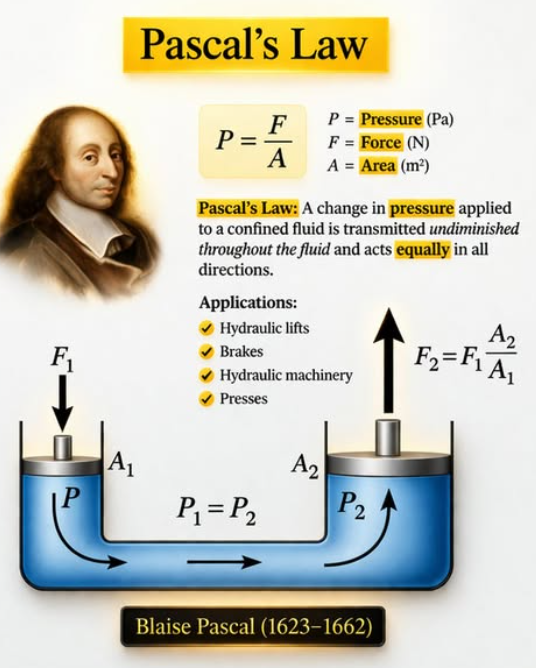 I have such respect for Pascal that I considered naming our son after him. (My wife wasn’t having it. Maybe if we lived in France?)
Pascal made important contributions to both math and physics but he’s perhaps best known for his philosophic “wager,” that it makes sense to believe in God, since if He exists, you’ll be very glad you did, and if He doesn’t, you haven’t lost anything. I counter that this is not how we accept or reject religious tenets.



-
Climate Change8 months ago
Guest post: Why China is still building new coal – and when it might stop
-
Greenhouse Gases8 months ago
Guest post: Why China is still building new coal – and when it might stop
-

 Greenhouse Gases2 years ago
嘉宾来稿:满足中国增长的用电需求 光伏加储能“比新建煤电更实惠”
-
Climate Change2 years ago
Bill Discounting Climate Change in Florida’s Energy Policy Awaits DeSantis’ Approval
-

 Climate Change2 years ago
嘉宾来稿:满足中国增长的用电需求 光伏加储能“比新建煤电更实惠”
-
Climate Change Videos2 years ago
The toxic gas flares fuelling Nigeria’s climate change – BBC News
-

 Carbon Footprint2 years ago
US SEC’s Climate Disclosure Rules Spur Renewed Interest in Carbon Credits
-

 Renewable Energy5 months ago
Sending Progressive Philanthropist George Soros to Prison?