

Last Updated on December 6, 2023
The holidays are a time when we indulge our families and friends with food, gifts and cards. But it can also be a time of stress, excess and waste.
That’s why making the right choices is important: They can minimize the impact on the environment while celebrating with the ones we love.

This post was sponsored by the Paper and Packaging Board’s How Life Unfolds® campaign. All thoughts and opinions are my own; for more information please see my disclosure policy.
I like to take a slower approach to the holiday season. Making Christmas cookies from scratch, hanging up some dried citrus garlands for decoration, and making the house smell amazing with festive simmer pots are some of my favorite holiday traditions.
If you’re looking to slow down and really experience all the delights of the holiday season, here are some of my favorite tips on how to spread joy and do it sustainably!
how does the holiday season affect the environment?
During the holiday season, household waste increases by more than 25% from Thanksgiving to New Years.
The average American produces ~5 lbs of trash per day, but during the holidays that rises to 6.25lbs. With a population of 331.9 million people in the U.S. alone, that’s ~2,072,375,000lbs of trash generated per day during the holiday season.
So, where’s all this waste coming from? It’s from all the additional excess food and packaging that does not get recycled. However, please note that when you recycle or reuse things like paper shopping bags, wrapping paper and fancy ribbon, that’s not considered waste.
how can we be sustainable during the holiday season?
Having a sustainable holiday season doesn’t have to be hard. Here are some tips, tricks and ideas to inspire you.

1. recycle (and upcycle) your paper
A papertarian is a fun term coined by the Paper and Packaging Board to highlight someone who lives a paper-based lifestyle. It’s about opting for paper packaging, and then recycling it when you are done!
With the holiday season here, you might be ordering more packages than usual. If you’re wondering what to do with all those shipping boxes and packaging paper, don’t.
Paper and boxes are some of the most recycled materials in the U.S. and can be made into new products up to seven times!
In 2022, 93.6% of corrugated cardboard packaging and nearly 68% of paper was recycled in the United States. Approximately 80% of U.S. paper and packaging mills use some recovered paper fibers in their products, and most corrugated boxes are made from 50% recycled material.
Recycling keeps paper and boxes out of landfills and makes the most of our natural resources because it can be recycled up to seven times. But before you recycle your paper, you can find festive ways to reuse or upcycle it.
Here are some fun ways to upcycle paper this holiday season:
- Make some star ornaments out of toilet paper rolls.
- DIY some paper snowflakes for holiday decor or DIY ornaments.
- Use cardboard tubes as gift tags, napkin rings, or gift pouches.
- Save cardboard boxes to reuse for gifts.
- Use brown paper from shipments over the year to wrap Christmas presents. Decorate them with festive stamps and ink for more pizazz.

2. choose sustainable wrapping
Did you know 4.6 million pounds of wrapping paper is made in the U.S. each year and half of it (that’s 2.3 million pounds!) ends up in landfill.
When wrapping gifts, it’s a good idea to opt for wrapping paper that has no glitter or foils to make sure it’s recyclable. Always double check your local recycling rules though, as they can vary from state to state.
I love to utilize salvaged packaging paper to wrap gifts too. Last year, I saved up all my brown paper, then got rubber stamps and ink to create really cute homemade wrapping paper.
To secure your gifts, use paper tape to cut back on plastic. Or, simply use compostable twine or upcycled ribbon. For finishing touches, tie on some dried citrus or pine sprigs.
3. opt for a sustainable card
Making cards is one of my favorite traditions. I love receiving physical cards, and have a whole box of sentimental cards that I’ve kept over the years from early birthdays, graduations, my wedding etc. It’s so nice to be able to pull these out and read the words from my loved ones, especially loved ones who’re no longer with us.
I’m a big fan of the tactile nature of cards, but whether you make them yourself or you get them from a store, it’s your personal message that really warms the heart. I always opt for a 100% paper-based card because it comes from a renewable resource, and they’re recyclable. To make your own, grab some drawing paper and get creative.
Paint on it, or draw on it with markers, crayons, or colored pencils. Or make it a family affair: Grab your partner and/or kids and give them a card to write out. They can choose who they want to address it to and personalize it their own way!
You can also make a stamp from a potato in the shape of a tree, then use plant paints instead of ink so your card is completely plastic-free.

4. gift consciously
It’s so important to gift consciously. You can do this by choosing gifts your loved ones will adore and actually use.
Think about what they truly want or need: What can they use right now? Practical gifts are always a safe bet, like a coupon to a car wash or a magazine subscription?
Ask them what they need most, or listen to what they talk about the next time you’re together. Are they always talking about getting new baking sheets? Have they voiced how hard it is to afford something you could help put money towards? PJs or thick wool socks?
You can also donate to a charity or volunteer time in their name. This is even more impactful when it’s something they strongly believe in, like environmental or social causes.
Lets also normalize re-gifting: If you have something you know someone else would want, and aren’t using yourself, why not re-gift it? It’s better than gathering dust on your shelf.
Of course, when in doubt, money will always be appreciated and never goes to waste.
5. protect your ornaments without the plastic
Reusing the same ornaments each year is a great way to reduce waste. Always use what you already have.
Plus, many ornaments can be (or become) family heirlooms with a lot of sentimental value. My mother still has some ornaments from her grandmother’s time and they are so precious to us – we decorate the tree with them every year.
It’s important to make sure you put them away safely after the holidays are over. I recommend upcycling a cardboard box and wrapping fragile items in upcycled tissue paper, crinkle paper or kraft paper. Even old newspapers can suffice in a pinch.
This will ensure you can easily pull it out of storage and look forward to making more holiday memories next year.

6. choose the right tree
Did you know that real trees are better for the environment than fake plastic trees?
All real Christmas trees are grown on farms. In fact in the U.S., 350 million trees are grown on Christmas tree farms, so you don’t have to chop a tree down from the forest to get one.
Christmas trees are grown like crops on farms, so the farmer will generally plant 3 seedlings whenever one gets picked.
Plus, when Christmas ends you can recycle it at the end of its life by turning it into compost or mulch.
Many big cities and towns have curbside pick-up options along with drop off centers for recycling.
For example, Mulchfest in NYC is a huge event where they’ll chip your tree into wood chips and use it to nourish trees around NYC. More than 58,300 trees were recycled last year alone.
An even more eco-friendly option yet is to find a place that lets you rent out a living tree for the holiday in a pot with its roots intact.
At the end of the holiday season, they’ll come and pick it up and return it to their forest nursery, where the trees will continue to produce oxygen, contribute to the ecosystem, and serve as wildlife habitat.
However, if you already have a fake plastic tree, continue to use it to prevent waste. Plastic trees cannot be recycled with curbside recycling. When it’s ready for retirement, consider getting a real tree in its place.

7. reduce food waste
Who doesn’t love to indulge in good food during the holidays? Between cookies, cakes, mains and sides, the options are endless.
But Americans waste around 30-40% of the food supply, and that amount rises by 25% during the holidays – aka Thanksgiving, Christmas and New Years.
Here are a few ways to reduce food waste this holiday season:
- Ask your guests to bring their own containers so they can take some leftovers home or provide some paper to-go containers.
- Actually eat your leftovers! Here are some creative ways to use them up.
- Compost any food/cooking scraps you have.
- Don’t over-cook: Focus on making enough for the people you’ll be serving. Meal prepping and planning in advance can help with this.
- Prepare only what you know your guests will like so it all gets eaten (try to avoid any foods they’ve expressed strong disdain for).
- Make sure to honor dietary restrictions! Make sure to talk to everyone about their diets before you plan to cook.
8. quality time
Above all else this season, spending quality time with your loved ones far outweighs any possession you can get them.
We’re often bombarded by ads this season telling us to buy more. This leads to overconsumption, stress, panic-buying and a lot of waste during the holidays.
But what if we just slowed down? What if we took the time to focus less on quantity, but quality?
Here are some ways we can enjoy time with our loved ones:
- Grab a coffee at a local cafe and catch up (bonus points if you challenge each other not to check your phones!)
- Host a girl’s night, order pizza and get crafty
- Watch a cooking class and eat the spoils together when done
- Sign up for a guided nature walk or foraging tour together
- Complete a puzzle or board game (Scrabble is always fun!)
You could also potentially ask for experience gifts. Even better, ask for an experience you can share together, like a concert, movie tickets, musical, or play.
Or ask for no gifts at all, if you’d rather just make the holidays a bit simpler and already have what you need. That will free both of you to just focus on creating fun memories together.
And, a huge thank you to How Life Unfolds® for sponsoring this post. Be sure to visit https://www.howlifeunfolds.com/holidayguide to learn more about having a sustainable holiday season. Don’t forget to also take the Papertarian Pledge!
Also, feel free to visit their Instagram handle @howlifeunfolds and participate in their #GoPapertarian campaign.
The post 8 Ways to Have a Sustainable Holiday Season appeared first on Going Zero Waste.

Just like fashion has been overrun by fast fashion, home goods and furniture have similarly seen a rapid decline in quality. Rugs are no exception.
And similar to fashion, these cheap goods come at a high cost — namely, to the planet and to people. In fact carpet and rug production is rampant with exploitation.
On the other hand, fair trade rugs present the best of what a rug can bring to your home: artistry, craftsmanship, and heritage.
The brands featured in this guide are partnering with (and fairly paying!) skilled artisans who are using generations-old — and sometimes even centuries-old — techniques. These artisans are sustaining long lines of crafts, preserving their cultural diversity, and celebrating the richness of their time-honored crafts.
There’s simply no replacement for a timeless, quality artisan-made rug — they’re like pieces of art you can lay out on your floor or hang on your walls.
So, enjoy browsing through this guide to sustainable rug brands listed out below and best of luck on your search for the right fair trade rug!
Where to Find Ethical and Fair Trade Rugs
Note that this guide includes affiliates and partners. As always, brands must meet high standards for ethics and sustainability to be featured and all opinions are my own.
1. Obakki
Best for: warm-hued handwoven wool rugs
Categories: Area Rugs, Runners, Accent Rugs
Obakki partners with artisan weavers primarily in Oaxaca, Mexico — including individual makers like José — who hand-dyes and weaves rugs on a traditional pedal loom using locally sourced sheep’s wool and natural dyes derived from native plants. The brand also works with Rrres Design Studio, a Latin American studio dedicated to preserving traditional Oaxacan weaving techniques, and sources handwoven textiles from artisan communities beyond Mexico as well, including Morocco.
Each rug is made from 100% wool with no synthetic dyes or backing. Most pieces are made-to-order with a 4-8 week production window, shipped directly from the artisan partners.
Price Range: $460 – $4,159
Conscious Qualities: Natural Fibers, Natural Dyes, Craft Preservation

2. Kiliim
Best for: modern wool kilim rugs
Categories: Area Rugs, Accent Rugs
If you’re well-versed in rug terminology, you may recognize that this brand’s name looks similar to the word kilim.
Kiliim’s rug are made using authentic kilim rug craftsmanship by artisans in Egypt coming from generations of kilim artisans. To ensure ethical production and to support the preservation of this heritage craft, Kiliim pays living wages to all artisans.
Price Range: $95 – $4,812
Conscious Qualities: Ethical Production, Heritage Craft Preservation, Natural Fibers
3. Urban Natural
Best for: browsing fair trade rugs in lots of styles and sizes
Categories: Outdoor, Area Rugs, and Accent Rugs
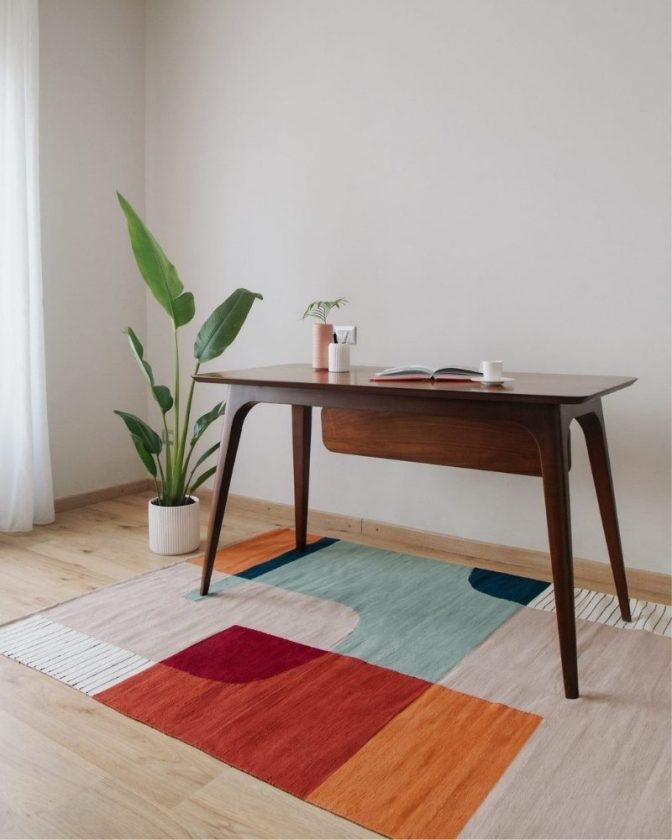
This natural home and lifestyle retailer has a beautifully curated selection of sustainably-made rugs crafted with materials like jute, sisal, wool, and cotton.
Several brands on Urban Natural are also ethically hand-loomed or hand-knotted, such as Loloi — a GoodWeave partner — and Jaipur Living — a brand that partners with thousands of local artisans to sustain heritage crafts.
Price Range: $259 – $9,755
Conscious Qualities: Eco-Conscious Materials
4. LOOMY
Best for: pet-friendly and performance rugs
Categories: Area Rugs, Accent Rugs, Runners, Outdoor Rugs
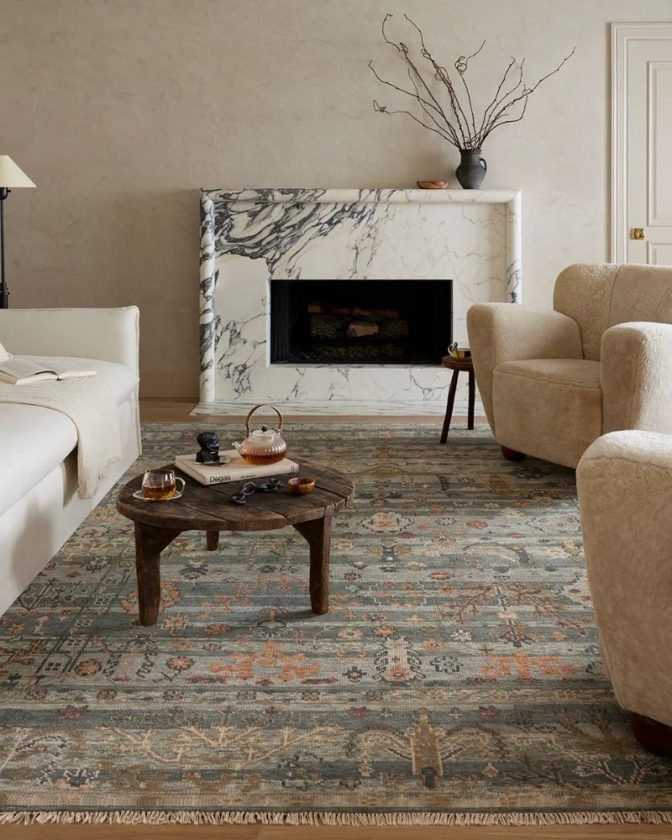
Founded by a weaver, LOOMY is dedicated to crafting beautiful artisan-made rugs that will last for decades to come.
LOOMY partners with highly-skilled artisan weavers who craft quality rugs made from eco-minded materials like banana silk, jute, and recycled cotton, plus performance options made from 100% recycled polyester built to withstand whatever life brings you.
Price Range: $298 – $8,298
Conscious Qualities: Natural Fibers, Craft Preservation, Vintage Options

5. West Elm
Best for: fair trade rugs in on-trend mainstream styles
Categories: Area Rugs, Accent Rugs
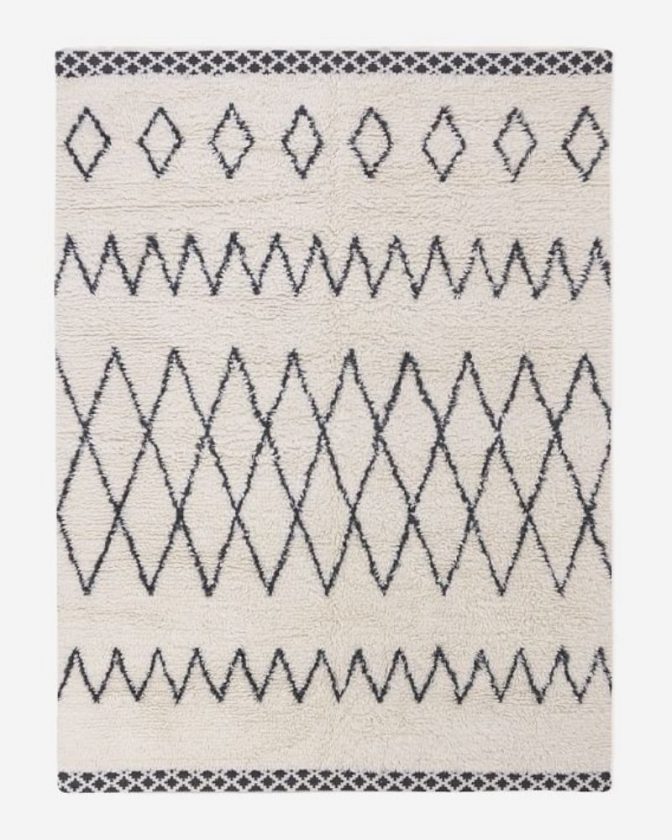
West Elm is bringing ethical rugs to a broader market with their collection of Fair Trade Certified wool and cotton rugs. While I recommend browsing the smaller shops listed above first, West Elm is supporting the movement to responsibly-made, fair trade rugs.
Price Range: $$$
Conscious Qualities: Fair Trade production, Majority Natural Materials
6. Jubi
Best for: Modern rugs in vibrant prints
Categories: Accent Rugs, Circle Rugs, Runners
Jubi is a Brooklyn studio founded by textile designer Cassie Dagostino. Every rug is handmade from New Zealand wool by fourth-generation weaving families in Bhadohi, India using traditional techniques. Each rug is made-to-order, meaning no excess stock. Since everything is made to order, expect between 3 and 7 weeks for your rug, depending on the technique used.
Conscious Qualities: Pays Above Market Rates, 100% Wool, Made-to-Order
Price Range: $228 – $668
Shipping: Free worldwide shipping

7. Rejuvenation
Best for: Classic rug styles made in Fair Trade factories
Categories: Accent Rugs, Runners, Area Rugs
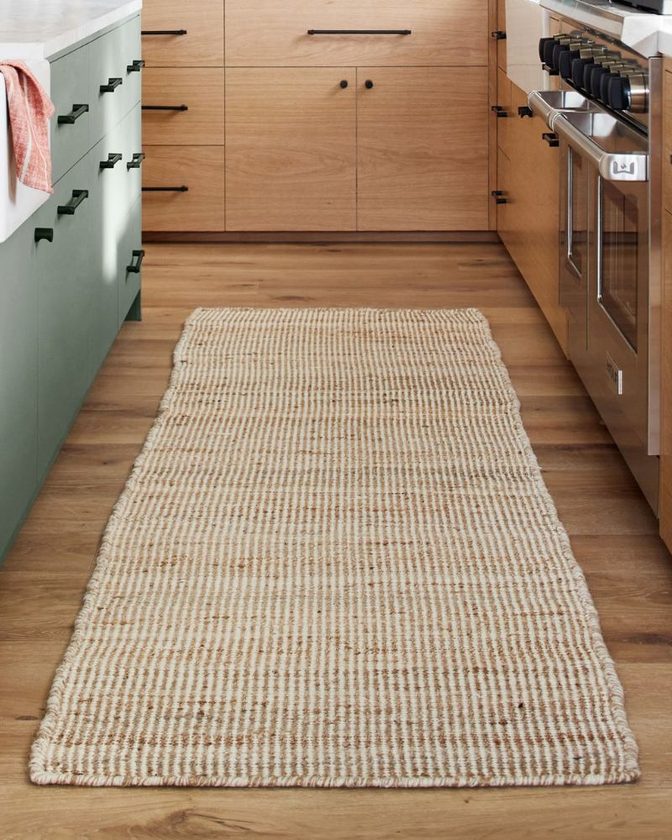
Home retailer Rejuvenation has a selection of rugs made in Fair Trade Certified factories. Their collection includes undyed hand-loomed rugs to geometric flatwoven wool rugs. And while I’d typically avoid synthetics, it tends to be unavoidable for outdoor rugs — so Rejuvenation’s Fair Trade 100% recycled poly rug is a good option.
Conscious Qualities: Fair Trade Certified, Mostly Natural Materials
Price Range: $79 – $1,649
Shipping: Contiguous U.S. shipping for 10% of product price (add $20 for HI, AK, and US. territorries)
Liked this guide to ethical rugs? You might also enjoy:
Ethical Home Decor Brands to Curate a Beautiful, Conscious Space
Eco-Friendly Furniture to Furnish Your Home Sustainably
Fair Trade and Eco-Friendly Blankets to Cozy Up With
The post 5 Best Ethical Fair Trade Rugs to Elevate Your Space appeared first on Conscious Life & Style.
As a longtime book lover, I may be biased, but I think a full bookshelf is one of the most beautiful additions to a space. There’s nothing better than seeing a showcase of your favorite reads alongside a TBR list.
A bookcase, though, can of course be used for all sorts of purposes from placing your favorite photos of family and friends to showcasing treasured vintage finds.
Whatever the case, this guide will help you find the right sustainable bookshelf for your living room, office, or wherever you like to cozy up with a good read!
So what make a bookcase more sustainable? What makes a bookshelf non-toxic?
First of all: sustainable and non-toxic are two overlapping — but distinct — criteria. And both of those terms can come with a lot of opinions and varying definitions.
When it comes to sustainable bookcases, I look for:
- Responsibly Sourced Materials: most bookshelves are made primarily with wood. While natural, unsustainable wood sourcing can be a cause of deforestation, so we want to see that the wood was from responsibly managed forests or made from reclaimed or repurposed wood. Some bookshelves may feature metal, in which case recycled materials here are important.
- High Quality Construction: sustainability includes longevity — how long will you be able to use that furniture piece before it goes to the landfill and gets replaced? Look for transparency around craftsmanship and woodworking processes. Another sign of quality is the length of warranty a company has for its products.
- Ethically Made: this one is straightforward in theory — were the people making it paid fairly and working in safe conditions? — but is unfortunately not always easy to find information. In this category, I look for transparency in practices, what relationship the brand has with the manufacturer (some produce in-house which is the best case scenario for transparency!), where it was made, and how well the makers were paid.
Ideally a sustainable bookshelf would also be non-toxic — as toxic chemical fumes aren’t exactly sustainable! But this isn’t always the case. For example, if a company prioritizes upcycled materials, they don’t necessarily have control over what inputs were part of the original materials. And sometimes a company focuses more on ethical artisan partnerships and sustainable wood sourcing, more than, say, using non-toxic finishes.
But when it comes to non-toxic bookshelves, this is what I look for. (Note that non-toxic doesn’t necessarily mean safe for all chemical sensitivities. Nor does it mean zero potentially irritating chemicals.)
- Solid Wood (where possible): MDF or pressed wood contains glue to stick the various wood pieces together, which can contain added formaldehyde. I prefer solid wood, or if it is engineered wood, I’d make sure the company is transparent around the type of glue used and/or they at least have a product certification like GREENGUARD. (More on that in a second.)
- Low or Zero VOC Finishes: most wood furniture is completed with some sort of finish to provide a protection against scratches or moisture. Many of these finishes are synthetic, and some can contain high levels of toxic chemicals. Look for a natural finish like linseed oil or beeswax or a low VOC synthetic finish.
Relevant Certifications
You’ll see a few certifications referenced throughout this guide. Here’s what each one covers:
- FSC Certified = the wood sourcing was responsibly managed; this is not a finish, foam, or textile guarantee.
- GREENGUARD / GREENGUARD Gold Certified = the finished product was tested for low chemical emissions, including VOCs, with Gold representing the stricter tier.
- Fair Trade Certified
 = verifies that a factory meets standards for fair wages, safe working conditions, and ethical labor practices.
 - Cradle to Cradle Certified (Gold) = evaluates a product or material across material health, circularity, clean air/climate, water/soil stewardship, and social fairness.
Where to Find Sustainable Bookcases and Shelving
I’m always a secondhand first proponent, and that goes for furniture, too. While your local thrift store might not have used bookshelves, check for dedicated furniture resale shops near you or estate sales. (I use EstateSales.net to find ones near me.) You can also find gently used pieces on online marketplaces like Facebook Marketplace, OfferUp or AptDeco.
If you can’t find something you love secondhand, and you don’t want to DIY your own bookshelf, then the next best choice is to shop from one of the sustainable furniture companies below. (If you’re simply looking for a bookstand, I’d suggest browsing Etsy for a collection of solid wood, bamboo, and