Connect with us

Published

on

The Amazon isn’t just the world’s greatest rainforest. She has been home to her original people for tens of thousands of years, who have persisted through centuries of colonial incursions to protect their home. At each moment of each day, the Amazon breathes, dances, and sings with an endless variety of plants and animals, many of those we humans have yet to understand. The Amazon is life-giving, irreplaceable and yet profoundly vulnerable.

Here are 10 fascinating facts to inspire you to take action for the Amazon:
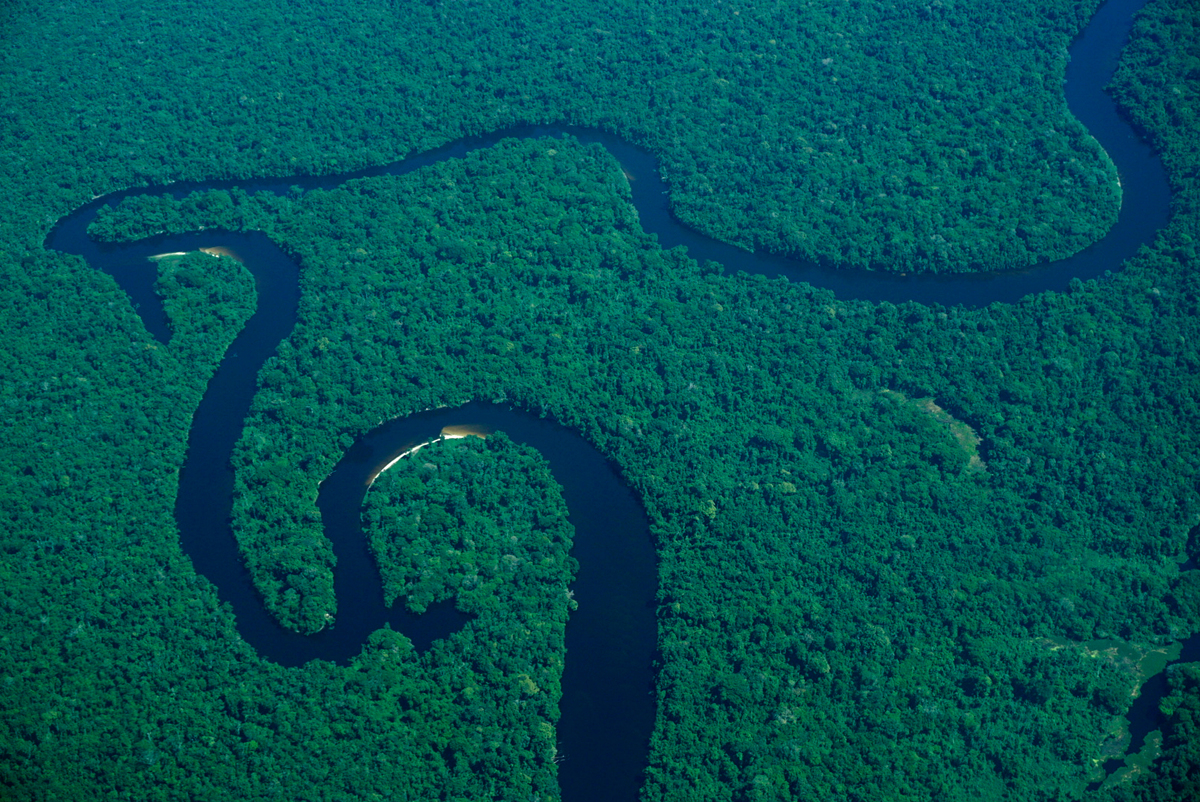
Aerial View over Amazon RainForest. © Rogério Assis / Greenpeace
Tapajós river basin, next to Sawré Muybu indigenous land, is home to the Munduruku people, Pará state, Brazil. © Rogério Assis / Greenpeace

1- The Amazon is the largest rainforest in the world

Spanning over nine countries in South America, the Amazon is the largest tropical forest on the planet, covering 6.7 million square kilometres. To put it in perspective, she is twice the size of Indiathe largest country in South Asia. The biggest part, around 60%, is in Brazil. After the Amazon, the Congo Basin and Papua host the world’s largest remaining rainforests.

2- The Amazon is one of the most biodiverse ecosystems on Earth

The Amazon is home to approximately 10% of all known species of fauna and flora worldwide. From the beautiful hyacinth macaws to fearless jaguars and the amazing pink dolphins, this vibrant ecosystem is teeming with life. In some areas, a single hectare can contain more than 300 tree species, approximately two-thirds of the native tree species in Europe (454), making the Amazon one of the most botanically rich regions on Earth.

Studies show that the Amazon Basin harbours at least 2,716 species of fish, 427 amphibians, 371 reptiles, 1,300 birds, and 425 mammals. However, the vast majority of its biodiversity lies in her invertebrates, particularly insects, with over 2.5 million species currently known

Munduruku and Greenpeace Demarcate Indigenous Lands in the Amazon. © Anderson Barbosa / Greenpeace
Two Munduruku boys walk along a river while holding spears. The Munduruku people have inhabited the Sawré Muybu in the heart of the Amazon, for generations. © Anderson Barbosa / Greenpeace

3- There are approximately 3 million Indigenous People living in the Amazon

The Amazon is home to a diverse group of Indigenous Peoples. Over 390 Indigenous Peoples live in the region, along with approximately 137 isolated groups, who have chosen to remain uncontacted.

In Brazil, about 51.2% of the country’s Indigenous population resides in the Amazon. But the largest tropical forest in the world is also home to traditional communities that have lived in harmony with the forest for generations, such as Rubber Tappers, Ribeirinhos—who inhabit the Amazon’s riverbanks—and Quilombolas, Afro-Brazilian communities descended from enslaved people..

4- The Amazon is home to over 40 million people

The Amazon is not just a vast rainforest rich in biodiversity and home to Indigenous People—it is also home to several cities. In Brazil, These include Manaus , an industrial hub with a population of 2.2 million, and Belém , which will host the United Nations Climate Conference (COP30) in November 2025.

These people’s lives are intrinsically connected to the forest. They depend on her for their food, fresh water, and to regulate the local climate. Smoke from the fires in the Amazon directly impacts the people living in the region, darkening the skies and causing respiratory problems to the population, especially children and elders.
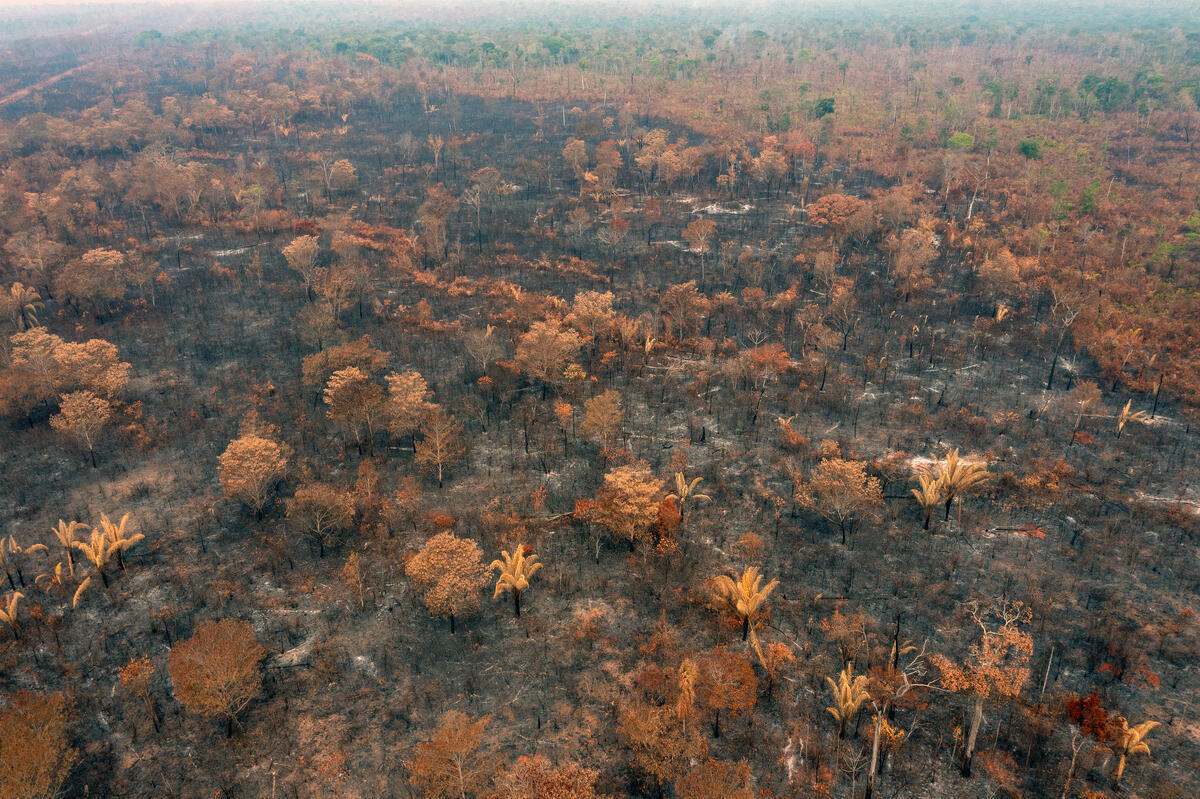
Scorched Earth in the Capoto-Jarina Indigenous Territory  in the Amazon. © Marizilda Cruppe / Greenpeace
Indigenous Territories in the Amazon are facing a devastating combination of extreme drought and forest fires, driven by the intensification of climate change and criminal activities from illegal mining and other exploitative actions. © Marizilda Cruppe / Greenpeace

5- The Amazon is vital for the global climate

The Amazon is estimated to store about 123 billion tons of carbon, both above and below ground, making her one of Earth’s most crucial “carbon reserves”, vital in the fight against the climate crisis. However, studies show that fire- and deforestation-affected areas of the Amazon are now releasing more CO₂ into the atmosphere than they absorb. This poses a major threat to the global climate. Protecting the Amazon means protecting the future of everyone.

6- Fires in the Amazon are not natural

Unlike bushfires in Australia and other parts of the world, fires in the Amazon are not natural. In the Amazon biome, fire is used in the deforestation process to clear the land for agriculture and pasture. The use of fire in the Amazon is often illegal, and so is deforestation. This practice has a major impact on the local biodiversity, the health of the populations living in the region, and to the global climate, as the fires release vast amounts of carbon into the atmosphere.
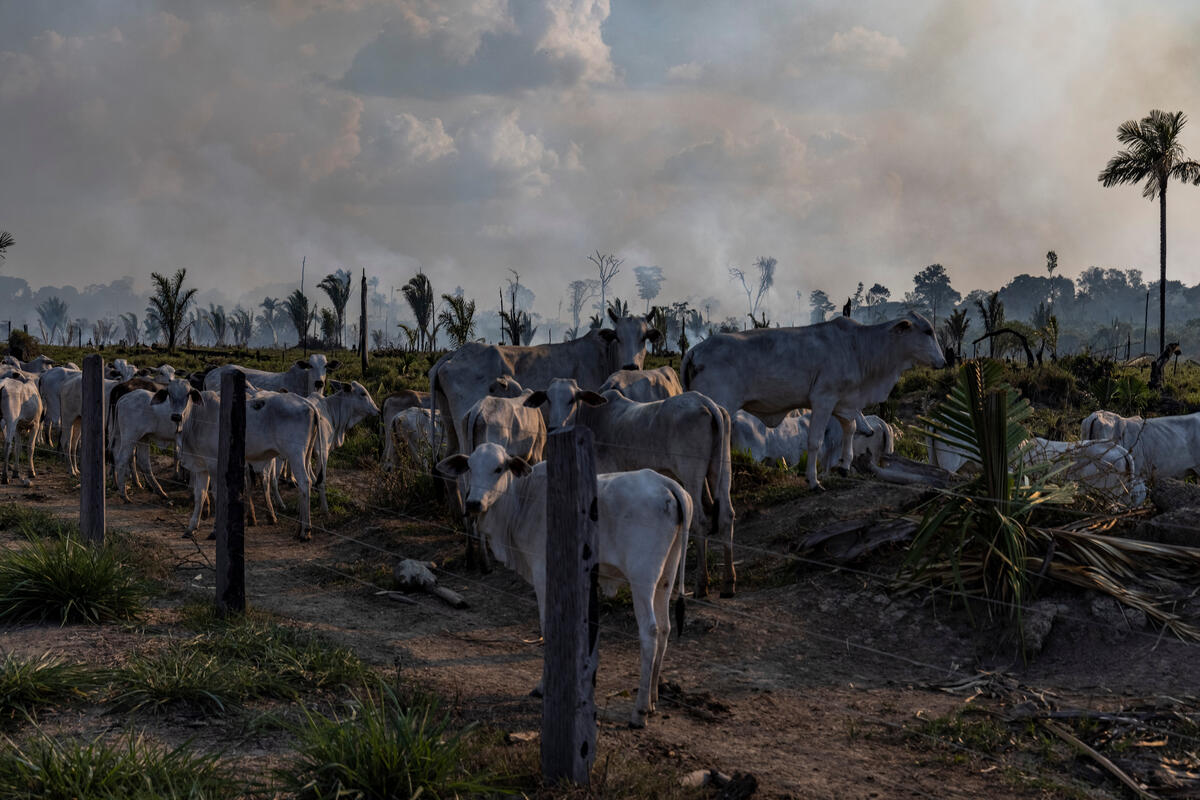
Fire Monitoring in the Amazon in Brazil in September, 2021. © Victor Moriyama / Amazônia em Chamas
Cattle in a ranching area, next to a recently deforested and burnt area, in Candeias do Jamari, Rondônia state.
© Victor Moriyama / Amazônia em Chamas

7- Cattle ranching is the leading cause of deforestation in the Amazon

The expansion of agribusiness in the Amazon is putting more and more pressure on the forest. According to a study, 90% of the deforested areas in the Brazilian Amazon are turned into pasture to produce meat and dairy. This means the food we eat may be linked to deforestation in the Amazon. We must urge our governments to stop buying from forest destroyers and ensure supply chains are free from deforestation, and demand stronger protections for the Amazon.

8- Illegal gold mining is a major threat to Indigenous Peoples

Illegal gold mining in Indigenous Lands in Brazil surged by 265% in just five years, between 2018 and 2022. The activity poses a severe threat to the health and the lives of Indigenous People, destroying rivers, contaminating communities with mercury and bringing violence and death to their territories.

But illegal gold mining doesn’t impact just the forest and Indigenous People. A recent study showed that mercury-contaminated fish are being sold in markets in major Amazonian cities, putting the health of millions at risk.
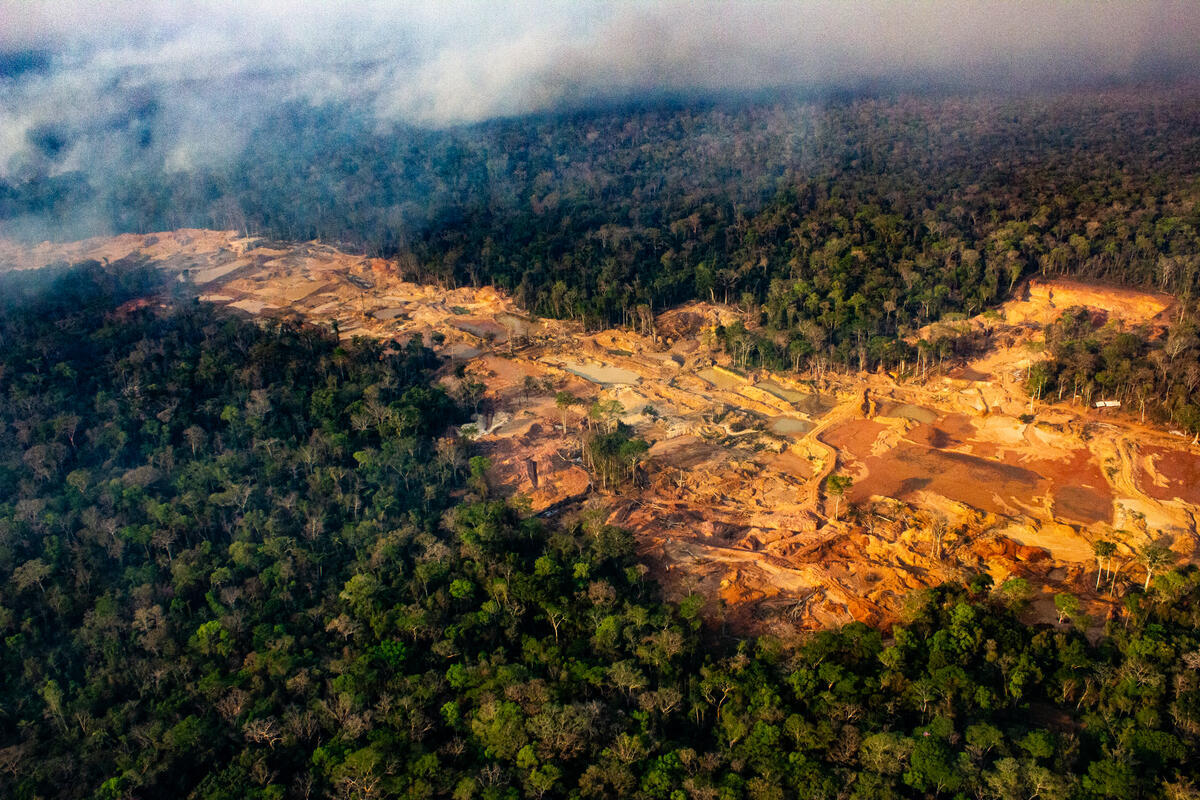
Illegal Mining in the Sararé Indigenous Land in the Amazon. © Fabio Bispo / Greenpeace
The Sararé Indigenous Land, home to the Nambikwara people. Mining continues to expand and make the Nambikwara way of life unviable, ignoring the right of this population to live according to their customs and traditions. © Fabio Bispo / Greenpeace

9- The Amazon is close to a point of no return

About 17% of the Amazon has already been deforested, and scientists warn we are getting dangerously close to a ‘point of no return’.

According to a study, if we lose between 20% and 25% of the Amazon, the forest might lose its ability to generate its own moisture, leading to reduced rainfall, higher temperatures, and a self-reinforcing cycle of drying and degradation.

As a result, vast areas of the forest could turn into a drier, savanna-like ecosystem, unable to sustain her rich biodiversity. This could have catastrophic consequences for the global climate, local communities, and the planet’s ecological balance.

10- The most important Climate Conference in the world is happening in the Amazon this year

COP30, the United Nations Climate Conference, will take place in Belém, the second largest city in the Amazon region, in November 2025. During the conference, representatives from countries all over the world will meet to discuss measures to protect the climate. Across the globe, we are already witnessing and feeling the impacts of the climate crisis. This is our chance to demand our political leaders move beyond words to urgent action. They must stop granting permission and public funds to Earth-destroying industries. Instead, our leaders must respect, pursue, and support real solutions that already exist—solutions that put the forest and her people at the heart of the response. Indigenous guardians of the forest hold true authority, and they must be respected and heard. The moment is now.

We are the turning point! Join the movement and demand respect for the Amazon.

10 reasons why we need to act for the Amazon

Continue Reading

Climate Change

Revealed: Floods have forced at least 67 closures at NHS hospitals since 2021

Published

on

At least 67 NHS hospital wards, departments and other sites across the UK have been forced to temporarily close or relocate due to weather-related flooding over the past five years, a Carbon Brief investigation reveals.

Maternity centres, surgical theatres, a neonatal intensive-care unit and even entire hospital buildings have been disrupted by heavy rainfall or encroaching floodwaters.

Carbon Brief submitted freedom-of-information (FOI) requests to 162 NHS trusts, which show that while many flood-related shutdowns were brief, some lasted for weeks or months.

In total, 148 trusts responded to these requests with reports of 67 flood-related shutdowns, giving detailed data for 30 incidents that resulted in a total of 3,000 days of closures.

Reports of flooding at NHS sites have been on the rise, according to NHS England data.

This comes as the UK experiences wetter winters, with periods of extreme rainfall that are increasingly linked to human-caused climate change.

These floods can exacerbate existing problems in a healthcare system that is already struggling with insufficient funding, old hospital buildings and a backlog of maintenance work.

Indeed, while there have been efforts to make UK hospitals more resilient to extreme weather, one expert tells Carbon Brief that such measures are difficult to implement when these institutions are struggling to keep their “heads above water”.

Rising floods

Floods pose a threat to people’s health, but they also threaten the UK’s healthcare infrastructure. Water can enter hospitals, paralyse ambulance services and damage equipment, placing strain on an already stretched NHS.

NHS records show that the number of flood incidents “caused by external weather events” in facilities across England has doubled since 2021, reaching nearly 400 in 2024-25.

Equivalent data is not available for Scotland, Wales and Northern Ireland, although there have been reports of floods disrupting services across the whole UK.

As global temperatures rise and the atmosphere holds more moisture, UK winters are getting wetter. Attribution studies show climate change has increased the severity of recent rainfall and flooding events – including Storm Eunice in 2022 and Storm Babet in 2023.

There is also a risk of increased flooding when heavy rain hits after periods of intense drought, of the kind seen in recent years.

Environment Agency modelling suggests that a rising share of medical facilities in England will be at risk of flooding due to climate change. It says the share of sites at risk will increase from a quarter in 2024 to a third by the middle of the century.

Despite this apparent threat facing the UK’s healthcare system, there is limited information about the extent to which these floods are already disrupting NHS services.

Closed services

To build a fuller picture of NHS-wide flooding, Carbon Brief sent FOI requests to 162 trusts and health boards – the organisations in charge of health services – across England, Scotland, Wales and Northern Ireland.

They were asked for details of wards, departments or services that had been temporarily or permanently closed due to weather-related flooding, such as river floods or heavy rainfall, between 2021-22 and the start of 2026.

In total, 148 of these bodies responded with details of 67 incidents in which weather-related floods have triggered closures. The map below shows where these incidents were located, from hospital wards in Scotland to an eye unit on the south coast of England.

Map of the UK showing that at least 67 NHS sites have been forced to close due to weather-related flooding since 2021
Sites of weather-related flooding incidents at NHS facilities. The size of the circles indicates the number of incidents reported at each site. Source: NHS trust FOI responses to Carbon Brief.

The 67 flooding-related disruptions reported by NHS trusts and health boards is likely an underestimate. Many trusts told Carbon Brief they did not record such detailed information or that collating it would be too time-consuming.

Nevertheless, the results provide an insight into the kind of risks facing NHS services as weather gets more extreme.

Among the closures were 13 accident and emergency (A&E) departments, urgent treatment centres and minor injuries units. There were also 10 hospital wards, 10 surgical theatres, five maternity units and a neonatal intensive-care unit affected by flooding.

Many trusts did not provide information about how long each closure lasted. However, the 30 incidents where timespans were provided add up to the equivalent of more than 3,000 days – or eight years – of closures across NHS sites.

The infographic below provides a snapshot of some notable closures from the dataset.

Notable incidents of weather-related flooding at NHS facilities. Source: FOI responses to Carbon Brief.
Infographic showing case studies of wards and departments closed by flooding at NHS sites
Notable incidents of weather-related flooding at NHS facilities. Source: FOI responses to Carbon Brief.

The entire Buckland Hospital site in Dover closed for two days in 2025 amid “exceptional rainfall” and flash floods. People seeking radiology, maternity and urgent-care services were told not to visit over the weekend and various clinical services were delayed or cancelled.

The NHS declared a “major incident” in 2021 when flood waters “caused power outages impacting multiple areas” at Whipps Cross Hospital in north-east London – including its maternity service – for four days. Neighbouring hospitals also flooded.

Some closures lasted far longer. In Stroud General Hospital, a surgical theatre was closed for two weeks and an X-ray facility for around two months after storm water overflowed into the building in 2023.

Several NHS trusts stressed that the flooding incidents they reported were localised – often resulting from roof leaks exacerbated by heavy rain – and resulted in minimal disruption. Sometimes, as with a cardiology suite in Cannock Chase Hospital, the service was moved and the trust says patient care was not disrupted.

However, the responses also showed the breadth of damage such events can cause, including rainwater “pouring onto expensive equipment” and floods triggering the long-term relocation of services.

For example, Orchard Cottage, a site that provided care for adults with learning disabilities in Derbyshire, experienced major flooding during Storm Babet in 2023 and was permanently shut down as a result.

Adaptation needs

The UK Health Alliance on Climate Change, a group of UK health organisations, concluded in a report in 2025 that, with flood risks projected to grow, there is an “urgent need for adaptation measures” across the nation’s healthcare facilities.

Government advisors at the Climate Change Committee have highlighted the need for flood resilience in UK hospitals, including flood barriers, waterproofed electricals and built-in redundancy for critical areas, such as theatres, labs and IT equipment.

There have been various measures at both government and NHS level intended to improve the resilience of medical facilities to climate-related hazards.

The UK’s national adaptation programme sets out expectations for NHS England to “adapt NHS infrastructure to extreme weather events”. All trusts must have “green plans” in place, which require climate change to be factored into infrastructure decisions, for example, through the creation of drainage systems or green spaces.

Yet, as it stands, three-quarters of UK doctors say their workplaces are not prepared for the impact of extreme weather and nearly half of healthcare workers report that extreme weather has disrupted NHS services in the past five years.

Many hospitals have outdated infrastructure – often predating the founding of the NHS – which was not designed to cope with climate change. Prof Hugh Montgomery, chair of intensive-care medicine at University College London, tells Carbon Brief:

“The hospitals themselves weren’t built for this weather any more than anything else is really – and of course it’s going to get worse, in an exponential function.”

Many of the FOI responses provided to Carbon Brief identified specific building defects, such as roof leaks, which led to the flooding incidents during periods of heavy rainfall. There is a huge – and growing – backlog of maintenance work at NHS hospitals that was estimated in 2024-25 to need repairs costing £15.9bn.

Chris Naylor, a senior fellow at the King’s Fund, a thinktank focusing on health policy, tells Carbon Brief:

“Dealing with some of the backlog maintenance would probably help with climate adaptation as well, because of leaky roofs and all the rest of it. But we do also need to be thinking specifically about climate adaptation within the NHS and making sure there is funding for that.”

Montgomery points out that with trusts “mostly bankrupt” and most hospitals running a deficit, the question remains how to fund such interventions. “They’re struggling to keep their heads above water and they’re losing money,” he says.

Dr Mark Harber, a consultant nephrologist and special adviser on climate change at the Royal College of Physicians, tells Carbon Brief that hospitals at least need to make plans for extreme weather. This is particularly important for patients in need of time-dependent and life-saving treatments, such as kidney dialysis and chemotherapy.

Harber notes that hospitals, supply chains and transport could all be disrupted by floods:

“You have to have plans in place to deal with that, even if the NHS can’t deal with the flooding risk per se.”

Carbon Brief asked NHS England – which is responsible for the majority of the trusts that reported flooding disruption – for comment, but had not received a response at the time of publication.

Methodology

The list of incidents reported by trusts can be viewed here.

Carbon Brief sent FOI requests to 120 English NHS trusts that have reported any incidents of flooding since 2021 in NHS England’s Estates Returns Information Collection (ERIC) dataset. This covers around 60% of all English NHS trusts.

Carbon Brief also filed FOI requests with all 42 of the health boards and trusts in Scotland, Wales and Northern Ireland, which are equivalent to English NHS trusts.

All trusts and health boards were asked for details of wards, departments or services that have been temporarily or permanently closed due to weather-related flooding, such as river flooding or heavy rainfall.

This matches the wording used to describe a flooding event in the ERIC system, which requires the reporting of all flood events “caused by external weather events” that trigger a risk assessment by staff. Such external events are distinct from floods caused by other issues that are not related to the weather, such as burst pipes.

In total, 14 trusts did not respond and many more said they did not hold the data requested. Some trusts provided data, but on further questioning stated that the data they provided covered all flooding events and it was not possible to say which were related to weather conditions. These cases have not been included in the final dataset.

The post Revealed: Floods have forced at least 67 closures at NHS hospitals since 2021 appeared first on Carbon Brief.

Revealed: Floods have forced at least 67 closures at NHS hospitals since 2021

Continue Reading

Climate Change

Nature cannot be ignored by Europe’s next big budget

Published

on

Adeline Rochet is a programme manager for the Corporate Leaders Group Europe, a business coalition driving the transition to a sustainable, competitive, and resilient economy convened by the University of Cambridge Institute for Sustainability Leadership (CISL).

Europe’s economy depends on the natural world functioning as it should, but the effects of climate change risk undermining increasingly delicate ecosystems. Talks about the European Union’s next long-term budget miss this fact.

Climate-related losses in the EU have already reached €822 billion since 1980, with a quarter of that damage concentrated in just the past four years. Ecosystems are under increasing pressure: more than 80% of protected habitats are in poor condition, soils are degrading and water stress is rising across the continent.

The latest state of the climate report by the EU’s Earth monitoring service Copernicus confirms this worrying state of affairs: 95% of Europe experienced above-average temperatures in 2025.

Economic exposure to nature-related risk is also growing. Businesses, banks and insurers are beginning to reflect this in their risk assessments.

So, will the policymakers in charge of developing the European Union’s next big budget integrate this vision? We are in the midst of finding out.

    Every seven years, the EU must negotiate a new budget that will help fund priorities over a seven-year-long period. The current one, which runs out next year, is worth more than a trillion euros.

    Talks about the next multiannual financial framework (MFF) for 2028-2034 are now getting serious and the initial outline of this new budget shows it will focus on competitiveness, resilience and prosperity.

    But, as the European Parliament adopted its negotiating position for the crunch budget talks and EU member states shape their approach ahead of a Council meeting on May 26, it is clear that the positioning of nature within this framework is strategically underestimated.

    Why nature impacts economic growth 

    Back in 2022, France’s nuclear power output was severely affected when heatwaves drove up the temperature of the rivers used to cool atomic reactors, impacting other European countries too. This was particularly poor timing given the energy price crisis triggered earlier that year by Russia’s illegal invasion of Ukraine.

    Low river levels caused by drought have also heavily impacted economic activity and growth in countries like Germany, due to the negative effect on inland trade, while degraded fields in the Netherlands combined with heavy rainfall have ruined potato harvests.

    These examples show that we cannot detach the health of the European economy from the good functioning of nature.

    UN General Assembly backs “climate obligations” set by world’s top court

    Nearly three-quarters of businesses in the eurozone rely directly on ecosystem services such as clean water, fertile soils and pollination. That dependency extends into the financial system, where around 75% of bank lending is exposed to companies dependent on these natural assets.

    They entirely underpin supply chains and financial stability across the European economy. If load-bearing ecosystems collapse, businesses not only face disruption in their own operations, but they will also be exposed to failures from suppliers and customers.

    This is not just a risk for individual companies, it is a threat for the whole system.

    A budget that looks greener than it is

    According to the latest proposals for the next MFF, a single 35% climate and environmental target will replace priorities that used to have distinct funding. As it stands, biodiversity has a 10% target, yet spending has struggled to reach even 8%, already showing how easily it is put to one side in practice.

    In the new framework, biodiversity is absorbed into a broader category with no separate tracking or visibility. Dedicated instruments are folded into larger funding envelopes, and nature-based investments are placed in direct and distorted competition with industrial projects.

    These are often faster to deploy and easier to measure, making them more attractive.

    Headline figures reinforce some appearance of ambition, with €587–635 billion allocated to climate and environmental objectives. But since these are aggregated numbers, they do not show how much will reach ecosystem conservation or restoration.

    Less visibility, weaker accountability

    Biodiversity funding also remains structurally fragile, with around 80% concentrated in agriculture policy rather than supported by a diversified investment strategy.

    This shift is structural: nature has been relegated from a defined priority to a mere discretionary allocation, and the governance model reinforces this dynamic.

    Webinar: From Santa Marta to Bonn – where next for the fossil fuel transition?

    Greater reliance on National and Regional Partnership Plans (NRPPs) moves decision-making into national spending choices, where fiscal and domestic political pressure will likely mean long-term ecosystem investments struggle to compete with short-term economic demands.

    The current MFF paints a worrying picture of structural triple risk for nature: reduced visibility, increased competition for funding and weaker accountability.

    Nature is critical infrastructure

    It is a point worth reiterating: investment in nature offers clear economic returns. Healthy ecosystems drive resilience by reducing exposure to climate damage and supporting local economic activity.

    Public finance plays a decisive role in enabling these investments at scale, making budget design a question of risk management and capital allocation.

    Nature-based solutions already perform essential economic functions. They regulate water systems, restore carbon sinks, provide a buffer against extreme weather events and support agricultural productivity.

    These are characteristics of infrastructure. Energy systems, transport networks and digital capacity are treated as strategic investments because they underpin competitiveness.

    Natural systems play the exact same role, so why does the current budget plan not reflect this?

    The next EU budget will shape investment for the decade ahead. Its structure will determine how risks are managed and where capital flows. Nature cannot be erased in favour of competing short-term priorities.

    In the upcoming negotiations, European leaders still have the option to treat nature as a structural objective and a core asset, supporting Europe’s resilience and long-term competitiveness. But they must act now, before it’s too late.

    The post Nature cannot be ignored by Europe’s next big budget appeared first on Climate Home News.

    https://www.climatechangenews.com/2026/05/25/nature-cannot-be-ignored-by-europes-next-big-budget/

    Continue Reading

    Climate Change

    In Florida, an Agricultural Town in Need of an Economic Boost Eyes Hyperscale Data Centers

    Published

    on

    Across the state’s heartland, communities such as Indiantown are weighing proposals for hyperscale data centers. The massive facilities would reshape Florida’s rural lands.

    INDIANTOWN, Fla.—Carroll McAllister frets over the prospect of a hyperscale data center opening next to the grassy expanse where she grew up, in a shack her father built.

    In Florida, an Agricultural Town in Need of an Economic Boost Eyes Hyperscale Data Centers

    Continue Reading

    Trending

    Copyright © 2022 BreakingClimateChange.com