Connect with us

Published

on

Is your solar power system secretly failing you? 

Well, in 2025, Australia’s rooftops are gleaming with solar panels, a true symbol of energy independence and sustainability. But behind those panels, there could be lots of underlying problems.  

Every year, thousands of Aussie homeowners discover their trusted solar systems aren’t working as they should. From uncertain power drops to gradual system failures, any silent, overlooked problems can result in shocking electricity bills.  

Whether you’re new to solar or have had panels for years, understanding the most common issues could save you thousands and protect your home’s energy future.  

Don’t get left in the dark anymore. Here are the 10 most common solar panel problems in Australia in 2025. All you need to do is read them out to maintain optimal performance and avoid costly repairs. 

So, let’s flip the switch on solar panels problems with some effective solutions! 

Are Solar Panels Still Worth It to Get in Australia?

Yes, solar panels are still worth it in Australia in 2025, and in many cases, they’re an even better investment than they were a few years ago. 

Due to Australia’s abundant sunshine and relatively high electricity prices, solar energy offers a strong return on investment.  

Most Australian homeowners can expect their solar system to pay for itself within 3 to 6 years, and after that, the electricity generated is essentially free.  

Also, the upfront cost of installing solar has dropped significantly over the past decade. With solar rebates and government incentives like the Small-scale Renewable Energy Scheme (SRES) still in place, the financial barriers have become relatively low. 

However, even though the battery storage is still relatively expensive and may not yet make financial sense for everyone, solar panels remain a highly cost-effective way to reduce energy costs and, most importantly, greenhouse gas emissions.

Is Your Solar Panel System Underperforming? Here’s How to Tell!

If you’re wondering whether your solar panel system is underperforming, you’re not alone in this journey.  

Solar power systems are generally low-maintenance, but in Australia, performance issues with solar panels can arise at any time for specific reasons.  

So, how to identify?  

Here’s how to determine if your system isn’t working as well as it should and what to do about it:

Signs Your Solar Panel System Might Be Underperforming

  1. Lower-than-Expected Energy Bills or Savings

If your utility bills haven’t decreased as much as expected or they’ve started to escalate again, it could signal an issue.  

Therefore, always compare your recent energy bills with those of previous months and check your household’s overall energy consumption rate. 

  1. Drop in Energy Production

Despite consistent sunlight, if your electricity bills are still creeping higher, your system might not be generating as much power as your home requires. 

Most systems come with a monitoring app, so if you notice a consistent drop in daily or monthly output, especially under similar weather conditions, it’s clear that your system might be underproducing. 

  1. Alert Notifications from Monitoring Software

The system’s integrated monitoring software can send alerts about inverter faults, shading issues, or other malfunctions. So, make sure you check these regularly. 

  1. Inverter Error Lights

Modern solar inverters often come with monitoring apps that send alerts if there’s an issue. A red or orange light on the inverter, or a complete lack of display, often means it’s not converting energy properly. 

  1. Visible Damage or Debris

Cracks, discolouration, or dirt buildup on panels can reduce solar panel efficiency. Even bird droppings or leaves can block sunlight and lower output. 

  1. Frequent System Shutdowns

 Frequent system shutdowns or error messages can point to any underlying issues. 

10 Solar Panel System Problems Faced by Aussie Homeowners in 2025

Top 10 Solar Panel System Problems Faced by Aussie Homeowners in 2025

Behind the promise of slashed power bills and powering the nation with renewable energy sources, some homeowners face unexpected issues with their solar panels.  

Remember, from finding trusted installers to mysteriously underperforming systems, the road to solar savings isn’t always smooth and successful for all.  

So, before you join the solar revolution, here are some common solar panel problems that need to be considered: 

1. Solar Battery and Inverter Failures: A Silent System Killer

Inverters significantly convert the direct current (DC) electricity generated by solar panels into alternating current (AC) electricity used by home appliances. Meanwhile, solar batteries store them for later use, ensuring energy security 

According to data, nearly 50% of major solar system failures in Australia result from faulty inverters and inefficient batteries.  

They ultimately lead to system shutdowns, making the entire solar setup ineffective even before its 15 to 20-year lifespan. 

Common inverter issues might include: 

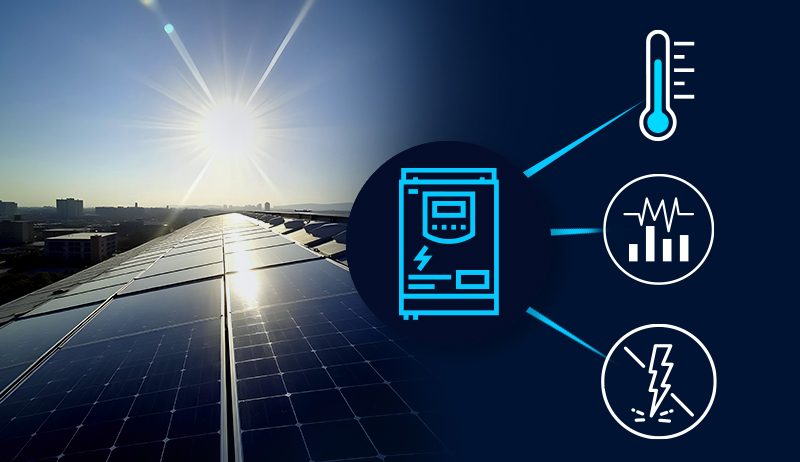
  • Overheating: Long-term dust accumulation can cause overheating issues in inverters and batteries.
  • Voltage Fluctuations: Inconsistent voltage levels can cause solar inverters and batteries to trip or malfunction.
  • Connection Failures: Issues with the connection between the inverter, solar battery storage and monitoring systems can inhibit performance tracking.

Effective Solutions: 

  • Schedule regular inspections, like every 2 to 3 years.
  • Ensure proper ventilation while installing the solar batteries and the inverter.  
  • Regularly update firmware and software. 
  • Follow the instructions and guidelines from the manufacturer. 

2. Dirt, Dust & Bird Droppings: The Uncovered Efficiency Drainers!

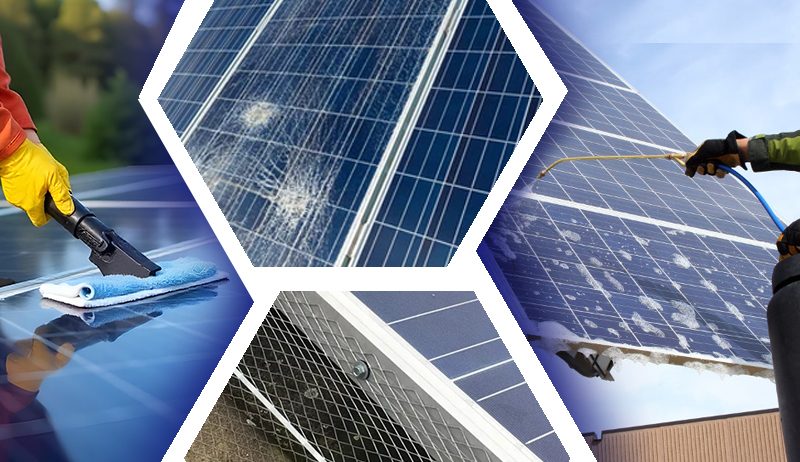
Only dust and dirt in Australia can reduce a solar panel’s efficiency by up to 30%. Specific mounting styles, like panels installed on flat roofs, are more prone to bird droppings, dry leaves and other tiny particles in the air. 

This can reduce system output and cause major problems by blocking sunlight. 

Also, birds can build nests beneath solar panels, which can be another reason that causes damage to wiring and reduces their efficiency. 

Panel Maintenance Tips: 

  • Clean panels at least once a year using water and a soft brush.
  • Install nets or spikes to prevent bird nesting.
  • Remove droppings to prevent damage.  
  • Avoid using harsh chemicals or abrasive materials. 

3. Solar Panels With Hot Spots Issue

When the panel’s energy cannot flow through your inverter, it becomes overloaded and radiates excess heat, so it gets hot, creating burning spots. 

These hot spots usually occur when certain areas of a solar panel become significantly hotter than others, often due to dirt, shading, or internal defects. These areas can degrade faster, reducing the panel’s overall lifespan. 

Hot spot prevention strategies: 

  • Ensure panels are free from dirt and debris.
  • Avoid shading from trees or other structures.
  • Check the panels regularly for signs of overheating. 

4. Micro-Cracks & Snail Trails: The Invisible Threats

Micro-Cracks & Snail Trails

Micro-cracks and snail trails are two lesser-known but significant issues affecting solar panels. Let’s see how these factors affect solar panel efficiency. 

  • Micro-Cracks 

Micro-cracks are tiny fractures in solar cells caused by stress during manufacturing, transport, or installation. They may seem minor initially, but can grow over time, reducing the panel’s electrical output.  

However, they are sometimes difficult to detect with the bare eye. 

  • Snail Trails 

Snail trails are dark, discoloured patterns on the solar panel surface formed by moisture infiltration and micro-cracks. Though they appear cosmetic, they signal internal damage that can lower efficiency. 

What Protective Measures Can We Take? 

  • Choose high-quality panels with strong encapsulation materials.
  • Handle panels with care during solar system installation to avoid scratches.
  • Regularly inspect panels for signs of damage. 
  • Take immediate action, even if the trail seems like a fine line. 

5. Damaged Roof Issues: Is Your Rooftop Compatible for Panel Installation?

Improper solar system installation can damage a roof, such as loose tiles or leaks. To prevent such issues, it’s essential to ensure that solar panels are installed correctly.  

So, before installing panels on the rooftop, call an expert and examine your roof condition for safety and long-term savings. 

Solar panel installation tips for better efficiency: 

  • Use appropriate mounting systems compatible with your roof type.
  • Secure the panel area to prevent water from entering. 

6. Wiring & Junction Box Failures

Faulty wiring and defective junction boxes can lead to open circuits, ultimately preventing electricity from flowing properly through the system.  

These open circuits can happen due to moisture accumulation and poor-quality components.  

What are the effective solutions? 

  • Use good-quality, high-rated junction boxes to prevent dust and water ingress.
  • Conduct regular checkups on wiring for signs of wear or damage.
  • Ensure proper sealing and insulation during installation.

7. Potential Induced Degradation (PID) Effect

If you’ve noticed a significant drop in the electricity produced by your solar panels, it could be due to the PID effect or Potential Induced Degradation.  

This indicates a voltage difference between the solar panel and the earthing, which causes a partial voltage discharge. Essentially, you’re losing voltage and potentially threatening the long-term effectiveness of your panels. 

Ways to prevent Potential Induced Degradation (PID) 

  • Use PID-Resistant Panels, high-quality panels specifically designed to resist PID. 
  • Install a PID recovery device that can reverse PID effects at night by applying a reverse voltage. 
  • Avoid excessively high system voltages that increase PID risk. 

Taking preventive steps during installation and maintenance greatly reduces the risk of PID. 

8. Rodents: The Unseen Wiring Destroyers

It’s natural for your roof’s electrical wiring to deteriorate over time due to loose connections, corrosion, and oxidation.  

But what if we say gnawing mammals like rats, mice, squirrels, or hamsters can also cause severe damage by chewing the wires of your solar panel system? 

Yes, that can happen! Rats and rodents can chew on solar panel wiring, leading to short circuits and system failures. Moreover, in the worst-case scenario, they can even set fire to your roof. 

How to prevent wiring issues? 

  • Seal entry points to prevent rodent access.
  • Use rodent-resistant, mesh wiring where possible. 
  • Periodically examine wiring for signs of damage. 

9. Watch Out for High Temperatures

Solar panels actually lose efficiency as they get hotter. Despite the sunshine, extreme heat can reduce output, and most panels lose 0.2% to 0.5% efficiency per °C above 25°C.  

To prevent efficiency loss from high temperatures, consider these steps: 

  • Ensure proper airflow by placing panels with enough space. Allow air to circulate beneath the panel’s surface, cooling it naturally.
  • Tilting panels or elevated racking help heat escape more easily.
  • Install light-colored or reflective roofs. These reduce heat absorption around the panels.
  • Some panels handle heat better, so look for panels with a low temperature coefficient.
  • Consider passive or active cooling systems in hot climates to make your panels more efficient. 

10. Poor Installation Practices

Improper installation is one of Australia’s leading causes of solar panel system failures. Issues like faulty wiring and inverter malfunctions, roof leaks, structural damage, and lack of expertise can significantly compromise safety and performance.  

Why is the Shading and Orientation of the panel Important?  

To ensure peak performance, panels should be installed with maximum sun exposure and at the optimal angle for your location. 

Incorrect panel placement, such as poor orientation or installation in shaded areas, can drastically reduce energy production. Even small shade from trees, chimneys, or nearby buildings can impact system efficiency. 

Choosing a Quality Installer: 

  • Ensure the solar installer is accredited by the Clean Energy Council (CEC). 
  • Check for experience and verified customer reviews. 
  • Ask for warranties on both products and installation work. 
  • Look for companies that provide the best after-sales support. 
  • Confirm they follow Australian standards and regulations. 

What To Do When Your Solar Power System Isn’t Working Right?

If your solar system isn’t performing as it should, don’t panic. Just start with the basics. Check the inverter display or monitoring app for error codes or abnormal readings.  

Ensure the panels are clean and free from debris or shade. Inspect for visible damage or loose connections.  

But if everything seems fine and performance still lags, it’s time to take action.  

Reach out to your installer or a certified technician for a full inspection. Remember, with regular care and quick action, you’ll keep your solar setup running strong, delivering the power you depend on.  

Partner With Cyanergy & Fix Your Solar Panel Problems Effectively

Fix Your Solar Panel Problems Effectively

In the upshot, proper timing and expert intervention make all the difference regarding solar panel performance.  

By partnering with Cyanergy, you’re choosing industry-leading experience, quality service, and a commitment to sustainable energy solutions.  

Let us know what other challenges you have encountered while installing solar panels. We’re here to help you maximize your solar investment efficiently, affordably, and reliably. 

Trust Cyanergy to power your future! 

Your Solution Is Just a Click Away

The post 10 Common Problems with Solar Panels in Australia in 2025 appeared first on Cyanergy.

https://cyanergy.com.au/blog/common-problems-with-solar-panels-in-australia/

Continue Reading

Renewable Energy

Sunrez Prepreg Cuts Blade Repairs to Minutes

Published

on

Weather Guard Lightning Tech

Sunrez Prepreg Cuts Blade Repairs to Minutes

Bret Tollgaard from Sunrez joins to discuss UV-curing prepreg that cuts blade repair time by up to 90% and has recently recieved OEM approval.

Sign up now for Uptime Tech News, our weekly newsletter on all things wind technology. This episode is sponsored by Weather Guard Lightning Tech. Learn more about Weather Guard’s StrikeTape Wind Turbine LPS retrofit. Follow the show on YouTubeLinkedin and visit Weather Guard on the web. And subscribe to Rosemary’s “Engineering with Rosie” YouTube channel here. Have a question we can answer on the show? Email us!

Allen Hall: Brett, welcome back to the program. 

Bret Tollgaard: Thanks for having me again.

Allen Hall: So a lot’s happening at sunrise at the moment. Uh, there’s, uh, activity with sunrise materials on a lot of blades this year.

Over the last couple of years actually, ISPs, operators, OEMs, are realizing that UV curing is a huge advantage.

Bret Tollgaard: Turns out there’s a lot of value added, uh, to the entire process when utilizing UV cure, uh, pre-req.

Allen Hall: So the, the pre pres are, have been available for a couple of years. The qualification though was always the concern.

Has the OEM qualified this material? Are they gonna give you the blessing? Does this show up in the manual? If I call the OEM, are they gonna say they have talked to you guys? A lot of those hurdles have been cleared at this point.

Bret Tollgaard: Yeah, great question. And we are happy to announce that we have finally been approved by a large OEM for use on the epoxy blade for now all general kind of repairs.

We have several more OEMs that have already passed their phase one mechanical testing, and we’re iterating through now [00:01:00] their, uh, secondary and tertiary kind of tests. And so we do expect to be fully qualified by several OEMs before the end of the year, which should make the ISPs integration and utilization of our materials much, much easier.

Allen Hall: So the, the, the problem you’re solving is repairs in the field for the most part, or sometimes in the factory. Mm-hmm. But a lot of times in the field that those repairs. It happened quite a bit. They’re the same repair, the same area, the same kind of thing over and over and over again. And wetting out fabric on site takes time.

Particularly if you’re using standard materials, you have to bag it. You have to apply heat in some cases to get it to kick, and then you have to wait several hours for it to cure. So in the repair cycle time, most of your time is waiting.

Bret Tollgaard: It sure is. Uh, and on top of all that, we all know that there aren’t enough technicians in this industry to even do all the repairs, uh, that would like to be done.

Yeah. And so to really kind of streamline all of that, [00:02:00] uh, we’ve rolled out a couple of new things and we’ve had a lot more interest in some pre consolidated preki patches for customers. Uh, if a particular blade model has an issue that is a standardized kind of repair. We’re actually now building custom prepregs, or we will build the appropriate width length, stack it, consolidate it, uh, wrap it between our films.

So then all the customer has to do when they get on site is, uh, you know, do do the appropriate surface prep. Scarfing, apply a little bit of our UV surface primer to the backside of that patch. But now they can go up tower, single peel, stick, roll out, and then they’re cured.

Allen Hall: And that’s a. How many hours of saving is that?

It’s gotta be like six, 12 hours of saving, of, of

Bret Tollgaard: labor. It’s upwards of 80 to 90% of the labor that’s gonna actually need to be done to apply that. Otherwise, and then same thing too. We’ve had a couple instances where we took a several day repair down to one, to two to three hours. And these are multi-meter long repairs that were fast tracked because we pre consolidated preki [00:03:00] everything.

Some were in flat sheet forms, some were much longer on rolls, where you’re actually then rolling out with a team. Um, and so we’ve been able to demonstrate several times, uh, over the last 12 months, uh, the, the value that a UV cure preprint.

Allen Hall: Well, sure, because that, that would make sense. The issue about wetting out fabric in the field you just done in the back of a trailer or something, somewhere like that.

Usually it is, it’s that you’re never really sure that you got the fabric wetted out. The experienced technicians always feel like, have done it enough that they get very consistent results. But as you mentioned, getting technicians is hard and, and there’s so many repairs to do. So you’re doing those wetting out composite things takes practice and skill.

Just buying it, preki it, where you have control over it. And you guys sell to the military all the time. So that, and you’re, are you ass 91 qualified yet? You’re in the midst of that?

Bret Tollgaard: So we, I mean, a, we just got ISO certified, uh, at the end of last year in December. So our [00:04:00] QMS system and everything like that’s up to date, that’s huge.

Another big qualification for the OEMs that want to see, you know, true quality and output.

Allen Hall: That’s it. I, if I’m gonna buy a preki patch, so, uh, uh, that would make sense to me, knowing that. There’s a lot of rigor as a quality system. So when I get out the the site and I open that package, I know what’s inside of it every single time.

Bret Tollgaard: Well, and that’s just it. And like we got qualified based on the materials that we can provide and the testing that’s being done in real world situations when you’re wetting out by hand and you’re vacuum backing and you’re trying to cure. It is a little bit of an art form when you’re doing that. It is, and you might think you have a great laminate, you got void content, or you haven’t properly went out that glass ’cause humidity or the way the glass was stored or it was exposed.

The sizing and the resin don’t really bite. Well. You might think you have a great repair, but you might be prematurely failing as well after X cycles and fatigue. Uh, simply because it’s not as easy to, to truly do. Right? And so having the [00:05:00] pre-wet, uh, pre impregnated glass really goes a long way for the quality, uh, and the consistency from repair to repair.

Allen Hall: Well, even just the length of the season to do repairs is a huge issue. I, I know I’ve had some discussions this week about opening the season up a little bit, and some of the ISPs have said, Hey, we we’re pretty much working year round at this point. We’re, we’ll go to California. We’ll go to Southern Texas.

We’ll work those situations. ’cause the weather’s decent, but with the sunrise material, the temperature doesn’t matter.

Bret Tollgaard: Correct. And I was actually just speaking to someone maybe half hour ago who came by and was talking about repairs that they had to do in Vermont, uh, in December. They could only do two layers of an epoxy repair at a time because of the amount of the temperature.

Allen Hall: Yeah.

Bret Tollgaard: Whereas you could go through, apply a six or an eight layer pre-reg cure it in 20 minutes. Uh, you know, throughout that entire length that he had and you would’ve been done. That’s, and so it took several days to do a single repair that could have been done in sub one hour with our material.

Allen Hall: I know where those wind turbines are.

[00:06:00] They weren’t very far from, we used to live, so I understand that temperature, once you hit about November up in Vermont, it’s over for a lot of, uh, standard epoxy materials and cures, it is just not warm enough.

Bret Tollgaard: Yeah, we, we’ve literally had repairs done with our materials at negative 20 Fahrenheit. That were supposed to be temporary repairs.

They were installed four or five years ago. Uh, and they’re still active, perfectly done patches that haven’t needed to be replaced yet. So,

Allen Hall: so, because the magic ingredient is you’re adding UV to a, a chemistry where the UV kicks it off. Correct. Basically, so you’re, it’s not activated until it’s hit with uv.

You hit it with uv that starts a chemical process, but it doesn’t rely on external heat. To cure

Bret Tollgaard: exactly. It, it is a true single component system, whether it’s in the liquid pre preg, the thickened, uh, the thickened putties that we sell, or even the hand lamination and effusion resin. It’s doped with a, a variety of different food initiators and packages based on the type of light that’s [00:07:00] being, uh, used to, to cure it.

But it will truly stay dormant until it’s exposed to UV light. And so we’ve been able to formulate systems over the last 40 years of our company’s history that provide an incredibly long shelf life. Don’t prematurely gel, don’t prematurely, uh, you know, erode in the packaging, all those

Allen Hall: things.

Bret Tollgaard: Exactly.

Like we’ve been at this for a really long time. We’ve been able to do literally decades of r and d to develop out systems. Uh, and that’s why we’ve been able to come to this market with some materials that truly just haven’t been able to be seen, uh, delivered and installed and cured the way that we can do it.

Allen Hall: Well, I think that’s a huge thing, the, the shelf life.

Bret Tollgaard: Mm-hmm.

Allen Hall: You talk to a lot of. Operators, ISPs that buy materials that do have an expiration date or they gotta keep in a freezer and all those little handling things.

Bret Tollgaard: Yep.

Allen Hall: Sunrise gets rid of all of that. And because how many times have you heard of an is SP saying, oh, we had a throwaway material at the end of the season because it expired.

Bret Tollgaard: Oh, tremendously

Allen Hall: amount of, hundred of thousands of dollars of material, [00:08:00]

Bret Tollgaard: and I would probably even argue, say, millions of dollars over the course of the year gets, gets thrown out simply because of the expiration date. Um, we are so confident in our materials. Uh, and the distributors and stuff that we use, we can also recertify material now, most of the time it’s gonna get consumed within 12 months Sure.

Going into this kind of industry.

Allen Hall: Yeah.

Bret Tollgaard: Um, but there have been several times where we’ve actually had some of that material sent back to us. We’ll test and analyze it, make sure it’s curing the way it is, give it another six months shelf, uh, service life.

Allen Hall: Sure.

Bret Tollgaard: Um, and so you’re good to go on that front

Allen Hall: too.

Yeah. So if you make the spend to, to move to sun, you have time to use it.

Bret Tollgaard: Yes.

Allen Hall: So if it snows early or whatever’s going on at that site where you can’t get access anymore, you just wait till the spring comes and you’re still good with the same material. You don’t have to re-buy it.

Bret Tollgaard: Exactly. And with no special storage requirements, like you mentioned, no frozen oven or frozen freezer, excuse me, uh, or certain temperature windows that has to be stored in, uh, it allows the operators and the technicians, you know, a lot more latitude of how things actually get

Allen Hall: done.

And, and so if. When we [00:09:00] think about UV materials, the, the questions always pop up, like, how thick of a laminate can you do and still illuminate with the UV light? And make sure you curate I I, because you’re showing some samples here. These are,

Bret Tollgaard: yeah.

Allen Hall: Quarter inch or more,

Bret Tollgaard: correct. So

Allen Hall: thick samples. How did you cure these?

Bret Tollgaard: So that was cured with the lamp that we’ve got right here, which are standard issued light, sold a couple hundred into this space already. Um, that’s 10 layers of a thousand GSM unidirectional fiber. Whoa. This other one is, uh, 10 layers of, of a biox. 800 fiber.

Allen Hall: Okay.

Bret Tollgaard: Uh, those were cured in six minutes. So you can Six

Allen Hall: minutes.

Bret Tollgaard: Six minutes.

Allen Hall: What would it take to do this in a standard epoxy form?

Bret Tollgaard: Oh, hours,

Allen Hall: eight hours maybe?

Bret Tollgaard: Yeah. About for, for the, for the post cure required to get the TGS that they need in the wind space, right? Absolutely. And so yeah, we can do that in true minutes. And it’s pre impregnated. You simply cut it to shape and you’re ready to rock.

Allen Hall: And it looks great when you’re done, mean the, the surface finish is really good. I know sometimes with the epoxies, particularly if they get ’em wetted out, it doesn’t. It [00:10:00] doesn’t have that kind of like finished look to it.

Bret Tollgaard: Exactly. And the way that we provide, uh, for our standard, uh, you know, pre pprs are in between films and so if you cure with that film, you get a nice, clean, glossy surface tack free.

But as more and more people go to the pre consolidation method down tower, so even if they buy our standard prereg sheets or rolls, they’re preki down tower, you can also then just apply a pre, uh, a peel ply to that top film. Oh, sure. So if you wet out a peel ply and then you build your laminate over the top.

Put the primer and the black film over when they actually get that up on tower, they can then just remove that fuel ply and go straight to Sandy or uh, uh, painting and they’re ready to rock.

Allen Hall: Wow. Okay. That’s, that’s impressive. If you think about the thousands and thousands of hours you’ll save in a season.

Where you could be fixing another blade, but you’re just waiting for the res, the cure,

Bret Tollgaard: and that’s just it. When you’re saving the amount of labor and the amount of time, and it’s not just one technician, it’s their entire team that is saving that time. Sure. And can move on to the next [00:11:00] repair and the next process.

Allen Hall: So one of the questions I get asked all the time, like, okay, great, this UV material sounds like space, age stuff. It must cost a fortune. And the answer is no. It doesn’t cost a fortune. It’s very price competitive.

Bret Tollgaard: It, it really is. And it might be slightly more expensive cost per square foot versus you doing it with glass and resin, but you’re paying for that labor to wait for that thing to cure.

And so you’re still saving 20, 30, 40 plus percent per repair. When you can do it as quickly as we can do it.

Allen Hall: So for ISPs that are out doing blade repairs, you’re actually making more money.

Bret Tollgaard: You are making more money, you are saving more money. That same group and band of technicians you have are doing more repairs in a faster amount of time.

So as you are charging per repair, per blade, per turbine, whatever that might be, uh, you’re walking away with more money and you can still pass that on to the owner operators, uh, by getting their turbines up and spinning and making them more money.

Allen Hall: Right. And that’s what happens now. You see in today’s world, companies ISPs that are proposing [00:12:00] using UV materials versus standard resin systems, the standard residence systems are losing because how much extra time they’re, they’re paying for the technicians to be on site.

Bret Tollgaard: Correct.

Allen Hall: So the, the industry has to move if you wanna be. Competitive at all. As an ISP, you’re gonna have to move to UV materials. You better be calling suns

Bret Tollgaard: very quickly. Well, especially as this last winter has come through, the windows that you have before, bad weather comes in on any given day, ebbs and flows and changes.

But when you can get up, finish a repair, get it spinning, you might finish that work 2, 3, 4 later, uh, days later. But that turbine’s now been spinning for several days, generating money. Uh, and then you can come back up and paint and do whatever kind of cosmetic work over the top of that patch is required.

Allen Hall: So what are the extra tools I need to use Sunz in the kits. Do I need a light?

Bret Tollgaard: Not a whole lot. You’re gonna need yourself a light. Okay. You’re gonna need yourself a standard three to six inch, uh, bubble buster roller to actually compact and consolidate. Sure. Uh, that’s really all you need. There’s no vacuum lights.

And you sell the lights. We do, we, [00:13:00] we sell the lights. Um, our distributors also sell the lights, fiberglass and comp one. Uh, so they’re sourced and available, uh, okay. Domestically, but we sell worldwide too. And so, uh, we can handle you wherever you are in the world that you wanna start using uv, uh, materials.

And yeah, we have some standardized, uh, glass, but at the same time, we can pre-reg up to a 50 inch wide roll. Okay, so then it really becomes the limiting factor of how wide, how heavy, uh, of a lamette does a, a technician in the field want to handle?

Allen Hall: Yeah, sure. Okay. In terms of safety, with UV light, you’re gonna be wearing UV glasses,

Bret Tollgaard: some standard safety glasses that are tinted for UV protection.

So they’ll

Allen Hall: look yellow,

Bret Tollgaard: they’ll look a little yellow. They’ve got the shaded gray ones. Sunglasses, honestly do the same.

Allen Hall: Yeah.

Bret Tollgaard: But with a traditional PPE, the technicians would be wearing a tower anyways. Safety glasses, a pair of gloves. You’re good to go. If you’re doing confined space, work on the inside of a, a, a blade, uh, the biggest value now to this generation of material that are getting qualified.

No VOC non [00:14:00] flammable, uh, no haps. And so it’s a much safer material to actually use in those confined spaces as well as

Allen Hall: well ship

Bret Tollgaard: as well as ship it ships unregulated and so you can ship it. Next day air, which a lot of these customers always end. They do. I know that.

Allen Hall: Yeah.

Bret Tollgaard: Um, so next day air, uh, you know, there’s no extra hazmat or dangerous goods shipping for there.

Uh, and same thing with storage conditions. You don’t need a, a flammable cabinet to actually store the material in.

Allen Hall: Yeah.

Bret Tollgaard: Um, so it really opens you up for a lot more opportunities.

Allen Hall: I just solves all kinds of problems.

Bret Tollgaard: It, it really does. And that’s the big value that, you know, the UV materials can provide.

Allen Hall: So. I see the putty material and it comes in these little tubes, squeeze tubes. What are these putties used for?

Bret Tollgaard: So right now, the, the existing putty is really just the same exact thickened, uh, resin that’s in the pre-print.

Allen Hall: Okay.

Bret Tollgaard: And it’s worked well. It’s, it’s nice we’re kind of filling some cracks and some faring, some edges and stuff if things need to be feathered in.

But we’ve [00:15:00] been working on this year that we’ll be rolling out very, very soon is a new structural putty. Okay. So we’ll actually have milled fibers in there and components that will make it a much more robust system. And so we’ve been getting more inquiries of, particularly for leading edge rehabilitation.

Where Cat three, cat four, even cat five kind of damage, you need to start filling and profiling before any kind of over laminates can really be done properly. And so we’re working on, uh, rolling that out here very, very soon. Um, and so that will, I think, solve a couple of needs, um, for the wind market. Uh, and then in addition to some new products that we’re rolling out, uh, is gonna be the LEP system that we’re been working on.

Uh, the rain erosion testing showed some pretty good results. But we’re buying some new equipment to make a truly void free, air free system that we’re gonna it, uh, probably submit end of April, beginning of May for the next round, that we expect to have some very, very good, uh, duration and weather ability with,

Allen Hall: because it’s all about speed,

Bret Tollgaard: it’s durability.

Allen Hall: All about e

Bret Tollgaard: Exactly. And ease of use by someone in the [00:16:00] field. Yeah. Or OEMs on, you know, in the manufacturing plant. Um, there has yet, in my opinion, to be a true winner in the LEP space. That is just the right answer. And so by applying our materials with the really high abrasion resistance that we expect this to have and be as simple to do as it really appeal, stick and cure, um, we think it’s gonna be a bit of a game changer in this industry.

Allen Hall: Well, all the sunrise materials, once they’re cured, are sandal

Bret Tollgaard: correct.

Allen Hall: And I think that’s one of the things about some of the other systems, I always worry about them like, alright, they can do the work today, but tomorrow I have to come back and touch it again. Do I have a problem? Well, and the sun rests stuff is at least my playing around with it has been really easy to use.

It’s, it’s. Uh, things that I had seen maybe 20 years ago in the aerospace market that have they thought about using the material not only [00:17:00] in the factory, but outside the factory. How easy is it to adapt to, how easy to, to paint, to all those little nuances that come up? When you’re out working in the field and trying to do some very difficult work, uh, the sunroom material is ready to go, easy to use and checks all the boxes, all those little nuances, like it’s cold outside, it’s wet outside.

Uh, it’s, it’s hot outside, right? It’s all those things that, that stop ISPs or OEMs from being super efficient. All those parameters start to get washed away. That’s the game changer and the price point is right. How do. People get a hold of you and learn about the sun rose material. Maybe they, you can buy through fiberglass or through composite one.

Mm-hmm. That’s an easy way to do, just get to play with some samples. But when they want to get into some quantity work, they got a lot of blade repair. They know what they’re doing this summer or out in the fall or this winter come wintertime. How do they get [00:18:00] started? What do they do?

Bret Tollgaard: Well, one of the first things to do is they can reach us through our website.

Um, we’re developing a larger and larger library now for how to videos and install procedures, um, generating SOPs that are, you know, semi, uh, industry specific. But at the same time too, it’s a relatively blanket peel and stick patch, whether it’s a wind turbine blade, a corroded tank, or a pressure pipe. Um, and so yeah, www.suns.com Okay, is gonna be a great way to do it.

Uh, we’re actively building more videos to put on, uh, our YouTube channel as well. Um, and so that’s kind of gonna be the best way to reach out, uh, for us. One of the big things that we’re also pushing for, for 26 is to truly get people, uh, in this, in industry, specifically trained and comfortable using the products.

At the end of the day, it’s a composite, it’s a pre impregnated sheet. It’s not difficult, but there are some tips and tricks that really make the, the use case. Uh, the install process a lot easier.

Allen Hall: Sure.

Bret Tollgaard: Uh, and so just making sure that people are, are caught up on the latest and greatest on the training techniques will [00:19:00] go a long way too.

Allen Hall: Yeah. It’s only as good as the technician that applies it

Bret Tollgaard: e Exactly.

Allen Hall: Yeah. That’s great. Uh, it’s great all the things you guys are doing, you’re really changing the industry. In a positive way, making repairs faster, uh, more efficient, getting those turbines running. It’s always sad when you see turbines down with something that I know you guys could fix with sun.

Uh, but it does happen, so I, I need the ISPs to reach out and start calling Sun and getting in place because the OEMs are blessing your material. ISPs that are using it are winning contracts. It’s time to make the phone call to Sun Rez. Go to the website, check out all the details there. If you wanna play with your material, get ahold of fiberglass or composite one just.

Order it overnight. It’ll come overnight and you can play with it. And, and once you, once you realize what that material is, you’ll want to call Brett and get started.

Bret Tollgaard: A hundred percent appreciate the time.

Allen Hall: Yeah. Thanks Brett, for being on the podcast. I, I love talking to you guys because you have such cool material.

Bret Tollgaard: Yeah, no, we’re looking, uh, forward to continuing to innovate, uh, really make this, uh, material [00:20:00] splash in this industry.

Sunrez Prepreg Cuts Blade Repairs to Minutes

Continue Reading

Renewable Energy

Infringing on the Rights of Others

Published

on

I agree with what Ricky Gervais says here; I would only add that there are dozens of ways religion impinges on others.

In my view, the most common is that it impedes our implementing science in things like climate change mitigation.  If you believe, as is explicit in the Book of Genesis, that “only God can destroy the Earth,” you have a good excuse to ignore the entirety of climate science.

Infringing on the Rights of Others

Continue Reading

Renewable Energy

Could You Be Paid to Sew Disinformation into Our Society?

Published

on

99% of this totally incorrect.

But hey, who cares, right? There’s a huge market for disinformation, and I’m sure you were handsomely paid.

Could You Be Paid to Sow Disinformation into Our Society?

Continue Reading

Trending

Copyright © 2022 BreakingClimateChange.com