新数据显示,继过去几年的低迷之后,2023年中国对非洲可再生能源项目的投资出现反弹。
中国和非洲之间的气候合作是中非合作论坛的一个重点议题。论坛每三年举行一次。本次峰会于9月6日闭幕,有数十位领导人齐聚北京。

上届中非合作论坛于2021年举行,论坛发表了一项具有里程碑意义的宣言,将气候合作“定位为”未来合作的“重要支柱”。同年,中国政府宣布停止为煤电项目提供资金。
随之而来的是对能源项目的政策性银行贷款出现暂停,这引发了人们对中国在非洲能源贷款前景的担忧。然而,波士顿大学全球发展政策中心(Boston University Global Development Policy Center)的最新数据显示,随着银行调整战略,以遵循投资低碳能源和“小而美”项目的要求,这种暂停只是一种重置。
本文分析了这一转变,并探讨了中国为非洲未来可再生能源建设提供融资所面临的挑战。
“既有”利益
中国一直是非洲的能源项目,尤其是化石燃料项目的重要融资方。非洲约75%的电力来自化石燃料,尽管其能源相关的碳排放量占全球总排放量的不到3%,电气化率也是所有有人居住的大洲中最低的。
过去,中国的大部分融资都是由中国两家政策性银行——中国进出口银行和国家开发银行——支持推动的,而且主要针对燃煤电厂。
这两家银行在非洲各地发放了1820亿美元的贷款,主要投向了能源行业。波士顿大学全球发展政策中心的数据显示,从2000年到2023年,政策性银行贷款总额的15%流向了化石燃料行业,12%流向了水电站。
相比之下,发放给太阳能、风能或地热项目的贷款按价值计算不到1%。
这在很大程度上是由于中国官方出资者与国企之间既有联系。根据中南项目(China Global South Project)的数据,从历史上看,大多数中国国企都专注于煤炭和水电等传统电力领域。
英国开放大学(Open University)国际发展教育讲师弗兰顿·奇耶穆拉(Frangton Chiyemura)博士告诉Carbon Brief,中国在2000和2010年代的国际发展活动反映了当时中国自身的“内部发展轨迹”,因为中国也发展了以煤炭为主导的电力系统,而水电是最大的低碳能源。
他表示,在这个“走出去”的时期,非洲的大多数能源项目开发商——主要是中国国企——都专长于水电和煤炭,这导致更多此类项目获得融资并得以建设。
他补充说,这些国企“在保险、融资和与非洲各国政府接触方面都有国家支持……(而且)没有做太多试图建立市场的基础工作”。
“小而美”
2023年,中国进出口银行和国家开发银行承诺向三个能源项目注资5.02亿美元,包括布基纳法索的一个太阳能发电厂和马达加斯加的一个水电站,结束了2021年和2022年能源贷款的“中断”,如下图所示。

中国政策性银行在非洲的能源贷款暂停了两年,部分原因可能是新冠大流行期间的经济压力。
不过,波士顿大学全球发展政策中心认为,在中国国家主席于2021年承诺停止资助煤电,转而建设“小而美”的项目后,这些银行似乎也暂停了活动,以对其投资战略作出“必要的调整”。
2021年中非合作论坛气候变化宣言也确认,中国将进一步增加对非洲可再生能源和其他低碳项目的投资,“不会在国外建立新的燃煤发电项目”。
奇耶穆拉告诉Carbon Brief,这两年间的贷款减少并非中国政策性银行的“独有”现象。他补充称,在疫情期间,西方国家向非洲提供的贷款也有所下降。
他还同意,中国贷款机构将重点从“数量”转向“质量”,更多地考虑与新项目相关的投资风险和社会影响,这加速了投资的转变。
在此期间,中国的其他利益相关者——从中国电建集团和三峡集团等国企到晶澳科技等私企——都同意为可再生能源项目提供资金或参与项目建设。
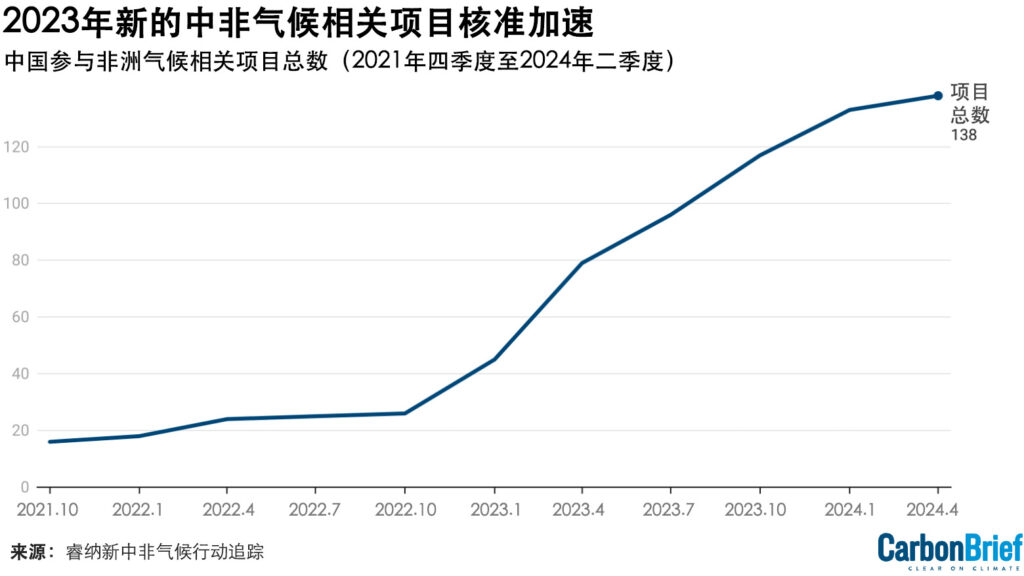
根据睿纳新国际咨询公司(Development Reimagined)整理的独立数据(如下图所示),自2021年中非论坛以来,已有138个新的气候相关项目达成协议,而且在过去18个月里,这一数字还在加速增长。
数据库中记录的项目包括超过20吉瓦(GW)的太阳能项目、9吉瓦的水电项目以及1吉瓦的风电项目,如下图所示。
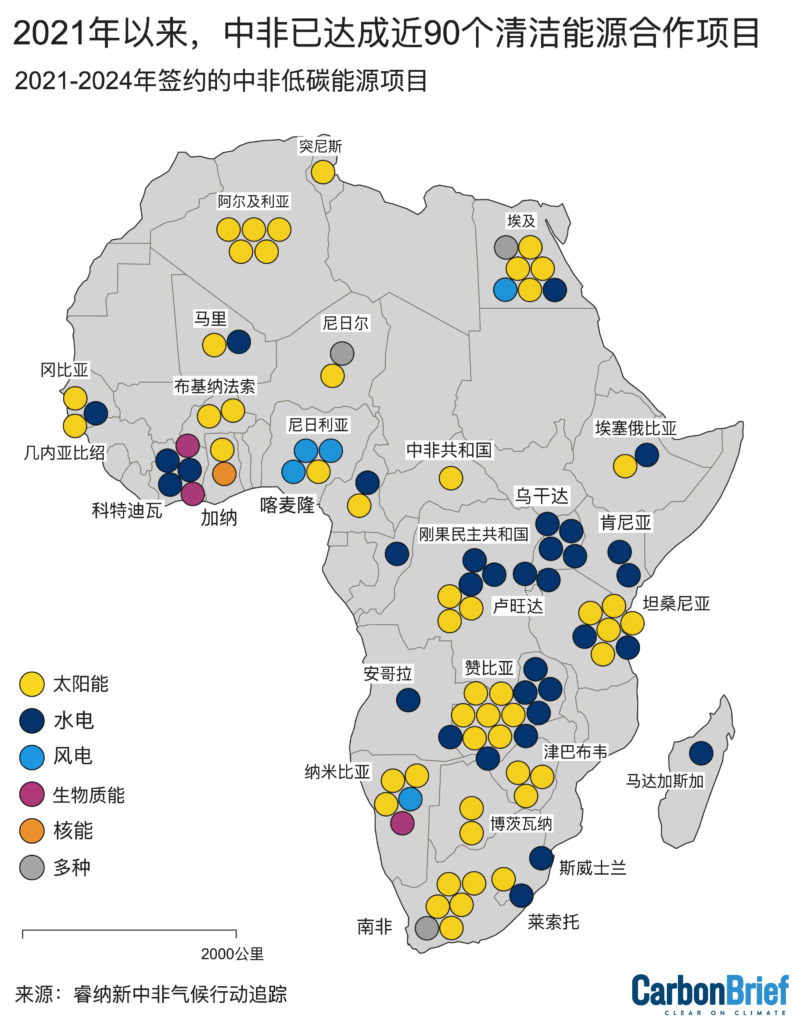
这些项目的资金来源广泛,包括中国和非中国企业、非洲和其他非中国金融机构,以及多边开发银行。
该咨询公司的项目经理兼中国气候融资政策负责人付亦可(Fu Yike;音译)对Carbon Brief说,在中国国家主席习近平2021年作出承诺后,中国国企已表示有兴趣“探索在非洲开展项目的新方式”,包括参与太阳能项目。
在数据库中列出的55个太阳能和风能项目中,国有企业分别参与了46个和5个。
根据睿纳新的分析,到2030年,中国在非洲的清洁能源项目装机可达224吉瓦,这意味着中国参与非洲的能源转型对于非洲实现2030年300吉瓦的目标至关重要。
付亦可补充说,特别是太阳能发电装机预计将成为中国未来在非洲能源部署的一大特色。
陡峭的“学习曲线”
总部设在伦敦的智库海外发展研究所(ODI)认为,中国“一带一路”倡议所建立的机制可以协助在非洲部署平价低碳技术,如同其促进了铁路和港口等中国国内基建产能向非洲“溢出”一样。
然而,奇耶穆拉告诉Carbon Brief,许多习惯于开发煤炭和水电的国企在转向可再生能源方面面临着巨大挑战。
此前,这些国企通过由政策性银行贷款资助的EPC总承包合同(即设计、采购和建造合同)来开发能源基础设施,这种合同只要求它们建设基础设施,而不负责运营和维护。
现在,非洲的决策者越来越多地推动采用股权融资模式,鼓励中国企业投资可再生能源项目并持有股份。
然而,奇耶穆拉表示,这种模式涉及到国企不太习惯的业务流程。
例如,埃塞俄比亚正在通过股权融资开发一座风力发电厂,从而减轻该国的债务压力。奇耶穆拉说,这意味着中国企业将不得不参与公开招标系统,而不是他们所习惯的闭门谈判。
“我记得一位(公司代表)说:‘为什么我要为一个(价值)可能只有8000万至9000万美元的项目浪费金钱和时间呢?’……企业认为,把时间花在(编写)招标文件上没有任何价值……但这表明它们在理解监管要求方面缺乏经验,而非洲的市场监管正在迅速变化。”
此外,付亦可认为,一些公司还对非洲的投资风险表示担忧。
大多数非洲国家在世界银行的“营商便利度”排名中靠后,这意味着监管环境不利于在当地创办和运营公司。
付亦可补充说,中国民营企业更愿意与国企合作,这可以将它们的参与与中国政府的利益更紧密地联系起来,从而限制它们的风险敞口。
奇耶穆拉与他人共同撰写的一篇论文也提到了这一点:“最近的趋势是在这些私营企业和国有企业之间建立一个联合体……很明显,在现有的政策群体中,新的联盟或利益集团正在形成,它们更加致力于促进风能和太阳能活动。”
奇耶穆拉称,部分原因是非洲在能源法规方面“快速变化”的环境。
非洲经济研究联合会(African Economic Research Consortium)合作研究经理戴安娜·恩吉·穆查伊(Dianah Ngui Muchai)认为,促进非洲投资的关键是针对可再生能源项目的“灵活和创新的(金融)工具”,以及“明确和现实”的政策目标。
奇耶穆拉告诉Carbon Brief,南非和埃塞俄比亚一直在尝试通过开发股权融资风电项目来实现这一目标。
“这是一条学习曲线,但我们相信也许在未来五到十年内……我们很可能会看到一些中国公司通过股权融资来开发这些项目。”他说。
中非论坛强调转向投资
这些主题在今年中非论坛的成果中得到了呼应。在主旨演讲中,习主席承诺向非洲提供价值3600亿元人民币(510亿美元)的资金支持。其中,2100亿元人民币(300亿美元)将通过信贷资金额度支付,700亿元人民币(100亿美元)将通过投资支付。
其中部分资金将用于资助一系列“清洁能源”项目,而“绿色发展”在会后的官方宣传中占据了重要位置。习主席在主旨演讲中指出,中方愿在非洲实施30个具体的清洁能源项目。
会后发表的宣言指出:“中方支持非洲国家更好利用光伏、水电、风能等可再生能源,进一步扩大在节能技术、高新技术产业、绿色低碳产业等低排放项目的对非投资规模。”
此外,与宣言同时发布的还有一份涵盖2025至2027年中非合作的行动计划,其中列出了指导未来三年中非合作的十大“伙伴行动”,包括“贸易繁荣”、“产业链合作”和“绿色发展”。
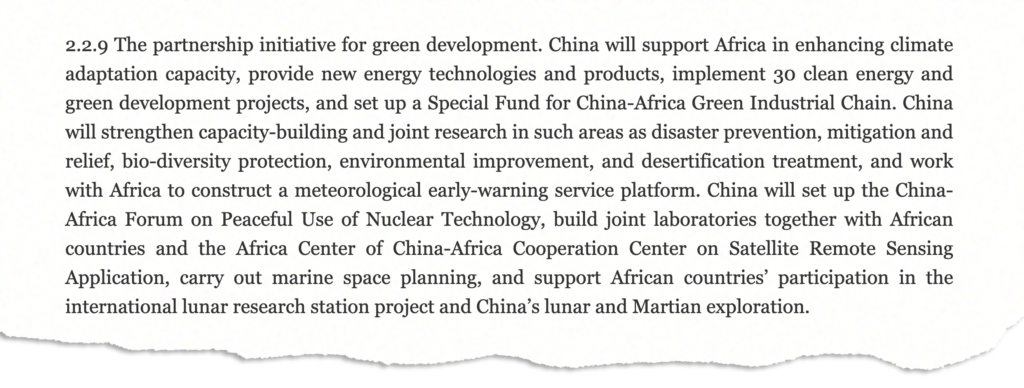
双方还将进行更广泛的能源合作,中方“将鼓励对非洲包括太阳能、风能、绿氢、水力发电、地热等可再生能源项目投资”。
习主席还告诉中非论坛代表,中国将“鼓励中非企业‘双向奔赴’投资创业……把产业附加值留在非洲,为非洲创造不少于100万个就业岗位。”
南非总统西里尔·拉马福萨(Cyril Ramaphosa)在新闻发布会上说,他“对习主席今天宣布的资金数额持非常积极的态度”,并补充说“这将是非洲大陆的一大福音”。
中南项目的分析则不那么乐观,认为报道标题上的数字“极具误导性”。
分析称,300亿美元的信贷额度“很可能………将更多地惠及中国企业,而非非洲利益相关者”,而100亿美元的投资数字“不应被视为政府财政承诺的一部分……因为(这笔资金)将由中国民营企业,尤其是采矿业企业提供”。
中南项目联合创始人埃里克·奥兰德(Eric Olander)告诉彭博社,这笔信贷可能会被用于“资助从中国购买大量太阳能电池板、电池和电动汽车”,以供非洲使用。
但非中政策咨询中心(Africa-China Centre for Policy and Advisory)高级研究员艾萨克·安克拉(Isaac Ankrah)博士告诉Carbon Brief,习主席对在整个非洲发展“绿色增长引擎”的关注凸显了中国“转向更具结构化的气候适应项目融资模式,重点关注技术转让、产能建设和可持续基础设施”。
他补充说,“这些承诺可能导致资金流的重新调整,使其更加符合非洲能源转型的具体需求”。
中非论坛对投资的关注是否会导致其切实远离贷款驱动型项目还有待观察,但一些非洲决策者将推动这种转变发生视为首要任务。
正如安哥拉财长维拉·戴维斯·德索萨(Vera Daves De Sousa)在接受路透社采访时所说:“我们需要打破常规思维: “我们需要跳出思维定式,因为‘你给我钱,我给你抵押品’的简单解决方案已经过时了。”
The post 深度报道:中国对非洲可再生能源的投资在沉寂两年之后反弹 appeared first on Carbon Brief.
Climate Change
Middle East war is another wake-up call for fossil fuel-reliant food systems
Lena Luig is the head of the International Agricultural Policy Division at the Heinrich Böll Foundation, a member of the Global Alliance for the Future of Food. Anna Lappé is the Executive Director of the Global Alliance for the Future of Food.
As toxic clouds loom over Tehran and Beirut from the US and Israel’s bombardment of oil depots and civilian infrastructure in the region’s ongoing war, the world is once again witnessing the not-so-subtle connections between conflict, hunger, food insecurity and the vulnerability of global food systems dependent on fossil fuels, dominated by a few powerful countries and corporations.
The conflict in Iran is having a huge impact on the world’s fertilizer supply. The Strait of Hormuz is a critical trade route in the region for nearly half of the global supply of urea, the main synthetic fertilizer derived from natural gas through the conversion of ammonia.
With the Strait impacted by Iran’s blockades, prices of urea have shot up by 35% since the war started, just as planting season starts in many parts of the world, putting millions of farmers and consumers at risk of increasing production costs and food price spikes, resulting in food insecurity, particularly for low-income households. The World Food Programme has projected that an extra 45 million people would be pushed into acute hunger because of rises in food, oil and shipping costs, if the war continues until June.
Pesticides and synthetic fertilizer leave system fragile
On the face of it, this looks like a supply chain issue, but at the core of this crisis lies a truth about many of our food systems around the world: the instability and injustice in the very design of systems so reliant on these fossil fuel inputs for our food.
At the Global Alliance, a strategic alliance of philanthropic foundations working to transform food systems, we have been documenting the fossil fuel-food nexus, raising alarm about the fragility of a system propped up by fossil fuels, with 15% of annual fossil fuel use going into food systems, in part because of high-cost, fossil fuel-based inputs like pesticides and synthetic fertilizer. The Heinrich Böll Foundation has also been flagging this threat consistently, most recently in the Pesticide Atlas and Soil Atlas compendia.
We’ve seen this before: Russia’s invasion of Ukraine in 2022 sparked global disruptions in fertilizer supply and food price volatility. As the conflict worsened, fertilizer prices spiked – as much from input companies capitalizing on the crisis for speculation as from real cost increases from production and transport – triggering a food price crisis around the world.
Since then, fertilizer industry profit margins have continued to soar. In 2022, the largest nine fertilizer producers increased their profit margins by more than 35% compared to the year before—when fertilizer prices were already high. As Lena Bassermann and Dr. Gideon Tups underscore in the Heinrich Böll Foundation’s Soil Atlas, the global dependencies of nitrogen fertilizer impacted economies around the world, especially state budgets in already indebted and import-dependent economies, as well as farmers across Africa.
Learning lessons from the war in Ukraine, many countries invested heavily in renewable energy and/or increased domestic oil production as a way to decrease dependency on foreign fossil fuels. But few took the same approach to reimagining domestic food systems and their food sovereignty.
Agroecology as an alternative
There is another way. Governments can adopt policy frameworks to encourage reductions in synthetic fertilizer and pesticide use, especially in regions that currently massively overuse nitrogen fertilizer. At the African Union fertilizer and Soil Health Summit in 2024, African leaders at least agreed that organic fertilizers should be subsidized as well, not only mineral fertilizers, but we can go farther in actively promoting agricultural pathways that reduce fossil fuel dependency.
In 2024, the Global Alliance organized dozens of philanthropies to call for a tenfold increase in investments to help farmers transition from fossil fuel dependency towards agroecological approaches that prioritize livelihoods, health, climate, and biodiversity.
In our research, we detail the huge opportunity to repurpose harmful subsidies currently supporting inputs like synthetic fertilizer and pesticides towards locally-sourced bio-inputs and biofertilizer production. We know this works: There are powerful stories of hope and change from those who have made this transition, despite only receiving a fraction of the financing that industrial agriculture receives, with evidence of benefits from stable incomes and livelihoods to better health and climate outcomes.
New summit in Colombia seeks to revive stalled UN talks on fossil fuel transition
Inspiring examples abound: G-BIACK in Kenya is training farmers how to produce their own high-quality compost; start-ups like the Evola Company in Cambodia are producing both nutrient-rich organic fertilizer and protein-rich animal feed with black soldier fly farming; Sabon Sake in Ghana is enriching sugarcane bagasse – usually organic waste – with microbial agents and earthworms to turn it into a rich vermicompost.
These efforts, grounded in ecosystems and tapping nature for soil fertility and to manage pest pressures, are just some of the countless examples around the world, tapping the skill and knowledge of millions of farmers. On a national and global policy level, the Agroecology Coalition, with 480+ members, including governments, civil society organizations, academic institutions, and philanthropic foundations, is supporting a transition toward agroecology, working with natural systems to produce abundant food, boost biodiversity, and foster community well-being.
Fertilizer industry spins “clean” products
We must also inoculate ourselves from the fertilizer industry’s public relations spin, which includes promoting the promise that their products can be produced without heavy reliance on fossil fuels. Despite experts debunking the viability of what the industry has dubbed “green hydrogen” or “green or clean ammonia”, the sector still promotes this narrative, arguing that these are produced with resource-intensive renewable energy or Carbon Capture and Storage (CCS), a costly and unreliable technology for reducing emissions.
As we mourn this conflict’s senseless destruction and death, including hundreds of children, we also recognize that peace cannot mean a return to business-as-usual. We need to upend the systems that allow the richest and most powerful to have dominion over so much.
This includes fighting for a food system that is based on genuine sovereignty and justice, free from dependency on fossil fuels, one that honors natural systems and puts power into the hands of communities and food producers themselves.
The post Middle East war is another wake-up call for fossil fuel-reliant food systems appeared first on Climate Home News.
Middle East war is another wake-up call for fossil fuel-reliant food systems
Climate Change
Are There Climate Fingerprints in Tornado Activity?
Parts of the Southern and Northeastern U.S. faced tornado threats this week. Scientists are trying to parse out the climate links in changing tornado activity.
It’s been a weird few weeks for weather across the United States.
Climate Change
UK cuts support for climate action abroad to fund military instead
The UK will cut overseas climate spending by more than 10% to fund higher defence budgets, despite agreeing to a global pledge to triple climate finance for developing countries by 2035.
Foreign secretary Yvette Cooper told the British parliament on Thursday that the UK will “aim to spend around £6 billion ($8bn)” on international climate finance over the next three years, covering emissions reductions, adaptation and nature.
This amounts to around £2 billion ($2.66 billion) a year in the next three years, about 13% less than the £2.3 billion ($3.05 billion) a year pledged by the previous Conservative government for the period from 2021-22 to 2025-26.
The move places the UK alongside several other European countries that have recently cut aid budgets, despite a COP29 agreement to mobilise $300 billion a year in climate finance by 2035. In the United States, President Trump has gone further, cancelling most overseas aid programmes, with climate projects among the hardest hit.
The UK cuts were slammed by climate campaigners and some opposition politicians as “brutal”, a “betrayal” of the government’s election promises to be a climate leader, and a failure to recognise that development and climate spending protect the UK’s national security.
The UK will also aim to deliver an additional £6.7 billion ($8.9 billion) in “UK backed climate and nature investments” and to mobilise billions more in private finance, Cooper said. She added that those investments would include measures to help countries to recover when disasters hit, for example, as risk insurance in Jamaica enabled rapid payouts following Hurricane Melissa.
Jamaica set for post-Melissa payout but experts warn of limits to hurricane insurance
Cooper said that the cuts were a “hugely difficult decision” and “not ideological”. But, she added, they were necessary “to deliver the biggest increase in defence spending since the Cold War”.
She reiterated Labour’s commitment to restore development spending to 0.7% of gross national income “when fiscal circumstances allow”, but did not provide a timeline when pressed by an opposition member of parliament (MP). UK aid was reduced from 0.7% to 0.5% by the previous Conservative government in 2021, and is now set to fall further to 0.3%.
Cooper told the sparsely-attended parliament session that “allies such as Germany, France and Sweden have made similar choices” to cut aid to fund defence. The US has also cut almost all of its climate finance.
Cuts open to legal challenge?
These cuts come despite governments agreeing at the COP29 climate summit in 2024 to aim for $300 billion a year of climate finance by 2035, up from the $100 billion a year target for 2025.
Last year, the International Court of Justice advised that developed countries must provide climate finance “in a manner and at a level that allow for the achievement of” the Paris Agreement’s 1.5°C target temperature limit, language that campaigners say could underpin future legal challenges.
Reaction to Cooper’s announcement in parliament was mixed. Scottish National Party MP Chris Law called the aid cuts “the steepest, deepest and most brutal of any G7 country”, even “astonishingly” going further than the Trump administration.
Sarah Champion, an MP from Cooper’s Labour Party but who is not in government, said she had seen a yet-to-be-published equalities impact assessment. These assesments determine how different demographic groups – like women and disabled people – will be affected.
“When that comes into the public domain, we’ll then have the information that we can maybe have an informed debate on”, she said, adding that pitching defence against international development was a “false dichotomy”.
“If you ask any military person, they will tell you the best line of prevention and first defence is our development money,” she added.
Liberal Democrat and Green MPs echoed the argument, describing climate change as a central threat to global and UK security.
Conservative Party development spokesperson Wendy Morton questioned why Cooper had labelled climate change be a priority given “the country faces serious fiscal constraints”.
“Should not our first priority be economic resilience and national security, including global health security?”, she asked.
MPs from Reform UK, which is leading the national polls, did not speak in parliament. But, in November, they proposed cutting the aid budget by about 90% to £1 billion ($1.3bn) a year.
Campaigners slam “betrayal”
Climate campaigners were critical of the government’s cuts. Hannah Bond and Taahra Ghazi, co-CEOs of ActionAid UK, said cuts to climate finance were “a huge betrayal for women and girls on the frontline of the climate crisis”.
Catherine Pettengell, head of Climate Action Network UK, said that “the government promised the UK public in its manifesto to be a climate leader and create a world free from poverty on a liveable planet – but today’s announcements leave those promises entirely unfilled”.
Gareth Redmond-King of the Energy and Climate Intelligence Unit argued the decision runs counter to warnings from security and food system experts.
He added that climate finance is an investment in the UK’s national security given that “we import two-fifths of our food from overseas, and worsening climate change impacts hitting farmers at home and abroad are leading to shortages and higher prices on our supermarket shelves”.
The post UK cuts support for climate action abroad to fund military instead appeared first on Climate Home News.
UK cuts support for climate action abroad to fund military instead
-
Greenhouse Gases7 months ago
Guest post: Why China is still building new coal – and when it might stop
-
Climate Change7 months ago
Guest post: Why China is still building new coal – and when it might stop
-
Greenhouse Gases2 years ago嘉宾来稿:满足中国增长的用电需求 光伏加储能“比新建煤电更实惠”
-
Climate Change2 years ago
Bill Discounting Climate Change in Florida’s Energy Policy Awaits DeSantis’ Approval
-
Climate Change2 years ago嘉宾来稿:满足中国增长的用电需求 光伏加储能“比新建煤电更实惠”
-
Climate Change Videos2 years ago
The toxic gas flares fuelling Nigeria’s climate change – BBC News
-

Carbon Footprint2 years agoUS SEC’s Climate Disclosure Rules Spur Renewed Interest in Carbon Credits
-
Renewable Energy2 years ago
GAF Energy Completes Construction of Second Manufacturing Facility