

Xcel Energy Retires Coal, €16B for EU Wind Projects
On News Flash this week, substantial investment for renewables across Europe by the European Investment Bank, Octopus Energy’s “The Collective” proves a success in the UK, and Xcel Energy plans to eliminate their coal power plants in the US Midwest by 2030.
Fill out our Uptime listener survey and enter to win an Uptime mug!
Sign up now for Uptime Tech News, our weekly email update on all things wind technology. This episode is sponsored by Weather Guard Lightning Tech. Learn more about Weather Guard’s StrikeTape Wind Turbine LPS retrofit. Follow the show on Facebook, YouTube, Twitter, Linkedin and visit Weather Guard on the web. And subscribe to Rosemary Barnes’ YouTube channel here. Have a question we can answer on the show? Email us!
Allen Hall: Starting off the week, the European Investment Bank is making bold moves to accelerate wind energy development across Europe, signing significant agreements with both BNP Paribas and Banco Satandier. These partnerships will generate up to 16 billion euros in wind energy investments through innovative counter guarantee agreements.
The initiatives are part of the EIB’s broader 5 billion euro wind power package, demonstrating Europe’s commitment to renewable energy expansion and industrial competitiveness.
The deals will enable manufacturers to receive advanced payments and provide performance guarantees for new wind projects, while also supporting supply chain efficiency and grid interconnections. This financing structure is backed by Invest eu, the eus ambitious program aiming to mobilize over 372 billion euros in investments by 2027. 2400 onshore wind turbines representing 14 gigawatts
of capacity. While the upcoming election has introduced some uncertainty with skepticism from leading parties, Industry experts still remain optimistic. The CDU, likely to lead the next government, is expected to maintain support for wind energy given its reliability and cost effectiveness in producing clean energy. Over in the UK, Octopus Energy’s groundbreaking investment platform, The Collective, has demonstrated remarkable success with its first two wind projects selling out within just one week.
The platform democratizes renewable energy investment by allowing public participation with investments ranging from 25 to 20, 000 with no fees. Located in Yorkshire and Wales, these projects attracted hundreds of investors. And the company is now expanding to expand the platform through its Pass the Power campaign, inviting more renewable energy projects to list on the platform.
And in the United States, despite challenging political headwinds, Xcel Energy is making significant progress in renewable energy deployment in the Upper Midwest. Their ambitious plan includes adding 3, 400 megawatts of wind energy and 550 megawatts of solar power.
The company aims to retire all coal plants in the region by 2030 and potentially reduce emissions by up to 88 percent compared to 2005 levels. The plan also includes innovative energy storage solutions including testing new iron air battery technology at their Becker site.
That’s this week’s top news stories. Stay tuned tomorrow for the Uptime Wind Energy podcast with Rosemary Barnes, Joel Saxum, Phil Totaro, and me.
https://weatherguardwind.com/xcel-energy-retires-coal-eu-wind/

 It’s easy to understand how Trump has great appeal to the hateful idiots and the amoral rich.
It’s much harder to see how it’s possible that a huge number of eligible voters are uninvolved in guiding the future of the United States, with many of them saying that “both sides are the same.”
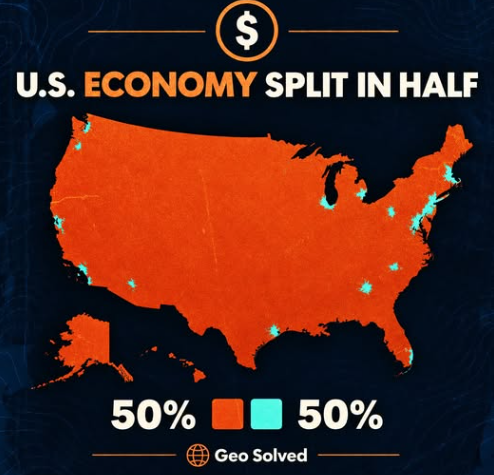 We often hear the MAGA folks claim that voting in the U.S. disproportionate favors the people in big cities, mostly along the coasts.
The obvious response: People vote, not acres of land.
And yes, it’s true that Trump has little appeal to the well-educated, highly productive people in Southern California, the Bay Area, the Mid-Atlantic, New England, other large cities like Chicago, Phoenix, Houston, and Seattle.
Weather Guard Lightning Tech
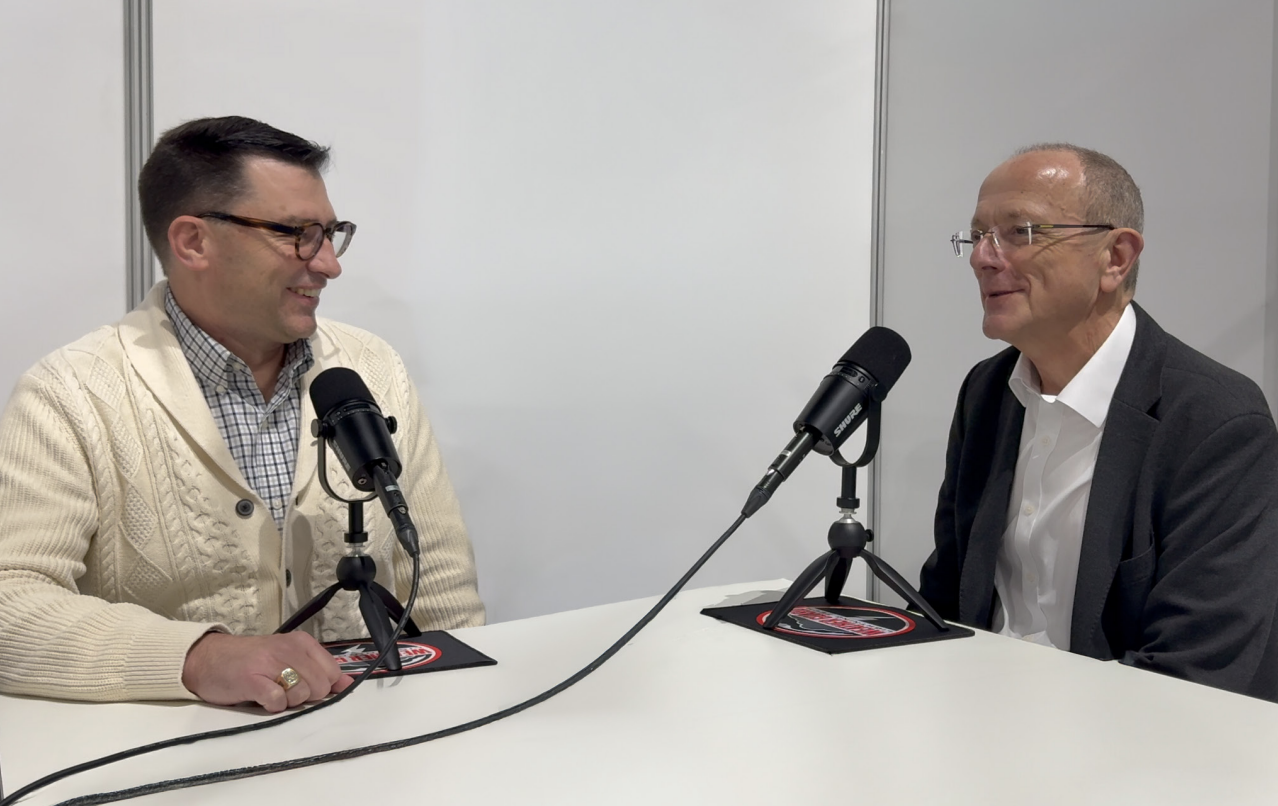
Global fleet, local knowledge: closing wind’s expertise gap
This exclusive article originally appeared in PES Wind 3 – 2026 with the title, Global fleet, local knowledge: closing wind’s expertise gap. It was written by Allen Hall and other members of the Weather Guard Lightning Tech team.
As wind fleets expand across increasingly diverse operating environments, the expertise needed to solve their problems is becoming more dispersed. Closing the industry’s knowledge gap means connecting local challenges with specialist experience from across the global wind sector and beyond.
An operator finds something on a blade they have not seen before. Who do they call? The engineer who designed that blade moved on years ago. The service provider has not seen the problem either. Somewhere in the world, there’s probably a person who has spent 15 years working on precisely that failure mode. But there’s no reliable way to find them.
That scenario plays out again and again. It’s rare that a problem is unsolvable. A solution exists somewhere. The bigger problem is finding that solution, or the person close to solving it.
Wind has become a large, geographically dispersed industry with roughly 1.3 TW of installed capacity. The technical knowledge required to keep it running has dispersed with it. The knowledge is real, deep and often highly specialized, but it is scattered across the globe in small teams working in different markets.
This is not the first global industry to discover that no single organization can hold every discipline, and that different parts of the world present different problems.
Two answers, one problem
In January 2023, Andrew Billingsley took a call from Ørsted asking whether his company could recycle wind turbine blades. Billingsley is CEO of Plaswire, a polymer processor in Northern Ireland. It was not a wind company. Plaswire’s business had been built on finding a way to use plastics from aircraft seat manufacturing and other waste nobody else would handle: residue pulled out of biodigesters and municipal waste plants.
He said yes before he was certain the company could do it.
Plaswire had a proprietary process for combining polymers that materials engineers said couldn’t be combined. Ground blade fiber mixed well with the combined polymer. Plaswire says it now has capacity to process up to 11,000 tonnes of blades a year and has increased blade content in its product from ten percent to thirty percent. The company also reports that the resulting structural components can outperform the concrete and timber alternatives they replace.
The same waste stream produced an entirely different answer on the other side of the Atlantic. Everpoint Services in Houston, Texas decommissions wind and solar assets, leaving the company tasked with repurposing fiberglass blades. At a birthday party, Everpoint CEO Tyler Goodell put that problem to James Timmins, a drilling engineer who had spent his career planning and overseeing drilling operations for major oil companies.
Timmins realized that ground blade fiber might work as a fluid loss additive in oil, gas, and geothermal drilling, where fluid escaping into the formation can cost tens of thousands of dollars a day. Everpoint spent the next two years turning that idea into a product. The company says BladeBlok is patented and shipping globally from Houston.
Two regions, two answers, both effective. And in retrospect, it makes perfect sense. Northern Ireland has decades of depth in polymers and injection molding, so its answer was a polymer. Houston is a center of the global oil and gas industry, so its answer was drilling mud. Neither answer came out of the wind industry. Both came from regional industrial expertise meeting a problem that happened to land next to it.
Looking beyond Denmark
Modern wind turbine engineering grew up in Denmark, and in many ways it still lives there. The most prevalent turbine design was refined by Danish engineers. DTU Wind and Energy Systems still anchors much of the research on wind turbines. Ask a hard aerodynamic question today and there is a fair chance the answer comes from within Denmark.
What has changed is that designing turbines and operating them are different problems. They no longer happen in the same places. A machine is designed in a small number of locations. It is then operated wherever the wind blows: West Texas, Queensland, Gujarat, the North Sea, and the Spanish meseta.
The fleet is also getting older and more varied as it grows. Machines commissioned during the last boom are aging in ways nobody modeled, on sites with conditions nobody anticipated. That combination generates operational questions faster than any single organization can answer them. Those questions are local, specific, and urgent. Now, companies all over the world are being asked to solve wind’s problems with legacy knowledge, often from an adjacent industry, that originated a long way from where the turbine was built.
The same blade, four climates
The industry’s leading-edge erosion wisdom is shaped largely by northern European conditions. It is a real problem, well studied and well understood. It is also not the same problem in West Texas, where the air carries dust and insects, and where inspections routinely find turbines one to three years old that look as though they have run for far longer. Will Howell of Armour Edge describes one site near an open-cast mine where airborne marble particulates were destroying blades within two seasons.
India produces a variant that exists nowhere in Europe. During the northern dry season, a sticky, tar-like dirt builds on the blades until the flow separates and the blade effectively stalls. The monsoon washes it away. PowerCurve reports that the use of vortex generators in India has produced some of the largest energy gains it has recorded, exceeding five percent across a full year. India is now the fourth-largest wind market on earth, surpassing 56 GW; last year it added more capacity than Germany did.
Rosemary Barnes worked for a Danish blade manufacturer before returning to Australia in 2021 to work in operations. There, she found blades behaving unlike the ones she had known in Europe. The standard method of predicting erosion severity combines annual rainfall with tip speed. But when Barnes plotted Australian sites with known erosion problems against those two axes, she got a random scatter. The model had no predictive value in Australia.
Her firm, Pardalote Consulting, is now placing scientific-grade sensors in Australian wind farms to establish what actually drives erosion there. [Barnes is also a regular host of The Uptime Wind Energy Podcast.]
A library of experts
Today, finding the right specialist can be difficult.
After six years hosting the Uptime Wind Energy Podcast, I increasingly think of the podcast as a library. In the past year alone, we’ve highlighted solutions from companies in Latvia, Denmark, Northern Ireland, Spain, Australia, Scotland, and the United States. As an organizer of the Wind O&M Australia event, one of our goals has been to bring international expertise to the local market. And similarly, to allow the global market to learn from knowledge that has been internal to Australia.
The answers are out there
The wind industry does not have time to solve the same problem twice. Fleets are aging, budgets are tight, and a blade defect that sits unresolved for a season costs real production. The pressure is to move faster, and the fastest way to solve a problem is rarely on your own. The fastest way to solve a problem is to find the person who has solved it. That search has to be a global one. The specialist who understands your failure mode may be in Copenhagen, Riga, Edinburgh, or Houston, working for a company you have never heard of. Geography is not a reason to rule them out. Increasingly it is the reason to go looking. The Uptime Wind Energy Podcast has become one way of documenting that dispersed expertise, bringing together specialists working on specific problems across different markets.
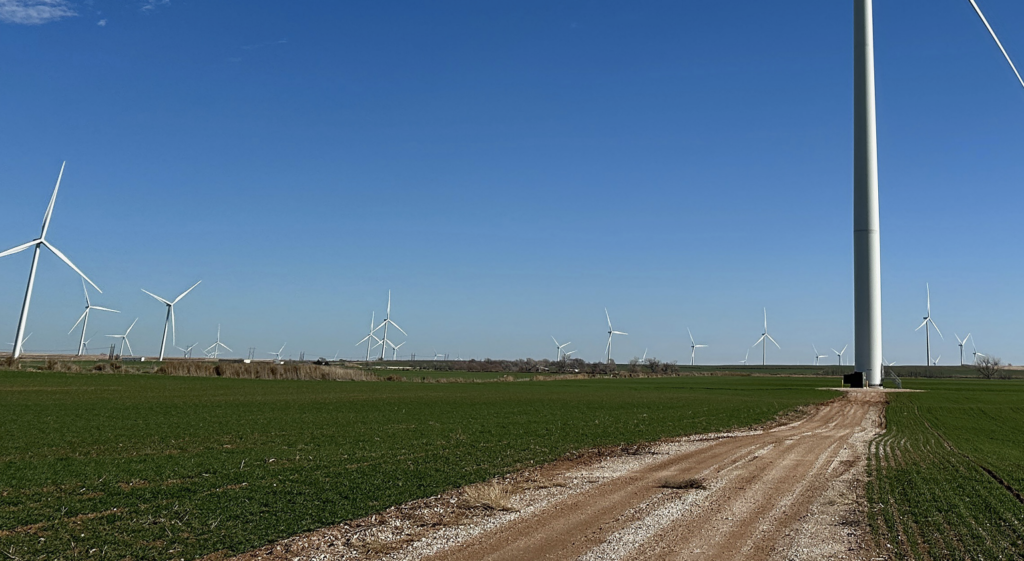
The answers are out there.
Unless otherwise noted, images here are from The Uptime Wind Energy Podcast.
Contact us for help understanding your lightning damage, future risks, and how to get more uptime from your equipment.
Download the full article from PES Wind here. Previous articles you may want to read:
Find a practical guide to solving lightning problems and filing better insurance claims here
See how a cohesive operational strategy can dramatically improve reliability and profitability



-
Climate Change1 year ago
Guest post: Why China is still building new coal – and when it might stop
-

 Greenhouse Gases2 years ago
嘉宾来稿:满足中国增长的用电需求 光伏加储能“比新建煤电更实惠”
-
Greenhouse Gases1 year ago
Guest post: Why China is still building new coal – and when it might stop
-

 Climate Change2 years ago
嘉宾来稿:满足中国增长的用电需求 光伏加储能“比新建煤电更实惠”
-

 Renewable Energy1 year ago
Sending Progressive Philanthropist George Soros to Prison?
-
Greenhouse Gases1 year ago
嘉宾来稿:探究火山喷发如何影响气候预测
-

 Climate Change2 years ago
Analysis: China’s CO2 falls 1% in Q2 2024 in first quarterly drop since Covid-19
-

 Climate Change1 year ago
嘉宾来稿:探究火山喷发如何影响气候预测