

Why Do Renewables Matter for Grid Stability?
This week we discuss Australia’s recent cancellation of wind projects due to political changes and community opposition, the complexities of grid interconnects, and the need for strategic renewable energy planning.
Sign up now for Uptime Tech News, our weekly email update on all things wind technology. This episode is sponsored by Weather Guard Lightning Tech. Learn more about Weather Guard’s StrikeTape Wind Turbine LPS retrofit. Follow the show on Facebook, YouTube, Twitter, Linkedin and visit Weather Guard on the web. And subscribe to Rosemary Barnes’ YouTube channel here. Have a question we can answer on the show? Email us!
You are listening to the Uptime Wind Energy Podcast brought to you by build turbines.com. Learn, train, and be a part of the Clean Energy Revolution. Visit build turbines.com today. Now here’s your hosts, Allen Hall, Joel Saxum, Phil Totaro, and Rosemary Barnes.
Well, welcome to the Uptime Wind Energy Podcast. I am Allen Hall and I’m here with Rosemary Barnes, who’s fresh from. Sweden, she just traveled all around the world to record this episode. Uh, Phil Totaro is out in California and Joel Saxum is up in the cold north of Wisconsin. And we, we’ve been just discussing off air. All the craziness has been happening in the wind industry.
And I, I have to admit, you know, I thought last week was. Insane. Well, we just, uh, put it on steroids. So not only are we canceling a lot of projects in the United States currently, we’re all, we’re starting to be cancel [00:01:00] them on Australia and over in Queensland. The Queensland Deputy Premier, uh, has used his ministerial powers to refuse planning approval for the moonlight range when Farm Near Rock Hampton.
Now I, and I’m sure I murdered that name Rosemary, so please forgive me, but it was gonna have 88 turbines in about 450 megawatts of capacity, enough to power about a quarter million homes in Australia and tied with, it’s about 300 construction jobs and 10 permanent positions to make that wind farm go.
But there’s was like a two month public consultation period that happened. And during that consultation period, about 80 per 90% of the local residents, and when I say local residents are about 150 local residents, uh, replied back and were concerned about some of the, the known people that are gonna be there because it’s gonna like double the population, right.
And 300 construction workers in a, an area of 140 people, 150 people. Uh, and based on [00:02:00] that boom, perhaps the, the project was canceled. What is happening in Queensland that we need to understand that projects just kinda get wiped away like that with 140 people, 150 people chiding in.
Rosemary Barnes: So what’s happened is that the Queensland government, the Queensland State Government, it was labor for quite a while and they had, uh, renewables targets and net zero targets and stuff like that.
And then, um, the government changed last year, so now there’s a, a liberal government, which means conservative in Australia. They’re in power and they wanted to change their planning regulations. But what is a bit weird is that they wanna do it retroactively. So they’ve changed the rules in April, and now they’re going through projects that have already been approved to see if they meet the new rules rather than the rules at the time that they were approved.
But the weirdest thing is that I’m pretty sure that this specific wind farm that they revoked, they were the ones to approve it shortly after [00:03:00] they came into government. They approved this wind farm and then they changed the rules a few months later, and then they did a new round of community consultation.
Um. And they say that 85% of local residents were, um, you know, in favor of reassessing. The issue is that now we’re at this stage of the energy transition where, you know, we’re up over 40% renewables across Australia. Um, that’s primarily wind and solar. We’re getting to the point now where we kind of, you can’t just add things as they’re convenient and easy.
You have to get a bit more strategic. Think about the whole energy system. I was looking forward to that coming online because it will make the whole system more robust and less, um, yeah, less fluctuations. You know, it would really even things out quite a lot to have, um, a lot of that Queensland wind in the mix.
So it will be a, a real shame and a, a problem for, uh, the whole of the Australian East Coast Grid. If Queensland opts out of any more wind energy.
Speaker 4: But once [00:04:00] they approve these plans, it sort of, you have to think about the grid as an entity and unplugging some capacity. There does have consequences further down the transmission line in this case.
Rosemary Barnes: Yeah, but each, each state has responsibility if they’re interconnected, but each space, each state has responsibility that they are gonna be okay regardless of what, they can’t control what the other states do. So. Every, um, every state has to make sure that they are okay on their own, and they are, they are planning for that, you know.
Um, so yeah, like Victoria’s got, got a lot of plans for, for batteries and interconnectors and stuff, and, uh. I mean, new South Wales is building renewable energy zones. Everyone’s got their own plans moving ahead. It would’ve, it would’ve made the whole job easier. But you know, like any interconnector, um, or yeah, interconnection between two, two grids, you can’t, like, you kind of, you plan for it, but you can’t, you have to also plan for the scenario where that interconnection goes down or you, you know, [00:05:00]um, whatever reason you might not get the energy that you plan on from the other states.
So. It is a tricky, tricky aspect I think of planning.
Joel Saxum: Mir. Lemme ask you a question, and this is popping into my head right now because it’s basically political games between parties and these kind of things. And normally we don’t talk politics on the show and we try to stay away from that. And I’m going to, I’m gonna skirt it.
But a couple months ago I, when I was uh, down, I was invited to testify the Texas Senate and I was uh, always amazed. The lack of technical knowledge in the room, right? There’s these people setting their chain. They’re, they’re putting bills forward, they’re putting things, doing things that really affect the general populace, but their knowledge base is coming from like their chief of staff and their chief of staff is a political science major, and that person is just googling whatever.
They want to see in the bill, so they’re putting things out that just didn’t make sense. Right. When it comes to Australian [00:06:00] politics, is it the same kind of stuff? Is it more of just like these political arguments versus the technical ones, or how do they get information into these decisions? Because this decision to me just seems like.
It seems like it’s not based in, in scientific fact or scientific method around anything. It’s just like, oh, we don’t like these things. Let’s get rid of ’em.
Rosemary Barnes: Yeah. I don’t think it’s trying to be based. They’re not, they’re not even the, yeah, the government is not trying to say that it’s based on any kind of science or anything they’re saying that it, you know, they’re mostly citing things that community consultation.
Um, so you know, it’s more about people’s feelings, which is, you know, a valid, a valid thing. I was listening to a podcast about Texas, actually, I’m halfway through it still, um, about what’s going on there with, um, some of their proposals to, you know, require everybody to have a hundred percent firming for each individual project.
And I do think that Texas is trying really hard to, uh, you know, like, um, to, to, you know, they’ve got, you’ve got a pretty flexible system and allow, you know, [00:07:00] um, uh. And allow companies to make their own decisions about how, you know, what kind of energy sources they’re gonna have and how they’re gonna make money and let the market take care of it to a certain extent.
And it’s really similar to the Australian electricity market as well. They’re, um, they are, they do share a common basis and some of the same people worked on the, um, market design of both of them. But I feel like Texas is trying as hard as possible to intervene to make sure that none of the, you can get none of the benefits and all of the disadvantages of a system like that.
So. That is a bit interesting,
Speaker 4: but at some point, Rosemary, and maybe we’ll talk about this after the break, maybe that’s the thing to do, is to talk about this after the break. It takes so long to get projects approved because of the interconnect that this engineers have to go back and look, make sure if this is going to work, how do they connect this energy source into the grid?
How do they make it work in the United States? And I want, I want want to get over the break here. I want to talk to Phil about this. We spent all this time doing the engineering work and then all of a sudden, poof, it’s gone. What [00:08:00] is the point of doing all the engineering work? Engineering? If at a moment’s notice you can yank this project,
Speaker 9: don’t let blade damage catch you off guard.
eLog ping sensors detect issues before they become expensive to consuming problems from ice buildup and lightning strikes to vibrations and internal cracks. EOGs Ping has you covered. Their cutting edge sensors are easy to install, giving you the power to easily stop damage before it’s too late. Visit eLog ping.com and take control of your turbine’s health.
Today,
Speaker 4: Phil, explain what is happening on the interconnect and why it takes so long to get projects approved and all the in supposedly because of engineering, it takes a long time to understand what effect of adding a 500 megawatts will do to a grid. Then instantaneously you just delete a project. Doesn’t that really affect all the work that the engineering [00:09:00] just completed and spent all that time doing?
It’s not, you just can’t plug 500 megawatts into a grid willy-nilly. You have to. You have to plan for it, but to delete a project does,
Phil Totaro: has like cascading problems. Right. I think you also just kind of answered your own question regarding what’s the challenge here. It’s, you know, if you wanna add five megawatts to a grid, that’s a lot easier to integrate because the, the grid can probably handle it.
It was a little bit over designed. But when you start talking about adding or subtracting 500 megawatts plus at a time, and you know, there are terawatts worth of solar projects that have been proposed. Obviously they’re all not, not gonna get built. Um, but, uh, when you, when you’ve got that volume in. The interconnection queue.
Every single one of those has to be independently studied. And then every single one of those, you know, the, how each one goes together and, and the impact of one on the other and the whole [00:10:00] system that all needs to, to go together. Originally, the way that things were being, um, permitted for interconnection was that, um, if you had like utility PPA in place, they would kind of put you to the front of the queue.
Um. And nowadays what they’re doing is it’s kind of first come, first serve. So when they’re trying to figure out all the, you know, impacts on, on the grid from adding whatever the capacity is that you’re proposing, they have to take that into consideration in relation to everything else that’s been proposed and everything else that’s already on the grid and, and operating
Speaker 4: well.
I’m just wondering what the effect of an IRA. Bill change is going to be right. So the, you have an IRA bill, it’s been around for a couple of years. You had a lot of applications to put, uh, uh, power sources onto the grid. Some of them have gotten approved. Or close to approval. So you have this expected pipeline of capacity being added to the grid.
[00:11:00] And then if the IRA bill changes in the way it’s currently proposed, where you have six months or 5% or no, 60 days after the passage, you have to have 5% of the total investment re in the ground, so to speak. Bent. Yeah. Spent, uh, otherwise it doesn’t count. Right? So then you, you’re pulling the plug on some projects, I think.
Doesn’t that just completely just wipe out all the planning that has happened in terms of the interconnect over the last couple of years that it, it really throws a kink in the works, right? I, I, I’m thinking about this correctly. It’s playing around. I’m the electrical engineer on the panel, I think, am I the only one that’s an electrical engineer?
Okay. So when you add capacity, it’s not easy. Because you’re adding reactive power. You got real power and reactive power, right? So you got transmission line. When you start adding transmission line, you have this sort of, you have this inductive thing that’s [00:12:00] happening and you gotta balance it. Although it doesn’t work, you have.
Big problems ’cause you’re not really moving electrons, you’re moving tic and electric fields around, right? So you kinda got these waves going. It’s electromagnetics, it’s the electrons are not, are just rattling back and forth in the wire to create these waves. That’s what’s providing power to the world at the minute.
If we can’t do that efficiently, if we don’t plant it out, then you have problems. You have unevenness and the grid doesn’t like unevenness. One of the reasons maybe Spain disconnected from the grid was because of the unevenness. The frequency changes, the loads disconnecting bad stuff happens, and then they don’t have power for 10 hours or whatever the amount of time was.
That’s a huge freaking problem. I don’t think anybody has really thought this through. I, I’m okay if you want to pull the plug and all the $26 a megawatt hour. Okay, sure. But doing it at 60 days is too [00:13:00] freaking soon you’re gonna create problems. Well, going back to the Australia problem and the now the American problem, you have to increase the amount of electricity on the grid period.
There is a certain growth rate, I think 3%, two to 3% is generally acknowledged as that growth rate. I don’t know what it’s exactly in Australia, but it’s gonna be somewhere close to that. If that’s the case, you cannot be altering. You can’t go from 3% to 1%. You’re gonna have problems three or four years from now.
Rosemary Barnes: Even if it’s 0%, you’re still gonna have problems because the thing is, in Australia, at least, you, our coal power plants are really old and they, uh, borderline economic to run even an old power plant that’s already paid, you know, it’s paid back all of the um, you know, capital expenditure. They’re borderline to run, right?
So they’re all announced closures. They’re, as they get closer to their end of life, they’re getting less and [00:14:00] less reliable. And, you know, it’s one thing if, uh, you know, it’s not windy for a little while and wind power turns down. That’s something that everyone’s planned for. With coal power plant when that, you know, that’s a, a gigawatt all in one go when that goes off the grid, that is, um, challenging, um, planned for, but you know, it, it’s a bigger deal.
You start to see a few of those happen at the same time and your electricity system suddenly falls apart. So yeah, even if you want to just have, maintain zero growth if you still want electricity into the future. You have to plan. And the planning today does involve replacing the existing coal plants with renewables.
If you wanna place it with, replace it with something in something else, something instead, then you need to do that along a long way ahead of time. It takes longer to build a coal power plant than it does to build a wind farm. Um, and. Who’s gonna pay for it, you know, then there’s nobody interested, no, no private company is interested in building new thermal, uh, power plants in Australia because they’re not economics.
So it’s not, you can’t just simply say, we want [00:15:00] things to stay exactly the same. They can’t. Your coal, coal power plants are dying. You know, you have to replace them. You can’t just pretend that you don’t need to replace them with anything, because that’s just not based on reality.
Speaker 4: Yes. And so the argument that’s being made at the moment, and going back to Rosemary’s point about the coal plants, ’cause that discussion is happening in the United States, now all of a sudden we’re talking about coal again, is that there’s just a certain amount of load.
Always on the grid. The coal plant just provides all that power that the grid, uh, demand doesn’t vary up and down all day, which it totally does, right? So coal plants and gas, fire plants in general don’t nuclear. I’ll throw into that, into the mix. Don’t like going up and down, right? They like to be constant, but the usage is not constant.
Is anybody talking about this? I don’t get it. I mean, the duck curve is real.
Rosemary Barnes: I’m, I’m talking about it. We’re talking about it. You know, people talk about it, but I’m not sure. I’m not sure everybody gets it. Like, last time I was at Queensland, I, I was [00:16:00] up there, you know, um, going, uh, to one of the big, big wind farms that, that are there.
It’s already there, already running. And I was there at seven o’clock in the morning. Uh, I was just driving on to site and the turbines had been running. Then all of a sudden it’s like the whole wind farm slows down to a stop at seven in the morning. The sun is barely up, you know, so there’s a small amount of, of solo’s, heaps of rooftops, solar in Queensland because there’s just so much sun.
It just really makes money and it takes like three years to pay back for your system. Um, so what’s caused that? It’s because no one’s using much electricity at that time of day. Coal can’t turn down beyond a certain level. The rooftop solar also, you can’t stop households from using their own electricity that they’re generating.
So there’s just coal power. Plants are supplying more electricity than the grid needs, and so everything else shuts down. But the prices then, then they’re negative. That means the coal power plants are paying to generate electricity. It’s not, you know, they, they don’t get it for free. Sometimes they’re paying, you know, negative hundreds [00:17:00] of dollars an hour, um, a megawatt hour just to generate through the middle of the day so that for a couple of hours in the evening, they can make, you know, a few hundred dollars a megawatt hour, two.
Generate, but now there’s heaps of batteries coming into the grid and they’re going to reduce that evening price spike. So it’s, it’s just like things are gonna change even faster over the next couple of years.
Phil Totaro: And that was actually the one big pillar of Labor’s proposal for renewable energy was, yeah, we’re gonna do transmission.
Yeah, we’re gonna do more generation, but we need to have, especially consumer based battery storage systems. With some type of maybe subsidy or some other type of regime that facilitates the adoption of that technology because we, you know, the, in Australia, we need that to be able to take some of that power to, to basically eliminate that duck curve.
Rosemary Barnes: Yeah. Well, the Queensland government has just canceled all of the bomb hydro projects in the state as well. So, you know, they just like, they’re just nothing. You know
Joel Saxum: why?
Rosemary Barnes: Because they just don’t want [00:18:00] anything, anything, uh, any of these green projects, they don’t want any. Negative, uh, you know, negative effects from a new infrastructure project, unless it’s from, um, fossil fuels.
That’s okay. You can have a new coal mine or a new, new, uh, you know, expand gas infrastructure, but just don’t, don’t do it for clean energy reasons.
Speaker 4: But those devices are not meant to handle flexible loads. Coal is not meant to handle a flexible load. So what are you doing if you, if you know you have a certain amount of fix?
Sure. Inflexible, we’ll call it. And you have a lot of flexibility because that’s the way. The grid is developing at the moment. You have this flexible demand that you need to meet with something that you can turn on and off. So when they see wind farms being turned off, that’s a good thing. The reason they’re doing that is because the grid needs that.
You have to turn those things off. Otherwise you have grid collapse. You will damage the grid for crazy [00:19:00] reasons by leaving too much. Too much power on it, feeding it and not enough pulling it off.
Rosemary Barnes: And the coal power plants, they, they have to pay a lot of money for the fact that they’re not flexible in that way.
But you know, what I think is, is really gonna help, um, is so, I mean the Queensland government, I, I don’t know if they had any incentives for household batteries. Not, not that I’ve heard of, but the federal government has announced a 30% rebate. But I think that what’s really going to change things is because, so rooftop solar has changed the way that the average person thinks about energy in Australia.
Because once you’ve got rooftop on, yeah, solar panels on your roof, and one in three Australian households do already. Then, you know, you’ve got a real economic incentive to use electricity when the sun is shining, right? It’s, um, the, you feed in tariff that you get for giving it to the electricity grid is not anything close to what you pay to bring electricity in.
So, e everybody is naturally kind of incentivized when you get household batteries. Then it’s going to just really boost the extent to which households can shift their demand around. ’cause at the moment, like [00:20:00] if you’re at work all day. You can’t choose to do your, you know, um, I don’t know, dry your clothes in the middle of the day.
Um, and if you would hang ’em out probably on the line anyway, if you did. But you know, there’s only so much that you can shift your loads around if you are out of the house during the day when it’s sunny. But if you’ve got a battery, then all of a sudden households are gonna be trying really hard to make sure that they are only.
You know, relying on, they’re as energy self-sufficient as they can be. I’m not talking about going off grid, but I’m talking about, you know, using mostly self-consumption. Um, and I think that that is really gonna change how much, uh, you know, a non-friendly to renewables government can really bamboozle people because they will get this understanding you, you know, of, of what it means and um, and to what extent you can shift things around To what extent solar plus batteries.
Can, uh, you know, supply the bulk of, um, bulk of power, which in a state like Queensland is, you know, especially true. So I think the discourse should change over the next few years [00:21:00]
Speaker 4: as wind energy professionals staying informed is crucial, and let’s face it difficult. That’s why the Uptime podcast recommends PES Wind Magazine.
PES Wind offers a diverse range of in-depth articles and expert insights that dive into the most pressing issues facing our energy future. Whether you’re an industry veteran or new to wind, PES Wind has the high quality content you need. Don’t miss out. Visit ps win.com today. The grid stability is economic stability.
That’s exactly what it is. And I, I’m not an analogy person as an engineer. I don’t like using analogies, but I’ll use this analogy ’cause I think it applies to the United States and it kind of clears this up. When the US started putting train tracks down, where are all the cities at? They’re on the train tracks.
That’s where they are. When the US started to put highways in, where did all the cities develop? Along the highways when the, I, I, when, when the [00:22:00]Eisenhower administration went to this kinda the super highway thing, right? So Interstate 95 and 10 and all those, where did all the industry and people move right to the super highways is exactly where they are.
If you are not on the electricity grid, if you wanna isolate yourself from the grid, you are isolating yourself and your future generations from economic success. Growth, you just are. So you wanna be on that grid. You need to be near that grid. If you want your children and your children’s children to have a life, they gotta be near that damn grid.
And if you do, if you make a grid that’s unstable, like this happened in Spain and other places, it’s not just Spain. I mean, Spain’s the most recent case. When the grid becomes unstable, you become economically unstable. America cannot have an unstable grid. Australia cannot have an unstable grid. Canada cannot have an unstable grid.
Brazil cannot have an [00:23:00] unstable grid, and for for some freaking reason, we don’t seem to understand that when politicians get involved in this, and Joel pointed this out, when you start unplugging unplugging projects and saying, we’re gonna fill this with some other sort of power sub source, that you are screwing with the economic viability of your community.
That is what you are doing.
Rosemary Barnes: The average person, uh, that doesn’t understand the electricity system well to it sounds more reasonable. That a really constant out, out load, you know, base load generator is more reliable. We all know it’s not, it’s not true. Um, however, it’s just, it’s a simpler message and that’s why I say that as batteries come into households with rooftop solar.
Then they’re gonna understand how reliable, um, variables plus, uh, batteries can, can be
Speaker 4: rosemary. I think the average person will never understand that, which is why the politicians are not talking to that. What, and Joel, correct me if I’m wrong here, but the latest I’ve, I’ve heard of the United [00:24:00] States and it’s a little bit of a different argument.
I think Rosemary’s right on the technical side. Don’t get me wrong. She’s totally right on the technical side. On the politics side, here’s what, here’s what I hear in the United States at the minute. Well, those wind turbines are ugly. What the hell does that have to do with the grid? Security? Nothing. Coal plants are freaking ugly.
They are ugly. No one wants to live next to a coal plant. That’s why we’re closing them down because they are awful to live next to.
Joel Saxum: Yeah. It’s, it’s a mo it’s a, it’s a, it’s a politically driven, but it’s emotional versus technical, emotional, political, whatever you want to call it. You hear a lot of influence from all these things, you know?
Here’s the opposite side of that. I think wind turbines are fricking beautiful. I think they look like works of art on the horizon. They’re cool as hell. Some of the, Alan, think about this. How many times you and I have literally pulled over on the side of the highway to take pictures at sunset together?
Like we’re on a date.
Speaker 4: We’re not on a date
Joel Saxum: officially, by the way. We’re not, yeah. Yeah. Not that there’s anything wrong with that. To me, they’re beautiful. I think they’re amazing. They’re awesome, right? So then it’s [00:25:00] just this emotional thought. You like them or you don’t this, it’s the nimbyism thing. It’s the Nantucket don’t wanna see it off the coast.
But they don’t realize that their energy future, their economic future is hanging in the balance of what they don’t like to look at.
Phil Totaro: If you go to any. Midwestern county meeting where they have, you know, a community session talking about a new renewable project they wanna build. That is precisely what ends up happening anyway, because the, all the arguments that people come in with are whatever they’ve Googled on the internet, and we used to have experts there, either from the project developer.
And, and they still send their own people. But see, the problem is the, the community’s like, oh, well of course you’re gonna say nice things about the project you wanna build. But what we also used to have were people from awe that had a network of grassroots folks that could go out and provide independent support during those kinds of meetings.
We lost that grassroots when they pulled [00:26:00] out and sent everybody into Washington because that’s where they think policy gets made. And it, but it’s not. Making the right kind of policy because you need to be able to change people’s minds in the local communities. And the lack of grassroots is what’s killing the industry at this point, and nobody’s investing in that anymore.
Rosemary Barnes: Pol, let’s be honest, have politicians ever understood how the electricity grid works like in the, you know, the electronics kind of way? No, your average person under doesn’t understand that. So we’ve, you know, engineers, electrical engineers, power system engineers have got on with the job of keeping the grid reliable despite a lot of challenges for, you know, over a hundred years now.
And if we would let them get on with it, then they would continue to do that. But now electricity is political because of, um, you know, climate change. And so that’s why we, you have all these problems where people want to, you know, mess with the way that engineers have always have always done things. So.
Speaker 4: Sun Zia, the largest wind energy and solar project in America at the moment is being built [00:27:00] right as we speak. It’s about three gigawatts. Alright? So plugging in three gigawatts anywhere is a big deal. No matter how big your grid is. Three gigawatts is a lot of power. It’s run into legal problems again, and maybe they’re all justified.
But if you take three gigawatts that are planned, co plan capacity. That all of a sudden disappears, could disappear, or could be delayed by a couple of years. That’s a big deal. And I, I think all the electrical engineers in the world would say, uhoh, we got a problem here that we need to get fixed. And I think that is gonna be more common now than it has been previously because of the size of the projects.
The projects are getting massive. Instead of putting in 50 megawatts or putting in 500, instead of 500, they’re putting in five gigawatts.
Rosemary Barnes: But is that so different to, you know, like you’ve had, you know, gigawatts or multiple gigawatts of nuclear power that turns out to take 20 years to build instead of 10?
You know, and that’s the same sort of thought of challenge. You, you, you, you [00:28:00] gotta, you gotta, in your planning people are ob Yeah. People are obviously aware that things can get delayed, uh, or whatever. So I don’t know if it’s a, a brand new, unique challenge. It’s a, a challenge for sure, but I’m not sure that it’s unprecedented.
Joel Saxum: I think the trouble, the trouble that what you say unprecedented. I’m, I’m, I, I, I disagree with you because when I hear, like, I’m sitting in the Ercot market, right? And I watch what the Ercot like. 2, 5, 10, 20 year plans are great. Looks like we’re gonna be fine. They, they were the ones who put in the crest lines, which are the, the big transmission lines that go west in the state to grab all the renewables and bring ’em to Dallas and bring ’em to San Antonio and bring ’em all great.
But they’re being undermined right now by the politic politics. And the politics are literally quoting the, the DC politics and saying like, we’re, and they’re standing up against renewables and it’s like. Okay. Whatever your political ideal ideology is, is [00:29:00] do you, but when you’re looking at stopping growth, stopping energy generation of the only sources that are deployable fast enough, you can only build solar and wind and batteries fast enough to keep up with the de growth and demand.
Right Now, you can’t get, we’ve said this before in the podcast. You can’t, I can’t go to GE and order a thermal generation. I can order a natural gas plank and, and get it next year. I’m not gonna get it until like 20 30, 20 32 thought if I’m lucky. And by 2032, the demand in the erco market is gonna be over two and a half times what it is right now.
So you better start building wind and solar. So if you’re passing legislation that’s undermining the ability to do that, we’re screwed. Like, I’m gonna go, I’ll come, go get solar panels and batteries for the house because you’re gonna have to have,
Speaker 4: do states start to take over. Where the federal government is stepping away.
You can’t, if you cross state lines, whoa, whoa, whoa, whoa, whoa, whoa, whoa. In terms of, in terms of development, Joel, I’m not, I’m not saying in, in, you know, providing, [00:30:00] basically what I’m thinking is if it’s a $31, a megawatt hour production tax credit, and the federal government pulls it, which is the problem, they pull it, they, they bring it back, they pull it again.
Okay. If, if I wanna have some stability, and if I’m in Kansas and the electricity is being generated in Kansas by wind and solar and a bunch of other things, same thing about Iowa. I don’t want that nonsense going on. I want them to know that the power is gonna be there when I need it, because my economic viability is relying upon that.
It depends on that to happen. So do I take the production tax credits and build it into my. State somehow, either in terms of. Rate increases or subsidies from the state
Phil Totaro: government. The only way that they can pay for that kind of a subsidy at a state level is to raise prices or taxes or, yeah. Or taxes.
But probably raising rates, uh, is the easier way to make that [00:31:00] happen. ’cause changing the tax code means more state level, you know, provisions need to be put in place. It’s just easier to jack up the, the, the utility price. So that’s, that’s likely the outcome if they go that direction. The reason why the industry’s pushed for federal, um, you know, tax subsidies in the first place is that it.
It provides a bigger, more economically viable pool to pull from for, for those subsidies as opposed to leaving it up to the states where states are then gonna get into competition with one another. Where one’s, you know, Kansas is gonna make their subsidy, you know, 32 bucks and then you know, somebody, Oklahoma’s gonna make theirs like 35 and then, you know, which, which sounds good.
I mean, it sounds like, okay, capitalism, yay, capitalism. But that’s gonna end up, but that’s also gonna end up having the, the same effect that you were talking about before, Alan, because [00:32:00] somebody that was proposing a project, even if it’s like, let’s say it’s somewhere in the Southwest Power Pool. Even if you were proposing a project to be built to connect to one node y, you know, based on.
The, the inconsistency of the state subsidies, you may pull your project from one node and now wanna stick it into another node because you’re getting a higher subsidy over here. That’s why a federal subsidy is actually better, um, because it provides more consistency to the entire industry, regardless of where you’re building the project.
Speaker 4: But it’s a brave new world right now. Phil. There has not been consistency at the federal government level. It has been very, if anything, inconsistent, consistently inconsistent. So it’s gonna be consistently inconsistent. Then the states are gonna take over or the utilities are gonna take over and make it consistent.
Joel Saxum: So let, lemme give you a rundown of states and, and I’m just saying for money to be able to possibly do their own PTC. These are the states in 2024 that ran at a budget surplus, Texas, [00:33:00] Florida. And now it gets weird. Oregon, Virginia, West Virginia, Kentucky, Ohio, South Dakota, Wyoming, Nevada, Wyoming, big wind state, of course, Texas, big wind state.
There’s a couple of big wind states in here. The rest of ’em, solar, of course, you can put anywhere. Uh, Oregon’s a big, Oregon’s, a pretty decent sized wind state as well. Uh, but I, I think you could see that. I, but I think you would, to what you’re saying, Phil, I, I under completely understand federal’s better.
However, if they’re not gonna do it and the states start doing it, great, but I think you would see some lawsuits instantly because people would be like, and it’s because the power pools don’t follow state lines. Ercot is the only one that is within one state. No lawsuits there. But if you’re in S Southwest, you’re in Meso, you’re in the PJM, you’re anywhere else where that stuff can cross the the electrons.
Technically you can cross state lines. Then you’re gonna run up a lawsuit. It’ll get stopped up instantly.
Speaker 4: I could see ways of structure would, would [00:34:00] work where everybody would be happy.
Joel Saxum: It’s about time. It would make com, it would man, it would make, it would make investment in states competitive. Think about that.
If you’re sitting here in South Dakota and Minnesota and Minnesota’s offering you $30 megawatt hour, all of those jobs are gonna Minnesota. You know, all those jobs are gonna Minnesota, all that construction’s going over there, all that spend is going over, all that economic growth is going over there.
That’s
Speaker 4: as easy as it is. That’s exactly right. That is the railroad of the 2020s. It’s exactly what it is. And if you’re not willing to hop on that train, man, you’re gonna pay a price. And it’s not gonna be a five year penalty, it’s gonna be a hundred year penalty. That’s what we’re talking about right now.
So. Get on this electricity train, but thank you for listening to this podcast. Hey, there’s everybody’s frustrated at the minute we’re all trying to figure out ways to make the electricity grid more reliable, more consistent, and, uh, better than it is today. So thanks for listening. This is EP Time Win Energy podcast for Phil [00:35:00] Ro Joel Saxon, and now The Missing Rosemary Barnes.
We’ll see you next week.
https://weatherguardwind.com/renewables-grid-stability/

 To the author of the meme here, FWIW, I agree. My wife employed a decent number of immigrants from Mexico for her horse breeding operation, and I found them to be hardworking, honest, respectful, and family-oriented.
Weather Guard Lightning Tech
Ørsted Finishes Drone Trial, Iberdrola Exits South Korea
Allen covers Ørsted’s Hornsea 2 drone trial, the DeepWind test site, Germany’s proposed land rent cap, and Iberdrola’s Korea exit.
The Uptime Wind Energy Podcast is brought to you by Weather Guard Lightning Tech, creators of the StrikeTape Ultra LPS retrofit. Subscribe to Uptime’s Substack newsletter. And check out Rosemary’s “Engineering with Rosie” Youtube channel. Have a question we can answer on the show? Email us!
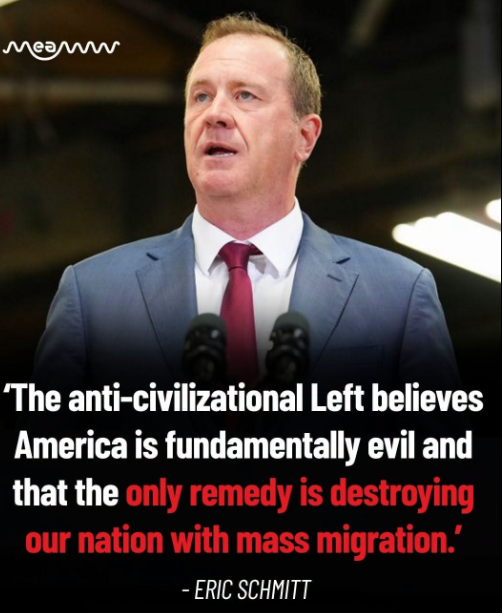 The vast majority of Americans have liberal views. We favor a woman’s right to choose abortion, high-quality public education, affordable healthcare, clear air and water, the use of science in policymaking, equal rights for minority ethnicities and religions, and efforts to trim the enormous gap between rich and poor.
It would be very interesting to know what percentage of U.S. voters believe that liberals hate America, that we believe our country “is fundamentally evil and the only remedy is destroying our nation with mass migration (sic).”
Trump’s approval rating is about 30%, and a few percent of that is the amoral super-rich. So, possibly it’s in the high 20s.
But aren’t there at least some MAGA folks who would concede that educated people don’t necessarily hate America? My mother lived on a steady diet of Fox News, but even she had respect for Bernie Sanders, about whom she said, “I admire his sincerity, misguided though it is.”
An Important Republican Position: The Left Really IS “Radical”–But Who Believes This?