

 This artist’s rendering at left suggests a device that its proponents say will, one day, capture CO2 from the Earth’s atmosphere, and mitigate the growing threat of climate change. But let’s think about this for a moment.
The concentration of CO2 in our atmosphere is fairly consistent from the planet’s surface up to about 60 miles in elevation.
Given that the radius of the Earth is ~4000 miles, and that the volume of a sphere is 4/3 πr3, this means the volume of this section of our atmosphere is 4060 4/3 πr3 – 4000 4/3 πr3, = 2.9 trillion cubic miles.
How many of these devices will be required to make a significant dent in the overall CO2 concentration, given that they need to process almost 3 trillion cubic miles of our atmosphere? What’s the cost per each one? How will they be powered, given that our grid-mix is largely fossil fuels? Won’t this only make matters worse?
This is a sad joke, but even sadder, it’s not the only one out there.

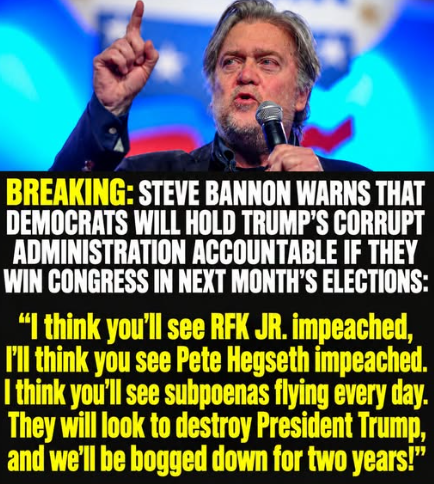 Yes, Hegseth and RFK, Jr. will be gone, but I think what’s going to happen first is the decapitation of the snake itself, i.e., the removal of Trump from the presidency.
Based on the news on social media, this could happen via the 25th Amendment, based on Trump’s mental deterioration. In my view, that’s a shame. If he’s not criminally prosecuted, this nation will be deprived of letting the American people and the rest of the world know that rule of law still matters in the United States.
Steve Bannon on the Consequences of a Blue Tsunami in November
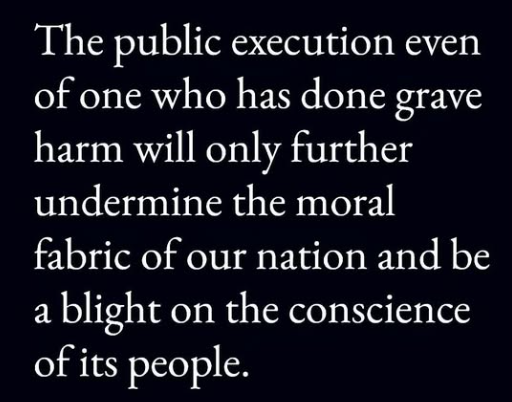 When I was young, I heard someone say, “The first execution this country televises will be the last one ever performed here.”
I think he was right at that time. You’d have millions of people watch that barbarism and realize that it was done in their name.
But today, we’re a far more insensitive, brutal, and stupid people that we were 50 years ago. If you doubt that, just look at the quality of the people at the top of the federal government–people like RFK, Jr., Hegseth, and Trump.
 As suggested at left, the world will never forget that the launch pad for all the destruction during Trump’s second term was our nation’s failure to prosecute the criminal sociopath for his attempted overthrow of the U.S. federal government on January 6, 2021.
Had these acts of treason been dealt with swiftly, all of this would have been avoided.


Steve Bannon on the Consequences of a Blue Tsunami in November

More on Televised Executions
“Sink or swim”: WA Gov hugely underestimating decline in regional gas demand while sleeping on green exports, new report finds
-
Climate Change1 year ago
Guest post: Why China is still building new coal – and when it might stop
-

 Greenhouse Gases2 years ago
嘉宾来稿:满足中国增长的用电需求 光伏加储能“比新建煤电更实惠”
-
Greenhouse Gases1 year ago
Guest post: Why China is still building new coal – and when it might stop
-

 Climate Change2 years ago
嘉宾来稿:满足中国增长的用电需求 光伏加储能“比新建煤电更实惠”
-

 Renewable Energy12 months ago
Sending Progressive Philanthropist George Soros to Prison?
-
Climate Change2 years ago
Bill Discounting Climate Change in Florida’s Energy Policy Awaits DeSantis’ Approval
-
Greenhouse Gases1 year ago
嘉宾来稿:探究火山喷发如何影响气候预测
-

 Climate Change2 years ago
Analysis: China’s CO2 falls 1% in Q2 2024 in first quarterly drop since Covid-19