

What’s the Future of Offshore Wind in the US?
This week we go on a deep dive on offshore wind in the US–what’s the status of projects that have been approved? Why do approvals for new sites seem to be slowing down? Is there enough manufacturing capacity to meet the transition goals? What can be done to boost wind energy growth?
Sign up now for Uptime Tech News, our weekly email update on all things wind technology. This episode is sponsored by Weather Guard Lightning Tech. Learn more about Weather Guard’s StrikeTape Wind Turbine LPS retrofit. Follow the show on Facebook, YouTube, Twitter, Linkedin and visit Weather Guard on the web. And subscribe to Rosemary Barnes’ YouTube channel here. Have a question we can answer on the show? Email us!
Pardalote Consulting – https://www.pardaloteconsulting.com
Weather Guard Lightning Tech – www.weatherguardwind.com
Intelstor – https://www.intelstor.com
Allen Hall: All right, Joel, it’s baseball season, and it’s actually playoff baseball season. Did you have a bunch of money on the Brewers already?
Joel Saxum: I don’t bet on my own teams, but I love them. And my heart got ripped out of my chest last night watching that damn game. Because it was, if you didn’t follow, it was 0 0 going into the seventh.
We hit two back to back home runs, and the Brewers, everybody in Wisconsin was riding high, and then we had four runs rung up on us in the ninth. So there goes our playoff run. And I was looking forward to being able to josh back and forth with our weather guard, lightning tech COO about her Philly fanatic fandom.
But we won’t get to see them in the playoffs.
Allen Hall: Well, it is fall in America, and that’s when the baseball playoffs start and college football kicks off. So everything, food wise, changes. The pumpkin spice is out, Joel. Not a fan. God, please. No one’s a fan of pumpkin spice? Pumpkin spice French toast, I’m a fan of, but that’s the only thing.
That’s not bad. What about squash and cranberries? I mean, you gotta like one of those.
Philip Totaro: Cranberry, I’ll take cranberries.
Joel Saxum: Cranberries up from northern Wisconsin, right? I grew up next to a cranberry bog.
Allen Hall: Alright, this is something everybody can agree upon. Maple syrup. Two cheers for maple syrup. Sure, why not.
Joel Saxum: You’re from northern New York, Phil! They do maples. There’s that syrup country. Sure. But I’m also not 12 years old eating a stack of pancakes anymore.
Allen Hall: Welcome to the Uptime Wind Energy Podcast. I’m your host, Alan Hall, and I’ll be joined by my Uptime co host. After these news headlines, in a bold move, Spain’s Acciona Energy has unveiled plans for a massive 3 gigawatt wind farm in Western Australia. The project, named Bellwether, aims to install 400 turbines, each with a capacity of 6.
2 megawatts. Once operational, it could become the largest onshore wind farm outside of China, significantly boosting Australia’s renewable energy capacity. Shifting to technology advancements, Weidmüller USA has introduced BoltControl, an innovative monitoring system for wind turbine blades. This system detects broken bolts in the blade root, potentially preventing costly damage and reducing downtime.
The technology promises to enhance safety and efficiency in wind farm operations. In South Korea, Unison has achieved a milestone by developing the country’s largest offshore wind turbine. The 10 megawatt direct drive turbine represents a significant leap in Korea’s wind energy capabilities. For Unison plans to begin performance tests in October of this year, with commercialization expected by early 2026.
GE Vernova has secured five new agreements in Spain, further solidifying its presence in the European wind market. The company will supply a total of 16 turbines for wind farms in Castilla, León, each with a capacity of 6. 1 megawatts. Additionally, GE Vernova will repower a wind farm in Catalonia and supply turbines for a new project in Andalusia.
Lastly, the Bureau of Ocean Energy Management has postponed the Oregon Offshore Wind Energy Auction. Due to insufficient bidder interest, this delay highlights the challenges facing offshore wind development in certain regions. BOEM plans to continue collaborating with stakeholders to support ongoing engagement processes and develop a strategic roadmap for offshore wind in Oregon.
That’s this week’s top news stories. After the break, I’ll be joined by my co host, CEO and founder of IntelStore, Phil Totaro, And the Chief Commercial Officer of Weather Guard, Joel Sexson. Dealing with damaged blades? Don’t let slower pairs keep your turbines down. Blade platforms get you back up and running fast.
Blade Platform’s truck mounted platforms reach up to 100 meters, allowing for a quick setup, improved safety, and efficient repairs. Book soon to secure your spot and experience a difference in blade access, speed, and efficiency. Visit BladePlatforms. com and get started today. Well, as offshore wind is really slowing down on the West Coast, particularly in Oregon, there’s been a number of changes on the East Coast around New York.
Massachusetts Rhode Island where the ownership is changing hands pretty rapidly. And some projects have been kicked down the road a little bit to allow the developers to get everything in, in, in place before. They start pounding monopiles in the ocean bottom. But there, Phil, there’s been a number of more financial transactions than there has been putting monopiles in.
A lot of financial companies have entered into the marketplace. A lot of power companies, state owned power companies for essentially are pulling out of offshore wind. That has changed the dynamic quite a bit. And you’re getting more outside players, non U. S. players into the U. S. offshore market.
What is the, sort of, the current status of that? And Joel, sort of, what does that look like in terms of growth? Is it really going to stagnate? Or what do you see out in the In the ocean there from all the ship activity.
Joel Saxum: Well, I know like, Alan, you and I we kind of regularly watch that marine traffic.
com. I, and I every couple of weeks I’m flipping up looking at like the TGS or foresee offshore maps and just kind of peeking around what’s happening. But we know right now, of course, Block Island, steel in the water. She’s been there for a while. That one’s always going to be there and running.
But as far as all these other wind farms we’ve been talking about for the last few years, active steel in the water, we have Vineyard Wind, which is Avangrid, right? And we also have South Fork, which is Orsted. And these are off the coast of Massachusetts. Rhode Island here, but South Fork is small, right?
Like Block Island, it’s like five turbines. South Fork, I think there’s a dozen turbines there in the water. Vineyard Wind, of course, a little bit bigger, but they had, the blade issues. So they slowed down and they paused on that one. And outside of those wind farms, as far as I know, the only other one that has steel in the water is the CVOW, the Coastal Virginia Offshore Wind.
Down off the coast of Virginia. So Phil, am I right or wrong there? Those are the only ones with steel in the water.
Philip Totaro: Yeah. The, so there’s some kind of early stage development activity still happening for a lot of the stuff that’s obviously not gone through tendering yet, the stuff that has gone through Boehm.
Consent is not quite as much as, everyone has hoped and to go back to the beginning of this Alan mentioned that, Oregon’s not really moving forward which is unfortunate, but it’s just reflective of the times. So we’re, whereas we were going through. A phase where we were having a lot of auctions.
Now, BOEM is kind of slowing down the process of having these auctions and trying to take the projects that are, quote unquote shovel ready and getting them, approved as much as they can. That said, there, there is still kind of a need and an opportunity for offshore wind and his interest rates will hopefully continue to come down.
It opens the door for a more profitable project where, if you remember back, what, three years ago, even, we had projects with PPAs that were being executed for like 77, hour. That’s relatively competitive with, some of the legacy onshore wind or solar projects in some of these same states where we would be doing the offshore wind offtake.
So. Offshore wind will make some sense moving forward. It’s really not going quite as quick as we would like, of course. But it looks like BOEM has at this point shifted their approach from doing more auctions to doing more consents and approvals of projects that have already been tendered.
Presumably to get the ball rolling on BOEM. Once this project’s been approved by everybody, including the government, makes it a lot harder to be undone by any kind of future regime change in, the presidency and whoever’s in control of Boehm.
Joel Saxum: So, Phil, one of the things that we talked about this slow down, not going as fast as we wanted to these things.
One of the positive things that I’m actually hearing from, my connections within the WIM network is that it’s allowing the ISPs a little bit of time to catch up. So we’re allow, we’re being able to get more people trained. There’s been some, some shifting, some gears and people working offshore and some things going on.
We’ve launched our first SOV, our first Jones Act compliant SOV. There’s another, I think there’s another two of those being built right now in different places around the country, but it’s giving, we went really hard and fast at it and there was all these kinds of issues and now we’re backing off, slowing down a little bit.
And like the pendulum has kind of swung the other way. It seems like the from a supply chain standpoint, and maybe not a supply chain as far as hardware, but a supply chain as far as services and those kinds of things. As a unit, the offshore wind industry in the United States is supported by the onshore wind industry in the United States because that’s what’s happening.
Is being able to catch up a little bit.
Allen Hall: Alan, are you hear that same thing? Oh, I think there’s been a lot of effort focused on offshore on the O& M side. There’s more people gathering steam and getting expertise from overseas to spool up their offerings. That was a smart move. I think the bigger picture going back into Phil’s discussion of, hey, what’s going to be developed over the next couple of years, not much, and the reason is because the factories do not exist to ramp it up.
If you take a look at Siemens Gamesa was supposed to build a blade factory in Virginia. They decided not to do that. GE is closing down half a line in France. The, that means they got one line in France and one light up in gas bay to build offshore blades with Siemens is going to rely on Hull in England to do the 108 meter blades.
Vestas is kind of in a similar situation that in order to start putting a lot of turbines out on the East coast of the United States, you would have to. add at least five, six, seven factories, blade factories or blade lines, so to speak to fulfill these orders. So even though there may be some demand in the U.
S. with the high interest rates, you’re still stuck because you can’t get the blades, you can’t get them you may be able to get towers, but that’s it. Which I think is what’s going to happen is they’re going to end up driving monopiles in some of these and waiting, which could be more than 12 months, maybe closer to 36 months before you start seeing some turbine deliveries is they’re just not increasing capacity.
Joel Saxum: Yeah. And at the end of the day the steel isn’t the hard component, right? Like can ramp up, you can ramp up factories all over the place to create the steel components. We need transition pieces, monopiles, these kinds of things. They’re specialized, but they’re not that specialized. Not like 108 meter blade or these nacelles or the other thing that need to be built.
So yeah, there’s definitely I could see that Alan. I said, that’s a concept I didn’t really have thought of is. Putting steel in the water and then just waiting until the turbines come. Yeah.
Philip Totaro: Well, but the reality with that is that it’s unlikely to happen because they don’t want to, there are still reliability issues with doing that.
If you’re waiting on parts, they’re just gonna delay the project. The problem,
Allen Hall: Phil, is gonna be driving the monopiles and having the ships to drive the monopiles, right? They have a schedule set, to do that part of it. I think that may happen because of the schedule
Philip Totaro: with the ships. Well, yes and no, but that’s kind of my point, is we, there are so few projects that have even been consented in the U.
S. right now that, that are ready to be built, that don’t already have a vessel assigned. And at the end of the day, these new power offtake agreements that have been signed with different states like New York or New Jersey or whomever, they don’t have, they just have, a price tag without necessarily a definitive, install by date if you will.
So we, we have a situation where the developers and independent power producers have an opportunity to kind of. Stretch things out, stretch your schedule out to be able to accommodate when the vessels are going to be available and the turbine components are going to be available. But this goes, the reason that we don’t have all those factories goes back to the pace of.
the approvals and the pace of the build out to begin with. We got caught in a scenario where everybody wanted to do factories in the U. S. GE wanted to have factories, Vestas wanted to do one in Jersey, Joel just talked about some of the other ones in Virginia and elsewhere. At the end of the day, most of them didn’t get built because we just got caught in this scenario of, escalating interest rates, and which triggered all those, power purchase contract renegotiations, which, delayed things because with PPAs going up, CapEx has to go up, it’s more money that the developer has to go ask for, and the bank is saying, well, We’re not giving you any more, we, this is the situation.
We got to spread our risk out and diversify our investments as well. We’re only prepared to give you, this much. And if you’re trying to get your project to a financial close to FID, you can’t do that if the bank is only giving you a 60 percent of the capital you’re going to need to be able to build a project.
So. The industry’s having to do more with less, but this also addresses your earlier point, which is if we’re not going to be in a position to spend the CapEx now, it’s easier to get ramped up on all those soft costs around the OpEx and the services and everything else, because it’s cheaper to do. And we have the time and bandwidth to be able to do it.
So we might as well take advantage of that.
Allen Hall: I want to take a quick break here, but after the break, I want to talk about the investors and how they have driven. This marketplace. We’re now the OEMs. Some of them don’t want to participate anymore. As wind energy professionals, staying informed is crucial, and let’s face it, difficult.
That’s why the Uptime Podcast recommends PES Wind magazine. PES Wind offers a diverse range of in depth articles and expert insights that dive into the most pressing issues facing our energy future. Whether you’re an industry veteran or new to wind, PES Wind has the high quality content you need. Don’t miss out.
Visit PESWind. com today. Also The aspect of the investment banks and all the financiers that have been involved in offshore wind have driven the marketplace in a very unique way. At first it was, we wanted to put the biggest turbines we can out in the water, reduce the number of monopiles, reduce the amount of cables.
So on your spreadsheet, setting up in an office, probably in Toronto or somewhere, that they’ve looked at it and said, hey, I can get more power out of a larger turbine, obviously, I can reduce my cost, my profitability goes up, everything seems hunky dory on that spreadsheet. The problem has been, though, is that when Vestas went after these turbines and started, pushing 12 to 15, and it sounds like Siemens is going to develop a 20 megawatt turbine for sure, but GE and Vestas are going to hang around 15 megawatt, that they ran into development problems.
That it wasn’t as easy as just building it. It wasn’t, it was more of an engineering task than they thought it was going to be in a manufacturing test for that matter. So now the investment decisions that were made a year or two, three years ago now are really wreaking havoc. The GEs of the world don’t see profit on offshore wind on a major scale.
Why would I build a factory? Why would I build that factory to build a factory? I think Joel, I think the number of investors was about a half a billion dollars to build a blade factory, something in that realm. So if you have to build five, six, seven of these things, you’re talking about three, four, five, probably five in this marketplace, 5 billion to build up blade factories, that’s just for the blades, goodness sakes.
Why would you do that? There’s no ROI on that. So if the investment banks want to go off and make ROI on the projects, You have to look at it from the OAN’s perspective, they need an ROI also, and that has been stripped, completely stripped from them.
Philip Totaro: There’s two things at play there though, one is Vessels aren’t gonna be capable, not for a while, of installing anything that’s, 18 to 20 like the Siemens Gamesa looks like they’re gonna do.
It’s, so, the reality there is the supply chain, notwithstanding, you also have vessels that are the bigger holdup in being able to do that. Because it’s not just the construction of the project site. If you have a problem with one of those turbines, and we’ve been talking on various, iterations of the Uptime Wind Energy podcast about, replaceable technology and whatnot.
But at the end of the day, if you have to have service performed on a 20 megawatt offshore wind turbine or bigger. There are only going to be a handful of vessels that are going to be capable of doing it, and if they’re already booked for installations elsewhere in the world, what are you going to do to repair a turbine?
Now, instead of having, a project site where you’ve got one turbine goes down, and it’s maybe, three to five percent of your entire project site’s power output, if you have fewer turbines and a 20 megawatt turbine goes down, that could be 10 percent of your or, something substantial in terms of your site’s power output.
So the bottom line is that’s where the financial forecasters, a spreadsheet breaks down, but it also, it just one other thing. It also comes back to, the, there’s not actually that much different, and this is why, cause this is kind of related to what leading light has or what happened with leading light.
Why they’re delaying the project is. They said that they can’t get the size turbine they want from GE, which was an 18 megawatt. GE is only going to give them a 15 and a half. Now, I don’t really see much of a difference between the two other than obviously some power ratings, some rotor size, etc.
But it’s not like it’s actually going to be that much LCOE difference between a 15 and a half megawatt turbine and an 18 megawatt turbine. Okay, so I don’t understand why that’s a problem.
Allen Hall: No, but on the Excel spreadsheet, if you start looking at the third digit there, Pass the decimal, it’s bigger.
And that’s what’s happening. It gets down to that sort of a couple half a percentage point, a quarter of a percentage point.
Philip Totaro: It is, but they also said, okay, that we can’t use a Vestas turbine at the site. Okay, fine, that’s a technical issue. Has less to do with, I mean, I still think they probably could have made a Vestas turbine work at the site, but so I think that’s maybe a bit of salesmanship there.
But then they also suggested that we can’t really source from Siemens because Siemens turbines are just going to be too expensive. And that’s. Just the new reality we’re in. The reality is that the OEMs are not going to lose money. Not anymore. They were prepared to do that before,
Joel Saxum: but they’re not going to do it anymore.
Nope. That day is over. The one thing I’m looking at is this, is like, there’s a really simple number that we need to look at. Right now, we’ve only got a hundred turbines in the water. And in the next year, maybe a hundred more. In the next two, three years, maybe two hundred. So, like, there’s no, there’s absolutely no demand or reason to build new blade factories or build a nacelle factory.
Like, if you’re going to build one, build it somewhere where they’re going to throw a lot of stuff in the water and, like, and just use it
Philip Totaro: to support as a global thing. Joel, why aren’t we buying turbines from China, then? Because they seem to have plenty of factories over there.
Allen Hall: I’ll tell you why we’re not.
We’re not because the DOE and the administration said it was going to create good paying American jobs. Thanks. And those good paying American jobs were going to be in blade factories and the cell factories and the assemblies and the ports, and that can’t happen now, but you can feel it though, right?
You can feel that tension building on what is going on in offshore wind. Why is it taking so long? And I have to throw in, and I was at the AMI wind turbine blade conference this past week. Which was tremendous, by the way, I had a really good time and man, did I meet a lot of new people and a lot of people that I knew from all over the world.
But the consensus on offshore is that it is going to go much slower than was ever envisioned and that the OEMs are not going to start building things on wishes and dreams. That is completely done that and even getting to your point about ships, Joel, the ships are coming in at, way over budget.
And the delays in the schedules have been really pronounced. That’s not going to help anything. So, in the meantime, which is what I was concerned with coming out of EMI is, alright, what is going to happen by 2030? Where is all this electricity going to come from? Evidently, Microsoft is going to restart one of the nuclear facilities in New York just for servers and AI, but is there going to be a push, a more broader push, because offshore can’t develop fast enough to get other renewables online, if that hydro, solar, Onshore wind, where is this going and how
Philip Totaro: fast?
Keep in mind too, that for all the stuff that’s in the interconnection queue right now, all those developers have paid money to be in that queue, and are gonna pay even more money to get out of the queue and get their thing approved, and get the project built. So, it’s not like the government doesn’t have the financial resources to be able to go and staff up and get the appropriate people in place to start speeding up the interconnection queue issue that we’ve got, but that’s only one part of it.
Transmission build out and demand are still going to end up driving the majority of this if demand keeps going up, particularly driven by these data centers and AI use and that sort of thing. Then that’s going to necessitate speeding up the permitting process. That’s going to, coincide with lowering interest rates, which would hopefully unlock some floodgates as far as capital is concerned, and should get more projects going.
But, Again you’re going to have to invest in the infrastructure necessary, which is really
Joel Saxum: transmission. Alan, you said it right. Like the consensus here is that there’s a lot of great wind resources. We need to connect things to the grid, but none of that is near the load centers that need the renewable energy.
That’s why three mile Island got just signed up by Microsoft to start back up because. It’s a load center that’s near, like, we have New York, you have that whole east coast. That’s why we’re going with offshore wind over there, because there’s no real estate to build renewables or, other kind of There’s a great onshore wind resource.
I mean, there’s some in upstate New York and you can, and that’s being moved on transmission to New York city and stuff. But like at the end of the day, like the only option you got here is what we’ve talked about before. It’s like HVDC somewhere else to get
Philip Totaro: power. And look the 1. 5 billion for some additional transmission, including the Southern Spirit transmission Linking, for the first time ever, ERCOT to any other part of the United States.
So they’re not going to be fully islanded anymore down in Texas, Joel.
Allen Hall: If they’re going to, if they’re going to be investing money into renewable energy and they really want to get offshore wind going, they’re going to have to build GE a factory. New York or the feds are going to have to put down a billion dollars in some sort of factory in New York.
Or New Jersey, somewhere up in there to speed this on if you could say, Hey, GE, here’s the facility. Here’s all the infrastructure. You need to put a blade mold in there and some people let’s go. I’m going to or I’m going to low cost you on the loan to go do this and give you a low interest loan.
0 percent loan. You’re going to pay it back over 20 years and deferred taxes or whatever they wanted to do to it. You’re going to have to sweeten that pot to get a GE or a Siemens to start producing blades in quantity.
Philip Totaro: All right, let me break it down like this, because we’ve been, one of the hot topics coming out of the Wind Energy Hamburg last week was, China’s incursion into the European market.
And at the end of the day, we started doing some research ourselves on, China, since they’ve started doing the Belt and Road, I don’t remember off the top of my head, like, how much they’ve spent, but just in the past 21 months China spent over 100 billion, the equivalent of 100 billion Euro in pursuing energy related projects through their Belt and Road initiative, which is investments in foreign markets, okay?
The European Investment Bank and the European Bank for Reconstruction and Development have collectively spent about 18 billion euros in that same time frame. I don’t have numbers yet for how much we’ve spent in terms of foreign direct investment. That’s one equation and one part of it. But even domestically, how are we keeping up with China when their government has dedicated that much money to ensuring that their OEMs are successful?
You’re absolutely right if the government in the U. S. doesn’t step in and help to build a factory for G. E. Because right now, G. E. would build a factory, but they can’t do it because they don’t have order book. The reason they don’t have order book is because of all these other things we just talked about.
But at the end of the day, some, somebody, something’s gotta give, and if you’re committed to supporting domestic production and building a domestic industry, then you gotta get your wallet out and start spending some taxpayer money on, re prioritizing it from whatever else you’re spending it on to this, alright?
You want an offshore wind industry, you gotta build it, you gotta invest in it.
Allen Hall: Bill, the IRA bill was 670 billion dollars, right? Right. We couldn’t have built a factory inside of that 600 plus billion.
Philip Totaro: Or two, or three, or four? Sounds like we could have built a few of them, y’know? If they’re half a billion each for, y’know, a blade factory and a cell factory, I mean, y’know, yeah.
We probably could have included some of that cost, or at least done some kind of tax deferment on some of that, considering the circumstances where we all know that we’re in a high, y’know, interest rate environment still. So let’s do something to either, let’s lower those interest rates a little faster, or let’s, do something else that’s gonna spur in interest and investment.
Because with oil and gas companies pulling capital out, Everybody else is going to start pulling capital out of renewables and we’re not going to have, we’re going to be, we’re supposed to be, top in the world on onshore wind, offshore wind, everything else we are going to be.
You know the laughing stock of the industry where you know europe and asia continue to outpace us
Allen Hall: it’s there’s a good racing analogy to this which I like to use in this case if they lowered interest rates back down to something normal the problem is you’re in 20th position. And the lead car is a half mile in front of you, maybe more.
And now you’re going exactly the same speed. You can’t catch up. You have to pour a little more gas into that fire to get back up to where you want to be. Right? So that delay doesn’t go away. Now you have to really pour money into it. To catch up,
Philip Totaro: right? And they’ve made it, they’ve created a situation where you’re right.
It is even more expensive, although you also don’t want to lower interest rates too much, too fast, because that creates other economic issues. But the point is that we’ve, even the jobs report we saw this week where unemployment’s dropped to 4. 1 percent in the U S you’ve got us, you’ve got an economic scenario where, you know, everybody, including the Fed now kind of agrees that the market can probably handle.
More rate easing, and we’re going to get into a scenario where you’re going to be able to create more of a favorable environment. But that’s just, as Alan just pointed out, that’s just getting us back up to the speed that we were going before. How do we catch up to where we’re supposed to be? We’ve talked on the show about how the government put, a 15 gigawatt by 2030 plan in place, and then they had to revise it because it was clear that we were never going to achieve that much in installation and operating facilities.
So now it’s 15 gigawatts permitted by 2030, which probably isn’t even going to happen now at this point either with the pace they’re going. Especially if Boehm’s gonna reining in the auctions because there’s such limited interest. I mean, this is exactly what happened in the Gulf of Mexico with Texas in particular.
Even the Louisiana sites that they did auction when they had that auction about a, a little over a year ago Pitton’s was paid, by the companies who got those lease sites. Nobody wants to even do an auction in Oregon at the moment, particularly with, the tribes and other people there locally piling on and saying, we’re going to oppose this, which, look, at the end of the day, even the opposition that we’ve got in Massachusetts, New Jersey, None of these people that’s opposing offshore wind legally is actually going to stop that process from happening, the development process on a project site from happening, unless they hit them when they’re, they kick them when they’re down.
Basically, they hit them at a point where interest rates are slowing down the project development process to the point where it causes the government to have a bit of a rethink on, well, can we really sustain this? And if they’re gonna start pulling the plug on the mechanisms that create a market environment where everybody’s free to invest, then all these crackpots are gonna come out of the woodwork and try and file a lawsuit to try and pile on the offshore wind developers, trying to get them to divert money and resources away from project development to legal fees.
So, none of this is helping us go fast and catch back up to where we need to be. And get us back into a position where we are market leading in offshore wind.
Joel Saxum: Okay, the wind farm of the week this week is the seven cowboy wind farm built by nl in oklahoma It’s out west of oklahoma city about an hour and a half It has 107 ge 2x machines the 2.
82 with 127 meter rotors it’s located in Washita and Kiowa Counties. That 107 turbines will generate approximately 1. 3 terawatt hours of energy annually. And it will, that’s enough energy to power 120, 000 households, which in western Oklahoma is a lot. So that energy though, and this is an interesting thing, is being sold from this wind farm on some PPA or virtual PPAs.
The companies lined up for them are Campbell Soup Company, which is kind of a neat one. Thermo Fisher Scientific is another one of the PPAs. They’re taking 90 megawatts of a virtual PPA. And then the other interesting one is a Japanese pharmaceutical company called Katayama. Takeda and they’re taking 79 megawatts of electricity off this wind farm.
Now the thing Enel is doing with this one that I really like is they have built a training facility in Oklahoma city to bolster the wind technician shortage that we’re seeing. And this is a thing that’s near and dear to us here at the Uptime podcast. We’ve started the build turbines. com website as a resource for technicians looking to get in or companies looking to recruit technicians, but Enel is also doing the same thing by having their own training facility up there in Oklahoma city.
So, these 300 construction jobs created by the seven cowboy wind farm during construction, 55 million in local tax revenue, and 41 million in landowner payments over the life of the wind farm are a great thing for Oklahoma. So seven cowboy wind farm from NL out there in Western Oklahoma, you are our wind farm of the week.
Allen Hall: That’s going to do it for this week’s Uptime Wind Energy Podcast. Thanks for listening. Please give us a five star rating on your podcast platform and subscribe in the show notes below to Uptime Tech News, our weekly newsletter. Transcribed And check out Rosie’s YouTube channel, Engineering with Rosie, and we’ll see you here next week on the Uptime Wind Energy Podcast.
https://weatherguardwind.com/whats-the-future-of-offshore-wind-in-the-us/

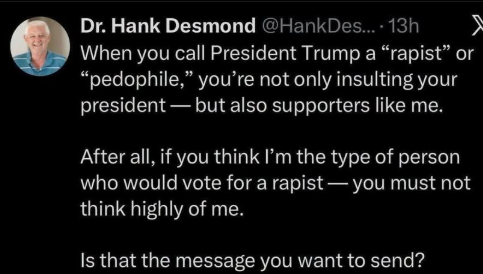 Apparently, this guy believes that the majority of Americans think poorly of Trump supporters, and wonders if this the message we want to send.
News flash: This is precisely the message we want to send.
I wonder what his doctorate is in. Filth? Debauchery? White collar felonies? War crimes?
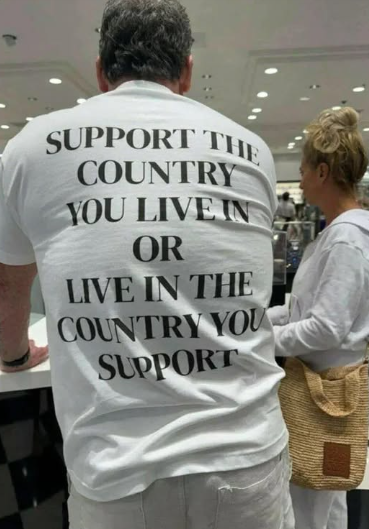 The idiot’s t-shirt shown here raises the question: How do you define the word “support?”
In a certain sense, I support all countries, insofar as the people living in each deserve to live freely.
As an American, I support the United States. I revere it for its strengths, while I advocate for remedying its considerable set of weaknesses: corruption, injustice, racism, indifference to human suffering, militarism, and greed.
 BREAKING: Texas Republicans are flailing after a party nominee posted vile racist commentary and refused to take it back.


-
Climate Change1 year ago
Guest post: Why China is still building new coal – and when it might stop
-

 Greenhouse Gases2 years ago
嘉宾来稿:满足中国增长的用电需求 光伏加储能“比新建煤电更实惠”
-
Greenhouse Gases1 year ago
Guest post: Why China is still building new coal – and when it might stop
-

 Climate Change2 years ago
嘉宾来稿:满足中国增长的用电需求 光伏加储能“比新建煤电更实惠”
-

 Renewable Energy11 months ago
Sending Progressive Philanthropist George Soros to Prison?
-
Climate Change2 years ago
Bill Discounting Climate Change in Florida’s Energy Policy Awaits DeSantis’ Approval
-
Greenhouse Gases1 year ago
嘉宾来稿:探究火山喷发如何影响气候预测
-

 Carbon Footprint2 years ago
US SEC’s Climate Disclosure Rules Spur Renewed Interest in Carbon Credits