

COP30 came to a close on Saturday afternoon in the Amazon city of Belém with government delegates grumpy and exhausted after all-night talks. It ended with a political deal that was weaker than many had hoped for and which failed to tackle – or even directly mention – the elephant in the room: fossil fuels.
Strong resistance from oil, coal and gas-producing countries, including Saudi Arabia, Russia and India, made it impossible to include a roadmap to transition away from fossil fuels – which European nations had fought for hard – in the final negotiated package. Brazil, instead, said it would create one, along with another roadmap on halting deforestation.
There were some wins – not least that against a hostile geopolitical background, this year’s UN climate conference managed to land a deal with modest steps towards increasing ambition on cutting emissions and helping poor countries cope with worsening climate impacts.
COP30 fails to land deal on fossil fuel transition but triples finance for climate adaptation
At this weekend’s G20 summit, where the US was also absent, leaders of the world’s biggest economies confirmed their support for the Paris Agreement and efforts to limit global warming to its temperature goals, as well as enabling the Global South to access more finance for climate action.
In one of the few political wins from COP30, the poorest countries secured a promise to triple international funding for them to adapt to more extreme weather and rising seas by 2035, though that deadline was five years later than they wanted and lacking a firm number.
Perhaps the most celebrated result, however – slipping largely under the radar – was an agreement to set up a “just transition mechanism” to ensure that workers and their communities do not lose out from the shift from dirty to clean energy and get a fairer share of the benefits.
Trade was another new kid on the block, with governments deciding to hold a series of dialogues on cooperating “to promote a supportive and open international economic system that would lead to sustainable economic growth and development” in all countries.
Here’s a selection of reactions from top politicians, UN officials, experts and campaigners to the COP30 outcome:
Marina Silva, Brazil’s Minister of the Environment and Climate Change:
“I believe we can show today that, despite delays, contradictions and disputes, there is continuity between the ambition of Rio-92 and today’s effort. That we remain capable of cooperating, of learning, and of recognising that there are no shortcuts – and that the courage to confront the climate crisis is the result of persistence and collective effort.
“But even if those earlier versions of us were to say we have not gone as far as we once imagined we would – or needed to – they would nevertheless recognise something essential: we are still here. And we continue steadfast in our commitment to undertake the journey necessary to overcome our differences and contradictions in urgently confronting climate change.”
Juan Carlos Monterrey-Gomez, Special Representative for Climate Change & National Climate Change Director of the Ministry of Environment of Panama:
“Ten years after the adoption of the Paris Agreement, the negotiators that your governments sent to COP30 are not defending your future. They are defending the very industries that created this crisis: the fossil fuel industry and the forces driving global deforestation…
“A Forest COP with no commitment on forests is a very bad joke. A climate decision that cannot even say “fossil fuels” is not neutrality, it is complicity. And what is happening here transcends incompetence.”
António Guterres, Secretary-General of the United Nations:
“COPs are consensus-based – and in a period of geopolitical divides, consensus is ever harder to reach. I cannot pretend that COP30 has delivered everything that is needed.
“COP30 is over, but our work is not. I will continue pushing for higher ambition and greater solidarity. To all those who marched, negotiated, advised, reported and mobilised: do not give up. History is on your side – and so is the United Nations.”
Al Gore, former US Vice President:
“Despite petrostates’ attempt to veto the development of a roadmap away from fossil fuels, the Brazilian COP30 Presidency will lead an effort to develop this roadmap, bolstered by the more than 80 countries that already support the effort. Ultimately, petrostates, the fossil fuel industry, and their allies are losing power…
“The rest of the world is fed up with delay and denial. Now is the time to forge global partnerships among all levels of government, the private sector, finance, and civil society to cultivate and achieve the level of action necessary to fulfill the promise the world made to future generations under the Paris Agreement.”
Inger Andersen, United Nations Environment Programme Executive Director:
“COP30… reinforced the growing global momentum, both in and outside of the negotiating halls, to transition away from fossil fuels as agreed in Dubai at COP28, halt deforestation – including the launch of the Tropical Forest Forever Facility that now stands at US$6.7 billion – and pursue rapid, high-impact measures such as cutting methane emissions.
“The Action Agenda, the foundation to such an inclusive COP from the Brazil Presidency that saw unprecedented Indigenous Peoples leadership from the Amazon and across the world, reinforced momentum is coming from all sources, including businesses, cities and regions, local communities, civil society, women, people of African descent, youth, and many more.”
Toya Manchineri, Manchineri Peoples, Coordination of Indigenous Organizations of the Brazilian Amazon (COIAB):
“Indigenous Peoples will remain vigilant, mobilised, and present beyond COP30 to ensure that our voices are respected and that global decisions reflect the urgency we experience in our territories. For some, COP ends today, for us territorial defense in the heart of the Amazon is every day.”
Kaysie Brown, Associate Director, Climate Diplomacy & Geopolitics, E3G:
“In an increasingly turbulent and multi-polar world, COP30 was a litmus test of whether political will and commitment to multilateralism could keep pace with the momentum already evident in the real economy.
“A deal was always going to be hard-fought, and the outcome on the table shows that Parties were not consistently resolute in pursuing the level of collective ambition required. Even so, there are important foundations to build on – elements that can be translated into tangible acceleration of real-world progress.”
Li Shuo, Director of the China Climate Hub at the Asia Society Policy Institute:
“COP30 marks a new inflection point in global climate politics. As national climate ambition slows, international negotiations are now constrained by diminishing political will. When the United States steps back, others are left cautious and indecisive.
“Belém has laid bare an urgent truth: in the absence of strong political momentum for greater ambition, the climate agenda will be driven less by the COP process and more by the economic forces unfolding in the real world.”
Mohamed Adow, Director, Power Shift Africa:
“With an increasingly fractured geopolitical backdrop, COP30 gave us some baby steps in the right direction, but considering the scale of the climate crisis, it has failed to rise to the occasion.
“Among the green shoots to emerge was the creation of a Just Transition Action Mechanism – a recognition that the global move away from fossil fuels will not abandon workers and frontline communities.
“COP30 kept the process alive — but process alone will not cool the planet. Roadmaps and workplans will mean nothing unless they now translate into real finance and real action for the countries bearing the brunt of the crisis.”
Tasneem Essop, Executive Director, Climate Action Network International:
“We came here to get the Belém Action Mechanism – for families, for workers, for communities. The adoption of a Just Transition mechanism was a win shaped by years of pressure from civil society.
“This outcome didn’t fall from the sky; it was carved out through struggle, persistence, and the moral clarity of those living on the frontlines of climate breakdown. Governments must now honour this Just Transition mechanism with real action. Anything less is a betrayal of people – and of the Paris promise.”
Ani Dasgupta, President & CEO, World Resources Institute:
“COP30 delivered breakthroughs to triple adaptation finance, protect the world’s forests and elevate the voices of Indigenous people like never before. This shows that even against a challenging geopolitical backdrop, international climate cooperation can still deliver results…
“COP30 succeeded in putting people at the center of climate action. Indigenous Peoples participated in record numbers and made their voices heard. The Global Ethical Stocktake affirmed that fairness, inclusion, and responsibility must guide every decision. New commitments for Indigenous Peoples’ and communities’ land rights and finance offer a strong step forward, though far more is needed.”
The post “We are still here” – COP30 shows resolve to keep fighting climate crisis appeared first on Climate Home News.
“We are still here” – COP30 shows resolve to keep fighting climate crisis

Next week, diplomats from around the world will descend on Yerevan, Armenia, to negotiate a series of decisions under the UN Convention on Biological Diversity (CBD).
Between 19 and 30 October, 196 parties will gather to hammer out the precise wording of the dozens of legal texts that make up the decisions under the Conference of the Parties (COP) to the CBD.
This year’s summit is particularly significant, as it marks the halfway point between the agreement of the Kunming-Montreal Global Biodiversity Framework and the deadline for achieving its targets.
The CBD has found that countries are currently not on track to meet 22 out of the framework’s 23 targets.
During the fortnight, delegates will also be negotiating decisions relating to the two supplemental protocols to the CBD: the Cartagena Protocol, which covers biosafety; and the Nagoya Protocol, which covers access and benefit-sharing for the use of genetic resources.
(The Cartagena and Nagoya Protocols, which are each governed by a “meeting of the parties”, or “MOP”, have fewer parties than the CBD as a whole, with 173 and 141, respectively.)
Carbon Brief is tracking the progress of countries towards consensus on dozens of negotiating texts using the interactive table below.
The tracker includes texts from the COP, as well as the MOPs for the Cartagena and Nagoya protocols. It also includes draft decisions from the most recent subsidiary body meetings, as these form the starting point for the negotiations in Yerevan.
The CBD has three subsidiary bodies: the subsidiary body on scientific, technical and technological advice (SBSTTA), the subsidiary body on implementation (SBI) and the subsidiary body on article 8(j) and other provisions (SB8J).
SB8J focuses on issues related to the Indigenous peoples and local communities. It was established at COP16 in Cali, Colombia, in 2024.
The first two columns of the interactive tracker list the topic of each agenda item and the relevant body, with subsequent columns including dates, page counts and links to the original documents.
The table is searchable and can be sorted using the arrows in the header.
Areas of disagreement in UN draft texts are denoted by square brackets. Counting the brackets in a particular iteration of a text therefore gives a sense of how far parties are from reaching consensus.
The bracket column is colour-coded, with dark green indicating a low number of brackets and red indicating a high number of brackets remaining.
Texts can also present parties with choices using “options” or alternatives (“alt”), which are counted together in the sixth column of the table.
The key discussions in Yerevan will centre around two agenda items in particular. The first is the global review, which will assess progress towards the GBF and make recommendations for accelerating action.
The second is finance, which can be separated into two parts: resource mobilisation and the financial mechanism. On resource mobilisation, biodiverse global south countries are likely to push for an increased amount of international finance for conservation.
Disagreement over the creation of the financial mechanism led to the suspension of COP16 in Cali in October 2024, as parties failed to find agreement on the mobilisation of finance before the end of the summit.
Global south countries want the establishment of a separate financial mechanism under the control of the CBD; global north countries largely prefer to maintain the existing mechanism, which sits under the Global Environment Facility.
At the resumed session of COP16 in Rome in early 2025, countries agreed on a roadmap that would lead to the establishment of a permanent mechanism.
related
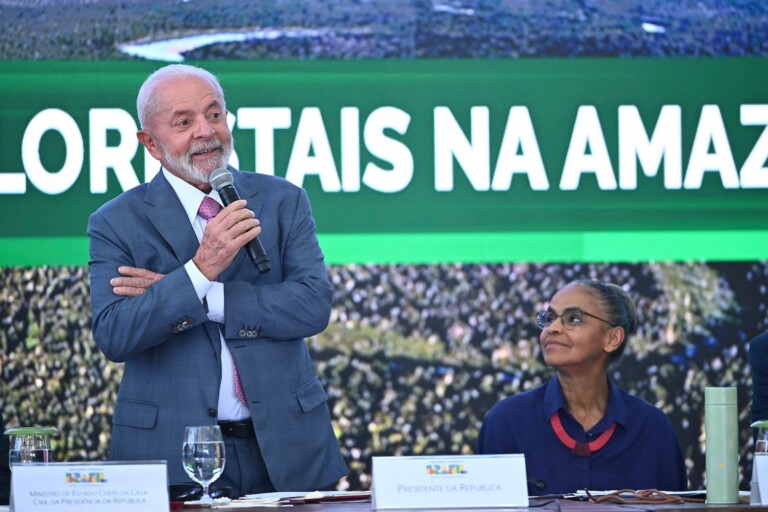
Analysis: Lula presidency saved at least 20,000km2 of Brazilian Amazon since 2022
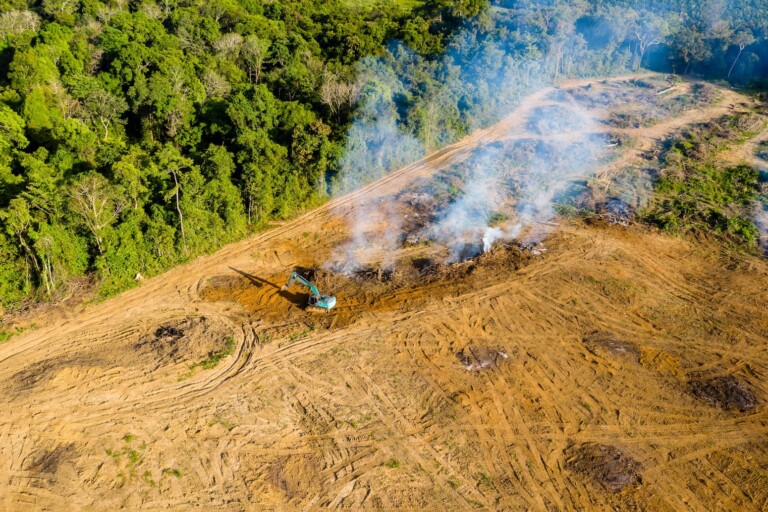
Why land-use emissions have fallen by a third this century – in six charts

Analysis: 84% of nations miss deadline to identify ‘nature-harming’ subsidies by 2025
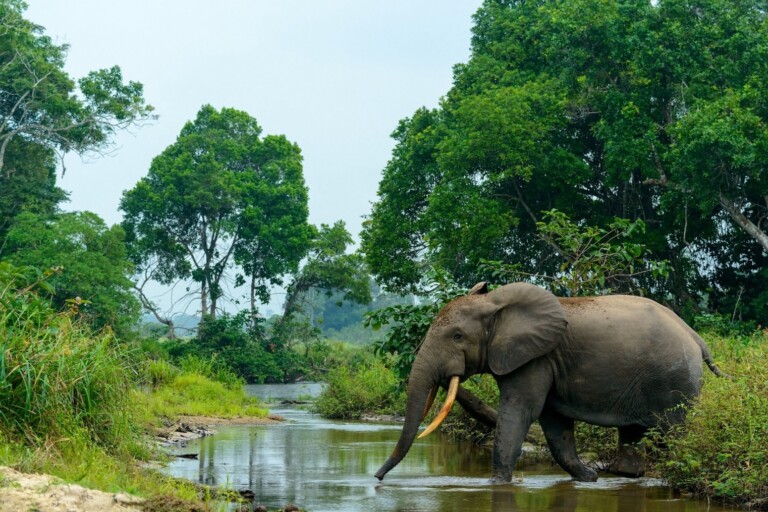
UK withdraws millions in funding from world’s second-largest rainforest in Congo
The post Interactive: Tracking negotiating texts at the COP17 biodiversity summit appeared first on Carbon Brief.
Interactive: Tracking negotiating texts at the COP17 biodiversity summit
A beacon of love
On an outer island of Fiji, two thousand nautical miles from Sydney, is a shining light of hope and resilience for our troubled world.
The island of Kioa is home to a Tuvaluan community who migrated from their atoll of Vaitupu in the late 1940s. It is a land of warm hearts, big smiles, and deep cultural roots; a place where the sound of a conch still summons the island together, where islanders paddle out to fish in carved outrigger canoes, and healthy happy children walk barefoot to school.
Here, culture is life. Kioans live sustainably through their traditional knowledge and practices. The island is alive with song, dance and the rhythms of a life tied to the tides, the winds, and the seasons.
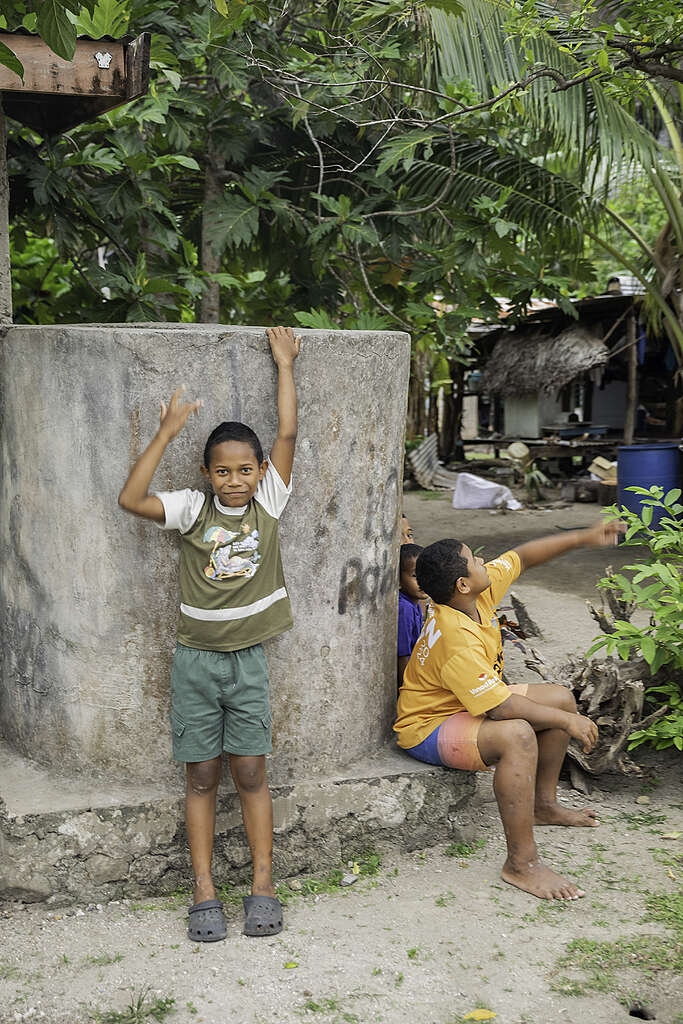
Facing the future
Greenpeace has been lucky to have a relationship with Kioa for a number of years now, and we are continually learning from this remarkable community.
Last week, as part of our Voyaging Oceania project, we returned to the island. Our purpose was twofold —- to carry messages from the island to leaders gathering in Nadi this week for the Pacific Pre-COP, and to support the Kioa community in their efforts to improve water security for the island.
Unlike Tuvalu itself, with its eight atolls, Kioa is a mountainous, forested and richly fertile island. It will remain habitable far into the future. Kioans did not initially migrate from Vaitupu due to climate change, but the move was prophetic. They now have a lifeboat.
However, even Kioa faces challenges on our rapidly warming planet, in particular when it comes to water. Climate change is shifting once reliable rainfall patterns. On top of this, the island is already feeling the effect of this year’s intensifying El Niño event, which for Fiji means reduced rainfall and prolonged dry spells.
Right now, fresh water has to be carefully rationed, and is only available for a few hours a day. During last week’s visit aboard our campaigning ship Oceania, Greenpeace was privileged to work with the Kioa community on a new solar-powered water distribution project for the island.
Designed and led by the island, the project involves using a solar pump to move water from a reliable source to a storage tank and then using gravity to distribute the water around the village.
It was a lesson in how local knowledge and ingenuity can be the backbone of today’s climate solutions. To build a dam around the source, the local community knew the exact spot where they could gather gravel at low tide to mix with the cement. They took only what was needed, knowing that all resources must be carefully conserved. Kioa has no roads and no machinery, and it was an all-of-island effort to carry the materials up to the project site, including many heavy bags of sand and rock.
Such projects truly bring to life the vision of a resilient, locally-led, fossil fuel free Pacific.