

There is a “massive gap between rhetoric and reality” that must be closed by new climate pledges being drafted under the Paris Agreement, the UN Environment Programme (UNEP) says.
In the 15th edition of its annual “emissions gap” report, the UNEP calls for “no more hot air” as countries approach the February 2025 deadline to submit their next nationally determined contributions (NDCs) setting mitigation targets for 2035.
These NDCs “must deliver a quantum leap in ambition in tandem with accelerated mitigation action in this decade”, the report says.
The report charts the “gap” between where emissions are headed under current policies and commitments over the coming decade, compared to what is needed to meet the Paris goal of limiting global warming to “well below” 2C and pursuing efforts to stay under 1.5C.
It highlights that greenhouse gas emissions reached record levels in 2023, up 1.3% from 2022, and rising notably faster than the average over the past decade.
The report warns that both progress and ambition have “plateaued” in recent years, with relatively little of substance occurring since the pledges made at COP26 in 2021. And many countries are not even on track to meet their existing NDCs, with current policy projections from G20 nations exceeding NDC commitments by a collective 1bn tonnes of greenhouse gas emissions (in carbon dioxide equivalent, CO2e) in 2030.
Current policies put the world on track for 2.9C of warming by 2100, the report finds – though this could be reduced to 2.4-2.6C, if all existing NDCs are met.
But unless global emissions in 2030 are brought below the levels implied by current NDCs, a pathway to 1.5C with no or limited overshoot becomes “impossible”, the report says, and “strongly” increases the challenge of limiting warming to 2C.
While the magnitude of the challenge is “indisputable”, there are “abundant opportunities for accelerating mitigation”, the report says. It finds that global emissions could be cut by 54% by 2030 and 72% by 2035 at a cost of less than $200 per tonne of CO2.
This indicates that the gap between commitments and current policies is a result of a lack of policy support rather than more fundamental barriers to decarbonisation.
(For previous reports, see Carbon Brief’s detailed coverage in 2014, 2015, 2016, 2017, 2018, 2019, 2020, 2021, 2022 and 2023.)
Global greenhouse gas emissions at record levels
The UNEP report finds that human emissions of greenhouse gases – CO2, methane, nitrous oxide and fluorinated gases (F-gases) – reached a record 57.1bn tonnes of CO2 equivalent (GtCO2e) in 2023.
The chart below shows how fossil CO2 (black) is by far the largest contributor to annual emissions and the main driver of the increase in recent decades, with methane (grey) playing the second largest role.

Global emissions grew 1.3% (0.7 GtCO2e) in 2023, compared with 2022 levels – a rate notably faster than that over the prior decade (2010-19, at 0.8 GtCO2e per year).
(As the report notes, these numbers do not include many of the climate-related impacts on greenhouse gas emissions that are not a result of direct human interventions – such as the catastrophic Canadian wildfires in 2023. The ability of the biosphere to absorb a portion of human emissions is broadly expected to weaken under scenarios where the world does not rapidly reduce emissions.)
These emissions were driven by energy use, industrial process emissions and land-use change across a variety of sectors.
As the chart below shows, electricity generation was the largest driver of greenhouse gas emissions globally in 2023, responsible for approximately 26% of the total. Other major contributors were transportation (15%), industry (11%), fossil-fuel production (10%) and industrial processes (9%).

The report finds that global aviation had the largest relative increase in emissions, increasing 19.5% between 2022 and 2023 as the sector recovered from Covid-era lows. Fossil-fuel production emissions, road transportation and industrial process emissions also increased notably from 2022.
The authors note that the fossil share of generation is starting to decrease in the power sector as solar and wind expand rapidly, with capacity additions increasing by 50% in 2023. Global investment in renewable power, grids and storage is now considerably higher than global investment in oil, gas and coal.
Despite rapid growth in clean energy, power-sector emissions have yet to peak, with new clean additions globally not quite keeping up with the rate of demand growth. However, the report notes that both power-sector emissions and overall global greenhouse emissions are expected to peak in the next few years, even if they did not in 2023.
An even wider emissions gap
The primary focus of this edition of the report is tracking the gap between where the world is heading today – both under current policies and near-term commitments – and what would be needed to meet Paris Agreement goals of limit warming to well-below 2C.
However, since the 2023 report, there have not been any notable changes in country pledges or policies – and global emissions continued to grow.
This means that the emissions gap is wider than it was last year and the world is further off track from its climate goals.
The report explores a number of different future emissions scenarios including: those under policies in place today; emissions if Paris Agreement NDCs are met; emissions if both NDCs and national-level net-zero pledges are met; and emissions required under scenarios that limit warming to below 2C and to 1.5C with no or limited overshoot by 2100.
While these NDCs – alongside other policies enacted by countries – have helped move the world away from some of the darkest climate futures that seemed plausible a decade ago, the gap continues to grow between where the world is today and a path to meeting the Paris Agreement.
The report finds an emissions gap in 2030 of around 14GtCO2e between where the world is headed if countries achieve their “unconditional” NDCs (that is, those not conditioned on “climate finance” or other external assistance) – shown by the mid-blue line – and an emissions pathway that limits warming to below 2C (defined in the report as a >66% chance of avoiding 2C warming) – shown by as the pale red line.
The gap is even larger – around 22GtCO2e – between unconditional NDCs and a scenario consistent with limiting warming to 1.5C by the end of the century (red line). If conditional NDCs are fully implemented in addition to unconditional ones (light blue line), this emissions gap would shrink by around 3GtCO2e in 2030 for both the 2C and 1.5C scenarios.

If NDCs are not strengthened by 2035, this gap would grow to 18GtCO2e for keeping warming below 2C and 29GtCO2e for 1.5C, the report finds. In the absence of a ratcheting up of commitments in recent years, limiting warming to 1.5C with no or low overshoot is now much more difficult to achieve. Further delays could similarly imperil the 2C target.
In addition, many countries are “not even on track to deliver on their current NDCs” today, the report says. Major countries, including Australia, Brazil, Canada, Indonesia, Japan, South Korea, the UK and the US, are all off track to meet their targets under existing policies. (Several of those that are on track had set weak targets, it adds.)
Countries are expected to update their NDCs by February 2025 and these should include mitigation targets up to the end of 2035 (compared to the 2030 date for the initial round of Paris NDCs).
However, the ability of post-2030 commitments to put the world on track to limit warming to below 2C is highly dependent on action pre-2030. As the report shows, strong climate action starting in 2024 would require a 4% reduction per year on average, while doing so in 2030 would increase this to 8% per year.
An upward revision of current policy warming
The UNEP report author team has been one of the main groups assessing the range of warming impacts the world could expect under current policies. However, their estimate has continued to increase over the past three reports – from 2.6C in 2022 to 2.7C in 2023 and 2.9C in 2024. This reflects both continued increases in global greenhouse gas emissions and methodology updates by UNEP.
The figure below compares these estimates between the 2022 (dark blue) 2023 (mid blue blue) and 2024 (light blue) versions of the UNEP report. Compared to the 2023 report, current policy warming outcomes increased notably, unconditional NDC outcomes were unchanged, conditional NDC warming increased slightly, and net-zero pledge warming decreased slightly.

The report finds that a continuation of current policies would result in a 100% chance of exceeding 1.5C, a 97% chance of exceeding 2C and a 37% chance of exceeding 3C by 2100. (And the world will continue to warm after 2100 as long as CO2 emissions remain above (net) zero.)
Under NDCs, the odds of exceeding 1.5C remains at 100%, while there is a 94% chance of exceeding 2C by 2100 under unconditional NDCs and a 79% chance under conditional NDCs.
If all country net-zero pledges are implemented (which, the report notes, few, if any, countries are on track to achieve today), these likelihoods are reduced to a 77% chance of exceeding 1.5C, a 20% chance of exceeding 2C and a near-zero chance of exceeding 3C.
The figure below compares the latest UNEP estimates (mid blue bars) to others in the literature – the emissions scenarios featured in the Intergovernmental Panel on Climate Change’s (IPCC) sixth assessment report (dark blue), estimates published by Climate Action Tracker (light blue), and the IEA’s 2024 World Energy Outlook (grey).

Current policy outcomes are broadly in-line with the IPCC’s middle-of-the-road SSP2-4.5 scenario, though a notable gap has developed in recent years between UNEP and IEA estimates. While the three were nearly identical in 2021, the UNEP’s current policy warming estimate has increased while the IEA’s has decreased.
The UNEP provides a high-end warming estimate for its scenarios that is notably higher than that of other groups. This is because its approach includes both future emissions uncertainties associated with each scenario, plus the range of possible climate system responses from climate sensitivity and carbon cycle feedbacks. While the latter can be expressed probabilistically, the likelihood of future emissions outcomes under these scenarios are more difficult to assess.
High potential for deep emissions cuts
While countries are far from being n track to meet Paris Agreement goals today, the new report explores what it would entail – and cost – to close the emissions gap.
They find that, across all sectors of the economy, global emissions could be reduced by 31GtCO2e by 2030 (54% below current policy levels) for a cost of less than $200 per tonne of CO2. In 2035 this increases to 41GtCO2e (a 72% reduction from current policy levels), reflecting expected continued cost declines of mitigation technologies.
The figure below, taken from the report, shows the assessed mitigation potential for $200 per tonne of CO2 or below for each different sector of the economy.

The energy sector has the largest potential for low-cost decarbonisation at 12GtCO2e/yr in 2030 and 15GtCO2e/yr in 2035, largely driven by the replacement of fossil fuel electricity production with clean energy sources.
Agriculture, forestry and other land uses (AFOLU sector) have the second largest potential for decarbonisation, with forestry making up the largest component of this.
While substantial increases in investments and finance are required to accelerate mitigation across all of these sectors, the report shows that deep decarbonisation is achievable in the next decade at a reasonable cost.
Ultimately, the report highlights that the growing emissions gap reflects a lack of political will by countries to address emissions, rather than any fundamental constraint on the world’s ability to rapidly mitigate.


The post UNEP: New climate pledges need ‘quantum leap’ in ambition to deliver Paris goals appeared first on Carbon Brief.
UNEP: New climate pledges need ‘quantum leap’ in ambition to deliver Paris goals

Jacynta Fa’amau is a Pacific campaigner at global grassroots climate movement 350.org and a secretariat member of Pacific Climate Warriors.
The first thing that struck me was the sheer size of Queensland’s Saraji coal mine. Standing at the edge of the enormous pit, my brain scrambled for words as I scanned the earth’s open wound – a whole island could probably fit inside it.
Looking down, I noticed footprints of an emu and a koala, pressed and dried in what was once a puddle – signs of how drought had driven animals in desperate search of water, so dangerously close to the coal trucks and heavy machinery ahead.
Earlier this year, I joined a small group of Pacific Islanders on a journey through the Bowen Basin to learn from First Nations communities battling Australia’s mammoth coal industry. Of the more than 40 coal mines operating in the area, BHP & Mitsubishi Alliance’s Saraji mine is one of the largest. So it came as a painful shock to us when in August, the Australian government approved the mine’s extension just months after our visit.
-
As COP31 co-host, Australia should make its polluters pay for climate damage
With UN climate funds running short on cash, now is the time to start taxing the companies whose emissions are driving harm in the Pacific and other vulnerable parts of the world -
At pre-COP, UN climate chief warns of heat threat to mothers and babies
The spotlight on maternal health came on the first day of the pre-COP31 meeting in Fiji, where Pacific concerns are set to top the agenda as ministers gather for talks

Witnessing coal extraction is devastating. It is bad enough to see what pillaging tonnes of coal can do to a mine’s immediate surroundings: dry creek beds, dwindling wildlife, denuded land. But to know that this coal will be shipped across the ocean, bring air pollution, and eventually lead to the destruction of Pacific islands thousands of miles away is another kind of heartbreak.
Rising ocean waters
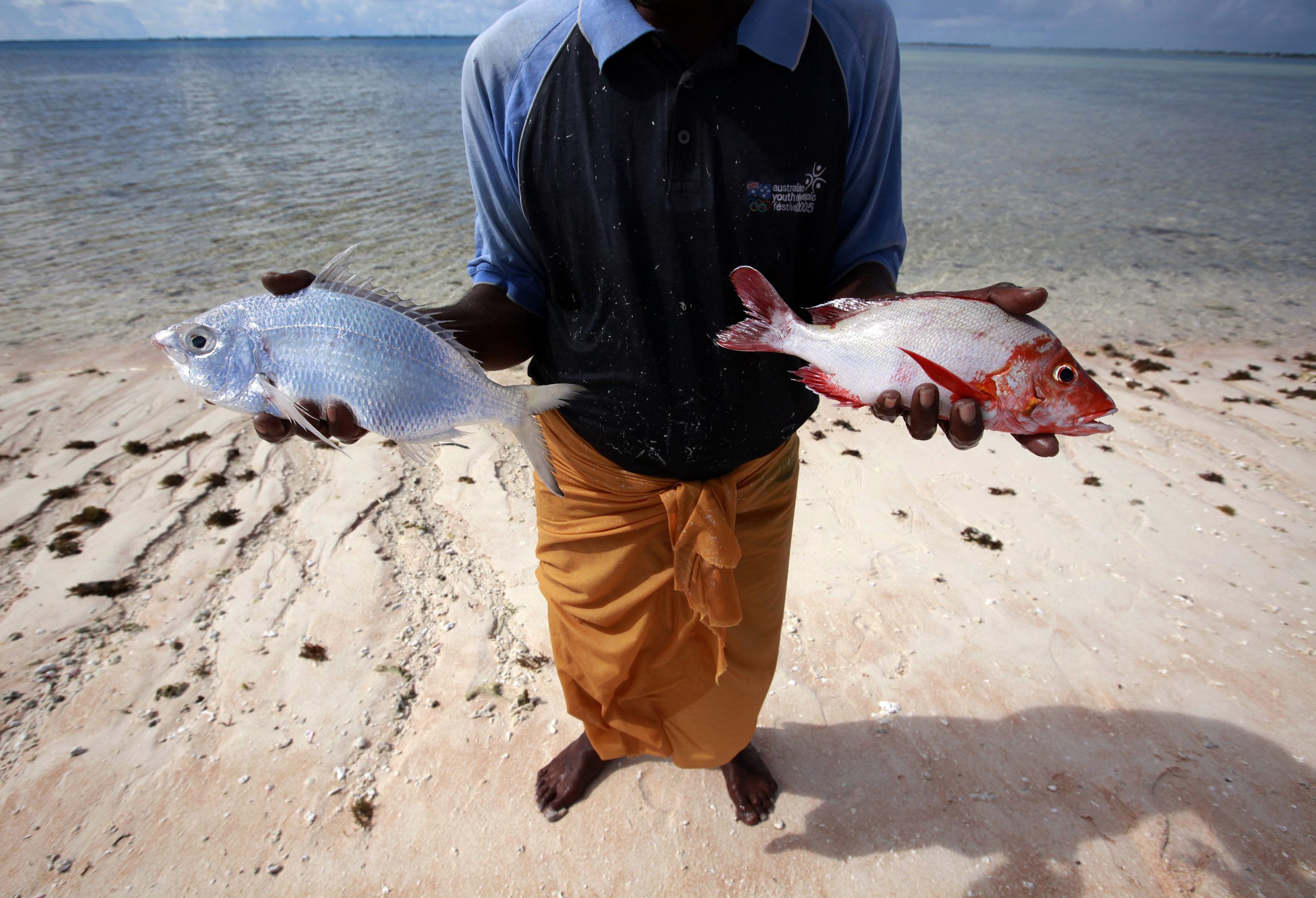
I’m an Australian-born Samoan. In 2002, I visited my family home for the first time. My father took me to the rural community where generations of my family were raised. He did not have the words to describe how much has changed since rising ocean waters had taken away almost a third of the beach.
I learned of how we had to relocate my great‑great‑grandparents’ grave to higher ground twice in the last 15 years. Of how my cousins have to paddle out further to sea to catch fish, since warmer waters have destroyed much of the reef. Of how the ocean crashes so close to my uncle’s home that he had to build a new house further away.
We saw reflections of our own climate destruction in the Pacific when we shared these stories with our First Nations relatives at the edge of the Saraji mine. Murrawah Johnson and Teila Watson, both Birri Gubba and Gangulu women, made clear connections between their struggles and ours. “We don’t get to inherit our land and we don’t get to inherit our traditional roles. We are fighting a war on extinction,” Murrawah said.
Coal extraction devastated their lands and cultures – totems have disappeared, fresh water has become scarce – while the effects of using it have devastated ours. “King tide, cyclones, all the violence that has been enacted on your country and people is because of the violence that has been allowed here, to us and our country,” Teila said.
Wearing the mantle of climate leadership
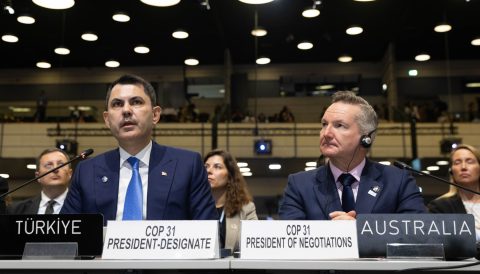
This week, Australia is assuming the mantle of climate leadership as co-president and head of negotiations of this year’s UN Climate Change Conference, COP31. It will lead on deliberating the summit’s priorities as world leaders and climate negotiators descend on Fiji and Tuvalu for the pre-COP meetings.
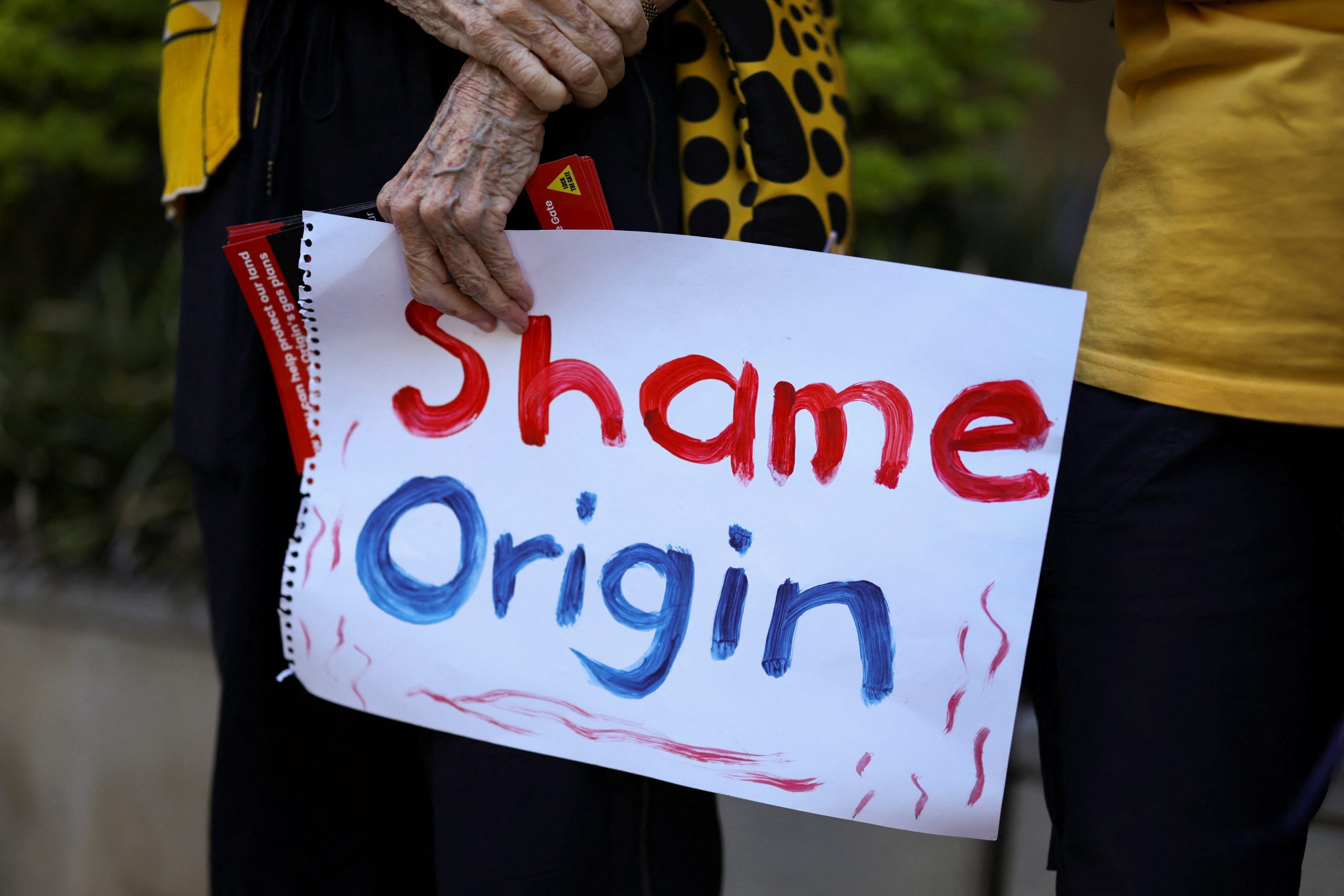
Ironically, just days before the pre-COP began, the New South Wales Independent Planning Commission approved the largest-ever coal project the state has seen, set to emit an extra 800 million tonnes of carbon emissions. I joined the Pacific Climate Warriors and other communities in submitting about 4,000 appeals to oppose the project – yet these all fell on deaf ears.
-
Fossil fuel expansion threatens COP31 hosts’ credibility, experts warn
Türkiye and Australia are pushing coal, oil and gas at home with no national timeline for their own fossil fuel phase-out -
This Australian coal community is co-designing its own green future
The mining town of Collie offers a promising example of how to survive – and even thrive – amid the global transition to net-zero emissions

But the fight is not yet over. The project still requires federal approval to proceed, so every promise that Australia makes while at the helm of the climate talks counts. These promises will be measured against actual decisions it makes at home: to either lock us into more decades of climate pollution, or begin shutting down coal and gas once and for all.
Pacific leaders have made it clear that countries must align their policies with the 1.5-degree warming goal, a limit that we already know will be breached within the decade. Any chance of keeping this still within reach requires an immediate end to fossil fuel expansion and concrete plans to phase out existing projects. But success will be an uphill battle if COP31’s own head of negotiations refuses to lead by example.
Australia remains the second-largest coal exporter in the world. It is one of the very few industrialised countries under the Paris Agreement’s Annex I that still has no coal phase-out plan. Since 2022, the Albanese government has approved 37 new, expanded or extended coal, oil and gas projects. It is thus unsurprising that its own mitigation policies have been rated by Climate Action Tracker as “insufficient”, even without factoring in fossil fuel exports and related expa