

There is a “massive gap between rhetoric and reality” that must be closed by new climate pledges being drafted under the Paris Agreement, the UN Environment Programme (UNEP) says.
In the 15th edition of its annual “emissions gap” report, the UNEP calls for “no more hot air” as countries approach the February 2025 deadline to submit their next nationally determined contributions (NDCs) setting mitigation targets for 2035.
These NDCs “must deliver a quantum leap in ambition in tandem with accelerated mitigation action in this decade”, the report says.
The report charts the “gap” between where emissions are headed under current policies and commitments over the coming decade, compared to what is needed to meet the Paris goal of limiting global warming to “well below” 2C and pursuing efforts to stay under 1.5C.
It highlights that greenhouse gas emissions reached record levels in 2023, up 1.3% from 2022, and rising notably faster than the average over the past decade.
The report warns that both progress and ambition have “plateaued” in recent years, with relatively little of substance occurring since the pledges made at COP26 in 2021. And many countries are not even on track to meet their existing NDCs, with current policy projections from G20 nations exceeding NDC commitments by a collective 1bn tonnes of greenhouse gas emissions (in carbon dioxide equivalent, CO2e) in 2030.
Current policies put the world on track for 2.9C of warming by 2100, the report finds – though this could be reduced to 2.4-2.6C, if all existing NDCs are met.
But unless global emissions in 2030 are brought below the levels implied by current NDCs, a pathway to 1.5C with no or limited overshoot becomes “impossible”, the report says, and “strongly” increases the challenge of limiting warming to 2C.
While the magnitude of the challenge is “indisputable”, there are “abundant opportunities for accelerating mitigation”, the report says. It finds that global emissions could be cut by 54% by 2030 and 72% by 2035 at a cost of less than $200 per tonne of CO2.
This indicates that the gap between commitments and current policies is a result of a lack of policy support rather than more fundamental barriers to decarbonisation.
(For previous reports, see Carbon Brief’s detailed coverage in 2014, 2015, 2016, 2017, 2018, 2019, 2020, 2021, 2022 and 2023.)
Global greenhouse gas emissions at record levels
The UNEP report finds that human emissions of greenhouse gases – CO2, methane, nitrous oxide and fluorinated gases (F-gases) – reached a record 57.1bn tonnes of CO2 equivalent (GtCO2e) in 2023.
The chart below shows how fossil CO2 (black) is by far the largest contributor to annual emissions and the main driver of the increase in recent decades, with methane (grey) playing the second largest role.

Global emissions grew 1.3% (0.7 GtCO2e) in 2023, compared with 2022 levels – a rate notably faster than that over the prior decade (2010-19, at 0.8 GtCO2e per year).
(As the report notes, these numbers do not include many of the climate-related impacts on greenhouse gas emissions that are not a result of direct human interventions – such as the catastrophic Canadian wildfires in 2023. The ability of the biosphere to absorb a portion of human emissions is broadly expected to weaken under scenarios where the world does not rapidly reduce emissions.)
These emissions were driven by energy use, industrial process emissions and land-use change across a variety of sectors.
As the chart below shows, electricity generation was the largest driver of greenhouse gas emissions globally in 2023, responsible for approximately 26% of the total. Other major contributors were transportation (15%), industry (11%), fossil-fuel production (10%) and industrial processes (9%).

The report finds that global aviation had the largest relative increase in emissions, increasing 19.5% between 2022 and 2023 as the sector recovered from Covid-era lows. Fossil-fuel production emissions, road transportation and industrial process emissions also increased notably from 2022.
The authors note that the fossil share of generation is starting to decrease in the power sector as solar and wind expand rapidly, with capacity additions increasing by 50% in 2023. Global investment in renewable power, grids and storage is now considerably higher than global investment in oil, gas and coal.
Despite rapid growth in clean energy, power-sector emissions have yet to peak, with new clean additions globally not quite keeping up with the rate of demand growth. However, the report notes that both power-sector emissions and overall global greenhouse emissions are expected to peak in the next few years, even if they did not in 2023.
An even wider emissions gap
The primary focus of this edition of the report is tracking the gap between where the world is heading today – both under current policies and near-term commitments – and what would be needed to meet Paris Agreement goals of limit warming to well-below 2C.
However, since the 2023 report, there have not been any notable changes in country pledges or policies – and global emissions continued to grow.
This means that the emissions gap is wider than it was last year and the world is further off track from its climate goals.
The report explores a number of different future emissions scenarios including: those under policies in place today; emissions if Paris Agreement NDCs are met; emissions if both NDCs and national-level net-zero pledges are met; and emissions required under scenarios that limit warming to below 2C and to 1.5C with no or limited overshoot by 2100.
While these NDCs – alongside other policies enacted by countries – have helped move the world away from some of the darkest climate futures that seemed plausible a decade ago, the gap continues to grow between where the world is today and a path to meeting the Paris Agreement.
The report finds an emissions gap in 2030 of around 14GtCO2e between where the world is headed if countries achieve their “unconditional” NDCs (that is, those not conditioned on “climate finance” or other external assistance) – shown by the mid-blue line – and an emissions pathway that limits warming to below 2C (defined in the report as a >66% chance of avoiding 2C warming) – shown by as the pale red line.
The gap is even larger – around 22GtCO2e – between unconditional NDCs and a scenario consistent with limiting warming to 1.5C by the end of the century (red line). If conditional NDCs are fully implemented in addition to unconditional ones (light blue line), this emissions gap would shrink by around 3GtCO2e in 2030 for both the 2C and 1.5C scenarios.

If NDCs are not strengthened by 2035, this gap would grow to 18GtCO2e for keeping warming below 2C and 29GtCO2e for 1.5C, the report finds. In the absence of a ratcheting up of commitments in recent years, limiting warming to 1.5C with no or low overshoot is now much more difficult to achieve. Further delays could similarly imperil the 2C target.
In addition, many countries are “not even on track to deliver on their current NDCs” today, the report says. Major countries, including Australia, Brazil, Canada, Indonesia, Japan, South Korea, the UK and the US, are all off track to meet their targets under existing policies. (Several of those that are on track had set weak targets, it adds.)
Countries are expected to update their NDCs by February 2025 and these should include mitigation targets up to the end of 2035 (compared to the 2030 date for the initial round of Paris NDCs).
However, the ability of post-2030 commitments to put the world on track to limit warming to below 2C is highly dependent on action pre-2030. As the report shows, strong climate action starting in 2024 would require a 4% reduction per year on average, while doing so in 2030 would increase this to 8% per year.
An upward revision of current policy warming
The UNEP report author team has been one of the main groups assessing the range of warming impacts the world could expect under current policies. However, their estimate has continued to increase over the past three reports – from 2.6C in 2022 to 2.7C in 2023 and 2.9C in 2024. This reflects both continued increases in global greenhouse gas emissions and methodology updates by UNEP.
The figure below compares these estimates between the 2022 (dark blue) 2023 (mid blue blue) and 2024 (light blue) versions of the UNEP report. Compared to the 2023 report, current policy warming outcomes increased notably, unconditional NDC outcomes were unchanged, conditional NDC warming increased slightly, and net-zero pledge warming decreased slightly.

The report finds that a continuation of current policies would result in a 100% chance of exceeding 1.5C, a 97% chance of exceeding 2C and a 37% chance of exceeding 3C by 2100. (And the world will continue to warm after 2100 as long as CO2 emissions remain above (net) zero.)
Under NDCs, the odds of exceeding 1.5C remains at 100%, while there is a 94% chance of exceeding 2C by 2100 under unconditional NDCs and a 79% chance under conditional NDCs.
If all country net-zero pledges are implemented (which, the report notes, few, if any, countries are on track to achieve today), these likelihoods are reduced to a 77% chance of exceeding 1.5C, a 20% chance of exceeding 2C and a near-zero chance of exceeding 3C.
The figure below compares the latest UNEP estimates (mid blue bars) to others in the literature – the emissions scenarios featured in the Intergovernmental Panel on Climate Change’s (IPCC) sixth assessment report (dark blue), estimates published by Climate Action Tracker (light blue), and the IEA’s 2024 World Energy Outlook (grey).

Current policy outcomes are broadly in-line with the IPCC’s middle-of-the-road SSP2-4.5 scenario, though a notable gap has developed in recent years between UNEP and IEA estimates. While the three were nearly identical in 2021, the UNEP’s current policy warming estimate has increased while the IEA’s has decreased.
The UNEP provides a high-end warming estimate for its scenarios that is notably higher than that of other groups. This is because its approach includes both future emissions uncertainties associated with each scenario, plus the range of possible climate system responses from climate sensitivity and carbon cycle feedbacks. While the latter can be expressed probabilistically, the likelihood of future emissions outcomes under these scenarios are more difficult to assess.
High potential for deep emissions cuts
While countries are far from being n track to meet Paris Agreement goals today, the new report explores what it would entail – and cost – to close the emissions gap.
They find that, across all sectors of the economy, global emissions could be reduced by 31GtCO2e by 2030 (54% below current policy levels) for a cost of less than $200 per tonne of CO2. In 2035 this increases to 41GtCO2e (a 72% reduction from current policy levels), reflecting expected continued cost declines of mitigation technologies.
The figure below, taken from the report, shows the assessed mitigation potential for $200 per tonne of CO2 or below for each different sector of the economy.

The energy sector has the largest potential for low-cost decarbonisation at 12GtCO2e/yr in 2030 and 15GtCO2e/yr in 2035, largely driven by the replacement of fossil fuel electricity production with clean energy sources.
Agriculture, forestry and other land uses (AFOLU sector) have the second largest potential for decarbonisation, with forestry making up the largest component of this.
While substantial increases in investments and finance are required to accelerate mitigation across all of these sectors, the report shows that deep decarbonisation is achievable in the next decade at a reasonable cost.
Ultimately, the report highlights that the growing emissions gap reflects a lack of political will by countries to address emissions, rather than any fundamental constraint on the world’s ability to rapidly mitigate.



The post UNEP: New climate pledges need ‘quantum leap’ in ambition to deliver Paris goals appeared first on Carbon Brief.
UNEP: New climate pledges need ‘quantum leap’ in ambition to deliver Paris goals

When José Antonio Kast took office as Chile’s new president in March, one of his first moves was to put the brakes on plans to expand two protected marine parks – raising doubts about the country’s high-profile bid to host the headquarters of the High Seas Treaty.
But during the UN General Assembly last month, the right-wing leader reaffirmed his leftist predecessor’s ambition for Chile to host the landmark global pact, which came into effect in January and provides a legal framework to protect the waters of the high seas beyond national jurisdiction that cover about two-thirds of the world’s oceans.
Hailing the country’s “maritime vocation”, Kast’s government said the bid to host the treaty’s secretariat in the port city of Valparaíso was state policy and testament to its commitment to multilateralism.
“For the government of Chile, it is of high interest to achieve this recognition, and we will carry out all the efforts to obtain the necessary support,” Foreign Minister Francisco Pérez Mackenna was quoted as saying by local media.
-
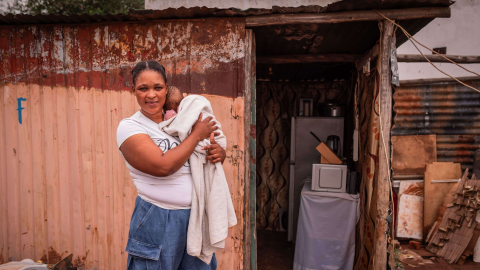
At pre-COP, UN climate chief warns of heat threat to mothers and babies
The spotlight on maternal health came on the first day of the pre-COP31 meeting in Fiji, where Pacific concerns are set to top the agenda as ministers gather for talks -
Big banks behind “net zero” alliance continued lending to coal firms
New data shows coal finance has stayed steady at the global level since 2022, as international efforts to cut the ties between lending and emissions faded -
Jordan’s mega-plan for water security risks locking in fossil gas demand
A giant desalination plant will help Jordan confront water scarcity, but solar power’s limited role in the energy-hungry project has raised questions about how climate adaptation finance is being spent


Tough competition from Chinese, Belgian bids
But to garner the votes it needs, Chile must fend off competing bids by Belgium – which has proposed its well-connected capital, Brussels – and China, whose well-funded bid includes the provision of free premises in the coastal city of Xiamen and five years of free utility costs.
Parties to the treaty, formally called the Agreement on Marine Biological Diversity of Areas Beyond National Jurisdiction (BBNJ), will choose the headquarters at their first summit (COP1), in New York from January 11 to January 22, 2027. They will seek consensus, falling back on a two-thirds majority in successive secret ballots.
Chile has offered to provide a restored waterside warehouse “at its own expense” as office space, pitching itself to developing countries as a Global South alternative to Europe-centred Brussels. Among richer countries, it is promoting its democratic credentials and greater transparency as an alternative to China.
Rolling back environmental safeguards at home?
While the South American country remains the top pick among environmental campaigners and other civil society groups, critics of Kast’s government say recent policy moves may make it harder for the country to garner the support it needs.
On March 12, the day after Kast took office, the Environment Ministry withdrew 43 decrees awaiting legal approval, including a push to expand the Mar de Juan Fernández and Nazca-Desventuradas marine parks – vast protected areas in Chile’s Pacific Ocean waters. Both remain under review, the ministry told Climate Home News.
The decrees also included an emission standard for coal power plants and regulations for Chile’s new biodiversity and protected areas service.
A month after holding up the decrees, Kast questioned aspects of Chile’s urban wetlands protection law, suggesting it was sometimes an unjustified obstacle to much-needed housing development, and his administration has also sought to ease the rules on salmon farming in the world’s second-largest producer.
In August, the Constitutional Court struck down the salmon farming reform after a challenge by opposition lawmakers and warnings from green groups including Greenpeace, which said it could help farms relocate into protected areas such as the Kawésqar National Reserve.
Valparaíso mayor Camila Nieto, from former leftist President Gabriel Boric’s party, backs the bid to host the High Seas Treaty, but said she hoped “the government’s support also translates into public policies consistent with the goals of protecting and conserving the oceans”.
“The decisions a country makes on environmental matters can influence international perceptions of its commitment to protecting the oceans. That is something we cannot ignore,” Nieto told Climate Home News.

China’s bid stirs concerns over data access, fishing
Chile’s past record on marine protection – it has protected 43% of its jurisdictional waters – could yet give it an edge.
“Chile deserves it for its conservation record as a state. For more than 15 years Chile has been following this path,” Liesbeth van der Meer, executive director at conservation group Oceana in Chile, told Climate Home News.
Concerns in some quarters about the rival bid by China – for example, over a potential conflict of interest due to the vast Chinese fishing industry – may also weigh in Chile’s favour, experts say.
Chinese-flagged vessels did about 30% of detected high seas fishing between 2022 and 2024, according to an Oceana analysis of Global Fishing Watch data. China also sponsors five of the International Seabed Authority’s 31 deep-sea mining exploration contracts, more than any other country.
The secretariat would host sensitive marine data, making transparency paramount, experts say.
China says hosting the secretariat in Xiamen would help make the treaty more globally representative, fostering cooperation between rich and developing countries and aiding equitable access to marine science and technology.
Wang Yi, China’s minister of foreign affairs, said in a statement that the country has “all along championed true multilateralism” and “firmly defended” UN institutions. Given Xiamen’s $38-billion ocean industry, the city lives up to the treaty’s “significance and promising future”, he added.
Meanwhile, Chile is proposing the treaty’s first high seas marine protected area for the Salas y Gómez and Nazca ridges, a chain of more than 110 seamounts stretching about 4,000 km from off Peru to Rapa Nui (Easter Island) that is rich in endemic fish and other marine species.
The ridges are “a true oasis of productivity”, said Carlos Gaymer, director of the Centre for Ecology and Sustainable Management of Oceanic Islands at Universidad Católica del Norte and co-author of a 2021 scientific review of the area.
The water is so clear that phytoplankton thrive around 200 metres down, feeding zooplankton, small fish and, up the chain, sharks and seabirds. Whales, turtles and sharks use the ridges as “a real highway” across the Pacific, Gaymer said. Parts of the Nazca ridge are likely nursery grounds for jack mackerel and swordfish.
Chile has already asked the body that regulates the industry in the area – the South Pacific Regional Fisheries Management Organisation (SPRFMO) – to close the ridges to all fishing vessels. According to Chilean data, more than 80% of fishing in the area involves Chinese vessels.
Meeting on the Chilean request in early September, SPRFMO’s scientific committee agreed only to recommend closing the area to bottom fishing. SPRFMO’s commission will take the final decision at its next meeting, in early 2027.
For Gaymer, Chile’s push to close the area to fishing should be seen as a “starting point” for the treaty proposal.
“Every time there’s a new expedition, species new to science appear,” Gaymer said. “If you don’t protect areas like these … those species simply disappear from the planet.”
The post Race to host High Seas Treaty HQ heats up as Chile reaffirms bid appeared first on Climate Home News.
Race to host High Seas Treaty HQ heats up as Chile reaffirms bid