

UN chief António Guterres called on Tuesday for stronger action to cut emissions of planet-heating methane, taking aim at the fossil fuel industry’s practices and profits, and pointing to coal, oil and gas as the root of today’s climate and energy crises.
In a major speech at London Climate Action Week, with the British capital under a heatwave warning, the UN Secretary-General said countries had not done enough to reduce greenhouse gas emissions in line with what is needed to keep warming below the globally agreed goal of 1.5C.
“The task before us is to strictly limit the overshoot, shorten its duration, and bring temperatures down below 1.5 degrees Celsius as fast as possible,” Guterres said. One way of doing that, he added, is by cutting methane emissions first.
He noted that methane – a potent greenhouse gas that traps around 80 times more heat than carbon dioxide – is responsible for around one-third of global warming but breaks down in the atmosphere within a decade or two.
“That means that aggressive cuts could produce visible temperature relief within a generation,” the UN chief emphasised, launching a global call to action on methane covering fossil fuel production, agriculture and organic waste disposal.
-
Bonn climate talks end in “gridlock” on adaptation and emissions-cutting
Splits between developed and developing countries over finance and science held back progress on key areas of climate action, leaving disappointment and much work for COP31 -
Warning against ‘consumer club’ as G7 forms critical minerals alliance
G7 countries want to reduce their reliance on China for minerals and protect supplies from geopolitical interests but experts see few benefits for developing nations


Of the three main sources of methane, he singled out the fossil fuel industry, where he said “the most immediate gains can be made”.
He cited the International Energy Agency (IEA) finding that around 70% of oil and gas methane emissions can be eliminated using existing technology, mostly at low or no net cost. This is because the gas leaking from coal mines and oil and gas production facilities can be captured and then used or sold.
Despite this, in 2025 alone, Guterres said some 167 billion cubic metres of gas were flared – as much as Africa consumes in a year.
“I am urging the fossil fuel industry to step up and do what is long overdue,” added the UN chief, whose term ends this year.
Guterres said voluntary action “is no longer enough” and there were similar global precedents for getting rid of harmful substances, including leaded petrol and ozone-depleting chemicals. “Methane pollution must be next,” he emphasised.
Methane emissions stuck at highs
The latest Global Methane Tracker report from the IEA shows that methane emissions from fossil fuels remained at very high levels in 2025, with no sign of a decline globally despite progress in some countries. In 2025, energy generated 41% of global methane emissions, followed by agriculture (40%) and waste (17%).
On Tuesday, a World Bank tracker showed that global gas flaring rose for the third year in a row in 2025, wasting an estimated $54 billion worth of gas by burning it off.
Demetrios Papathanasiou, the World Bank Group’s global director for energy, said that at a time when many countries are struggling to expand their access to affordable and reliable energy, “the economic development costs of continued flaring are simply too high”. “The gas currently flared could be captured to power industries and businesses, create jobs and strengthen energy security,” he said in a statement.
As well as easing climate change, the IEA says capturing waste methane could help improve gas market security after Iran’s near-closure of the Strait of Hormuz removed close to 20% of global liquefied natural gas supply from the market.
The prime minister of Barbados, Mia Mottley, last year called on leaders at the UN General Assembly to draw up a “legally binding global agreement” to reduce methane emissions, an idea that is also supported by France.
Mottley’s “legally binding” methane pact faces barriers, but smaller steps possible
However, Guterres stopped short of supporting such a solution on Tuesday, throwing his weight instead behind a proposal for governments to set a new global standard for net near-zero methane emissions across the value chain in the oil and gas sector.
This initiative, outlined in a report on the new call to action, would establish a common, internationally recognised methane intensity benchmark, for use by both producers and consumers. Compliance with the standard would then become a condition for financing, procurement and long‑term market access.
Voluntary action ‘not enough’
In recent years, countries and companies willing to act on the methane problem have teamed up on the Global Methane Pledge, which aims to cut methane emissions by 30% by 2030 from 2020 levels, and the UAE-led Oil and Gas Decarbonisation Charter, signed by over 50 oil and gas companies. But their success has been limited in real terms.
Speaking at a separate event on Monday, Jonathan Banks, vice president of methane pollution prevention at the Clean Air Task Force (CATF), said the global pledge had been successful in creating “high-level political buy-in”, raising more money to detect methane emissions and helping countries plug their sources.
But it “is not there to be this all-encompassing binding treaty that drives emissions down”, he added.
At last year’s COP30, 11 countries representing around 10% of global oil production and 18% of gas exports signed a pledge to “drastically reduce” methane emissions in the fossil fuel sector, including by eliminating routine gas flaring and venting.
Comment: Curbing methane is the fastest way to slow warming – but we’re off the pace
The United Nations Environment Programme (UNEP) also runs a system that detects methane leaks around the world. It has issued more than 5,000 alerts across 33 countries, but received responses in only 12% of cases.
Meghan Demeter, a programme manager at the UNEP service, said on Monday that countries face several barriers to responding to the alerts, including limited capacity to interpret the data and act on it, as well as funding shortages, particularly among national oil companies.
A senior UN official told journalists that existing initiatives on methane had raised awareness of the issue but had failed to deliver the emissions cuts needed. “’It’s absolutely critical that governments step in and strongly regulate the oil and gas sector,” he added.
Norway leads the way
As an example of how this could work, the call to action report singled out Norway, which banned routine flaring in 1971, imposed a tax on emissions from petroleum production and transport in 1991, and increased its tax on flaring and methane emissions in 2017. It now has one of the lowest methane emissions intensities of upstream oil and gas production in the world.
The report said that if all countries matched Norway’s standards, global methane emissions from oil and gas operations could fall by roughly 90%.
Recent COP hosts Brazil and Azerbaijan linked to “super-emitting” methane plumes
It added that China, Canada, the United Arab Emirates and Qatar reduced or maintained their methane emissions from oil and gas production between 2023 and 2024, even as output increased, indicating a decline in the emissions intensity of their operations.
On Monday, the Fossil Fuel Regulatory Programme (FFRP), a UNEP-backed initiative that works with governments to strengthen regulatory frameworks for cutting methane emissions from their energy sectors, added Egypt, Brazil, and Bosnia and Herzegovina to its existing partners, Ghana, Kazakhstan and Iraq.
Windfall tax on fossil fuel profits
Guterres also made a strong push for states to hit the very deep pockets of fossil fuel companies with windfall taxes, as countries like the UK, Italy or Spain have done in recent years.
He said fossil energy giants had reaped ”extraordinary profits”, with the eight biggest making an extra $6.5 billion in the first quarter of this year alone, which included only one month of the Middle East crisis which has pushed up oil prices.
“These are windfall gains born of pain – of instability, hardship and dependence. I urge governments to tax them,” said the UN chief.
He added that the proceeds should be used “where they belong: helping vulnerable families and communities, and accelerating the shift to clean, affordable energy”.
The post UN chief says fossil fuel industry must cut methane for warming “relief” appeared first on Climate Home News.
UN chief says fossil fuel industry must cut methane for warming “relief”

Next week, diplomats from around the world will descend on Yerevan, Armenia, to negotiate a series of decisions under the UN Convention on Biological Diversity (CBD).
Between 19 and 30 October, 196 parties will gather to hammer out the precise wording of the dozens of legal texts that make up the decisions under the Conference of the Parties (COP) to the CBD.
This year’s summit is particularly significant, as it marks the halfway point between the agreement of the Kunming-Montreal Global Biodiversity Framework and the deadline for achieving its targets.
The CBD has found that countries are currently not on track to meet 22 out of the framework’s 23 targets.
During the fortnight, delegates will also be negotiating decisions relating to the two supplemental protocols to the CBD: the Cartagena Protocol, which covers biosafety; and the Nagoya Protocol, which covers access and benefit-sharing for the use of genetic resources.
(The Cartagena and Nagoya Protocols, which are each governed by a “meeting of the parties”, or “MOP”, have fewer parties than the CBD as a whole, with 173 and 141, respectively.)
Carbon Brief is tracking the progress of countries towards consensus on dozens of negotiating texts using the interactive table below.
The tracker includes texts from the COP, as well as the MOPs for the Cartagena and Nagoya protocols. It also includes draft decisions from the most recent subsidiary body meetings, as these form the starting point for the negotiations in Yerevan.
The CBD has three subsidiary bodies: the subsidiary body on scientific, technical and technological advice (SBSTTA), the subsidiary body on implementation (SBI) and the subsidiary body on article 8(j) and other provisions (SB8J).
SB8J focuses on issues related to the Indigenous peoples and local communities. It was established at COP16 in Cali, Colombia, in 2024.
The first two columns of the interactive tracker list the topic of each agenda item and the relevant body, with subsequent columns including dates, page counts and links to the original documents.
The table is searchable and can be sorted using the arrows in the header.
Areas of disagreement in UN draft texts are denoted by square brackets. Counting the brackets in a particular iteration of a text therefore gives a sense of how far parties are from reaching consensus.
The bracket column is colour-coded, with dark green indicating a low number of brackets and red indicating a high number of brackets remaining.
Texts can also present parties with choices using “options” or alternatives (“alt”), which are counted together in the sixth column of the table.
The key discussions in Yerevan will centre around two agenda items in particular. The first is the global review, which will assess progress towards the GBF and make recommendations for accelerating action.
The second is finance, which can be separated into two parts: resource mobilisation and the financial mechanism. On resource mobilisation, biodiverse global south countries are likely to push for an increased amount of international finance for conservation.
Disagreement over the creation of the financial mechanism led to the suspension of COP16 in Cali in October 2024, as parties failed to find agreement on the mobilisation of finance before the end of the summit.
Global south countries want the establishment of a separate financial mechanism under the control of the CBD; global north countries largely prefer to maintain the existing mechanism, which sits under the Global Environment Facility.
At the resumed session of COP16 in Rome in early 2025, countries agreed on a roadmap that would lead to the establishment of a permanent mechanism.
related
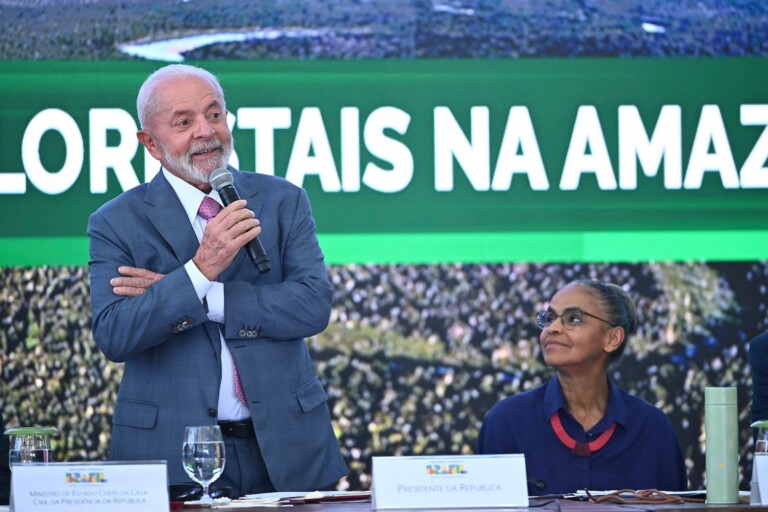
Analysis: Lula presidency saved at least 20,000km2 of Brazilian Amazon since 2022
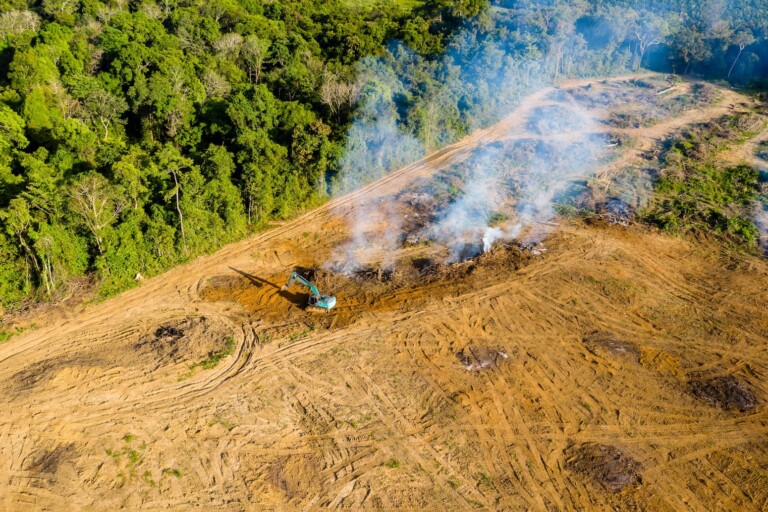
Why land-use emissions have fallen by a third this century – in six charts

Analysis: 84% of nations miss deadline to identify ‘nature-harming’ subsidies by 2025
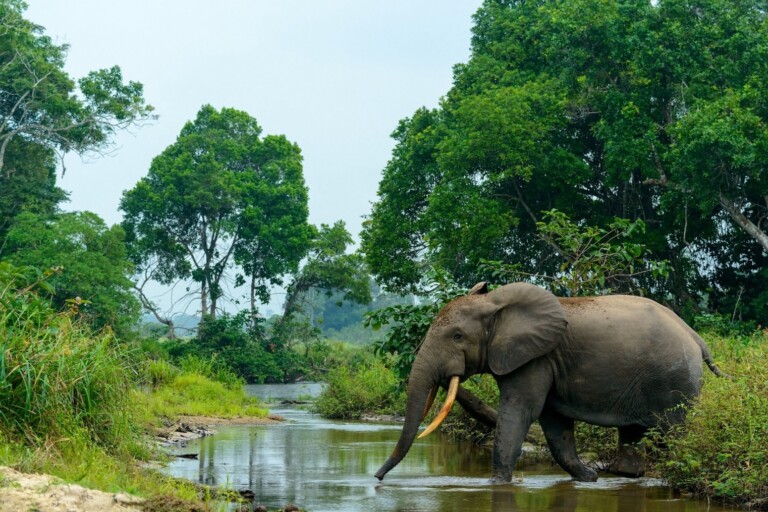
UK withdraws millions in funding from world’s second-largest rainforest in Congo
The post Interactive: Tracking negotiating texts at the COP17 biodiversity summit appeared first on Carbon Brief.
Interactive: Tracking negotiating texts at the COP17 biodiversity summit
A beacon of love
On an outer island of Fiji, two thousand nautical miles from Sydney, is a shining light of hope and resilience for our troubled world.
The island of Kioa is home to a Tuvaluan community who migrated from their atoll of Vaitupu in the late 1940s. It is a land of warm hearts, big smiles, and deep cultural roots; a place where the sound of a conch still summons the island together, where islanders paddle out to fish in carved outrigger canoes, and healthy happy children walk barefoot to school.
Here, culture is life. Kioans live sustainably through their traditional knowledge and practices. The island is alive with song, dance and the rhythms of a life tied to the tides, the winds, and the seasons.
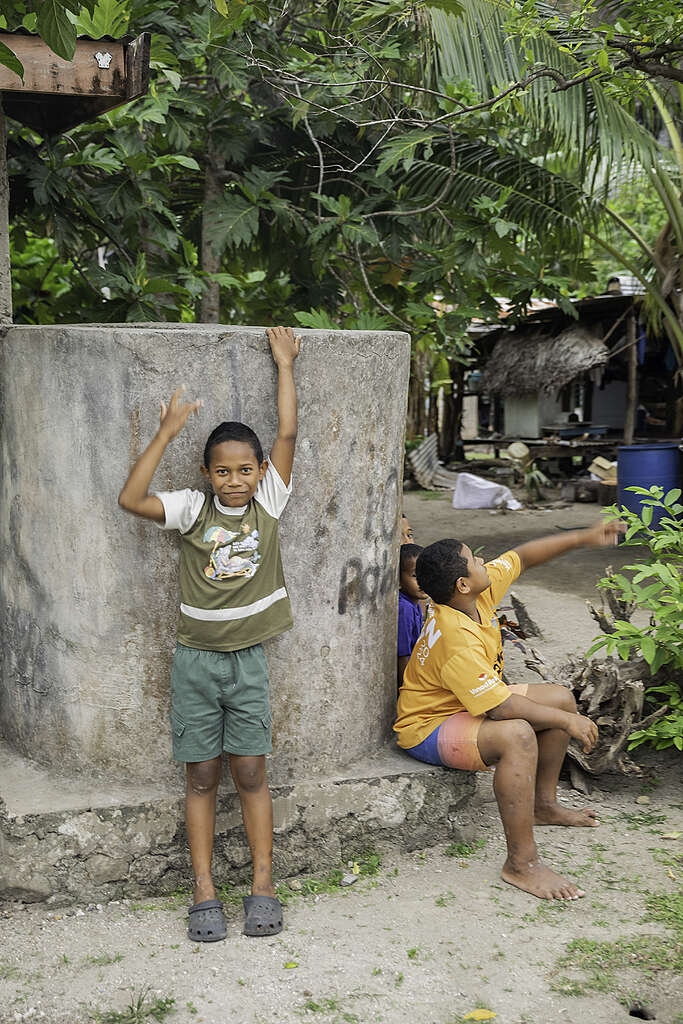
Facing the future
Greenpeace has been lucky to have a relationship with Kioa for a number of years now, and we are continually learning from this remarkable community.
Last week, as part of our Voyaging Oceania project, we returned to the island. Our purpose was twofold —- to carry messages from the island to leaders gathering in Nadi this week for the Pacific Pre-COP, and to support the Kioa community in their efforts to improve water security for the island.
Unlike Tuvalu itself, with its eight atolls, Kioa is a mountainous, forested and richly fertile island. It will remain habitable far into the future. Kioans did not initially migrate from Vaitupu due to climate change, but the move was prophetic. They now have a lifeboat.
However, even Kioa faces challenges on our rapidly warming planet, in particular when it comes to water. Climate change is shifting once reliable rainfall patterns. On top of this, the island is already feeling the effect of this year’s intensifying El Niño event, which for Fiji means reduced rainfall and prolonged dry spells.
Right now, fresh water has to be carefully rationed, and is only available for a few hours a day. During last week’s visit aboard our campaigning ship Oceania, Greenpeace was privileged to work with the Kioa community on a new solar-powered water distribution project for the island.
Designed and led by the island, the project involves using a solar pump to move water from a reliable source to a storage tank and then using gravity to distribute the water around the village.
It was a lesson in how local knowledge and ingenuity can be the backbone of today’s climate solutions. To build a dam around the source, the local community knew the exact spot where they could gather gravel at low tide to mix with the cement. They took only what was needed, knowing that all resources must be carefully conserved. Kioa has no roads and no machinery, and it was an all-of-island effort to carry the materials up to the project site, including many heavy bags of sand and rock.
Such projects truly bring to life the vision of a resilient, locally-led, fossil fuel free Pacific.